








Can stablecoins be combined with AI? Explaining the new玩法 of USD.AI
TechFlow Selected TechFlow Selected
Can stablecoins be combined with AI? Explaining the new玩法 of USD.AI
USD.AI generates returns through AI hardware collateral, filling the gap in financing for computing resources.
 Navigating Web3 tides with focused insights
Author: San, TechFlow
According to data from Coingecko, the current global market capitalization of stablecoins has surpassed $285 billion. Meanwhile, giants such as Circle and Kraken are also stepping into the stablecoin payment chain赛道.
However, the vast majority of current stablecoin projects still rely on traditional models pegged to the U.S. dollar or U.S. Treasuries, showing limited innovation and generally lacking "imagination." Against this backdrop, a unique challenger is entering the market with a fresh approach.
Recently, USD.AI—a stablecoin project uniquely combining DePIN, RWA, and AI—has sparked heated discussions in the market. It does not simply peg to the U.S. dollar but instead generates yield through AI hardware collateral, filling a gap in computing resource financing.

Earlier today, USD.AI officially launched and opened its deposit channel, rapidly gaining momentum. This could bring new opportunities for the convergence of AI and stablecoins.
Project Background
According to Rootdata, the project was established in 2024. On the team side, David Choi—one of USD.AI's core founders—is the co-founder and CEO of MetaStreer, a well-known NFT lending platform, and previously worked as an investment banking analyst at Deutsche Bank.
What truly brought USD.AI into the spotlight is its remarkable funding background.
On the 14th of this month, USD.AI announced the completion of a $13.4 million Series A round led by Framework Ventures.
As an investment firm focused on DeFi and infrastructure, Framework Ventures has backed star projects such as Uniswap and ChainLink. Its lead participation in USD.AI reflects institutional recognition of the project’s innovative value. The list of other investors is equally impressive, including prominent crypto VC Dragonfly, Layer2 giant Arbitrum, and Bullish—the recently IPO-listed popular exchange.
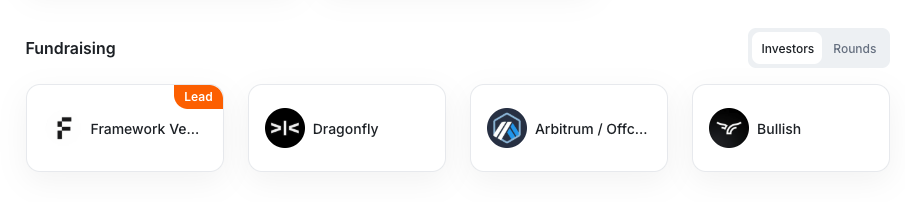
This high-profile funding round not only injects substantial resources into USD.AI but also validates the appeal of DePIN-integrated AI stablecoin projects to top-tier capital, significantly raising market expectations. Following the announcement, USD.AI seized the moment and officially launched on the 19th, sparking widespread market discussion.
Operating Principles and Core Mechanisms
Against the backdrop of growing AI computing demand, USD.AI is designed to combine stablecoin protocols with AI infrastructure financing, addressing issues overlooked by other market projects:
Small and medium-sized AI companies possess valuable GPU hardware but struggle to secure operating funds through traditional channels.
The project's core goal is to use on-chain capital to support AI companies in hardware procurement and operations, bridging the financing gap left by traditional finance in the emerging AI economy, while maintaining the low-risk nature of stablecoins.
Centered around a closed-loop system of “collateralization-minting-investment-yield,” USD.AI integrates trending concepts of RWA and AI, showcasing unique innovative advantages in this wave of stablecoin development.
USD.AI's operation begins with users depositing stablecoins like USDT or USDC as collateral to mint USDai at a 1:1 ratio. USDai is backed by U.S. Treasuries and major stablecoins, achieving a dollar peg with instant redeemability and liquidity, suitable for trading or providing liquidity within the DeFi ecosystem. Users can further choose to stake USDai to obtain sUSDai tokens and participate in other DeFi projects for additional yield—achieving a “multi-layered returns” effect.
USD.AI allocates user deposits into two types of investments: first, providing loans to AI companies for purchasing GPUs and other hardware, generating high-interest income—with an annualized yield of 6.96% currently displayed on the official website; second, idle funds are invested in U.S. Treasuries, providing stable base returns. sUSDai holders can amplify yields through DeFi protocols, with the project targeting an annualized return of 15%-25%, while USDai holders enjoy low-risk, stable returns.
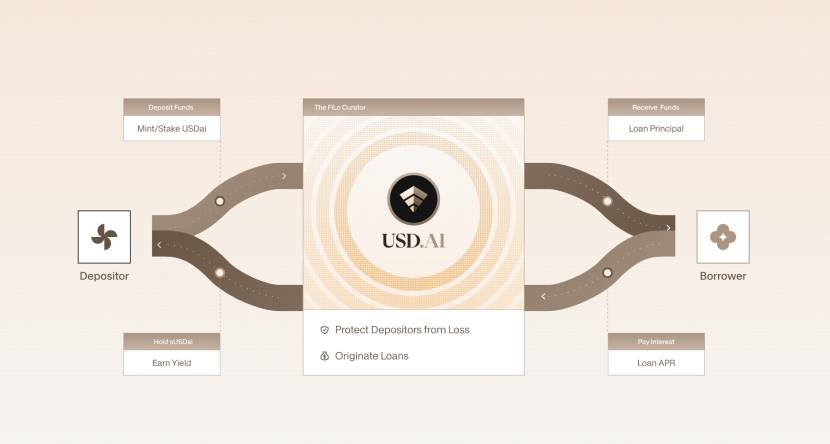
USD.AI's core mechanism includes several key components to ensure its innovation and stability:
1. Dual-token system: USDai serves as a low-risk stablecoin ideal for risk-averse users; sUSDai targets high-yield-seeking investors, offering flexibility and risk exposure. This design meets diverse risk preferences while maintaining compatibility with the DeFi ecosystem.
2. Asset tokenization and Caliber framework: Through the CALIBER framework, USD.AI tokenizes physical assets such as AI hardware into on-chain assets, using legal and technical measures to ensure transparent ownership with legal enforceability. An on-chain insurance mechanism further reduces default risk.
3. QEV redemption mechanism: To address the long-term and illiquid nature of AI infrastructure assets, USD.AI implements the QEV mechanism, which manages sUSDai redemption requests via market-driven methods, avoiding inefficiencies of first-come-first-served systems, while ensuring protocol fairness and stability.
4. FiLo Curator expansion mechanism: This allows the protocol to onboard large numbers of new borrowers, expanding the AI infrastructure investment portfolio, while structural protections and risk alignment mechanisms safeguard user interests, ensuring diversified and sustainable revenue sources.
In summary, user funds deposited into USD.AI are loaned to AI companies needing GPU and other hardware computing power to generate interest—all fully transparent and traceable. Idle funds are used to purchase U.S. Treasuries for guaranteed baseline returns.
USD.AI’s innovative mechanisms give it distinct competitive advantages. Compared to traditional stablecoin projects, USD.AI achieves higher yields through AI infrastructure investment; compared to high-risk DeFi protocols, its risk isolation and insurance mechanisms significantly reduce systemic risks.
USD.AI not only injects fresh vitality into the stablecoin market but also provides a scalable solution for capital needs in the AI economy, potentially becoming a pioneer in merging stablecoins with AI infrastructure.
How to Participate
Currently, USD.AI has opened user deposits and introduced a referral program to earn Allo points within its reward system.
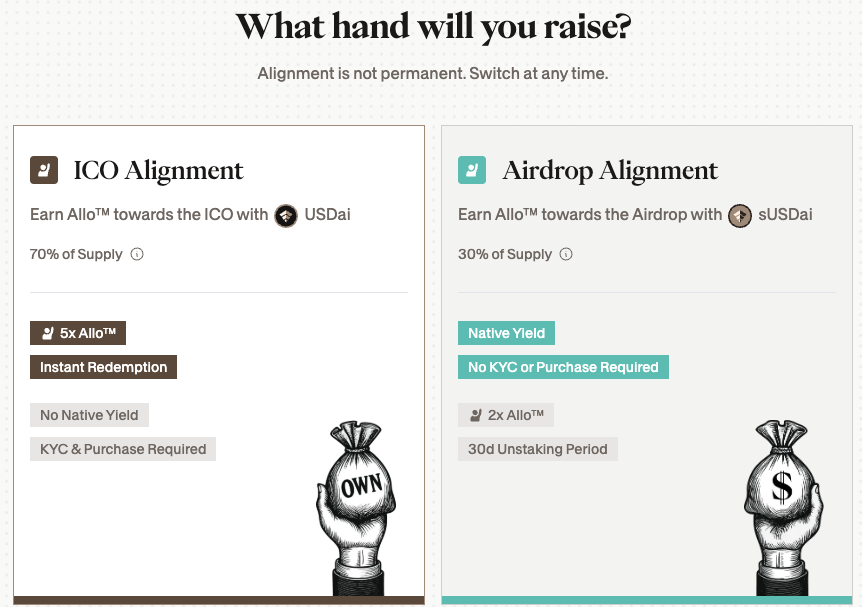
Users can receive final token rewards through either ICO or airdrop. All participants enter at a project valuation of $30 million circulating supply (10% of total FDV of $300 million).
According to official tweets, minting or staking USDai will continuously generate points daily going forward. Users can choose different strategies to determine whether they ultimately receive ICO allocations or airdrop rewards.
The Allo points campaign will end when YPO (cumulative paid yield) reaches $20 million. Users opting for ICO allocation must complete KYC, while those choosing airdrop do not require KYC.
Advanced ways to earn Allo points can be found in the introductory video shared in the official tweet.
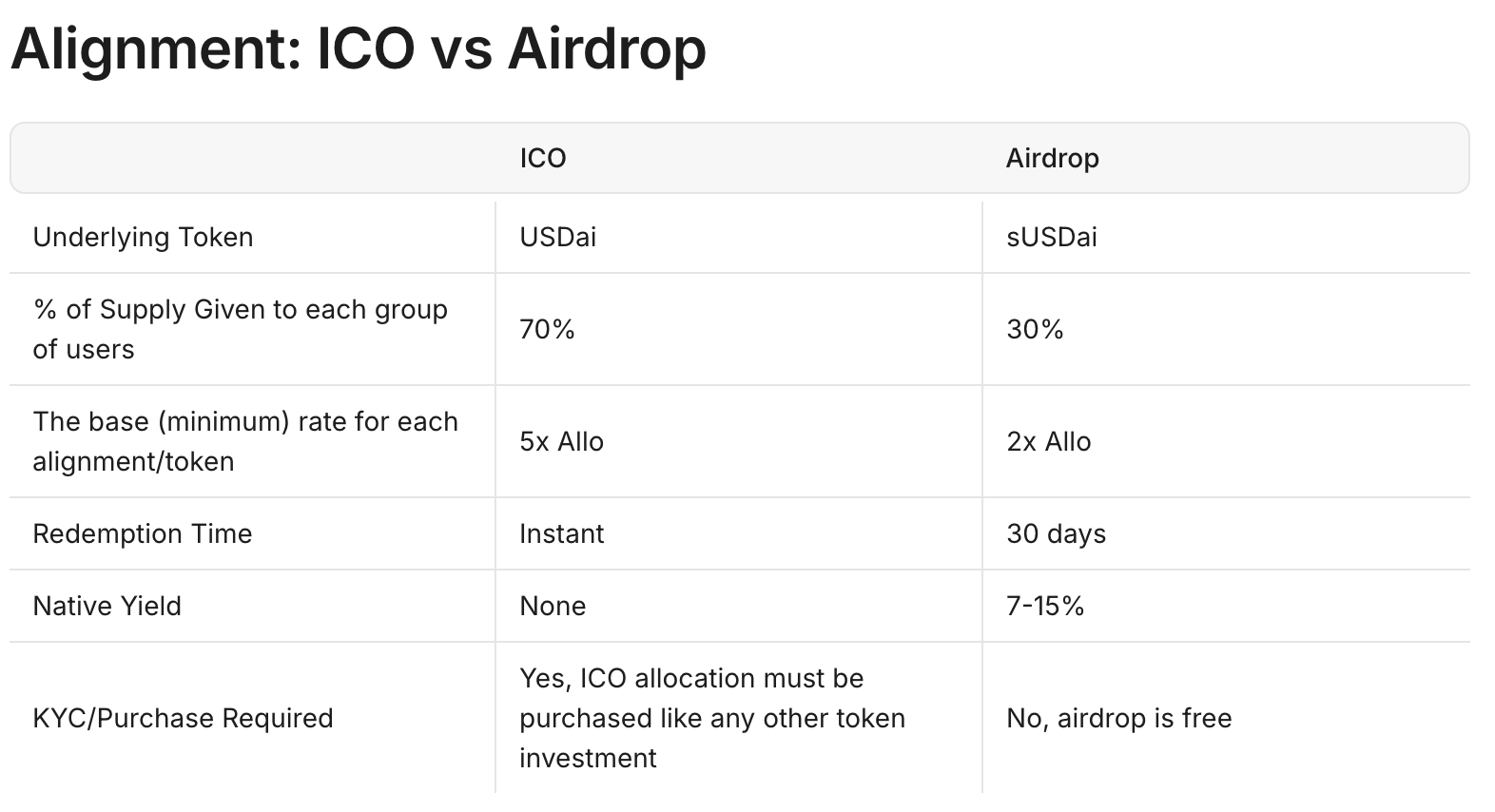
In short, holding USDai qualifies users for the project’s ICO; to participate in the airdrop, users need to stake USDai to obtain sUSDai.
Currently, purchasing USDai or sUSDai results in receiving qUSDai, which acts as a deposit queue receipt and will automatically convert into the corresponding token within 24 hours.
USD.AI’s total deposit cap is currently set at $100 million. Since all incoming funds are in qUSDai status, the current TVL only shows $52 million deposited during the internal testing phase.
Market Discussion
Current market sentiment toward the USD.AI project is polarized.
Supporters generally view USD.AI as a uniquely innovative stablecoin project that integrates the popular AI theme, allowing users to enjoy AI-driven returns while securing stable yields. Offering multiple participation strategies enables different user types to find suitable approaches, combining the stability of stablecoins with high-risk, high-return options.

On the other hand, critics argue that disclosed information suggests the team may be primarily Chinese, and the project merely stacks trendy concepts without substantive innovation.
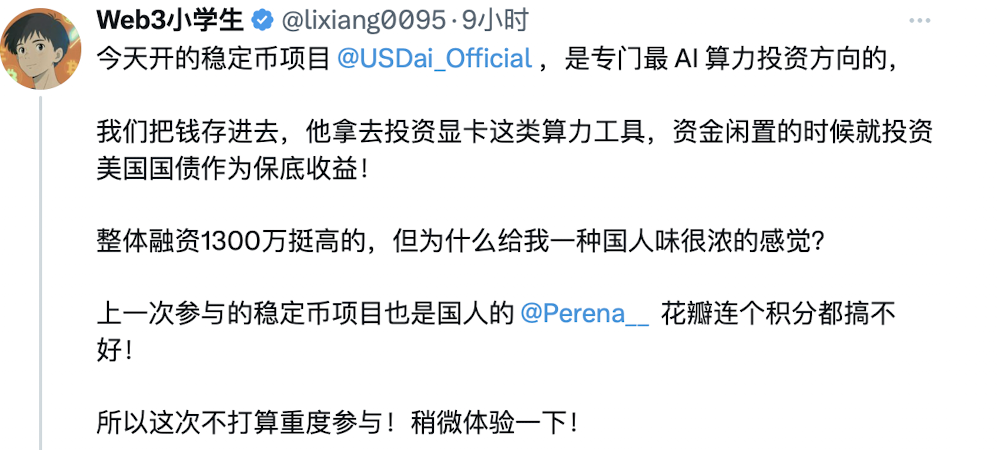
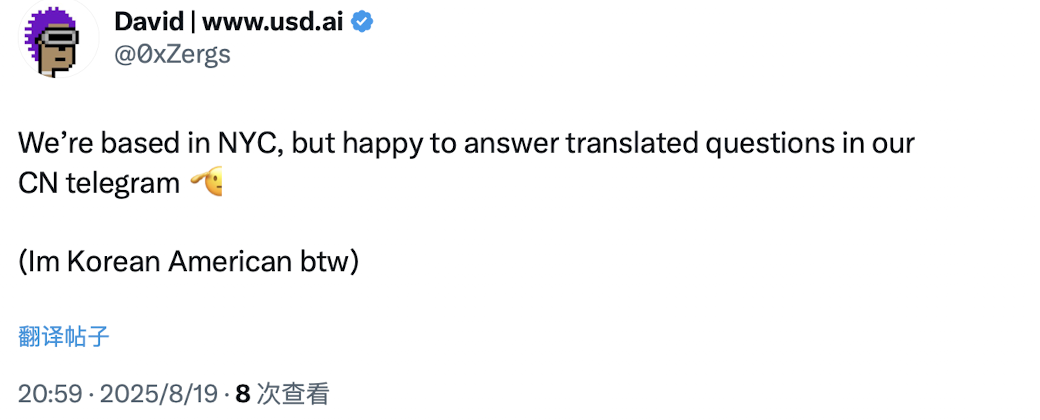
Interestingly, USD.AI’s core founder David just responded under this FUD tweet, clarifying he is Korean-American, stating the project is headquartered in New York, but remains happy to answer questions from Chinese-speaking users.
In my opinion, USD.AI indeed presents a different answer in the crowded stablecoin space. But whether it gains market favor and recognition depends on whether users are willing to "vote with their feet" and quickly fill up the $100 million TVL cap.
Its success or failure will serve as a litmus test for market acceptance of the emerging narrative of “AI infrastructure + stablecoin.”
Join TechFlow official community to stay tuned
Telegram:https://t.me/TechFlowDaily
X (Twitter):https://x.com/TechFlowPost
X (Twitter) EN:https://x.com/BlockFlow_News
 深潮TechFlow


