








Your "scarcity mindset" is the biggest enemy in crypto trading
TechFlow Selected TechFlow Selected
Your "scarcity mindset" is the biggest enemy in crypto trading
Not the market, not whales, and not manipulation.
 Navigating Web3 tides with focused insights
Author: VKTR
Translation: TechFlow
This is not financial advice.
I've held an ETH position for nearly two years, essentially breaking even. It's been like dead money—completely inert. Like a zombie sitting in my portfolio while other assets raced past me.
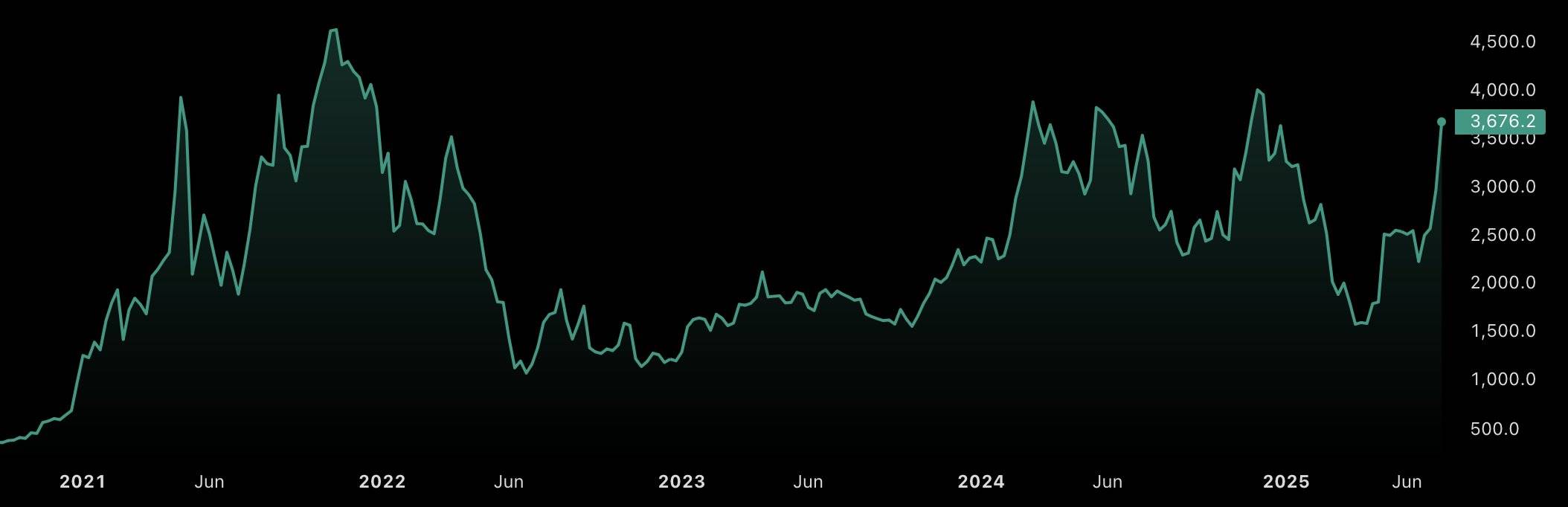
The cursed chart
Now it's finally showing solid profits, but that doesn't change the fact it may be one of the worst trades I've ever made. Not because of entry timing or investment thesis—but because I couldn't let go and redeploy capital into better opportunities.
This is scarcity mindset in action. I was too afraid to "give up," preferring to watch my money do nothing for two years rather than admit I was wrong and seek better opportunities.
This phenomenon is everywhere. Traders self-destruct not because they can't read charts or time entries, but because they can't make clear decisions with capital.
I know a trader who made $2 million during the 2021 bull run, only to lose it all by 2022. Another sold everything during the first 30% market drop, then watched prices surge 50x while holding stablecoins. Same psychological wiring, different disaster.
Watch any trader long enough and you'll see the same pattern. They build massive gains, then sabotage themselves by doubting their own decisions. A 40% gain turns into a 20% loss because they hold too long. A 10x runner gets sold at breakeven because they don't believe it can keep rising. A trader who dumped a token to zero will panic-sell the next runner due to "a bird in the hand is worth two in the bush" thinking.
I've lived both scenarios. Not the diamond hands nonsense, nor paper hands panic—but I've seen enough good opportunities turn into regret to recognize the real pattern. Sometimes I hold too long, sometimes I sell too early. The common denominator isn't strategy or analysis.
It's fear.
It's not belief. It's not discipline. It's not faith in the technology.
As uncomfortable as it sounds, this might stem from childhood trauma.
Invisible Cage
I believe most trading mistakes stem from financial scarcity. Every "holding through pain" tweet, every "I sold too early" group chat message reveals someone raised to believe such opportunities won't come again. Every trader unable to make clear decisions usually learned early that money is scarce and precious—better not waste the few chances available.
Most traders I know grew up amid middle-class anxiety—checking balances before purchases, parents arguing over bills. Every dollar mattered because it might never return.
This crap follows you into trading like a curse.
Imagine: You're up 40% on a trade. Your scarcity mind starts calculating: "If I just hold a bit longer, this could change your life." So you hold. And hold. Watching profits vanish because you can't accept that 40% is enough.
Or the opposite: You're up 40%, and scarcity whispers: "Take the money and run. You might never see green again." So you sell, then watch it go 400% while you sit on cash, blaming yourself for not believing in the setup.
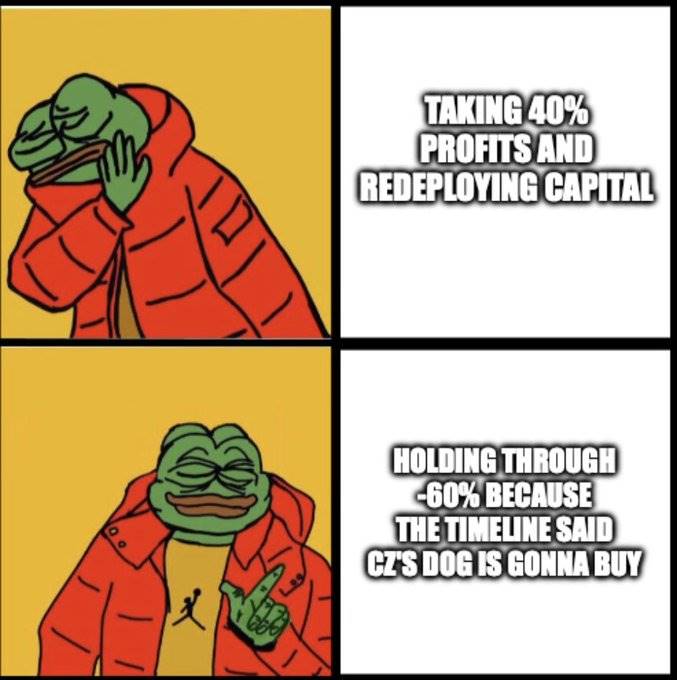
Scarcity mindset chooses financial trauma over financial freedom
Both reactions stem from the same belief: that opportunities are limited and precious.
Behavioral economists have studied this for decades. When you grow up under financial stress, your brain instinctively treats every decision as potentially catastrophic. Your childhood experiences are running your trading account—and likely costing you money.
Abundance Asymmetry
Meanwhile, another type of trader exists in these markets. They typically grew up with money, or at least stable finances. They make decisions without emotional weight. Let winners run, cut losses, adjust positions appropriately. No emotional attachment, no "what if" loops.
They genuinely believe more opportunities will come—something many of us cannot fathom.
An abundant trader thinks: "I'll let this winner run while properly managing risk. There will always be another trade." A scarce trader thinks: "This might be my only shot at financial freedom, so I either lock it in immediately or let it go to zero."
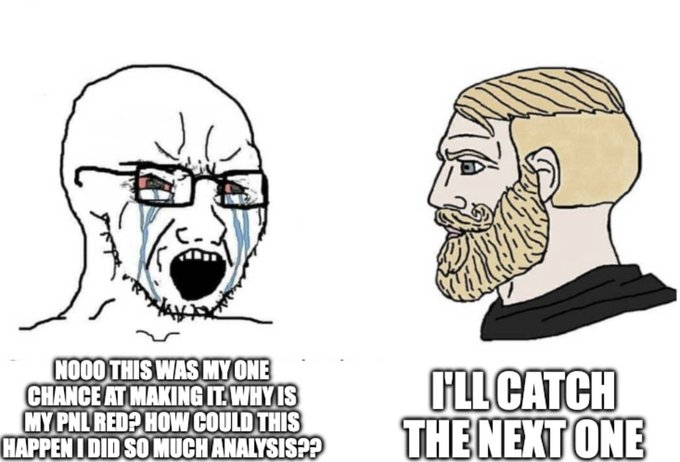
One approach builds wealth. The other breeds anxiety.
Why Everyone Makes Bad Decisions
The most expensive lie in crypto isn't "diamond hands" or "never take profit"—it's the idea that every trade has one correct answer.
Truthfully, I think we're just afraid. Afraid of missing out. Afraid of being wrong. Afraid that one misstep means such an opportunity will never come again.
This shows up everywhere. Traders you might call "maximizers" can't make clear decisions because each trade feels like it could change everything. They hold winning positions too long until they become losers. They sell winning positions too early, then watch them explode. They keep adding to positions without managing risk. They treat every decision as irreplaceable.
They're trading childhood trauma, not markets.
The True Cost of Narrow Thinking
Scarcity mindset doesn't just affect your trades—it shapes your entire relationship with money and opportunity.
I once had a 5x gain but couldn't bring myself to take profits. I watched it erode over three months until I was back at breakeven, paralyzed by fear of "selling too early." Yet I've also panic-sold positions up 30% that later went 10x, because my brain couldn't believe I deserved that wealth.
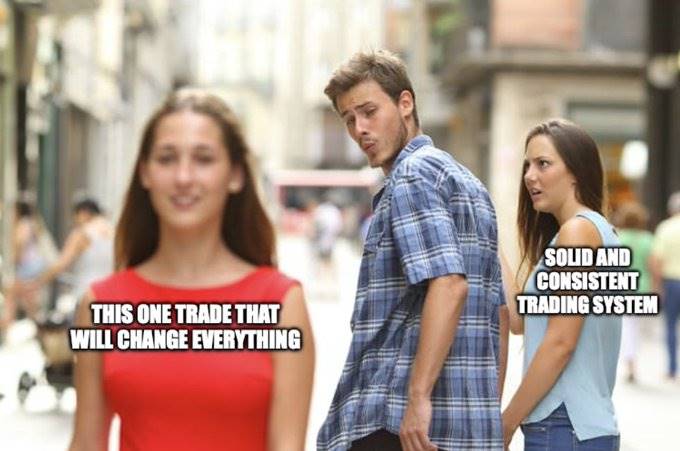
Scarcity mindset creates specific forms of self-sabotage:
Decision paralysis—you can't decide when to buy, sell, or hold because every choice feels like it could ruin everything. You freeze, unable to dynamically manage risk.
Binary thinking—you believe every trade must be either "diamond hands forever" or "take profit immediately." You can't scale positions because you don't trust yourself to make multiple right decisions.
Risk distortion—you either go all-in on one trade or avoid meaningful risk altogether. You miss the middle ground where real wealth accumulates.
Abundance Secret
The solution isn't necessarily therapy or meditation, though I find the latter helpful. The key is teaching your brain to see money as renewable, not finite.
Ask yourself: "What would someone with $10 million do in this situation?" I guarantee they wouldn't hold a stock through an 80% drawdown just because they "believe in the tech." But neither would they sell during the first 20% of a bull run out of fear of volatility.
Experienced large-cap traders don't emotionally attach to single trades. They focus on risk management and position sizing, not absolute gains. They prefer consistent decisions over perfect ones.
What Actually Works
I wish someone had told me this five years ago—and it's exactly what I see truly successful traders doing:
Think in ranges, not absolutes. Set multiple profit targets and risk levels before entering a trade. Don't let scarcity convince you there's only one right way.
Size your trades like you're already wealthy. If you had $1 million, would you risk 100% on a meme coin? Then why do it with your $10,000 account?
Practice dynamic risk management. Take profits when big gains appear. Add to winners when right. Cut losses when wrong. Don't treat every decision as permanent.
Calculate opportunity cost. Every dollar tied up in a stagnant trade means missed gains elsewhere. Every dollar panic-sold means lost compounding potential.
Compounding Effect
Abundant thinking makes you more money than scarcity thinking. The desperate pursuit of perfection in every trade usually results in fewer good trades overall.
When you start thinking abundantly, you make better decisions. You take profits at appropriate times. You let some winners run. You cut losses. You wait for quality setups. You stop revenge trading. You stop jumping into late-stage narratives out of FOMO.
All these small decisions compound. Instead of cycling through scarcity-driven booms and busts, you begin building steady, consistent wealth.
Markets reward patience, discipline, and strategic thinking—punishing desperation, greed, and emotional decisions. Your mindset determines which category you fall into.
Breaking the Cycle
I still struggle with this. Even now, with larger accounts and more experience, I sometimes catch myself making decisions from fear, not logic. Scarcity thinking runs deep.
But I've learned to recognize it. And I see the same pattern in every trader who transitions from chronic losses to consistent profits.
The first step is acknowledging your scarcity trap exists. It's not your fault—it's shaped by early experiences with money. But it's your responsibility to change it.
Heal and Win
Your relationship with money formed before you could walk—and every trade you make may be losing you money. Scarcity traps are poverty mindsets disguised as strategy.
I learned this the hard way. I've lost more money making terrible emotional decisions than logical ones. I've turned more winners into losers by overthinking than by following my plan.
I believe this pattern destroys traders more than any bad technical analysis or market crash.
Your childhood doesn't have to determine your trading fate. But you must recognize that your scarcity mindset is the real enemy—not the market, not whales, not manipulation.
Your brain breaks down, making you keep breaking.
Fix that first. Everything else is just strategy.
Join TechFlow official community to stay tuned
Telegram:https://t.me/TechFlowDaily
X (Twitter):https://x.com/TechFlowPost
X (Twitter) EN:https://x.com/BlockFlow_News
 @0xVKTR


