High-quality Data Hub: How Sapien Builds Truly Practical Web3 AI Solutions?
TechFlow Selected TechFlow Selected
High-quality Data Hub: How Sapien Builds Truly Practical Web3 AI Solutions?
Sapien's mission is not just to train machines, but to coordinate global intelligence so that AI truly serves the interests of all humanity.
 Navigating Web3 tides with focused insights
Author: TechFlow
When discussing GPT models, OpenAI CEO Sam Altman pointed out:
AI capabilities are directly dependent on the quality and diversity of AI training data. Poor data leads to model bias and errors; high-quality data is the foundation for building powerful AI.
However, despite this consensus, even OpenAI—one of the world’s most renowned AI companies—faces a severe shortage of high-quality AI training data. It's reported that the development of OpenAI’s next-generation flagship model, GPT-5 (internal codename Orion), is behind schedule, largely due to insufficient supply of high-quality text and data.
The importance of high-quality AI training data is self-evident: even the smartest model in the world yields meaningless results if fed low-quality input. Yet obtaining high-quality AI training data remains complex and challenging due to issues such as integrating data diversity, high costs of data labeling, and extremely stringent requirements for accuracy and expertise in certain niche domains.
It is precisely for this reason that Sapien, having raised $10.5 million in funding and boasting 1.2 million registered users across more than 110 countries, is demonstrating its critical value in the intensifying global AI development race.
As a decentralized data platform, how exactly does Sapien leverage Web3 to build a unique reputation system and decentralized governance structure, incentivizing global users to contribute lower-cost, precise, and verifiable high-quality data for AI advancement?
Before mainnet launch and TGE, how can users participate more efficiently in this AI data revolution, earn rewards, and accumulate greater ecosystem equity?
As积分 tasks deepen, let’s explore Sapien’s approach.

Partnering with Alibaba, Amazon: Delivering Real-World Web3 Data Solutions
During the past two years of the Crypto + AI boom, you may have encountered many Web3 AI data projects. Most use "blockchain" and "AI" as buzzwords to attract market attention and capital investment, but only a handful have truly solved real problems or achieved deep integration between technology and application—leading to growing skepticism toward Web3 AI data initiatives.
Real adoption, however, is what sets Sapien apart from other Web3 AI projects.
As an open, scalable, and decentralized data platform, Sapien has moved beyond concept into real-world implementation, empowering AI optimization across multiple practical applications through high-quality data provision.
Since its inception in 2023, Sapien has demonstrated strong growth potential and market validation within less than two years, with continuous rapid expansion in both user base and business scale: it now has over 1.2 million registered users across 165 countries/regions, with more than 100 million data tasks completed on the platform.
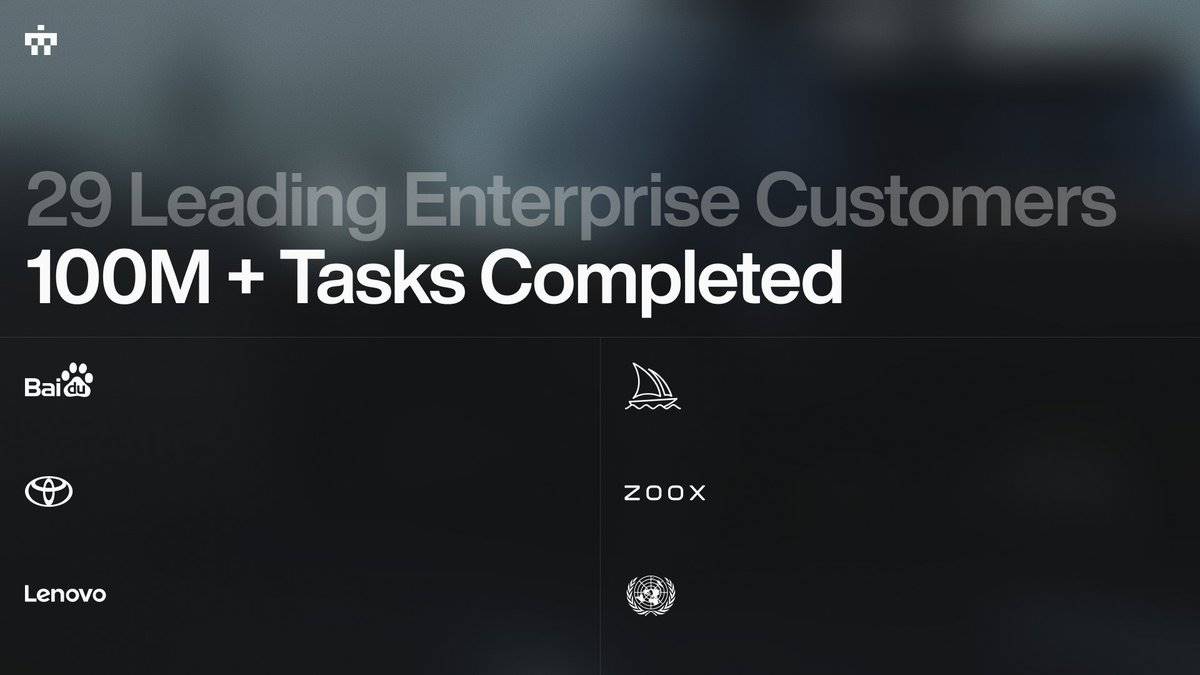
On the enterprise collaboration front, Sapien also stands out. To date, Sapien has established deep partnerships with 27 enterprise clients, including Web2 giants like Amazon, Toyota, Alibaba, Baidu, and Lenovo. These collaborations not only validate Sapien’s technical capabilities and commercial value but also lay a solid foundation for its future growth.
Certainly, the journey from clever Web3 conceptual integration to real-world multi-scenario deployment is powered by a team of AI experts and crypto elites with deep insights into AI industry pain points and a strategic vision for Web3 AI’s potential.
Rowan Stone, founder and CEO, brings extensive blockchain experience, having been one of the key contributors to Coinbase’s Layer 2 project Base. Now focusing on artificial intelligence, he aims to enable knowledge sharing and connection through Sapien, fueling further AI development.
Trevor Koverko, co-founder of the on-chain digital securities platform Polymath, made pioneering contributions in tokenizing real-world assets. As Sapien’s Chief Strategy Officer (CSO), he focuses on applying decentralized trust models to AI, promoting trustworthy and transparent AI development.
Henry Chen brings rich market operations experience, serving as COO at Haller.ai (now publicly listed) and previously driving growth at tech unicorns including ClickUp, SAS, and Xsolla. As Sapien’s COO, he leads market expansion strategy and drives global growth.
Kelly Ryan, a University of Waterloo graduate, is an experienced product and engineering leader who previously worked at FastAF, a startup backed by $80 million. As Sapien’s CTO, she leads technical architecture and product development, providing robust support for platform innovation.
Leveraging the exceptional capabilities and collaborative spirit of this elite team, Sapien excels not only technically and commercially but has also earned strong recognition from institutional investors. In October 2024, Sapien secured $10.5 million in seed funding led by Variant, with participation from Primitive Ventures, Animoca, Yield Game Guild, and HF0.

Accumulating massive users and partners to drive Web3 AI from concept to real-world deployment while gaining investor backing stems from Sapien’s clear business model and sophisticated operational logic. But how is this actually achieved?
Connecting Data Contributors, Annotators, and AI Projects: Building a High-Quality Data Hub
When it comes to Web3 AI data services, many immediately form a stereotype: Is this just a token-economy-driven data labeling platform?
It’s important to clarify: data labeling is part of Sapien’s offerings, but its services go far beyond that.
In short, Sapien’s core operation revolves around “high-quality data.”
Users can contribute in two primary ways:
First, data contribution: Users can submit various types of data—including text, audio, images, video, and even specialized professional knowledge. Beyond general data, Sapien’s contribution system offers customized data services. For example, medical AI requires highly accurate and professional training data; doctors can contribute medical data via Sapien to advance medical AI and receive rewards. With a user base of 1.2 million, Sapien provides fresh data resources for AI development across industries.
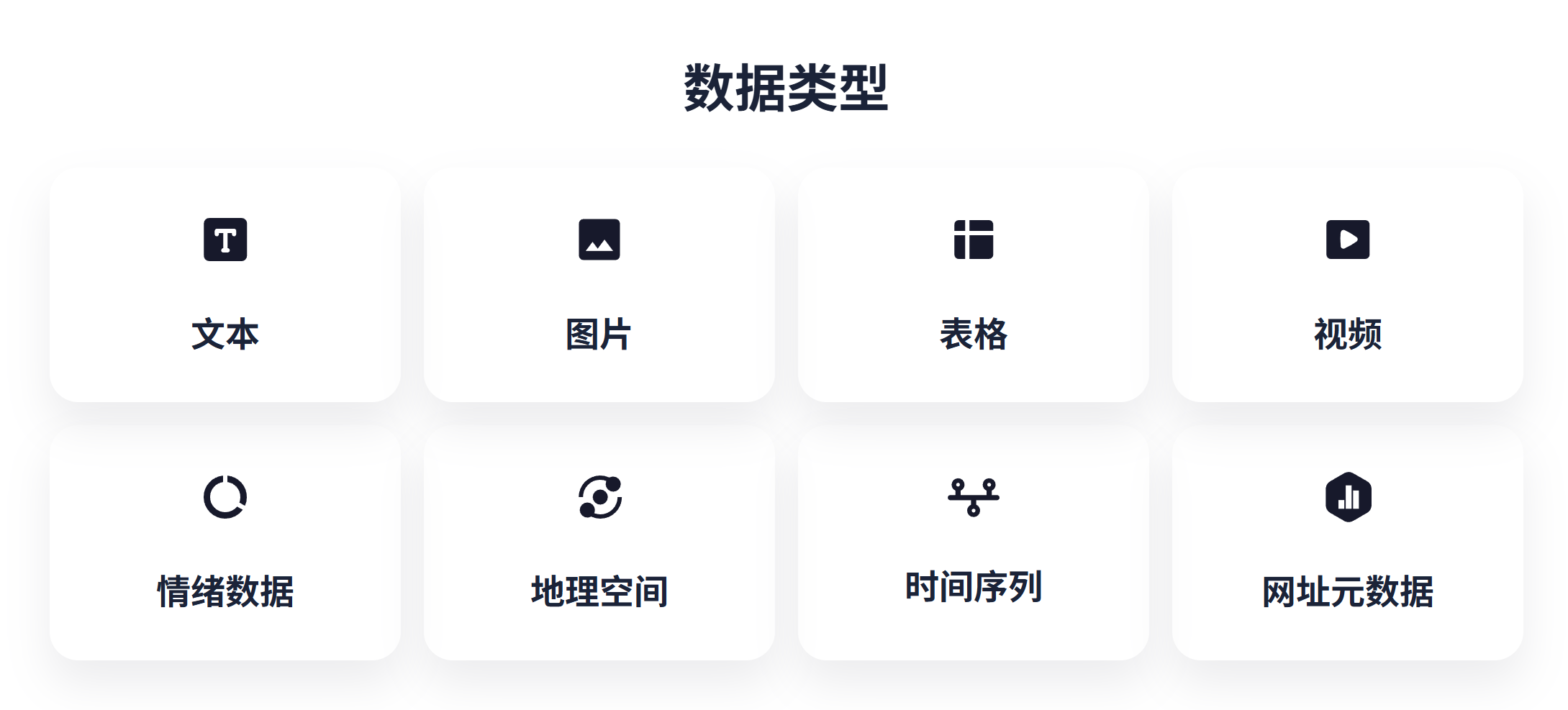
Second, data annotation: Anyone worldwide can participate in a decentralized manner. This contribution is similar to data labeling but more advanced, as Sapien combines artificial and human intelligence to collect and annotate all types of inputs for any model, enhancing AI’s perception and understanding of language and context.
For instance, when annotating text data, Sapien supports generating question-answer pairs based on context and content, enabling chatbots to deliver seamless, natural responses. By adding sentiment annotations—positive, negative, or neutral—it further deepens AI comprehension.
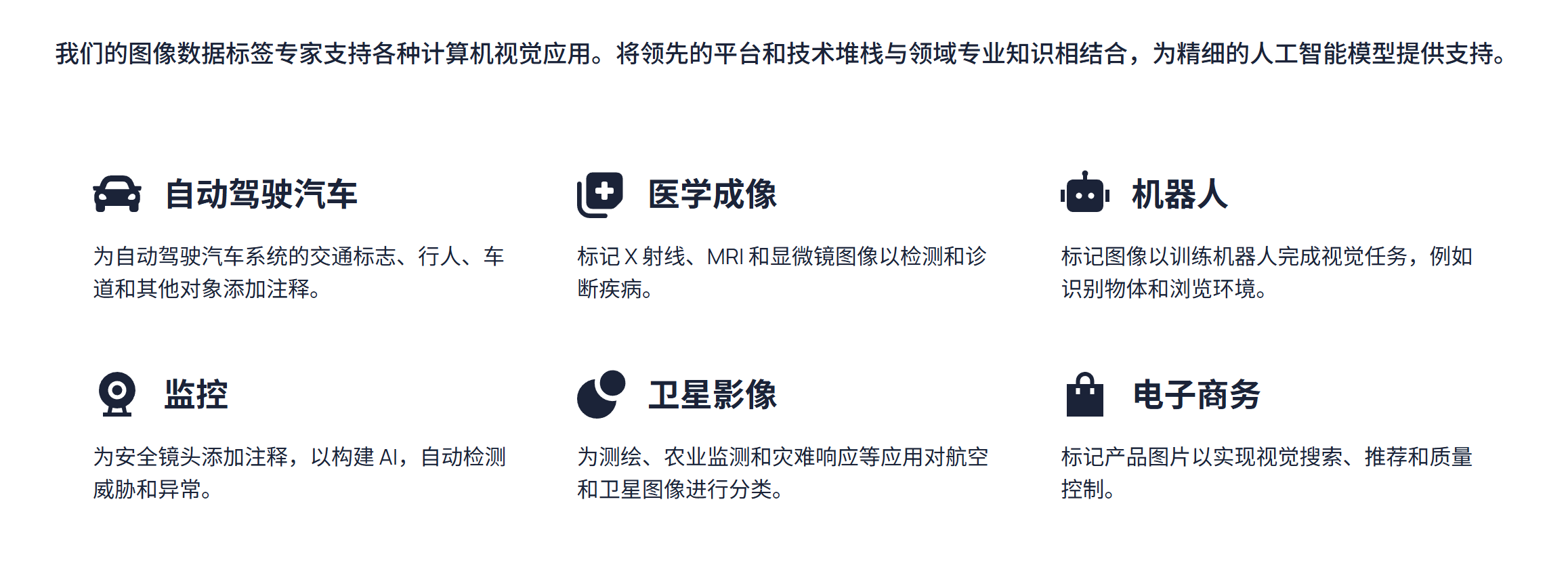
Similarly, Sapien enables identification and differentiation of objects, features, or regions within images, categorizing them—for example, labeling people, cars, and buildings in a photo. This higher-dimensional data processing delivers superior-quality data for AI training.
A vivid case study illustrates the uniqueness of Sapien’s data: In autonomous driving, Toyota provided Sapien with datasets from self-driving vehicles. Sapien users reviewed and annotated these 3D data points, helping models understand the vehicle’s position in time and space and the surrounding environment, enabling safer navigation.
Based on this high-quality data foundation, Sapien seamlessly connects data contributors, processors, and AI projects, becoming a central hub and distribution point for AI industry data resources and high-quality AI datasets:
-
For data contributors: Anyone can upload data, contribute to AI progress, and earn rewards;
-
For data processors: Anyone can participate in data processing, contribute to AI development, and be rewarded;
-
For AI projects: Access higher-quality data at lower cost, accelerating AI development.
Meanwhile, leveraging blockchain, all contributions are recorded and managed on-chain, ensuring fair pay-for-work distribution and eliminating inequities caused by middlemen exploitation.
Sapien’s May report, *Unlocking China’s AI Data Market: Trends, Challenges, and Opportunities*, also emphasizes: The foundation of any powerful AI system lies in the data used to train it. High-quality data holds vast application potential in automatic speech recognition (ASR), financial activities, autonomous vehicles, robotics, edtech, and large language models (LLMs).
Given this logic, ensuring high-quality data contributions and broadly motivating diverse participants become core challenges for Sapien’s platform success.
All of this is further enabled through a decentralized task platform built on the SPN token.
Staking, Validation, Matching: Higher Quality, Higher Rewards
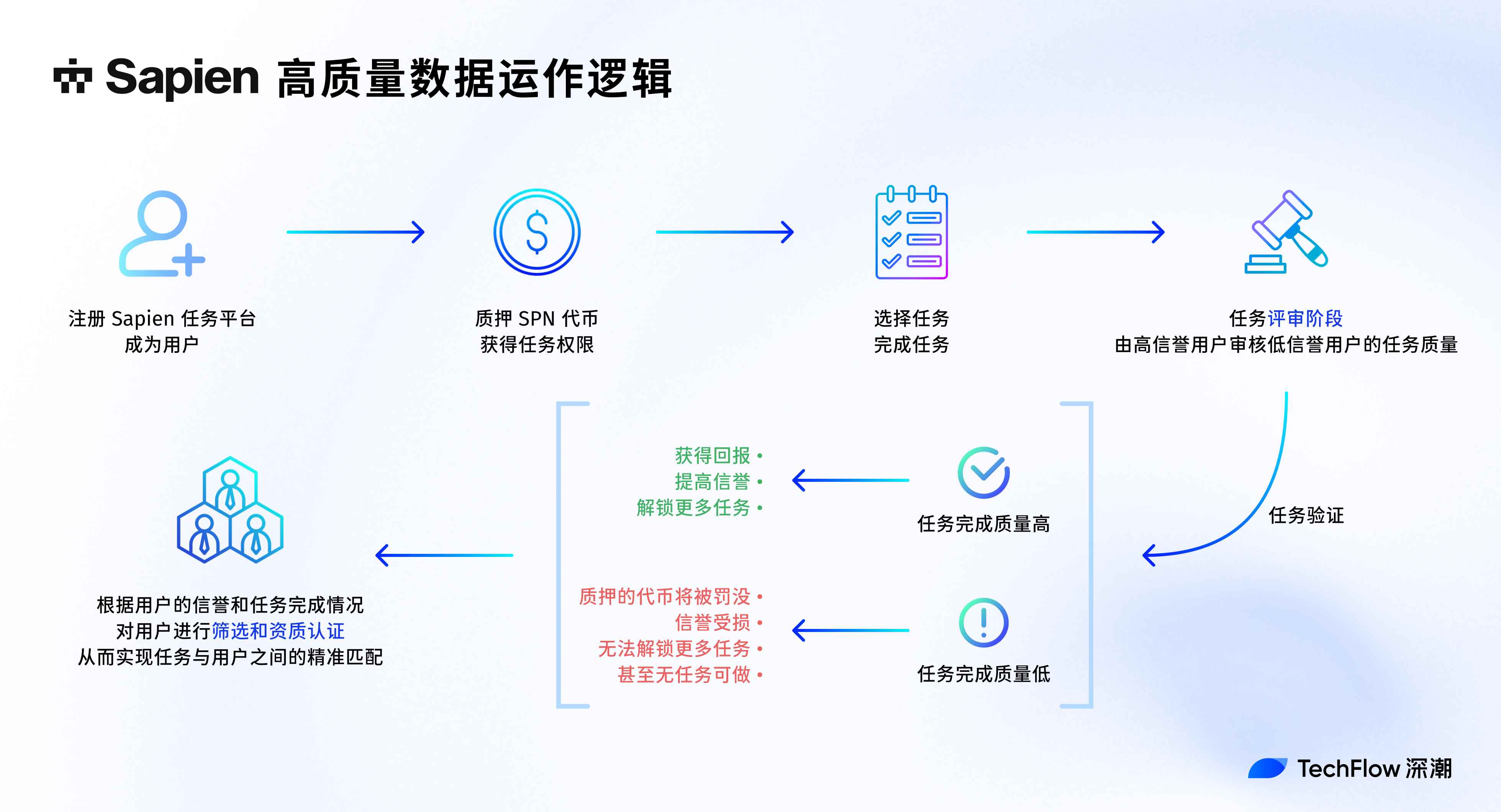
In simple terms, the core logic of Sapien’s decentralized task platform is: register → select task → complete task → earn reward.
The SPN token, Sapien’s native token, plays a vital role in ecosystem incentives.
How does Sapien ensure users genuinely complete tasks with high quality? Sapien addresses this through staking mechanisms and an on-chain reputation system.
To participate in tasks, users must stake SPN tokens as collateral;
After task completion, submissions enter a peer-review phase, where high-reputation users evaluate the work of lower-reputation users;
If task quality is high, users receive rewards and improve their reputation;
If quality is low, staked tokens are slashed, and future task access is restricted;
Through continuous evaluation of user performance, a comprehensive on-chain reputation system emerges: On one hand, users with higher reputation unlock more tasks and greater rewards, creating a positive feedback loop that attracts more users striving to improve their standing; on the other hand, based on reputation and task performance, Sapien screens and certifies users to build clearer user profiles, enabling precise matching between tasks and users, thereby enhancing overall ecosystem efficiency.
The scale of 1.2 million registered users globally and adoption by dozens of top enterprises already strongly validates the feasibility of Sapien’s high-quality AI training data solution. So, before mainnet and TGE go live, how can one best get involved?
Cookie x Sapien Special Campaign Live: Earn Points to Accumulate Airdrop Eligibility
Sapien has just concluded Phase Three of the Sapien Squad campaign, which collaborates with top projects in the Ethereum and Base ecosystems—including Uniswap, AAVE, Morpho, and Pendle. Registered Sapien users holding qualifying tokens at snapshot time may earn badges and gain eligibility for allied airdrops.
No need to worry if you missed Sapien Squad Phase Three—before TGE, the most direct way to participate is earning points by completing tasks.
Currently, users can earn points through three sections on the Sapien website: Task Dashboard, Points Dashboard, and Training Center.
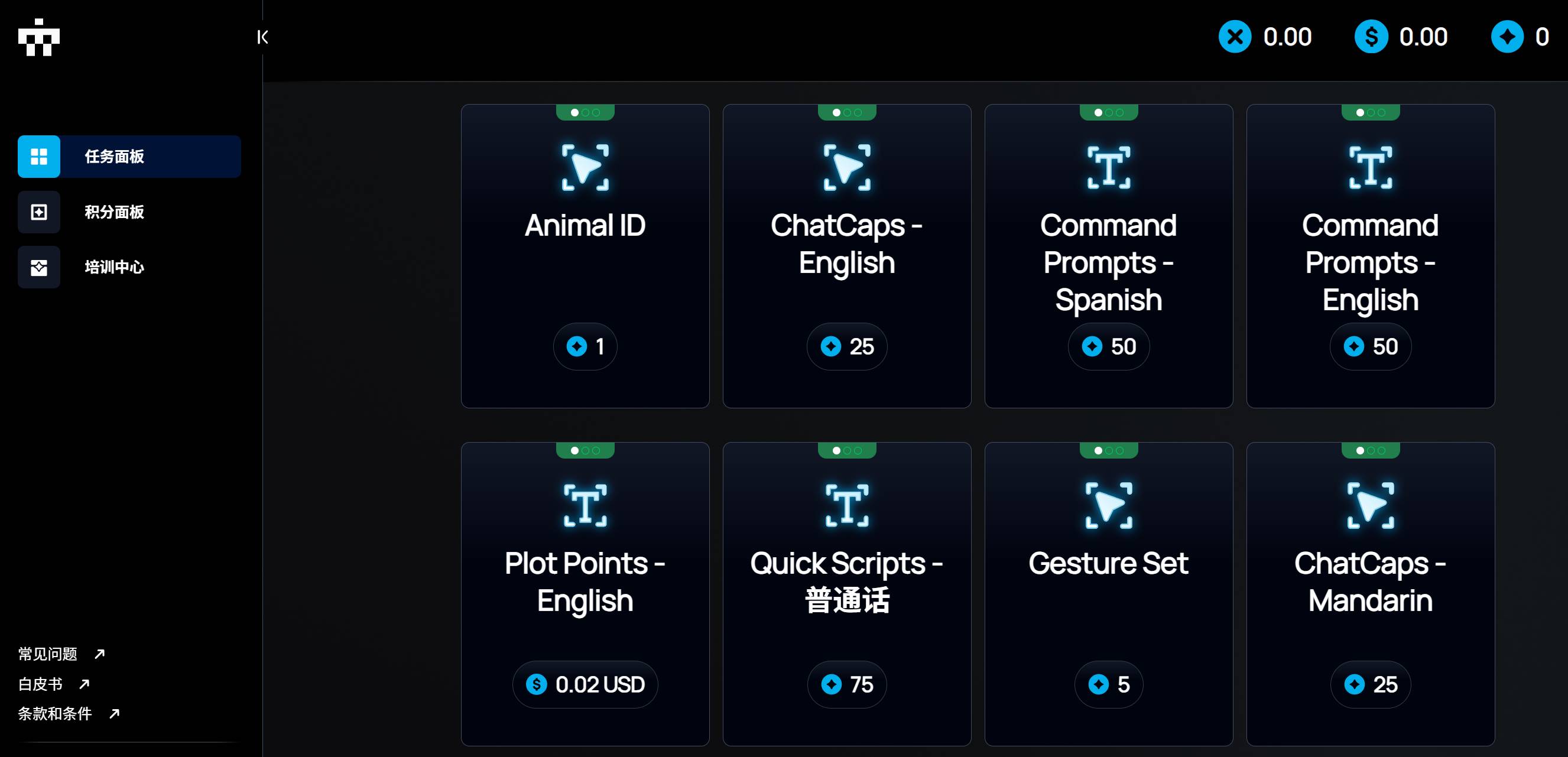
The Task Dashboard displays available data tasks. Users can choose tasks based on time, type, and point value. More tasks will continuously be added in the future.
The Points Dashboard guides users to learn more about Sapien. Tasks like following Twitter, linking Twitter, connecting Farcaster, or binding World ID offer 100–500 points each.
The Training Center provides beginner-friendly videos and tutorials. Watching them earns bonus multipliers and additional points.
Points serve as proof of participation in Sapien and as eligibility for future SPN token rewards, redeemable for SPN tokens upon official TGE.
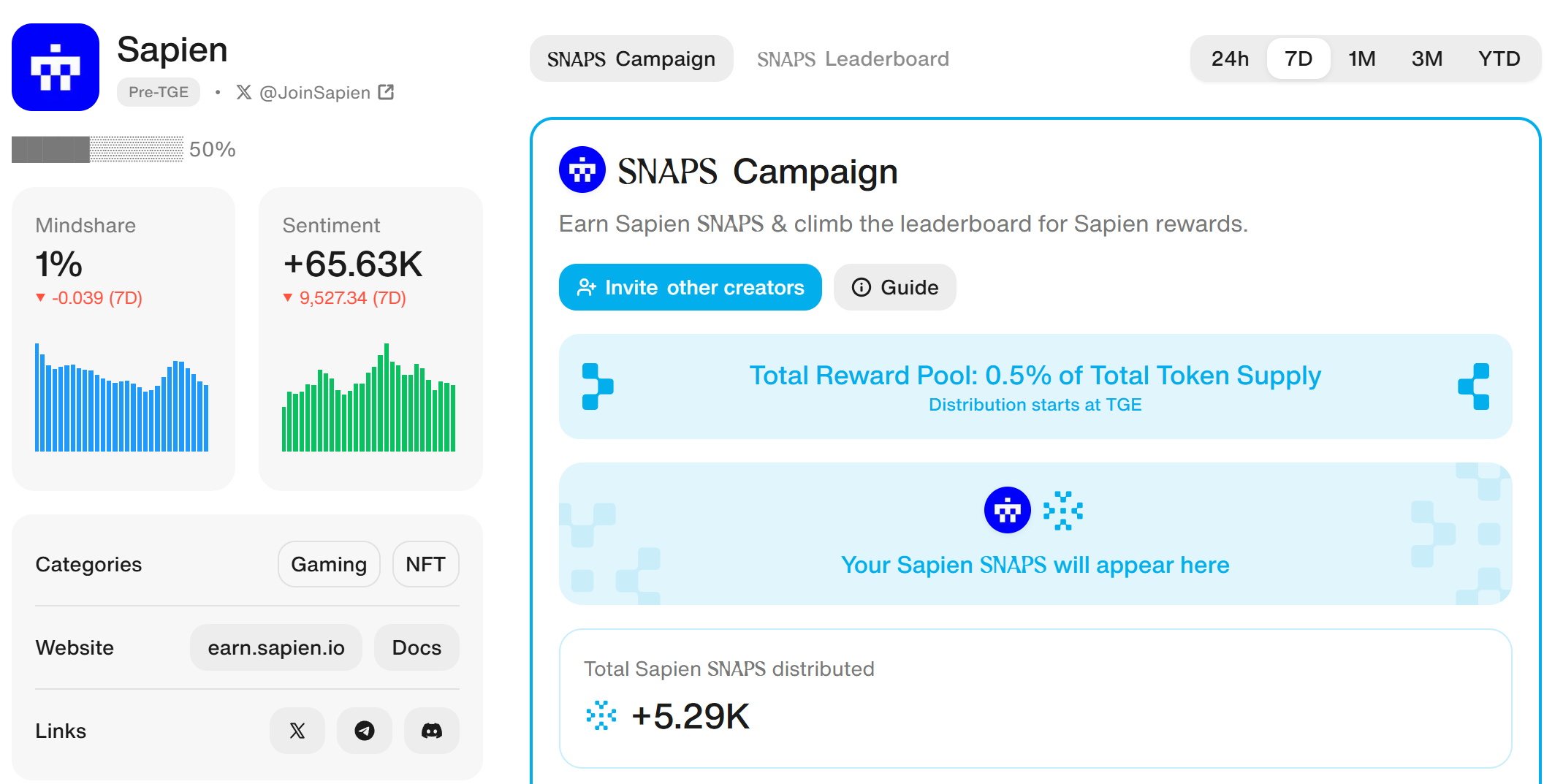
Meanwhile, the Sapien-themed SNAPS campaign on Cookie DAO is currently live. After registering on Cookie.fun, users can post tweets on X featuring #Sapien and #snaps to promote Cookie DAO and Sapien, expand project visibility, and collectively share 0.5% of the SPN token supply.
In addition, to ensure orderly, healthy, and sustainable ecosystem growth, Sapien has implemented an invitation-fueled growth mechanism and staking rewards.
Under the staking mechanism, longer lock-up periods yield higher point multipliers: 1-month lock-up grants a 1.05x multiplier; 3 months grants 1.10x; 6 months grants 1.25x; and 12 months grants 1.50x.
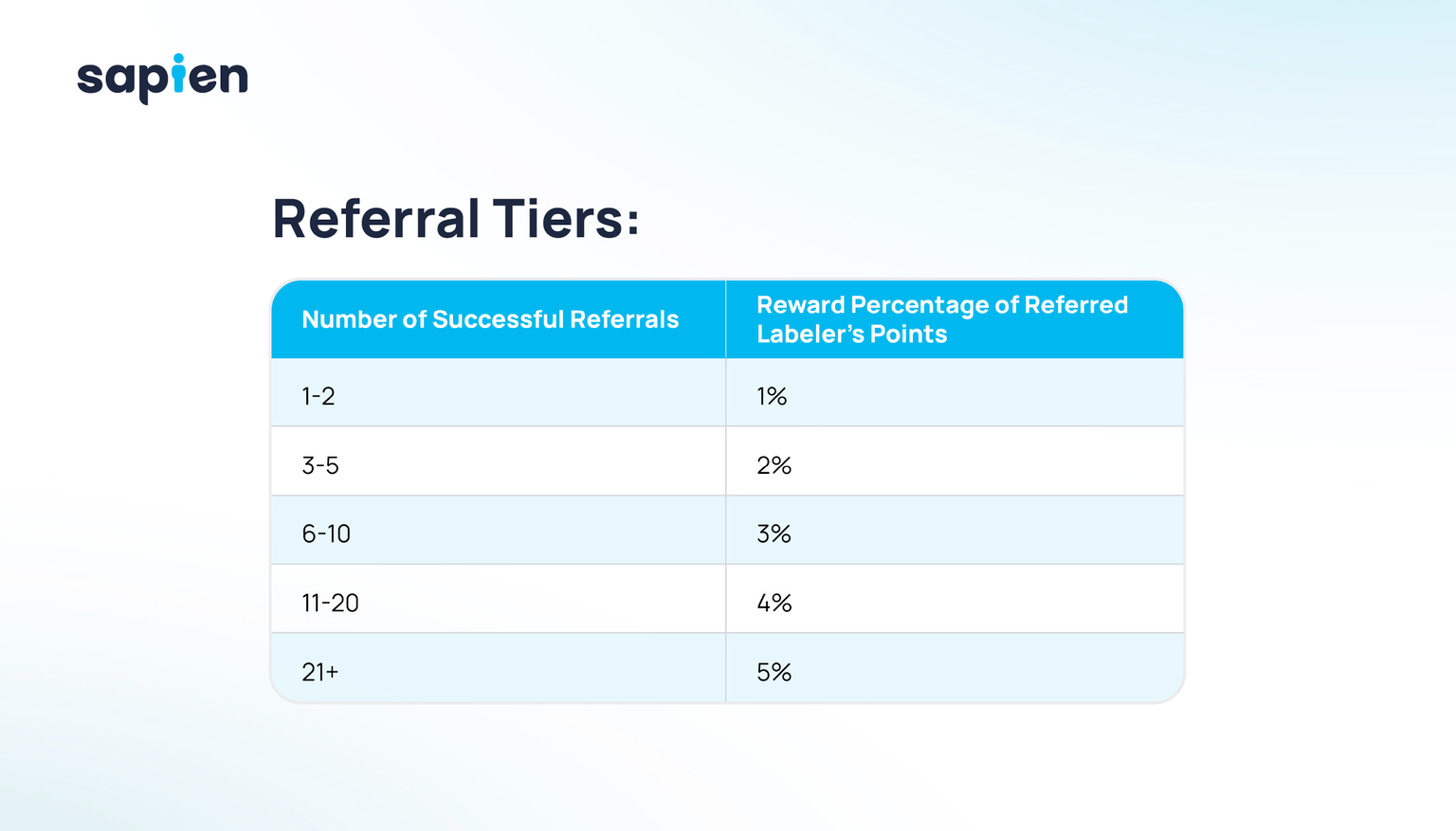
In the referral program, the more new participants a user invites, the higher their rewards—up to 5% of their referees’ earnings.
Conclusion
Data is the new electricity—an undeniable truth.
Sapien, dedicated to providing high-quality AI training data for AI advancement, acts as a power station in this data revolution. Using decentralization to encourage global participation in data contribution and rewarding quality work, Sapien solves the AI data dilemma. Its mission goes beyond training machines—it seeks to orchestrate global intelligence so that AI truly serves humanity’s collective interests.
Notably, on July 7, 2025, Sapien announced a brand refresh. Visiting Sapien’s official X profile, the progress bar in the bio was updated from 40% to 50%, leading many community members to speculate it hints at a major milestone—possibly mainnet launch and TGE.
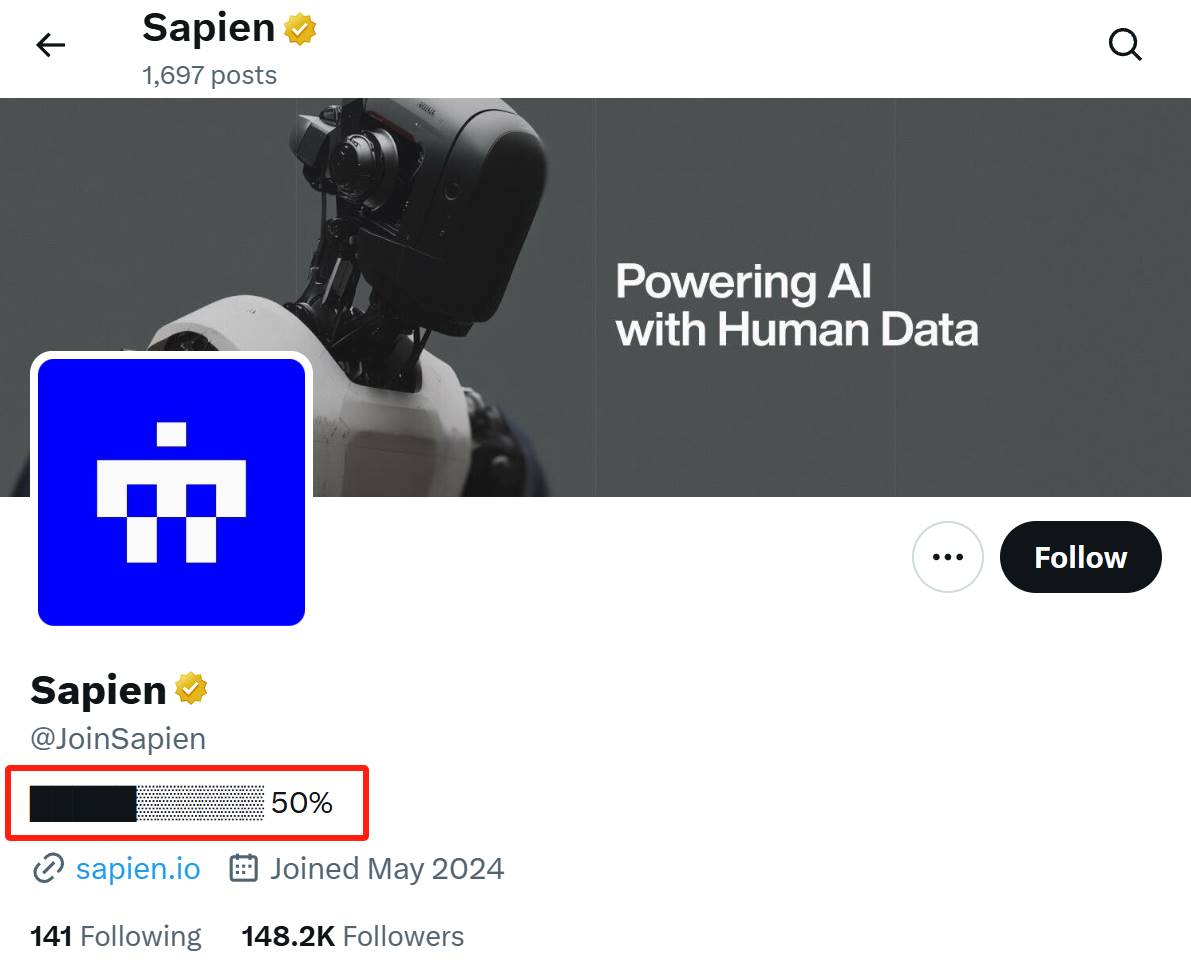
According to Sapien’s roadmap disclosed in official documentation, 2025 will be a pivotal year. Key priorities include mainnet launch (featuring the reputation system and user certification), token TGE (Token Generation Event), continued growth of data contributors within the ecosystem, and attracting more enterprise partners. With brand renewal underway, the积分 program progressing steadily, and the ecosystem expanding, we look forward to Sapien redefining the rules of data sharing and value creation through high-quality data, emerging as a key force in advancing AI.
Join TechFlow official community to stay tuned
Telegram:https://t.me/TechFlowDaily
X (Twitter):https://x.com/TechFlowPost
X (Twitter) EN:https://x.com/BlockFlow_News
 深潮TechFlow