On-site investigation of stablecoins in Huaqiangbei: Buying starts at 50,000 coins, with gray areas
TechFlow Selected TechFlow Selected
On-site investigation of stablecoins in Huaqiangbei: Buying starts at 50,000 coins, with gray areas
Only a few merchants indicated they would use or try using stablecoins for transactions.
 Navigating Web3 tides with focused insights
By Cao Yuan, 21st Century Business Herald
In today's foreign trade landscape, an increasing number of merchants have started noticing the use of stablecoins for cross-border payments.
Earlier, reporters from the 21st Century Business Herald visited Yiwu—the "world’s largest wholesale market for small commodities"—to investigate local merchants’ usage of stablecoins. It was found that most merchants had never heard of stablecoins or lacked understanding of them; some raised concerns about compliance and costs; only a few individual businesses accepted stablecoin payments.
Similarly, in Shenzhen’s Huaqiangbei, known as China’s “Electronics First Street,” which hosts a vast electronics components trading hub and attracts numerous global suppliers and buyers,
Recently, reporters conducted on-site visits to five major shopping malls in Huaqiangbei—including SEG Electronics Market, SEG Communication Market, Modern Window Digital Plaza, Yuanwang Digital City, and Longsheng Accessories City—covering dozens of densely packed stores across these locations. Simultaneously, over 20 Huaqiangbei merchants were consulted online to understand their adoption of stablecoin transactions: only a handful indicated they used or had tried using stablecoins, while the majority said they were unfamiliar with stablecoins.
Stablecoins refer to cryptocurrencies whose value is pegged to fiat currencies. Taking USDT—the largest stablecoin by market size—as an example (commonly abbreviated as “U”), 1 USDT is pegged to 1 USD. This year, driven by legislative progress in the U.S. and Hong Kong, the stablecoin sector has gained global momentum.
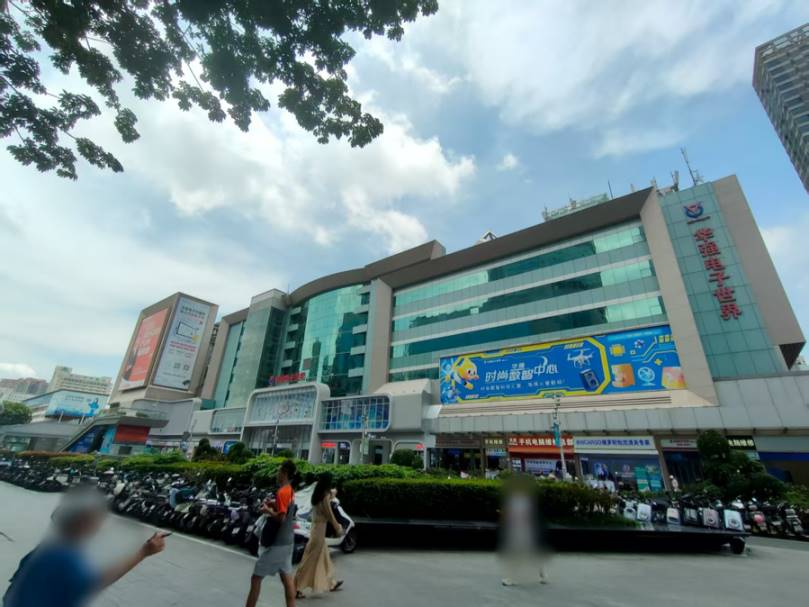
Shenzhen's Huaqiangbei, China's "Electronics First Street" (Photo/Cao Yuan)
A Few Merchants Express Interest in Experimentation
During the field investigation by 21st Century Business Herald reporters, a few individual merchants in Huaqiangbei said they either used or were considering using stablecoins for transactions. One merchant dealing in 3C electronic products said, “People around me are trading cryptocurrencies. I’m considering receiving overseas payments via stablecoins, but haven’t completed any such transaction yet.”
Besides physical visits, reporters randomly contacted more than 20 Huaqiangbei merchants online, among whom two stated they could accept stablecoin payments. A stablecoin exchange provider told reporters online, “Some foreigners often ask if they can pay with stablecoins because it’s convenient.”
The majority of interviewed merchants in Huaqiangbei said they “don’t know what stablecoins are.” Even among those who had heard of stablecoins, many believed they had no relevance to their daily operations.
A merchant primarily selling hair dryers said, “Foreign customers mostly still pay in cash or Alipay. My latest large overseas remittance was $30,000, transferred through someone else via Alipay.”
Another merchant specializing in CPUs said, “We only use legal tender; we’ve never used stablecoins.” A graphics card dealer asked the reporter, “Is a stablecoin the same as Bitcoin? What use would it be for me?”
Reporters also consulted staff at two malls in Huaqiangbei, both responding, “As far as I recall, no merchants here use stablecoins—I’ll need to check further.”
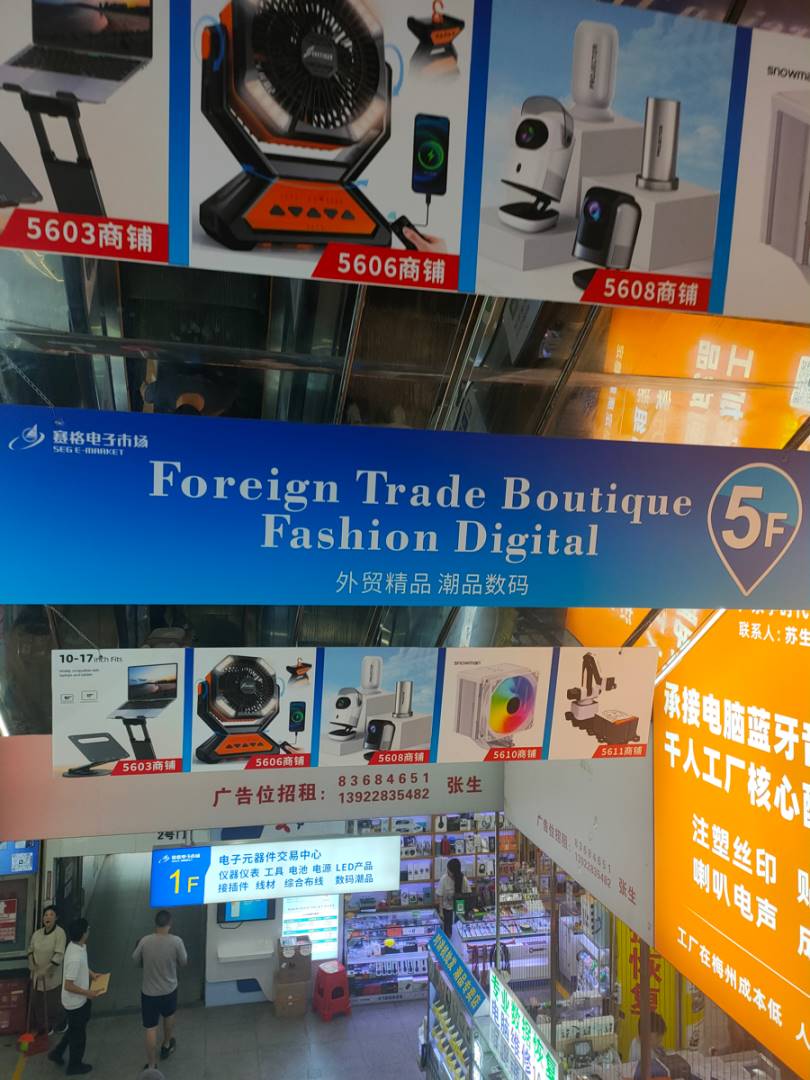
SEG Plaza in Huaqiangbei (Photo/Cao Yuan)
Even when a few merchants express willingness to receive stablecoin payments, converting received stablecoins into cash remains in a gray area, typically handled through so-called “U dealers.” These “U dealers” refer to virtual currency exchangers or OTC (over-the-counter) traders in the crypto community. They mainly operate in cryptocurrency markets, earning profit margins by providing exchange services between stablecoins like USDT (“U”) and fiat currencies.
The investigation revealed that different “U dealers” set various thresholds for accepting “U,” primarily focusing on large-volume trades. One dealer directly told reporters, “We don’t handle small amounts—we focus on bulk transactions. We start at 50,000 U in physical cash, and can process several thousand U at a time.” (i.e., minimum acceptance of 50,000 USDT tokens paid in cash). However, another “U dealer,” upon learning the reporter wanted to sell U, said, “You can come directly for an in-person transaction.”
Regarding exchange rates, taking USDT as an example—since 1 USDT is pegged to 1 USD—most “U dealers” buy U slightly below the day’s official exchange rate, with some adding extra service fees. “Buy low, sell high compared to market prices,” one “U dealer” explained simply. Another “U dealer” broke it down: “I don’t have a price list—everything’s fixed. For instance, if you bring me 100 stablecoins worth $100, I’ll give you $97 in cash, plus a handling fee of ¥0.03 per coin.”
Who are the downstream recipients of these “U dealers”? Who ultimately absorbs the stablecoins they collect? One such dealer said, “Part of it we list on exchanges to sell, and sometimes other peers buy from us.”
Compliance Risks Must Be Guarded Against
Are some merchants noticing stablecoins—or even using them—for international trade?
Tianyang Technology, dubbed a “stablecoin概念股 (concept stock),” summarized investor questions by pointing out traditional pain points: first, uncertain arrival times depending on counterpart bank routing within SWIFT; second, non-transparent fees influenced by intermediary banks involved; third, lack of real-time transaction status visibility—despite SWIFT offering paid tracking services, neither sender nor receiver currently knows the exact progress of funds.
Stablecoins do offer certain advantages in cross-border settlement. “The biggest difference between stablecoins and other cryptocurrencies is their linkage to fiat currency, making them relatively stable. This reduces their financial investment appeal while highlighting their utility in payment settlements,” said a source from the transaction banking department of a bank. “Stablecoins bypass the traditional SWIFT banking system, enabling peer-to-peer transactions over blockchain networks. However, this is currently illegal on mainland China.”
It must be emphasized that using stablecoins for foreign trade settlements within China carries significant compliance risks.
“Currently, using virtual currencies for cross-border payments domestically is definitely not allowed,” stressed Zeng Jie, senior partner at Guangqiang Law Firm and director of its Illegal Fundraising Defense & Research Center, speaking to reporters. Recently, authorities in Shenzhen and Beijing issued risk alerts warning against illegal fundraising schemes disguised under the guise of stablecoins.
Furthermore, regarding “buying U / selling U” transactions, Zeng Jie noted this essentially relates to how virtual currency trading itself is legally defined. Personal investment and trading of virtual currencies, if consistent with public order and good customs, constitutes private asset transactions rather than business operations, and thus falls within legally protected personal property rights.
Join TechFlow official community to stay tuned
Telegram:https://t.me/TechFlowDaily
X (Twitter):https://x.com/TechFlowPost
X (Twitter) EN:https://x.com/BlockFlow_News