Ethereum's New Vision
TechFlow Selected TechFlow Selected
Ethereum's New Vision
The ultimate goal is to make Ethereum a robust network.
 Navigating Web3 tides with focused insights
Author: francesco
Translation: Block unicorn
Introduction
In recent years, Ethereum has stood at a crossroads.
Growing criticism has led to leadership changes within the Foundation, with hopes for broader scrutiny, greater transparency and engagement, and a renewed focus on value capture at the L1 layer.
In the past, it was rare to see an executive director actively participating in multiple panel discussions at Ethereum conferences. This week, I was pleased to see Tomasz K. Stańczak, Co-Executive Director of the Ethereum Foundation, engaging as widely as possible in events and panels.
This is truly refreshing and hopefully signals the direction of things to come.
So... what is Ethereum's vision for the future?
And how can we ensure this vision is well executed?
This article provides an overview of Ethereum’s vision.
Objectives
To build a structured vision, we must start with objectives.
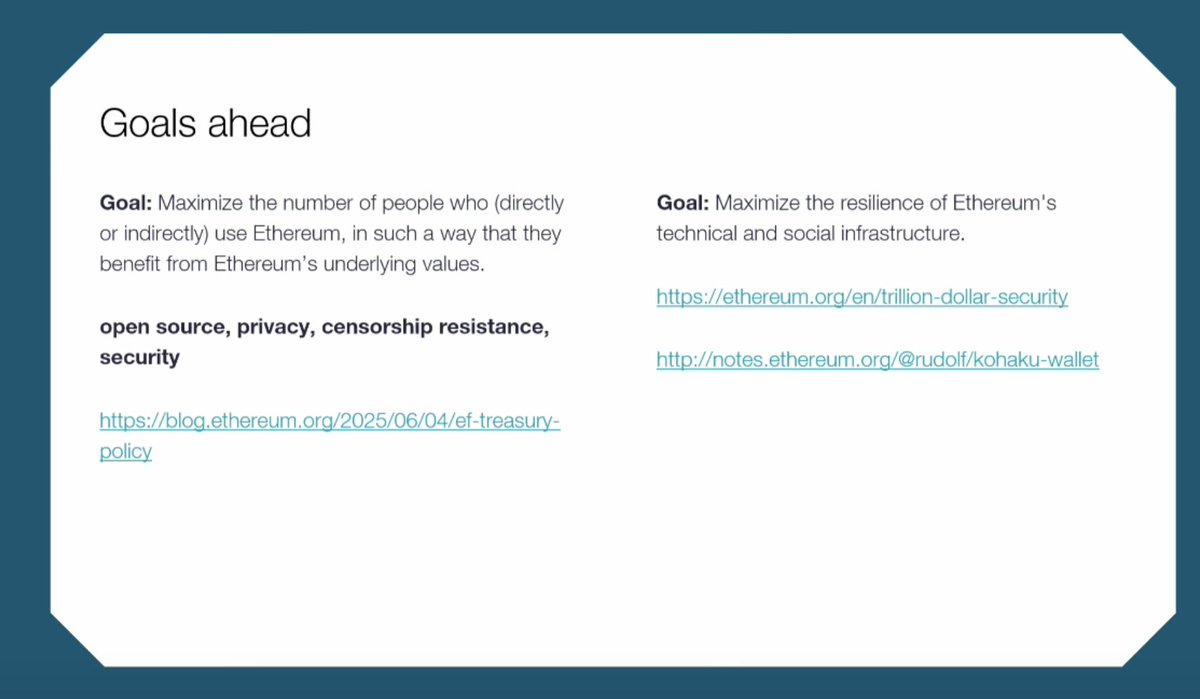
The main objectives for Ethereum are as follows:
1. Return to the spirit of crypto by protecting privacy and trustlessness.
It’s not just about attracting new users—it’s about ensuring they can embrace these values and build upon them.
Build—yes—but with purpose and values.
2. Ensure Ethereum remains the most secure and resilient blockchain infrastructure.
This aligns with Vitalik’s post on “trillion-dollar security.”
It’s part of a broader conversation about security:
-
How do we enhance Ethereum’s security?
-
How do we effectively communicate this to users?
-
How do we ensure institutions and users fully leverage this strength?
Above all:
How do we ensure that all technical developments continue to uphold Ethereum’s core ethos and values? No shortcuts. No compromises.
Recently, many have criticized Ethereum and felt somewhat alienated from its developers.
However, this appears poised to change.
In fact, we can expect the Ethereum Foundation to adopt a slightly more proactive stance, introducing new funding policies. As Thomas noted, these will be used to explore efficient and sustainable DeFi protocols and allocate funds strategically—shifting from a passive approach to guided stewardship.
This is just one of several challenges that will profoundly impact Ethereum’s long-term future, including:
-
Regulatory clarity
-
AI adoption
-
Privacy concerns
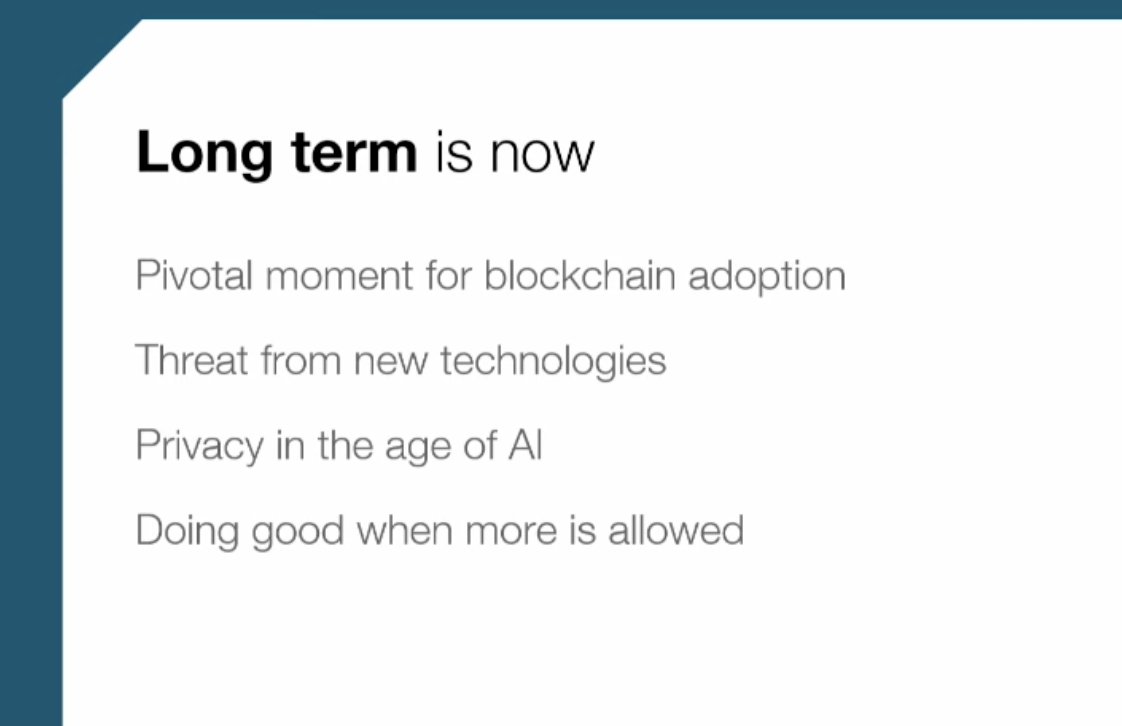
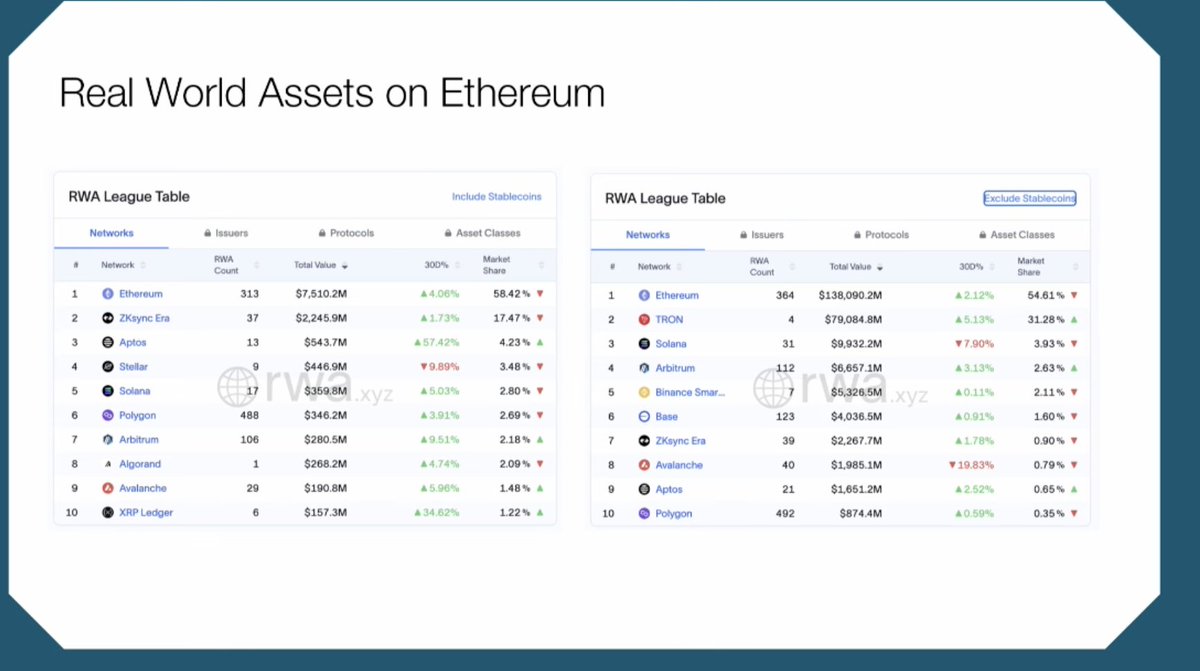
Among these, a key aspect and near-term trend is increased institutional adoption.
Ethereum’s future vision involves treating various domains and industries as modular components—open-sourcing them and removing intermediaries.
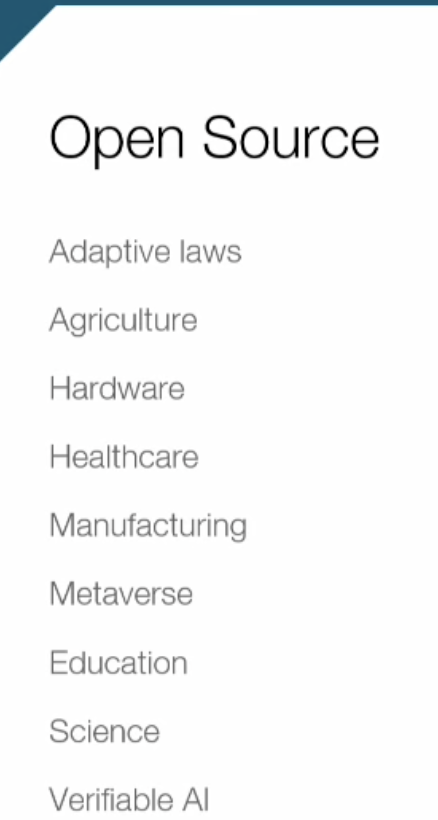
These modules will in turn enable a smooth transition from Web2 to Web3, eliminating friction between institutions.
Imagine health agencies across different countries openly contributing to shared health data repositories—all secured through interactions on the Ethereum chain, guaranteeing the safety and verifiability of these solutions.
The ultimate goal? Enabling users to trade all global assets on-chain.
Challenges
Yet, to achieve this, Ethereum must address some major challenges and user confusions.
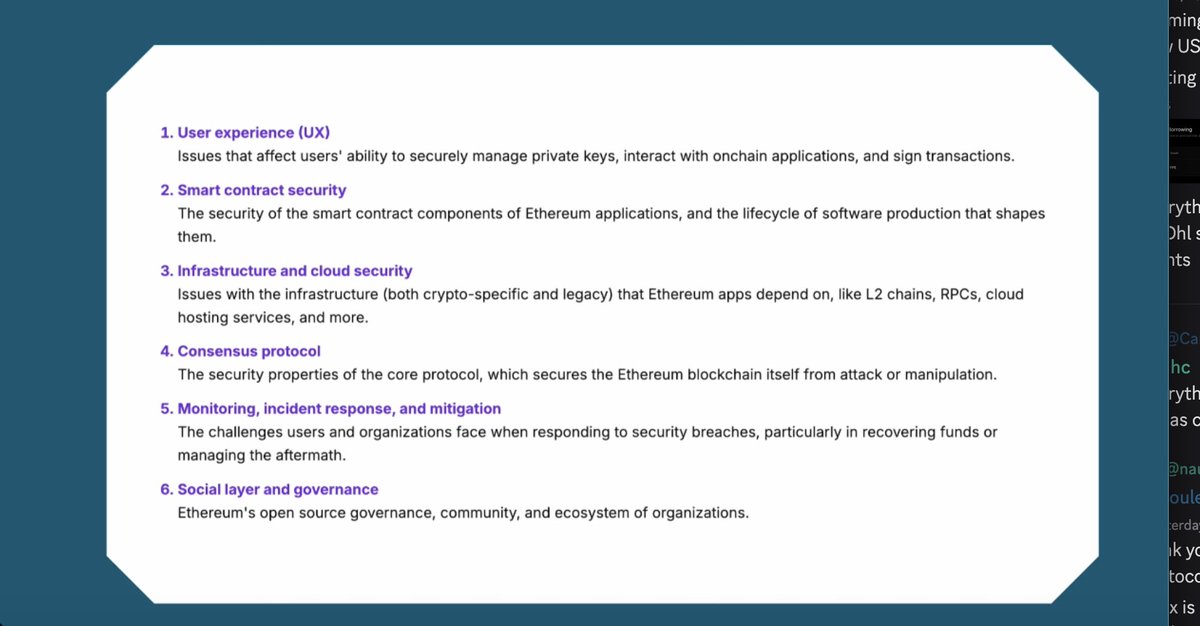
Hence, the focus moving forward will be on tackling key issues around on-chain privacy and identity, while countering AI threats by positioning Ethereum as a trusted execution layer for artificial intelligence.
-
Trustless neutrality
-
Globalization
-
Privacy and security by design
All of this will create a diverse environment and establish a social structure enabling different participants to collaborate—the end goal being an antifragile Ethereum network.
To truly resist centralization, global participation must be ensured, incorporating diverse voices and approaches to build a genuinely global network.

This would allow Ethereum to listen to critical topics and empower diversity and inclusion.
It’s also refreshing to hear about the so-called tension between L1 and L2s—now clearly dismissed by the Ethereum Foundation as non-existent.
Instead, Ethereum will take a more active role in guiding how these L2s reach stage two, using Ethereum as the foundational base layer to protect users.
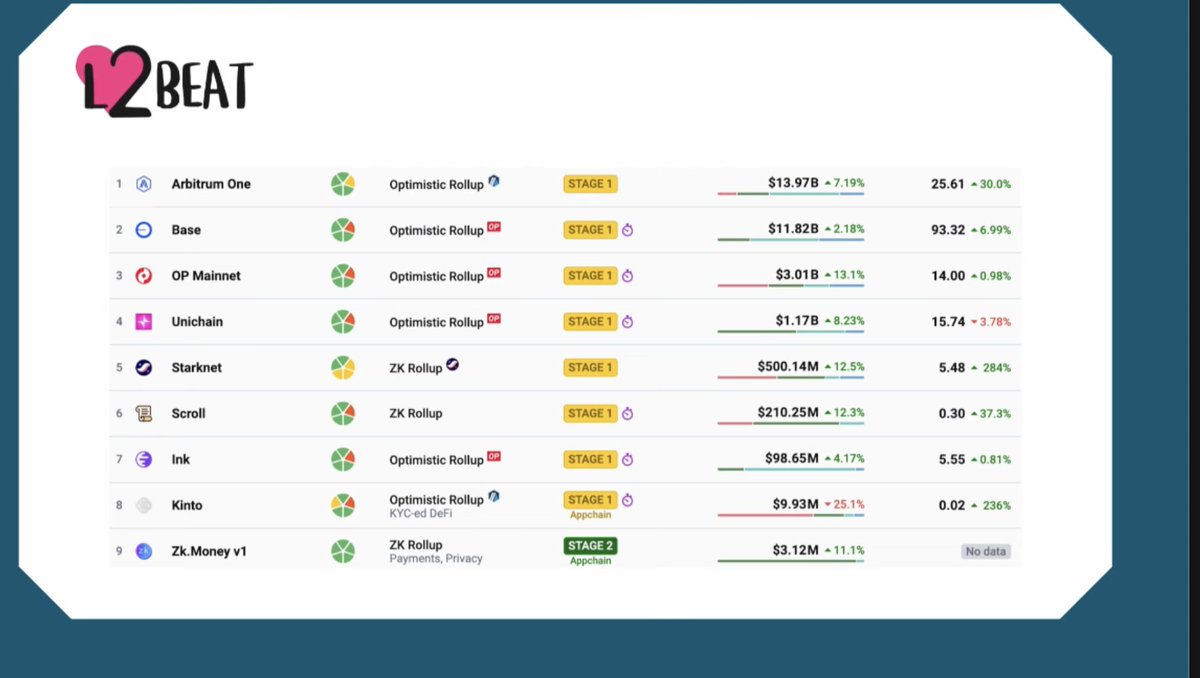
Last but not least, we’re seeing the emergence of real-time blockchains like MegaETH, along with other fast networks such as Monad and Hyperliquid.
This raises questions around interoperability and integration:
-
How do we ensure they connect securely with the Ethereum mainnet?
-
How do we build blockchains with 25-millisecond block times that inherit Ethereum’s security parameters?
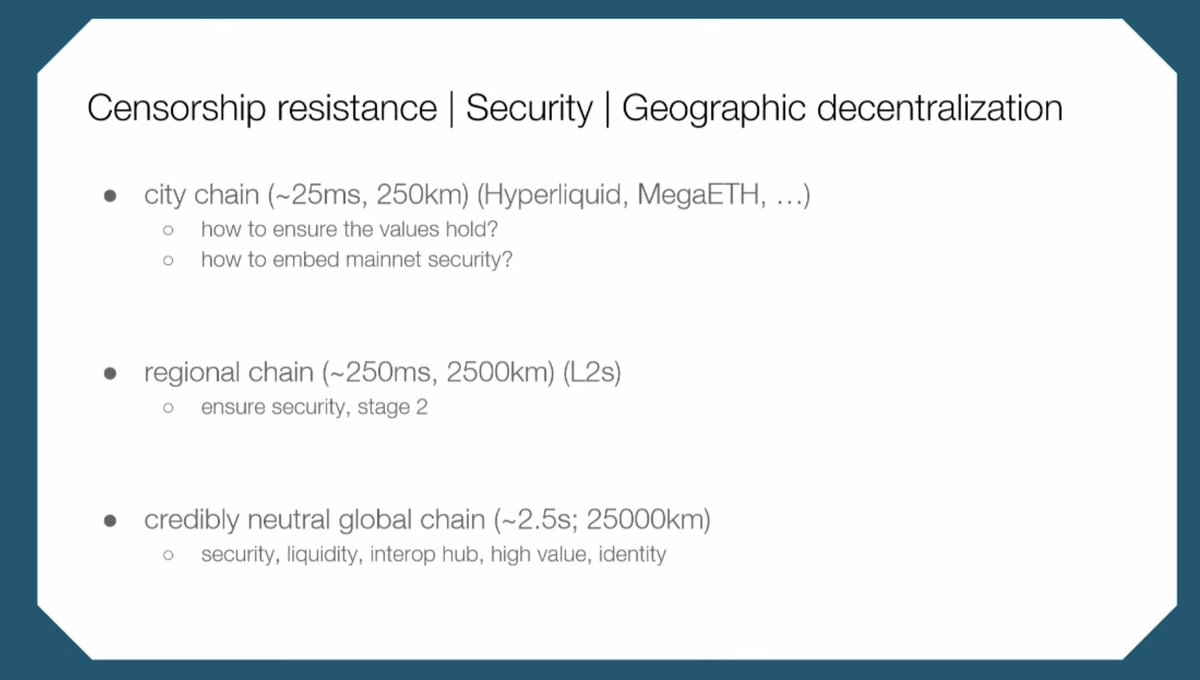
Thus, new tools are needed to identify emerging challenges at various levels and ensure clients can integrate with these networks.
This opens up a new creative space for client development.
All Ethereum client teams agree on increasing per-block gas limits to 45 million or even 60 million, aiming for 100 million gas by the end of this year or early next quarter.
Internal reorganization will support this goal, with modular teams working toward shared objectives:
-
Scaling L1
-
Scaling Blobs
-
Improving user experience
-
Enhancing interoperability
You read that right: scaling L1—one previously overlooked—is now among these goals.

I’m personally optimistic about Ethereum, welcome this awakening, and look forward to seeing further progress.
Join TechFlow official community to stay tuned
Telegram:https://t.me/TechFlowDaily
X (Twitter):https://x.com/TechFlowPost
X (Twitter) EN:https://x.com/BlockFlow_News
 @francescoweb3