On the Ground in Yiwu: How Hot Is Stablecoin for Cross-Border Payments?
TechFlow Selected TechFlow Selected
On the Ground in Yiwu: How Hot Is Stablecoin for Cross-Border Payments?
Most merchants said they had never heard of stablecoins, and only a few individual merchants support stablecoin payments.
 Navigating Web3 tides with focused insights
By Bian Wanli
Stablecoins remain a hot topic, with growing attention shifting toward real-world applications. Recently, market rumors suggested that merchants in Yiwu have started accepting stablecoin payments for foreign trade goods, once again placing the city in the spotlight.
A research report from Huatai Securities stated, "In Yiwu, the world's largest small commodities hub, stablecoins have become an important tool for cross-border payments. Blockchain analytics firm Chainalysis estimates that stablecoin flows on-chain in Yiwu exceeded $10 billion in 2023." Online posts also claimed, "Over 3,000 merchants in Yiwu now accept USDT and other stablecoins, achieving monthly transaction volumes exceeding $1 billion, saving nearly 10 million RMB in fees!"
So, what is the actual situation regarding stablecoin usage in Yiwu?
To find out, reporters from the 21st Century Business Herald conducted on-site investigations in Yiwu to examine the real adoption of stablecoins.
When asked whether stablecoin payments were accepted, most merchants said they had never heard of stablecoins or did not understand them; others raised concerns about compliance and costs; only a few reported supporting stablecoin payments.
Most Merchants Are Unfamiliar With Stablecoins
Yiwu International Trade City is the world’s largest wholesale market for small commodities. Since its first-generation market opened in 1982, it has undergone six relocations, ten expansions, and five generational upgrades to reach its current scale. The market covers over 6.4 million square meters, hosts 75,000 business stalls, offers more than 2.1 million products across 26 major categories, attracts over 560,000 overseas buyers annually, and hosts over 15,000 long-term resident foreign traders from more than 100 countries and regions. Its products are exported to 233 countries and regions worldwide.

Yiwu International Trade City Photo/21st Century Business Herald
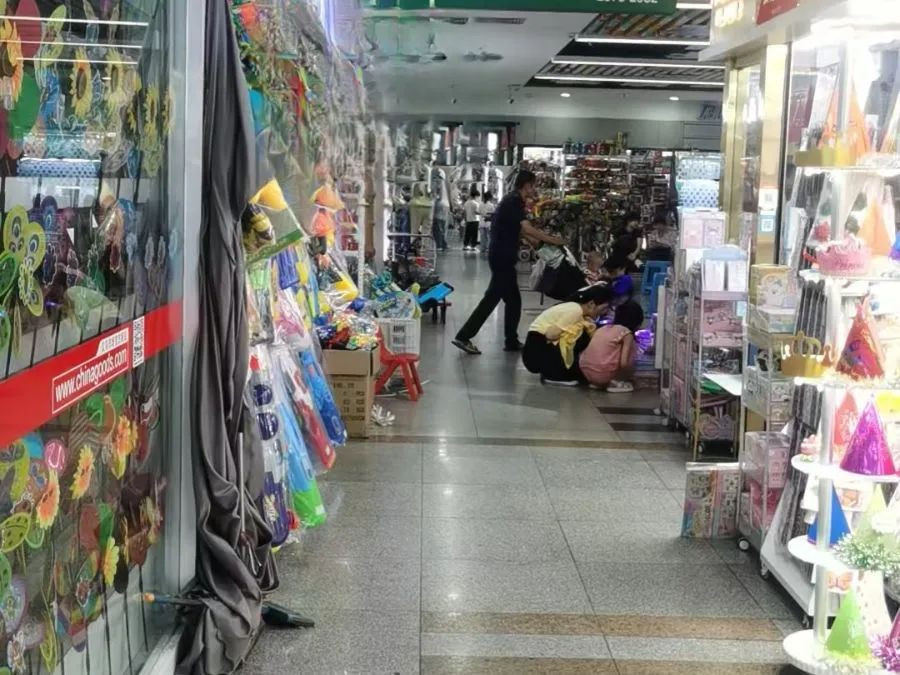
Yiwu International Trade City Photo/21st Century Business Herald
Walking through Yiwu International Trade City, one sees a constant flow of visitors. However, there is no sign of the rumored widespread use of stablecoins. Reporters, posing as customers, asked merchants if they could pay using stablecoins or “U” (a common nickname for stablecoins like USDT and USDC). Most merchants responded with confusion: “What kind of payment?” “What is U payment?” “Never heard of it. Don’t know anything about stablecoins.”
Stablecoins are digital assets pegged to reserve assets—such as the U.S. dollar—to maintain price stability. Unlike volatile cryptocurrencies like Bitcoin and Ethereum, their value is tied to low-volatility assets and not directly subject to market supply and demand, making them suitable tools for payments and value storage within blockchain ecosystems.
Since cryptocurrency transactions are borderless and less regulated than traditional finance, stablecoins offer strong advantages in cross-border transfers. For example, traditional wire transfers typically take 2–3 business days and incur high fees. In contrast, USDT (a type of stablecoin) transactions settle in about two minutes at significantly lower cost—this efficiency is a key reason some market participants advocate for stablecoin adoption.
During the investigation, some merchants expressed interest or basic awareness of stablecoins.
A number of foreign trade merchants admitted that overseas buyers had inquired about paying with USDT or USDC.
One merchant with a study-abroad background said, “I’m aware of stablecoins, but I haven’t used them yet.”
Others said, “Too costly—we don’t use them.”
Some questioned, “Is it compliant? Could our accounts get frozen?”
Still, a few merchants confirmed they do accept stablecoin payments, though they declined to provide further details.
Multiple insiders noted that some export merchants who already hold crypto wallets may privately conduct transactions using stablecoins. For instance, some merchants involved in crypto trading naturally hold stablecoins and have related needs. Others must rely on “U agents” (intermediaries facilitating fiat-stablecoin exchanges) to convert stablecoins into fiat currency (USD or CNY).
A local banking professional in Yiwu revealed, “In recent years, intermediaries have emerged in Yiwu, buying USD-pegged stablecoins like USDT at below-par rates—say, $0.98–$0.99—and reselling them above par—e.g., $1.03—to merchants seeking stablecoins. Some merchants do have demand, especially when dealing with buyers from countries experiencing extreme currency volatility. They occasionally use stablecoins. But converting between fiat and stablecoins always involves costs.”
Rumors claim “over 3,000 Yiwu merchants now accept USDT, with monthly transaction volumes surpassing $1 billion,” and that “stablecoins have become a key cross-border payment tool in China’s small commodities capital,” with “on-chain stablecoin flows in Yiwu exceeding $10 billion in 2023.” However, a Yiwu-based observer deeply familiar with cryptocurrencies stated, “From what I know, there isn't widespread stablecoin usage among Yiwu merchants. At least none around me are willing to settle in stablecoins.”
Another entrepreneur focused on cross-border e-commerce candidly shared, “It’s possible some cross-border businesses use stablecoins, but most still rely on traditional bank transfers or third-party payment platforms.”
Reporters noted that recently, an investor asked Little Commodity City (SSE: 600415) on an interactive platform: “At a recent stablecoin forum, experts claimed 30% of transactions in Yiwu’s small commodity market now use USDT. Is this accurate? If not, what is your company’s current status regarding this?”
The company replied: “We operate the world’s largest small commodities trading market, maintaining trade relations with over 230 countries and regions, with particularly strong ties to Belt and Road partner nations. This gives us access to vast, high-frequency cross-border settlement scenarios. We actively explore fintech innovations to enhance trade convenience. Innovative payment tools like stablecoins hold potential to provide global traders—especially SMEs—with faster, lower-cost cross-border payment solutions, aligning with our mission to serve real economy trade. We aim to combine our massive physical trade ecosystem with financial technology innovation to create greater value for global customers and improve consumer goods circulation.”
At the same time, the company emphasized it currently has no data on stablecoin usage within the Yiwu market and advised investors to monitor future announcements for updates.
Multiple Factors Hinder Stablecoin Adoption
Emerging technologies such as blockchain and distributed ledgers have driven rapid development in central bank digital currencies (CBDCs) and stablecoins, enabling “payment-as-settlement” and fundamentally reshaping traditional payment systems by drastically shortening cross-border payment chains. Compared to conventional models, stablecoins’ core advantage lies in bypassing the multi-layer intermediary architecture based on correspondent banking, thereby reducing settlement times and cutting transaction costs.
Specifically, stablecoins enable peer-to-peer value transfer via a shared distributed ledger, compressing processes that traditionally require multiple institutions into just one or a few on-chain transactions. This reduces settlement time from days to minutes or even seconds and lowers costs to predictable network fees. In terms of cost structure, traditional systems involve SWIFT messaging fees, foreign exchange spreads, and liquidity reserve costs, while stablecoins operating on blockchain can minimize these expenses.
Despite these advantages in cross-border payments, large-scale adoption of stablecoins has not taken off as envisioned.
Chen Jun (a pseudonym), a merchant closely following cryptocurrencies, explained, “Traditional settlement methods allow exporters to claim tax rebates, which represent significant profit incentives—this discourages merchants from adopting stablecoins.”
In simple terms, export tax rebates return VAT and consumption taxes paid during production and distribution after goods are exported. Different product categories have varying rebate rates, generally ranging from 6% to 13%, effectively turning rebates into direct profit for exporters.
As an internationally recognized practice, export tax rebates eliminate overall tax burdens on exported goods, prevent double taxation, and strengthen competitiveness in global markets—a policy widely adopted worldwide. Data shows that in 2023, Yiwu processed total export tax refunds and exemptions amounting to 12.071 billion RMB, up 14.78% year-on-year, including 10.625 billion RMB in actual tax refunds, up 7.39%. Notably, annual export tax refunds surpassed 10 billion RMB for the first time.
Chen Jun added, “Merchants often need substantial capital. Bank statements and transaction records generated through traditional payment methods serve as critical documentation for loan approvals, helping merchants secure financing to sustain operations. Additionally, export order history and bank transaction data are essential for applying for booths at major trade fairs. Generally, larger export volumes lead to bigger booth allocations.”
Major exhibitions like the Canton Fair are vital channels for foreign trade companies to acquire clients and close deals. For example, according to data from the 137th Canton Fair in 2025 (as of May 4), nearly 290,000 overseas buyers from 219 countries attended, representing a 17.3% increase compared to the 135th edition. On-site intended export deals reached $25.44 billion, up 3%.
Moreover, although stablecoin transactions themselves carry near-zero fees, practical challenges remain. These include conversion costs when working with U agents and unavoidable foreign exchange settlement costs. There are also risks—such as potential links to money laundering and account freezes—that could significantly disrupt normal business operations for foreign trade enterprises.
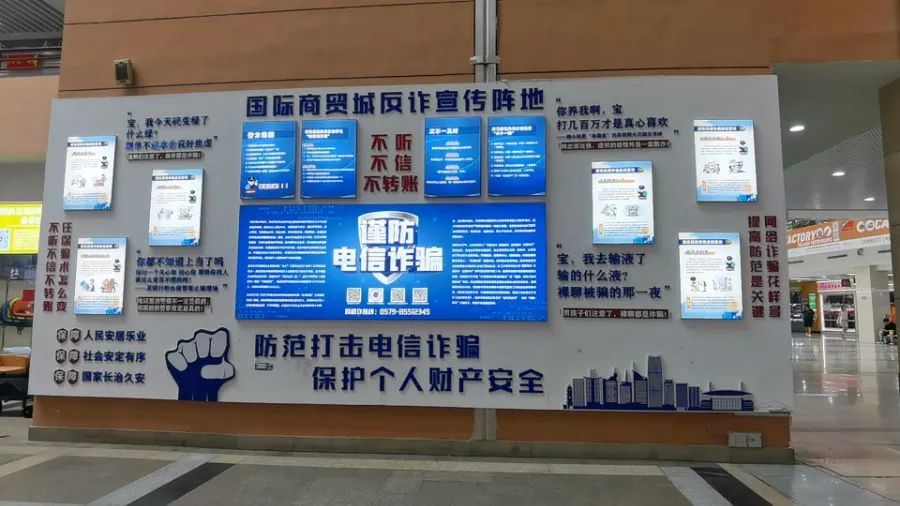
Yiwu International Trade City Photo/21st Century Business Herald
Notably, regarding plans to apply for a Hong Kong stablecoin license, Little Commodity City is closely monitoring regulatory developments in Hong Kong and may eventually submit an application through its “Y Pay” platform.
On June 18, the company stated on an investor platform: “We welcome and support Hong Kong’s positive progress in establishing a stablecoin regulatory framework. Our cross-border payment platform, ‘Y Pay,’ will continue monitoring regulatory developments and, once regulations are clear and pathways open, promptly assess and submit relevant applications.”
Join TechFlow official community to stay tuned
Telegram:https://t.me/TechFlowDaily
X (Twitter):https://x.com/TechFlowPost
X (Twitter) EN:https://x.com/BlockFlow_News