Defining Moments: Four Future Directions for Stablecoins — Payments, Compliance, Foreign Exchange, and Yield
TechFlow Selected TechFlow Selected
Defining Moments: Four Future Directions for Stablecoins — Payments, Compliance, Foreign Exchange, and Yield
The transformation journey of stablecoins has begun.
 Navigating Web3 tides with focused insights
Author: Poopman
Translation: TechFlow
Stablecoins have recently become a focal point in the industry, with news emerging nonstop:
-
The GENIUS Act passes
-
Stripe acquires Privy and Bridge
-
$crcl stock price rises 7x from IPO level
-
Plasma rapidly hits $1B deposit cap
-
Tether becomes the 19th largest U.S. Treasury investor
-
Mastercard partners with Chainlink to let users buy stablecoins on decentralized exchanges
-
Banks, big tech, and Asian regions rush to launch their own stablecoins
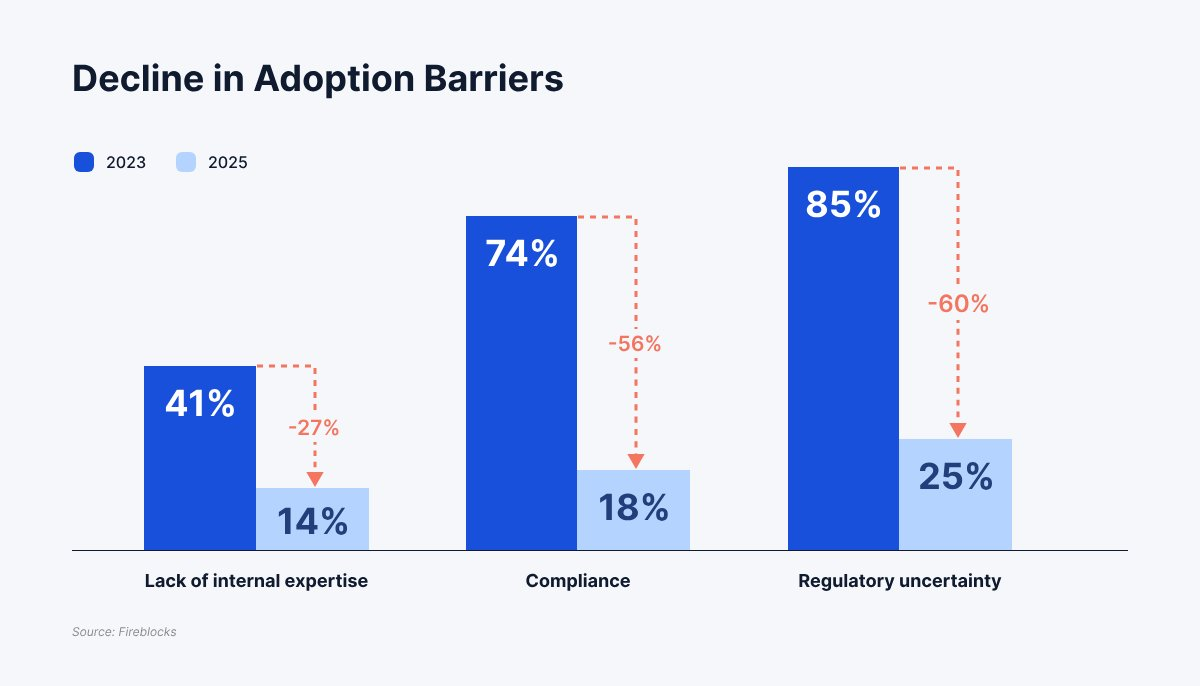
Regulation, once seen as a barrier to stablecoin development, has now become a driving force. Traditional finance (TradFi) players previously hesitated due to lack of understanding, consensus, and compliant tools. However, as regulatory frameworks for stablecoins become clearer, former obstacles are turning into catalysts.
According to Fireblocks, regulatory clarity has boosted enterprise confidence in stablecoins by 80%. Meanwhile, 86% of companies have already built stablecoin infrastructure, indicating banks and institutions were prepared for this shift long ago.
Why Have Stablecoins Suddenly Become a Focus?
The answer is simple: they solve real problems. Key advantages of stablecoins include:
-
Instant, low-cost cross-border transactions: providing permissionless access to USD for emerging markets, and potentially enabling more efficient on-chain foreign exchange markets.
-
Driving demand for Treasuries: stablecoins increase demand for U.S. Treasuries, which benefits the U.S. by reinforcing dollar dominance and facilitating debt sales.
Thanks to public attention drawn by the GENIUS Act, I believe we’re entering a new era—where the next wave of payment-focused stablecoin adoption will be driven not by crypto natives, but by mainstream users, marking true “mass adoption.”
The Next Step for Stablecoins
With anticipated growth in payments, cross-border transfers, and personal banking, significant business opportunities await. Let’s explore where stablecoins go from here.
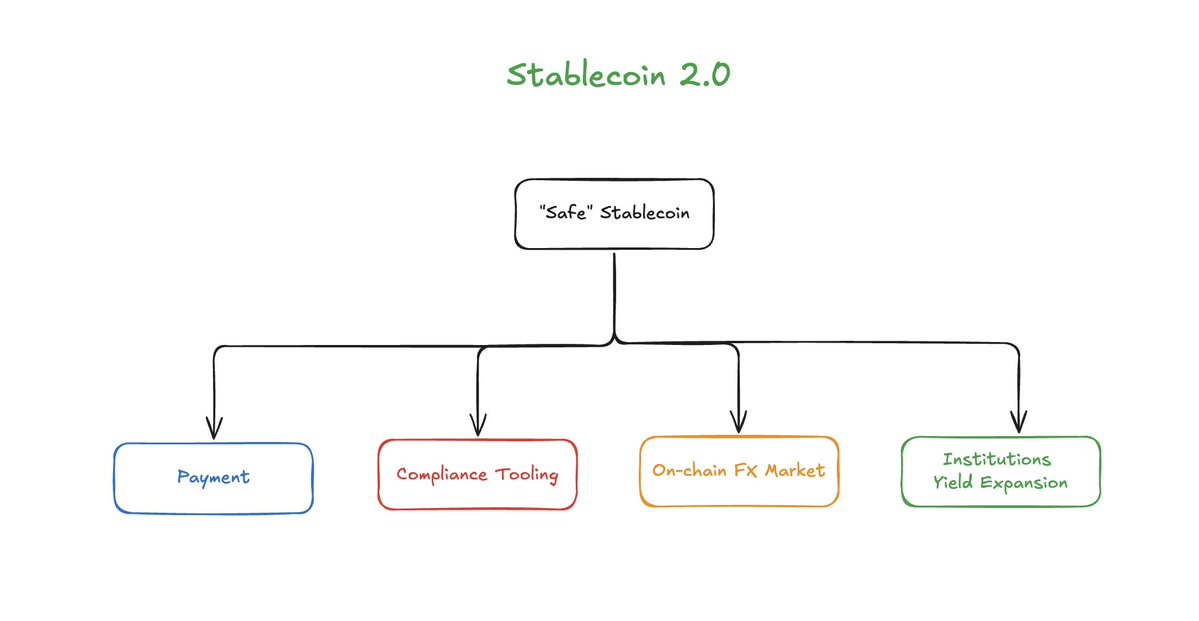
In my view, the stablecoin ecosystem may evolve along four key directions: payments, compliance, on-chain FX, and institutional yield expansion.
-
Beyond trading: stablecoins are moving into the mainstream. Their use cases will expand far beyond trading pairs—to payments, savings, and even new business models previously constrained by T+1 settlement delays.
-
Compliance tools: more mature and user-friendly compliance solutions (e.g., tax reporting, fraud detection) to help issuers meet anti-money laundering (AML) and other regulatory requirements.
-
24/7 on-chain FX markets: a more efficient foreign exchange market with instant settlement.
-
Growing demand for yield: as the ecosystem fragments, more real-world asset (RWA) strategies, fixed-income products, and aggregated offerings (like indices) will emerge.
Beyond Trading
The original mission of stablecoins was simple: provide crypto traders with a volatility hedge and a safe haven for holding digital assets. Fully-reserved stablecoins like USDT gained early-mover advantage and became dominant trading pairs on major exchanges. USDC followed closely as the second most popular choice. In the early days, stablecoins primarily served trading and hedging needs.
New Trends
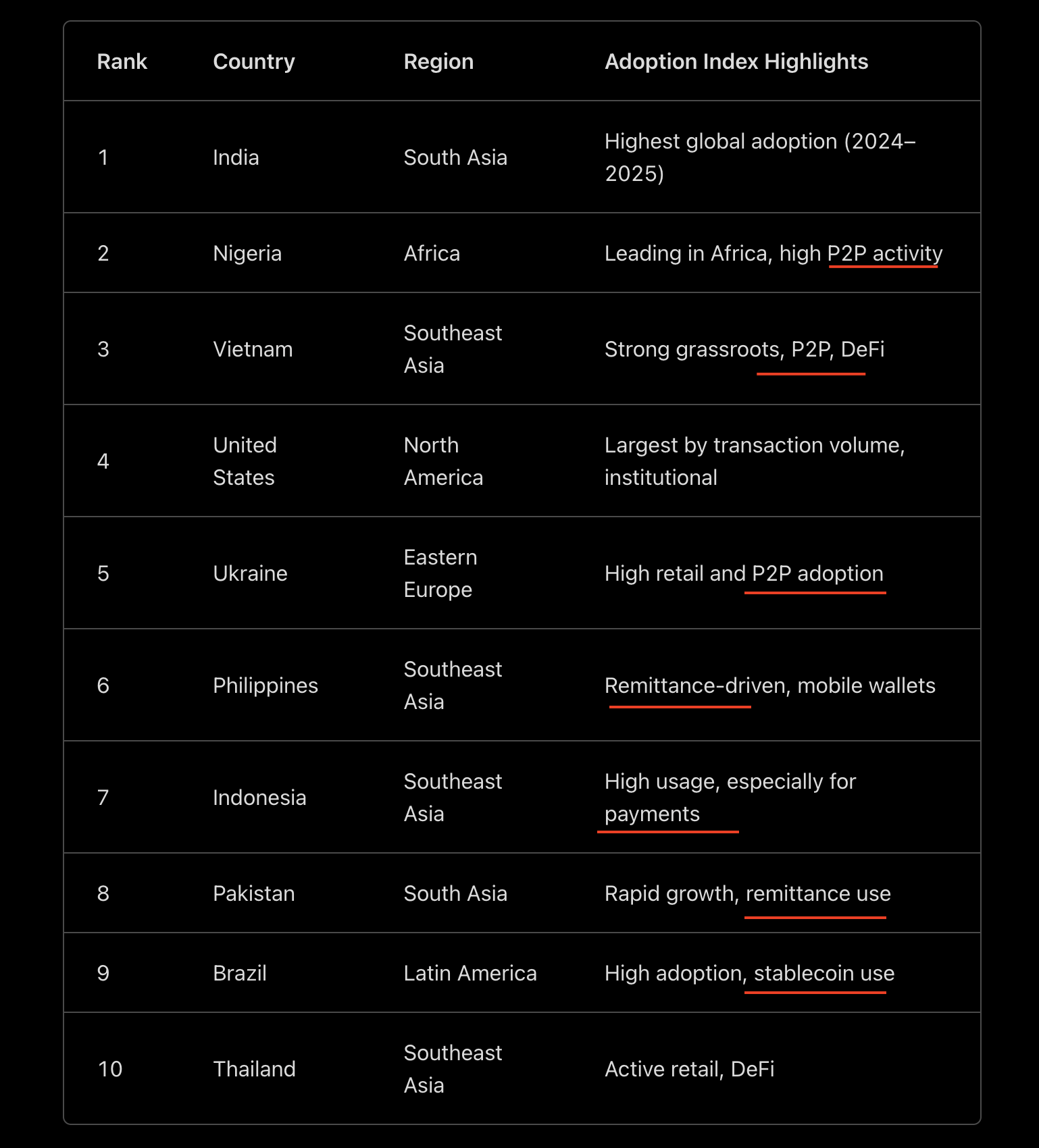
Beyond trading, payments have become another core function of stablecoins—a trend growing increasingly evident. According to the 2025 Crypto Adoption Index report, in eight out of the ten countries with the fastest-growing crypto adoption, growth is actually driven by peer-to-peer (P2P) transactions and remittance demand.
This growth is concentrated in emerging markets, where stablecoins offer permissionless access to USD—a capability often unavailable in low-income countries. For businesses in these regions, USD-backed stablecoins provide essential protection against extreme local currency volatility. As confidence grows, I expect stablecoin adoption to accelerate further.
Trading View
Cross-Border Payments & E-Commerce
Cross-border payments represent another major use case for stablecoins, offering clear advantages: instant settlement, lower costs, greater transparency, and permissionless USD access. These features address the slowness and opacity of traditional cross-border systems, unlocking capital previously trapped in legacy rails.
A prime example is @ConduitPay, a cross-border payment solution backed by @dragonfly_xyz. They reported surging demand from import/export businesses in Latin America and Africa, driving a 16x increase in platform transaction volume and helping them reach an annualized payment volume of $10 billion. This reflects rapidly rising demand for stablecoin-based cross-border solutions.
Meanwhile, e-commerce is opening new doors for stablecoins, primarily by boosting merchant and payment processor margins. According to a16z crypto, retail giants like Walmart could increase revenue by up to 62% by adopting stablecoin payments to reduce network fees. Payment processors like Stripe also stand to gain higher profit margins from stablecoin transactions, which may further incentivize integration.
Stablecoins are unlocking potential in cross-border payments and e-commerce, injecting new vitality into global commerce.
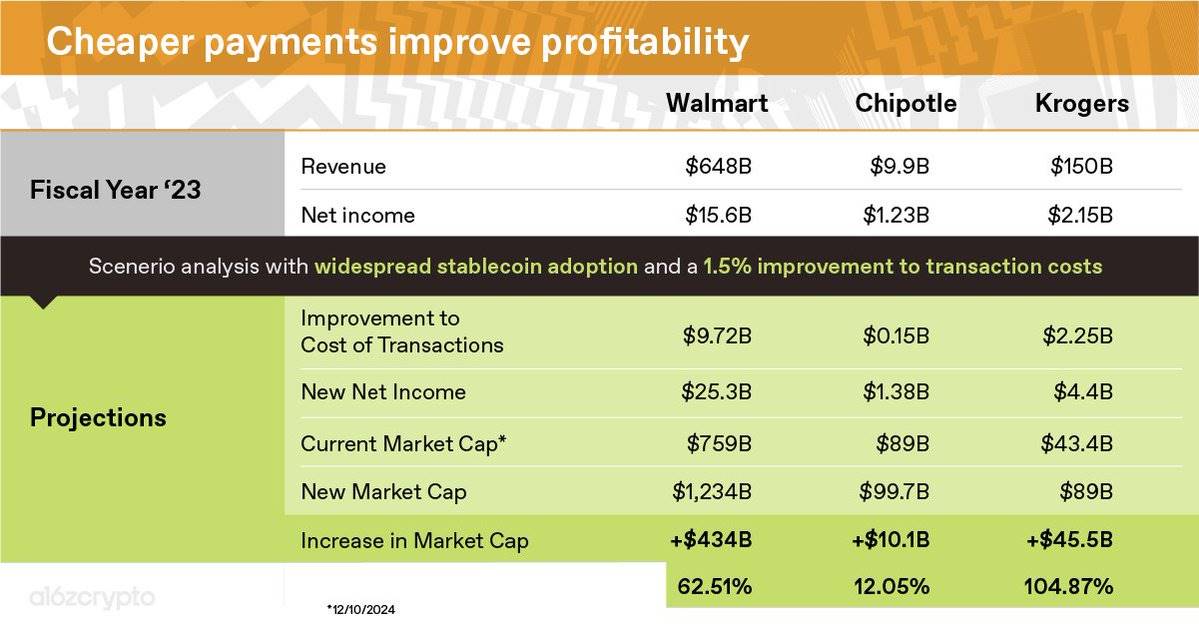
https://a16zcrypto.com/posts/article/how-stablecoins-will-eat-payments/
Web2 payment giants aren’t just watching—they’ve already started acting. Stablecoin payments are about to become ubiquitous. Here are some notable examples:
-
Shopify: accepts USDC via Stripe.
-
PayPal: launched pyUSD, a $1B market cap stablecoin usable as a payment method.
-
Walmart and Amazon: planning to develop their own stablecoins.
With regulatory barriers gradually lifting, stablecoins are effectively ready for explosive growth. We can expect to see:
-
Explosive growth in cross-border stablecoin transfers in emerging markets;
-
More payments made in USDC across chains like SOL/Base, using CEX wallets, Phantom, neobanks, or fintech apps;
-
Increased sales in e-commerce driven by stablecoin payments.
The stablecoin revolution has only just begun.
Compliance Tools
Trust is key to enterprise adoption of stablecoins. With the GENIUS Act establishing a regulatory framework for U.S. stablecoin issuers, I expect growing demand for compliance tools as new issuers enter the market.
To understand the role of compliance tools in the stablecoin ecosystem, let’s review some fundamentals.
Although regulations vary by state, two main frameworks are shaping the future of stablecoins: MICA and the GENIUS Act. Below is a comparison table (details not elaborated here).

https://eu.ci/mica-vs-genius-act-2025/
The newly introduced GENIUS Act serves two primary purposes: consumer protection and national security. Chainalysis summarized it succinctly. Key points include:
-
Consumer Protection
-
Reserve Requirements: must be fully backed by highly liquid assets (e.g., U.S. Treasuries with maturities under 93 days or cash).
-
Disclosure: monthly public reporting of reserve composition, redemption policies, and related fees on the issuer’s website.
-
Restrictions: prohibition on using “USG” or any term implying “legal tender” in marketing or promotional materials.
-
Bankruptcy Protection: stablecoin holders have priority claim in bankruptcy proceedings.
-
No Yield Allowed: issuers cannot offer interest or yield on 1:1 backed stablecoins.
-
National Security Provisions
-
Bank Secrecy Act Compliance: includes AML, KYC, transaction monitoring, record keeping, and reporting suspicious activities.
-
Technical Enforcement Capabilities: issuers must be able to freeze and destroy tokens, and block non-compliant foreign issuers from accessing the U.S. market.
-
Sanctions Coordination: the Treasury Secretary must coordinate with stablecoin issuers before blocking foreign entities’ transactions.
To become a “certified” stablecoin issuer, enterprises must be capable of identifying, freezing, tracking, and publicly disclosing reserves, while maintaining effective communication with affected parties.
Compliance tool providers play a critical role in this process. For example, Chainalysis Sentinel monitors 35 types of risky transactions in real time. The platform offers APIs allowing issuers to freeze addresses, blacklist entities, halt transactions, or stop minting/burning tokens upon detecting suspicious activity.
In recent years, the importance of compliance layers for stablecoins has grown significantly. Some sanctioned entities, unable to access USD through traditional banking systems, have turned to stablecoins as a medium for fund transfers.
Additionally, due to their price stability, stolen funds and money-laundering proceeds are increasingly held in stablecoins. Data shows the share of stolen funds stored in stablecoins has surged from 20% a few years ago to over 50% today.
For this reason, a robust compliance layer is essential to the stablecoin ecosystem. It helps identify, filter, and report suspicious transactions, building trust for enterprises and new users alike.
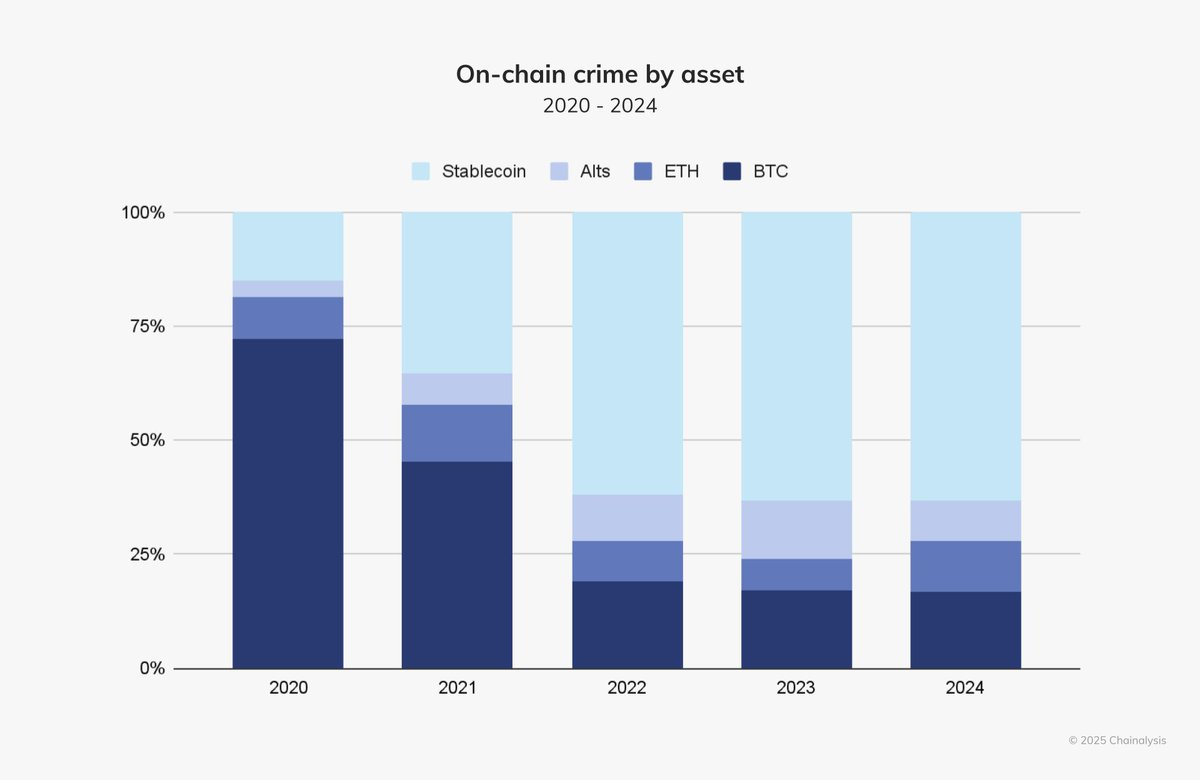
Chainalysis Crime Report
Compliance tools aren't limited to existing infrastructure—every platform involving stablecoins must gradually shift toward compliance-friendly designs.
For instance, Coinbase recently acquired Liquifi Finance, a platform that handles token vesting, airdrops, and even salary payments in stablecoin form. Liquifi has started offering tax reporting tools and ensures its platform meets compliance standards across different jurisdictions.
Similarly, Fireblocks has developed tools akin to Chainalysis—but with richer functionality, including configurable compliance policies, integrated KYT (Know Your Transaction), AML, and Travel Rule compliance. Other players like TRM Labs, Elliptic, and Polyflow are also building the stablecoin compliance stack.
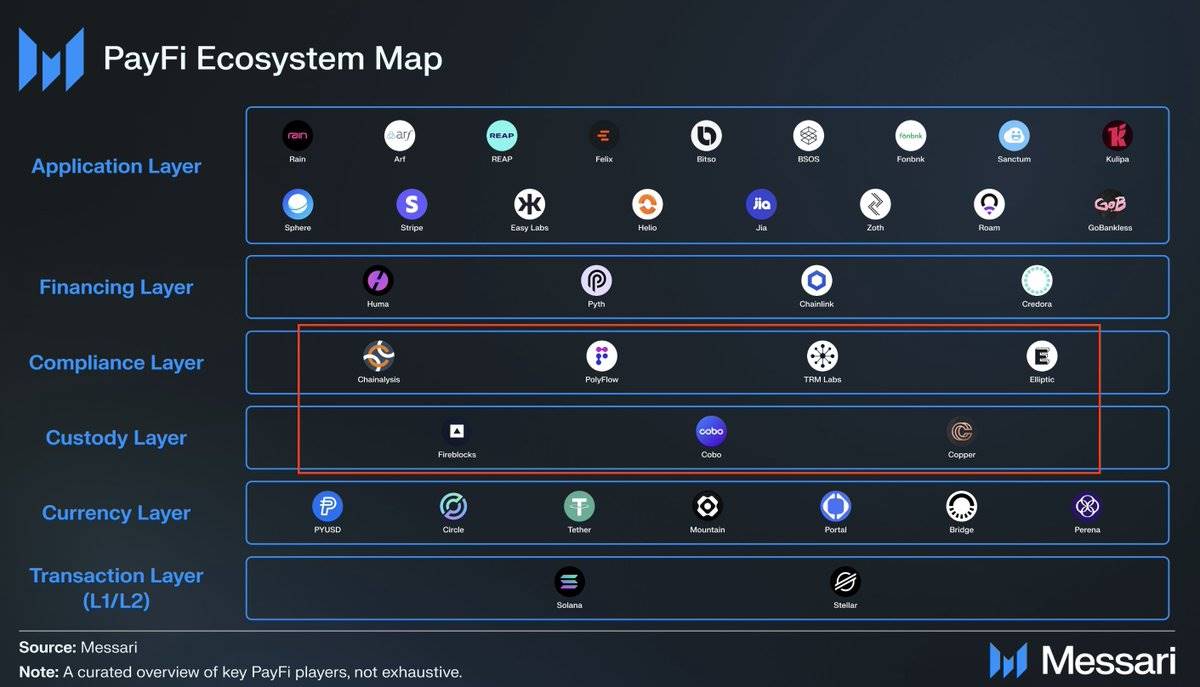
As stablecoins gain global traction, compliance tools will become foundational to industry growth. They not only address challenges around sanctions and illicit funds but also build the trust necessary for broad adoption. The stablecoin compliance ecosystem is evolving rapidly, paving the way for a safer, more regulated future.
On-Chain FX Markets
With U.S. regulators approving stablecoin usage, other countries are likely to follow, accelerating the digitization of currencies worldwide. This transition will naturally give rise to on-chain foreign exchange (FX) markets, offering two clear advantages: 24/7 availability and increased retail participation due to high accessibility.
I see on-chain FX markets operating across two main layers: issuers and trading platforms. For simplicity, we’ll exclude fiat-to-stablecoin ramps (on/off ramps), as those require country-specific analysis.
Currently, dollar-denominated stablecoins dominate the market with 99.79% share, while euro stablecoins (EURC) make up only 0.2%. Major non-USD issuers include Circle, Paxos, and Tether. But soon, compliant banks and institutions may launch their own stablecoins, increasing market diversity.
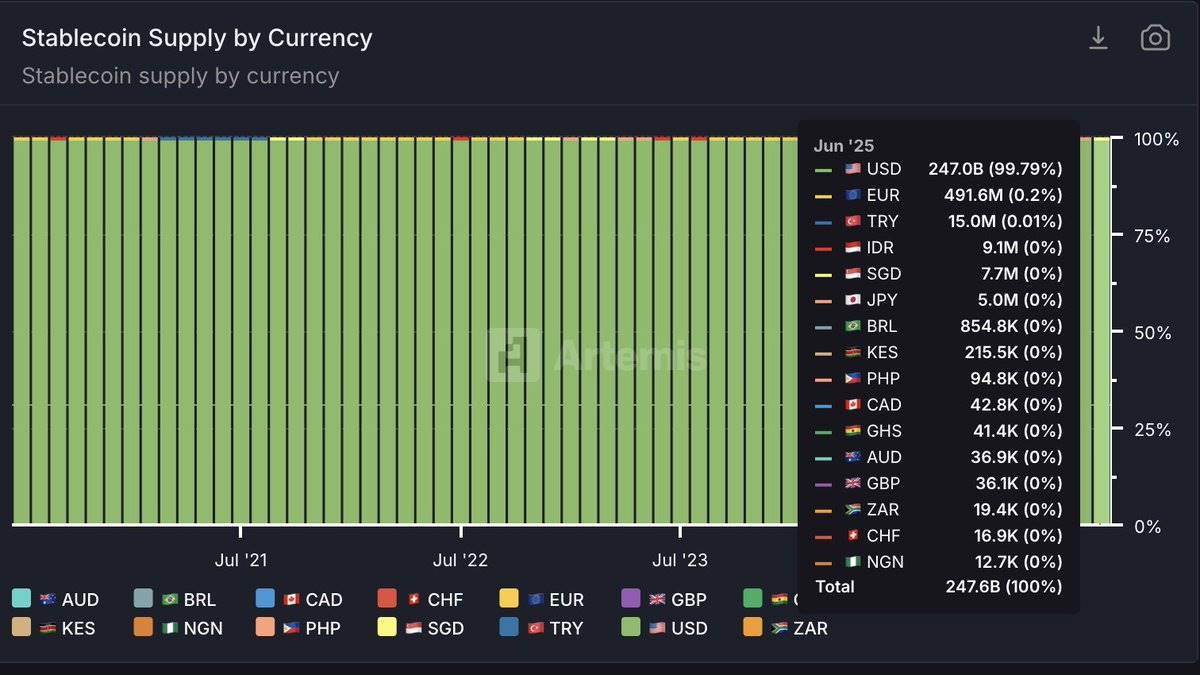
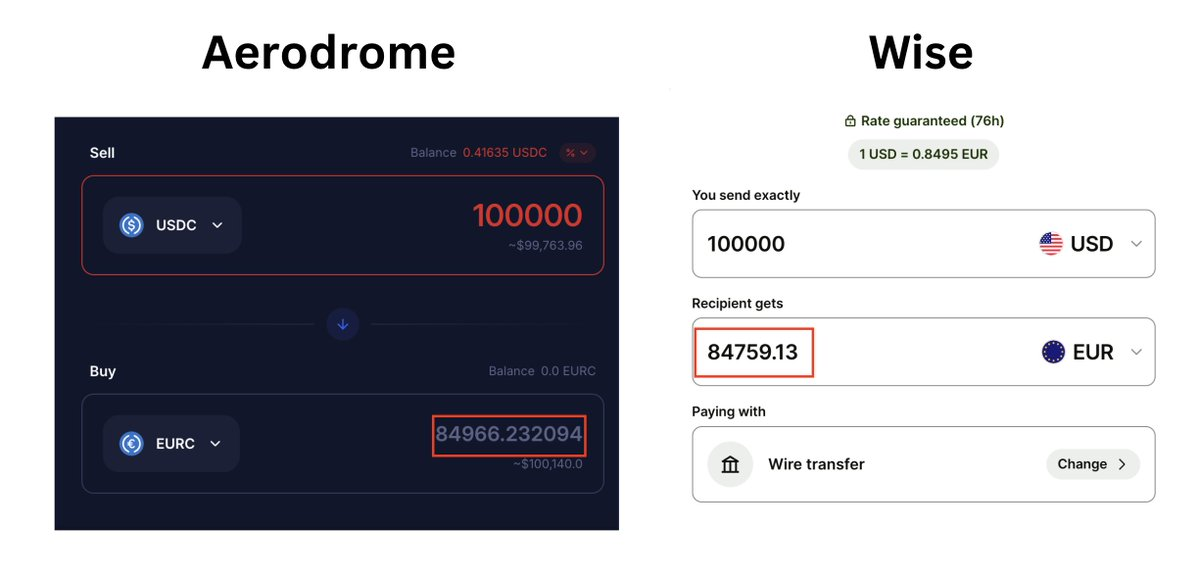
As demand shifts, the non-USD stablecoin trading market is slowly expanding. Most USD/non-USD trades occur on automated market makers (AMMs), particularly Aerodrome and Pancakeswap. Notably, exchanging USDC for EURC on Aerodrome offers better rates than traditional platforms like Wise—even after accounting for slippage and gas fees (excluding fiat ramp costs)—Aerodrome is roughly 30 basis points cheaper.
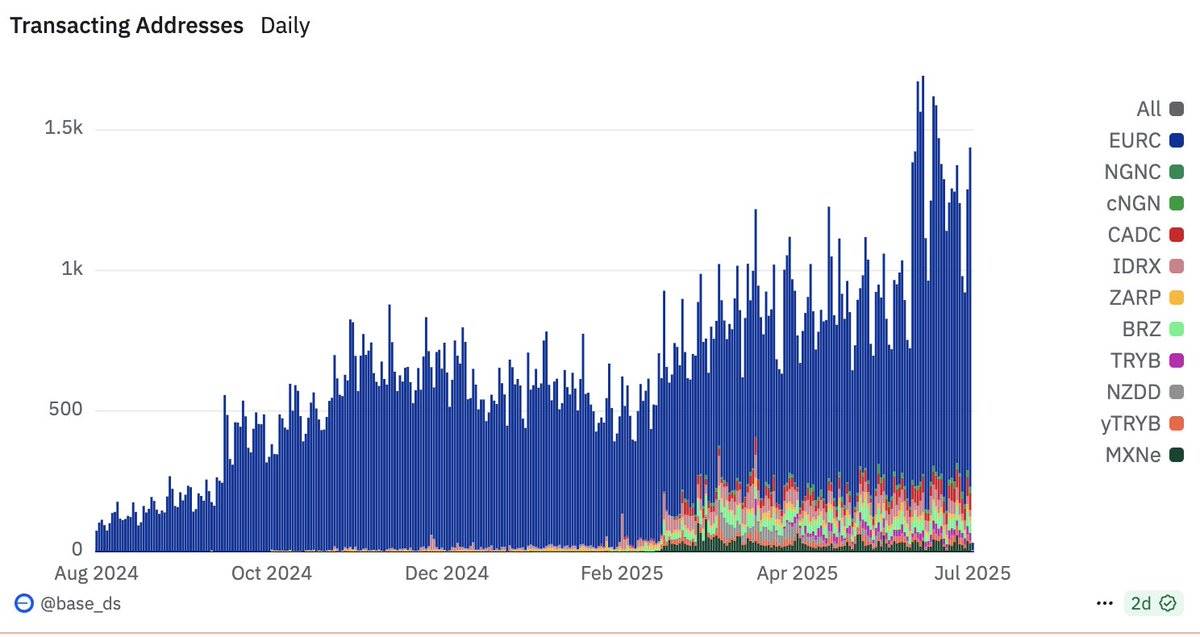
Due to competitive exchange rates and economic uncertainty (e.g., Trump-era impacts), we’re seeing upward momentum in EURC adoption—its daily active addresses doubled from 600 in February to 1,300. New stablecoins like the Canadian dollar (CAD) and Brazilian real (BRZ) are also entering the market, though still small in share, they’re beginning to make an impact.
As the global economy digitizes and stablecoins become compliant, on-chain FX markets are poised to complement traditional financial systems. They offer round-the-clock trading and attract more retail users, enhancing global currency digitization and circulation efficiency. The future of stablecoins won’t be limited to the dollar—it will expand to include more national currencies, achieving true globalization.
On-Chain FX Platforms
While stablecoin issuers (like Tether, Circle, Paxos), banks, and fintech firms drive adoption, certain on-chain projects are integrating DeFi elements into FX trading, fostering innovation.
For example, Injective offers a 24/7 market with support for EUR and GBP trading at up to 100x leverage; MentoLabs uses CDP (collateralized debt position) technology, enabling users to maintain exposure to base assets while gaining multi-currency positions. These innovations open new trading opportunities and yield farms.
Despite their promise, on-chain FX markets face two major hurdles:
-
Insufficient on-chain liquidity: current liquidity remains thin—the largest single pool holds only ~$1.3M in EURC, clearly inadequate for large-scale trading.
-
Fiat-to-stablecoin conversion friction: inefficient on/off ramps between fiat (banking systems) and stablecoins remain the biggest obstacle for on-chain FX to compete with traditional FX systems.
The High-Yield Stablecoin Era
Whether in DeFi or personal finance, the stablecoin yield market is becoming a central focus. In the future, anyone holding USDC will likely ask: how can I generate yield on idle capital? While regulation primarily benefits payment-focused stablecoins, the growth of yield-driven stablecoin markets is equally significant.
Over the past year, yield-bearing stables (YBS) like Ethena and Sky have grown sixfold in market cap to $6B. Simultaneously, demand for leveraged exposure and yield farming has become the primary driver behind record-high total value locked (TVL) in lending protocols such as Aave, Euler, and Syrup.
Recall DeFi Summer, when flywheel tokenomics delivered outsized yields—yet sustainability relied heavily on token price itself. When prices fell, protocols often halted or collapsed entirely.
With Ethena's success, the CeDeFi (centralized + decentralized finance) model has gained popularity. Depositors lend stablecoins to teams who generate real returns via off-chain strategies. This ushered in the YBS boom, with projects creating yield through on- and off-chain strategies. While this breaks the dependency on token price as the sole utility, it also reduces value accrual to the native token.
Today, the most common yield-generation strategies fall into three main categories:
-
Short-term U.S. Treasuries (T-bills)
-
Delta-neutral strategies
-
Money market strategies
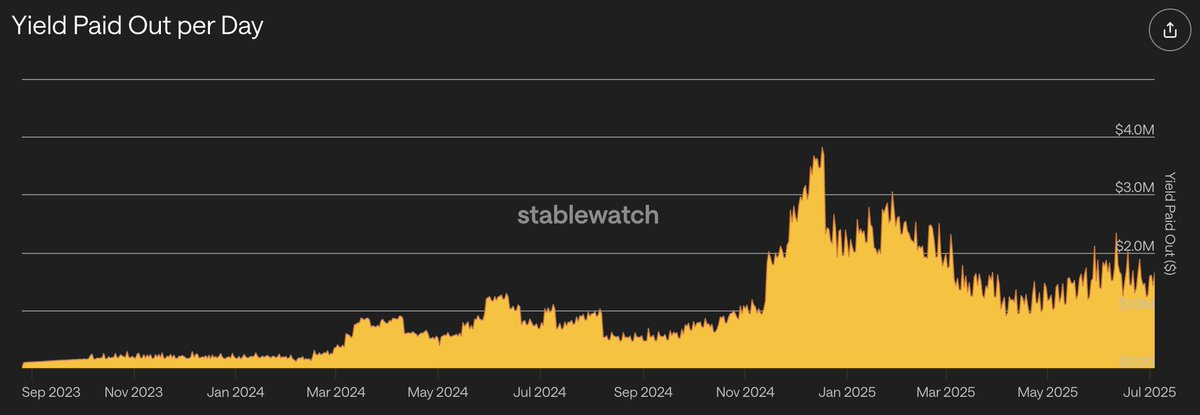
Though many other strategies exist, these are considered proven "classic yield" approaches. Yield-bearing stablecoin strategies collectively generate about $1.5M per day in returns—and the trend remains healthily upward.
RWA Strategies & Money Markets
Yield-bearing stables (YBS) are just the tip of the iceberg.
In the next phase of yield markets, TradFi-style RWA (real-world asset) strategies combined with DeFi mechanics (e.g., recursive leverage) will attract significant institutional and fund interest.
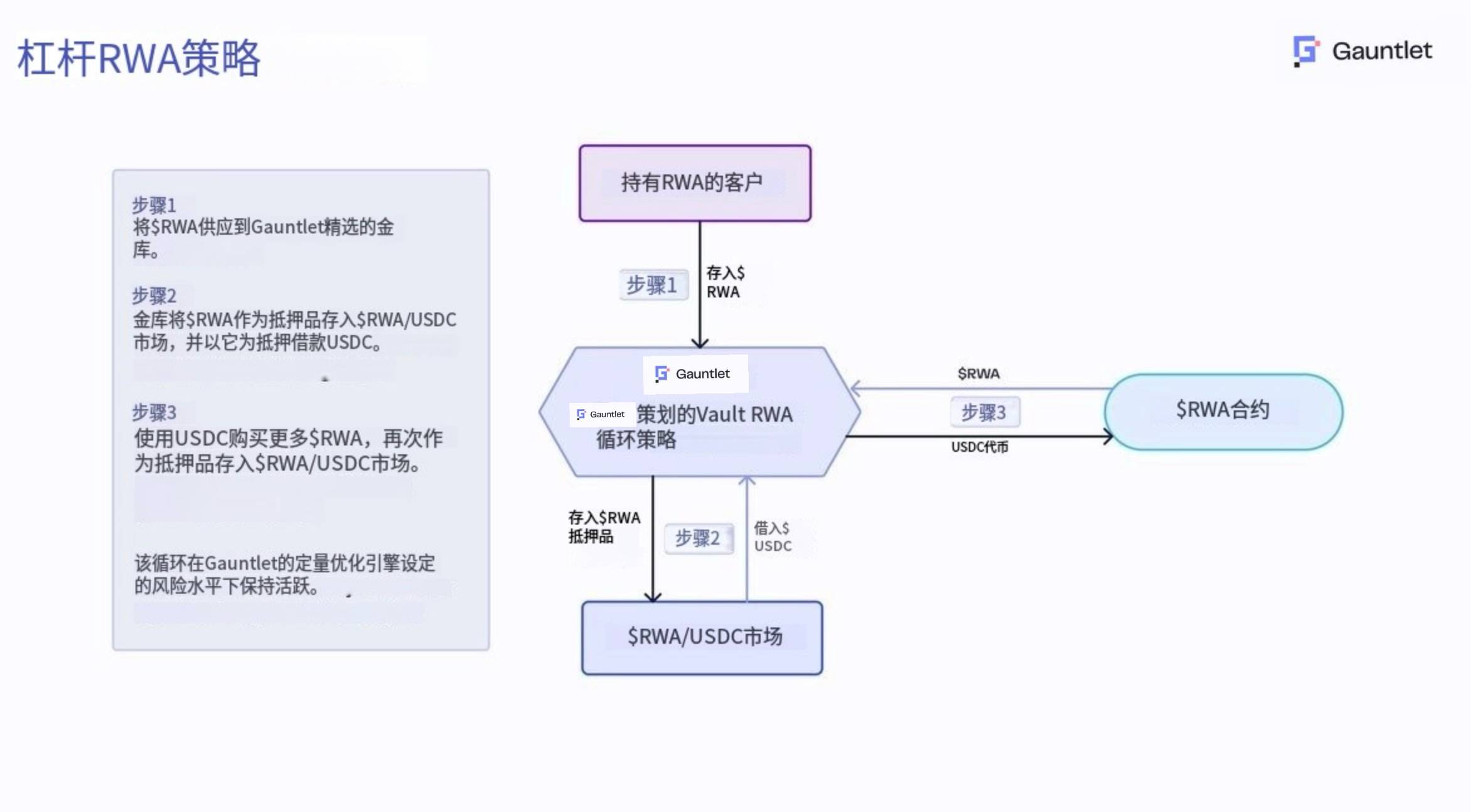
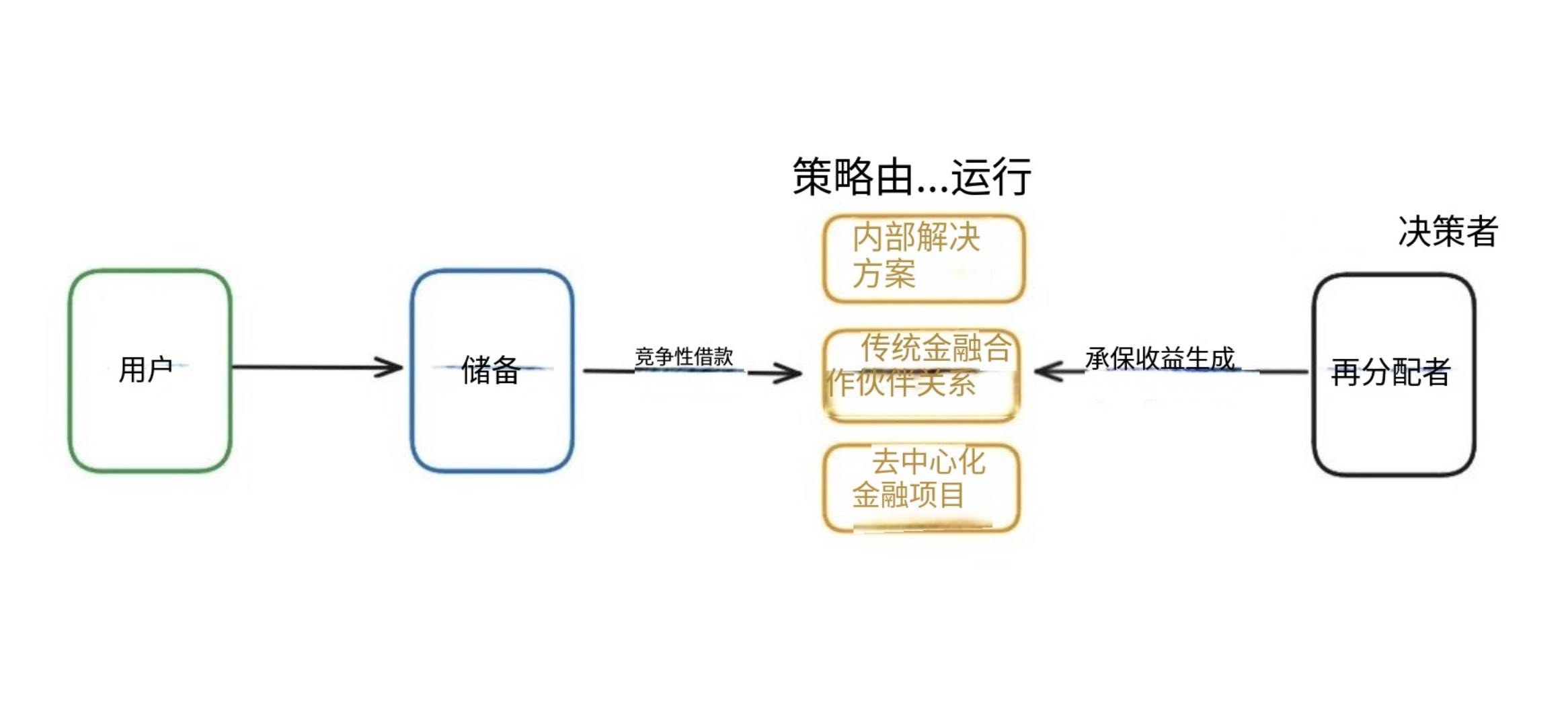
A recent example: investors in ACRED (Apollo Diversified Credit Securitize Fund) can deposit $ACRED into the Morpho Blue market and borrow USDC against it. Borrowers can then reinvest the borrowed USDC back into ACRED, creating a leveraged loop. In this setup, ACRED investors earn leveraged returns, while USDC suppliers (retail or funds) earn interest paid by ACRED.
Below is an excellent illustration provided by Gauntlet and @redstone_defi.
RWA Strategy
This is just one example. As traditional institutions realize they can tokenize complex yield strategies and bring them on-chain to borrow stablecoins, the market size could grow exponentially. As long as underlying assets (e.g., USCC yielding 7.7% APY) deliver sustainable, attractive returns to qualified investors, the potential is nearly limitless.
This new source of yield stems from tokenized RWA assets and is amplified through leverage.
However, directly providing liquidity across diverse strategies can be complex for new users. Thus, I believe the best platforms for setting up such strategies include:
-
@upshift_fi
-
@MorphoLabs
-
@eulerfinance
-
@veda_labs
-
@maplefinance
-
@NestCredit
These platforms strive to remain compliant while meeting institutional needs. However, legal guidance for such products remains unclear, making regulatory risk a key challenge.
Fragmentation
With the number of yield strategies and projects growing (now over 50 and counting), the market is becoming increasingly complex and fragmented.
New users often don’t know where to deploy their stablecoins for optimal returns, nor how to allocate portfolios based on risk-adjusted metrics. Many strong strategies lack visibility and need greater exposure.
In this context, an aggregator platform or unified “earn” dashboard—with built-in risk disclosure—could bridge yield farmers with powerful strategies.
We need a product like Binance Earn, but on-chain, with greater transparency and detailed risk disclosures.
Currently, projects like @capmoney_, @Perena__, and strategy curators like @gauntlet_xyz are building such aggregation platforms. By abstracting complex yield strategies, they help users easily discover, manage, and deploy funds across yield farms. Users can access top-tier yields (on- and off-chain) with a single click, paying only a small management fee.
Cap Money
Cap Money aggregates all top-tier on- and off-chain yield strategies on the megaeth platform, unifying their exposure into a single stablecoin or anchor asset. This asset is compatible with any DeFi protocol and highly composable.
Capital allocation depends on strategy performance, creating a self-reinforcing market where only the most competitive strategies survive. This mechanism ensures capital flows to the best-performing strategies, optimizing user yield experience.
However, widespread stablecoin adoption requires trust. To address this, Cap Money pioneers a new market allowing asset holders (restakers) to delegate their assets via EigenLayer to strategy providers, offering “trust” to stablecoin holders. In return, these restakers receive a portion of the yield as compensation for their trust.
A fascinating idea—enabling “safe” yield aggregation.
Perena
SOL is known for fast, low-cost transactions, making it ideal for everyday stablecoin payments and on-chain FX markets.
Perena leverages SOL’s speed and low fees to build a unified stablecoin liquidity layer—StableBank. By pooling on-chain liquidity of branded stablecoins like USDC, USDT, PYUSD, BENJI, and AUSD into a single AMM, represented by receipt token USD*, Perena delivers optimal exchange rates for stablecoin swaps on SOL.
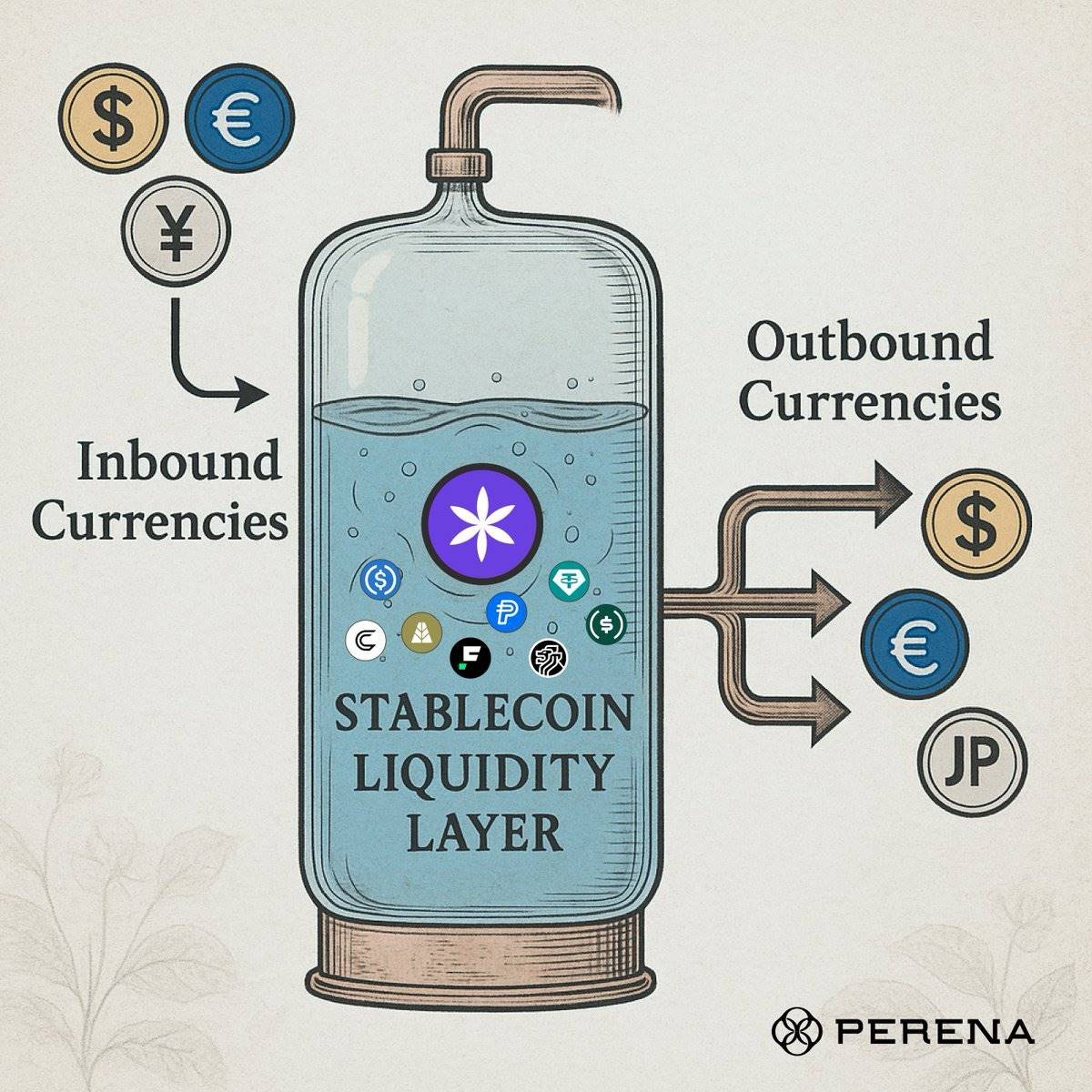
In the upcoming Perena v2, smart routing will scan all liquidity pools and OTC desks—including non-SOL chains—to ensure users get the best possible swap rates. Perena will also support multiple currencies (e.g., EURC, GBP) and cross-chain swaps, preparing for mass stablecoin adoption.
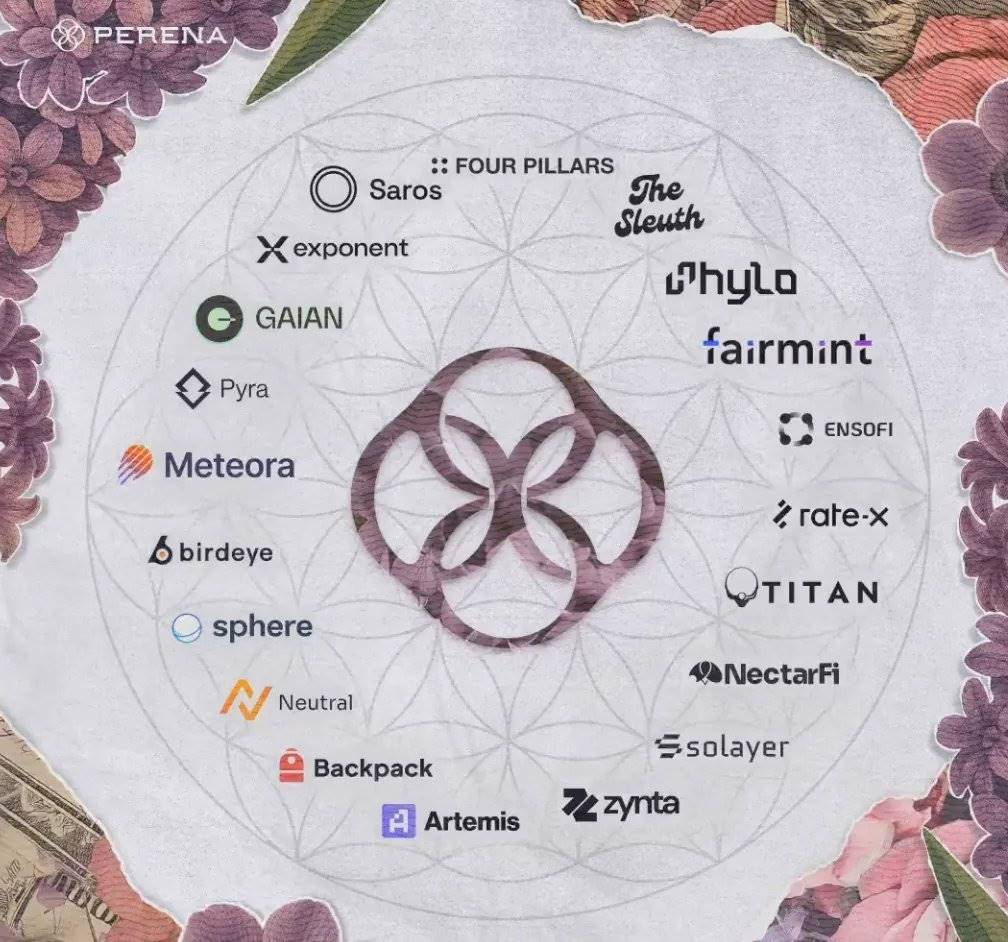
But USD* isn’t just a swap engine—it’s also a savings and yield platform. Through partnerships with over 20 projects, Perena’s StableBank network offers USD* holders access to top yield strategies, connecting high-potential strategies with yield-seeking stablecoin farmers via a single interface.
Stablecoin Network
Gauntlet USD Alpha
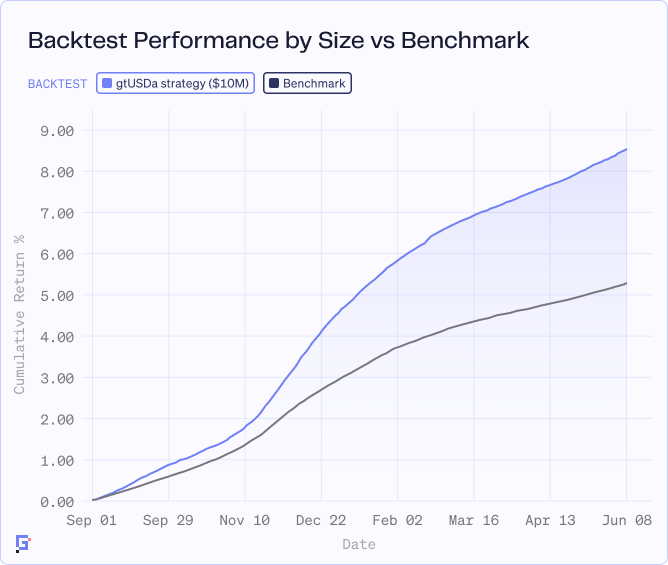
Gauntlet USD Alpha ($gtUSDa) is a new offering from Gauntlet, deploying off-chain strategies on-chain via vault infrastructure built by Aera Finance. Managed by a “Guardian” (designated executor), this vault aims to help users achieve on-chain yield objectives.
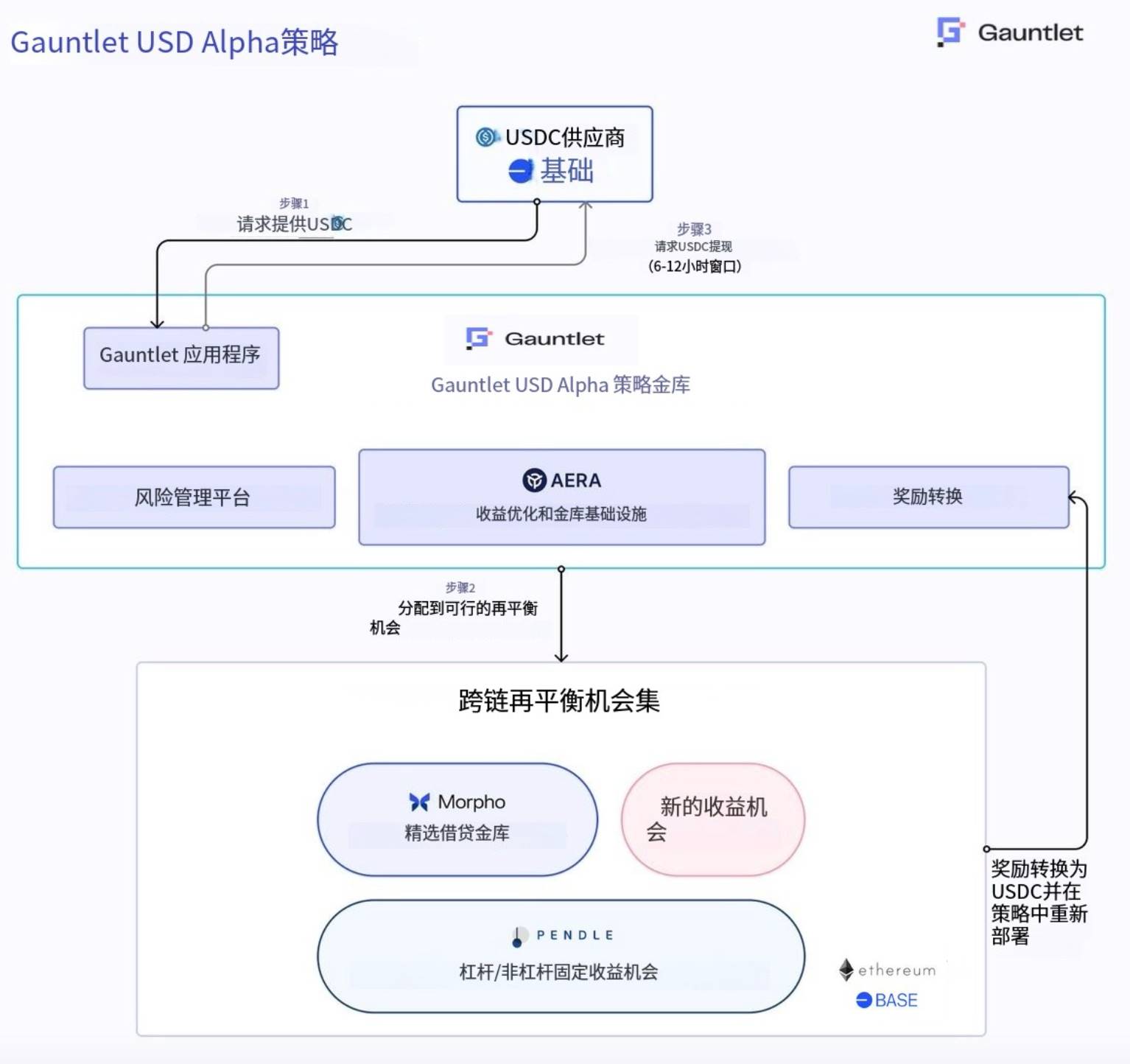
The core goal of Gauntlet USD Alpha is to dynamically allocate depositors’ stablecoins to the highest-yielding lending markets and automatically rebalance positions according to risk guidelines.
In backtesting, Gauntlet’s risk-adjusted strategy on Morpho (Base + ETH) outperformed Vaults.fyi’s benchmark (7.76% alpha vs. 4.46% baseline). Currently live, the vault generates 7.2% yield, primarily allocated to $midasUSD and $gtusdcf.
By abstracting complex yield discovery and risk management, Gauntlet USD Alpha offers passive yield farmers an efficient platform for risk-adjusted returns. This innovation not only optimizes stablecoin yield strategies but also advances transparency and usability across the DeFi ecosystem.
Disclaimer: The author has invested in Cap and Perena
Conclusion
Stablecoins are entering an unprecedented era of opportunity, becoming a vital component of the global financial ecosystem.
With maturing regulatory frameworks, stablecoin mainstreaming is accelerating. For example, the GENIUS Act provides clear compliance pathways for TradFi, fintech, and payment systems, boosting their confidence in integrating with stablecoins.
Meanwhile, emerging economies will continue adopting stablecoins for cross-border transactions and USD exposure management. More countries will begin tokenizing their currencies, naturally forming a 24/7, DeFi-compatible foreign exchange market.
For ambitious enterprises, on-chain stablecoin liquidity enables real-world asset (RWA) strategies like recursive leverage, while retail users can earn yield by providing liquidity. Moreover, mass stablecoin adoption will fuel demand for on-chain personal finance, driving growth in yield-generating products.
Projects like Cap, Perena, and Gauntlet are addressing fragmentation in the stablecoin ecosystem, delivering more efficient, centralized solutions for users.
Today, stablecoins are no longer “just another internet money”—they are a powerful demonstration of blockchain’s integration with the real world, enabling 24/7 instant settlement.
The transformation of stablecoins has already begun.
Join TechFlow official community to stay tuned
Telegram:https://t.me/TechFlowDaily
X (Twitter):https://x.com/TechFlowPost
X (Twitter) EN:https://x.com/BlockFlow_News
 @poopmandefi