Bybit, Robinhood, and Kraken Launch on Same Day as Tokenized U.S. Stocks Surge
TechFlow Selected TechFlow Selected
Bybit, Robinhood, and Kraken Launch on Same Day as Tokenized U.S. Stocks Surge
Three major platforms simultaneously launch tokenized U.S. stock services.
 Navigating Web3 tides with focused insights
By Long Yue, TechFlow
The boundary between traditional stock markets and the cryptocurrency world is rapidly blurring.
Tokenized U.S. equities are experiencing an unprecedented surge. On June 30, U.S. online brokerage Robinhood and major crypto exchanges Bybit and Kraken simultaneously announced the launch of tokenized U.S. stock services, offering users 7×24 uninterrupted stock trading.
According to Reuters, on Monday Robinhood launched its stock token trading service for EU users on the Arbitrum network, supporting trading of over 200 U.S. stocks and ETFs—including NVIDIA, Apple, and Microsoft. On the same day, Bybit and Kraken rolled out "xStocks" (tokenized stocks) powered by Swiss-regulated asset tokenization platform Backed Finance, covering approximately 60 tokenized stocks and ETFs.
Adam Levi, co-founder of Backed Finance, said: “xStocks represents a giant leap toward democratizing access to financial markets.”
“By bringing familiar assets onto blockchains with unprecedented accessibility, we’re not just bridging traditional finance and DeFi—we’re building the foundation for a truly open, efficient, and inclusive global financial system.”
These tokenized stocks are backed 1:1 by real underlying shares and support round-the-clock trading. Robinhood’s current service operates 24 hours a day, five days a week, with plans to eventually expand to full 7-day availability.
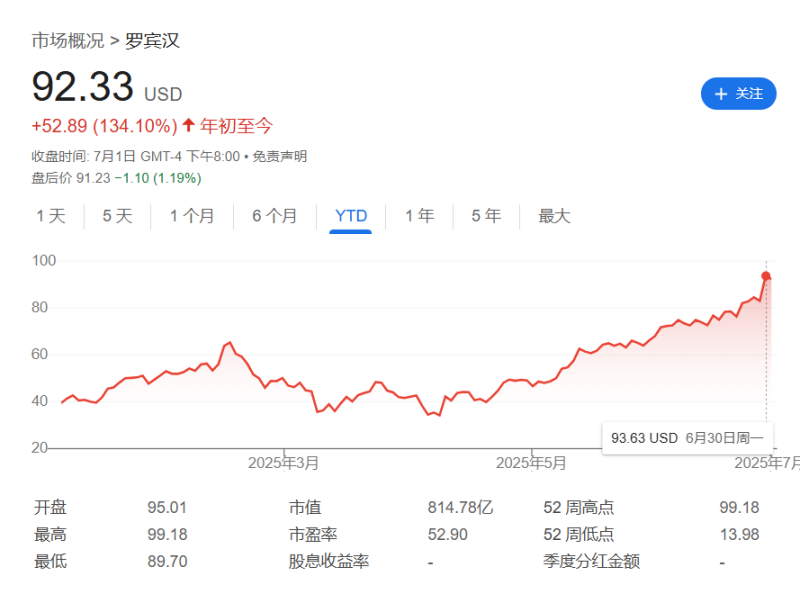
Following the announcement, Robinhood’s stock hit a record high, surging nearly 10%. Company executives also revealed plans to launch tokens linked to private company shares, starting with Sam Altman’s OpenAI and Elon Musk’s SpaceX.
Three Platforms, Three Approaches—Divergent Technical Paths
Mainstream crypto exchanges have adopted different models for U.S. stock trading.
Crypto exchanges Bybit and Kraken act as access platforms providing matching services. They use a third-party issuance model, integrating tokens issued by Backed Finance and deployed on the Solana blockchain to enable on-chain transfers and integration with DeFi applications. Users can trade 7×24 and enjoy corresponding economic rights (e.g., dividends). In this model, compliance responsibilities primarily rest with the issuer; most exchanges do not hold securities licenses and typically exclude U.S. users from these services.
In contrast, Robinhood has chosen a licensed brokerage self-built chain approach, directly issuing stock tokens on the Arbitrum network while holding custody of the underlying assets. According to Reuters, Robinhood plans to launch its own Layer 2 blockchain, Robinhood Chain, to fully integrate issuance, clearing, and settlement on-chain.
Robinhood’s CEO stated at an event in France that “tokenization will spark a revolution in mass-scale trading.” The company aims to expand the number of tradable stock tokens to “thousands” by year-end and gradually transition to full 24/7 trading.
Regulatory Clarity Emerges, Reviving Tokenized Stocks
TechFlow previously reported that tokenized stocks briefly gained traction on platforms like Mirror Protocol but faded due to regulatory and market volatility concerns. Now, with advancing regulatory frameworks for Real World Assets (RWA), traditional institutions like BlackRock and crypto-native firms are actively lobbying regulators.
Since Trump’s return to office, U.S. cryptocurrency regulation has gradually eased, making tokenized U.S. stocks a potential hotspot.
Guosheng Securities reported that Coinbase is seeking approval from the U.S. Securities and Exchange Commission (SEC) to offer tokenized stock trading. According to CoinDesk, the company has submitted a pilot application to the SEC. If it receives a no-action letter or regulatory exemption, Coinbase could become one of the first compliant platforms to launch tokenized U.S. stock services in the United States.
Reuters cited experts saying tokenized stocks could fundamentally reshape investment in equities. Combining features of traditional finance and crypto trading, tokenized stocks are gaining favor among international investors due to improved market access, flexible trading hours, and lower costs.
Tokenized U.S. stock services not only broaden asset allocation options for crypto investors but may also become a key use case for stablecoins. As on-chain “fiat,” stablecoins serve as foundational infrastructure in tokenized stock trading.
A Guosheng Securities report projects the vast scale of the U.S. stock market could drive rapid expansion in stablecoin demand.
A Trillion-Dollar Market on the Horizon
McKinsey forecasts that the market for moving real-world financial assets onto blockchains could reach $2 trillion by 2030. Tokenization of relatively simple assets like U.S. Treasuries on-chain has already seen notable success, with companies like Securitize and Ondo leading a market now worth billions of dollars.
Trump’s election has boosted optimism about improved regulatory conditions. Hester Peirce, head of the SEC’s crypto task force, recently voiced support for tokenization, suggesting a “regulatory sandbox” approach to allow innovative firms to test new models under relaxed rules.
Wyatt Lonergan of VanEck Ventures noted that native crypto investors “want the comfort of owning assets like Apple stock within their digital ecosystem,” especially during periods of crypto market volatility. However, for average U.S. investors, fractional shares and T+1 settlement are already standard, raising fundamental questions about whether scalable demand truly exists.
Challenges Remain for Tokenized Stocks
Despite the promising outlook, tokenized stocks still face significant hurdles. A Bloomberg report on June 27 highlighted that experts believe there remains a lack of regulatory clarity in the U.S., causing most such services to first launch outside American jurisdictions.
Bryan Routledge, Associate Professor of Finance at Carnegie Mellon University’s Tepper School of Business, pointed out: “You’re not just changing the format of the asset—you’re changing how trading works.” He predicts this innovation will compete directly with the existing exchange and brokerage ecosystem.
Data from RWA.xyz shows the current total market size of tokenized stocks stands at just $388 million—negligible compared to the more than $120 trillion global stock market.
Join TechFlow official community to stay tuned
Telegram:https://t.me/TechFlowDaily
X (Twitter):https://x.com/TechFlowPost
X (Twitter) EN:https://x.com/BlockFlow_News