








The Transformative Forces in Africa's Cross-border Payment Landscape
TechFlow Selected TechFlow Selected
The Transformative Forces in Africa's Cross-border Payment Landscape
For the global fintech community, the question is not whether stablecoins will go mainstream. The question is what we can learn from where stablecoins have already become mainstream—Africa.
 Navigating Web3 tides with focused insights
Author: Oui Capital
Translation: Will Awang
In previous articles such as "The Stablecoin Narrative in Crypto Is Reshaping Africa's Economic Landscape" and "Web3 Payments Deep Dive Report: Stablecoins in Africa by 2025", we primarily examined financial transformation across the African continent through the lens of stablecoins—an impactful, bottom-up perspective.
From everyday use cases—savings, consumption, and credit—to B2B trade and cross-border payments, stablecoins are addressing critical challenges in Africa including dollar access, instant settlement, and FX inefficiencies. These issues are especially pronounced in markets where traditional payment infrastructure is inadequate.
"Stablecoins in African cross-border payments are already a reality... the rest of the world is just catching up." — Zekarias Amsalu, Co-Founder of Africa Fintech Summit
Stablecoins feel to me like receiving satellite communication via Starlink on the vast Serengeti plains. But this analogy isn't complete—most Africans still rely on traditional telecom pathways. The same applies to Africa’s financial landscape. Fragmented regional systems and underdeveloped financial infrastructure require broader fintech transformation, with blockchain-based stablecoins representing just one optimal path forward.
Therefore, we have translated Oui Capital’s report: Africa's Cross-border Payment Landscape, aiming to examine the butterfly effect of financial transformation from a comprehensive view of Africa’s cross-border payment ecosystem. This report offers deep insights into the market landscape and key trends, regional differences, payment pathway options, and potential investment opportunities.
This report also reveals blind spots in the current bottom-up stablecoin narrative: the impact of regulatory harmonization, value unlocked by interoperability between fintech firms and banks, and solutions to real-world pain points (inspired by Airwallex CEO Jack’s commentary on stablecoins).
While certain regional financial innovations accelerate capital flows, Africa’s underlying financial rails have not kept pace. Traditional financial systems fail to deliver stability, accessibility, and efficiency—exposing people to inflation and financial uncertainty, limiting control over savings, and restricting access to global markets. Yet, just as the region leapfrogged desktop computing and went straight to mobile, Africa is now poised to bypass outdated banking infrastructure and actively embrace next-generation fintech innovation.
For the global fintech community, the question is no longer whether stablecoins will go mainstream. The real question is: what can we learn from where stablecoins are already mainstream—Africa?
Executive Summary
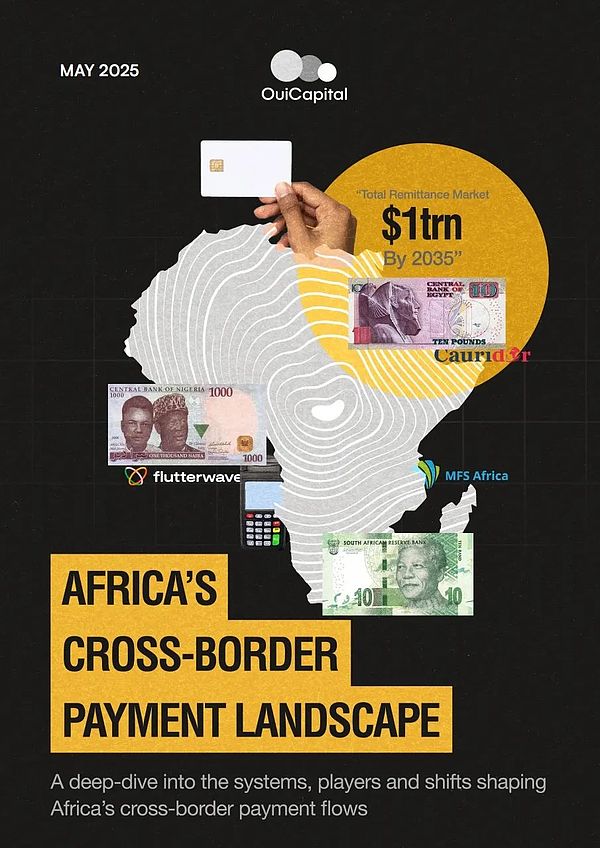
The African cross-border payments market is projected to reach $329 billion in 2025, growing at a compound annual growth rate (CAGR) of 12%, and reaching $1 trillion by 2035. However, the market suffers from inefficiencies that cost businesses and consumers billions annually. Factors reshaping this landscape include rising intra-African trade, increasing migration, growing mobile payment adoption, and fintech innovation. Despite progress, high transaction fees, currency volatility, and fragmented regulation continue to hinder seamless transactions.
In 2022, Africa had 781 million registered mobile money accounts—a 17% year-on-year increase—with transaction volumes reaching $837 billion, accounting for 66% of global mobile payment volume. Fintech solutions have significantly reduced remittance costs to an average of 3.5%, enabling near-instant transfers within minutes, compared to traditional banks charging 8–12%. Additionally, intra-African trade is expanding, with SMEs increasingly using digital payments for efficient cross-border transactions. Nonetheless, significant barriers remain.
Yet, Africa remains the most expensive region globally for remittances, averaging 7.4%–8.3%, largely due to regulatory fragmentation and limited digital interoperability. Only 55% of African countries allow e-KYC, leading to repetitive compliance processes, while inconsistent forex policies in countries like Nigeria exacerbate transaction uncertainty and cost. Moreover, foreign exchange liquidity challenges necessitate costly offshore USD/EUR clearing, resulting in an additional $5 billion in annual costs due to illiquidity and dual currency conversions.
Investment and innovation opportunities abound, particularly in enhancing digital payment interoperability and building robust API and infrastructure layers. Connecting mobile money networks could save up to $5 billion annually by improving transaction efficiency. Furthermore, the expansion of cryptocurrency and stablecoin payments presents immense potential—reducing remittance fees by up to 60% compared to traditional banks, enabling faster settlements with minimal FX costs. Finally, establishing a decentralized African FX exchange could dramatically lower currency conversion costs, stabilize rates, and promote intra-African trade and remittances.
I. Market Overview & Key Trends
Africa’s payments market stands at a pivotal moment. Rising adoption of digital payment channels, coupled with shifting migration patterns, is driving efforts to formalize informal transactions by offering faster, cheaper alternatives to traditional bank transfers. Mobile money, fintech solutions, and regulatory reforms are fueling this shift, making digital channels increasingly competitive.
This transition is expected to achieve a 12% CAGR, potentially pushing the entire cross-border remittance market (formal and informal) to $329 billion by 2025 and $1 trillion by 2035. However, despite increasing digital penetration, high costs, limited access, and regulatory gaps mean informal channels and traditional bank transfers remain deeply entrenched.
Even as digital solutions evolve, some users still rely on legacy methods due to trust issues, inconsistent regulation, or infrastructural limitations. Can digital innovation truly absorb informal flows at scale? Or will structural inefficiencies continue to drive alternative transfer methods? The answer will determine whether Africa’s payments landscape achieves its anticipated formalization—or if the informal economy continues to thrive.
1.1 Formal Cross-Border Remittance Channels & Market Growth (2020–2035)
A. Current Market Value (2025)
The formal African cross-border payments market is projected to reach $140.9 billion by 2025, growing at a 12% CAGR. In 2023 alone, remittances flowing into Africa totaled $90.2 billion (5.2% of continental GDP), nearly double the amount of foreign aid received.
B. Historical CAGR (2020–2025)
Over the past five years, formal remittance inflows have grown steadily at a CAGR between 10% and 15%, averaging 12%. Specifically, from 2020 to 2023, remittance inflows surged by 14.8%, driven primarily by increased diaspora remittances.
1.2 Total Cross-Border Remittance Volume & Market Size Estimate
A. Share of Informal Flows
In 2022, formal remittances to sub-Saharan Africa ranged between $53–54 billion, but informal channels account for a substantial share of total remittances, suggesting market size is underestimated. Informal remittances represent 35%–75% of total flows, implying actual remittance volumes—including informal transactions—could exceed $329 billion by 2025.
B. Cost Impact
Formal remittance fees average 7.4%, incentivizing continued reliance on informal transfers. Digital solutions have reduced fees to 1.5%–3%, making formal channels more attractive and potentially capturing a larger share of informal flows.
C. Market Growth Forecast
With rising digitization, a sustained 12% CAGR is expected to push total remittance volumes to $1 trillion by 2035. This underscores the massive opportunity for digital solutions to formalize more transactions, shift informal flows to traceable online channels, and drive future market growth.
1.3 Key Growth Drivers in Cross-Border Payments
A. Regulatory Reforms (Pan-African Payment and Settlement System [PAPSS] & African Continental Free Trade Area [AfCFTA])
Launched in 2022, PAPSS enables instant cross-border payments in local currencies, potentially saving $5 billion annually. Meanwhile, AfCFTA is harmonizing financial systems, reducing dependence on SWIFT and external banking intermediaries.
B. Regional Migration, Trade, and Urbanization
In 2022, intra-African remittances reached $20 billion, reflecting strong regional migration trends. Urbanization and intra-African trade are fostering South-South remittance corridors, strengthening regional financial integration.
C. Mobile Payment Penetration
Currently, 30% of cross-border remittances in sub-Saharan Africa (SSA) are processed via mobile money, totaling $16 billion in 2022—a 22% year-on-year increase. Mobile remittances grow at an annual rate of 48%, with fees (1.5%–3%) far below those of bank transfers (over 7%).
1.4 Impact of Fintech Innovation on Cross-Border Payments
A. Remittance Volume Through Fintech Channels
Digital remittance usage has doubled since 2020, with 71% of mobile remittances originating in Africa. By 2024, mobile money handled over 30% of SSA remittances, with fintech companies processing tens of billions in annual remittances.
B. Rise of Fintech Solutions (Blockchain, APIs, Digital Wallets)
Africa ranks among the highest regions globally for cryptocurrency adoption, with on-chain crypto transaction volumes reaching $125 billion—highlighting growing demand for cheaper, faster remittance solutions.
Fintech APIs are enhancing wallet-to-wallet direct transfers and interoperability, reducing reliance on costly intermediaries.
New-age banks and digital wallets offer seamless cross-border transfers via mobile and online platforms, making remittances faster, easier, and more cost-effective.
According to Chainalysis, Africa is the fastest-growing region for crypto adoption, with a YoY growth rate of 45% from 2022–2023 to 2023–2024, surpassing emerging markets like Latin America (42.5%). This rapid growth highlights the immense potential for stablecoin applications, especially in Africa where banking penetration remains among the lowest globally.
C. Expected Cost Savings from Digital Innovation
Digital transfers have significantly reduced remittance fees—from 7.4% down to 3% or lower—saving migrants $4–5 billion annually while making cross-border payments more affordable. Additionally, PAPSS and fintech APIs are expected to eliminate $5 billion in correspondent banking fees, further accelerating transaction speeds and lowering costs. Every 1% reduction in remittance fees saves African households approximately $600 million annually—underscoring the massive financial impact of digital innovation on the remittance industry.
II. Overview of Fund Flows Across African Regions
While mobile payment adoption is rising in certain areas, it remains relatively low compared to East and West Africa. Central Africa’s financial system is more fragmented, heavily reliant on informal networks, with limited interoperability between banks and mobile money platforms.
Below is a regional breakdown of fund inflows and outflows:
2.1 West Africa
West Africa is one of Africa’s largest remittance recipient regions, receiving approximately $48 billion in inflows in 2022 (World Bank 2023). Nigeria alone received $20 billion, primarily from the U.S., UK, and Canada. Ghana, Senegal, and Côte d'Ivoire also received substantial remittances due to strong diaspora ties with France and other European nations.
Intra-regional remittances are also significant—e.g., Côte d'Ivoire to Burkina Faso ($1.5B), Ghana to Nigeria ($900M), and Mali to Senegal ($750M) (African Development Bank 2023).
These flows are largely trade-driven and facilitated by informal networks due to high remittance fees averaging 8–10% (IMF 2023). Despite infrastructure improvements, interoperability between mobile money and bank-led systems remains a challenge. While Nigeria and Ghana have stronger bank-centric systems enabling broader integration, seamless transactions between mobile money and traditional banking channels are still evolving.
In Chainalysis’ Global Crypto Adoption Index, Nigeria ranks second overall. Between July 2023 and June 2024, the country received approximately $59 billion worth of cryptocurrency. Nigeria is also one of the top markets for mobile crypto wallet adoption, second only to the U.S. The country is actively pursuing regulatory clarity, including through incubation programs, and stablecoin usage in daily transactions (such as bill payments and retail purchases) is growing significantly.
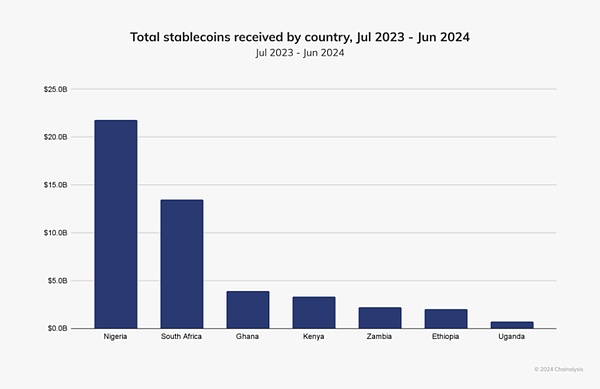
(Sub-Saharan Africa: Nigeria Takes #2 Spot in Global Adoption, South Africa Grows Crypto-TradFi Nexus, Chainalysis)
Alongside Ethiopia, Ghana, and South Africa, stablecoins play a major role in Nigeria’s crypto economy, accounting for about 40% of all stablecoin inflows in the region—the highest in sub-Saharan Africa. Nigerian users report high transaction frequency and a deeper understanding of stablecoins as financial tools rather than mere asset classes.
Nigeria’s crypto activity is driven by small-scale retail and professional transactions, with around 85% of transfers valued below $1 million. Due to inefficient and costly traditional remittance channels, many Nigerians rely on stablecoins for cross-border transfers. Remittances are the primary use case for stablecoins in Nigeria—they are faster and more affordable.
2.2 East Africa
East Africa leads in mobile money adoption, with over 60% of remittance transactions conducted digitally (GSMA 2023). Kenya, Uganda, and Tanzania rely on M-Pesa, MTN MoMo, and Airtel Money, reducing remittance costs to around 3%.
The region’s outward remittances mainly flow to the Middle East—particularly Ethiopia ($5.3B), Somalia ($2.1B), and Kenya ($3.5B) (World Bank 2023)—supporting household livelihoods and small enterprises. However, cross-border payments within East Africa remain constrained by regulatory disparities and lack of seamless interoperability, limiting financial inclusion.
One of Kenya’s greatest strengths is its deeply embedded mobile money culture. Launched by Safaricom in 2007, M-Pesa has become a cornerstone of Kenya’s financial system, handling approximately 60% of the country’s GDP and serving over 90% of adults. Its success lies in providing banking services without physical branches, enabling millions of Kenyans to deposit, withdraw, transfer funds, and even access credit via mobile devices. Stablecoins complement this ecosystem by allowing users to hold value in stable currencies and conduct frictionless global transactions.
Beyond mobile money, Kenya’s regulatory environment has been a key enabler for fintech and Web3 innovation. Unlike many countries taking restrictive stances on digital assets, the Capital Markets Authority (CMA) actively promotes innovation through regulatory sandboxes, allowing blockchain-based firms to test and refine their products.
2.3 Southern Africa
Southern Africa sees large remittance flows, especially from South Africa. In 2022, South Africa sent $17 billion to neighboring countries (Statista 2023), with Zimbabwe receiving $1.9 billion, followed by Mozambique ($1.2B) and Malawi ($800M). Labor migration drives these flows, as workers in mining, construction, and domestic services regularly send earnings home. However, remittance fees remain among the highest in Africa, averaging 12–15% via formal channels (World Bank 2023), pushing users toward informal networks, which account for nearly 40% of total remittances.
The remittance landscape in Southern Africa is bank-dominated, with traditional institutions leading cross-border transactions. Unlike East Africa, where mobile money is widespread, mobile payment penetration in Southern Africa is relatively low. For example, South Africa’s well-developed banking system handles most remittances. However, high fees and slow processing times lead many migrants to choose informal channels. Efforts to integrate mobile money into the broader financial ecosystem continue, but interoperability between mobile wallets and banks remains limited.
2.4 Central & North Africa
North Africa, led by Egypt ($32B), Morocco ($11B), and Algeria ($5.1B), remains one of the largest remittance-receiving regions, fueled by large diasporas in Europe (World Bank 2023). Over 65% of inflows come from France, Spain, and Italy.
The Middle East is another major source, particularly for Egypt, where Saudi Arabia, UAE, and Kuwait contribute over 50% of total remittance inflows (World Bank 2023). Moroccan and Tunisian migrants working in Gulf states also send significant remittances, though European inflows remain dominant.
In Central Africa, remittance corridors are shaped by intra-African migration. Cameroon, for instance, received $2.8 billion from Chad and the Central African Republic (African Development Bank 2023). With limited financial infrastructure and formal channel fees exceeding 10%, over 70% of transactions remain informal. North Africa’s financial landscape is predominantly bank-based, with most remittances processed through formal financial institutions.
2.5 Key User Segments Driving Cross-Border Payments
A. Workers and Migrants
Labour migrants send money home primarily for family expenses, education, and healthcare.
Migration is strongest from rural to urban areas and from low-income to higher-income African countries—such as South Africa and Nigeria. Other examples include Egypt in North Africa and Kenya in East Africa, both attracting significant labor migration due to stronger economies and job opportunities.
Typical monthly remittances range from $200 to $500, mainly for family support.
B. Traders and SMEs
Informal traders and SMEs use remittances for inventory procurement, supplier payments, and cross-border business expansion.
Mobile money and fintech platforms are the main transaction channels, offering fast and convenient payment solutions.
Payment amounts range from $1,000 to $10,000 depending on trade volume and sector.
C. Corporate Transactions
Enterprises use remittance systems to process payroll for expatriate employees and gig workers.
Large supply chain transactions are increasingly adopting fintech-enabled instant payments, reducing reliance on cash.
Transaction values may exceed $50,000, especially in logistics, payroll, and supply chain settlements.
III. Global Cross-Border Payment Pathways
Global cross-border payments operate through a complex, multi-layered infrastructure enabling fund movement across countries, currencies, and financial institutions. This system rests on traditional banking networks, fintech disruptors, foreign exchange (FX) settlement systems, and emerging digital payment alternatives.
To understand how African cross-border payments currently function, one must first grasp how money flows globally. This section explores the key components, major players, and cost structures defining today’s cross-border payment landscape.
3.1 Traditional Finance (TradFi) – Bank-Dominated Infrastructure
TradFi underpins most high-value international transactions, typically ranging from $100,000 to hundreds of millions. These payments are processed through secure, regulated banking channels relying on interbank messaging, correspondent banking, and large-scale settlement systems.
-
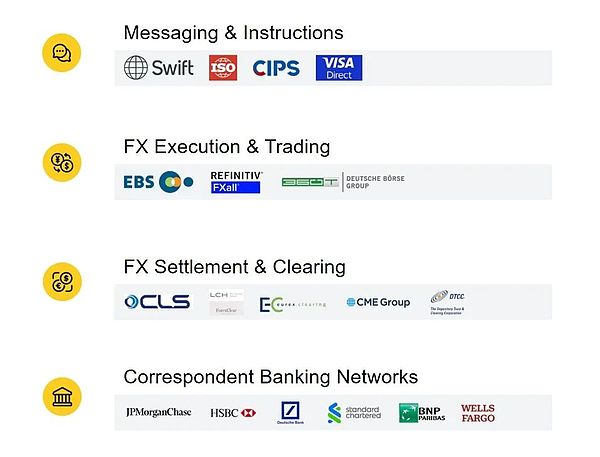
Messaging & Instructions: Communication infrastructure allowing financial institutions to securely transmit transaction details. These systems do not move funds but enable banks, PSPs, and financial entities to exchange payment instructions in standardized formats. Without them, banks would struggle with interoperability, leading to slower, costlier, and error-prone transfers.
-
FX Execution & Trading: The currency exchange layer facilitates and ensures funds are converted at market rates. Banks, hedge funds, and corporations use FX markets to secure liquidity, hedge currency risk, and settle international invoices. Without this layer, cross-currency trade would be inefficient.
-
FX Settlement & Clearing: Ensures proper settlement of trades, eliminating counterparty risk. Systems like PvP (payment versus payment) ensure simultaneous exchange of currencies, preventing scenarios where one party delivers funds but fails to receive payment.
-
Correspondent Banking Network: Large global banks handle payments between institutions lacking direct relationships, enabling cross-border transfers. They hold accounts on behalf of foreign banks to ensure correct fund routing.
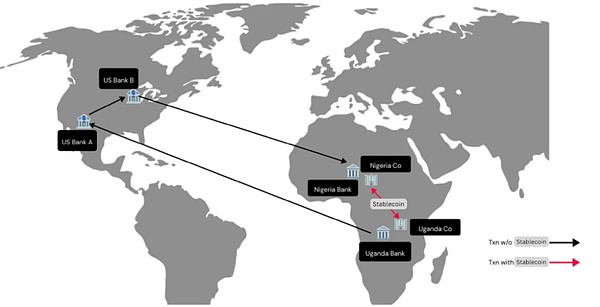
USE CASE: A U.S. company pays a German supplier $5 million via traditional bank wire.
A. Payment Initiation
A U.S. company sends $5 million to a German supplier via traditional bank wire.
Parties Involved: e.g., JPMorgan Chase (U.S. bank), Deutsche Bank (German bank).
Cost & Time Impact: SWIFT fee $10–$50. Initiation is immediate, but processing may take several hours.
B. FX Conversion (USD to EUR)
JPMorgan uses its FX trading platform to convert USD to EUR.
Entities Involved: e.g., EBS, Refinitiv FX Matching, CME FX.
Cost & Time Impact: FX spread of 0.1%–2% ($10K–$100K cost), settlement in seconds to minutes.
C. FX Settlement & Clearing
Payment settled through CLS Group to ensure simultaneous transfer of both currencies.
Entities Involved: e.g., CLS Group (PvP settlement).
Cost & Time Impact: Secure FX settlement with minor CLS fees (~$5 per $1M settled).
Time: 1 business day.
D. Correspondent Banking & Final Settlement
If no direct link exists between JPMorgan and Deutsche Bank, a correspondent bank processes the payment. Deutsche Bank credits the supplier and sends final confirmation.
Entities Involved: Correspondent bank (e.g., HSBC).
Cost & Time Impact: Additional fees of $20–$100. Full settlement takes 1–3 days.
Total Cost Estimate: $20K–$150K including SWIFT fees, FX spreads, and correspondent charges. Settlement time: 1–3 days.
Why Expensive: Multiple intermediaries charge fees at each step, FX spreads can be wide, and settlement is slow.
In Africa, due to lack of traditional financial infrastructure, cross-border remittances—even between neighboring countries—sometimes route through U.S.-based correspondent banks.
3.2 Fintech Disruptors – Faster Payment Alternatives
While TradFi dominates high-value transactions, SMEs, freelancers, and digital-first companies need cheaper, faster alternatives. This has led to the rise of fintech disruptors who bypass (optimize) correspondent banking networks by leveraging local partnerships, centralized liquidity, and real-time settlement networks.
Fintech firms are transforming cross-border payments by circumventing traditional banking channels, offering faster, cheaper, and more transparent transactions typically ranging from $100 to $50 million.
Total Cost Estimate: Fees of $12–$30, saving up to $100 vs. banks.
Settlement Time: Same-day (hours instead of days).
Cheaper & Faster Because: Wise avoids correspondent banks by locally matching transactions, eliminating FX markups and SWIFT fees.
This model of cross-border pooling and local settlement inherently enables higher payout efficiency. This is precisely why Airwallex CEO Jack questioned the advantages of stablecoins. However, this approach heavily depends on a fintech company’s ability to manage banking relationships and liquidity positions across geographies.
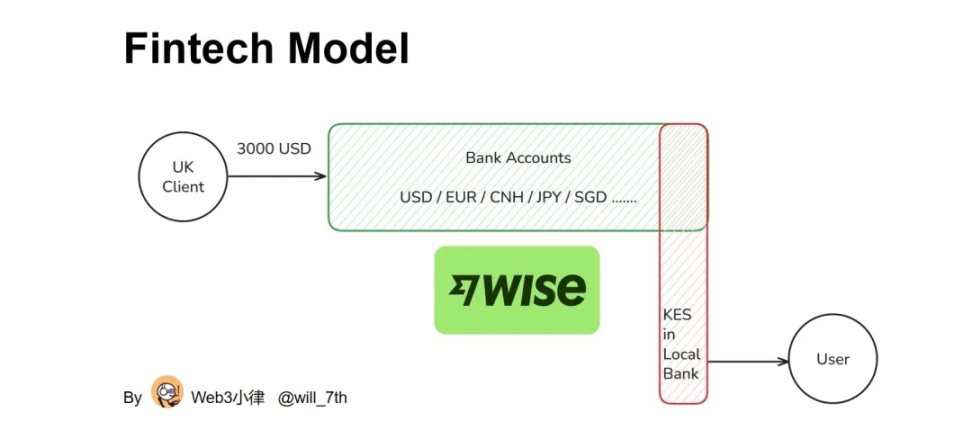
USE CASE: A freelancer in Kenya receives $3,000 from a UK client via Wise.
A. Payment Initiation
A UK client sends $3,000 via Wise instead of a traditional bank wire.
Entity Involved: e.g., Wise (fintech alternative).
Cost & Time Impact: Transfer starts immediately; fee: 0.4%–1% ($12–$30).
B. Liquidity Pooling & Local Settlement
Wise matches this transaction with someone sending KES to the UK, avoiding direct FX conversion.
Entity Involved: e.g., Wise’s local settlement network.
Cost & Time Impact: Near mid-market rate, 0.5%–1% spread (saving $60–$100).
C. Local Bank Payment
Wise pays the freelancer in KES from its local Kenyan bank account.
Entity Involved: e.g., Cooperative Bank of Kenya.
Cost & Time Impact: Settlement in minutes to hours, no SWIFT fees.
3.3 Cryptocurrency & Blockchain-Based Settlement
Blockchain and stablecoins completely replace banks, enabling instant, low-cost transactions ranging from $1 to $10 million. The crypto rail uses decentralized ledgers, fully bypassing SWIFT and correspondent banks, reducing settlement times from days to seconds.
Total Cost Estimate: On-chain fees negligible. Main costs are fiat on/off-ramps, ~0.4%–1% per side.
Settlement Time: Instant.
Cheaper & Faster Because: Eliminates intermediaries, reducing fees by up to 99% vs. banks, cutting settlement from days to seconds.
Despite fiat on/off-ramp costs, this remains cheaper than cross-border liquidity pools. But for citizens in FX-controlled countries, holding USD instead of rapidly depreciating local currency is immensely valuable.
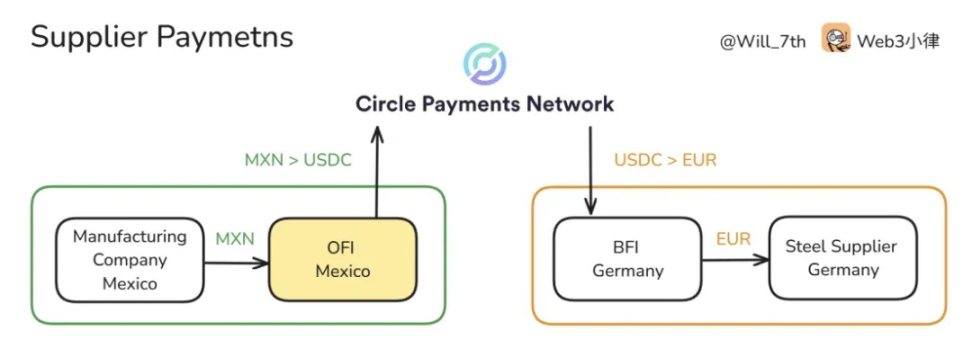
USE CASE: A Mexican textile factory sends $1 million USDC to a German supplier.
A. Blockchain Transfer
Sender converts local currency into $1M USDC and transfers via blockchain.
Participants: e.g., Ethereum, Solana, USDC issuer (Circle). Fee: 0.4%–1% ($4K–$10K).
Cost & Time Impact: Network fee: $1.
Time: Seconds.
B. Cross-Border Settlement
Recipient instantly receives $1M USDC in their digital wallet.
Participants: e.g., Crypto exchanges (Binance, Coinbase, Circle API).
Cost & Time Impact: No intermediaries, instant completion.
C. Local Conversion & Payment
Recipient converts USDC to EUR via an exchange.
Participants: e.g., Binance, local fintech firm.
Cost & Time Impact: 0.4%–1% fee via USDC issuer (Circle), settlement within minutes.
3.4 African Cross-Border Payment Channels
Traditional finance (TradFi) dominates large-value payments but remains prohibitively expensive—up to $20K–$150K per transaction. In contrast, fintech solutions offer a cost-effective alternative, reducing fees by up to 90% for SMEs and freelancers. Even more transformative, blockchain-based settlement bypasses traditional banks entirely, bringing costs close to zero.
Despite these advances, remittances remain expensive under traditional providers like Western Union. However, fintech disruption is reshaping the landscape, offering faster, cheaper alternatives.
This shift is especially urgent in Africa, where cross-border payments are fragmented, costly, and heavily reliant on correspondent banks and cash remittances. While global markets embrace real-time settlement and fintech-driven efficiency, Africa still relies on legacy infrastructure, causing delays and high fees. Yet, innovation is emerging.
Africa’s unique financial landscape—led by mobile money, regional payment systems, and blockchain-based solutions—is beginning to address long-standing inefficiencies and paving the way for a more inclusive, affordable future.
Main characteristics of African cross-border payments:
A. Dominance of Low-Value, High-Frequency Transactions
Remittances, SME trade, and informal payments are the primary use cases. The average remittance transaction in Africa is $200–$400, with an estimated 60–80 million transactions monthly (World Bank 2023). Informal cross-border traders typically process payments of $200–$1,000 per transaction, often multiple times per week (UNCTAD 2021).
B. Fintech and Blockchain
Companies like Chipper Cash, Flutterwave, and BitPesa are bypassing banks to enable faster, cheaper transfers.
C. Currency Fragmentation
Africa has over 40 currencies, leading to high FX costs and dependency on USD/EUR settlement.
D. Heavy Reliance on Cash
Digital adoption is growing, but over 80% of transactions are still cash-based (World Bank 2023). Cash remains dominant.
E. Strong Mobile Payment Networks
Africa leads in mobile payment penetration, with platforms like M-Pesa, MTN MoMo, and Airtel Money dominating.
F. Dependence on Correspondent Banks
Many African banks lack direct cross-border relationships, increasing transaction costs and processing times.
IV. How Are Cross-Border Payments Conducted Across Africa?
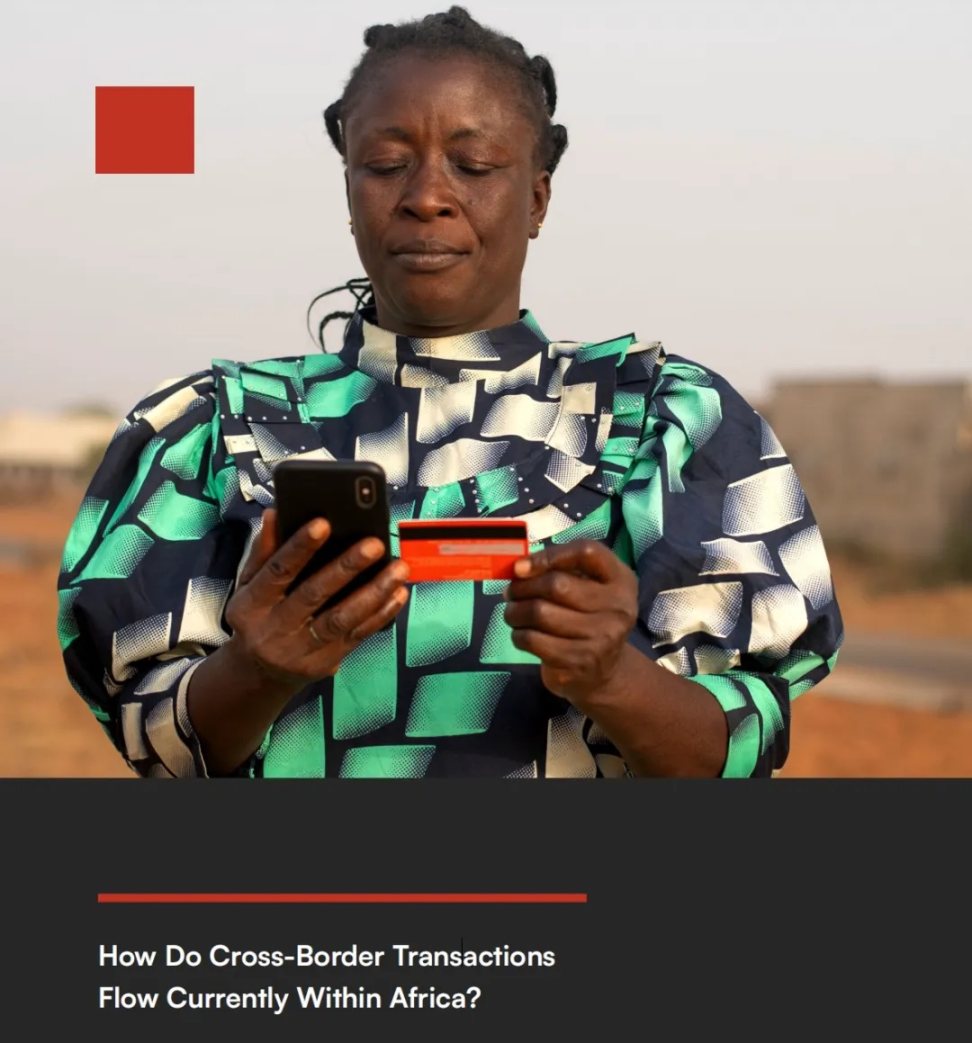
Remittance transactions typically involve multiple steps from sender to recipient, involving various financial entities and regulatory frameworks.
4.1 Sender Initiates Transaction
The sender selects a payment channel based on cost, speed, accessibility, and convenience. Preferences vary by location, digital literacy, and financial infrastructure:
Mobile Money (e.g., M-Pesa, MTN MoMo)
Preferred in countries with mature mobile money ecosystems due to low fees (typically 1–3% per transaction) and high accessibility. Transactions are usually instant, ideal for everyday remittances under $500.
Fintech Apps (e.g., Chipper Cash, Grey)
Appeal to digitally savvy users seeking faster transfers and better exchange rates. These services charge less than banks (average 0–2%), with processing times from minutes to hours.
Bank Transfers (e.g., UBA, Ecobank)
Commonly used by businesses and individuals with formal banking access for large-value transactions. However, these services carry higher fees (2–5%) and slower processing (1–3 days), making them less suitable for urgent remittances.
Cash Pickup/Drop-off (e.g., Western Union, MoneyGram)
Still crucial for recipients in rural areas with limited digital infrastructure. These services charge 5–10% per transaction and require recipients to visit physical locations, but they are reliable and widely accessible.
Crypto Transfers (e.g., Bitnob, Afriex)
Favored by users seeking low-cost (0–1%) and borderless transactions, especially in FX-restricted environments. Settlement can be instant or take several hours, depending on blockchain congestion and availability of fiat on/off-ramps.
4.2 Transaction Processing & Routing
Transactions are processed and routed by payment aggregators, money transfer operators (MTOs), or blockchain-based networks—each serving different market needs and operational models:
Mobile Money Aggregators
These companies connect telecom operators, banks, and international MTOs to enable seamless transaction routing. As aggregators, they don’t directly own customer relationships but facilitate interoperability. They focus across Africa, especially in regions with high mobile money penetration (East, West, and parts of Central Africa). Revenue comes from transaction fees charged to IMTOs, telcos, and banks.
Some also operate direct-to-consumer (D2C) services for individuals and SMEs conducting cross-border transactions—e.g., Onafriq (formerly MFS Africa), Cauridor, Thunes.
Fintech Aggregators
Digital payment infrastructure providers offering businesses (merchants, fintechs, SMEs) a single API to accept multiple payment methods—mobile money, bank transfers, card payments. Companies like Flutterwave, Paystack, and Fincra enable merchants to process digital payments from various sources via one integration. They focus on countries with thriving digital economies and formalized banking—e.g., Nigeria, South Africa, Egypt, Kenya. Revenue models include merchant transaction fees (1–4%), API subscription fees, and value-added services like fraud detection and instant settlement. These aggregators meet the needs of enterprises, merchants, and digital platforms requiring seamless payment processing.
Traditional Banks & Correspondent Banking Network
Bank-mediated transactions are processed via SWIFT and correspondent banking relationships—the dominant method for high-value payments. Most African banks lack direct links to foreign banks, requiring intermediary correspondent banks (e.g., Citibank, JPMorgan) to clear cross-border payments. This dependency increases costs and delays, with settlement times ranging from 1 to 5 days due to multiple intermediaries charging fees at each stage.
SWIFT handles over $80 billion monthly in transactions involving African banks (SWIFT 2023), deeply entrenched due to global acceptance and regulatory compliance. However, it remains one of the most expensive solutions, with fees of 0.5%–3% plus FX spreads and intermediary charges. Disrupting this system is difficult, though emerging alternatives like PAPSS and blockchain-based networks aim to reduce costs and settlement times.
Cash Pickup & Remittance Networks
Western Union and MoneyGram transactions often route through correspondent banks (e.g., Citibank, JPMorgan) to reach recipients, adding layers of fees and delays. Since most African banks lack direct international clearing capabilities, these providers must use SWIFT to transfer funds—resulting in high costs (5–10% per transfer) and extended processing (hours to days). Many banks also serve as physical pickup points for Western Union and MoneyGram, reinforcing their reliance on bank infrastructure for cash disbursement and compliance checks.
Despite these inefficiencies, Western Union and MoneyGram maintain strong market dominance due to decades of established agent networks, compliance frameworks, and consumer trust. Their ability to offer cash pickup, bank deposits, and FX services ensures continued leadership in Africa’s remittance space.
To mitigate inefficiencies, emerging players like BnB Transfer have expanded beyond traditional cash pickup. They now offer bank deposits, mobile money, and agency network services, giving individuals and SMEs more flexible access to funds while reducing reliance on costly correspondent banking systems.
Blockchain Networks & Crypto-Based Remittance
Platforms like Afriex, Bitnob, and Stellar process transfers on blockchain networks. This enables instant transaction validation, reduces intermediaries, shortens settlement to minutes, and lowers per-transaction costs to 0–1%. Users typically fund their crypto wallets via bank transfer, mobile money, or other available on-ramps.
While blockchain-based remittance solutions offer faster settlement and greater accessibility for users in FX-controlled or bank-limited countries, they face scalability challenges due to regulatory uncertainty, limited fiat on/off-ramps, and compliance restrictions. Difficulty converting crypto efficiently into local currency hinders partnerships with major financial institutions, limiting their capacity to process large volumes and compete with traditional remittance providers.
4.3 Foreign Exchange Conversion
If remittances involve different currencies, FX conversion is required before payout. This is facilitated by various entities: banks, FX brokers, fintech platforms, and blockchain-based liquidity providers.
Banks & Correspondents
Traditional banks rely on correspondent networks to access foreign currencies, adding fees (typically 0.5%–3% per transaction) and extending settlement times (1–3 days).
FX Brokers & Fintech Platforms
Companies like AZA Finance, VertoFX, and Thunes offer alternative FX services, often providing better rates and faster settlement than banks. They aggregate liquidity from multiple sources to facilitate cross-border trade and remittances.
Blockchain-Based Liquidity Providers
Platforms like Stellar, Bitnob, and Afriex use decentralized networks to offer real-time FX conversion at minimal cost (0–1% per transaction), though scalability is limited by regulatory barriers and low institutional adoption.
4.4 Last-Mile Delivery
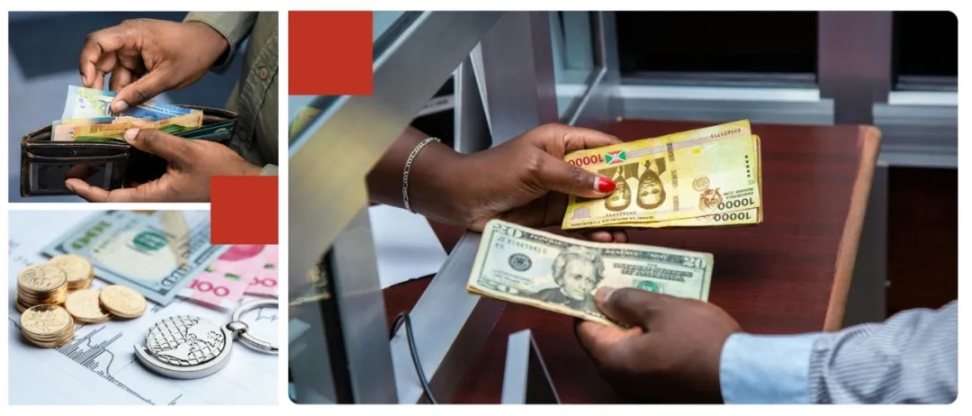
Funds must be deposited into the recipient’s mobile wallet, bank account, or made available for cash pickup via partner agents, banks, or mobile money operators.
Banks & Financial Institutions
For recipients opting for bank deposits, financial institutions handle the transfer. Settlement ranges from instant to 3 days, depending on infrastructure and interbank relationships.
Mobile Money Operators
Platforms like M-Pesa, MTN MoMo, and Airtel Money support direct wallet deposits, typically processed in real-time or within hours.
Cash Pickup Networks
Providers like Western Union, MoneyGram, and BnB Transfer offer in-person cash pickup at designated agent locations or partner banks. These transactions require additional KYC verification and fees.
V. Africa’s Payment Landscape & Key Players
Traditional institutions like banks and money transfer operators (MTOs) rely on correspondent banks and the SWIFT network, driving up costs and slowing settlement. Meanwhile, fintech companies are rapidly transforming Africa’s cross-border payment landscape by offering users faster, cheaper, and more convenient solutions.
In contrast, fintech disruptors are reshaping the payment ecosystem by offering direct-to-consumer services and building infrastructure that empowers traditional institutions. This wave of innovation is redefining Africa’s cross-border payment industry and intensifying competition.
5.1 Market Opportunities & Real Challenges
Challenges:
- Lack of a true intra-African clearing and settlement system. Payments require USD clearing, increasing cost and inefficiency.
- No unified African FX market. Illiquid local currencies lead to costly currency conversions.
- Limited interoperability between banks and fintech firms. Siloed systems cause inefficiencies.
- Slow adoption of PAPSS. Regulatory hesitation and liquidity constraints hinder regional payment initiatives.
- Over-reliance on SWIFT for cross-border transactions. African banks depend on expensive international payment networks.
Opportunities:
- Real-Time Gross Settlement (RTGS) systems enabling instant intra-African transactions without USD dependency.
- Decentralized FX liquidity pools facilitating African currency trading without correspondent banks.
- Standardized API layers to improve bank-fintech interoperability.
- Pan-African instant payment corridors (similar to Europe’s SEPA) to unify fragmented systems.
- SWIFT alternatives for African banks to reduce dependence on costly international networks.
5.2 The Fintech Disruptor Landscape
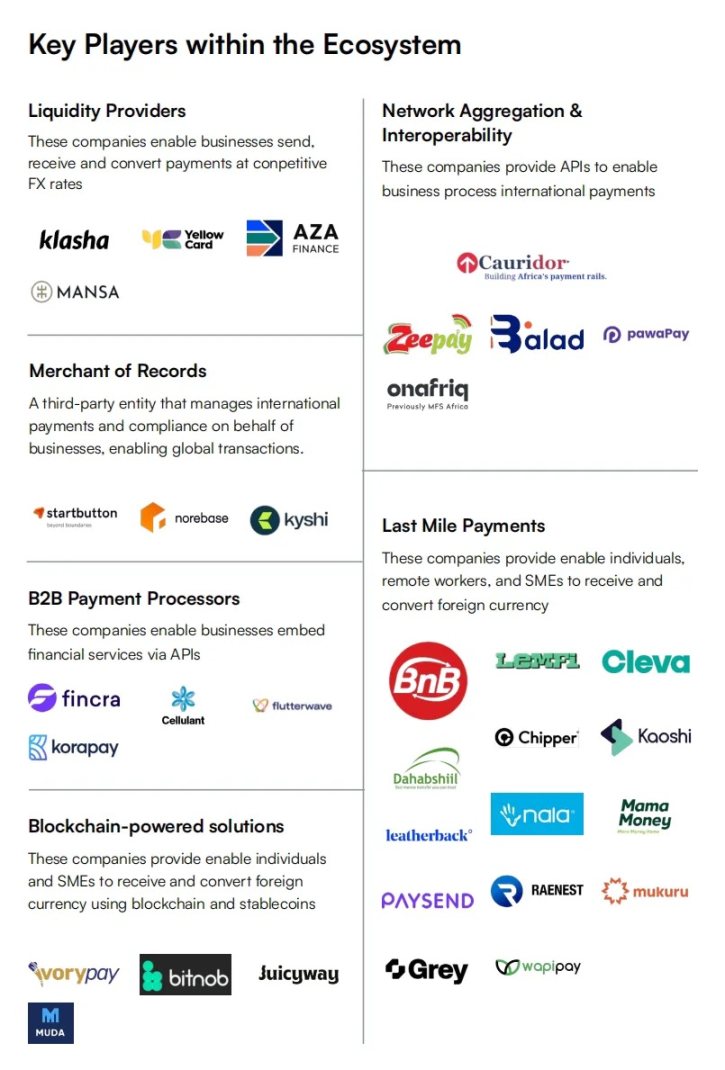
In response to the above opportunities and challenges, the power of fintech disruptors becomes evident:
The emergence of B2B Payment Processors (firms enabling businesses to embed financial services via APIs) and Last-Mile Payment Providers (those enabling individuals, remote workers, and SMEs to receive and convert foreign currency) has drastically reduced transaction costs—typically 50%–80% lower than traditional channels. Fintech platforms now offer near-instant settlement within hours, significantly faster than banks’ typical 2–5 days. However, entry barriers in these segments are relatively low, leading to fierce competition and declining fees. Companies like Chipper Cash and LemFi have eliminated transaction fees on certain channels, forcing traditional providers to rethink pricing strategies.
Liquidity Providers (firms enabling businesses to send, receive, and convert payments at competitive rates) now offer competitive FX pricing and multi-currency settlement, filling gaps left by traditional banks amid capital controls and USD shortages. However, high capital requirements, constrained competition, and rapid market entry make scaling difficult in this space.
Network Aggregation & Interoperability providers (companies offering APIs to streamline international payments for businesses) solve Africa’s fragmented mobile money ecosystem by enabling seamless cross-border payments. Yet, regulatory hurdles and dominant telecom operators hinder development, requiring deep market integration and strategic partnerships.
As fintech companies steadily gain market share, banks and traditional providers are adapting to changes in Africa’s cross-border payment landscape. Legacy players like Western Union and MoneyGram have responded by lowering fees and integrating mobile money platforms, while banks increasingly partner with fintech firms to innovate and enhance customer experience. Although SWIFT-based transactions remain significant, fintech solutions are gradually attracting users with faster, more cost-effective alternatives, driving broader innovation across the industry.
Beyond Oui Capital’s fintech-focused perspective, Chuk from Paxos has also mapped an ecosystem encompassing African payment channels, use cases, and companies, revealing deeper insights. It illustrates the depth of stablecoin transformation already underway in Africa and highlights Africa’s role in shaping its own financial future.
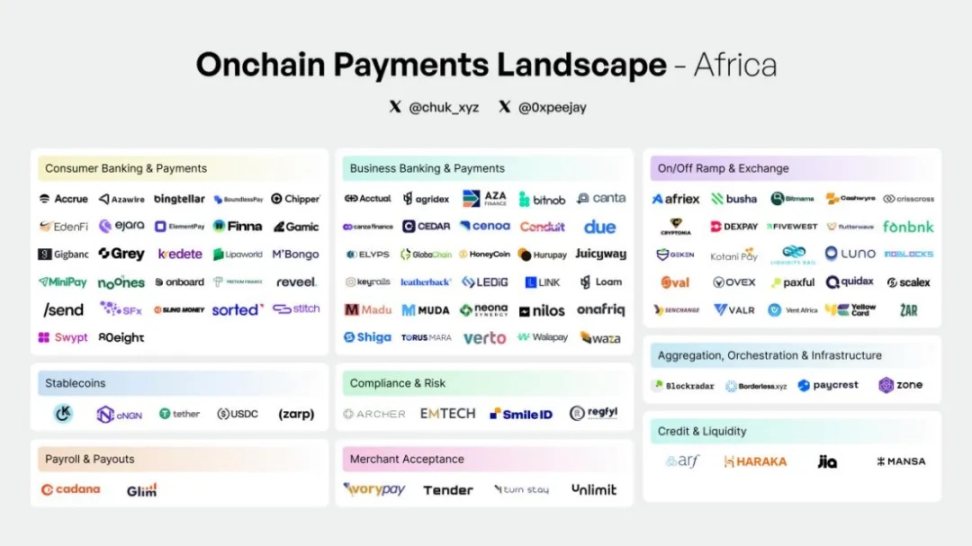
(Mobile Money to Global Money: Africa’s Stablecoin Revolution, Chuk @ Paxos)
Looking ahead, Africa’s cross-border payment industry will see further price declines, rising stablecoin adoption, enhanced interoperability among financial institutions, and deeper collaboration between banks and fintechs. The most successful companies will scale efficiently, navigate regulatory frameworks adeptly, and deliver seamless, affordable transaction services. As competition intensifies, traditional institutions must innovate quickly or risk marginalization in Africa’s rapidly digitizing financial ecosystem.
VI. Risks & Challenges in Fintech Development
Fintech companies in cross-border payments face multiple challenges affecting scalability, profitability, and long-term sustainability. These stem from regulatory environments, financial risks, and intense competition. Below are the main risks and constraints limiting fintech growth:
6.1 Regulatory Uncertainty
Navigating complex and evolving regulatory landscapes remains one of the biggest hurdles for fintechs operating in cross-border payments.
Compliance Diversity: Each jurisdiction has its own financial regulations, anti-money laundering (AML) rules, and capital controls, making cross-border operations cumbersome.
Licensing & Approvals: Obtaining necessary remittance licenses across jurisdictions can be costly and time-consuming, with regulatory approvals taking months or even years.
Data Protection & Privacy Laws: Compliance with GDPR (Europe), Nigeria Data Protection Regulation (NDPR), and South Africa’s POPIA adds complexity, especially regarding data localization requirements.
Sanctions & Fraud Prevention: Cross-border transactions face strict scrutiny from global regulators like FATF, making compliance an ongoing challenge.
Example: Crackdowns by regulators led to the shutdown of crypto remittance services in Nigeria, highlighting the unpredictability of fintech operations in emerging markets.
6.2 Credit, FX Lending & Liquidity Risk
Many fintechs, especially those involved in FX trading, extend credit to customers through FX position lending or liquidity support. However, this exposes them to counterparty default, currency volatility, and poor liquidity management.
FX Liquidity Provision & Position Lending:
When businesses or fintechs need to settle cross-border payments but lack immediate FX access, FX providers act as liquidity sources. They extend credit in the required currency, allowing transactions to proceed before full settlement. If clients fail to repay or face delays, FX providers bear the risk.
FX Volatility Risk: Exchange rates fluctuate constantly; sudden devaluations can leave fintechs exposed on FX positions. Providers facing sharp FX swings may struggle to maintain liquidity, especially during deteriorating local market conditions.
Systemic Ripple Effects: If multiple fintechs default, liquidity shortages can emerge, widening market spreads and increasing transaction costs. Banks and liquidity providers respond by tightening credit lines, demanding more collateral, or raising fees—adding further financial pressure on fintechs.
Liquidity Management Risk: Most FX firms generate revenue from bid-ask spreads.
Without sound treasury management—accurate FX spread pricing, balanced balance sheets, and effective currency hedging—they risk massive losses. Poor cash flow management can quickly spiral, potentially leading to insolvency.
6.3 Market Competition & Profitability Pressure
Intensifying competition in fintech makes differentiation and long-term profitability increasingly difficult.
Established Competitors: Traditional banks, global remittance giants (Western Union, MoneyGram), and large fintechs (Wise, Revolut) dominate key markets. However, African fintechs like LemFi, Geegpay, and Chipper Cash have gained traction, offering more localized, cost-effective solutions for cross-border payments.
These firms leverage digital wallets, multi-currency accounts, and direct integrations with mobile money platforms to streamline transactions, reduce costs, and shorten settlement times. Their rise reflects growing competition and a shift toward fintech-driven remittance solutions in Africa.
Price Wars & Thin Margins: Many fintechs compete by slashing transaction fees, eroding profitability and making scale harder to achieve. Average transaction fees for African fintechs range from 0.5% to 2% per transfer—far below the 5%–10% charged by traditional providers. Some firms, like LemFi and Geegpay, offer zero or near-zero fees to attract users, further compressing margins. While this strategy wins market share, it creates sustainability challenges, pushing fintechs to diversify revenue through FX spreads, subscriptions, and embedded financial services.
Customer Acquisition Cost (CAC): High costs of acquiring and retaining users add pressure, especially in emerging markets where fintech adoption is growing but customer education remains a hurdle. CAC for fintechs typically ranges from $5 to $30 per user, while lifetime value (LTV) depends heavily on transaction frequency and add-on financial services. In competitive markets, marketing spend and user incentives further erode profitability, challenging long-term viability.
6.4 Infrastructure & Liquidity Constraints
Fintechs often struggle to access banking infrastructure and liquidity, limiting their ability to scale effectively.
Dependence on Partner Banks: Many fintechs rely on traditional banks for cash-in/cash-out services, reducing independence and increasing costs.
Slow Settlement Times: Lack of real-time cross-border settlement solutions increases delays and harms user experience.
Liquidity Risk in Emerging Markets: Managing multi-currency liquidity without strong bank backing remains a major bottleneck. FX fintechs typically depend on a network of liquidity providers, correspondents, and market makers to access currencies on demand. This dependence brings significant risks—currency mismatches, high transaction fees (0.5%–3%), and exposure to FX volatility. Without robust treasury practices, fintechs may fail to maintain adequate liquidity buffers, risking settlement failures, rising borrowing costs, and reduced transaction efficiency. Emerging strategies include real-time FX settlement solutions and partnerships with stablecoin issuers to mitigate these risks and improve liquidity management.
VII. Conclusion & Recommendations
Driven by rising digital adoption, increasing mobile money penetration, and fintech leadership, Africa’s cross-border payments market is poised for significant growth. As more individuals and enterprises seek cost-effective, fast, and convenient payment solutions, intra-African remittance volumes are expected to keep rising.
With the emergence of regional payment networks like PAPSS, dependence on SWIFT-based correspondent banking may decline, lowering transaction costs and improving settlement efficiency. Additionally, crypto remittances and stablecoins—as alternatives to traditional FX and banking systems—are gaining traction, offering seamless, low-cost cross-border payment services. However, regulatory challenges and liquidity constraints remain key barriers to mass adoption.
For Fintech Founders:
Addressing real-world SME payment and trade finance problems (high-cost, inefficient B2B transactions) holds immense opportunity. Collaborating with mobile money providers to build financial interoperability can unlock exponential market growth. Beyond P2P remittances, expanding into embedded financial services (lending, insurance, working capital solutions) will boost margins.
For Investors:
Prioritize infrastructure investments—especially in the biggest gaps (PAPSS adoption, FX liquidity solutions, API interoperability)—which represent over $10 billion in opportunity. Focus on fintech connectors: interoperability will drive fintech adoption faster than crypto itself. Watch high-frequency, low-cost transaction models: winners will scale through volume, not margin.
For Policymakers:
A cross-border fintech license and a unified African KYC framework could unlock billions in trapped capital—requiring major regulatory coordination. Instead of restricting crypto, governments should pilot stablecoin-backed settlement networks to engage with, rather than suppress, this bottom-up trend. Accelerate PAPSS adoption: strengthen regional banking integration to reduce intra-African trade’s dependence on the U.S. dollar.
Join TechFlow official community to stay tuned
Telegram:https://t.me/TechFlowDaily
X (Twitter):https://x.com/TechFlowPost
X (Twitter) EN:https://x.com/BlockFlow_News
 @OuiCapital


