Trump's Smartphone Enigma: Repeating the "Freedom Phone" Scam or Following Solana's Wealth Code?
TechFlow Selected TechFlow Selected
Trump's Smartphone Enigma: Repeating the "Freedom Phone" Scam or Following Solana's Wealth Code?
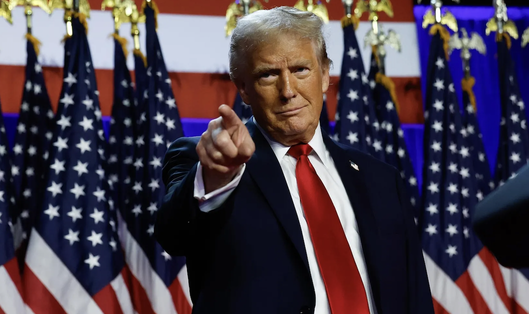
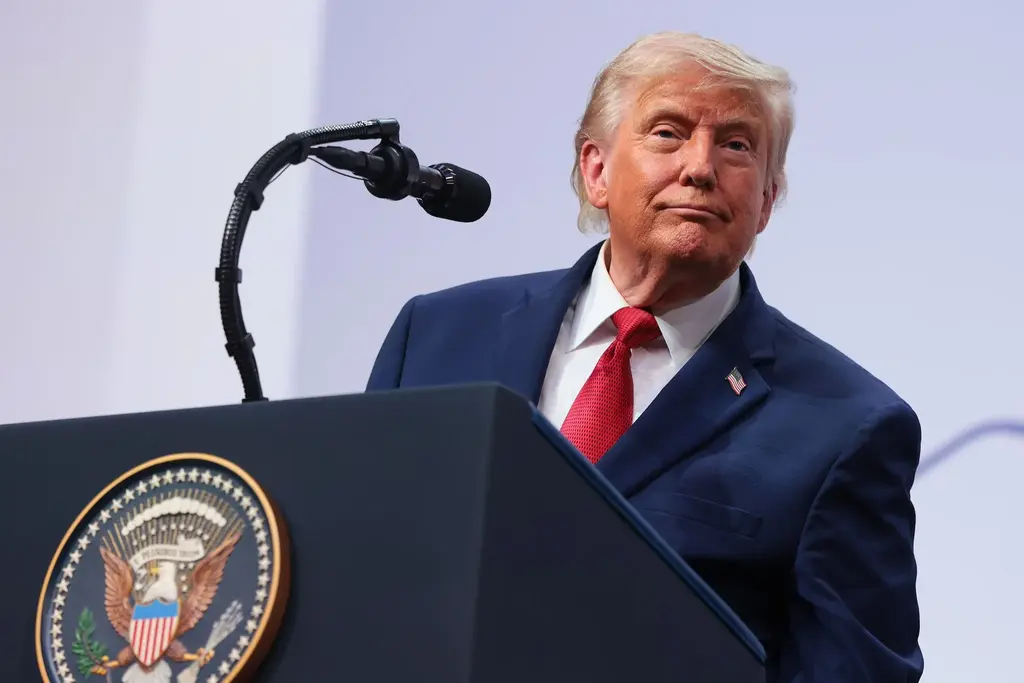
Donald Trump Jr. and Eric Trump launch "Trump Phone," more than just a hardware product—it's a political statement, attempting to merge a specific ideology with business model.
 Navigating Web3 tides with focused insights
By Luke, Mars Finance
When a smartphone ceases to be merely a communication device and is instead forged into a ticket to a "parallel universe," the rules of the game have already quietly changed. Donald Trump Jr. and Eric Trump’s decision to unveil the “Trump Mobile” at the 10th anniversary of their father’s presidential campaign launch was itself a meticulously staged political spectacle. This is not just a hardware product or a telecom service—it is a declaration, a digital totem attempting to bind together a specific ideology, community, and business model.
Beneath the fanfare of its launch event and the loud slogan of “Made in America,” a deeper question emerges: Is this a serious technological and commercial innovation, or yet another “Patriot Scam” exploiting political fervor to harvest supporters? To see through this maze, we cannot focus solely on the Trump name. Instead, we must turn our gaze toward an apparently unrelated realm—the world of crypto—and that phone which once staged a miraculous resurrection: the Solana Saga.
Is the business model behind “Trump Mobile” a politicized translation of Web3’s “airdrop economics”? Is it repeating the same rebranded,韭菜-harvesting playbook as the ill-fated Freedom Phone three years ago, or is it quietly adopting the viral marketing code of the Saga phone’s “buy hardware, get wealth” strategy? Does this golden phone call lead into an abyss of irreversible fraud, or toward a new commercial continent built on faith, community, and capital?
The Golden Shell: “Made in America” and the Illusion of Value
The core narrative of “Trump Mobile” rests on two pillars: a golden smartphone called the “T1,” and a mobile service plan named the “47 Plan.” Both are wrapped tightly in the rhetoric of “America First.” The $47.45 monthly fee cleverly references the 45th presidency and the aspiration for a 47th term. Meanwhile, the T1’s central selling point is the highly emotive promise—“Designed and manufactured in the United States.”
In the context of global manufacturing in 2025, this claim feels both bold and illusory. A smartphone is a “dragon ball” of global collaboration, with supply chains spanning Asia, Europe, and the Americas. From Qualcomm or MediaTek processors, to Samsung or BOE OLED displays, to CATL or LG batteries, core components are produced within highly concentrated industrial clusters. According to strict U.S. Federal Trade Commission (FTC) guidelines, “Made in USA” requires that “all or virtually all” parts and processes originate domestically—an almost impossible feat for any smartphone.
A more realistic scenario is that the T1 will follow the path of “Assembled in USA”—importing globally sourced components and completing final assembly on American soil. This is legally compliant, but using “manufactured” instead of “assembled” in marketing language undoubtedly stirs greater national pride and purchasing impulse among its target audience. This semantic sleight-of-hand is part of the business strategy itself—a deliberate construction of a value illusion rooted in patriotic consumption.
Likewise, the nearly $50 monthly “47 Plan” holds no price advantage in the fiercely competitive U.S. MVNO (Mobile Virtual Network Operator) market. Providers like Visible, Mint Mobile, and US Mobile offer similar or better unlimited data plans at lower prices. Trump Mobile isn’t competing on value-for-money; it’s engaging in “value bundling.” Value-added services such as roadside assistance and telehealth precisely target its core user base—older, non-urban conservatives who prioritize traditional security. Buyers aren’t just purchasing connectivity—they’re buying emotional reassurance, a sense of preparedness. And this feeling lies at the heart of the Trump political brand.
Yet this model has precedents. Three years ago, a product called the “Freedom Phone” played out an almost identical script. Marketed as “uncensored” and “built for patriots,” it sold for $500—only for investigations to reveal it was a rebranded version of the Youmi A9 Pro, a $120 phone from Chinese e-commerce platforms. The farce ended in reputational collapse, becoming a textbook case of the “political consumerism” trap. While Trump Mobile appears more professionally executed, its underlying logic mirrors that of the Freedom Phone: leveraging ideological premium to sell identity, not technology. Whether it can escape that shadow depends on whether it holds a card the Freedom Phone never had.
The Saga Lesson: When Hardware Becomes a Money Printer
That hidden card may lie in the legendary story of the Solana Saga phone. In early 2023, the Saga—a Web3-focused “crypto phone” launched by blockchain giant Solana—was a commercial disaster. Priced at $1,000, it flopped in the market, even after being slashed to $599. But by late 2023, everything flipped.
The turning point was a seemingly minor “airdrop.” Every Saga owner qualified to receive 30 million BONK tokens. BONK, a meme coin on the Solana network, started nearly worthless. But as the crypto market rebounded and community hype surged, BONK’s price exploded—rising hundreds of times over in weeks. Overnight, the airdrop’s value soared past $1,000, exceeding the phone’s cost.
A stunning wealth effect emerged: buying a Saga didn’t just mean getting the phone for free—it meant making hundreds in profit. The phone ceased to be a consumer gadget and became a money-printing “minting machine.” News spread virally across social media. Within days, the Saga sold out completely, and secondhand prices jumped to five times the original retail.
Saga’s comeback offered a revolutionary insight to the tech industry: hardware doesn’t need to win on specs or experience. Instead, it can drive sales by bundling a high-potential digital asset. The phone becomes a customer acquisition channel, a VIP pass into a closed economic ecosystem. Users aren’t buying hardware—they’re buying a seat at the table, a chance to participate in future wealth distribution.
Now, return your gaze to the “Trump Mobile.” Though it lacks an overt crypto pedigree, the “Trump economy” surrounding it shares striking similarities with crypto communities: intense group cohesion, shared ideology, and a deep distrust of established institutions—both political and financial. If the T1 aims to transcend the lowbrow scam image of the Freedom Phone, emulating Saga’s “airdrop economics” offers a tantalizing shortcut.
The “MAGA Coin” Airdrop: Trump’s Wealth Code?
What could be the “BONK token” for the Trump Mobile? The answer might be simpler than we think.
The first and most powerful possibility: directly airdropping shares of Trump Media & Technology Group (TMTG), traded under the ticker DJT. Imagine this: purchase a T1 phone at an unspecified price, activate it, and through a dedicated app, receive hundreds of dollars’ worth of DJT stock. This isn’t a discount or cashback—it transforms customers into shareholders and business partners.
The power of this model is exponential. Every phone owner becomes a staunch defender and enthusiastic promoter of $DJT’s stock price. They’ll organically promote the phone and company on social media because their financial interests are directly aligned. Phone sales translate directly into market cap growth, creating a powerful positive feedback loop. Merging fan culture, community identity, and capital markets in this way would unleash extraordinary energy. True, this would attract scrutiny from the U.S. Securities and Exchange Commission (SEC), but for the legally savvy Trump team, such risks are likely already factored into their strategic planning.
The second possibility: issuing a new “MAGA Coin” or “Patriot Points.” This digital token could serve as the universal currency within a “Trump parallel economy.” Users could mine or earn it by buying the phone, using services, or posting interactions on platforms like Truth Social. The token could then be spent at affiliated merchants (such as “patriot businesses” on PublicSq), redeemed for goods, or used to buy tickets to rallies or limited-edition memorabilia.
This would turn the T1 phone into the central bank and digital wallet of this parallel economy. It would perfectly replicate the Saga playbook: fueling hardware sales with a novel, community-backed digital asset. This wouldn’t just boost phone sales—it would lock millions of users into a closed economic ecosystem, completing a full loop from online community to real-world commerce.
Conclusion: The Golden Call to a Parallel Universe
To return to our initial question: What exactly is the “Trump Mobile”?
It is not simply a phone. It is a carefully designed experiment at the intersection of business and politics. It seeks to transform a vast political movement into a vertically integrated, self-sustaining economy. And the T1 phone is meant to be the “digital ID” and “financial terminal” of this emerging economic system.
If it remains stuck at slogans like “Assembled in USA” and offering mediocre bundled services, it risks repeating the Freedom Phone’s fate—a fleeting joke in history’s long scroll. But if it boldly adopts the success formula of the Solana Saga, deeply tying hardware to strong economic incentives via $DJT stock airdrops or “MAGA Coin” issuance, it could usher in a new era of “Political Consumerism 2.0.”
In this new era, consumers don’t buy products for their features, but for the identity, belonging, and potential wealth they represent. Phones will no longer be neutral devices—they will become “firewalls” and “connectors” between tribes, beliefs, and economic worlds.
This golden phone may ultimately not connect callers to distant friends or family, but to a new world forged by faith, code, and capital. The signal has been sent. We are all waiting to see who answers—and what they hear on the other end: a gospel of hope, or the noise of desire.
Join TechFlow official community to stay tuned
Telegram:https://t.me/TechFlowDaily
X (Twitter):https://x.com/TechFlowPost
X (Twitter) EN:https://x.com/BlockFlow_News