Coinbase on the Move: Splashing Cash on Sponsorships and Acquisitions, Leveraging S&P 500 Inclusion to Break into the Mainstream
TechFlow Selected TechFlow Selected
Coinbase on the Move: Splashing Cash on Sponsorships and Acquisitions, Leveraging S&P 500 Inclusion to Break into the Mainstream
Coinbase has been accelerating product innovation and ecosystem expansion over the past several months, significantly enhancing user experience and boosting market confidence, while seeking to build a more diversified growth engine.
 Navigating Web3 tides with focused insights
By Nancy, PANews
Coinbase is undoubtedly one of the key driving forces behind advancing cryptocurrency compliance in the United States, actively promoting industry-friendly policies through strategic political donations. Recently, it made headlines by sponsoring the U.S. Semiquincentennial military parade, aiming to strengthen its influence within mainstream society and the political arena.
At the same time, over recent months Coinbase has accelerated product innovation and ecosystem expansion, significantly improving user experience and market confidence while attempting to build a more diversified growth engine.
Inclusion in S&P 500 Boosts Stock Recovery, but Profit Model Hides Concerns
Since the beginning of this year, Coinbase has shown positive signals across several key metrics, with both stock price and user activity recovering.
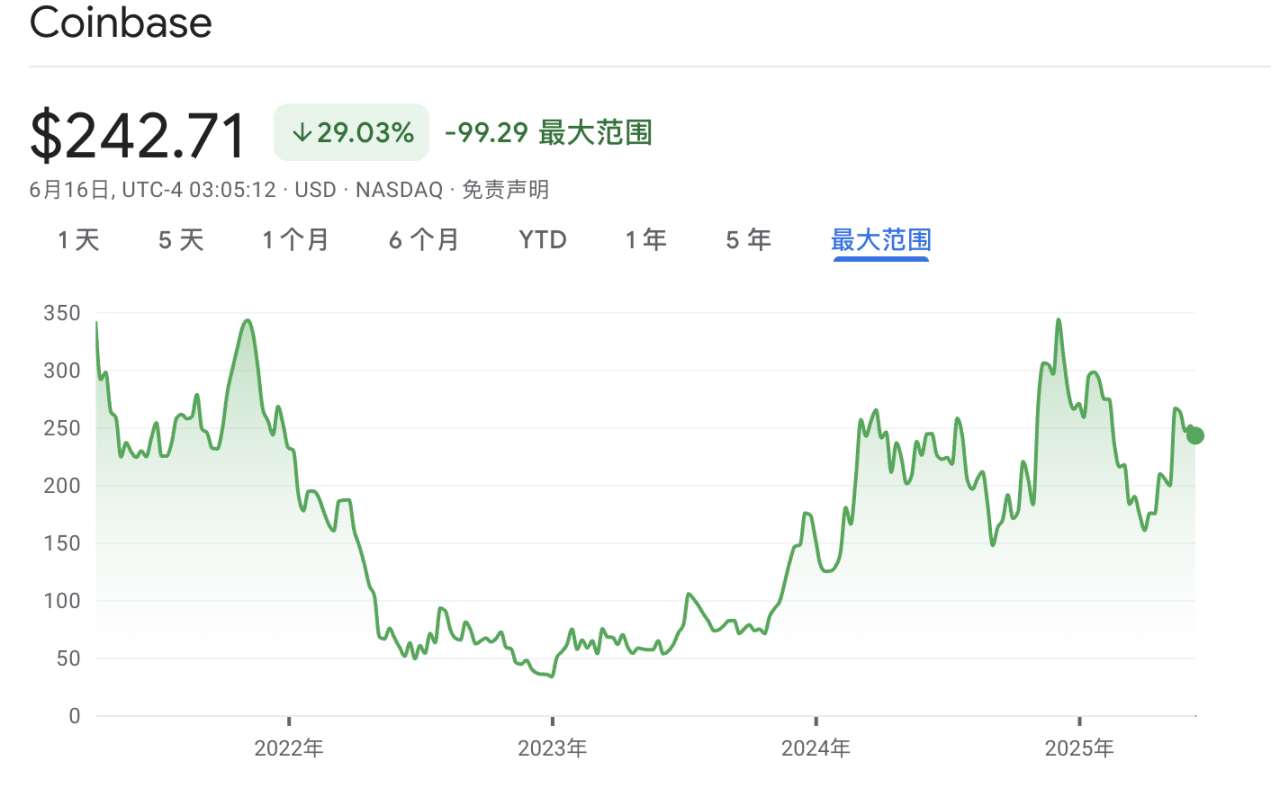
As of June 16, 2025, Coinbase (COIN) stock had rebounded to $242.71, up more than 60% from its low of $151.47 reached in April 2025. This rally was partly driven by COIN's formal inclusion into the S&P 500 index in mid-May 2025. As the first crypto company ever added to the S&P 500, this milestone signifies growing recognition within traditional financial markets and provided solid support for its share price. However, compared to its all-time high of $342.98 at the time of its IPO in April 2021, the stock remains down approximately 29%.
According to Fintel data, 1,560 public institutions now report holding Coinbase shares, collectively owning over 120 million shares. Major investors include Vanguard Group, BlackRock, Susquehanna International Group, State Street Corporation, Jane Street, and Paradigm.
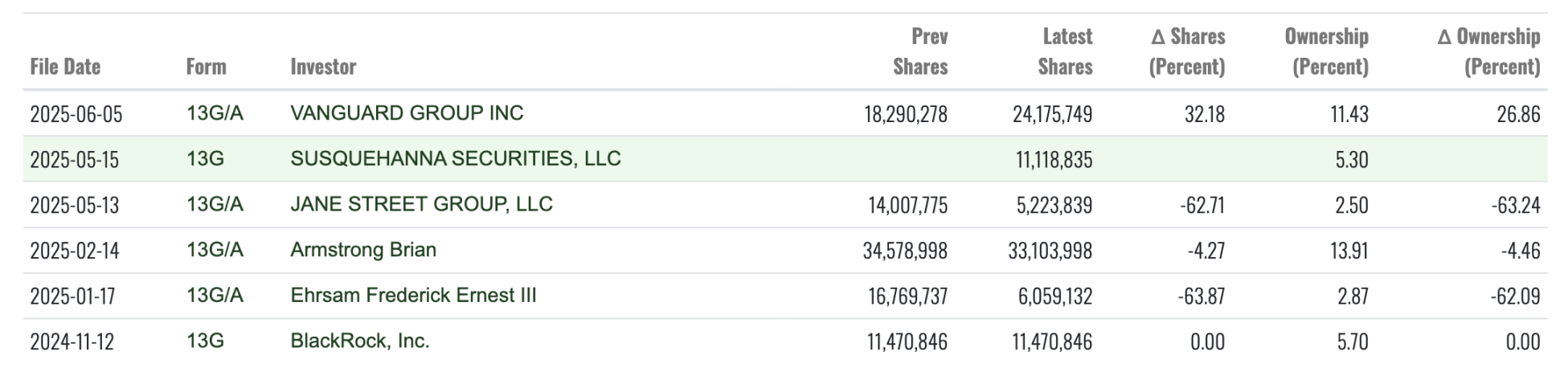
Some publicly listed companies holding COIN
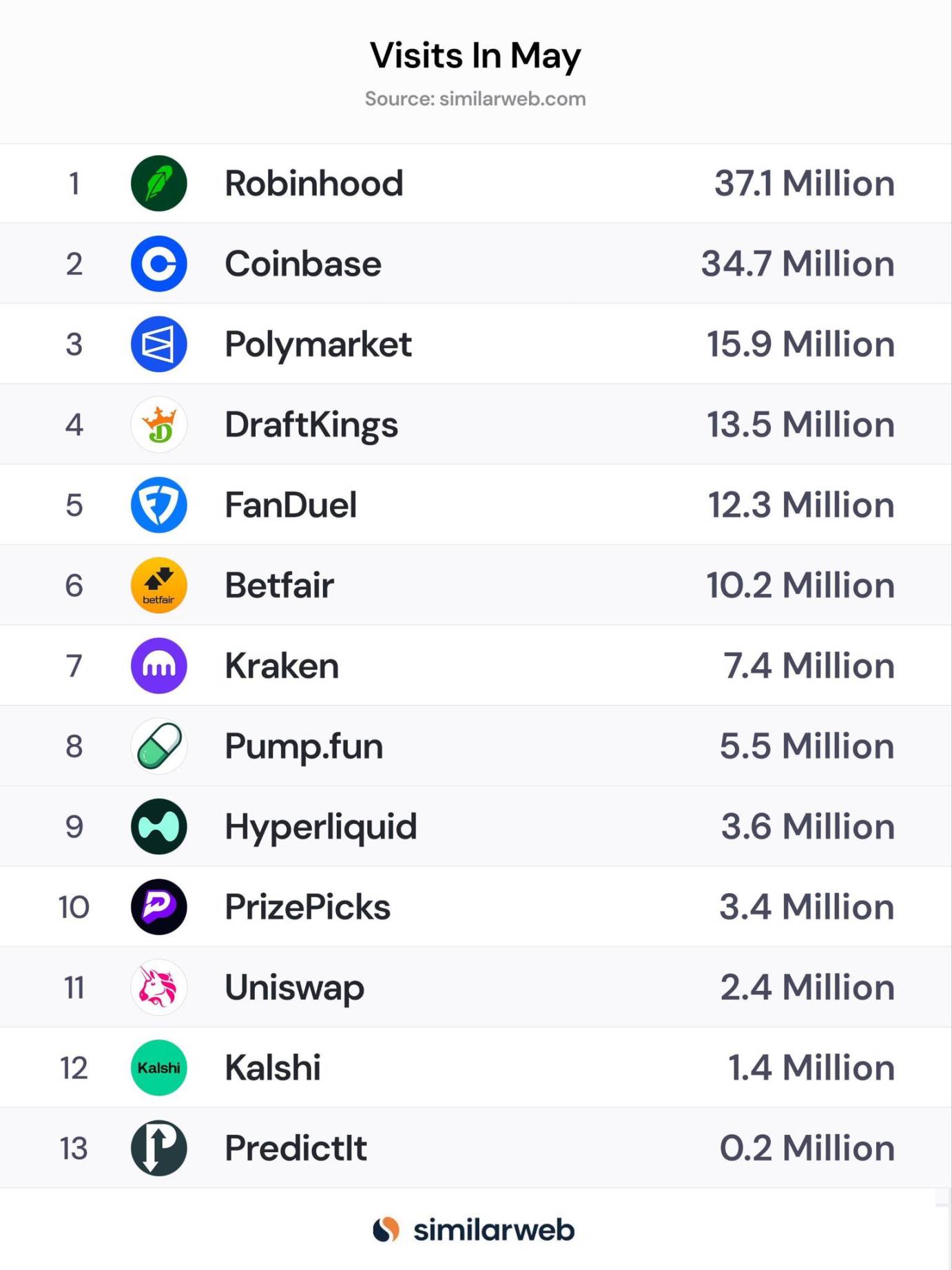
Meanwhile, Coinbase continues to maintain a substantial level of user engagement. Data from web traffic analytics firm Similarweb shows that Coinbase recorded 34.7 million active users in May, ranking second in the industry, just behind traditional brokerage and trading platform Robinhood.
Despite these strong market indicators, Coinbase’s revenue structure reveals significant underlying concerns. According to its 2024 annual report, about $4 billion of the company’s revenue—approximately 63% of its total revenue of around $6.3 billion—came from trading fees. This heavy reliance on transaction fees makes its revenue highly sensitive to volatility and activity levels in the crypto market. In Q1 2025 alone, Coinbase’s trading revenue dropped 19% quarter-on-quarter to $1.3 billion, indicating clear pressure on market volume. Furthermore, as on-chain ecosystems rapidly evolve, they are gradually diverting trading volumes and user attention, intensifying competition against centralized exchanges.
Beyond financial risks, Coinbase has recently faced serious trust challenges. In May, the company disclosed a major data breach affecting over 69,000 users, with potential losses reaching hundreds of millions of dollars, severely damaging user trust and brand reputation. Additionally, due to poor stock performance and disclosure issues, Coinbase is facing a class-action lawsuit. The U.S. SEC is investigating whether Coinbase overstated user data during its direct listing in 2021, particularly scrutinizing the authenticity of its claimed "100 million verified users," a figure quietly discontinued two years later. These controversies have triggered market panic and contributed to downward pressure on its stock price.
Multifaceted Competition: Accelerating Product On-Chain Integration and Global Expansion
Facing multiple market challenges, Coinbase is actively pursuing diversified growth through product innovation and global strategic expansion, aiming to reestablish its competitive edge.
On one front, Coinbase is expanding its product and service offerings. For example, in perpetual contracts, Coinbase announced this month it will launch regulated perpetual products in the U.S., marking its official entry into the U.S. crypto derivatives market and filling a long-standing strategic gap in domestic derivatives offerings. Due to regulatory ambiguity and high compliance costs, U.S. investors have historically been unable to access high-liquidity, high-leverage perpetual contracts directly and have instead relied on offshore platforms. However, as the regulatory landscape becomes clearer, the U.S. crypto derivatives market appears to be approaching a policy turning point. CFTC Commissioner Summer Mersinger recently stated publicly that crypto perpetual futures may soon become compliantly tradable within the U.S., sending a positive signal to the market.
Of even greater strategic significance, shortly before announcing its perpetual contract plans, Coinbase revealed a deal to acquire Deribit for $2.9 billion. Deribit is one of the world’s largest crypto options and perpetual contract platforms, with a solid institutional client base and deep product expertise. This acquisition marks the largest M&A deal in crypto history and substantially strengthens Coinbase’s position in the crypto derivatives space.
In payments, Coinbase has recently partnered with Shopify and Stripe to promote USDC usage for e-commerce transactions. Moreover, Coinbase is further developing its crypto credit card business. Following its earlier experiment with cashback credit cards, Coinbase recently announced the Coinbase One Card, a co-branded card developed with American Express, set to launch in the U.S. in fall 2025. Cardholders will receive up to 4% Bitcoin cashback based on their platform asset holdings—the highest Bitcoin rewards rate among current crypto credit cards. In addition to Bitcoin rewards, users will also gain access to American Express benefits such as travel insurance, purchase protection, return coverage, and Amex Offers discounts. Leveraging Amex’s established payment network and brand credibility will enhance the acceptance and reliability of the Coinbase One Card.
The card will be exclusive to Coinbase One subscribers, reinforcing the closed-loop effect of Coinbase’s membership ecosystem. For a monthly subscription fee, Coinbase One members enjoy benefits including zero trading fees, priority customer support, higher staking rewards, and gas fee subsidies on the Base chain, significantly increasing user stickiness. Since its launch in 2023, the subscription service has attracted nearly one million users and has become one of the most steadily growing segments within the Coinbase ecosystem. In Q1 2025, subscription and services revenue reached $698.1 million, up 9% from the previous quarter, with its share of total revenue continuing to rise.
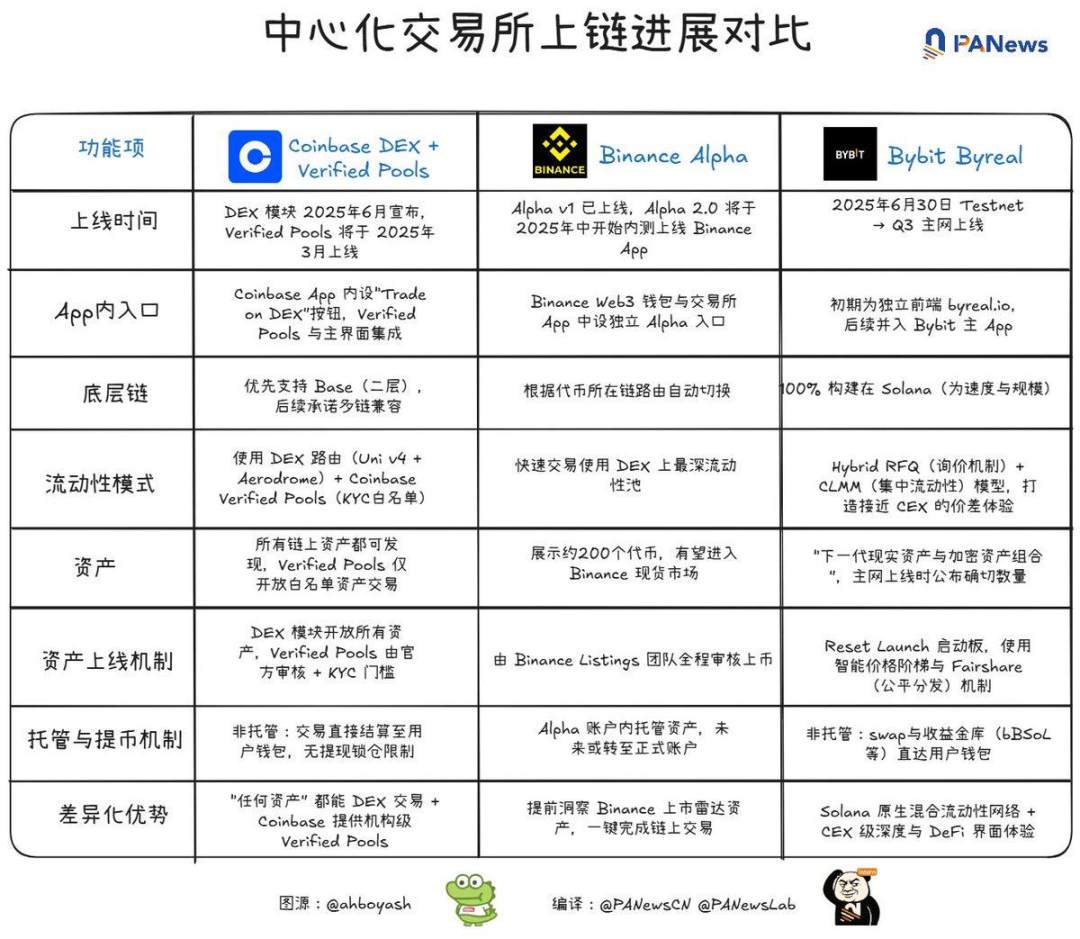
In response to the growing convergence between CEXs and DEXs, Coinbase is also strengthening its presence in on-chain trading access. Coinbase recently announced it will integrate the Base network DEX into its main app, enabling access to millions of on-chain assets—a move similar to Binance Alpha and other CEX strategies targeting on-chain competition. As a primary backer of Base, this integration will greatly boost asset activity and liquidity on the chain, enhancing its network effects, while solidifying Coinbase’s role as a gateway to on-chain trading. Coinbase has also recently launched cbDOGE and cbXRP tokens on Base, further strengthening Base’s competitiveness and liquidity among Layer 2 networks.
For developers, Coinbase unveiled the CDP Wallet at the end of May, a new wallet infrastructure combining account abstraction with custodial access. With this solution, users can fully control their on-chain assets without managing private keys or relying on centralized custodians.
Additionally, as institutional demand for Bitcoin continues to grow, Coinbase Asset Management launched a new fund in May: the Coinbase Bitcoin Yield Fund (CBYF). Designed specifically for non-U.S. institutional investors, the fund aims to help clients earn stable on-chain yields while holding Bitcoin, targeting a net annualized return of 4%–8%, with returns denominated and distributed in Bitcoin. Abu Dhabi-based digital asset manager Aspen Digital is among the seed investors in CBYF and has been appointed as the fund’s exclusive distribution partner in the UAE and Asian markets.
With its product portfolio maturing, Coinbase is accelerating global expansion through regulatory compliance efforts and political-economic resource integration. On the compliance front, Coinbase is actively positioning itself to become one of the first platforms licensed under Europe’s MiCA regulations for full-scale crypto operations. It already holds a virtual currency license from the New York State Department of Financial Services (NYDFS). On the political front, Coinbase has also been highly active—for instance, David Plouffe, former campaign manager for President Obama and veteran Democratic strategist, recently joined Coinbase’s Global Advisory Board. Meanwhile, Coinbase’s sponsorship of Trump’s military parade has drawn public relations risks and sparked controversy.

In summary, thanks to its first-mover advantage in compliance, support from political and economic resources, and increased market recognition following its S&P 500 inclusion, Coinbase has secured a foothold in the mainstream financial system. However, amid an increasingly complex and shifting regulatory environment and intensifying market competition, the company’s ability to effectively manage policy risks, diversify its revenue streams, and sustain user trust will remain critical challenges shaping its future trajectory.
Join TechFlow official community to stay tuned
Telegram:https://t.me/TechFlowDaily
X (Twitter):https://x.com/TechFlowPost
X (Twitter) EN:https://x.com/BlockFlow_News
 PANews