Competing in the AI Payment Sector: Traditional Card Networks vs. Coinbase
TechFlow Selected TechFlow Selected
Competing in the AI Payment Sector: Traditional Card Networks vs. Coinbase
The Two Major Approaches to AI Agent Payments Go Head-to-Head.
 Navigating Web3 tides with focused insights
By Zennon Kapron
Translated by Chopper, Foresight News
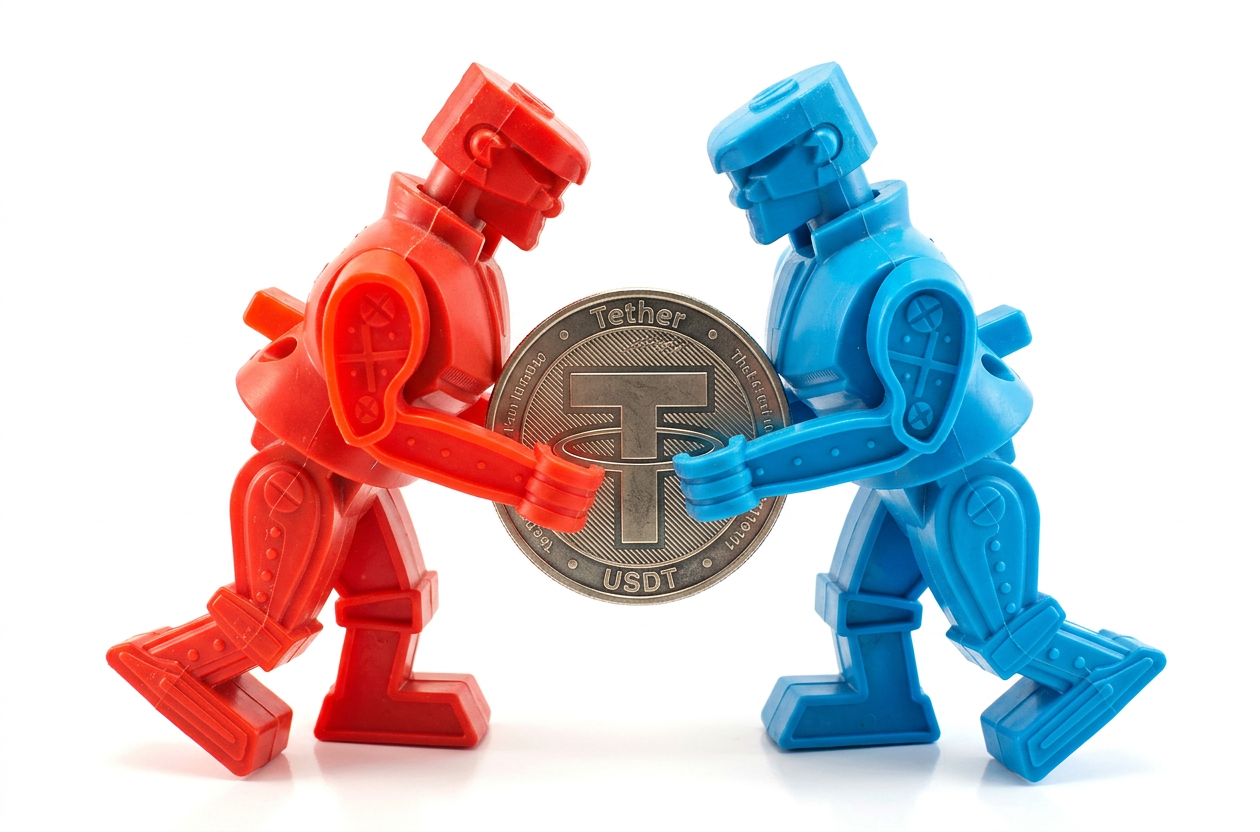
As AI agents increasingly handle commercial transactions, a battle for control over the underlying payment infrastructure has begun.
Today, two fundamentally incompatible technical approaches have emerged for enabling autonomous spending by AI agents: When software programs initiate payments, through which channel are those transactions ultimately cleared and settled? One camp builds its payment stack on tokenized bank card credentials controlled by Visa and Mastercard. The other, led by Coinbase, leverages open internet protocols and stablecoins for settlement. While the surface-level focus of AI agent e-commerce is shopping assistant applications, the core strategic contest lies in determining who will govern the next-generation payment system.
Two Payment Channels, Optimized for Different Use Cases
Traditional card networks moved first—and fast. In April 2025, Mastercard launched Agent Pay, a service built upon its proprietary agent tokenization framework. Originally designed for contactless payments and quick-pay scenarios involving linked bank cards, this tokenization technology has now been extended to enable verified AI agents to execute transactions within user-defined authorization boundaries.
From day one, the service attracted a strong coalition of industry partners—clear evidence of its strategic intent. Collaborators include Microsoft, IBM’s watsonx intelligent orchestration platform, and payment service providers Braintree and Checkout.com. One day later, Visa unveiled Visa Intelligent Commerce, opening its global payment network to AI developers via AI-optimized bank cards. This solution replaces raw card numbers with tokenized credentials, thereby proving that a specific AI agent has been authorized by the user and defining precise transaction permissions. Visa also enlisted top AI firms—including Anthropic, OpenAI, Perplexity, Mistral, and Samsung.
Both card networks anchor their solutions firmly within the decades-old bank card payment model. Though AI agents are new participants, they operate atop traditional payment rails that have powered global commerce for half a century.
The stablecoin camp, by contrast, adopts a radically different architectural approach. In May 2025, Coinbase launched the x402 protocol—reviving the long-dormant HTTP 402 “Payment Required” status code—to enable direct USDC-based settlement over the open internet. The workflow is simple: A client requests access to a resource; the server responds with a payment instruction; the client attaches a cryptographically signed stablecoin payment payload in the request header; and once the on-chain transaction confirms receipt, the requested resource becomes accessible. No account registration, no bank card binding, and no card network interchange fees.
This design targets machine-to-machine (M2M) transactions. An AI agent may need to make thousands of micro-payments—for API calls, data streams, or inter-agent coordination. Such volume and scale would be economically unviable over traditional card rails.
Each technical path has distinct strengths. Card rails excel at consumer-facing retail purchases—scenarios demanding robust chargeback protection, fraud prevention, and dispute resolution. Stablecoin rails dominate high-frequency, low-value, cross-border M2M transactions—where traditional card pricing models and settlement latency simply break down. The central question is: Which use case will become dominant in AI agent commerce?
Both paths face a shared critical challenge: identity verification. When a software program initiates a payment, merchants must confirm it’s an authorized AI agent acting on behalf of a real user—not a malicious bot exploiting stolen credentials. At the same time, users need mechanisms to reverse transactions if an AI agent acts erroneously.
Visa reports that AI-driven traffic to U.S. retail websites surged 47-fold—and in response, partnered with cloud provider Cloudflare to launch the Trusted Agent Protocol, distinguishing legitimate AI agents from malicious scrapers. This highlights a structural advantage of legacy card networks: Five decades of accumulated risk-scoring systems, chargeback rules, and dispute-handling infrastructure are well-suited to resolving issues like AI agents purchasing the wrong item. By contrast, stablecoin transactions are immutable once confirmed on-chain—no native rollback mechanism currently exists within the ecosystem.
Ultimately, what determines success in the consumer market may not be lower fees—but rather, which player solves the twin challenges of AI agent identity verification and transaction dispute resolution.
Card Networks Pursue Dual-Track Strategies Across Both Domains
A telling signal is that neither Visa nor Mastercard is doubling down exclusively on its own rail—they’re actively investing across both domains.
As of April 2026, Visa’s stablecoin settlement business reached $7 billion in annualized transaction volume—a 50% sequential increase. The company added five new supported public blockchains, bringing its total to nine, and deployed over 130 “stablecoin + bank card” integration projects across more than 50 countries. In October 2025, Visa further intensified its efforts, partnering with Cloudflare to roll out the Trusted Agent Protocol to help merchants distinguish legitimate agents from malicious bots—and publicly announced collaboration with Coinbase to interconnect its network with the x402 protocol. What appear to be competing infrastructures—bank card rails and stablecoin protocols—are now building bridges between them.
Mastercard has adopted an identical dual-track strategy. In March 2026, Mastercard announced plans to acquire stablecoin platform BVNK for up to $1.8 billion. Prior to that, its Agent Pay service had already expanded into Latin America and the Caribbean, completing local issuer integrations early in 2026.
The logic is clear: Rather than clinging solely to bank card rails, both legacy card networks aim to position themselves as toll gates across *all* payment pathways—whether proprietary or stablecoin-based. This bet signals their conviction: If bank cards ultimately prevail as the dominant AI payment rail, there would be little need to spend billions acquiring stablecoin infrastructure.
Divergent Real-World Applications
Early product deployments reveal sharply defined application boundaries between the two technical paths.
Mainstream consumer-facing products overwhelmingly adopt bank card rails. ChatGPT’s “One-Tap Checkout” feature—launched in September 2025—was jointly developed by OpenAI and payment service provider Stripe, using shared payment tokens for bank card clearing. These tokens are restricted to specific merchants and orders, initially integrated with Etsy sellers and later extended to over one million Shopify stores. Amazon’s “Order on My Behalf” feature lets AI agents purchase items on third-party sites, automatically populating the user’s pre-bound bank card at checkout.
Consumer-oriented AI shopping services favor bank cards because the ecosystem offers mature anti-fraud tools, deep merchant partnerships, and long-established user trust.
Stablecoin rails, meanwhile, dominate the M2M space. Amazon has integrated the x402 protocol into Bedrock—the core AI agent payment service—settling transactions via Coinbase’s Base blockchain. Each transaction takes ~200 milliseconds and costs less than one cent. Stripe serves as a payment integration partner for this offering. According to Coinbase, the x402 protocol processed over 169 million payments in its first year—serving 590,000 buyers and 100,000 sellers.
These aren’t typical consumer purchases of clothing or electronics. They’re AI agents paying for compute, data, and API access—transactions whose frequency and value per unit directly contradict the design assumptions underpinning bank card systems. In September 2025, Coinbase and Cloudflare co-founded the x402 Foundation to drive industry-wide adoption of an open standard—not a closed, proprietary product.
Among the five flagship AI commercial payment projects live as of early 2026: three use bank card settlement, and two use stablecoin settlement—split cleanly along the personal-consumption vs. machine-transaction divide.
Industry Trajectory
In the near term, the 2026 landscape will likely remain stable: bank cards dominating personal retail payments, stablecoins owning M2M transactions—coexisting and evolving in parallel. But by 2030, that equilibrium may fracture, as both camps aggressively compete for hybrid use cases bridging the two domains.
The ultimate deciding factor will be whether AI-driven commerce evolves toward traditional retail—or toward vast networks of micro-transactions among machines. If the former prevails, legacy card networks retain dominance. If the latter wins, stablecoin rails capture massive new transaction volume.
Visa and Mastercard made the safest possible move: pursuing both tracks simultaneously. Regardless of where traffic flows, they’ll collect fees. The real risk lies with companies betting exclusively on a single payment rail. The card networks have already hedged against that risk—revealing their clear-eyed assessment of the future.
Join TechFlow official community to stay tuned
Telegram:https://t.me/TechFlowDaily
X (Twitter):https://x.com/TechFlowPost
X (Twitter) EN:https://x.com/BlockFlow_News
 Forbes