BofA Research Report Analysis: NVIDIA vs AMD Head-to-Head, Who Defines the New Standard for Agent CPU?
TechFlow Selected TechFlow Selected
BofA Research Report Analysis: NVIDIA vs AMD Head-to-Head, Who Defines the New Standard for Agent CPU?
Bank of America's judgment on this strategic direction debate is clear: whoever can define the industry's next-generation metrics will prevail.
 Navigating Web3 tides with focused insights
By: Rita
TechFlow Guide
Nvidia and AMD are battling for the right to define standards in the $170 billion agent CPU market.
Amid the AI agent wave, server CPU architecture paths are diverging. Nvidia advocates for faster cores, believing single-core performance determines the system ceiling. AMD focuses on more cores, emphasizing that concurrent throughput is key.
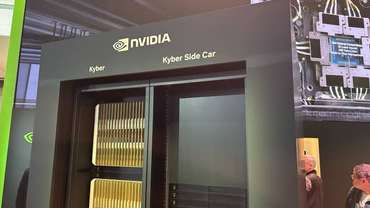
Nvidia released the Vera CPU architecture last week, featuring 88 custom ARM cores, 1.2TB/s memory bandwidth, and a monolithic compute die design. The logic is that agent AI requires repeated interaction between CPU and GPU, with each cycle dependent on the completion of the previous step, so single-core performance directly determines overall response speed. AMD will announce its response at Thursday's AI Day, with market expectations focusing on the "more cores" path. Currently, under a 100kW deployment scenario, the EPYC 9965 achieves rack-level throughput 2.4 times that of Vera.
Bank of America's judgment on this path dispute is clear: whoever defines the industry's next-generation measurement standards will win.
Two Technical Paths, Two Design Philosophies
Nvidia's Vera CPU differs from traditional server processors that "stack cores." 88 cores are not outstanding in the server CPU field, but Nvidia focuses on "maximum single-thread performance." Vera memory bandwidth reaches 1.2TB/s, on-die interconnect bandwidth 3.4TB/s, with all designs serving to improve single-core operating efficiency.
Nvidia's logic is that agent AI differs from one-off large-scale parallel computing, manifesting more as a repeated interaction loop between CPU and GPU. Links such as tool invocation, code execution, retrieval, and orchestration each depend on the completion of the previous step. Insufficient single-core performance will slow down the entire agent's response speed, causing GPU waiting, thereby lowering the overall utilization of the AI factory.
AMD's design philosophy is completely different. AMD believes production-grade AI is closer to a distributed software platform, where components such as databases, APIs, vector storage, orchestration engines, caches, and middleware run in parallel. In this scenario, the system bottleneck lies in the number of concurrent workflows that can be carried within a fixed power budget. The rack-level throughput of EPYC 9965 in a 100kW deployment is 2.4 times that of Vera, and the next-generation EPYC 6 is expected to increase to 3.3 times.
x86 vs. ARM: The Hidden Game of Software Ecosystems
Beyond the core count dispute of "faster vs. more," there is a more hidden but equally important front: instruction set selection, the ecosystem game between x86 and ARM.
Nvidia Vera is based on the ARM architecture. Nvidia believes that as long as the microarchitecture is excellent enough, instruction set differences do not matter. Can ARM carry AI workloads? The answer is yes. Can ARM run enterprise software? If performance comprehensively surpasses x86, the software ecosystem will migrate accordingly.
AMD and Intel obviously hold different views. Their argument is direct: agent AI is extending from model inference to enterprise-grade workflows. Scenarios such as databases, middleware, security platforms, and enterprise applications have been optimized based on the x86 architecture over the past few decades. The feasibility of ARM replacing x86 cannot be proven solely by a few AI test results.
AI Day Approaches, AMD Welcomes Response Window
AMD's AI 2026 Day held on Thursday will be the first public response node in this path dispute.
Bank of America expects that AMD will not compete on speed solely through benchmark data, as that would fall into the "single-core performance" evaluation framework set by Nvidia. AMD needs to redefine the competition dimensions, shifting from "single-core performance" to "agent carrying capacity in real production environments."
Bank of America believes this is the core of the debate. The core of victory or defeat is not a comparison of technical merits, but which measurement standards defined by whom the industry ultimately accepts.
TechFlow Perspective
The insight of this Bank of America report lies in reducing a CPU technical path dispute to a struggle for industry "standard-setting rights."
The computing power requirements of agent AI differ from traditional AI training. Traditional training is mainly large-scale parallel, while agents are a hybrid of serial loops and concurrent scheduling. Which architecture is better depends on the definition of evaluation standards. If the industry takes "single agent response latency" as the core metric, Nvidia's path is more reasonable. If the industry takes "single rack agent carrying capacity" as the core metric, AMD holds the advantage.
Thursday's AMD AI Day will be an important node in this debate. But Bank of America's implicit judgment is that the path dispute will not be resolved in the short term. The ultimate winner may not be the one with higher benchmarks, but the vendor that can drive the industry to accept its defined measurement standards.
For investors, the investment value of this debate is not judging the right or wrong of the paths, but understanding the strategic bets of the two companies. Nvidia bets that agent AI is extremely sensitive to latency, while AMD bets that the core demand in production environments is concurrency density. Both paths have the possibility of validity, ultimately depending on the actual evolution direction of AI applications.
Bank of America gives both companies a Buy rating, with a Nvidia target price of $350 and an AMD target price of $620. This indicates that Bank of America believes this competition is not a zero-sum game; both companies can achieve growth through differentiated paths, just with different growth paths.

Disclaimer
This article is a compilation and interpretation by TechFlow Research of a third-party broker research report (Bank of America Securities, July 22, 2026). The ratings, target prices, earnings forecasts, and related judgments cited in the text are the views of the broker's analysts, representing only their affiliated institution's stance, not representing the views of TechFlow Research, nor constituting any investment advice.
The market carries risks; decisions must be independent. This article should not be used as a basis for buying or selling any securities.
Join TechFlow official community to stay tuned
Telegram:https://t.me/TechFlowDaily
X (Twitter):https://x.com/TechFlowPost
X (Twitter) EN:https://x.com/BlockFlow_News
 @chaoxiangooo