Solana spot ETF makes further substantive progress as SEC focuses on evaluating staking and redemption mechanisms
TechFlow Selected TechFlow Selected
Solana spot ETF makes further substantive progress as SEC focuses on evaluating staking and redemption mechanisms
As early as July rollout.
 Navigating Web3 tides with focused insights
Author: Nancy, PANews
As sentiment in the Solana ecosystem hits a low point, news of an ETF has reignited market optimism. On June 11, the U.S. SEC requested potential issuers of Solana spot ETFs to update their S-1 filing documents. This move is seen by the market as a turning point signaling that Solana ETFs have entered a substantive review phase, reflecting a positive shift in regulatory stance. Fueled by this development, expectations for formal approval in July have rapidly intensified, triggering a broad rally across the Solana ecosystem.
Solana Spot ETF Review Accelerates: SEC Focuses on In-Kind Redemption and Staking Mechanisms
According to Blockworks, multiple sources revealed that the U.S. SEC has notified several firms planning to launch Solana spot ETFs to submit updated S-1 registration statements within the coming week. This means these issuers must revise and resubmit their filings shortly.
Sources indicated that the SEC will provide review feedback within 30 days after receiving the updated S-1 filings. The revisions primarily focus on language regarding in-kind redemptions and how staking mechanisms are addressed—two key areas now central to the approval process for crypto spot ETFs.
In the design of cryptocurrency ETFs, in-kind redemption allows investors to exchange ETF shares for the underlying assets (e.g., SOL) rather than cash. When reviewing S-1 filings, the SEC closely examines whether issuers clearly describe how in-kind redemptions are executed, how asset values are calculated, and whether partial or full cash redemptions are permitted—all critical aspects for legality, compliance, and operational feasibility. The structure of this mechanism directly affects market transparency, liquidity, and arbitrage efficiency, making its compliant disclosure a key criterion for the SEC when assessing suitability for both retail and institutional investors.
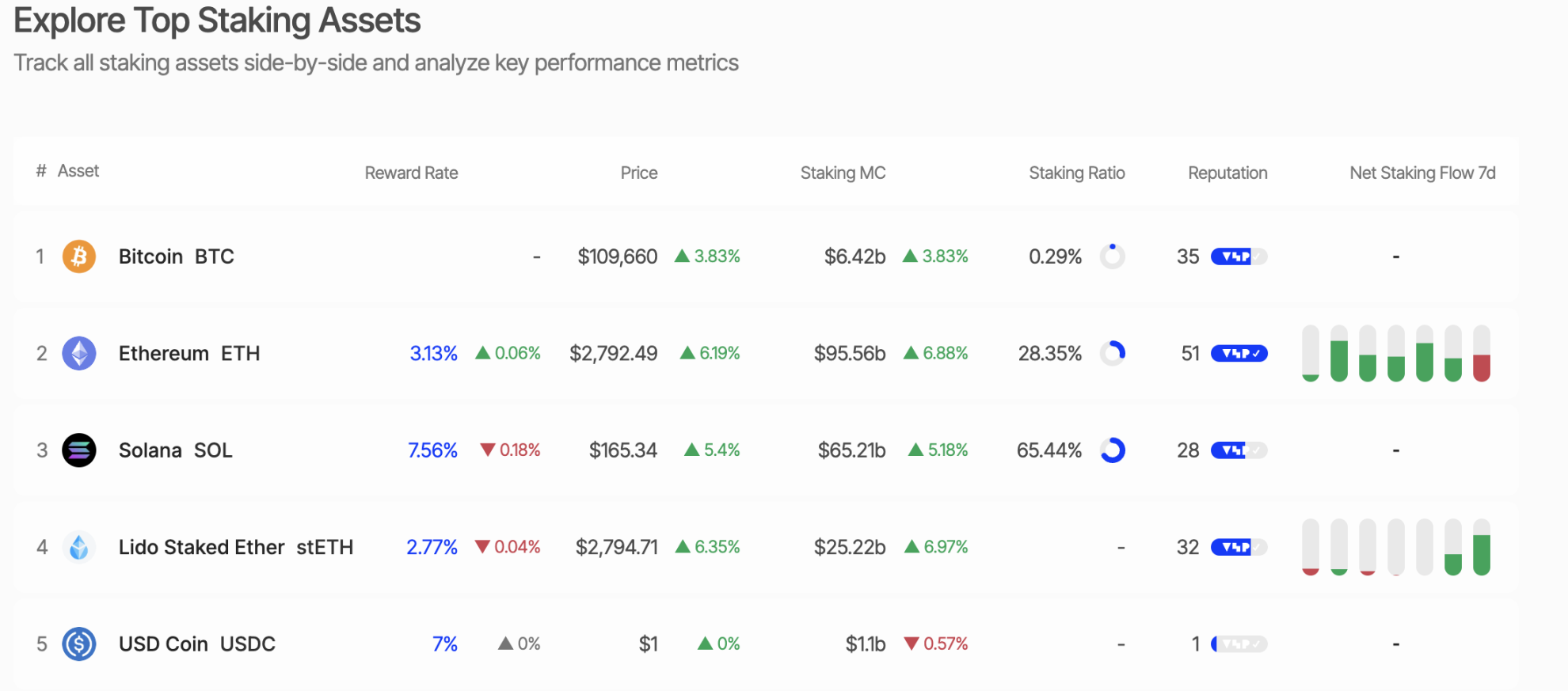
The staking mechanism is another major area of focus. Staking is a native yield-generating method on PoS blockchains like Solana, offering on-chain returns to holders. According to Staking Rewards data, as of June 11, Solana’s staking rate stood at 65.44%, with a staking yield of 7.56%—more than double that of Ethereum (3.13%). Previously, the SEC sidestepped staking-related provisions during Ethereum ETF approvals, concerned about potential implications of treating staking rewards as securities income. However, in May, during negotiations with BlackRock over the spot Ethereum ETF, the SEC showed signs of flexibility, beginning to accept staking under specific conditions. Now, insiders report that the SEC is open to including staking in Solana spot ETFs, but requires issuers to provide sufficient legal clarity and detailed implementation plans.
Since Grayscale first filed a Form 19b-4 for a Solana spot ETF in 2024—and was officially accepted by the SEC in February this year—Solana ETFs have entered a substantive regulatory process. Although the SEC again delayed certain Solana ETF decisions at the end of May, citing "need for additional time to evaluate legal and policy issues," the recent directive to revise S-1 filings sends a strong signal: regulators are no longer rejecting the viability of Solana ETFs; instead, they have shifted from opposition to rule negotiation and refinement of details.
To date, Fidelity, Franklin Templeton, VanEck, Bitwise, Canary Capital, 21Shares, and Grayscale have all submitted applications for Solana spot ETFs.
Fueled by this news, CoinGecko data shows a broad rally in Solana ecosystem tokens, with SOL price briefly hitting a monthly high. Prior to this, participation in Solana had significantly declined from年初 levels due to factors such as token issuance hype on Pump.fun and liquidity incentives diverting activity to other chains.
Potential Launch as Early as July, Approval Likelihood Reaches 90%
Following the successful launches of Bitcoin and Ethereum spot ETFs, market attention is quickly shifting toward the next wave of potential crypto spot ETF candidates.
Solana is the third cryptocurrency asset—after Bitcoin and Ethereum—to pursue a spot ETF application. According to Blockworks, citing insiders, based on the latest pace of ETF filing updates, Solana spot ETFs could be approved within the next three to five weeks—potentially as early as July—earlier than the previously expected late-year timeline.
Bloomberg ETF analyst James Seyffart recently stated that relevant products may be approved this year, possibly even in July. He noted, “We believe the SEC might now be processing the 19b-4 filings for Solana and staking ETFs earlier than originally planned. Issuers and industry participants have likely been working with the SEC and its crypto working group to shape rules, though the final decision deadlines for these applications remain in October this year.”
Solana is considered to already meet key prerequisites for approval. Seyffart added that both Solana and XRP have already seen derivative-based ETFs approved, paving the way for spot ETF approvals.
In fact, in March, Volatility Shares launched two Solana futures ETFs—the first L1 blockchain project after Bitcoin and Ethereum to receive approval for futures ETFs in the U.S.—seen as an important indicator of spot ETF market maturity. This path closely mirrors the progression of Bitcoin and Ethereum spot ETFs: first testing the waters with futures ETFs, then advancing to spot products.
Outside the U.S., Canada's Toronto Stock Exchange launched four Solana spot ETFs in April, with support for staking functionality. This product innovation not only demonstrates appeal to institutional investors but also exerts indirect pressure on the SEC from an international regulatory perspective.
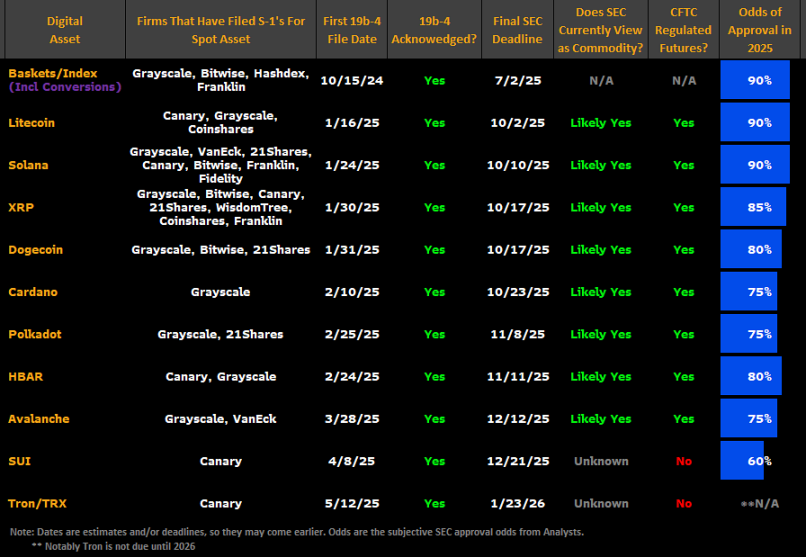
In James Seyffart’s latest forecast estimating approval probabilities for crypto spot ETFs, Solana and Litecoin rank in the top tier. Litecoin and Solana each have a 90% chance of approval; XRP stands at 85%; Dogecoin and HBAR are projected at 80%; Cardano, Polkadot, and Avalanche at 75%; and SUI at 60%.
Despite meeting most key conditions for U.S. spot ETF approval, Solana still faces a hurdle: in prior litigation against Coinbase and Binance, the SEC classified SOL as an "unregistered security." While some of those cases have been paused or dismissed, the securities designation has not yet been formally clarified or ruled upon, remaining a potential obstacle.
Join TechFlow official community to stay tuned
Telegram:https://t.me/TechFlowDaily
X (Twitter):https://x.com/TechFlowPost
X (Twitter) EN:https://x.com/BlockFlow_News
 PANews