








Doubled in 30 Days, Up 15x This Year: Why Is the English-Speaking Community FOMOing $ZEC Again?
TechFlow Selected TechFlow Selected
Doubled in 30 Days, Up 15x This Year: Why Is the English-Speaking Community FOMOing $ZEC Again?
When “Old Man Coin” Hops on the Anti-Quantum Computing Bandwagon…
 Navigating Web3 tides with focused insights
Author: Kuli, TechFlow
If you’ve recently scrolled through English-language Crypto Twitter, you’ve almost certainly seen ZEC flooding your feed.
Names like Naval, Arthur Hayes, Mert Mumtaz, Balaji, and Cobie have all appeared in the same conversation thread—alongside Multicoin Capital’s public announcement of a major position and back-to-back privacy-track panels at Consensus Miami. ZEC’s social media buzz has reached its highest level since the rally at the end of 2025.
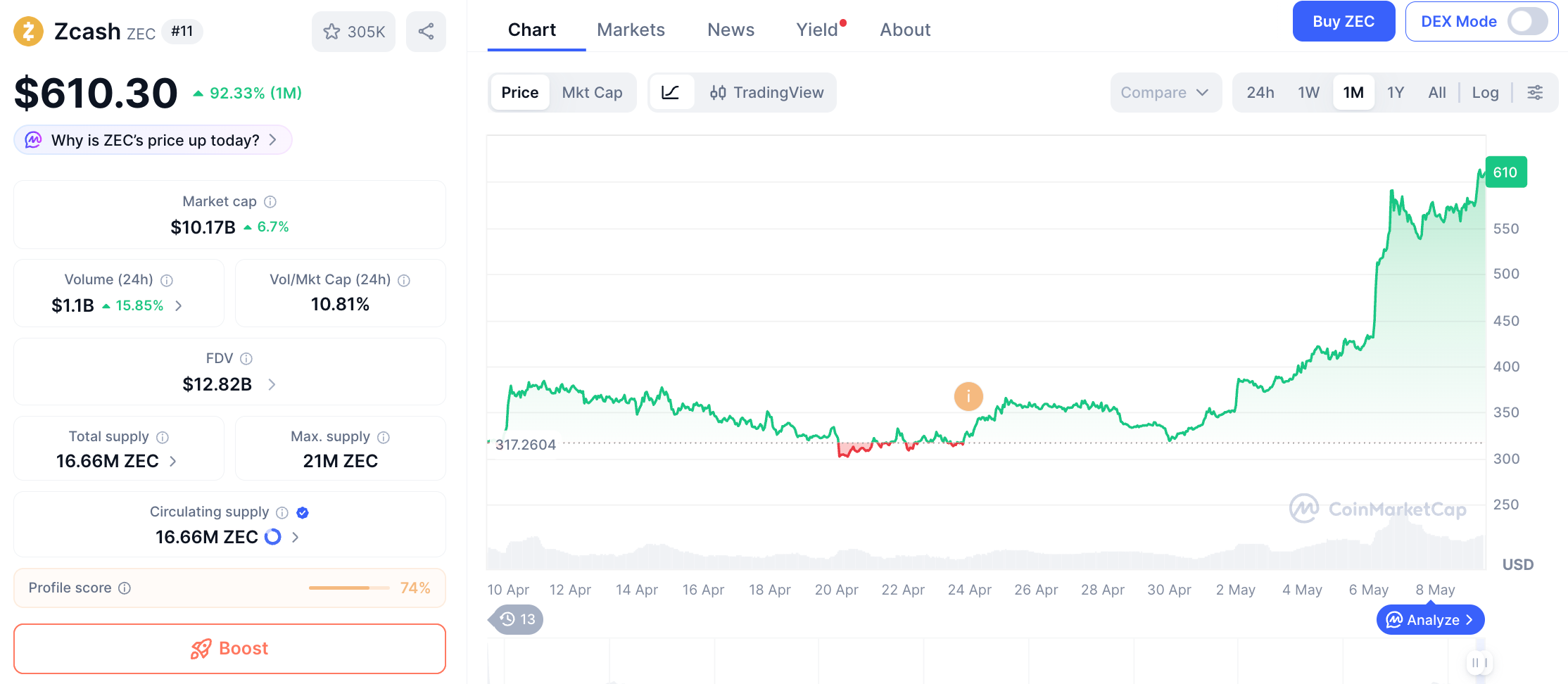
The price has already surged ahead of the narrative. As of press time, ZEC is trading at approximately $580—up over 110% in the past 30 days and more than 1,500% year-to-date. Its market cap has surpassed $9.5 billion, overtaking long-standing privacy coin Monero (XMR), and it has climbed into the top 20 on CoinGecko.
On May 6, ZEC surged nearly 30% in a single day, triggering over $62 million in short liquidations—including $46.7 million attributable to short positions.
So the question arises: What’s driving this rally?
Multicoin’s Major Position: “Bitcoin Resists Censorship—but Not Wealth Taxes”
The most direct catalyst came from Multicoin Capital.
On May 6, Tushar Jain, Co-Founder and Managing Partner of Multicoin, publicly disclosed during a Consensus Miami panel that the firm had established a “significant position” in ZEC since February this year. While he declined to reveal exact size, he laid out a clear investment thesis.
In a subsequent long post on X, Jain wrote: “Bitcoin resists censorship—no one can freeze your BTC or prevent you from using it. But that doesn’t stop governments from seizing known holdings via wealth taxes.”
His key evidence was California Initiative 25-0024, a proposed one-time 5% wealth tax on residents with net assets exceeding $1 billion—including unrealized gains—with an estimated revenue potential of ~$100 billion.
Jain’s core argument is that Bitcoin serves as insurance against fiat devaluation, yet its on-chain balances are fully transparent: any tax authority armed with a blockchain explorer can see everything. In contrast, ZEC’s shielded pool uses zero-knowledge proofs to hide sender, receiver, and amount—rendering on-chain assets invisible to external observers.
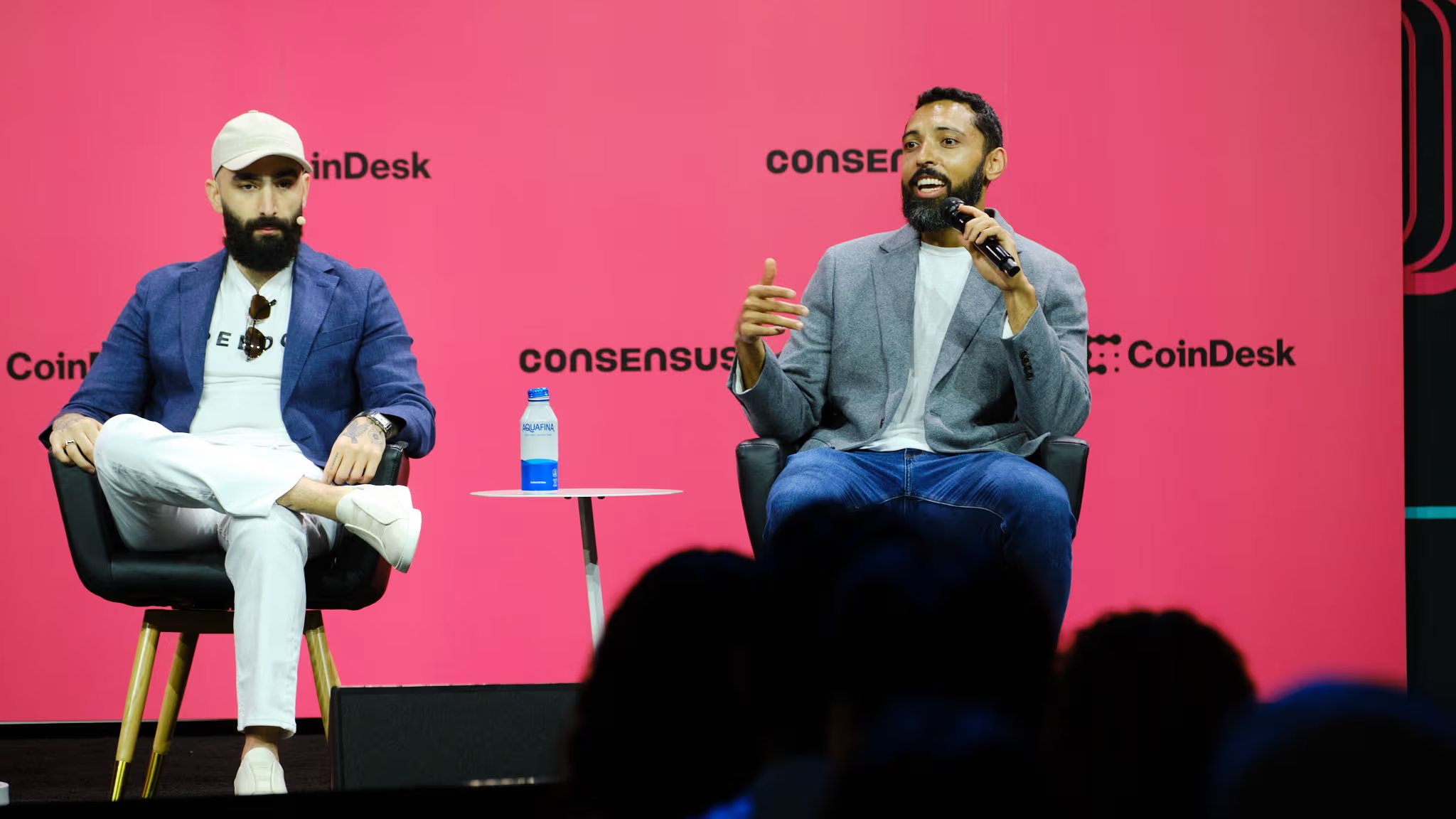
“We believe truly private, censorship-resistant, and seizure-resistant assets have clear product-market fit—and demand is accelerating,” Jain wrote, “Zcash is the cleanest way to express this thesis in public markets.”
This marks a clear shift in Multicoin’s stance.
In 2019, the fund published an article arguing that “privacy is a feature—not a standalone product—of valuable cryptocurrencies,” asserting users shouldn’t need to sell BTC or ETH to buy ZEC for privacy.
Seven years later, this public declaration appears to be a full reversal—backed by real capital.
Collective KOL Endorsement: Arthur Hayes Targets “10% of BTC’s Price”
The seeds of this ZEC narrative were actually sown in the second half of 2025.
Arthur Hayes (co-founder of BitMEX), Naval Ravikant (co-founder of AngelList and an early Zcash investor), Mert Mumtaz (founder of Solana infrastructure firm Helius), Balaji Srinivasan, and Cobie—all leading figures in crypto—began intensively promoting ZEC starting last autumn.
In October last year, Naval tweeted: “Bitcoin is insurance against fiat. Zcash is insurance against Bitcoin.”
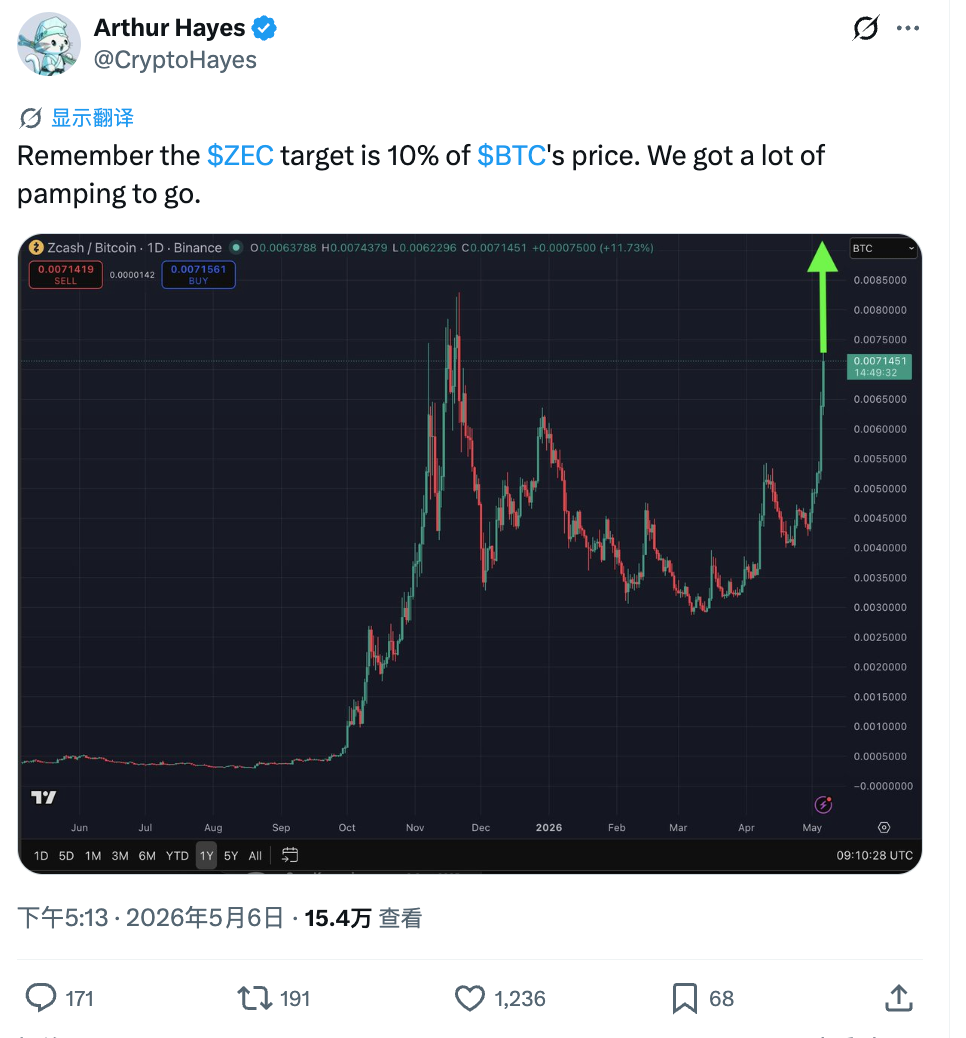
Hayes’ take was even bolder. At Consensus 2026, he stated outright that ZEC’s long-term target price should be “10% of Bitcoin’s price.” With BTC currently trading near $80,000, that implies a ZEC target of ~$8,000—over 13x above current levels. Tyler Winklevoss also endorsed this week a $9,700 ZEC target tied to offshore wealth capture.
While such calls aren’t investment advice per se, their convergence signals one thing clearly: Top-tier capital and top-tier voices in the English-speaking crypto world are simultaneously pivoting toward the privacy sector.
The Post-Quantum Narrative at Consensus Miami
If Multicoin and KOLs provided the capital and narrative catalysts, the technical roadmap unveiled at Consensus Miami delivered a fundamental story.
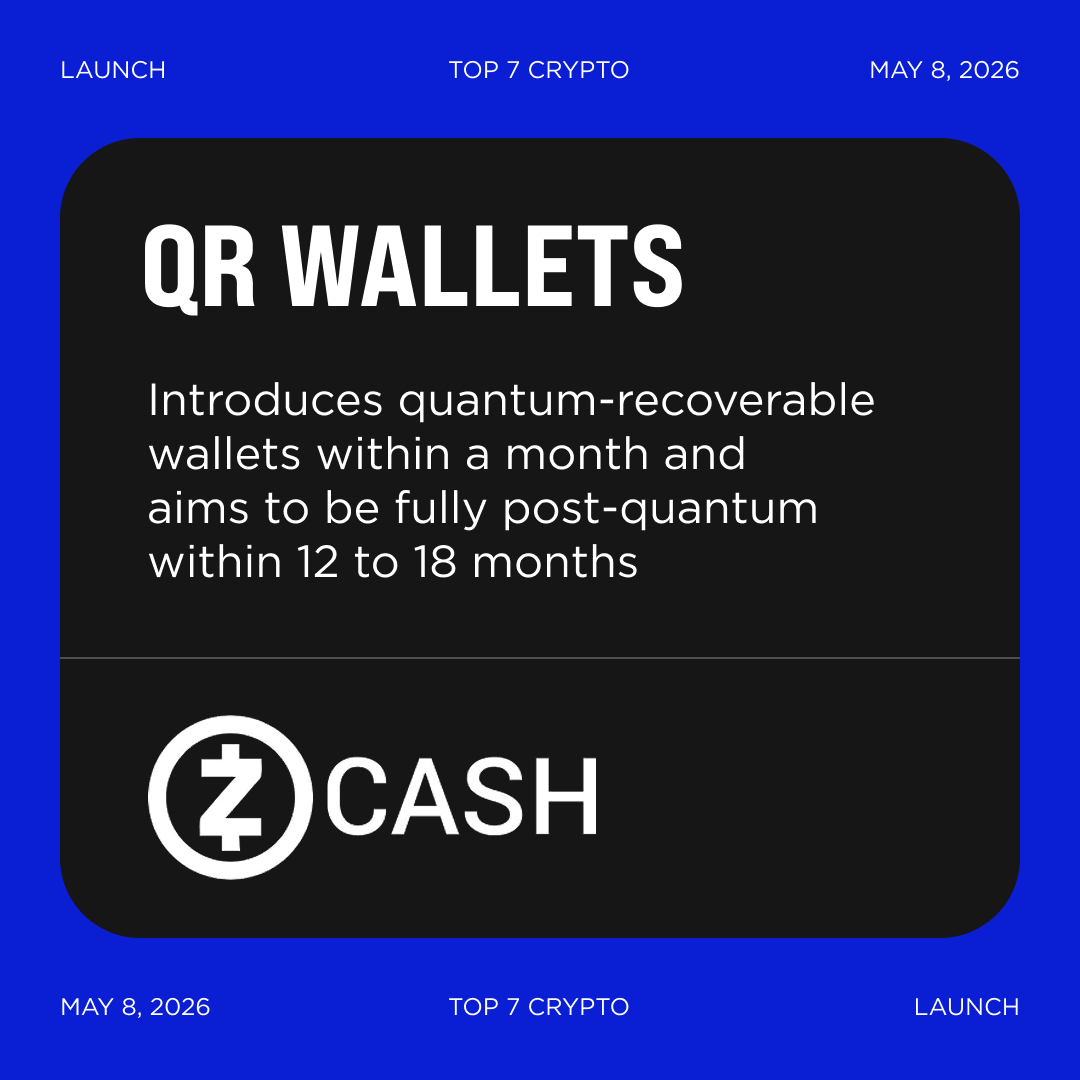
Josh Swihart, Founder & CEO of the Zcash Open Development Lab, announced during the dedicated privacy track on May 8 that quantum-recoverable wallets will launch within one month—and Zcash aims to achieve full post-quantum security within 12–18 months.
The logic here is straightforward: Most cryptocurrencies today rely on ECDSA signature schemes, which will become vulnerable once quantum computers mature. Even more dangerous is the “harvest now, decrypt later” strategy—where adversaries record encrypted data today and decrypt it later when quantum hardware arrives. For a privacy coin whose entire value proposition rests on transactional confidentiality, this represents an existential threat.
Swihart also revealed that since integrating Near Intents cross-chain swap functionality into ECC wallets last October, $600–700 million has flowed in and out via this channel—primarily swapping between USD and USDC. Zcash’s shielded pool currently holds ~30% of circulating ZEC—the highest level on record.
Institutional Signals: Grayscale ETF, Robinhood Listing, Foundry Mining
Beyond Multicoin’s large position, ZEC is accumulating additional institutional catalysts.
Grayscale has filed a ZEC spot ETF application, currently pending SEC approval. The firm has publicly stated that ZEC’s upside potential is tightly linked to the “re-pricing of financial privacy in an AI-driven world.”
Robinhood recently added ZEC trading, opening a retail on-ramp. Foundry (a subsidiary of Digital Currency Group) announced the launch of a large-scale ZEC mining pool—the second asset the company supports after Bitcoin—bolstering ZEC’s mining security and institutional credibility.
On-chain data further supports growing interest: Santiment reports rising retail investor appetite for privacy coins, driven by tightening exchange compliance rules and heightened concerns about on-chain surveillance. A March report from CoinDesk Research declared Zcash has reached “encryption supremacy”—a tipping point fueled by three converging forces: AI tools capable of deanonymizing users on transparent blockchains via transaction-pattern analysis; the increasingly tangible threat quantum computing poses to current wallet security; and quarterly trading volume surpassing $100 billion.
However, the Team That Built Zcash Has Already Left
The above catalysts paint a bullish picture—but one fact must not be overlooked: The core team behind Zcash is gone.
In January this year, Josh Swihart, CEO of Electric Coin Company (ECC), and the entire ECC team resigned en masse, citing governance conflicts with the Bootstrap Project board and characterizing their departure as “constructive discharge.” ECC is the original organization responsible for creating and maintaining Zcash; its exodus means the chain is now operating without its founding engineering team.
Thus, ZEC’s current momentum reflects narrative heat far outpacing fundamentals. KOL endorsements, fund accumulation, and consecutive Consensus panels tell a story of capital and attention—but on-chain trading volume shows little growth.
Because shielded-pool transactions are deliberately opaque by design, on-chain data cannot distinguish between “genuine adoption” and “speculative capital parking.”
Yet lack of fundamentals is the norm for most tokens. In this broader “OG coin” resurgence, ZEC stands out as the brightest performer—though likely not the last.
Join TechFlow official community to stay tuned
Telegram:https://t.me/TechFlowDaily
X (Twitter):https://x.com/TechFlowPost
X (Twitter) EN:https://x.com/BlockFlow_News
 深潮TechFlow


