








Publicly traded companies are buying crypto assets—so who’s really making money?
TechFlow Selected TechFlow Selected
Publicly traded companies are buying crypto assets—so who’s really making money?
Who hasn't made money? Answer: new investors.
 Navigating Web3 tides with focused insights
Author: Jeff Dorman, CFA
Translation: TechFlow

Crypto Treasury Companies: Facts and Misconceptions
After six consecutive weeks of gains, the Bloomberg Galaxy Crypto Index (BGCI) pulled back last week, while equities and U.S. Treasuries both rose. Despite ongoing discussions about a "breakdown" in the U.S. Treasury market, it's worth noting that over the past two years, the yield on the 10-year U.S. Treasury has actually fluctuated within a 100 basis point range—another classic example of narrative overriding facts.

Speaking of narratives, the growing trend of U.S. public companies purchasing Bitcoin and other digital assets has undoubtedly become a market focal point. But as usual, this trend comes with many misconceptions. We aim to clarify the facts and myths behind these new types of digital asset buyers.
Some refer to these firms as "Bitcoin treasury companies," while others use the term DATs (Digital Asset Treasury Companies). Regardless of the label, they are essentially new shell structures designed to hold digital assets. This differs from the original concept of Bitcoin treasury companies. For over five years, we've discussed how public companies have added Bitcoin to their balance sheets for various strategic reasons.
These companies generally fall into several categories:
-
Ordinary companies making exploratory Bitcoin holdings, such as Tesla and Block (formerly Square);
-
Crypto-native firms like Coinbase and Galaxy, which naturally accumulate these assets through core operations;
-
Bitcoin mining companies whose primary business model revolves around holding Bitcoin.
The growth of Bitcoin on corporate balance sheets is trackable and sometimes even drives stock appreciation. However, in most cases, Bitcoin holdings do not overshadow the core business. Moreover, until recently, the accounting standards set by the Financial Accounting Standards Board (FASB) for holding Bitcoin posed significantly greater downside risk to earnings per share (EPS) than upside potential.
Conversely, these companies typically exert limited upward pressure on Bitcoin prices, as they rarely buy large amounts directly in the open market. Most accumulate Bitcoin organically through operations, and even those that actively purchase it usually do so in relatively small volumes.

Source: BitcoinTreasuries.net
In contrast, MicroStrategy (ticker: MSTR) has gradually evolved into the first true "Bitcoin company"—a publicly traded entity whose sole purpose is acquiring Bitcoin. We first took notice of MSTR five years ago when it announced its initial Bitcoin purchase, triggering an immediate 20% surge in its stock price and capturing widespread market attention. As we wrote in August 2020:
"MSTR’s stock jumped 20% after last week’s announcement, likely causing junior analysts in corporate finance departments worldwide to spend a busy weekend researching Bitcoin. Remember 2017, when companies scrambled to mention 'blockchain' on earnings calls—even if they had no idea how to use it or any real plans—simply because the market rewarded perceived technological leadership? Get ready for a Bitcoin encore."
MSTR initially funded its Bitcoin purchases with cash on its balance sheet, but over the past five years, its real “genius” has been its seamless and frequent access to capital markets. While MSTR still maintains a core business—generating $50–150 million in annual EBITDA through enterprise software and business intelligence services—this operation has quickly been overshadowed by its Bitcoin acquisition strategy.
Unlike other would-be imitators, MSTR benefits from existing cash flows generated by its (once-core) business lines, which can be used to cover operating expenses and debt interest. This sets it apart from most other public companies attempting similar strategies.
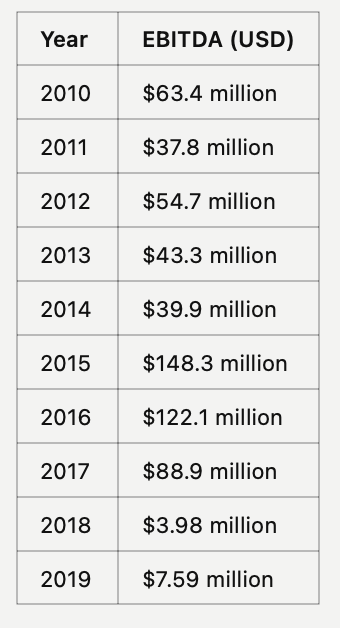
Source: ChatGPT and MicroStrategy financial reports
By leveraging debt, convertible bonds, preferred shares, and equity offerings to raise capital for Bitcoin purchases, MSTR has opened the door for a new class of investors to gain exposure to crypto assets previously out of reach.
While I won’t dive into the specifics of each funding round (details irrelevant to my argument, especially since this content was generated via ChatGPT), MSTR’s financial “magic” is truly impressive—a masterclass in capital markets execution over the past five years.

Source: ChatGPT
Each new financing round and subsequent Bitcoin purchase pushes up BTC’s price—not only due to the scale of transactions but also because of the signaling effect of future buying. Simultaneously, MicroStrategy’s (MSTR) stock rises as the market increasingly focuses on newly created metrics like “Bitcoin per share” and “Bitcoin yield.” In essence, the sole mission of this “company” has become increasing its Bitcoin reserves—and in this process, everyone involved wins.
Holders of convertibles and preferred shares effectively play a “cheap volatility” game, profiting from the volatility between MSTR’s stock and Bitcoin prices. Direct debt holders receive fixed-income returns, easily supported by the EBITDA still generated by MSTR’s legacy operations. Meanwhile, equity investors benefit from a premium valuation of MSTR shares well above the net asset value (NAV) of the Bitcoin on its balance sheet.
Everyone wins! Of course, when everyone profits, two things typically happen:
-
Skeptics grow louder
Critics take to online forums, angrily challenging the sustainability of this strategy. We began countering these absurd claims as early as 2021, when many market participants insisted MSTR would eventually be forced to sell Bitcoin—completely misunderstanding debt covenants and confusing direct Bitcoin ownership with leveraged futures positions subject to liquidation.
To this day, we still frequently confront claims that MSTR poses systemic risk to Bitcoin, though we’ve largely given up arguing against this endless debate. We wish Jim Chanos good luck with his recent “long Bitcoin, short MSTR” trade—though based on the reasons outlined here, it’s unlikely to succeed. “Shorting MSTR” has become the new “shorting Tether”—a tantalizing trade that appears low-risk and high-reward, yet has proven extremely difficult to execute successfully.
-
Imitators emerge en masse
Welcome to the wild new era of crypto. Let’s explore this phenomenon further.
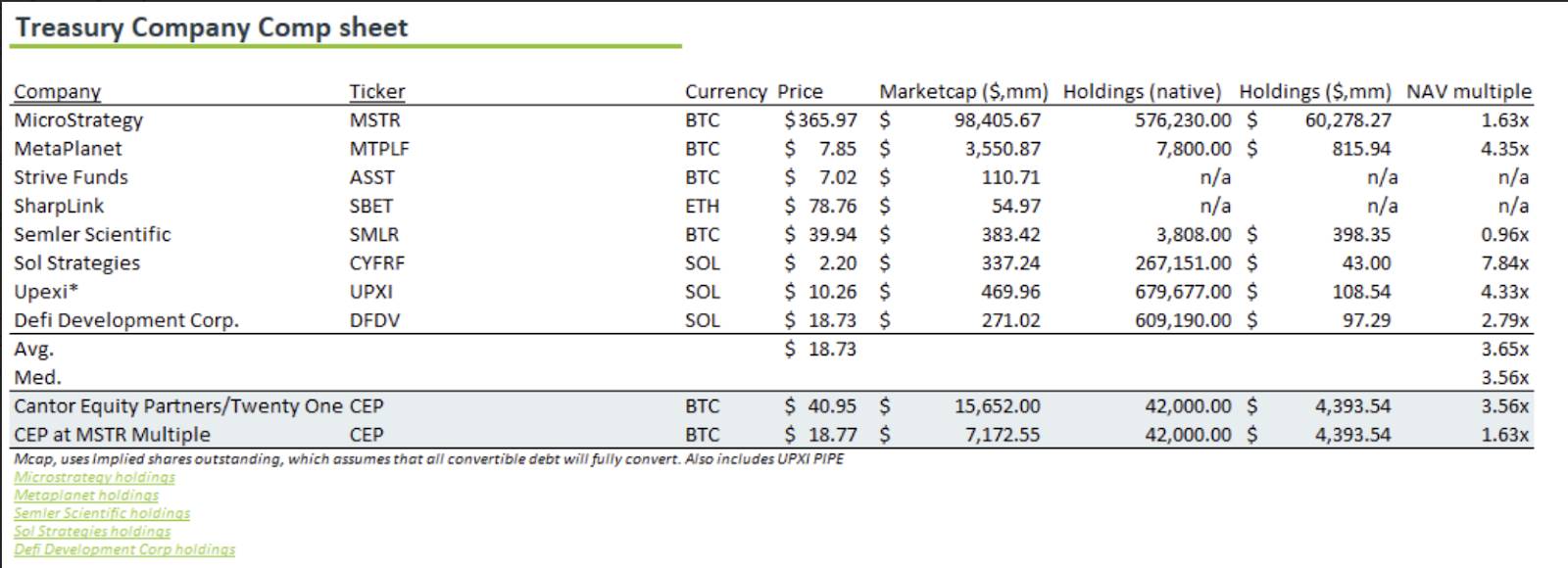
Source: Bloomberg and Arca internal calculations
If 2024 was the year of “Crypto ETFs,” then 2025 will be the year of SPACs and reverse mergers. We once described crypto ETFs as “two steps forward, one step back”:
"Many see ETFs as a victory for real-time settlement assets, but it’s quite the opposite. Bitcoin ETFs essentially force a real-time settlement system (blockchain) into an outdated T+1 product (ETF). Isn’t that moving backward? As an industry, we should focus on bringing global assets onto blockchains—not forcing on-chain assets into Wall Street’s legacy systems."
While we acknowledge this was a necessary step to drive adoption and interest, the point remains valid. There’s a big difference between “blockchain technology” and “crypto assets.” We’re more interested in bringing the world’s most popular assets—stocks, bonds, real estate—onto blockchains than in cramming questionable crypto assets into outdated frameworks. Yet the trend of stuffing crypto assets into equity shells shows no sign of stopping. Let’s examine what’s happening now.
SPACs (Special Purpose Acquisition Companies) and reverse mergers aren’t new, but they’ve rarely been fully embraced for a single purpose—until now. If you own a public equity shell, you can use it to acquire crypto assets and potentially trade at a significant premium to net asset value (NAV). These new structures differ slightly from MicroStrategy. Some attempt to replicate MSTR exactly—holding only Bitcoin—though without MSTR’s brand recognition or capital markets expertise. Others diversify into new assets: some hold Ethereum (ETH), others Solana (SOL) or TAO, with more emerging regularly. Arca currently receives 3–5 new deal pitches weekly from investment banks.
Below are examples of recently announced deals currently raising funds (not exhaustive):
-
SharpLink Gaming (SBET)
-
Recent Activity: May 2025
-
Funding Method: $425 million private investment (PIPE)
-
Crypto Acquired: Ethereum (ETH)
-
-
Trump Media & Technology Group (DJT)
-
Recent Activity: May 2025
-
Funding Method: Raised $2.3 billion via stock and convertible bond sales
-
Crypto Acquired: Bitcoin (BTC)
-
-
GameStop Corp. (GME)
-
Recent Activity: May 2025
-
Funding Method: $1.5 billion in convertible bonds
-
Crypto Acquired: 4,710 Bitcoin (BTC)
-
-
Jetking Infotrain (India)
-
Recent Activity: May 2025
-
Funding Method: Raised ₹6.1 million via equity sale
-
Crypto Acquired: Bitcoin (BTC)
-
-
Meliuz (CASH3.SA - Brazil)
-
Recent Activity: May 2025
-
Funding Method: Raised 150 million BRL via stock issuance (~$26.45 million USD)
-
Crypto Acquired: Bitcoin (BTC)
-
Details: Brazilian fintech Meliuz announced a share offering to raise 150 million BRL for Bitcoin purchases, issuing 17,006,803 common shares as the initial tranche.
-
-
Sol Strategies Inc. (CSE: HODL, OTCQX: CYFRF)
-
Initial Investment: January 2025
-
Funding Method:
-
Unsecured revolving credit facility of CAD 25 million from Chairman Antanas Guoga;
-
CAD 27.5 million (~$20 million USD) convertible note from ParaFi Capital;
-
Up to $500 million convertible note facility from ATW Partners, with an initial $20 million drawn in May 2025.
-
-
Crypto Acquired: Solana (SOL)
-
-
Cantor Equity Partners / Twenty One Capital (CEP)
-
Recent Activity: May 2025
-
Funding Method: Added $100 million to its crypto arm Twenty One Capital, bringing total funding to $685 million. Existing shareholders—including Tether, Bitfinex, and SoftBank—committed Bitcoin in-kind through existing equity structures.
-
Crypto Acquired: Bitcoin (BTC)
-
-
Upexi Inc.
-
Recent Activity: April 2025
-
Funding Method: Raised $100 million to build a Solana reserve
-
Crypto Acquired: Solana (SOL)
-
Details: Purchased SOL via a $100 million PIPE and plans to increase “Sol-per-share” through additional equity and debt issuances.
-
-
DeFi Development Corp (formerly Janover)
-
Recent Activity: April 2025
-
Funding Method: Raised $42 million to establish a Solana treasury, with plans to raise up to $1 billion more
-
Crypto Acquired: Solana (SOL)
-
These cases illustrate a growing number of public companies incorporating crypto assets into their financial strategies, typically funded through debt or equity offerings.
But who profits from these deals?
-
Investment Banks
Banks earn fees by underwriting PIPEs or executing reverse mergers—low-risk revenue streams that pay off regardless of whether the deal succeeds. They have every incentive to keep facilitating such transactions.
-
Shell Company Owners/Management
Suppose a $100 million PIPE raises capital, with $85 million allocated to crypto purchases and $15 million to “operating expenses.” Those “expenses” often include higher salaries—lucrative compensation for management teams.
-
Shareholders Prior to Reverse Merger or SPAC Announcement
Most of these shell companies had market caps below $20 million before being rebranded as crypto vehicles. Some investors may have had insider knowledge, while others were simply lucky. Either way, the real windfall comes when shares surge 500%–1000% or more post-announcement.
Who doesn’t profit? New investors.
Unlike MicroStrategy, where five years of data show that debt, convertible, preferred, and equity holders all benefited, there’s currently no track record proving that new investors in these deals—those funding PIPEs or SPACs—will earn returns. These deals are too new; most private investors haven’t yet converted their private shares into public ones (which typically requires at least 90 days). So the deals continue, and investors keep buying.
If these stocks continue trading at significant premiums to NAV after unlock events, we’ll see more such deals. But if they begin falling sharply—trading below NAV—the game ends.
We may need a few more months to see how the market reacts once shares unlock.
Yet a misconception is already spreading: that unlocks pose a risk to shell company equity investors, not to the underlying crypto assets they hold. Unless financed via debt and unable to service interest (i.e., default), there’s virtually no mechanism forcing the sale of underlying crypto. And currently, these new shell companies are too small to access debt markets. That capability is limited to players like MicroStrategy (MSTR) and a few others.
Equity and preferred shareholders have no right to demand asset sales unless the stock trades far below NAV, prompting activist investors to accumulate shares and push for board control to liquidate assets and buy back stock. This could happen eventually, but today it’s not a major risk. Once such an event occurs, most stocks would rapidly converge toward NAV as the market recognizes the exploitability of this model.
This situation closely resembles Grayscale trusts before the ETF launch. At that time, there was no forced selling risk for underlying crypto… the real risk was the trust (stock) trading at a discount to NAV. Eventually, that did happen—hurting equity investors but leaving crypto holders unscathed.
Today, every crypto venture investor holding large quantities of highly inflated, low-demand junk tokens is brainstorming ways to stuff them into an equity shell. But this doesn’t automatically create demand—just as most newly launched ETFs failed to attract investors. Creating a vehicle and creating demand are entirely different. While these instruments will keep being built, it remains uncertain whether they’ll genuinely attract lasting market demand.
Is there a chance these shells can sustain long-term premiums above NAV? The answer is yes, but under strict conditions.
Perhaps one day, MicroStrategy (MSTR) could become the Berkshire Hathaway of crypto. Then, Bitcoin might become so scarce and coveted that companies would accept lower acquisition offers from Michael Saylor—simply because he pays in precious Bitcoin.
Another path to sustained premium is increased creativity in selecting underlying assets. For example, holding high-quality tokens like HYPE—currently unavailable on any centralized exchange—could provide unique access to new investor groups. Such scarcity and exclusivity might justify a premium. But these scenarios remain long-term possibilities.
In any case, just like ETFs, some shells will succeed, others won’t. But if bankers want the “profit train” to keep rolling, they must get creative. Simply stuffing crypto into equity shells isn’t enough—they must innovate the contents inside, making them valuable and hard to replicate elsewhere.
Still, I believe these equity shells pose no negative impact on crypto assets themselves—at least not in the short term. Without debt in the capital structure, there’s no forced selling mechanism. And I suspect we’ll continue dispelling myths around these shells for a long time, just as we do with many crypto topics.
Tokens Remain a Tool for Capital Formation
The recent shift from token-based fundraising to equity shell financing represents “two steps forward, one step back.” But this doesn’t mean token sales have stopped—only that the conversation has quieted down.
We often say: “Tokens are the greatest mechanism ever invented for capital formation and user alignment—uniting all stakeholders and creating lifelong brand advocates and core users.” The idea is simple: instead of issuing equity or debt that separates investors from users and users from company growth, why not issue tokens directly to customers—aligning all parties at once? This was the promise of 2017’s ICOs, before U.S. regulators shut it down.
The good news: regulatory pressure is easing, allowing some token fundraising to return. The bad news: most current token financing remains confined to “pure crypto”—blockchain-native companies that couldn’t exist without the technology. Missing is a world where non-crypto-native businesses—like gyms, restaurants, or small enterprises—can also issue tokens to fund operations and align stakeholders.
“Internet Capital Markets” is a term describing this emerging theme. It’s not new—in fact, we’ve written about it for seven years (my very first crypto blog touched on this idea, back when Arca didn’t even have a website). Now, finally, the concept is gaining traction.
Launchcoin is a key platform driving next-generation token launches. Launchcoin (which itself has a token) supports Believe, a token issuance platform pioneering the “Internet Capital Markets” narrative. On Believe, tokens debut via bonding curves and later gain liquidity on Meteora. The platform is compelling, with numerous credible Web2 businesses already tokenized through Believe. While direct value accrual mechanisms aren’t yet mature, the potential is vast—making Launchcoin a leader in this space.
In other words, Launchcoin and Believe are working toward a vision where every municipality, university, small business owner, sports team, or celebrity can issue their own token.
We’ve already seen cases where tokens fill balance sheet gaps or support restructurings—Bitfinex with its LEO token, Thorchain with its debt tokens. These token-based financing models represent the exciting frontier of crypto, far beyond mere equity shells.
For now, both models coexist. Understanding the difference is crucial.
Join TechFlow official community to stay tuned
Telegram:https://t.me/TechFlowDaily
X (Twitter):https://x.com/TechFlowPost
X (Twitter) EN:https://x.com/BlockFlow_News
 @arca
@arca






