The InfoFi Dilemma in the Attention Economy
TechFlow Selected TechFlow Selected
The InfoFi Dilemma in the Attention Economy
InfoFi is an important experiment in designing and operating new economic structures.
 Navigating Web3 tides with focused insights
Author: Jay Jo, Tiger Research
Translation: AididiaoJP, Foresight News
TL;DR
-
InfoFi is a structured attempt to quantify user attention and activity and link them to rewards.
-
InfoFi currently faces structural issues, including declining content quality and reward centralization.
-
These are not inherent limitations of the InfoFi model, but rather design flaws in evaluation metrics and reward distribution mechanisms that urgently need improvement.
The Era of Attention as Token
Attention has become one of the scarcest resources in modern industries. In the internet era, information overflows while human capacity to process it remains extremely limited. This scarcity has triggered fierce competition among companies, making the ability to capture user attention a core competitive advantage.
The crypto industry demonstrates this competition in an even more extreme form. Attention share plays a critical role in token pricing and liquidity formation, becoming a key determinant of project success. Even technically superior projects often fail if they cannot attract market attention.
This phenomenon stems from the structural characteristics of crypto markets. Users are not only participants but also investors— their attention directly translates into actual token purchases, creating greater demand and network effects. Liquidity forms where attention concentrates, and narratives develop on top of this liquidity. These established narratives then attract new attention, forming a virtuous cycle that drives market growth.
InfoFi: A Systematic Attempt to Tokenize Attention
Markets operate based on attention. This structure raises a crucial question: Who truly benefits from this attention? Users generate attention through community engagement and content creation, but these contributions are difficult to measure and lack clear direct reward mechanisms. So far, ordinary users can only gain indirect returns via token trading. There is currently no reward mechanism for those who genuinely create attention.
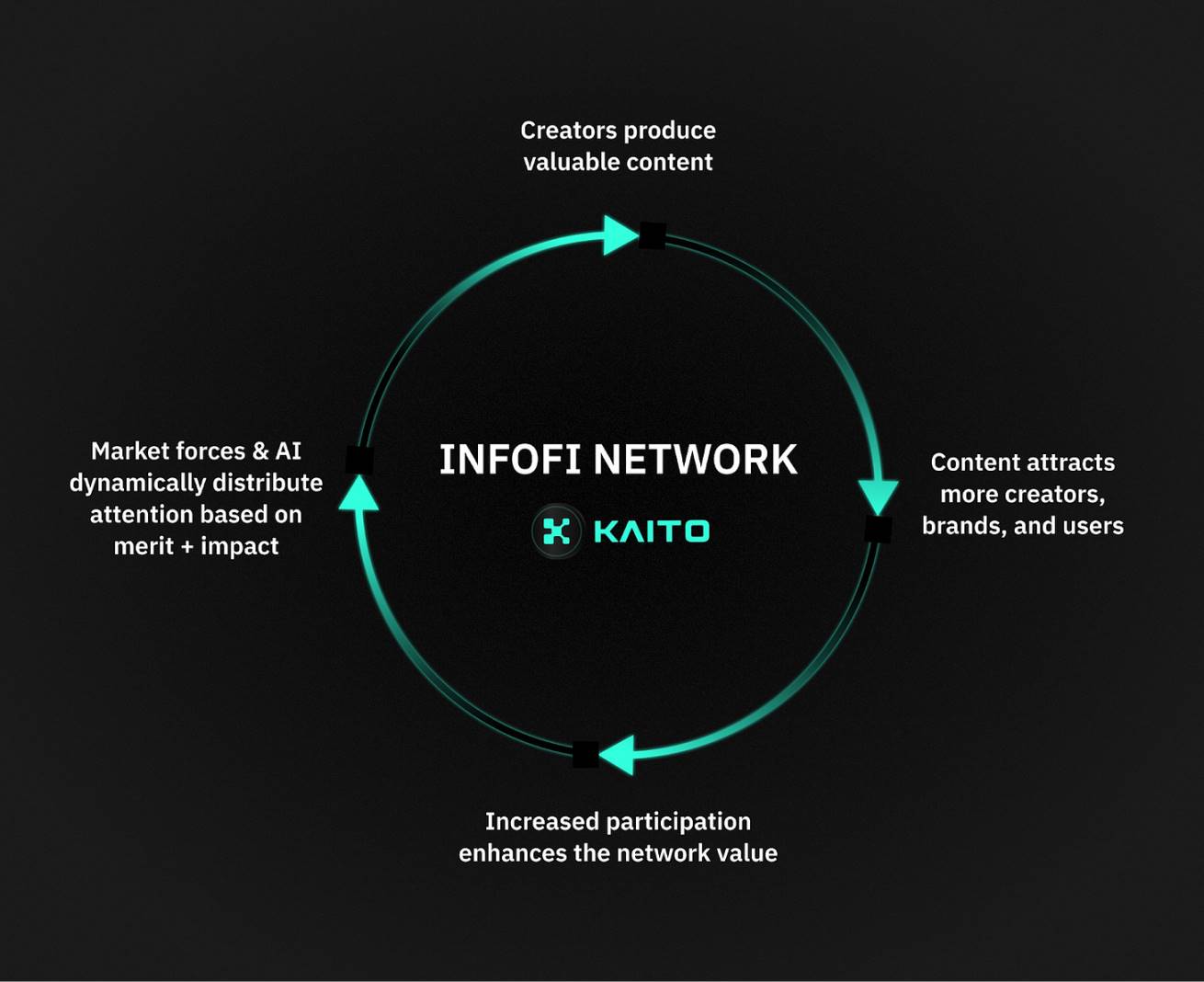
Kaito's InfoFi Network, Source: Kaito
InfoFi is an attempt to solve this problem. By combining information with finance, InfoFi creates a mechanism that evaluates user contributions based on attention generated by content (e.g., views, comments, shares) and links them to token rewards. Kaito’s success helped popularize this model.
Kaito uses AI algorithms to evaluate social media activities such as posts and comments. The platform distributes token rewards based on scores. The more attention user-generated content attracts, the greater exposure the project receives. Capital treats this attention as a signal for investment decisions. As attention grows, more capital flows into the project, increasing participant rewards. Participants, projects, and capital work together through attention data as a medium, forming a positive feedback loop.
The InfoFi model makes notable contributions in three key areas.
First, it quantifies user contribution activities that previously lacked clear evaluation criteria. The points-based system allows structured definition of contributions and helps users predict what rewards specific actions will yield, thereby improving the sustainability and consistency of user participation.
Second, InfoFi transforms attention from an abstract concept into quantifiable and tradable data. User engagement shifts from passive consumption to productive activity. Most existing online participation involves investing or sharing content, with platforms profiting from the attention these activities generate. InfoFi quantifies the market response to such content and distributes rewards accordingly, turning user behavior into recognized productive work. This shift positions users as value creators within the network, not just community members.
Third, InfoFi lowers the barrier to information production. In the past, Twitter influencers and institutional accounts dominated information distribution, capturing most of the attention and rewards. Now, ordinary users who achieve a certain level of market attention can also receive tangible rewards, creating more opportunities for participation across diverse backgrounds.
The Attention Economy Trap Triggered by InfoFi
The InfoFi model is a new reward design experiment within the crypto industry, quantifying user contributions and linking them to rewards. However, attention has become an overly centralized value, and its side effects are becoming increasingly evident.
The first issue is excessive competition for attention and declining content quality. When attention becomes the sole criterion for rewards, the purpose of content creation shifts from providing information or fostering meaningful engagement to merely chasing rewards. Generative AI further lowers the barrier to content creation, enabling rapid spread of mass-produced content lacking real insight or substance. This so-called "AI Slop" is spreading throughout the ecosystem, raising concerns.
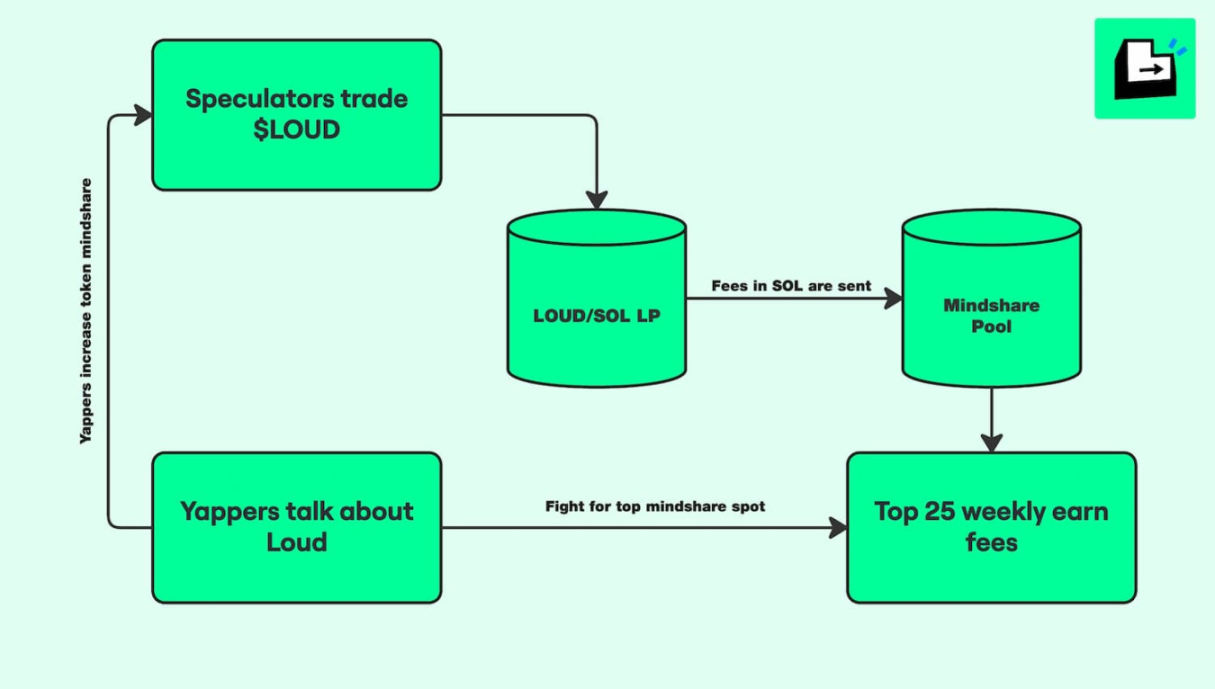
Loud Mechanism, Source: Loud
The Loud project clearly illustrates this trend. Loud attempts to tokenize attention by allocating rewards to top users who gain the most attention within specific timeframes. While interesting as an experiment, making attention the sole reward metric leads to overheated competition, generating大量 low-quality, repetitive content and ultimately causing homogenization across the community’s content.
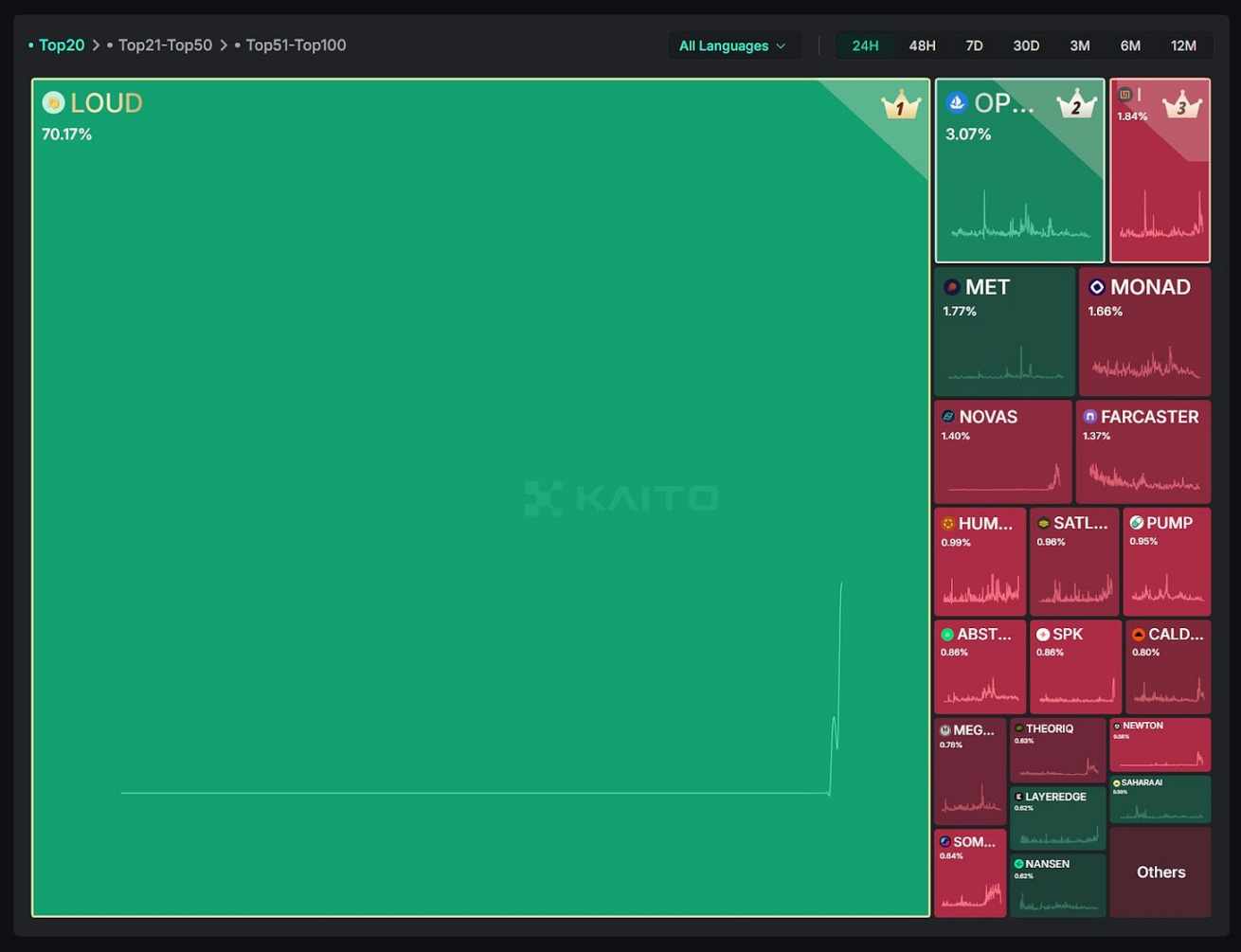
Source: Kaito Mindshare
The second issue is reward centralization. Attention-based rewards begin to concentrate around specific projects or topics, causing content from other projects to effectively disappear or diminish from the market. Kaito’s shared data clearly shows this. Loud once accounted for over 70% of crypto-related content on Twitter, dominating the ecosystem’s information flow. When rewards focus on attention, content diversity declines, and information gradually revolves only around projects offering high token rewards. Ultimately, marketing budget size determines influence within the ecosystem.
Structural Limitations of InfoFi: Evaluation and Distribution
4.1. Limitations of Simple Content Evaluation Methods
A reward structure centered on attention raises a fundamental question: How should content be evaluated, and how should rewards be distributed? Most current InfoFi platforms judge content value based on simple metrics like views, likes, and comments. This structure assumes “high engagement equals good content.”
High-engagement content may indeed have better information quality or delivery effectiveness, but this assumption mainly applies to exceptionally high-quality content. For most mid-to-low-tier content, the correlation between feedback volume and actual quality is unclear, leading to repetitive formats and overly positive content receiving high scores. Meanwhile, content presenting diverse perspectives or exploring new topics struggles to gain proper recognition.
Solving these problems requires a more robust content quality evaluation system. Purely engagement-based evaluation standards are static, while content value changes over time or context. For example, AI could identify meaningful content, and community-driven algorithmic adjustments could also be introduced. The latter would allow algorithms to adapt evaluation criteria based on periodic user feedback, helping the system remain flexible and responsive to change.
4.2. Reward Structure Concentration and the Need for Balance
The limitations of content evaluation coexist with reward structure issues, which further exacerbate information flow bias. Current InfoFi ecosystems typically run separate leaderboards for each project, using their own tokens for rewards. Under this structure, projects with large marketing budgets can attract more content, and user attention tends to cluster around specific projects.
To address these issues, adjustments to the reward distribution structure are needed. Each project can retain its own rewards, while the platform monitors content concentration in real time and uses platform tokens for rebalancing. For instance, when content becomes overly concentrated on a specific project, platform token rewards could be temporarily reduced, while under-covered topics receive additional platform tokens. Content covering multiple projects could also earn bonus rewards. This would foster an environment rich in diverse themes and viewpoints.
Evaluation and distribution form the core of the InfoFi structure. How content is evaluated shapes the ecosystem’s information flow, and who gets what rewards is equally important. The current structure combines single-dimensional evaluation systems with marketing-driven reward models, accelerating attention dominance while weakening information diversity. Flexible evaluation standards are essential for sustainable operations, and balanced distribution mechanisms represent a key challenge facing the InfoFi ecosystem.
Conclusion
The structured experiments of InfoFi aim to quantify attention and transform it into economic value, shifting the existing one-way content consumption model toward a producer-centric participatory economy—an endeavor of profound significance. However, today’s InfoFi ecosystem faces structural side effects during the process of attention tokenization, including declining content quality and distorted information flows. These side effects are less about inherent model limitations and more about inevitable growing pains at the initial design stage.
The evaluation model based on simple feedback reveals its limitations, and the reward structure influenced by marketing resources exposes further problems. What is urgently needed now are systems capable of accurately assessing content quality, along with community-driven algorithmic adjustment mechanisms and platform-level balancing mechanisms. InfoFi aims to build an ecosystem where members can fairly benefit from participating in information production and dissemination. Achieving this goal requires technological improvements as well as active community involvement in design.
In the crypto ecosystem, attention operates much like tokens. InfoFi is a significant experiment in designing and operating a new economic structure. Its full potential will only be realized when it evolves into a framework where valuable information and insights are freely shared. The outcome of this experiment will accelerate the development of a quantified information economy in the digital age.
Join TechFlow official community to stay tuned
Telegram:https://t.me/TechFlowDaily
X (Twitter):https://x.com/TechFlowPost
X (Twitter) EN:https://x.com/BlockFlow_News
 @tiger_research