Fed Gets New Supervision Chief—Is the Last Hawkish Stronghold Crumbling?
TechFlow Selected TechFlow Selected
Fed Gets New Supervision Chief—Is the Last Hawkish Stronghold Crumbling?
Michelle Bowman's appointment could indeed weaken the Fed, the last hawkish stronghold.
 Navigating Web3 tides with focused insights
By ChandlerZ, Foresight News
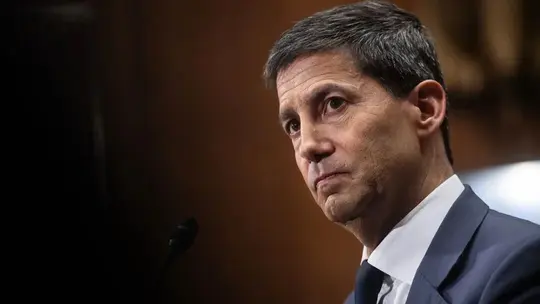
Recently, the U.S. Senate confirmed Michelle Bowman’s nomination as Vice Chair of the Federal Reserve for Supervision by a vote of 48 in favor and 46 opposed. The Republican from Kansas will succeed Michael Barr in the Fed’s top supervisory role, directly overseeing future regulation of stablecoin issuers and financial institutions involved in crypto.
Michelle Bowman: From Board Member to Regulatory Head
Michelle Bowman was born and raised in Kansas, holding a bachelor's degree in advertising and journalism from the University of Kansas and a Juris Doctor from Washburn University School of Law. She is a licensed attorney in New York. Early in her career, she held multiple positions in the U.S. Congress, serving in the office of Senator Bob Dole and working as legal counsel for the House Committee on Transportation and Infrastructure and the Committee on Government Reform and Oversight. Starting in 2002, she entered the federal executive branch as Director of Congressional and Governmental Affairs at the Federal Emergency Management Agency (FEMA), later becoming Deputy Assistant Secretary and policy advisor at the Department of Homeland Security, supporting its first secretary, Tom Ridge.

After her government service, Bowman founded and ran a public affairs consulting firm in London before returning home in 2010 to join Farmers & Drovers Bank in Kansas as vice president—a position she held for seven years—gaining deep insight into community banking operations. In 2017, she was appointed Commissioner of Banking for the State of Kansas, responsible for regulating all state-chartered banks, and joined the Federal Reserve Board in 2018.
During her tenure at the Fed, Bowman has been known for her focus on small and mid-sized banks and her advocacy for balancing regulation with innovation. She has repeatedly emphasized that banking regulations should not be used to advance non-financial policy goals, calling for policies that encourage innovation while preserving the stability of the banking system. As Vice Chair for Supervision, she will lead policymaking on stablecoins, crypto assets, and fintech firm access and oversight, positioning her as one of the key figures who may shift the Fed’s stance.
She has long expressed skepticism toward central bank digital currencies (CBDCs) and warned about risks posed by stablecoins in the absence of clear rules. However, during her April confirmation hearing, Bowman did not clearly articulate her policy views on crypto assets.
The position of Vice Chair for Supervision was created after the 2008 financial crisis to separate the Fed’s monetary policy and regulatory responsibilities. Once in office, Bowman will have direct influence over crypto-related bank access and stablecoin regulation. She recently indicated that the Fed plans to revise regulatory rules for the nation’s largest and most complex banks, signaling that several initiatives aimed at easing requirements and streamlining oversight—particularly in areas long criticized by the banking industry—will soon be launched.
Potential Shift in Regulatory Stance
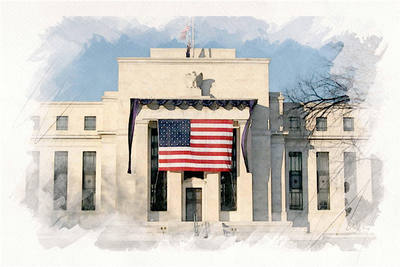
In an environment where U.S. crypto regulation is gradually warming, the Federal Reserve has remained the most cautious agency. Historically, the Fed, alongside the Treasury Department’s OCC and FDIC, restricted crypto firms’ access to banking services. Even as political dynamics have shifted, the Fed has maintained a guarded approach toward cryptocurrencies.
Chair Jerome Powell previously stated that Congress should establish a “broader regulatory framework” around crypto to address potential stablecoin risks—a cautious stance that contrasts sharply with the more open approaches of other regulators. Although the Fed has recently relaxed some restrictions, the overall regulatory landscape remains unclear.
In April, the Federal Reserve Board announced it would rescind previous guidance on banks’ crypto asset and dollar token activities and adjust related expectations to align with evolving risks while better supporting innovation in the banking system. Specific actions include withdrawing the 2022 supervisory letter requiring state member banks to provide prior notice of crypto-related activities, replacing it with regular supervisory monitoring; revoking the 2023 letter outlining a non-objection process for state member banks engaging in dollar token activities; and jointly withdrawing two 2023 joint statements issued with the FDIC and the Office of the Comptroller of the Currency regarding banks’ crypto asset exposures and activities.
Bowman has frequently stated in public forums that regulation should not serve as a reason to shut banks out from serving legitimate businesses. She argues that regulators should not use rules to exclude lawful enterprises from financial services, especially when doing so serves unrelated policy objectives. These remarks directly respond to the crypto industry’s long-standing complaints about “debanking.”
At her confirmation hearing, Bowman pledged to promote a safe and resilient banking system through pragmatic supervision, advocating for transparent and tailored regulatory frameworks that foster innovation. Such language marks a departure from the stricter regulatory tone of her predecessor, Michael Barr. Based on her current statements, her evidence-based regulatory approach could improve banking access for crypto firms and introduce balanced oversight for stablecoins—representing a notable shift from the Fed’s prior caution.
A Critical Juncture for Policy Change
Within the broader policy direction of the Trump administration, Bowman’s appointment is part of a growing pro-crypto trend. The Senate Agriculture Committee is scheduled to consider Trump’s nomination of Brian Quintenz for chair of the Commodity Futures Trading Commission on June 10.
However, regulatory change will take time and must account for congressional sentiment and positions of other agencies. U.S. stablecoin regulation currently involves multiple overlapping jurisdictions, creating confusion and complexity. The GENIUS Act seeks to establish a federal framework while preserving existing state-level regulations. Republicans aim to limit the Fed’s jurisdiction over stablecoin issuers, while Democrats advocate for broader oversight, including non-bank issuers. This inconsistency underscores the urgent need for a unified regulatory approach. In this divided landscape, Bowman may play a pivotal role in shaping how effectively the Federal Reserve engages with and guides the stablecoin market.
Overall, Michelle Bowman’s appointment may indeed weaken what has been the last hawkish stronghold within U.S. financial regulation. With the broader U.S. crypto environment already turning increasingly favorable, a shift in the Fed’s stance could remove the final barrier to industry growth. However, the actual impact of policy changes will ultimately depend on Bowman’s actions once she assumes her new role.
Join TechFlow official community to stay tuned
Telegram:https://t.me/TechFlowDaily
X (Twitter):https://x.com/TechFlowPost
X (Twitter) EN:https://x.com/BlockFlow_News
 Foresight News