








How Competition and Regulation Can Revolutionize DeFi?
TechFlow Selected TechFlow Selected
How Competition and Regulation Can Revolutionize DeFi?
The competitive spirit of DeFi is expected to drive greater interoperability among protocols.
 Navigating Web3 tides with focused insights
Written by: Lorenzo Makoy
Translated by: Baihua Blockchain
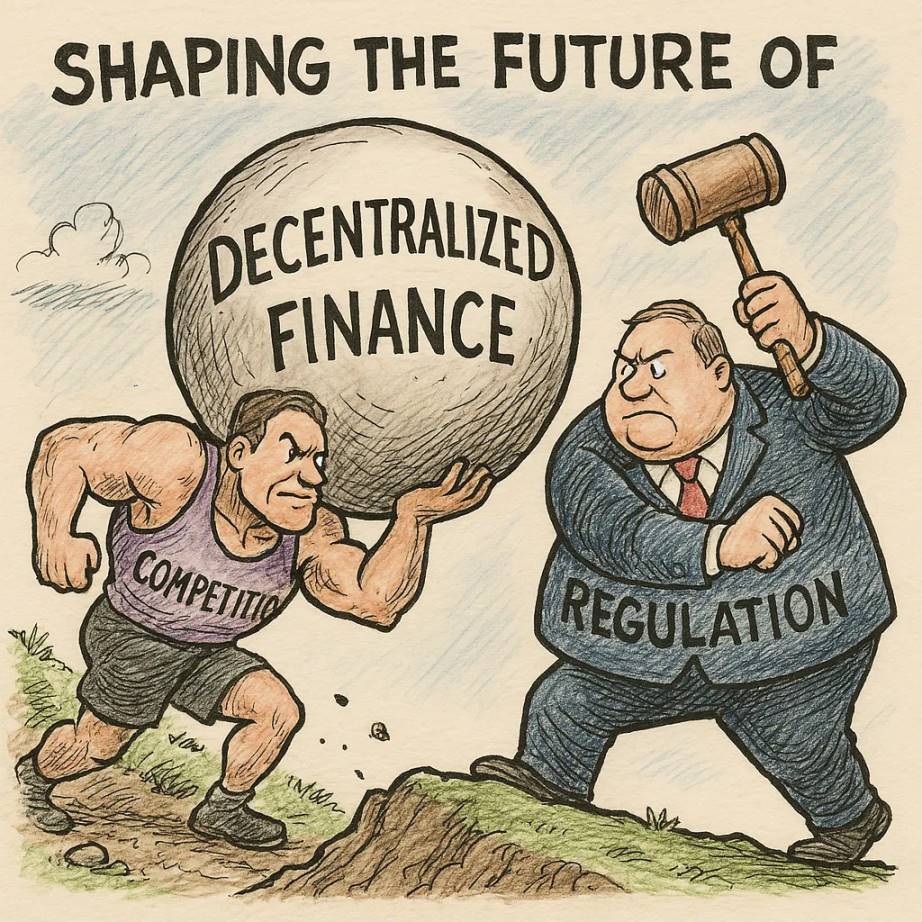
The decentralized finance (DeFi) ecosystem is evolving at a remarkable pace. As innovation pushes financial services beyond the scope of traditional intermediaries, emerging and established market participants are fiercely competing for user attention, market share, and technological dominance. At the same time, global regulators are striving to understand, assess, and ultimately govern these nascent systems—without stifling their disruptive potential.
A Diverse and Dynamic Competitive Landscape
DeFi is not a monolithic domain but encompasses a wide range of services, including lending protocols, decentralized exchanges (DEXs), yield farming platforms, asset tokenization projects, and insurance protocols. Each subsector attracts its own cohort of innovators, and intense competition drives continuous improvement—ranging from incremental evolution to disruptive breakthroughs.
Key Areas Driving DeFi Innovation
-
Lending Protocols: Platforms like Aave, MakerDAO, and Compound laid the groundwork with over-collateralized loans and variable interest rate models. However, new entrants are now exploring modular designs, zero-interest loans, and even AI-assisted credit scoring methods to enhance capital efficiency and risk management.
-
Decentralized Exchanges and Automated Market Makers (AMMs): The rise of DEXs such as Uniswap and SushiSwap has fundamentally changed how assets are traded. Their open, permissionless architecture encourages rapid experimentation and competition, pushing even established players to innovate in liquidity and fee structures.
-
Asset Tokenization and Real-World Integration: From real estate to art, asset tokenization is expanding the reach of DeFi. Integrating physical assets with digital protocols compels existing players to rethink liquidity mechanisms and market inclusivity.
-
Emerging Innovations: New projects are distinguishing themselves through unique value propositions. For example, some integrate decentralized physical infrastructure (such as Grass Token), combining blockchain with the Internet of Things to create niche ecosystems that go beyond conventional financial returns.
This convergence of technologies, ideas, and business models not only fuels fierce competition but also fosters collaboration. Many projects are beginning to achieve interoperability, enabling "composability"—where multiple protocols work together seamlessly to deliver synergistic financial products.
The Role of Regulation in DeFi
Innovation lies at the heart of DeFi, while regulation is emerging as a crucial balancing force. Regulatory frameworks for decentralized platforms remain fragmented, with oversight still in early stages across many jurisdictions. This duality presents both challenges and opportunities.
Challenges Posed by Regulatory Uncertainty
-
Fragmented Global Standards: Unlike the relatively standardized regulatory frameworks of traditional finance, DeFi operates within borderless digital ecosystems. This mismatch leaves projects uncertain about legal obligations and potentially exposed to enforcement actions due to lack of clear guidance.
-
Risk of Overregulation: Excessively strict regulations could inadvertently stifle innovation. If regulators apply traditional financial institution rules directly to decentralized protocols without accounting for their unique characteristics, promising projects may fail to realize their transformative goals.
-
Balancing Consumer Protection and Innovation: Regulators must protect users from fraud, operational failures, and systemic risks while fostering an environment conducive to technological advancement. Many DeFi projects lack transparent KYC (Know Your Customer) and AML (Anti-Money Laundering) frameworks, further complicating this balance.
Opportunities in Regulatory Integration
-
Embedded Regulation: An emerging concept suggests that smart design can integrate regulatory checks directly into blockchain architecture. "Embedded regulation" envisions rule enforcement built into the underlying technology via smart contracts, decentralizing both finance and its governance.
-
Regulatory Clarity Fuels Growth: Clear regulatory frameworks can bring legitimacy to the DeFi industry. When investors—especially institutional ones—see well-defined rules, confidence increases, potentially attracting more capital into the ecosystem.
-
Collaborative Approaches: The future of DeFi may depend on close cooperation between innovators and regulators. By establishing industry standards and self-regulatory agreements, DeFi projects can proactively set benchmarks and address regulatory concerns in advance—protecting user interests and paving the way for sustainable growth.
The Intersection of Competition and Regulation
Intense competition and an evolving regulatory landscape are reshaping strategic priorities for DeFi projects. On one hand, competition drives developers to innovate at astonishing speed, creating sophisticated systems that challenge the boundaries of traditional finance. On the other hand, compliance demands greater transparency, security, and accountability—potentially slowing disruption but also protecting users from volatility and potential fraud.
Balancing Act for DeFi Platforms
-
Innovation vs. Compliance: Projects must maintain their innovative edge while seamlessly integrating regulatory requirements into operations. This balance is critical—too much rigidity may suppress innovation; too much leniency may invite legal scrutiny and erode consumer trust.
-
Market Differentiation: In an increasingly crowded space, unique technical integrations (such as using AI for risk assessment) or novel business models (like hybrid approaches linking DeFi with traditional finance) will become key differentiators for successful platforms.
-
Risk Management Strategies: Robust, adaptable, and scalable risk control protocols will become essential. As platforms strive to balance innovation and compliance, strategies like real-time data monitoring, regular audits, and community-driven governance models may grow in importance.
The dynamic tension between competition and regulatory oversight is not a hindrance, but rather a forge shaping a more resilient financial system.
Looking Ahead: The Future Blueprint of DeFi
The future of decentralized finance hinges on its ability to build comprehensive, adaptive regulatory frameworks while responding to competitive pressures. As markets grow denser, innovative platforms emerge, and regulators gradually catch up with technological realities, the following trends are expected to shape the path forward:
-
More Coordinated Regulatory Environment: Global efforts toward regulatory coordination could reduce uncertainty, promote cross-border collaboration, and attract investment. This evolution may draw in both retail enthusiasts and institutional giants, accelerating DeFi’s mainstream adoption.
-
Rise of Next-Generation Platforms: Success will favor platforms that innovate without compromising compliance. We may see next-gen models where "embedded regulation" becomes standard, enabling automated compliance and enhanced user protection.
-
Enhanced Interoperability and Collaboration: The competitive spirit in DeFi is likely to drive greater interoperability among protocols. By combining strengths and forming alliances, platforms can reduce risks and build more comprehensive financial service ecosystems.
As the industry matures, the interplay between market competition and regulatory adaptation will determine not only the viability of individual projects but also the overall trajectory of decentralized finance. A symphony of ideas, technological prowess, and legislative foresight is laying the foundation for a new financial paradigm—one that promises transparency, inclusivity, and resilience.
Where Do We Go From Here?
In this unfolding narrative, every participant—from developers to regulators, early adopters to seasoned investors—plays a pivotal role in shaping the future of finance. The road ahead may be fraught with challenges and risks, yet rich with opportunity for those who can strike the right balance between innovative disruption and regulatory prudence.
As you consider the next chapter of this exciting evolution, reflect on how shifting dynamics between competition and regulation might impact the projects you follow or invest in. Will embedded regulation become a game-changer? What collaborative measures could emerge as industry standards? These critical questions will guide DeFi into its next era—where every token, every smart contract, and every regulatory adjustment could redefine the boundaries of finance itself.
Join TechFlow official community to stay tuned
Telegram:https://t.me/TechFlowDaily
X (Twitter):https://x.com/TechFlowPost
X (Twitter) EN:https://x.com/BlockFlow_News
 @thecapital_io






