
Ethereum revisits raising Gas Limit to 60 million, scaling roadmap becoming increasingly clear
TechFlow Selected TechFlow Selected
Ethereum revisits raising Gas Limit to 60 million, scaling roadmap becoming increasingly clear
Increasing the gas limit does not mean PoS validators can earn more money; in fact, they are likely to earn less.
 Navigating Web3 tides with focused insights
By Ebunker
In the past, many people perceived ETH's TPS (transactions per second) as being stuck at "15 transactions per second." However, thanks to continuous protocol optimizations, Ethereum's peak TPS has now risen to approximately 60—representing a fourfold improvement.
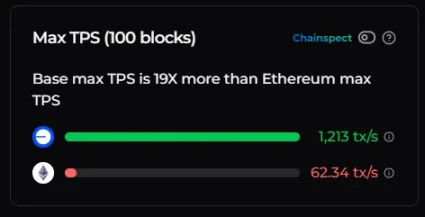
While this progress stems from years of ongoing optimization, the most direct contributor has been the simple yet effective adjustment of increasing the GAS Limit from its previous cap of 15 million to 36 million.
Recently, ETH is poised to raise the GAS Limit again—this time to a cap of 60 million.
What is GAS Limit?
Every time we use ETH, we must pay gas fees for transactions. The Gas Limit, as the name suggests, refers to the maximum amount of gas each block can accommodate. The higher this limit, the more transactions a block can process, and consequently, the faster the network becomes.
Among various scaling approaches, raising the Gas Limit is arguably the most immediate and effective method.
More importantly, this adjustment does not require a hard fork. The Gas Limit is a dynamic parameter in Ethereum; PoS validators can fine-tune it within existing protocol rules.
In other words, the protocol itself allows each new block producer to adjust the Gas Limit by ±1/1024 relative to the parent block—a built-in part of the consensus mechanism. This stands in stark contrast to Bitcoin’s fixed 1MB block size rule.
Therefore, increasing the Gas Limit doesn't necessitate system upgrades or code changes. As long as PoS validators consistently signal support during block production, the network gradually adopts the change. With over 1 million validators on Ethereum today, once sufficient support is reached, the network automatically transitions to the new Gas cap while maintaining node compatibility.
To date, around 15% of validators have chosen to support the 60 million Gas setting. Ebunker has also joined this effort. As a non-custodial node service provider, we remain committed to balancing Ethereum's network performance with decentralization. Since participation is voluntary, a significant number of nodes still operate under older configurations (e.g., 30 million).
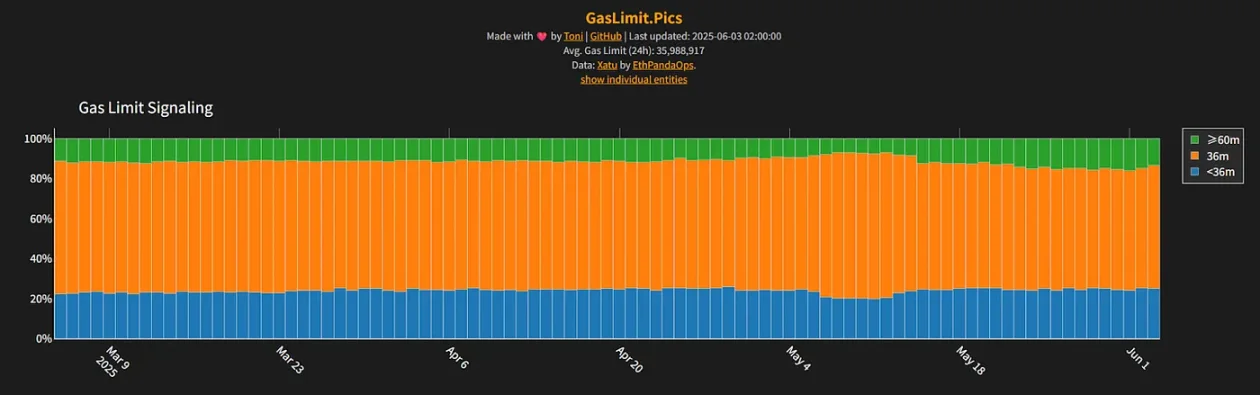
Raising the Gas Limit does not mean PoS validators earn more—in fact, they’re likely to earn less.
Since the implementation of EIP-1559, Ethereum's base fee is burned, leaving validators with only the tips voluntarily added by users. Increasing the Gas Limit enhances the network's overall capacity, reduces congestion, lowers competition for inclusion, and thus diminishes tip amounts. As a result, higher Gas Limits may actually reduce validator revenue while further increasing ETH burn rates.
Under such incentive conditions, validators choosing to support a 60 million Gas Limit could be considered truly altruistic.
Additionally, the community recently proposed a controversial initiative—EIP-9698—which suggests increasing the Gas Limit from 36 million to 3.6 billion over the next four years, aiming to push Ethereum's TPS to around 2,000 and rival high-performance chains like Solana. However, this proposal appears overly ambitious.
Theoretically, if node hardware were powerful enough, the Gas Limit could keep rising indefinitely. But in reality, Ethereum hosts over 1 million active validators, requiring broad accessibility across diverse participants. In contrast, some high-performance public chains have validator counts in the mere hundreds—a difference of tens of thousands of times.
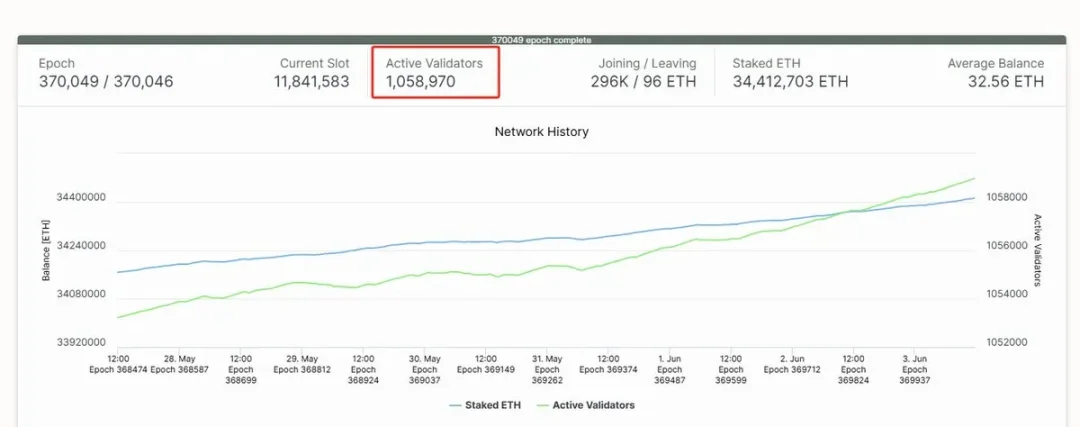
Even the current proposal to increase the Gas Limit from 36 million to 60 million became feasible only after execution-layer load optimizations introduced in the Pectra upgrade enabled smoother network adjustments.
According to research by ethpandaops, after raising the Gas Limit to 60 million, about 90% of blocks can be discovered within 1016 milliseconds. Compared to before, there is a slight increase in block propagation delay, but it remains within an acceptable range.
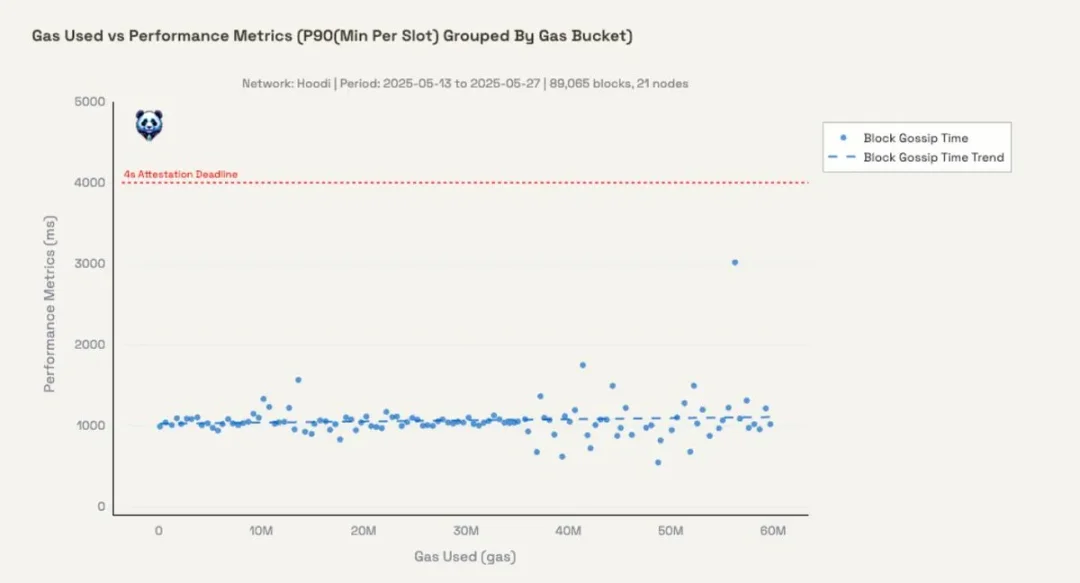
However, 66% of nodes on the Ethereum network must fully receive both the block and its associated blob data within 4 seconds for the block to be considered valid. Due to this propagation constraint, testnet simulations estimate the theoretical maximum Gas Limit under the current architecture to be around 150 million. Therefore, the vision of EIP-9698 remains unfeasible in the short term.
Certainly, if Ethereum adopts a “large-node / small-node” architecture in the future—allowing nodes staking 2048 ETH to handle heavier workloads while 32 ETH nodes manage smaller blocks—it might open up new pathways for further scalability.
So, although people often joke that ETH gas prices continue hitting new lows and the so-called "Rolls Royce chain" is long gone, this shift may not solely reflect market trends, but rather indicates that Ethereum itself is genuinely becoming faster, more efficient, and more accessible.
Join TechFlow official community to stay tuned
Telegram:https://t.me/TechFlowDaily
X (Twitter):https://x.com/TechFlowPost
X (Twitter) EN:https://x.com/BlockFlow_News
 @ebunker_eth