Can Echo's new feature Sonar create a "compliant ICO" market?
TechFlow Selected TechFlow Selected
Can Echo's new feature Sonar create a "compliant ICO" market?
Will "compliant ICOs" bring new growth to the crypto industry as crypto gradually becomes formalized?
 Navigating Web3 tides with focused insights
Author: BUBBLE, BlockBeats
Echo, founded by Jordan Fish "Cobie," today announced the launch of its new product Sonar. Unlike its previous community-based fundraising model limited to small circles, this tool will enable anyone to conduct public token sales on the platform. As more and more VCs support retail investors in early-stage investments, it reflects a shift in the current investment landscape. With Sonar’s emergence, this model is expanding into broader territory—will it revive the ICO boom of 2015?
What Is Echo?
Echo was founded in March 2024 by crypto KOL Jordan Fish, better known as Cobie @echodotxyz. Cobie previously served as Head of Growth at Lido and hosted the popular Web3 podcast UpOnly. At its core, Echo operates on a “lead investor endorsement mechanism,” allowing users to create investment communities as lead investors, share projects with members, and earn a share of proceeds.

Since launch, over 30 crypto projects have raised funds via Echo, including well-known names such as Ethena, Morph, Usual, Hyperlane, Dawn, Monad, Initia, and MegaETH. Collectively, these efforts have raised $100 million within a year. Notably, in December 2024, MegaETH completed two funding rounds totaling $10 million through Echo—$4.2 million raised in 56 seconds during the first round and $5.8 million in 75 seconds during the second—marking Echo’s largest financing to date.
Echo initially functioned like an “elite alliance” for crypto investors, focusing on high-potential projects vetted within tight-knit circles. The Block’s CEO Larry Cermak and Aave founder Marc Zeller are among those who have created their own Echo communities. To join, users must answer screening questions and complete a relatively strict KYC identity verification process. Some communities also require additional qualifications for specific investment opportunities. Currently, there are 67 community leaders who have established groups on Echo.
Not the Enemy of VCs, But a Distribution Channel for Them
In January, Echo reported that some venture capital firms attempted to prevent founders from offering better terms to the Echo community or even block community sales altogether unless conducted through later-stage high-valuation offerings. Alexander Pack, co-founder of Hack VC, commented: “While tech investing overall is a positive-sum game, capital allocation is zero-sum.” This means that when projects open fundraising space for communities, VC profit margins shrink.
Rob Hadick, partner at Dragonfly, shared his view in media interviews, stating that platforms like Echo actually complement venture capital by helping projects build stronger communities while maintaining relationships with investors. He added: “VCs that fail to deliver real value may feel threatened by the rise of such platforms. For those feeling pressure, they must either adapt or perish.”
An increasing number of value-adding VCs have joined this movement, with Paradigm, Coinbase Ventures, Hack VC, 1kx, and dao5 all creating groups on Echo. Meanwhile, the recent surge in the “Agency” ecosystem has posed significant challenges to traditional VC models. As Rob noted, VCs that still haven’t found their footing are gradually fading out of relevance.
In today’s market, where “attention economy” resources are being continuously depleted, can we now move toward a phase of “value return”?
Back to 2015? Will Sonar Bring Back the ICO Boom?
Matt O'Connor, co-founder of Legion—an equally hot ICO platform today—said, “The relatively lenient regulatory environment in the U.S. right now could promote a revival of public token sales,” adding, “Once ICOs regain momentum, attention may shift away from the memecoin craze.” In the current market climate, projects focused on actual product development are dwindling, while vast wealth accumulates behind the scenes.
However, Echo in its earlier form couldn’t address broader market needs. Even project teams themselves admitted, “We don’t like this group structure.” Therefore, the founding team, including Cobie, began planning a more orthodox “ICO” platform early on. In February, founder Cobie hinted at developing an ICO platform, noting, “There’s currently no good way to conduct initial sales—you’re probably stuck with CoinList, which has major limitations for several reasons.” Three months later, the product launched.
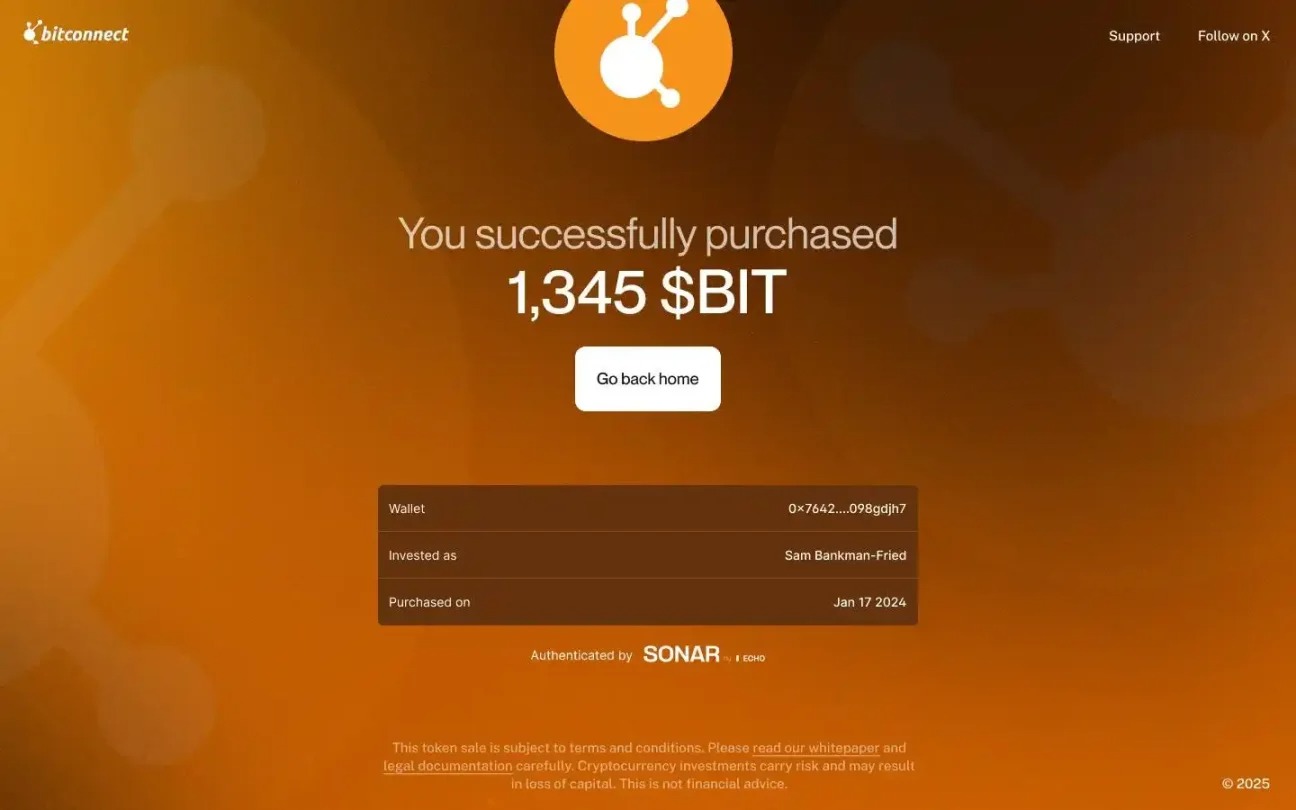
Sonar is a tool enabling founders to self-host token sales. It allows customizable sale formats (auctions, option swaps, point systems, variable valuations, and allocation sizes) and supports multiple chains including Hyperliquid, Base, Solana, and Cardano. It offers various configurable compliance tools integrated with Echo’s digital identity passport system (existing Echo users can register for Sonar with one click). Issuers can also select target regions for distribution—for example, banning UK residents or setting longer lock-up periods for users in certain jurisdictions.
Sonar aims to combine the community-driven sales dynamics of the ICO era with today’s regulatory and compliance requirements, addressing past issues around regulation and privacy. It introduces more flexible “sales models” to replace the dominant “LaunchPad” approach. The platform encourages projects to build their own communities and communicate directly with investors instead of relying on Echo’s built-in community. This model pushes investors to conduct deeper due diligence rather than simply pushing projects onto uninterested or uninformed users—but it also carries risks of information asymmetry.
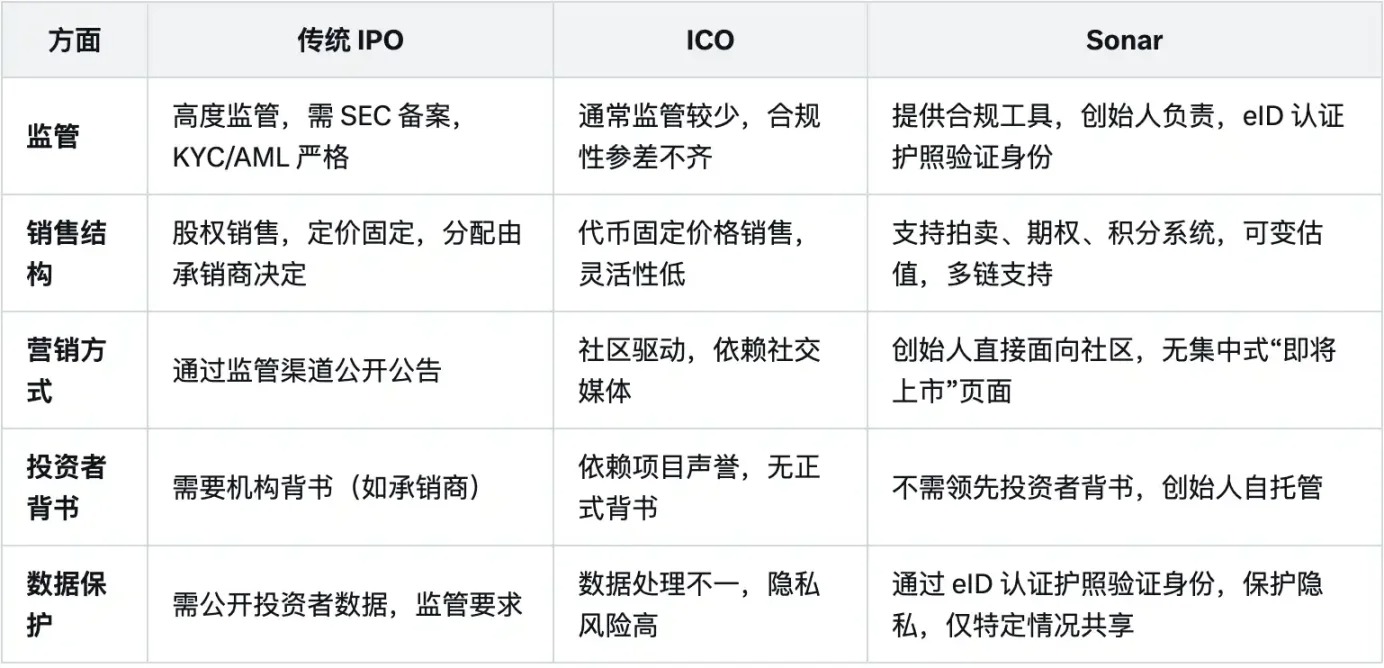
Comparison of IPO, ICO, and Sonar, graphic:律动 BlockBeats
In the final section of Sonar’s release documentation, Echo stated its goal is “to replicate the market dynamics of the ICO era as closely as possible, while providing compliant tools for founders who don’t want to go to prison.”
First Project Live: Plasma
As Echo launched Sonar, Plasma announced it would use Sonar for a portion of its official token $XPL sale. Plasma is a new blockchain purpose-built for stablecoins, running parallel to the Bitcoin network and fully EVM-compatible, enabling developers to build Ethereum-like applications on Plasma.
Plasma will offer 10% of the total XPL token supply via Sonar, aiming to raise $50 million. This 10% equates to 1 billion XPL tokens out of a total supply of 10 billion, priced at $0.05 per XPL. According to the team, the fully diluted valuation of XPL is $500 million, matching the valuation from Founders Fund’s recent equity and token warrant investment in Plasma.
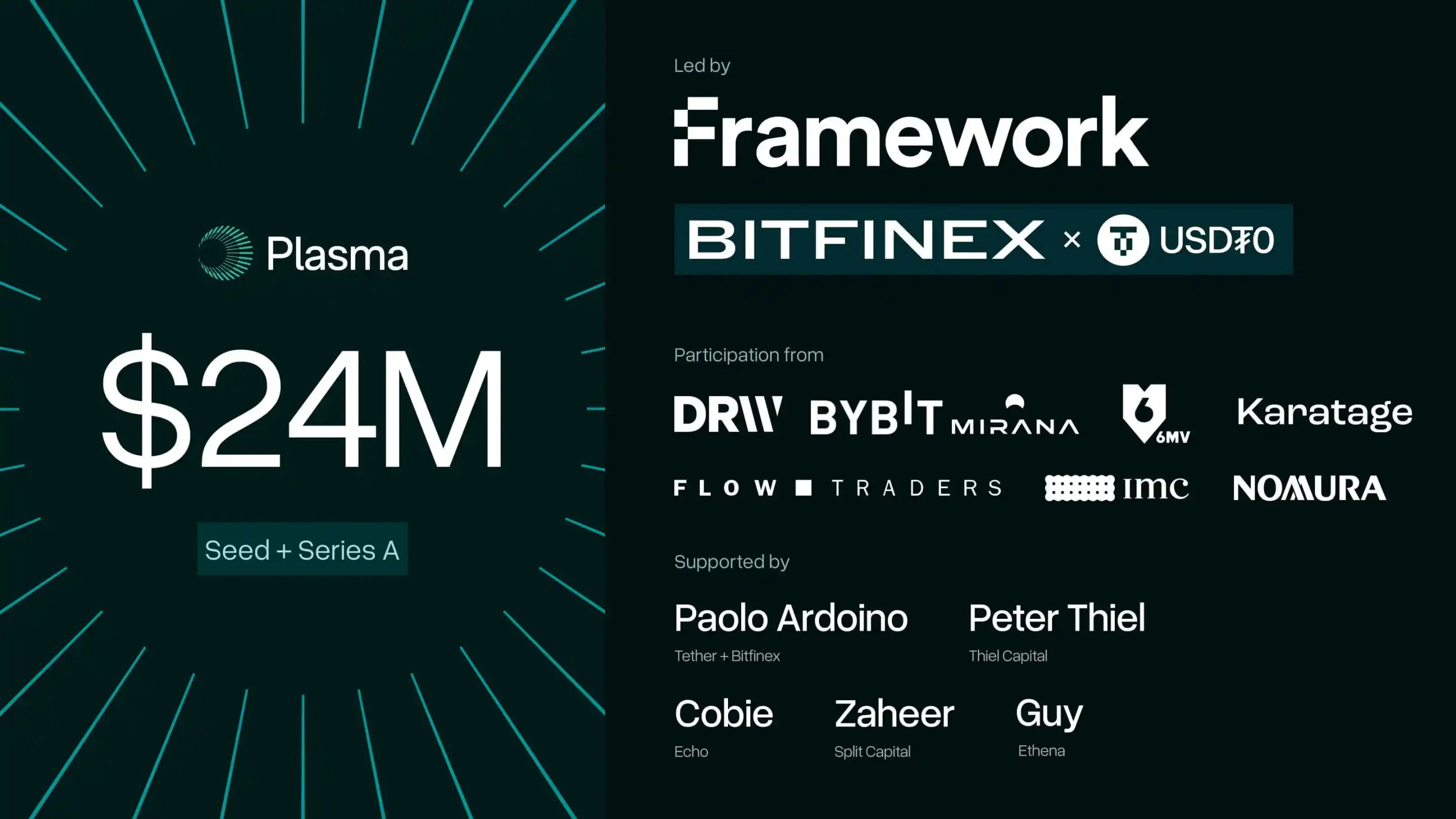
Prior to this, Plasma raised $24 million in seed and Series A rounds, with investors including Peter Thiel, Cobie, Tether CEO Paolo Ardoino, Bitfinex, USDT0, and Bybit.
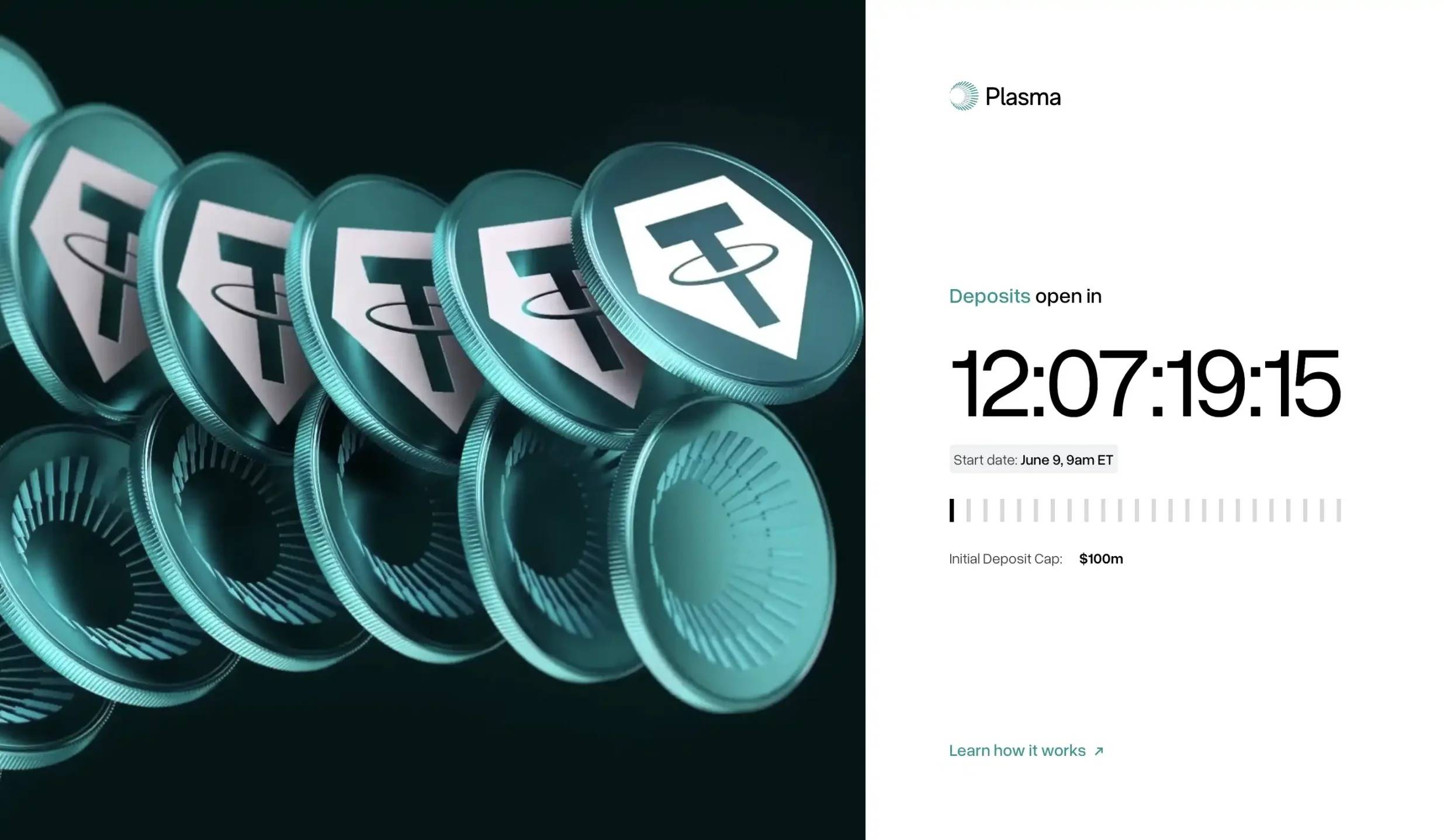
To participate in the XPL sale on Sonar, users must deposit stablecoins (USDT, USDC, and USDS, formerly known as DAI) into the Plasma vault on Ethereum. Allocations will be determined based on each participant’s time-weighted share of total deposits in the vault. After deposits close, holdings will be locked until the Plasma mainnet beta launches, at which point XPL tokens will be distributed.
XPL pre-deposits will open on June 9, with the actual sale beginning a few weeks later. Participation is open globally except for residents of the UK and sanctioned jurisdictions. U.S. participants will face a 12-month lock-up period, while most others will have a 40-day lock-up.
With the gradual passage of stablecoin legislation, growing recognition of crypto firms like Coinbase by traditional capital, and the SEC showing more “friendly” stances amid multiple market developments, compliant ICOs may gradually re-enter the mainstream. Platforms like Sonar might bring a breath of fresh air to a market saturated with LaunchPads.
Join TechFlow official community to stay tuned
Telegram:https://t.me/TechFlowDaily
X (Twitter):https://x.com/TechFlowPost
X (Twitter) EN:https://x.com/BlockFlow_News
 BlockBeats