The Paradox of Uncertainty: Cryptocurrency's Evolving Hedge Role in a Divided World
TechFlow Selected TechFlow Selected
The Paradox of Uncertainty: Cryptocurrency's Evolving Hedge Role in a Divided World
In a fragmented global economy, demand is growing for borderless, neutral financial tools as tariffs rise and alliances come under pressure.
 Navigating Web3 tides with focused insights
Editor's Note: On May 20, the South China Morning Post published an article by Lily Z. King, COO of Cobo, offering an in-depth analysis of the rise of crypto assets as "digital gold" and a new financial infrastructure amid today's fragmented global economy.
In recent months, the global financial system has undergone dramatic changes, highlighting the growing significance of digital assets. The U.S. spot Bitcoin ETF market (exchange-traded funds allowing investors indirect exposure to Bitcoin) has experienced explosive growth, surpassing $120 billion in assets under management (AUM), reflecting a profound shift in investor behavior.
Meanwhile, stablecoin transaction volume surged past $27 trillion last year, exceeding the combined transaction volumes of Visa and Mastercard. In Asia, jurisdictions such as Hong Kong have taken proactive steps—issuing exchange licenses, establishing regulatory frameworks for stablecoins, and approving cryptocurrency ETFs—in an effort to position themselves as regional hubs for the digital asset economy.
These are not isolated developments; they reflect a broader market reassessment of cryptocurrencies' practical value in an era marked by economic fragmentation and rising uncertainty. We might call this the "paradox of uncertainty": digital assets are moving from speculative peripheries into the mainstream, unexpectedly emerging as hedges against systemic risk.
As governments erect barriers to trade and capital flows, blockchain is quietly building a "highway" to facilitate global capital movement. Gold remains a traditional safe-haven asset, but it cannot enable cross-border transactions within minutes, nor can it bypass financial system restrictions during crises.
The enthusiastic investor response to spot Bitcoin ETFs underscores the appeal of the "digital gold" narrative. When U.S. regulators approved these products in January last year, many skeptics predicted tepid market interest. Instead, BlackRock’s iShares Bitcoin Trust (IBIT) rapidly grew to over $65 billion in AUM, becoming the world’s largest spot Bitcoin ETF.
Beyond the "digital gold" narrative, the truly revolutionary potential of cryptocurrencies lies in their ability to build a new financial system independent of traditional financial intermediaries. At the core of this system are stablecoins: blockchain tokens pegged to fiat currencies like the U.S. dollar.
The stablecoin market has expanded rapidly from $2 billion in 2019 to over $200 billion in circulation today, becoming an essential financial tool in markets where local currencies are unstable or cross-border capital flows are restricted.
The corporate sector has quickly recognized this trend. In October last year, Visa launched its "Visa Tokenised Asset Platform" to help banks issue and manage fiat-backed digital tokens. Last month, fintech firm Stripe began testing stablecoin payment solutions in emerging markets, enabling businesses to access U.S. dollars more easily via digital tokens. Mastercard has also introduced new features supporting stablecoin transactions.
The dual role of cryptocurrencies—as both a hedge and an innovation platform—is most vividly illustrated in Hong Kong. In a remarkably short time, Hong Kong has transformed from a cautious observer into a global leader in cryptocurrency regulation and application.
Since 2020, the Securities and Futures Commission (SFC) of Hong Kong has issued licenses to 10 virtual asset trading platforms, bringing cryptocurrency trading by retail and institutional investors under regulatory oversight. As Financial Secretary Paul Chan remarked at a recent Web3 event, this move aligns with Hong Kong’s strategic goal of building a "thriving digital asset ecosystem," while strengthening investor protection mechanisms.
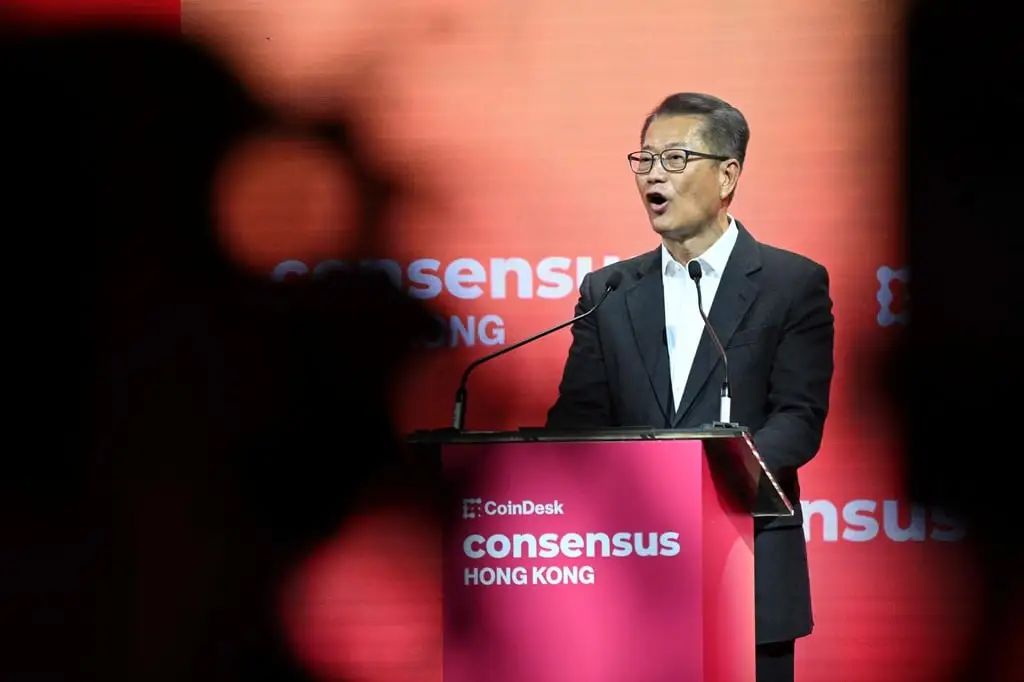
On February 19, 2025, Hong Kong Financial Secretary Paul Chan attended the opening ceremony of Consensus, hosted by Coindesk at the Hong Kong Convention and Exhibition Centre. This premier event in the crypto industry was held outside the United States for the first time in five years.
Hong Kong has adopted a diversified and pragmatic strategy. In April last year, it became one of the first jurisdictions globally to launch spot Bitcoin and Ethereum ETFs. In December, the Hong Kong government introduced a stablecoin bill requiring issuers of fiat-backed stablecoins to maintain adequate reserves and guarantee user redemption rights, establishing one of the world’s most advanced stablecoin regulatory frameworks.
At the end of November last year, Hong Kong’s Financial Services and the Treasury Bureau released a consultation paper proposing tax exemptions on gains from cryptocurrencies and other alternative assets for hedge funds, private equity funds, and family offices—clearly signaling its strategic intent to become a digital asset hub amid tense U.S.-China relations.
This momentum has continued into this year. In February 2025, the SFC unveiled a 12-point regulatory roadmap aimed at further advancing the development and security of the virtual asset industry. The plan includes licensing regimes for over-the-counter (OTC) trading and crypto asset custody, along with enhanced insurance and compensation mechanisms for virtual asset service providers.
The case of Hong Kong is particularly significant due to its dual strategic value. First, developing a robust digital asset industry serves as a financial hedge against global fragmentation and uncertainty, while reducing Hong Kong’s reliance on the traditional banking system—a sector vulnerable to geopolitical influences. Should the international financial system split into competing blocs in the future, Hong Kong could still provide channels for capital flow through crypto infrastructure, including stablecoins.
Second, growing the digital asset sector has become a key engine for financial innovation and long-term competitiveness. Hong Kong has not only issued the world’s first government-led tokenized green bond but also launched a pilot program for e-HKD to explore central bank digital currency (CBDC) development. Meanwhile, local banks and fintech firms are actively piloting blockchain applications in credit, trade finance, clearing, and settlement.
In an era of rapidly shifting global alliances, Hong Kong’s strategic embrace of cryptocurrencies is not merely a risk hedge—it is a forward-looking investment in future financial leadership.
As the global economy becomes increasingly fragmented, with rising tariff barriers and weakening traditional alliances, demand for borderless, neutral financial tools is growing rapidly. Born out of the 2008 global financial crisis, crypto assets were designed precisely to navigate such uncertain times.
The next financial shock—whether a currency crisis, data channel blockade, or weaponization of payment networks—will test the maturity of these alternative financial channels. Yet signs are already evident: capital is flowing in faster, institutions are adapting, and regulatory pioneers like Hong Kong are deliberately advancing their positioning.
We may be standing at the beginning of a historic restructuring of reserve assets—not to replace the U.S. dollar, but to hedge against its limitations: a quiet, gradual shift toward the mainstream, forming a viable backup system.
Join TechFlow official community to stay tuned
Telegram:https://t.me/TechFlowDaily
X (Twitter):https://x.com/TechFlowPost
X (Twitter) EN:https://x.com/BlockFlow_News
 Cobo
Cobo