a16z 2025 Crypto State Report Quick Take: $4 Trillion Market Cap New High, Institutional Adoption Becomes Mainstream
TechFlow Selected TechFlow Selected
a16z 2025 Crypto State Report Quick Take: $4 Trillion Market Cap New High, Institutional Adoption Becomes Mainstream
It's time to upgrade the financial system, rebuild global payment channels, and create the internet the world deserves.
 Navigating Web3 tides with focused insights
By Daren Matsuoka, Robert Hackett, Jeremy Zhang, Stephanie Zinn, and Eddy Lazzarin
Translated by Luffy, Foresight News
In 2025, global assets entered a year of on-chain adoption.
When we released our first State of Crypto Report, the industry was still in its adolescence. At that time, the total market capitalization of crypto was only half of today’s level, and blockchains were slower, more expensive, and less reliable.
Over the past three years, despite significant market pullbacks and regulatory uncertainty, developers across the crypto industry have continued to upgrade infrastructure and achieve technological breakthroughs. These efforts have brought us to where we are today: cryptocurrency has become an indispensable component of the modern economy.
The core narrative of the crypto industry in 2025 is maturity. In short, crypto has grown up:
-
Traditional financial giants (such as Visa, BlackRock, Fidelity, JPMorgan) and tech disruptors (such as PayPal, Stripe, Robinhood) are launching or preparing crypto products;
-
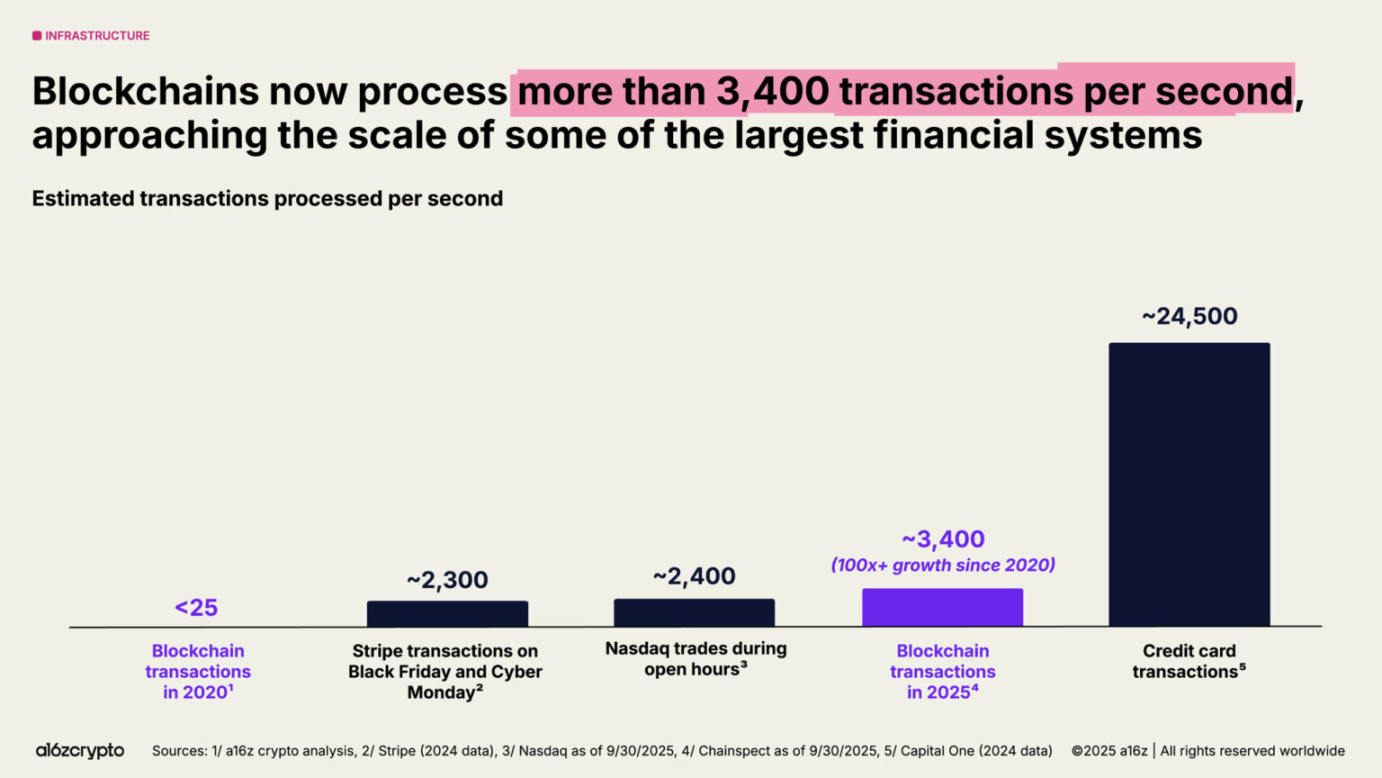
Blockchains now process over 3,400 transactions per second—more than 100 times higher than five years ago;
-
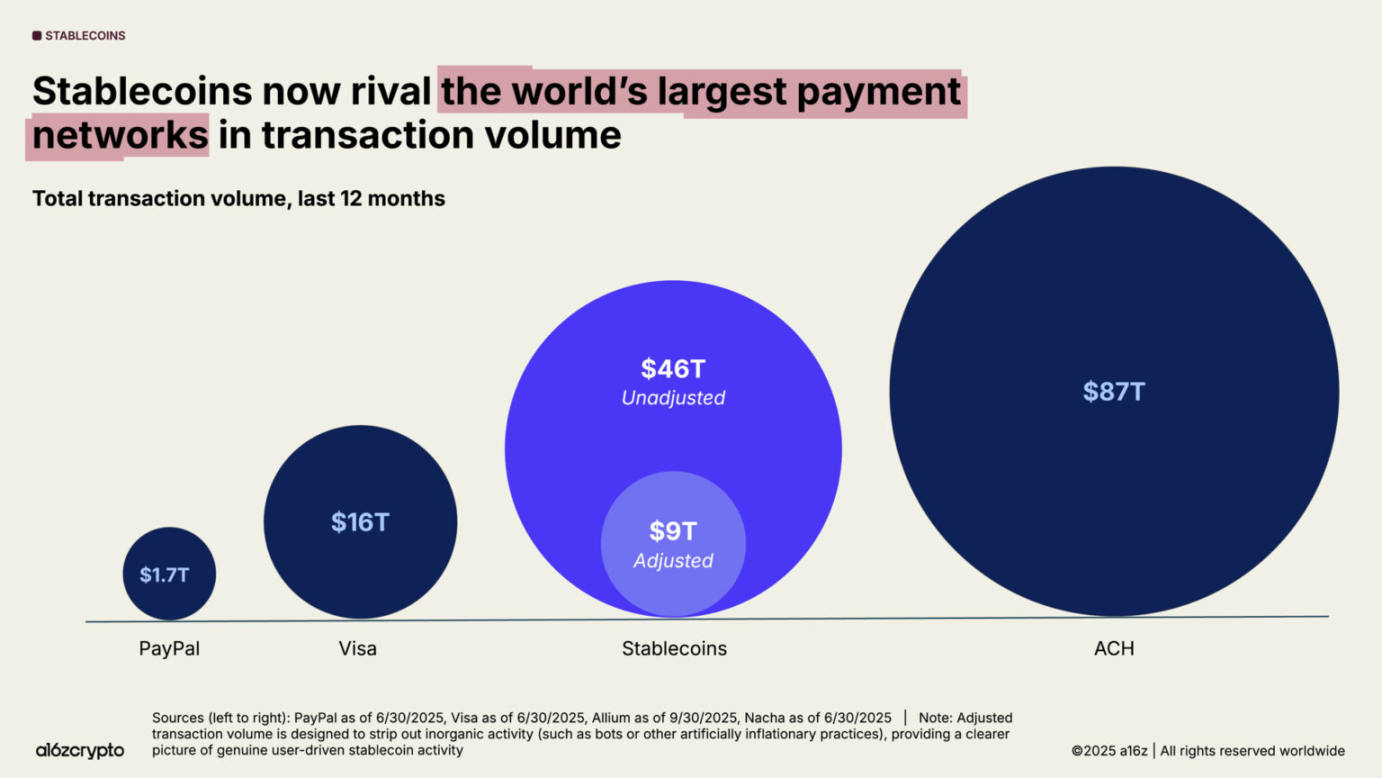
Stablecoins achieved $46 trillion in annual transaction volume (adjusted: $9 trillion), rivaling the scale of Visa and PayPal;
-
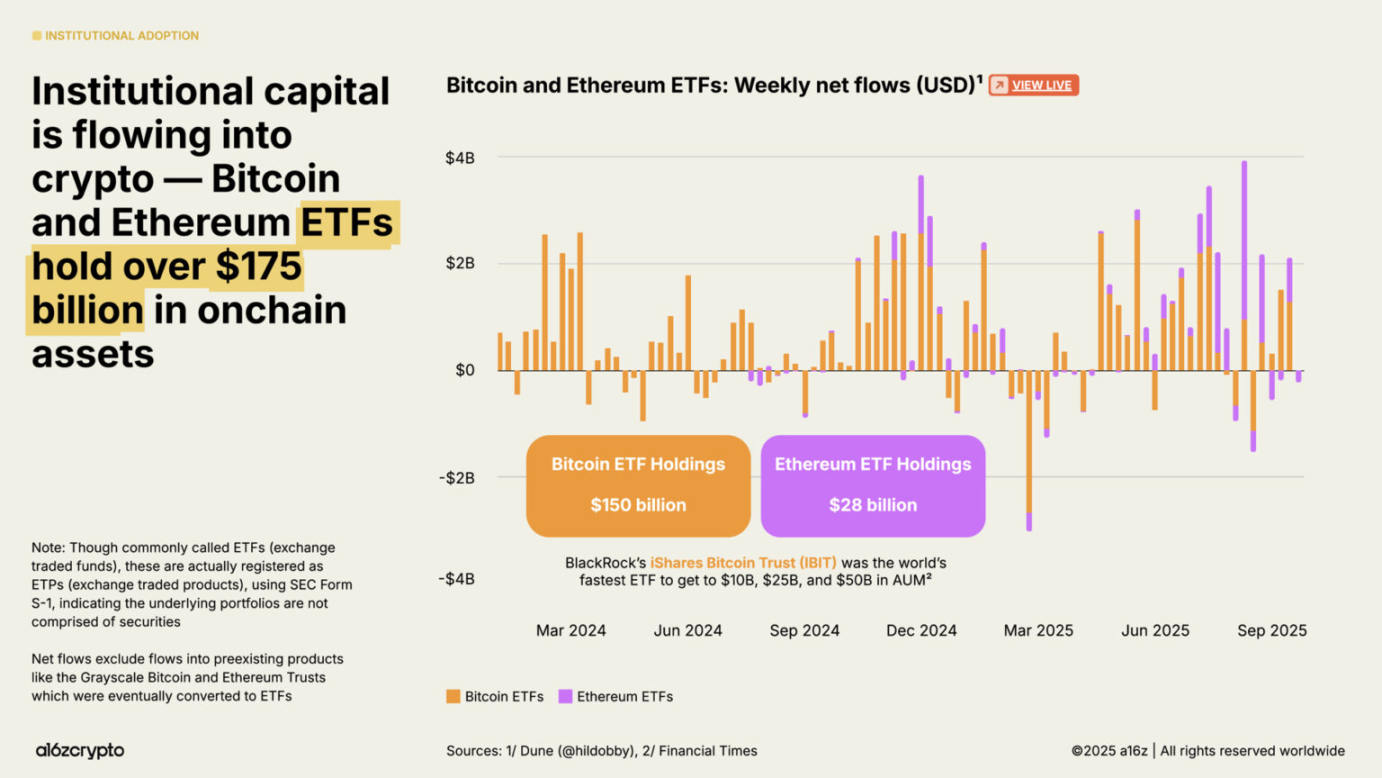
Bitcoin and Ethereum exchange-traded products (ETPs) hold over $175 billion in assets.
Our latest State of Crypto Report dives deep into this transformation, covering key trends such as institutional adoption, the rise of stablecoins, and the convergence of crypto with artificial intelligence. Additionally, we’re launching the State of Crypto Dashboard (https://stateofcrypto.a16zcrypto.com/)—a new data exploration tool that tracks industry developments in real time through core metrics.
Crypto market is large, global, and growing
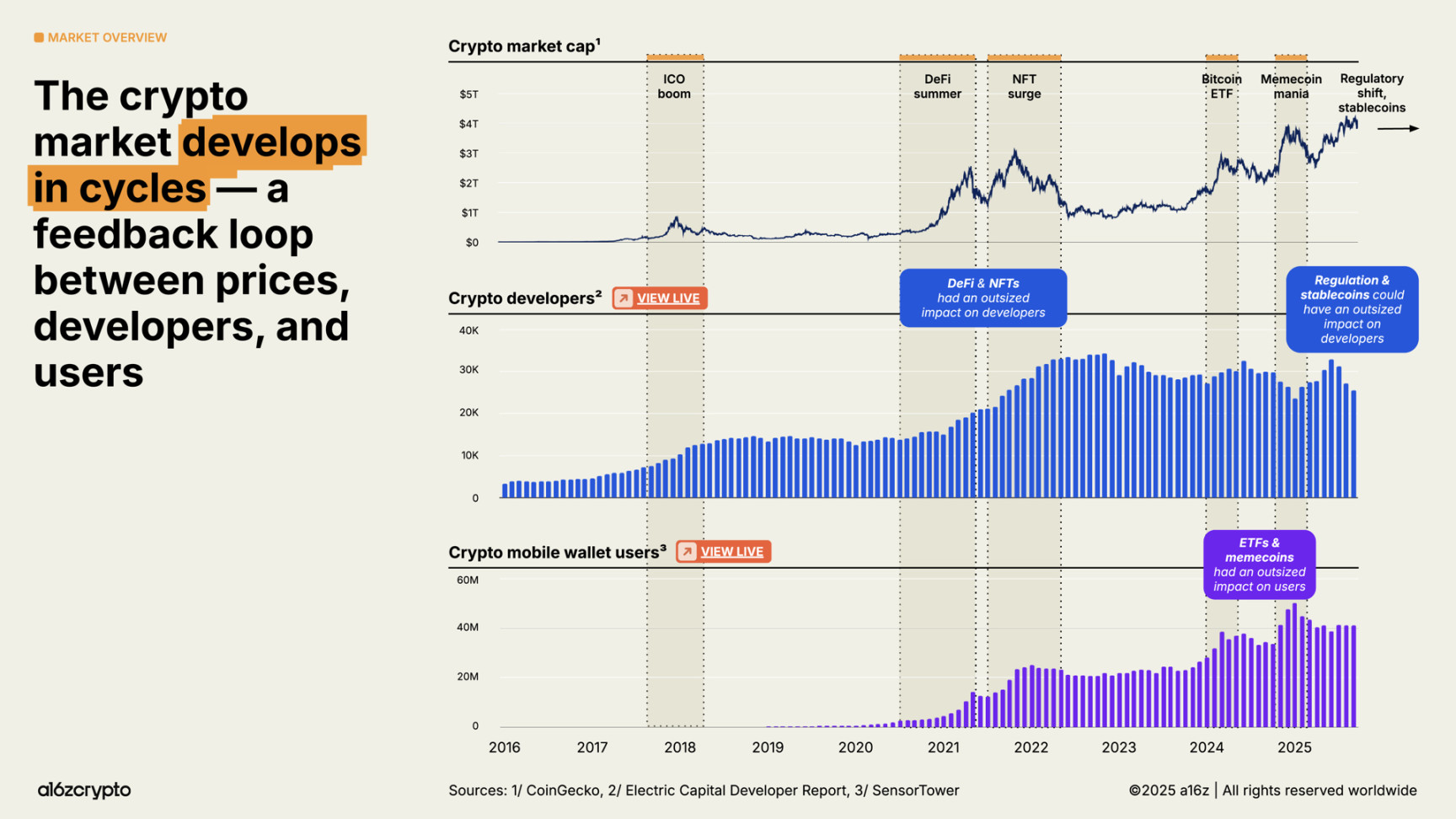
In 2025, the total market cap of crypto surpassed $4 trillion for the first time, marking full industry maturation. The number of cryptocurrency mobile wallet users also reached a record high, increasing 20% from last year.
A shift from regulatory hostility to support, combined with accelerating technology adoption—including stablecoin use, tokenization of traditional financial assets, and emerging applications—will define the next cycle of the industry.
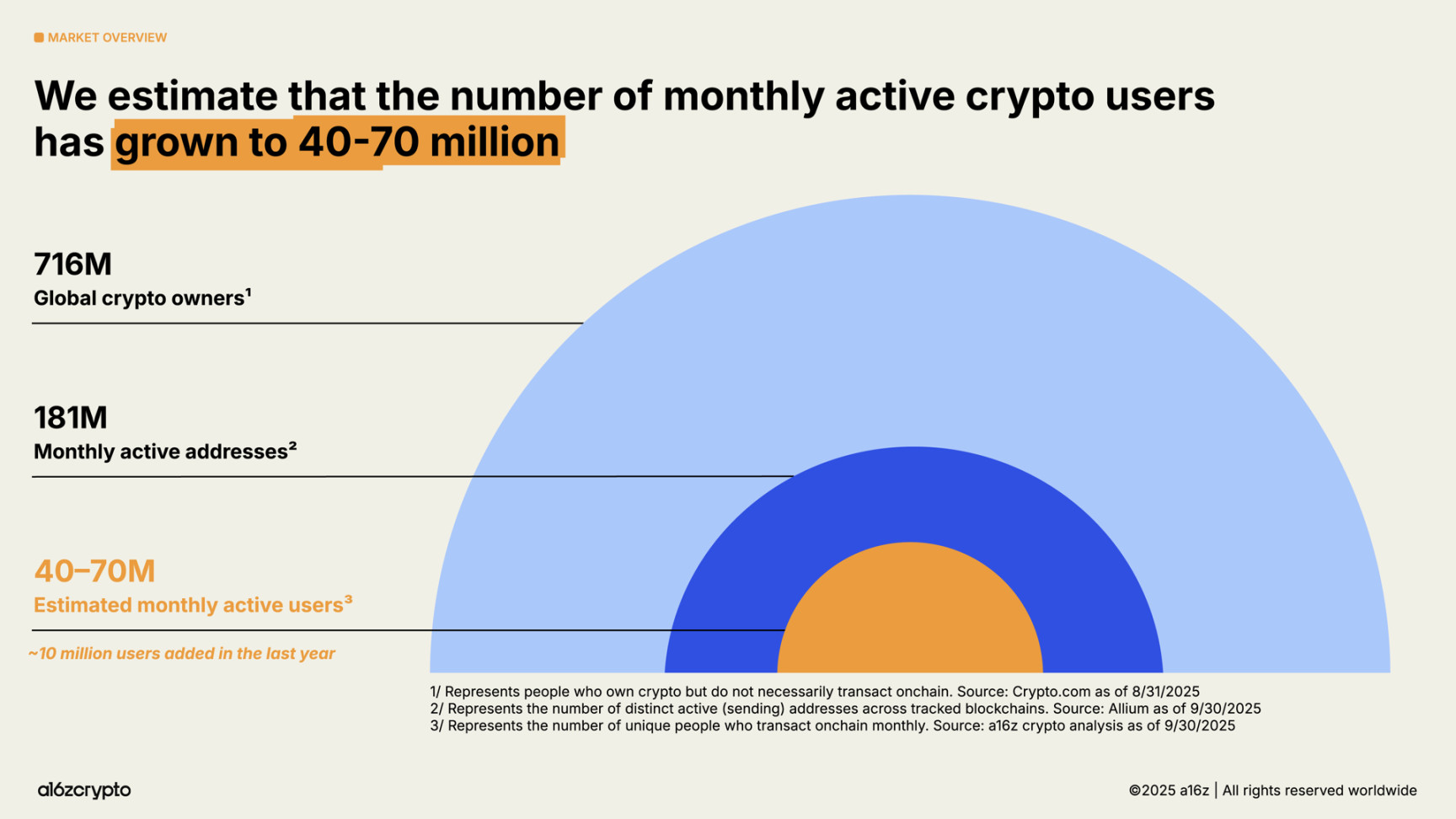
According to our latest methodology, active crypto users now number between 40 million and 70 million—about 10 million more than last year.
This figure represents only a fraction of total crypto holders (approximately 716 million, up 16% year-on-year) and is far below the number of monthly active on-chain addresses (around 181 million, down 18% year-on-year).
The gap between passive holders (those who own crypto but don’t transact on-chain) and active users (those who regularly engage in on-chain activity) presents an opportunity for developers to reach the vast pool of potential users who already hold crypto but aren't yet actively participating.
So where are these crypto users, and what are they doing?
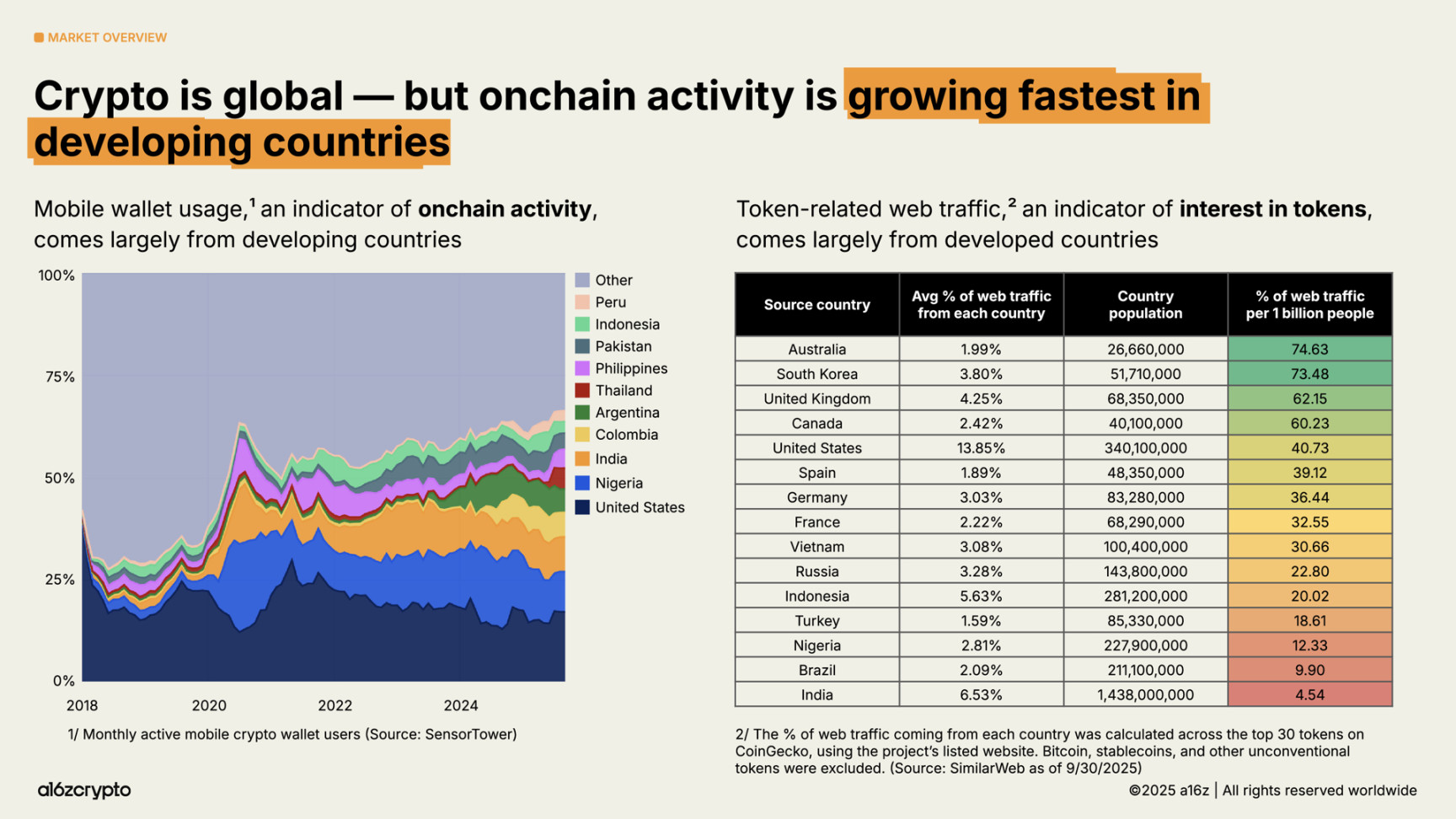
Crypto applications are global, but usage varies significantly by region. Mobile wallet adoption (a proxy for on-chain activity) grew fastest in emerging markets like Argentina, Colombia, India, and Nigeria. In Argentina, amid escalating currency crises, the use of crypto mobile wallets surged 16-fold over the past three years.
Meanwhile, our analysis of geographic sources of token-related web traffic shows interest indicators leaning toward developed nations. Activity in these countries—particularly Australia and South Korea—may be more focused on trading and speculation compared to users in developing economies.
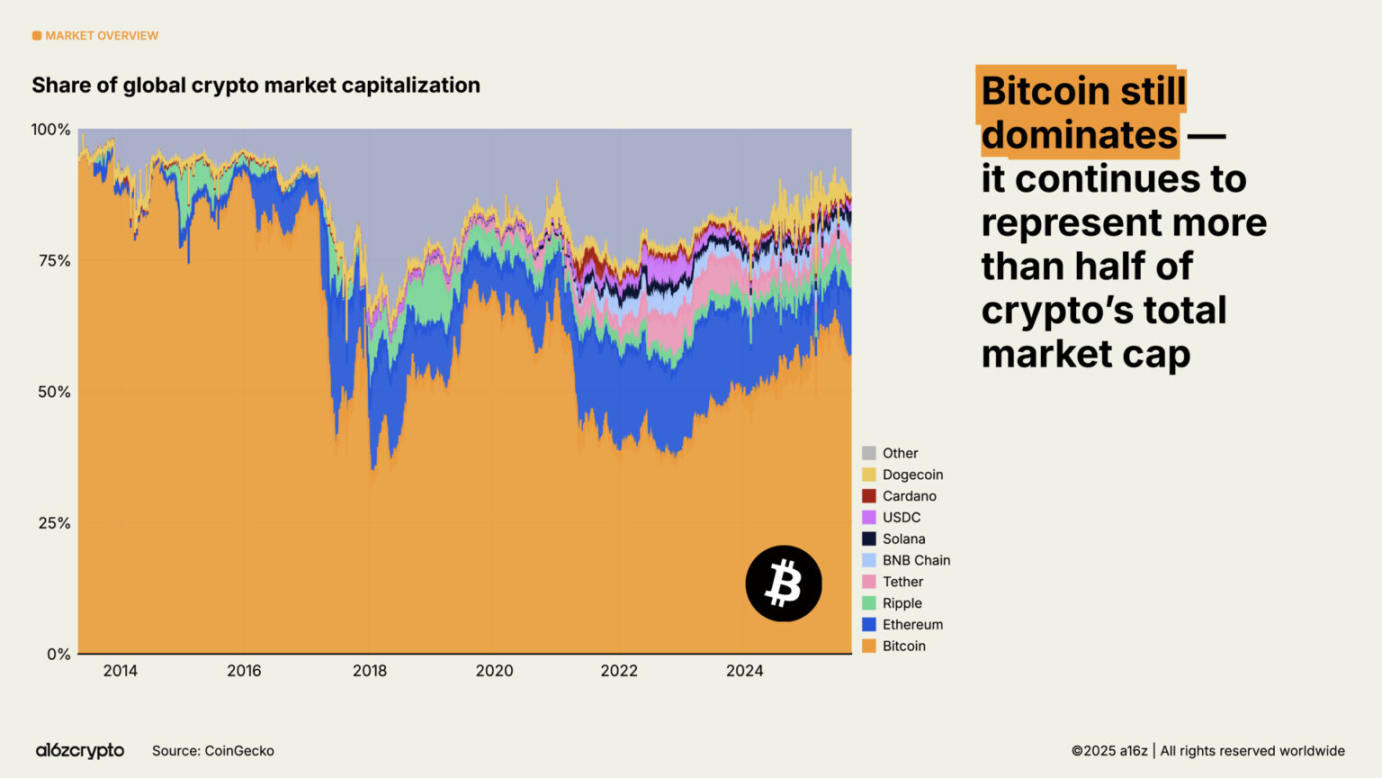
Bitcoin still commands about half of the total crypto market cap, with its value-storage properties recognized by investors, reaching a record high above $126,000. Meanwhile, Ethereum and Solana have reclaimed much of the ground lost since 2022.
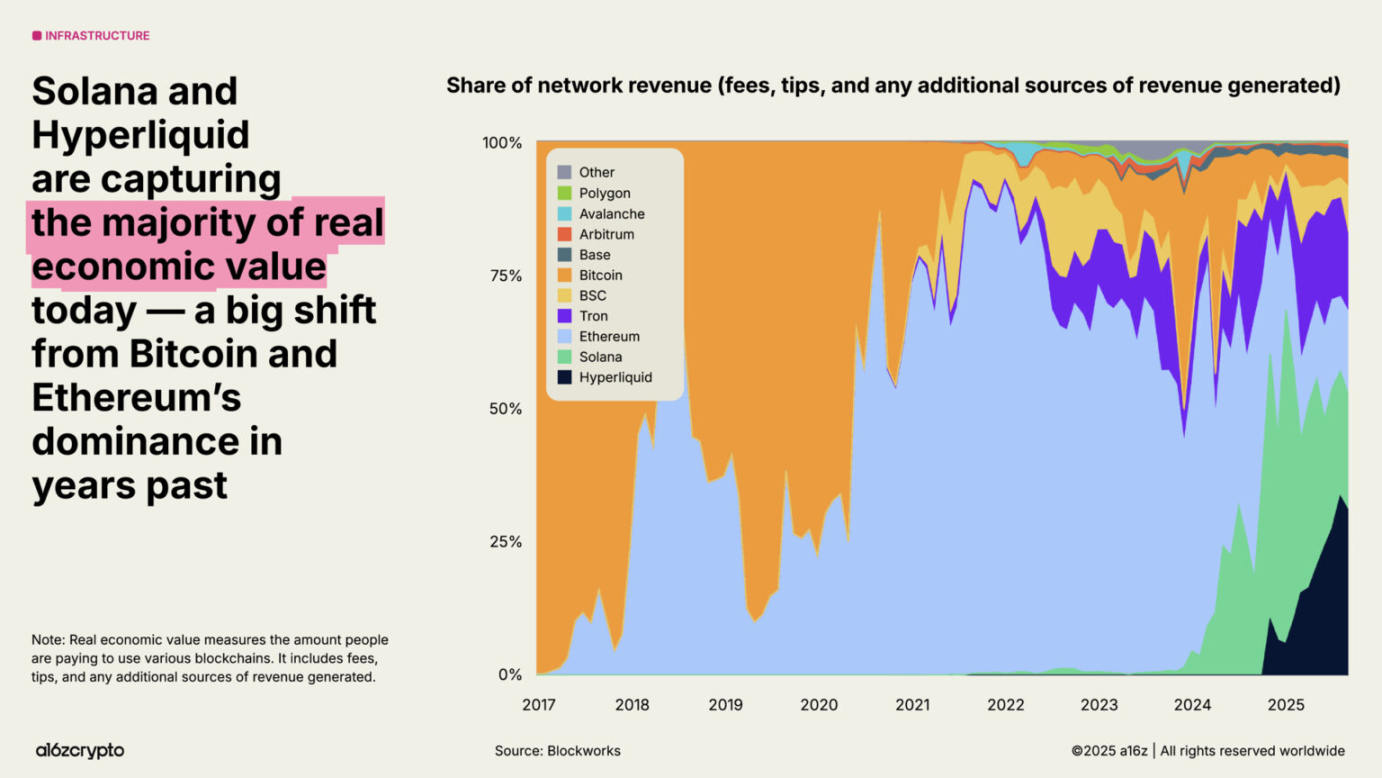
As blockchains continue to scale, fee markets mature, and new applications emerge, real economic value—the actual cost users pay to use blockchains—has become a more important metric. Currently, Hyperliquid and Solana account for 53% of revenue-generating economic activity—a stark contrast to previous years when Bitcoin and Ethereum dominated.
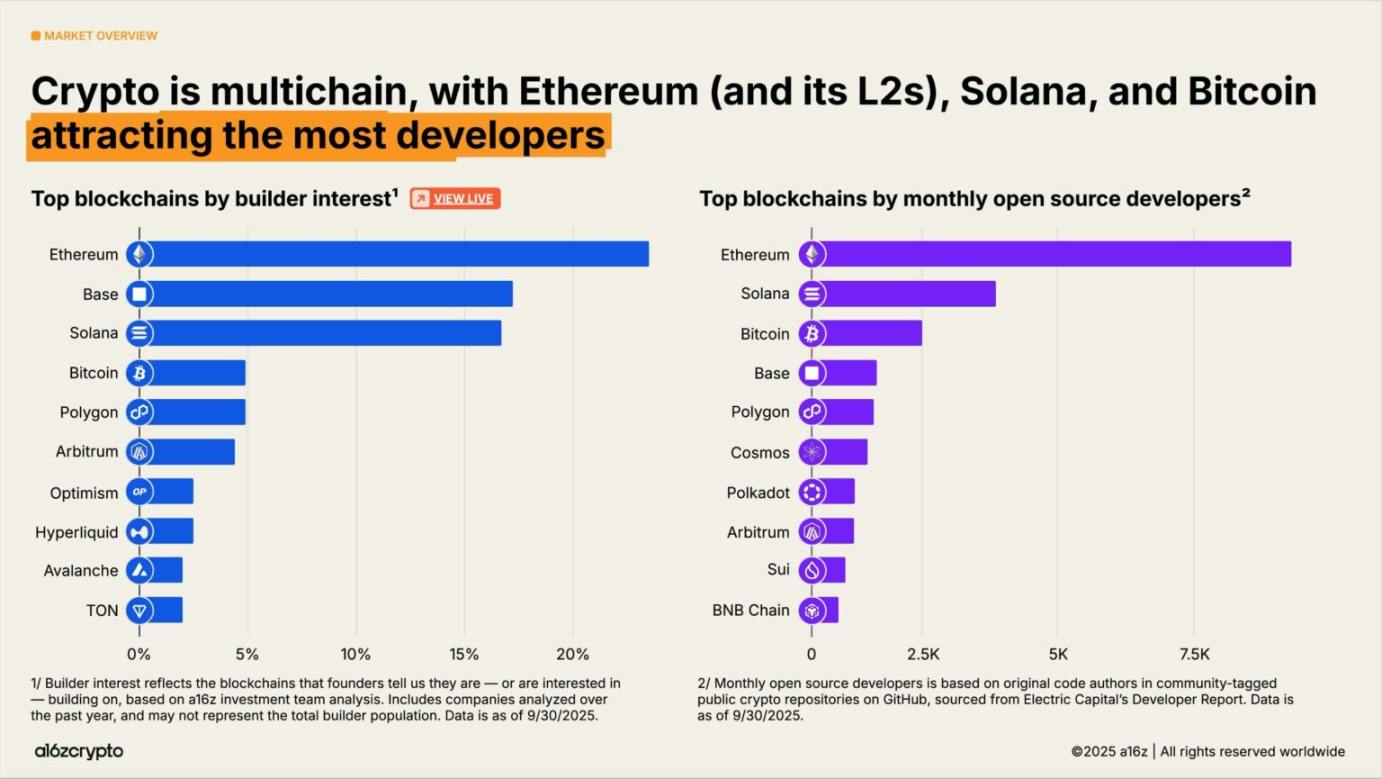
At the developer level, the crypto industry remains multi-chain. Bitcoin, Ethereum (and its Layer 2 networks), and Solana attract the most developers. In 2025, Ethereum and its Layer 2 ecosystems are the top choice for new developers, while Solana ranks among the fastest-growing ecosystems, with developer attention rising 78% over the past two years.
Financial institutions fully embrace crypto
2025 marks the year of institutional adoption in crypto. Just five days after last year’s State of Crypto Report declared “stablecoins have found product-market fit (PMF),” Stripe announced plans to acquire Bridge, a stablecoin infrastructure platform. The race officially began, with traditional financial institutions quickly following suit and publicly entering the stablecoin space.
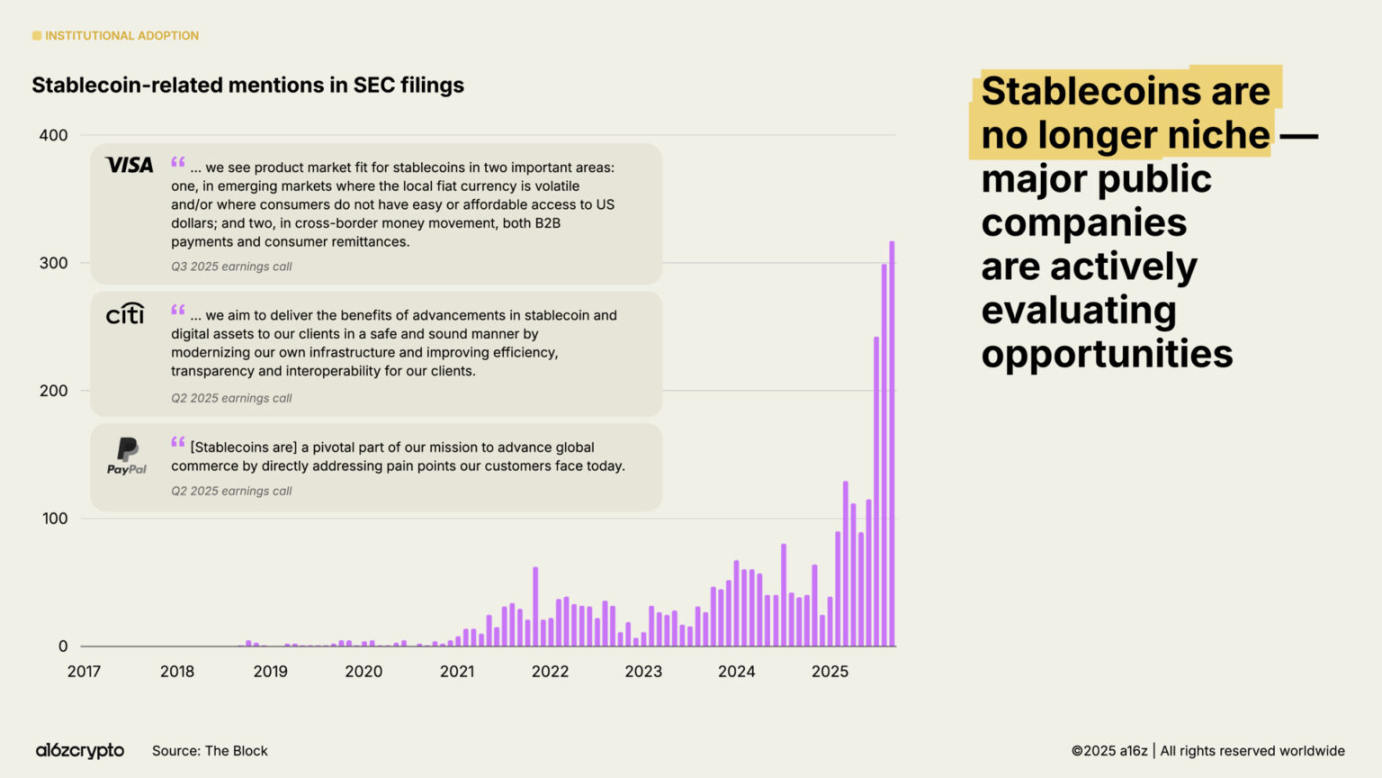
Months later, Circle’s multibillion-dollar IPO marked stablecoin issuers’ arrival as mainstream financial players. In July, the bipartisan GENIUS Act took effect, providing clear compliance frameworks for developers and institutions and eliminating prior policy uncertainty. In the months that followed, mentions of stablecoins in U.S. Securities and Exchange Commission (SEC) filings rose 64%, and major financial institutions issued a series of crypto-related announcements.
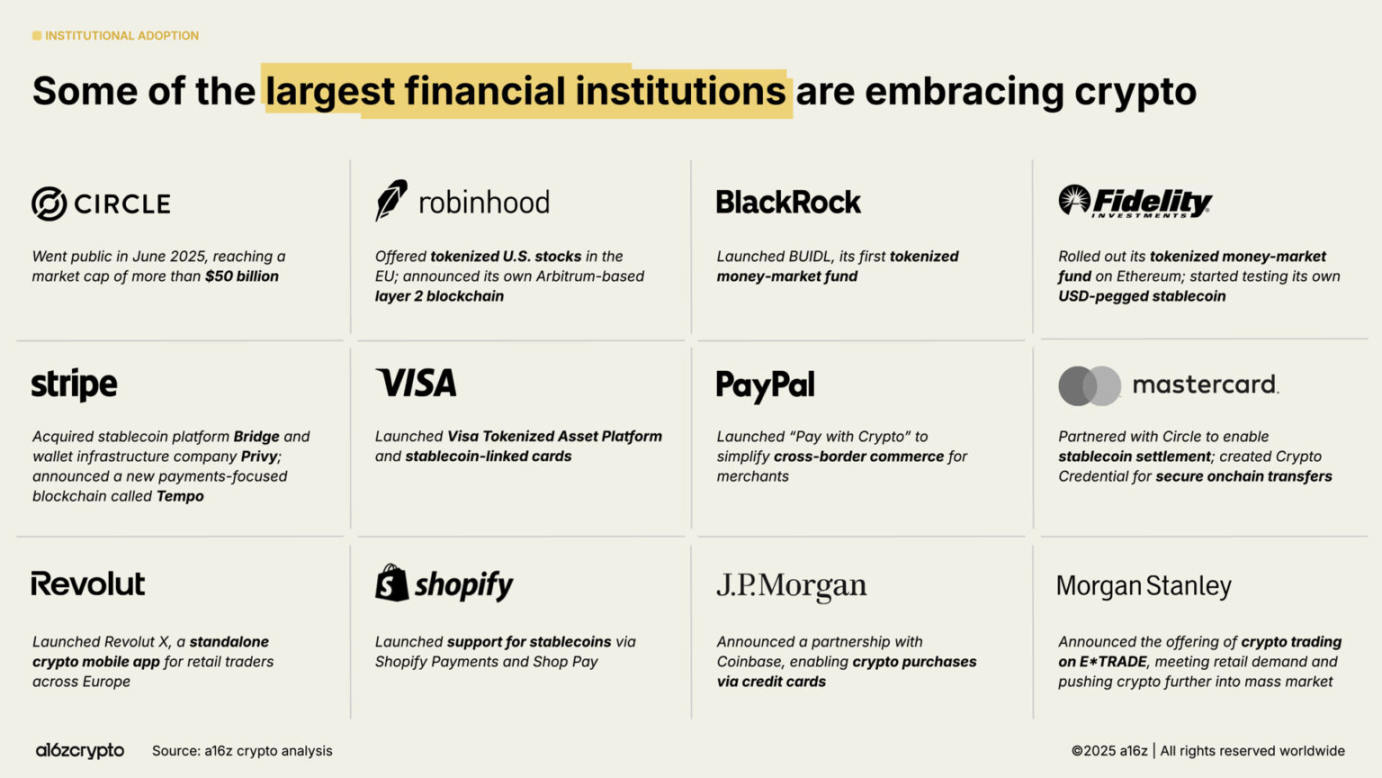
Institutional adoption accelerated rapidly. Traditional institutions including Citigroup, Fidelity, JPMorgan, Mastercard, Morgan Stanley, and Visa are now directly offering—or planning to offer—crypto products to consumers, enabling them to buy, sell, and hold crypto assets alongside stocks, exchange-traded products, and other traditional instruments. Meanwhile, platforms like PayPal and Shopify are doubling down on payments, building infrastructure for everyday transactions between merchants and customers.
Beyond direct product offerings, major fintech firms including Circle, Robinhood, and Stripe are actively developing—or have announced plans to build—new blockchains focused on payments, real-world assets, and stablecoins. These initiatives could drive more on-chain payment flows, encourage enterprise adoption, and ultimately create a larger, faster, and more globalized financial system.
These companies possess massive distribution networks. If this momentum continues, crypto could become deeply embedded in the financial services we use every day.
Exchange-traded products (ETPs) are another key driver of institutional investment, now holding over $175 billion in on-chain crypto assets—an increase of 169% from $65 billion a year earlier.
BlackRock’s iShares Bitcoin Trust (IBIT) has been dubbed the most traded Bitcoin ETP in history; its Ethereum counterpart has also seen strong inflows in recent months. (Note: Although often referred to as ETFs, these are technically exchange-traded products registered via SEC Form S-1, with underlying portfolios that do not contain securities.)
These products lower the barrier to entry for crypto investment, unlocking massive institutional capital previously held back due to compliance concerns.
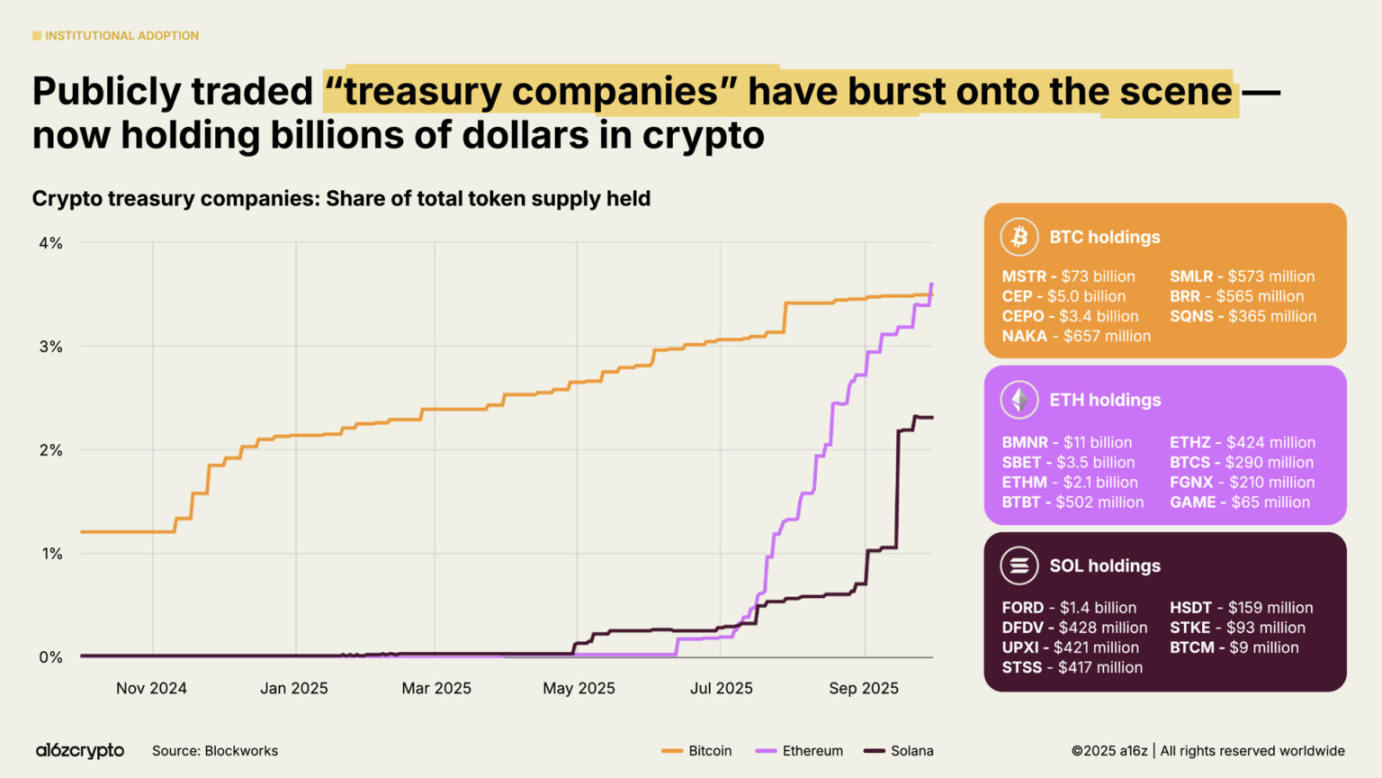
Publicly traded digital asset trusts (DATs) currently hold approximately 4% of the total circulating supply of Bitcoin and Ethereum. Combined with ETPs, these holdings represent about 10% of the total Bitcoin and Ethereum token supply.
Stablecoins go mainstream
In 2025, the rise of stablecoins stands as the clearest proof of crypto’s maturity. A few years ago, stablecoins were primarily used to settle speculative crypto trades; over the past two years, they’ve evolved into the world’s fastest and cheapest dollar transfer mechanism—capable of settling transactions in one second for less than one cent, accessible nearly everywhere globally.
Today, stablecoins are a foundational pillar of the on-chain economy.
Over the past year, stablecoins recorded $46 trillion in total transaction volume, a 106% increase from the previous year. While this number largely reflects financial flows rather than retail payments (unlike credit card networks), it is nearly triple Visa’s volume and approaches the scale of the ACH network, which underpins the entire U.S. banking system.
Using adjusted figures (excluding inflated activity such as bot-driven trades), stablecoin transaction volume reached $9 trillion over the past 12 months, up 87% year-on-year. This exceeds PayPal’s volume by more than five times and surpasses half of Visa’s transaction volume.
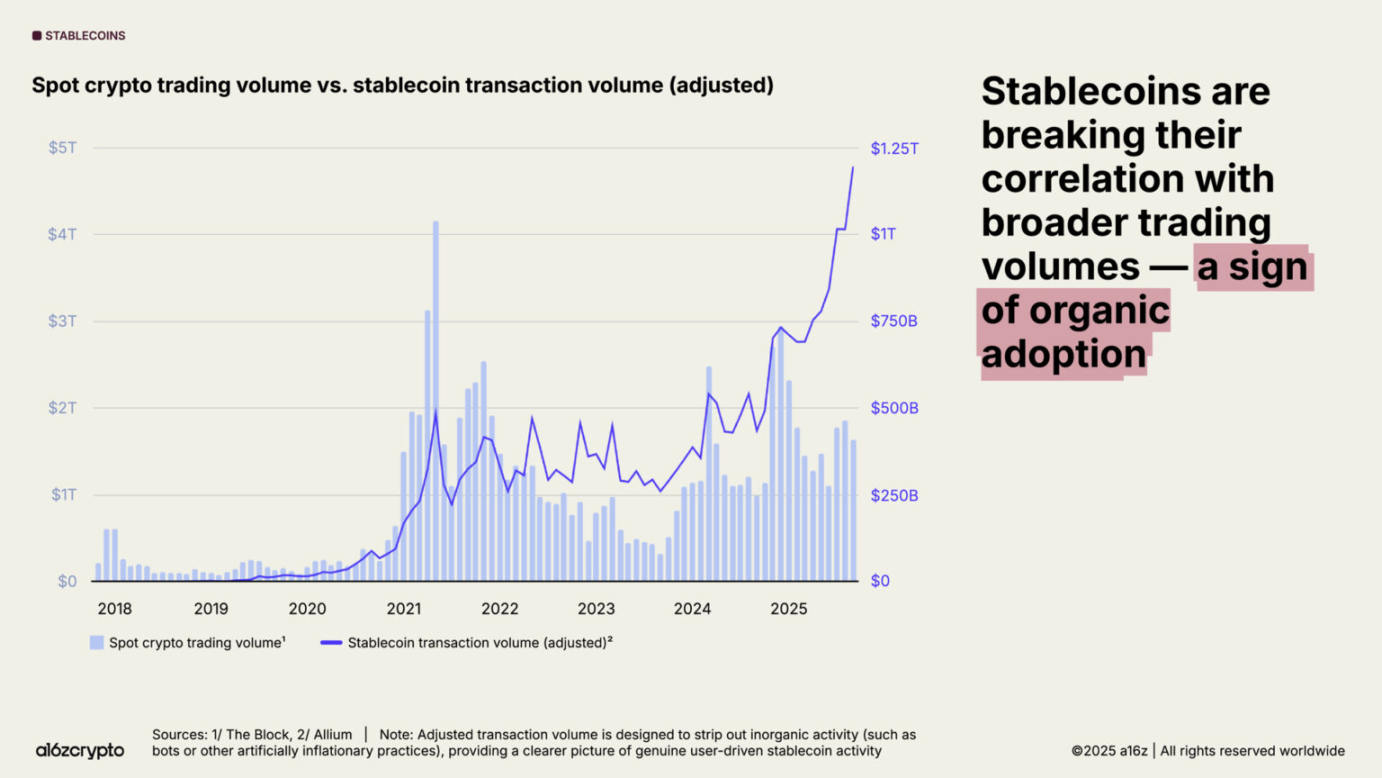
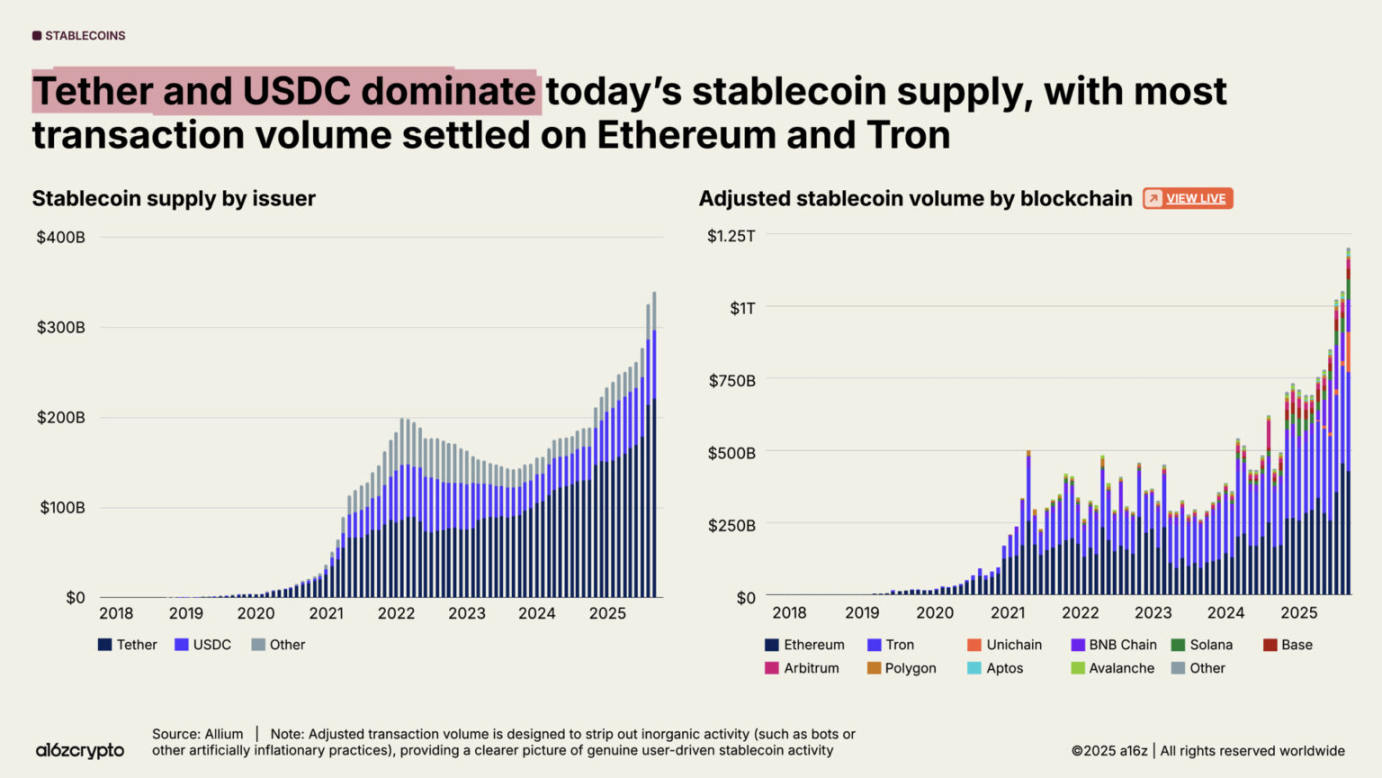
Adoption of stablecoins is accelerating. In September 2025, adjusted monthly stablecoin transaction volume hit a record high, nearing $1.25 trillion.
Notably, this activity is largely decoupled from overall crypto trading volumes. The non-speculative utility of stablecoins is now widely accepted, confirming the durability of their product-market fit (PMF).
Total stablecoin supply has also reached an all-time high, exceeding $300 billion.
The market is dominated by leaders: Tether and USDC together hold 87% of the market share. In September 2025, adjusted stablecoin transaction volume on Ethereum and Tron blockchains totaled $772 billion, accounting for 64% of the global market. While these two issuers and two chains dominate, growth among new blockchains and new issuers is accelerating.
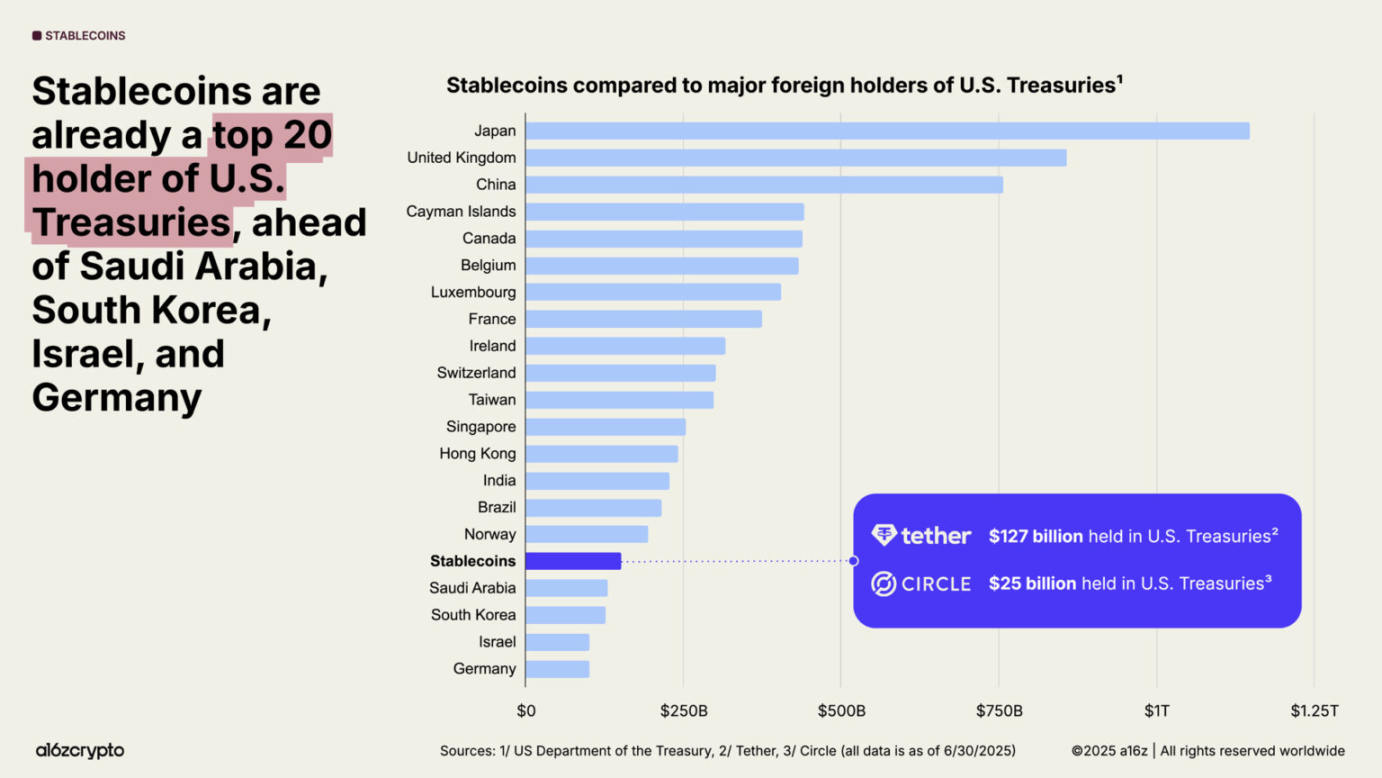
Stablecoins have now become a force in global macroeconomics. Today, over 1% of all dollars exist as tokenized stablecoins on public blockchains. Stablecoins’ holdings of U.S. Treasuries have risen from 20th to 17th largest holder year-on-year, totaling over $150 billion—surpassing the Treasury holdings of many sovereign nations.
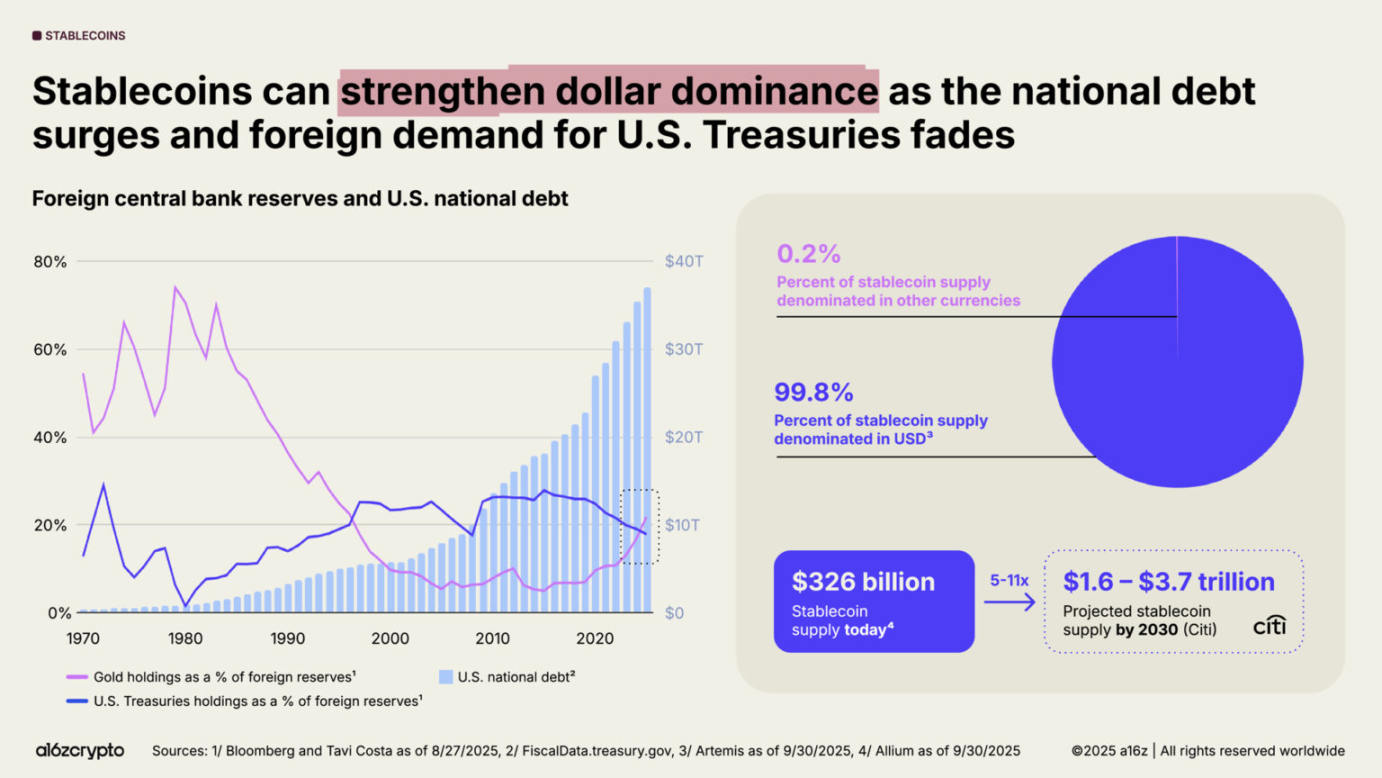
Meanwhile, a contradiction exists globally: shrinking demand for U.S. Treasuries contrasts with surging issuance. For the first time in 30 years, foreign central banks hold more gold reserves than U.S. Treasuries.
Yet stablecoins are moving counter-trend: 99% of stablecoins are pegged to the dollar, and their size is projected to grow tenfold by 2030, surpassing $3 trillion. This suggests stablecoins may become a strong and sustainable source of demand for U.S. Treasuries in the coming years, reinforcing the dollar’s global dominance even as foreign central banks reduce their holdings.
Crypto momentum in the U.S. stronger than ever
The United States has reversed its previous hostile stance toward crypto, reigniting developer confidence.
This year, the enactment of the GENIUS Act and the passage of the CLARITY Act in the House signal bipartisan consensus: crypto is not only here to stay but will thrive in America. Together, these bills establish a framework for regulating stablecoins, market structure, and digital assets, balancing innovation with investor protection. Additionally, Executive Order 14178 overturned prior anti-crypto policies and created an interagency task force to modernize federal digital asset policy.
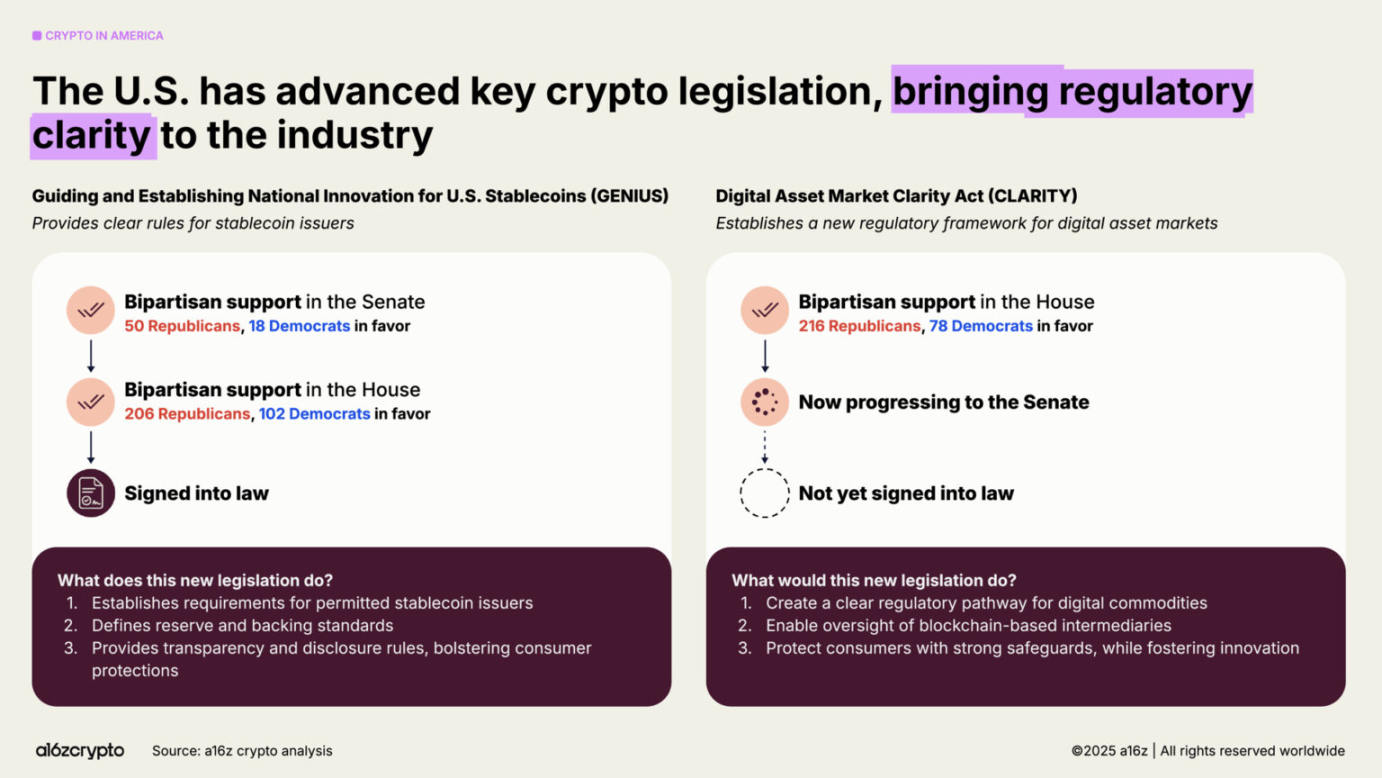
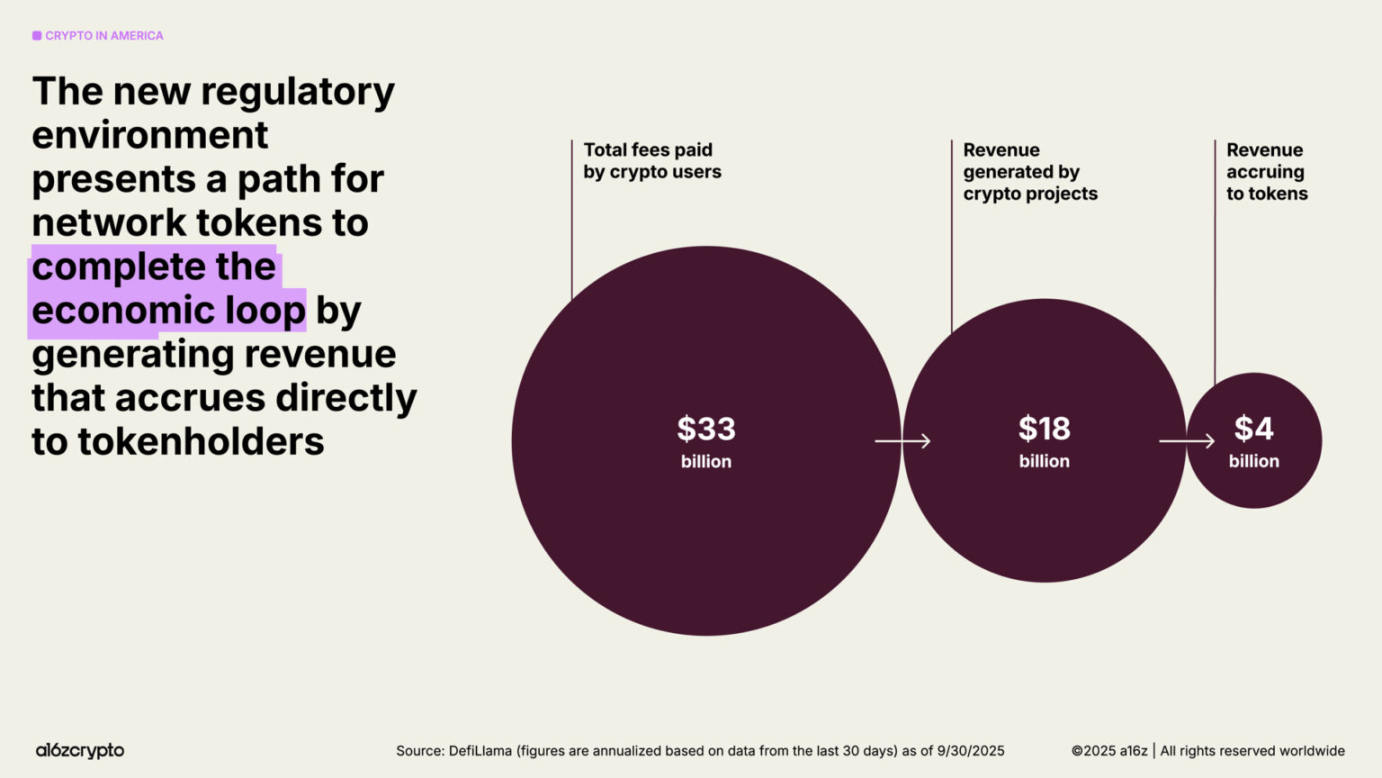
Clear regulation paves the way for developers to build tokens as “next-generation digital building blocks.” With regulatory clarity, more tokens can close their economic loops by generating yield for holders, creating a self-sustaining economic engine for the internet—one that empowers broader user ownership of systems.
Global assets accelerate on-chain migration
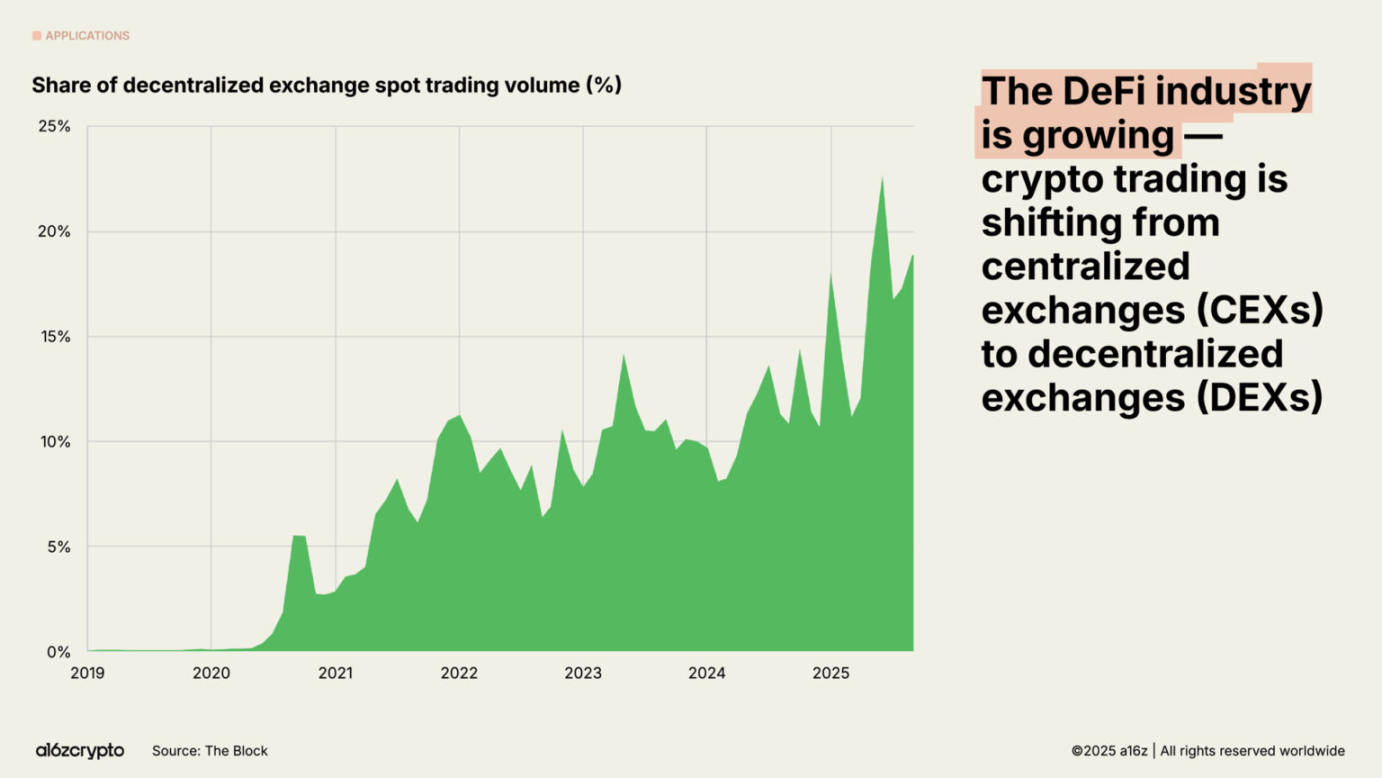
Once a niche domain for early adopters, the on-chain economy has evolved into a large-scale market spanning multiple industries, with tens of millions of monthly active users. Today, nearly one-fifth of spot trading volume comes from decentralized exchanges (DEXs).
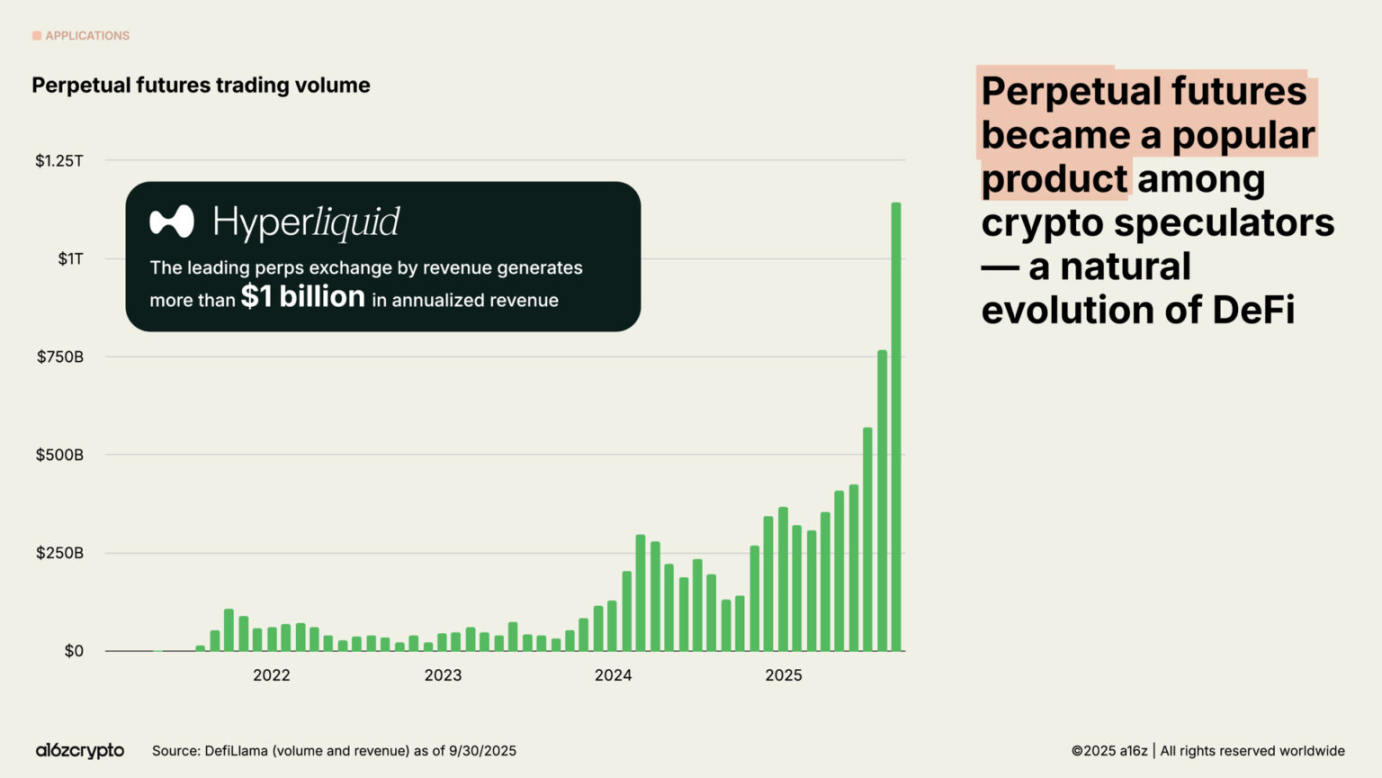
Perpetual futures trading volume has grown nearly eightfold over the past year, gaining rapid popularity among crypto speculators. Decentralized perpetual exchanges like Hyperliquid have processed trillions in trading volume and generated over $1 billion in annualized revenue this year—figures comparable to some centralized exchanges.
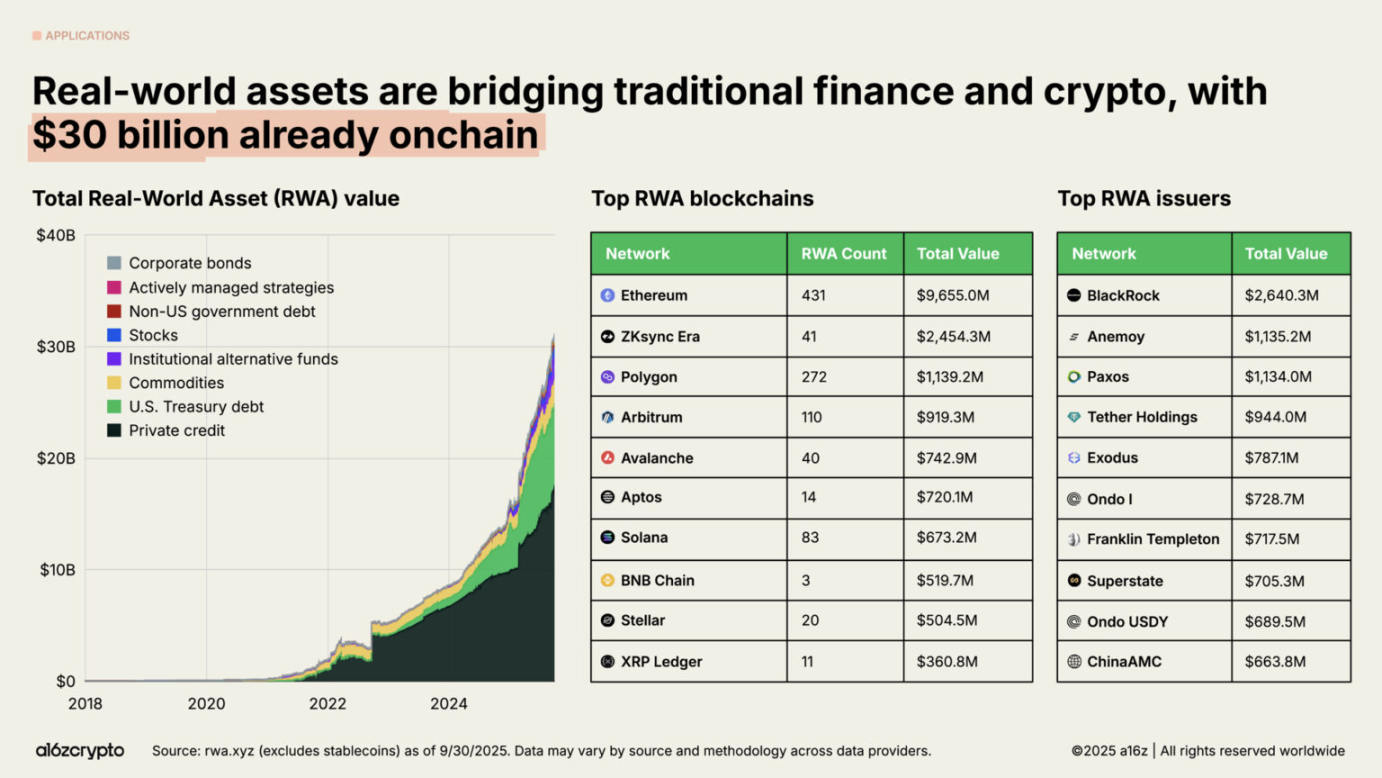
Real-world assets (RWA)—such as U.S. Treasuries, money market funds, private credit, and real estate—now exist on-chain, bridging crypto and traditional finance. The total market size of tokenized RWAs stands at $30 billion, nearly quadrupling over the past two years.
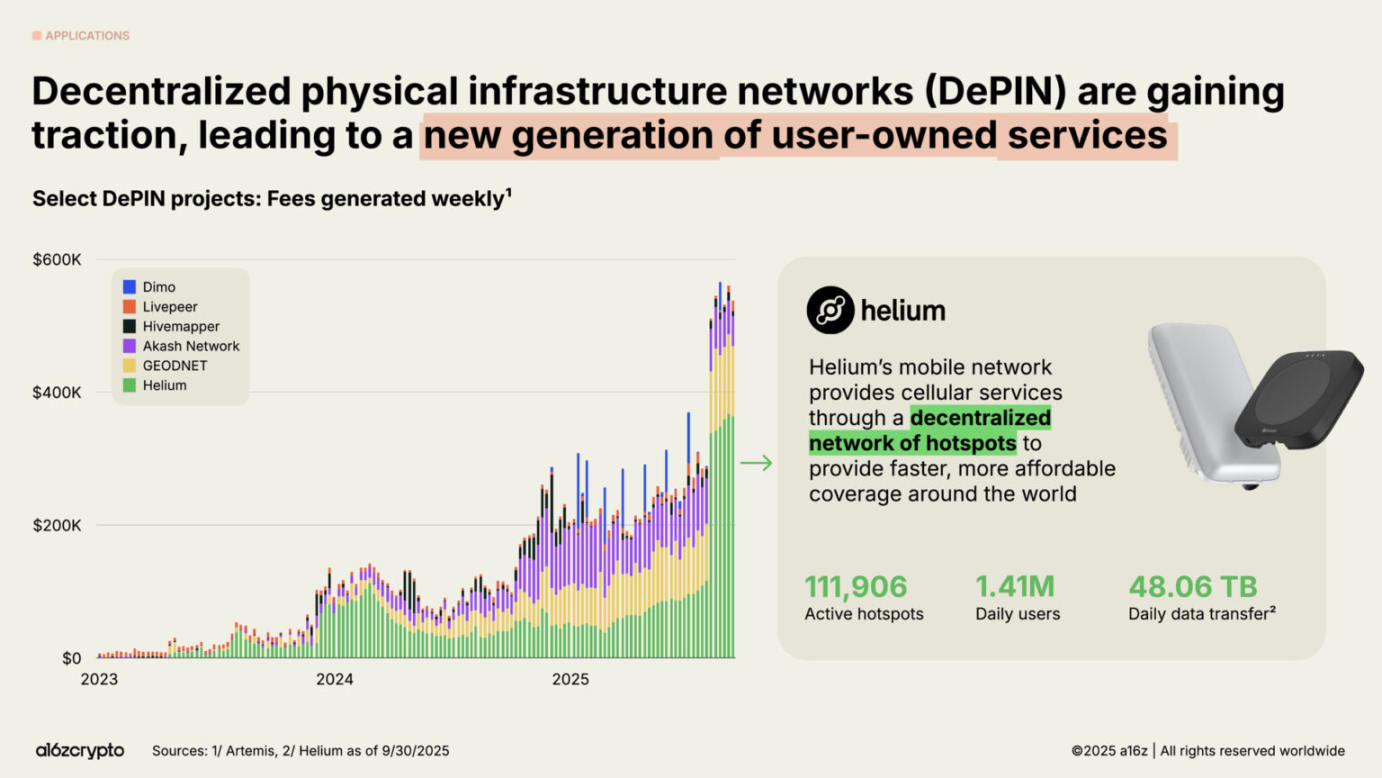
Beyond finance, one of blockchain’s most ambitious frontiers in 2025 is DePIN—decentralized physical infrastructure networks.
If decentralized finance (DeFi) redefined finance, then DePIN is redefining physical infrastructure, including telecom networks, transportation systems, and energy grids.
The potential is enormous: the World Economic Forum predicts the DePIN market could reach $3.5 trillion by 2028.
The Helium network is the best-known example: this grassroots wireless network uses 111,000 user-operated hotspots to provide 5G cellular coverage to 1.4 million daily active users worldwide.
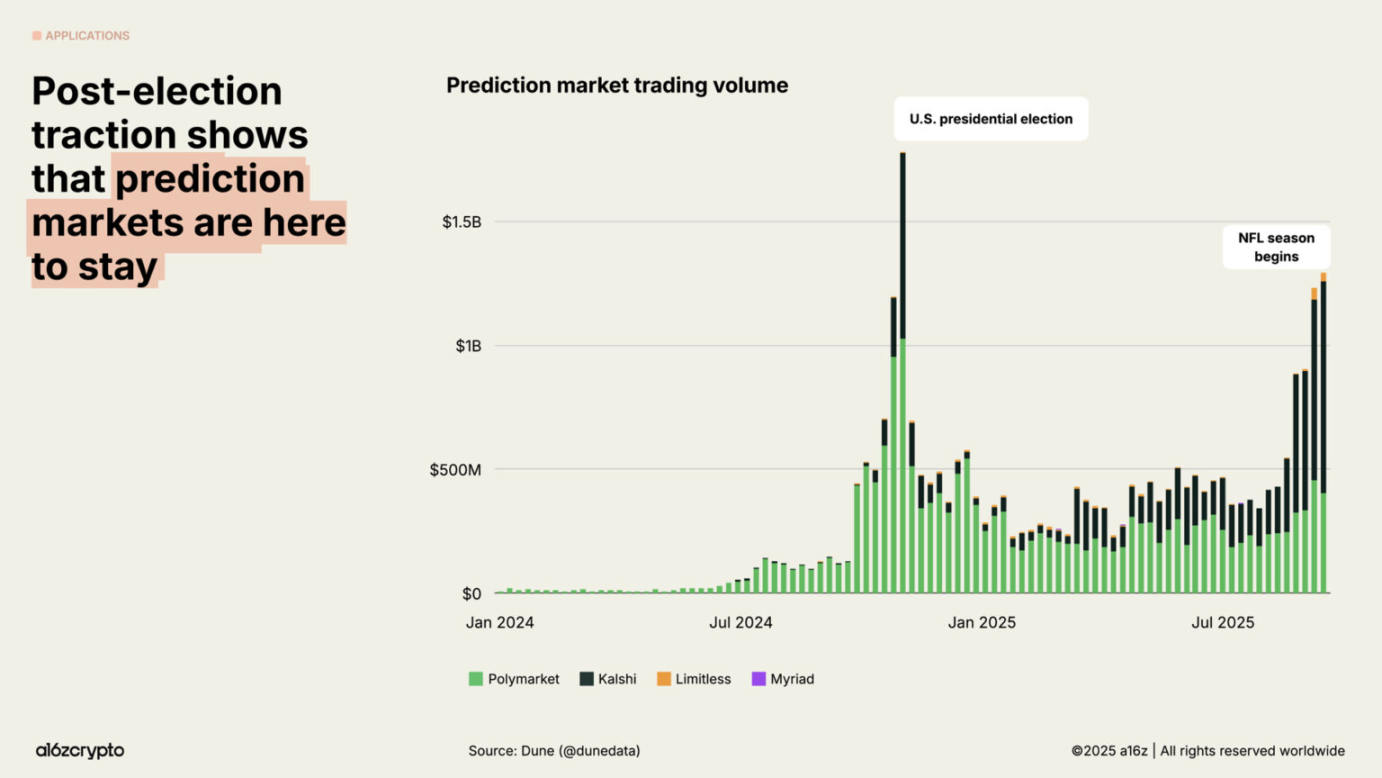
Prediction markets entered the mainstream during the 2024 U.S. election. Leading platforms like Polymarket and Kalshi saw combined monthly trading volumes reach billions of dollars. Despite skepticism about post-election user retention, trading volumes on these platforms have grown nearly fivefold in 2025 so far, approaching previous highs.
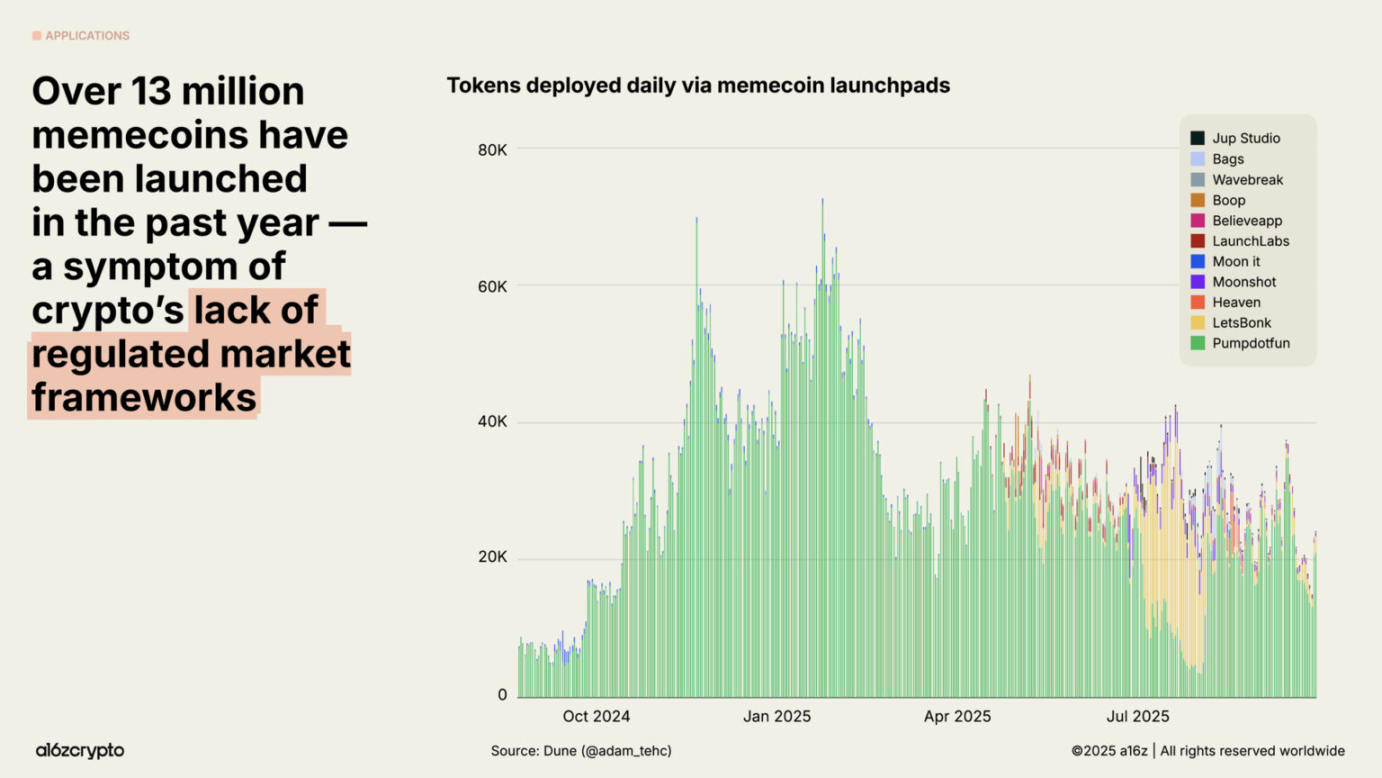
During periods of regulatory ambiguity, Memecoins experienced a boom: over 13 million new memecoins launched in the past year. However, the trend has cooled recently, with memecoin launches in September down 56% from January. As sensible policy and bipartisan legislation pave the way for more meaningful blockchain use cases, memecoin hype is being replaced by more purposeful applications.
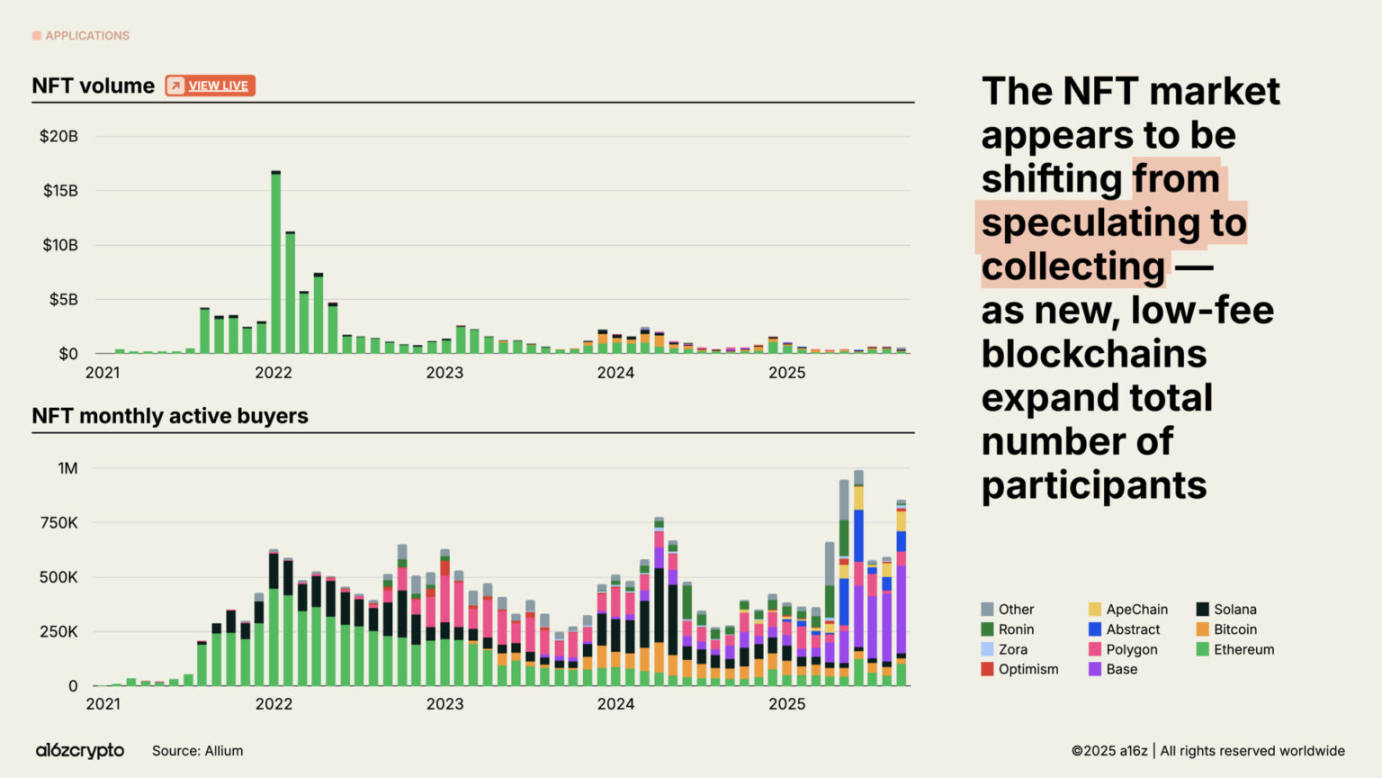
NFT (non-fungible token) trading volume remains far below 2022 peaks, but the number of monthly active buyers continues to grow. This indicates a shift in consumer behavior—from speculation to collecting. This transition is enabled by low-cost blockspace on chains like Solana and Base.
Blockchain infrastructure ready for mass adoption
None of the above progress would be possible without major breakthroughs in blockchain infrastructure.
Over the past five years, total transaction throughput across major blockchain networks has increased over 100-fold. Five years ago, blockchains processed fewer than 25 transactions per second; today, that number exceeds 3,400—comparable to Nasdaq’s transaction volume or Stripe’s global throughput on Black Friday—at a fraction of historical costs.
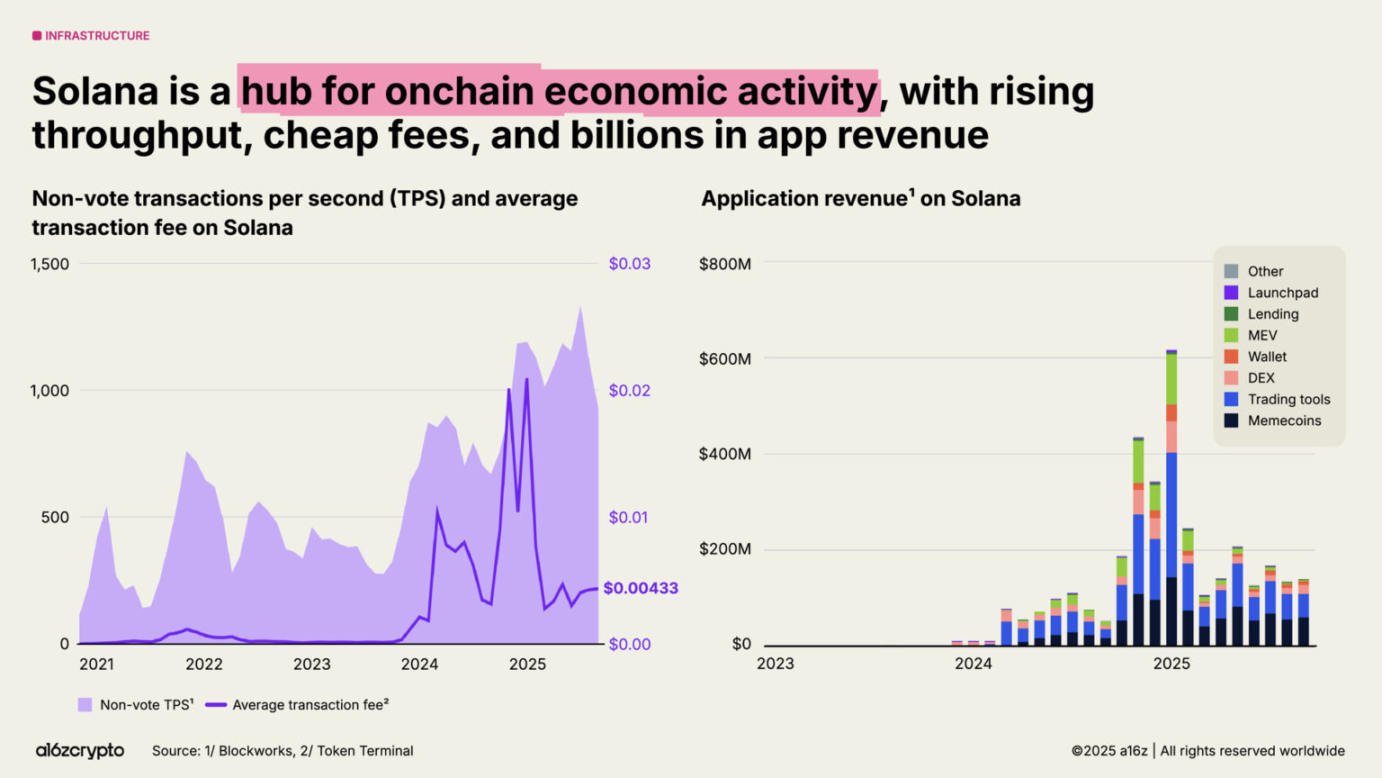
Among blockchain ecosystems, Solana has emerged as one of the most prominent. Its high-performance, low-cost architecture now supports diverse applications—from DePIN projects to NFT marketplaces—and native apps generated $3 billion in revenue over the past year. Upgrades planned by year-end are expected to double network capacity.
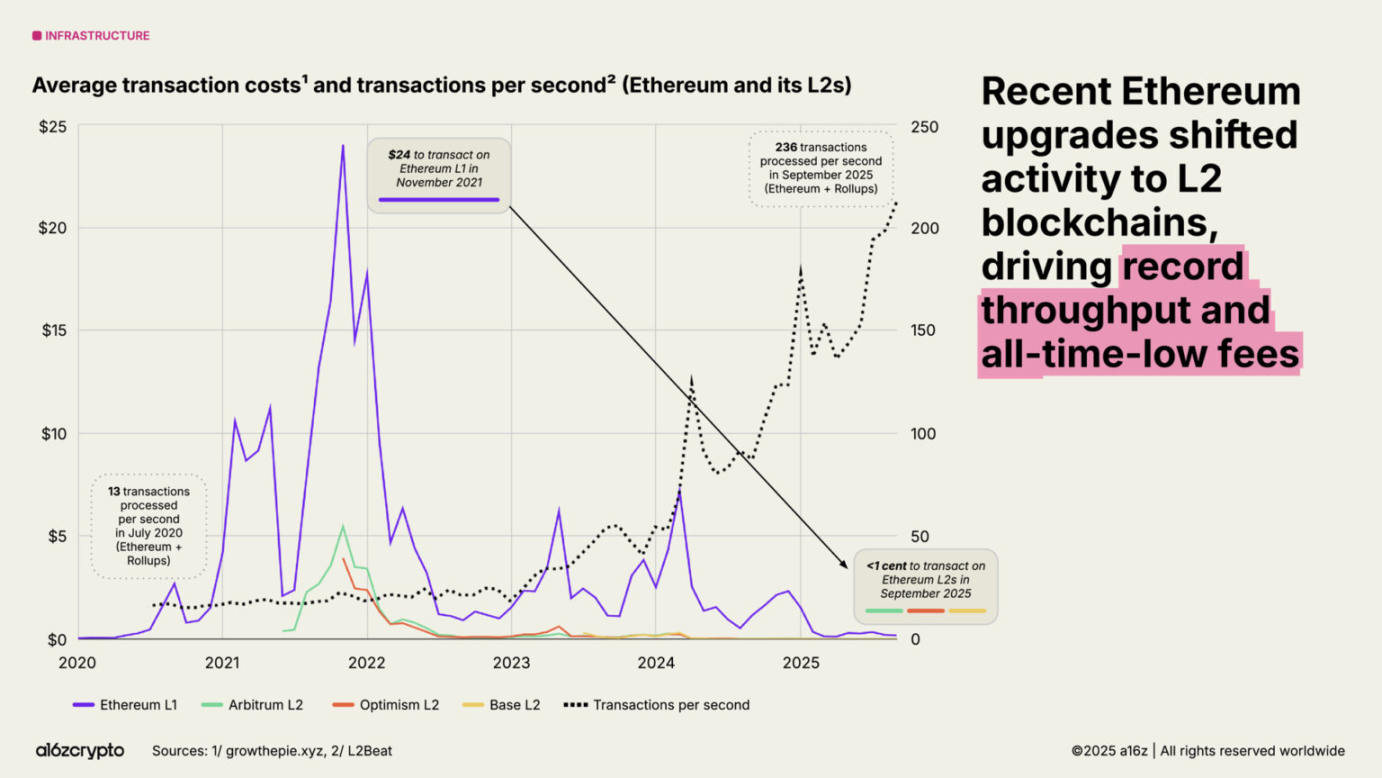
Ethereum continues advancing its scaling roadmap, with most of its economic activity shifting to Layer 2s like Arbitrum, Base, and Optimism. Layer 2s have reduced Ethereum’s average transaction cost from around $24 in 2021 to less than one cent today, making on-chain blockspace cheap and abundant.
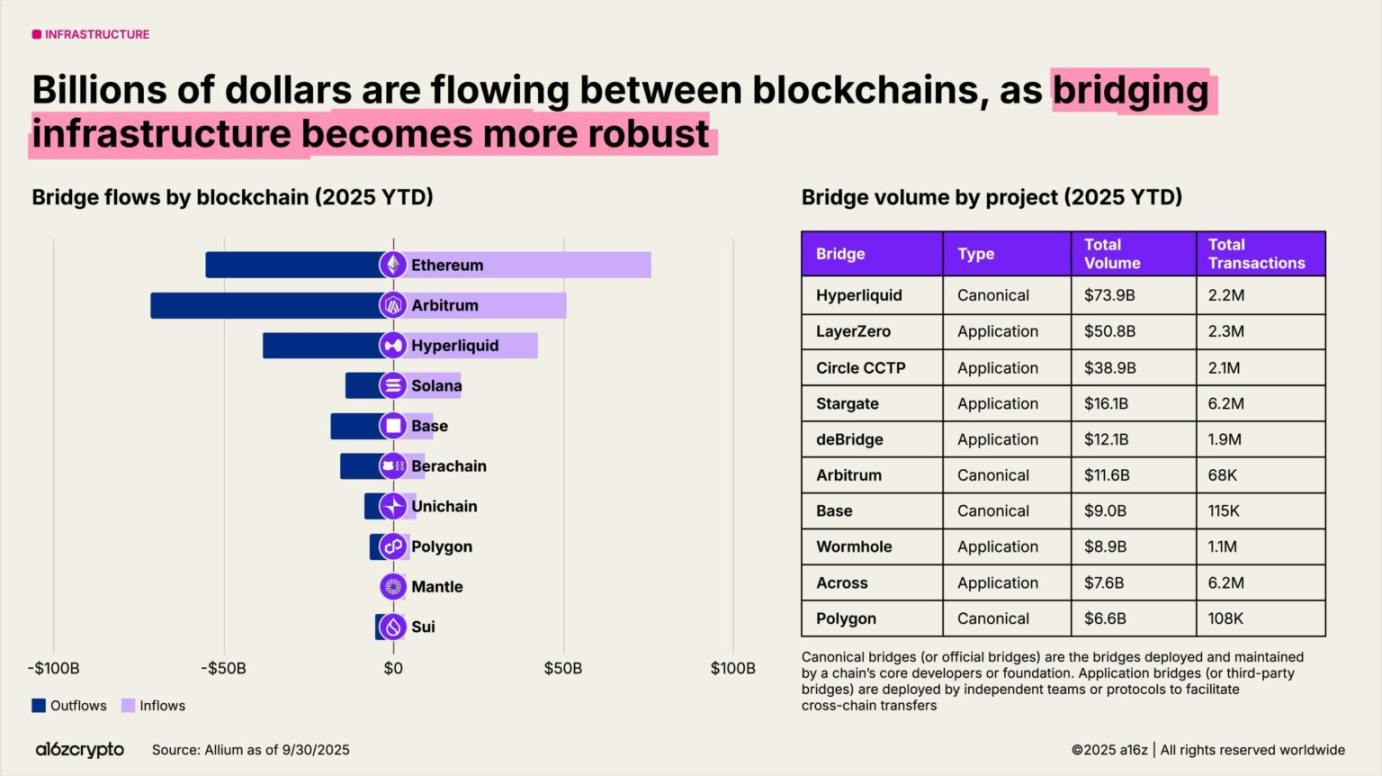
Interoperability protocols enable connectivity across blockchains. Protocols like LayerZero and Circle’s Cross-Chain Transfer Protocol allow users to move assets across multi-chain environments; Hyperliquid’s standard bridge has processed $74 billion in trading volume year-to-date.
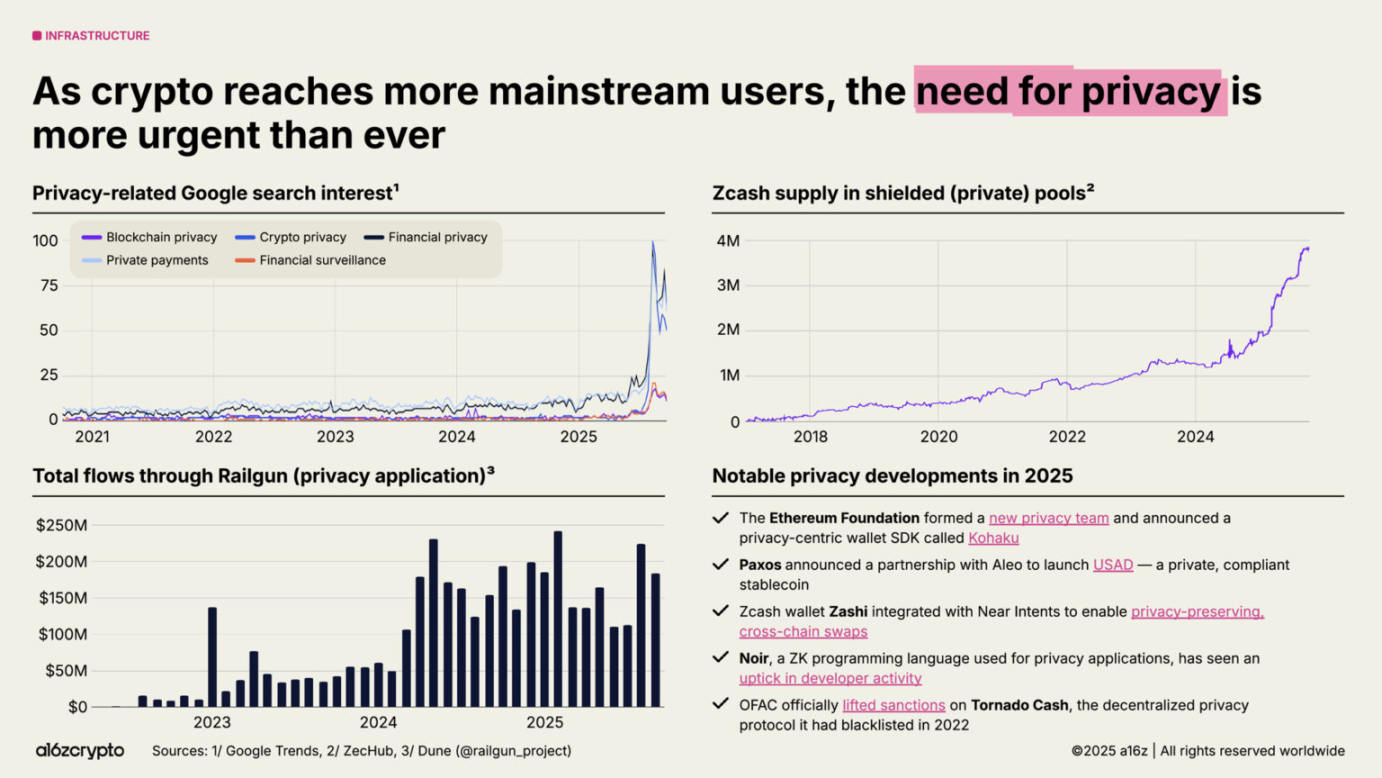
Privacy is regaining attention and may become a prerequisite for broader adoption. Indicators of growing interest include: surging Google searches related to crypto privacy in 2025; Zcash’s shielded pool supply growing to nearly 4 million ZEC; and Railgun recording over $200 million in monthly transaction volume.
Additional positive signals include: the Ethereum Foundation forming a new privacy team; Paxos and Aleo partnering to launch a compliant privacy stablecoin (USAD); and the U.S. Office of Foreign Assets Control (OFAC) lifting sanctions on the decentralized privacy protocol Tornado Cash. As crypto becomes increasingly mainstream, we expect privacy efforts to gain even stronger momentum in the coming years.
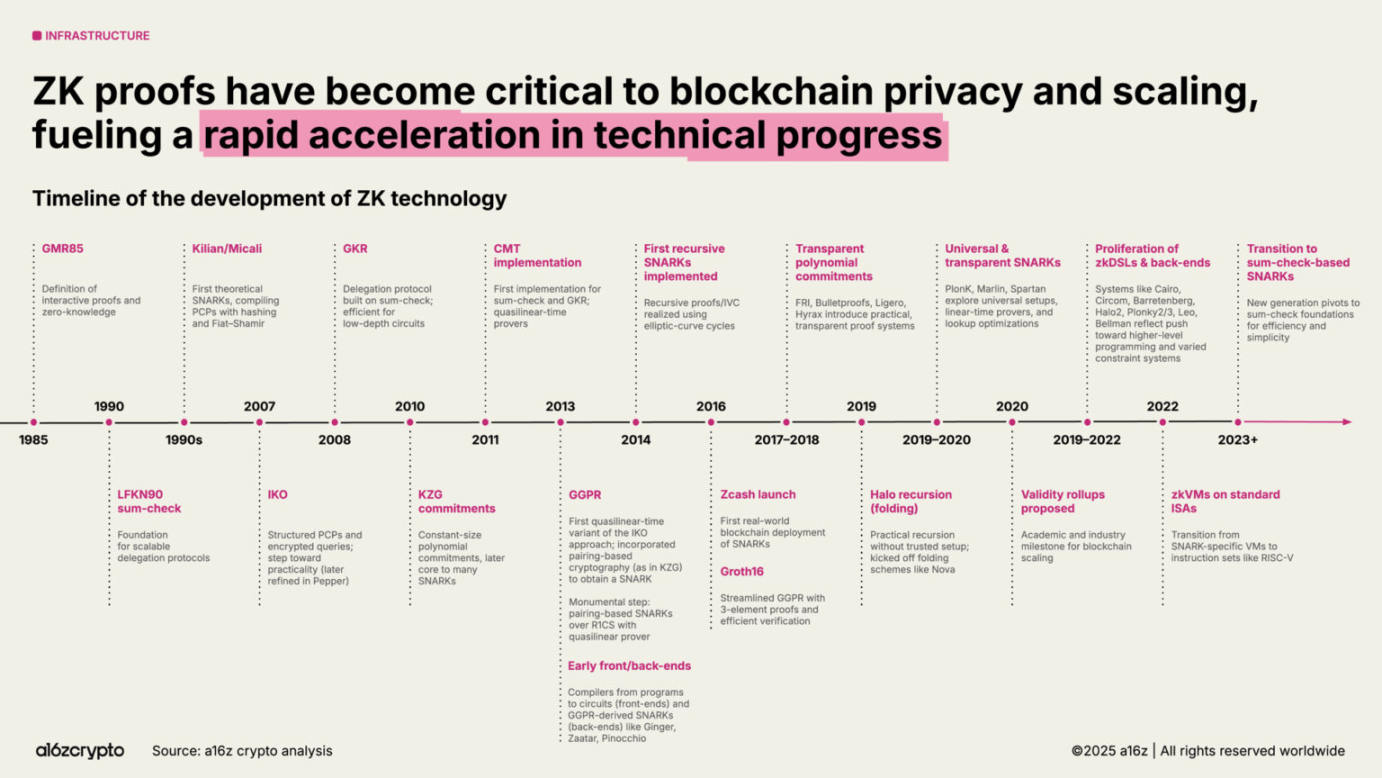
Zero-knowledge (ZK) systems and succinct proofs are rapidly evolving from decades-old academic research into critical infrastructure. ZK systems are now integrated into rollups, compliance tools, and even mainstream web services—Google’s new ZK identity system being one example.
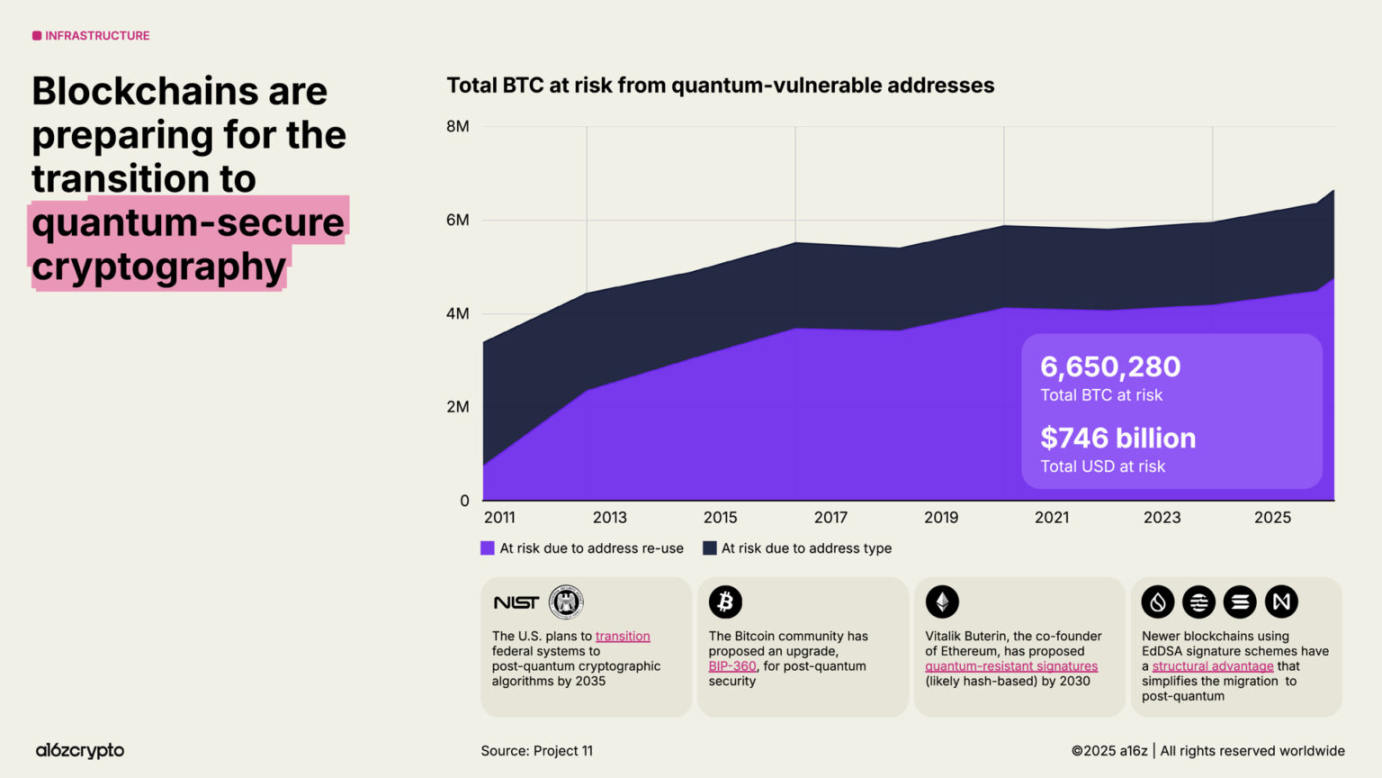
Meanwhile, blockchains are accelerating preparations for the “post-quantum” era. Currently, about $750 billion worth of Bitcoin is stored in addresses vulnerable to future quantum attacks; the U.S. government plans to migrate federal systems to post-quantum cryptographic algorithms by 2035.
AI and crypto accelerate convergence
The launch of ChatGPT in 2022 brought artificial intelligence (AI) into the public spotlight and created clear synergies with crypto. From provenance tracking and IP licensing to providing payment rails for AI agents, crypto may help solve some of AI’s core challenges.
Decentralized identity systems like World have already verified over 17 million identities, offering proof-of-personhood and helping distinguish humans from bots.
Protocol standards like x402 are emerging as potential financial backbones for autonomous AI agents, enabling microtransactions, API access, and settlement without intermediaries. Gartner estimates this economy could reach $30 trillion by 2030.
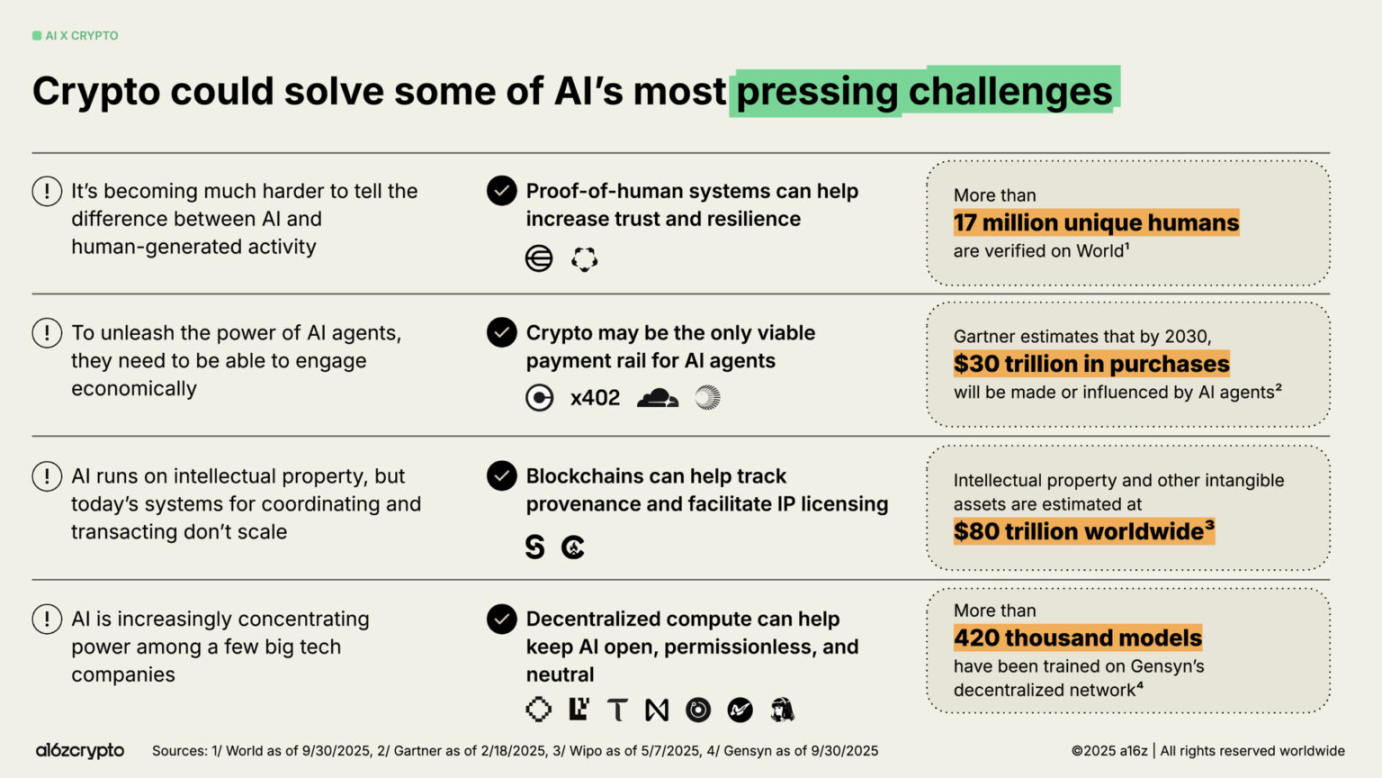
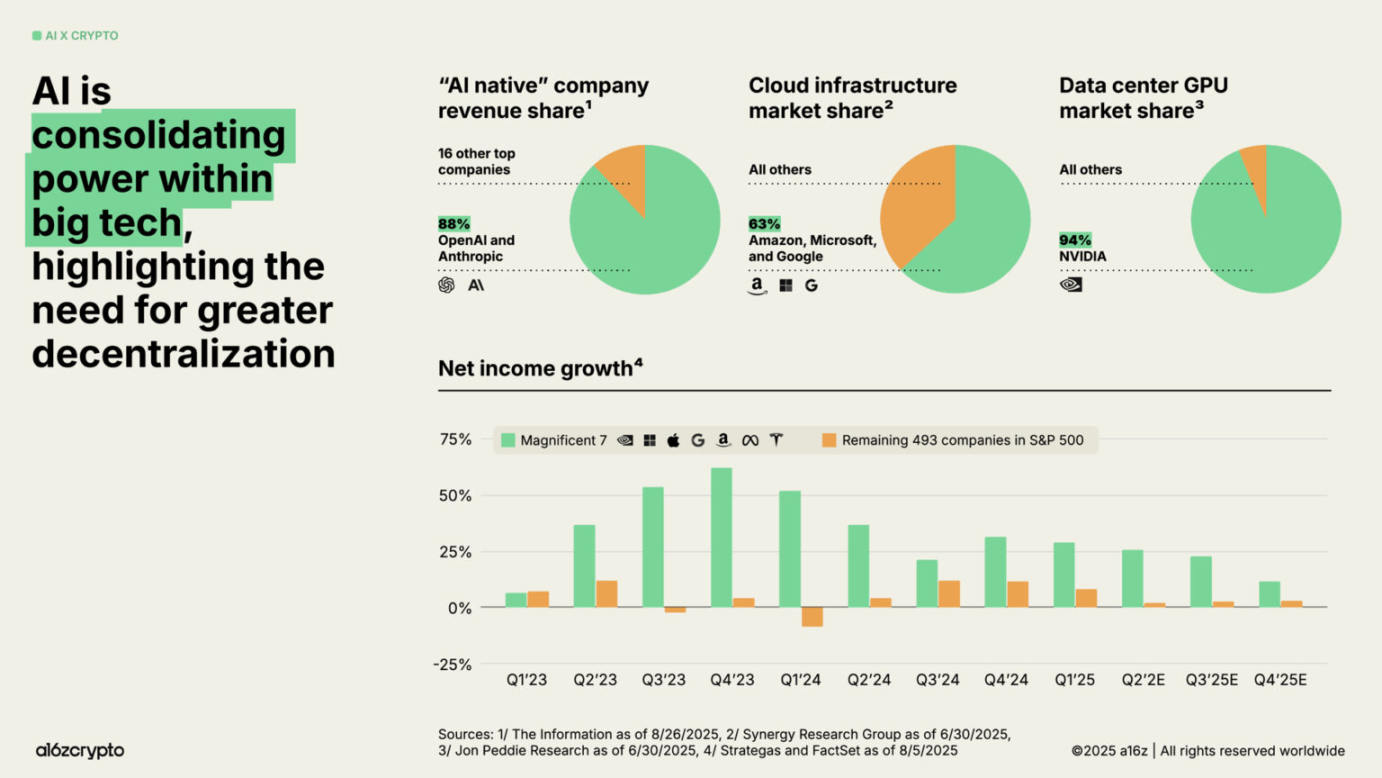
Currently, AI’s compute layer is concentrating among a few tech giants, raising concerns about centralization and censorship risk. OpenAI and Anthropic control 88% of revenue from “AI-native” companies. Amazon, Microsoft, and Google control 63% of the cloud infrastructure market, while Nvidia holds 94% of the data center GPU market. These imbalances have enabled the “Magnificent Seven” to achieve double-digit quarterly net income growth in recent years, while the remaining 493 S&P companies have collectively failed to outpace inflation.
Blockchain offers a counterbalance to this centralization in AI systems.
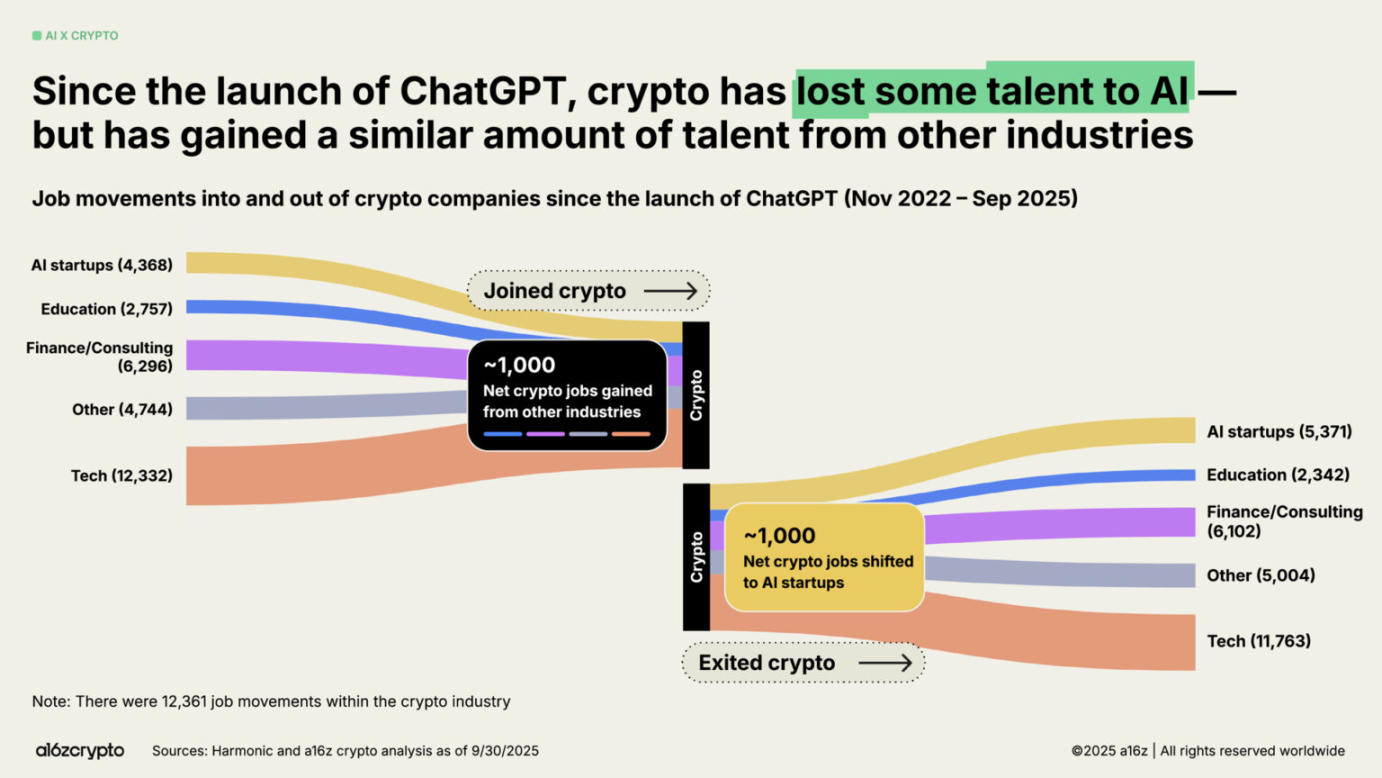
Fueled by the AI boom, some developers have left the crypto space. Our analysis shows that since the launch of ChatGPT, about 1,000 jobs have shifted from crypto to AI. However, this outflow has been offset by an equal number of developers moving into crypto from other fields—such as traditional finance and tech.
Outlook
Where is the industry today? With regulation becoming clearer, tokens now have a viable path to generate real revenue through fees. Going forward, adoption of crypto by traditional finance and fintech will accelerate further; stablecoins will upgrade legacy systems and democratize global financial services; and new consumer-grade products will bring the next wave of users on-chain.
We now have the infrastructure and user reach. With timely regulatory clarity, crypto technology will finally enter the mainstream. It’s time to upgrade the financial system, rebuild global payment rails, and build the internet the world deserves.
After 17 years of development, crypto is leaving adolescence and entering adulthood.
Join TechFlow official community to stay tuned
Telegram:https://t.me/TechFlowDaily
X (Twitter):https://x.com/TechFlowPost
X (Twitter) EN:https://x.com/BlockFlow_News
 a16z
a16z