Vitalik Buterin, Ethereum's silent revolutionary
TechFlow Selected TechFlow Selected
Vitalik Buterin, Ethereum's silent revolutionary
The creator of a $314 billion financial ecosystem, wearing a simple T-shirt, pondering the future of humanity.
 Navigating Web3 tides with focused insights
Writing: Token Dispatch and Thejaswini M A
Translation: Block unicorn
Preface
The creator of a $314 billion financial ecosystem, dressed in a simple T-shirt, ponders the future of humanity.
Vitalik Buterin, revered in the industry as "V God," is the Russian-born genius who created Ethereum, reshaping concepts of finance, art, governance, and digital ownership.
The entire ecosystem exists in the shadow of his architecture.
His influence extends from boardrooms on Wall Street to developer hackathons across six continents. Central banks build central bank digital currencies (CBDCs) based on his designs. The Ethereum Virtual Machine (EVM) powers thousands of projects processing billions of transactions daily.
When he speaks, markets fluctuate. When he writes code, industries transform. When he donated $1.14 billion to charities, he didn't even make a public announcement.
As Ethereum continues advancing through a difficult period within the crypto world, Vitalik appears to be orchestrating his most ambitious vision yet: rebuilding it entirely while keeping Ethereum running.
This genius, who once cried over a nerfed video game, is now the most influential technologist in one of the most important financial revolutions of our time.
From Russia to Canada: Early Years
Born on January 31, 1994, in Kolomna, about 113 kilometers southeast of Moscow, Vitalik’s childhood unfolded during the turbulent post-Soviet era in Russia.
His father, Dmitry Buterin, was a computer scientist, laying the foundation for Vitalik’s connection with technology.

Vitalik and his father Dmitry Buterin
At age six, his family immigrated to Canada in search of better economic opportunities. This move marked the beginning of a new chapter where Vitalik’s intellectual talents began to emerge.
In elementary school in Canada, teachers quickly noticed his mathematical abilities. He could mentally add and subtract three-digit numbers at twice the speed of his peers. This led to his enrollment in a gifted program, where Vitalik started realizing he was different—particularly drawn to mathematics, programming, and economics.
"I was never particularly inspired by the traditional education system," Vitalik later wrote. But when he entered Abellard School, a private high school in Toronto, his perspective changed dramatically. The school’s environment, which encouraged intellectual inquiry and critical thinking, transformed Vitalik’s relationship with learning.
His academic excellence continued. In 2012, he won a bronze medal at the International Olympiad in Informatics, demonstrating his programming skills on a global stage. However, perhaps the most pivotal moment in his intellectual development did not happen in a classroom, but through a video game.
From 2007 to 2010, Vitalik was deeply immersed in World of Warcraft. When the game developers decided to remove the damage component from his beloved Warlock ability "Life Tap," he was devastated—reportedly crying himself to sleep that night. This experience gave him a profound understanding of centralized control.
This event drove him to seek alternative systems—ones not subject to arbitrary rule changes by a single authority.
Awakening to Bitcoin
At age 17, Vitalik was introduced to Bitcoin by his father. The concept intrigued him, prompting deeper exploration.
Wanting to participate in this emerging economy but lacking either computing power for mining or funds to buy Bitcoin, Vitalik took an unconventional path: he began writing articles about cryptocurrency for a blog, earning 5 bitcoins per article (worth about $3.50 at the time).
These early writings caught the attention of Romanian Bitcoin enthusiast Mihai Alisie. In September 2011, they co-founded Bitcoin Magazine, establishing one of the first serious publications dedicated to cryptocurrency. Despite his youth, Vitalik’s articles displayed technical depth and insight far beyond his years.
Over two and a half years, Vitalik immersed himself in the Bitcoin ecosystem, gaining deep understanding of blockchain technology’s potential and its limitations.
By 2013, Vitalik decided to fully commit to cryptocurrency, dropping out of his computer science studies at the University of Waterloo.
"I clearly remember the day he came back from university. His mother was visiting us, so all three of us—I, Maya, and Natalia—were there when he walked in. Then he said, 'Hey guys, I'm actually thinking about dropping out,'" recalled his father, Dmitry.
He spent six months traveling the world, speaking with developers and examining various blockchain projects. His findings revealed a truth: most projects were too narrowly focused on specific applications.
This observation sparked a key insight: What if blockchains could be programmed to perform nearly any task, not just financial transactions? What if developers could directly build applications on a blockchain?
By late 2013, at just 19 years old, Vitalik wrote a white paper outlining his vision for Ethereum—a platform that would go beyond Bitcoin’s limited functionality, becoming a fully programmable blockchain capable of supporting almost any application developers could imagine.
The Birth of Ethereum
Vitalik’s Ethereum white paper proposed a radical idea: a blockchain with a Turing-complete programming language, theoretically capable of solving any computational problem given sufficient time and memory. At its core was the concept of "smart contracts": self-executing agreements with terms directly written into code.
Reactions were swift and enthusiastic.
Within weeks, a group of programmers—including Gavin Wood, Joseph Lubin, and Charles Hoskinson—rallied around Vitalik’s vision. In January 2014, they announced the creation of Ethereum.
To fund development, the team conducted their first token sale (ICO) in July 2014, exchanging Ether (ETH) tokens for Bitcoin. The sale raised approximately 31,000 BTC, worth around $18 million at the time—an enormous sum reflecting strong confidence in the project’s potential.
Meanwhile, Vitalik received the $100,000 Thiel Fellowship, established by PayPal co-founder Peter Thiel to support young entrepreneurs willing to drop out or skip college to pursue their ideas. This funding allowed Vitalik to work full-time on Ethereum.
After extensive development and testing, Ethereum officially launched on July 30, 2015. The first version, called "Frontier," was basic but functional, providing developers a platform to begin building decentralized applications.
Ethereum’s design introduced several key innovations:
-
An account-based model, instead of Bitcoin’s UTXO (Unspent Transaction Output) system
-
Smart contracts enabling complex self-executing protocols
-
A gas mechanism to measure and limit computational work
-
The Ethereum Virtual Machine (EVM), a Turing-complete execution environment
These features made Ethereum far more flexible than Bitcoin, opening the door to applications beyond simple value transfers. Developers could now create token systems, financial derivatives, decentralized autonomous organizations (DAOs), identity systems, and more—all on a single blockchain platform.
However, Ethereum’s launch was not without challenges. In 2016, a decentralized venture fund called The DAO was hacked due to a code vulnerability, with attackers stealing millions of dollars worth of Ether, triggering an existential crisis for the young platform.
The community faced a difficult choice: modify the blockchain to recover the stolen funds, violating the principle of immutability, or accept the loss to preserve the system’s philosophical integrity?
Vitalik advocated for a "soft fork" to restore the funds. This stance proved controversial, leading to community division and ultimately a "hard fork." The result was two separate chains: Ethereum (the modified chain, recovering the stolen funds) and Ethereum Classic (the original, unaltered chain).
This decision revealed Vitalik’s pragmatic leadership: a willingness to prioritize user protection over strict adherence to ideological principles. This pragmatism has continued to shape his approach to Ethereum’s evolution.
Technical Vision and Evolution
Ethereum has always embraced continuous evolution. Rejecting rigid adherence to legacy architecture is both Ethereum’s greatest strength and its biggest challenge.
The platform’s price chart tells a story of extreme volatility—from cents at launch to nearly $4,900 in November 2021, down below $1,000 during the 2022 crypto winter, and now stabilizing around $2,605. Over ten years, these fluctuations have tested the resolve of ETH supporters, who have endured promised upgrades, delayed timelines, and technical transitions.
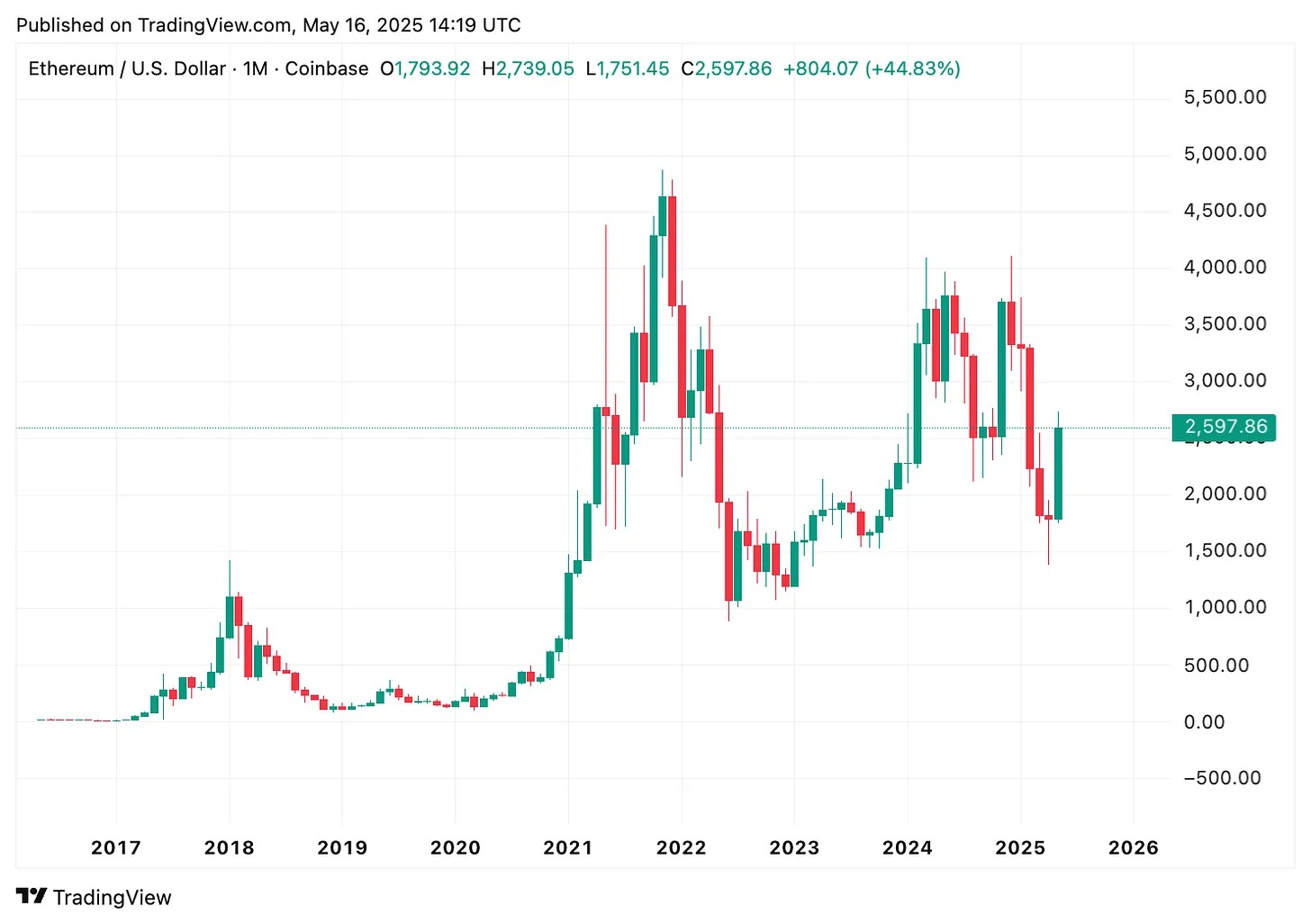
For Ethereum believers, the journey has been an emotional rollercoaster. Early supporters imagined rapid scaling solutions but needed immense patience through multi-year development cycles. Some gave up during downturns, while the most loyal members of the community—"ETH maximalists"—have maintained faith across multiple market cycles.
What many critics overlook is that Ethereum’s seemingly slow development pace is actually by design. Vitalik has remained at the forefront of community-driven development.
As a truly community-driven protocol, every major upgrade requires extensive research, multiple implementations, community debate, and rigorous testing. This governance model prioritizes security and consensus over speed—a necessity when handling tens of billions of dollars in value.
Ethereum’s decade-long journey has passed through several key milestones.
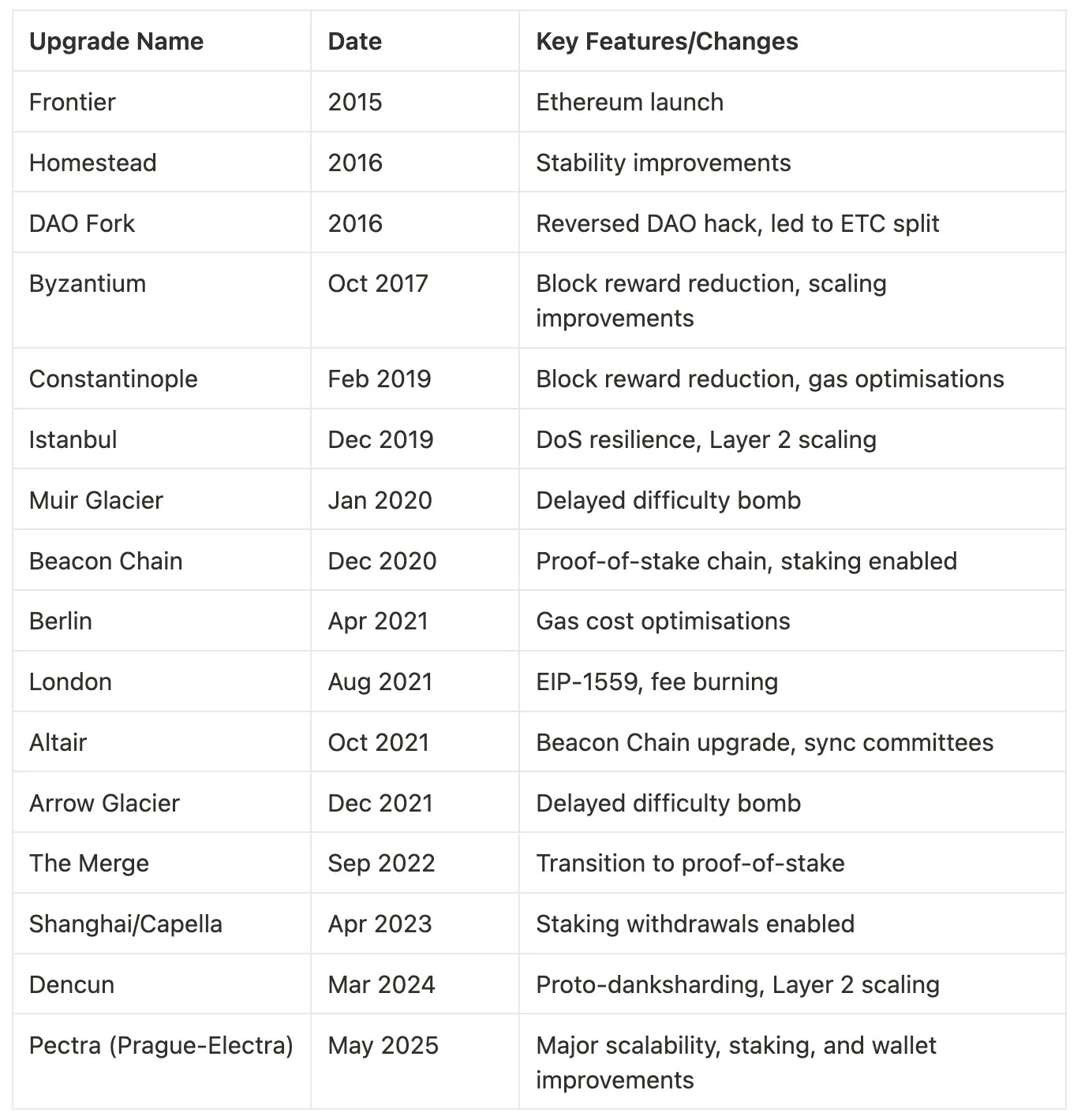
Vitalik’s roadmap for Ethereum’s future development unfolds across several key phases, whimsically named:
-
The Merge: Completion of the transition to proof-of-stake (PoS)
-
The Surge: Implementation of sharding to improve scalability
-
The Verge: Introduction of Verkle trees for greater efficiency
-
The Purge: Reduction of storage requirements
-
The Splurge: Enhancement of quantum resistance
The recent Pectra upgrade (May 2025) advanced this roadmap by improving wallet functionality and validator economics, but the true guiding star remains Vitalik’s vision: a blockchain serving as globally neutral infrastructure for coordination and value exchange.
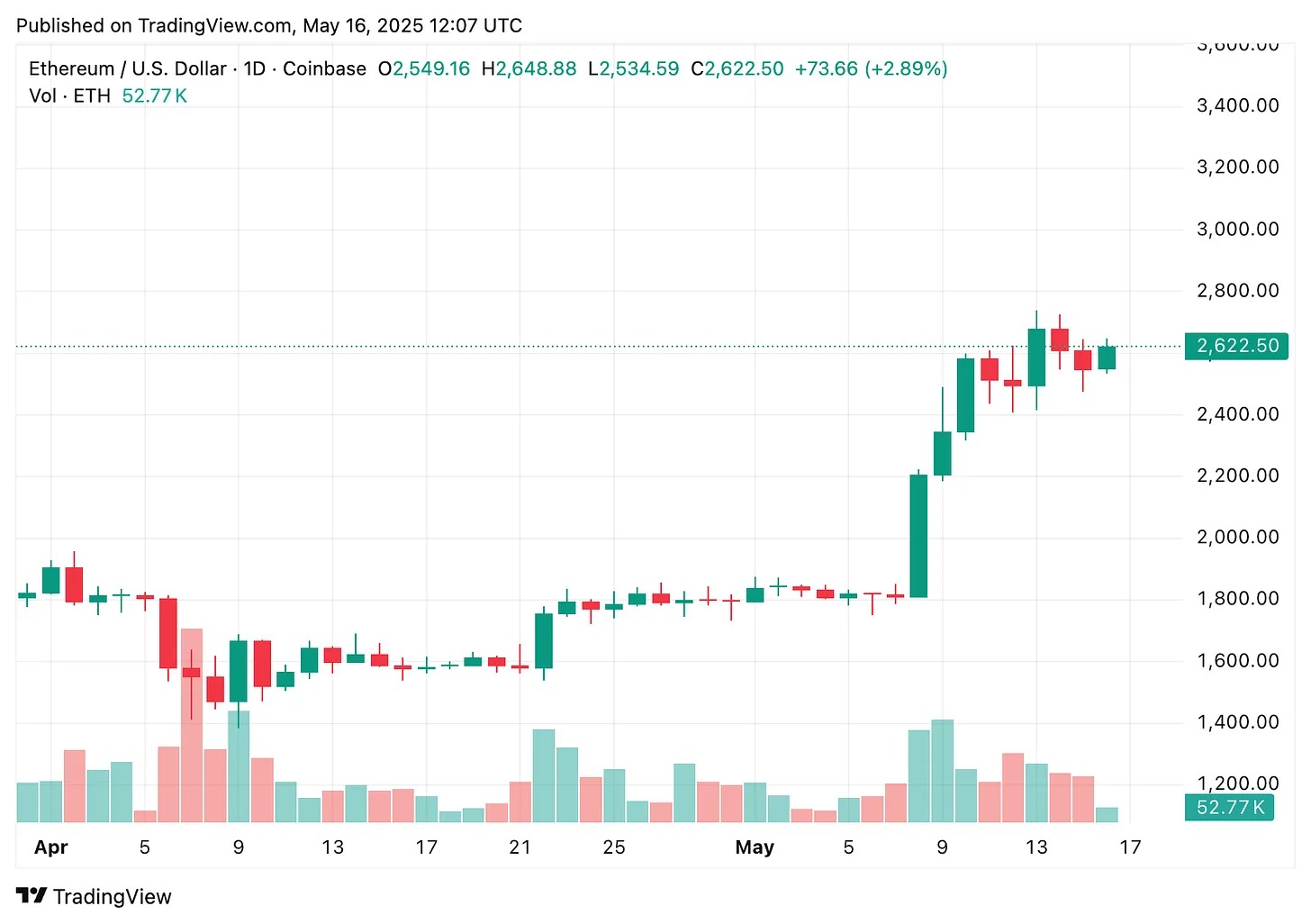
For validators, this upgrade increased the maximum staking limit from 32 ETH to a staggering 2048 ETH, significantly reducing operational costs for institutional stakers. These improvements helped ETH recover from recent price slumps, rising from around $1,615 in mid-April to over $2,600 today—a gain exceeding 60%.
Yet, just days before Pectra went live, Vitalik published a blog post titled "Simplify L1," presenting an apparently contradictory vision: advocating that Ethereum must become "almost as simple as Bitcoin" within five years.
He proposed replacing the Ethereum Virtual Machine with RISC-V—an open-source instruction set architecture—claiming it could deliver "100x performance gains" while making the system more developer-friendly.
This apparent contradiction—implementing the complex Pectra upgrade while simultaneously pushing for radical simplification—captures Buterin’s pragmatic approach: improving the current system while planning a more elegant future architecture.
Philanthropist and Philosopher
Beyond his technical contributions, Vitalik frequently emerges as a philanthropist, using his cryptocurrency wealth to support scientific, medical, and humanitarian causes.
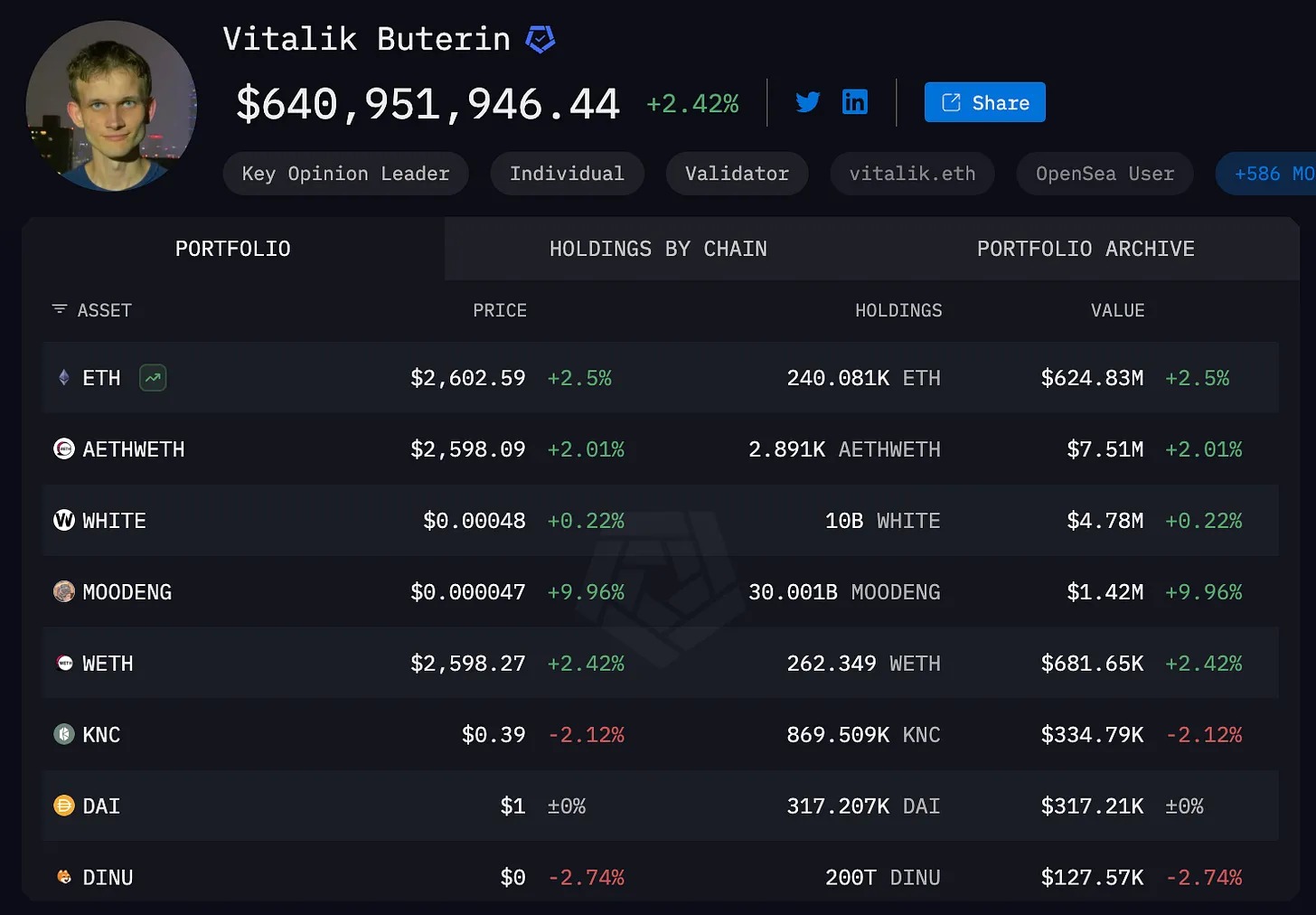
In May 2021, he made headlines by donating Shiba Inu cryptocurrency (SHIB) worth $1.14 billion to India’s Crypto Covid Relief Fund to help combat the pandemic. The donation caused a sharp drop in the coin’s price but provided substantial aid during a critical time.
Other significant donations include:
-
$665 million to the Future of Life Institute, focusing on mitigating existential risks including those from artificial intelligence
-
$763,970 in Ethereum to the Machine Intelligence Research Institute
-
$2.4 million in Ethereum to the SENS Research Foundation for rejuvenation and longevity research
-
$336 million in Dogelon Mars tokens to the Methuselah Foundation for longevity research
-
$9.4 million in USDC to the University of Maryland for research on germicidal ultraviolet light to prevent future pandemics
During the outbreak of the Russia-Ukraine war in 2022, Vitalik supported relief efforts through cryptocurrency donations and public advocacy, including participation in initiatives like Ukraine DAO.
At the heart of Vitalik’s personal philosophy are decentralization, egalitarian principles, and the potential for technology to drive positive social change. His thinking has evolved over time, shifting from what he described as “anarcho-capitalist thinking” toward a more “Georgist” perspective focused on public goods and common resources.
More recently, Vitalik has expressed concerns about the existential risks artificial intelligence may pose to humanity. In a November 2023 blog post titled "My Techno-Optimism," he argued that AI is "fundamentally different" from other inventions such as guns, airplanes, and social media, because it could develop a new form of "mind" that might even oppose humanity.
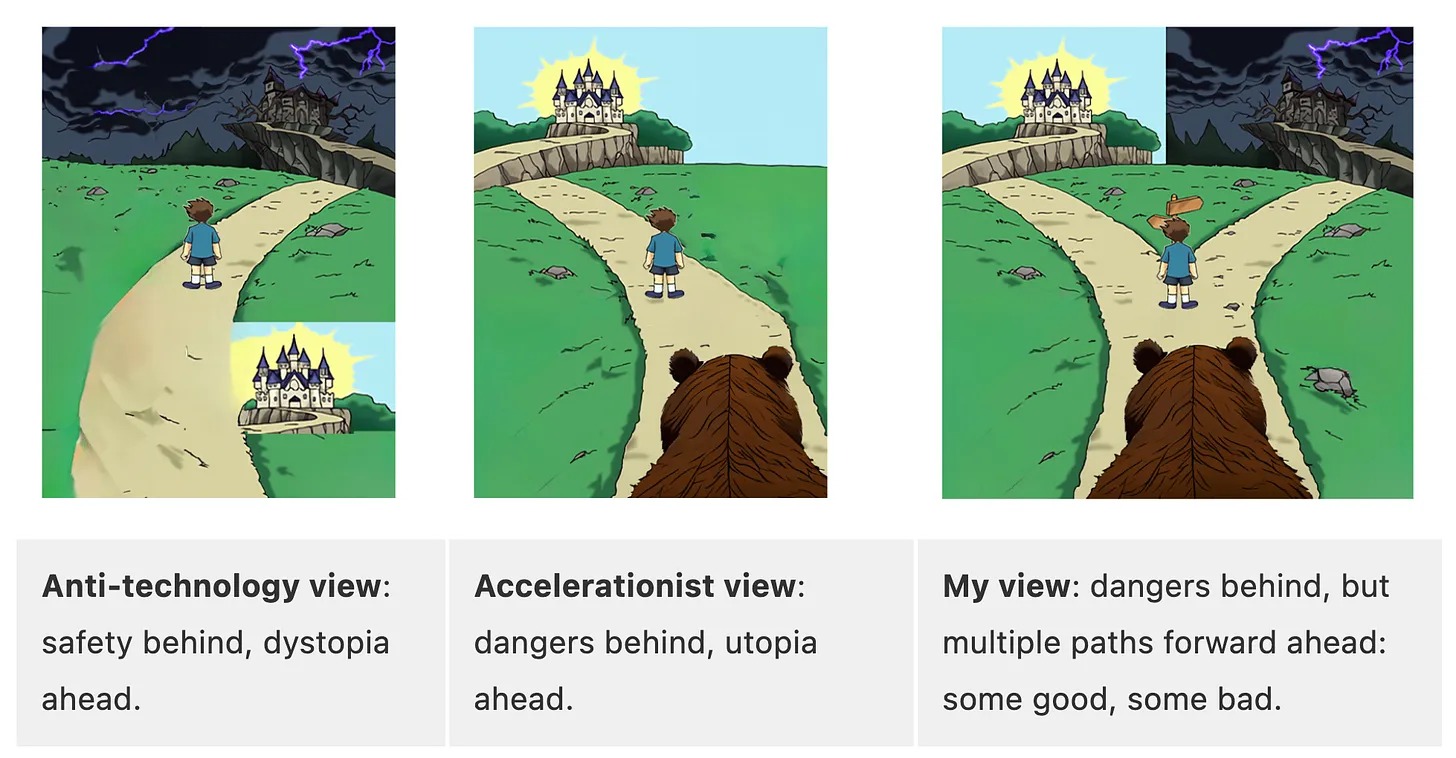
"If a superintelligent AI decides to fight against us, it could kill every human and completely end humanity," wrote Vitalik. "Even Mars might not be safe."
In response to these concerns, he advocates for a philosophy he calls "d/acc," emphasizing defense, decentralization, democracy, and differential technological development. This approach aims to advance beneficial technologies while mitigating the risks of potentially harmful ones.
Our View
Vitalik Buterin’s story reveals the contradictory forces shaping the blockchain revolution. His journey is both deeply technical and profoundly philosophical, challenging conventional narratives about tech founders and their creations.
Unlike the typical Silicon Valley founder-CEO, Vitalik rejects the symbols of traditional corporate leadership. He leads not through organizational authority, but through the persuasive power of ideas shared publicly in blog posts and technical papers.
Yet, this leadership style also creates tensions. Critics like Cardano founder Charles Hoskinson argue that Ethereum’s governance still relies too heavily on Vitalik’s direction. "Everyone looks to him to set the roadmap," Hoskinson noted in a recent conference. "If you removed him from the equation right now, what would the next hard fork look like?"
This critique touches on a fundamental challenge for decentralized projects: how to balance visionary leadership with truly distributed governance. Ethereum’s success has partly stemmed from Vitalik’s technical insights and roadmap, but its long-term resilience will require moving beyond dependence on any single individual.
Ethereum’s current transformation—from the immediate technical improvements of the Pectra upgrade to Vitalik’s longer-term vision of radical simplification—is less a series of isolated changes than a fundamental recalibration of its approach. The market’s recent positive reaction suggests investors believe in this dual strategy of immediate enhancement and long-term architectural innovation.
The tension between Vitalik’s personal wealth and his philosophical commitments presents another paradox. While his net worth exceeds $1 billion, he lives modestly, wears simple clothes, and focuses on intellectual rather than material pursuits. Yet, as one of Ethereum’s largest token holders, he benefits economically from the platform’s growth—a potential conflict with his advocacy for fair, decentralized systems.
His way of handling these contradictions is instructive. Rather than pretending they don’t exist, Vitalik openly acknowledges them and examines the trade-offs across different developmental paths. This intellectual honesty stands in stark contrast to the exaggerated marketing and tribalism prevalent in much of the crypto space.
In a field dominated by extremism and absolutist thinking, Vitalik offers a different model: courage to explore intellectually, willingness to revise views, and commitment to building technology that serves human values rather than merely disrupting existing systems. Whether this approach can withstand market pressures and competing visions remains an open question—one that will likely define the next chapter of Ethereum and Vitalik’s story.
Join TechFlow official community to stay tuned
Telegram:https://t.me/TechFlowDaily
X (Twitter):https://x.com/TechFlowPost
X (Twitter) EN:https://x.com/BlockFlow_News