Binance Research: What does the Petrca upgrade mean for Ethereum?
TechFlow Selected TechFlow Selected
Binance Research: What does the Petrca upgrade mean for Ethereum?
The Pectra upgrade focuses on staking, data blobs, and account abstraction.
 Navigating Web3 tides with focused insights
Author: Binance Research
Translation: TechFlow
The Pectra upgrade is now live on the Ethereum mainnet.
Dive into the core improvements of this upgrade, its significance for Ethereum's development roadmap, and our perspective on its potential impact on $ETH value accrual.
1/ What is Pectra?
The Pectra upgrade focuses on staking, blobs, and account abstraction, primarily involving the following key EIPs (Ethereum Improvement Proposals):
-
EIP-7251: Increase the maximum effective balance (MaxEB) from 32 ETH to 2,048 ETH
-
EIP-7691: Increase blob capacity from 3/6 to 6/9
-
EIP-7702: Upgrade externally owned accounts (EOAs) to smart contract wallets
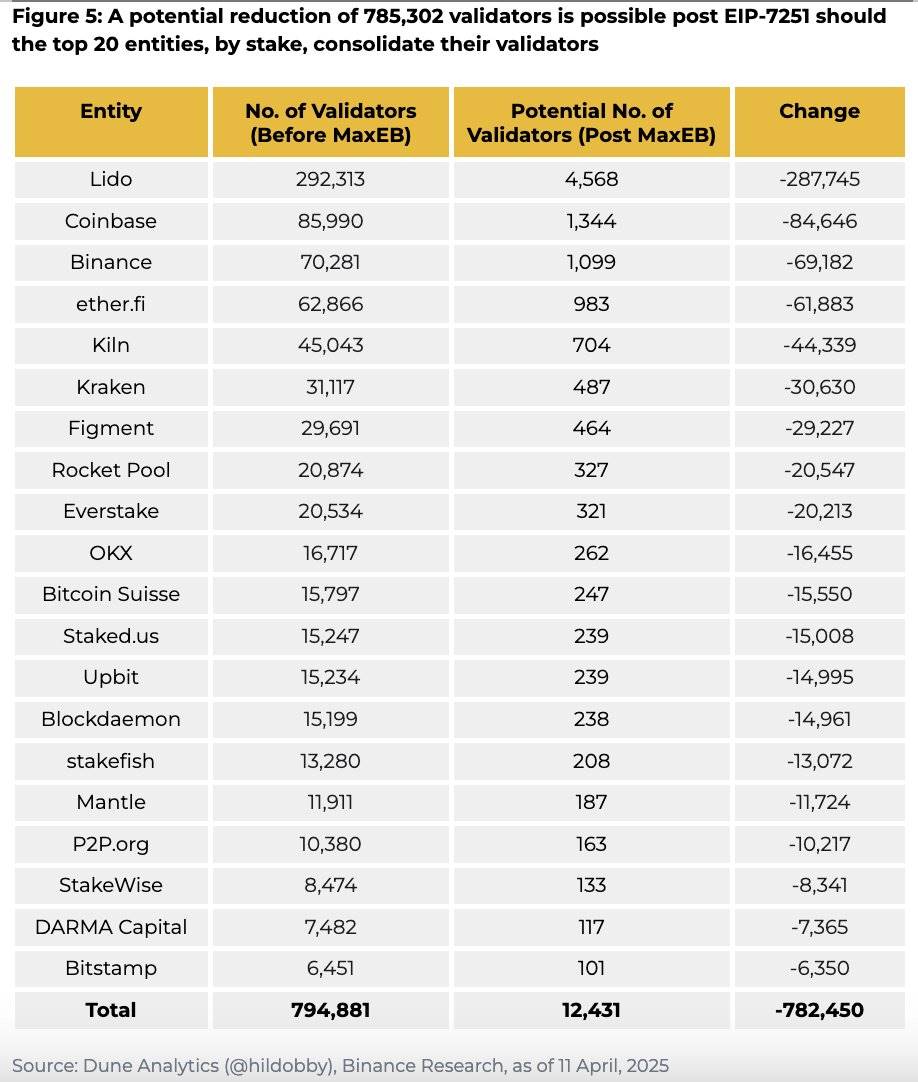
2/ EIP-7251 - Increasing the Maximum Effective Balance (MaxEB) for Staking
With over one million validators, significant strain has been placed on Ethereum’s Layer 1 (L1) network. By raising the maximum effective balance limit to 2,048 ETH, large staking service providers can consolidate their validator nodes, whereas previously each node was capped at 32 ETH in stake.
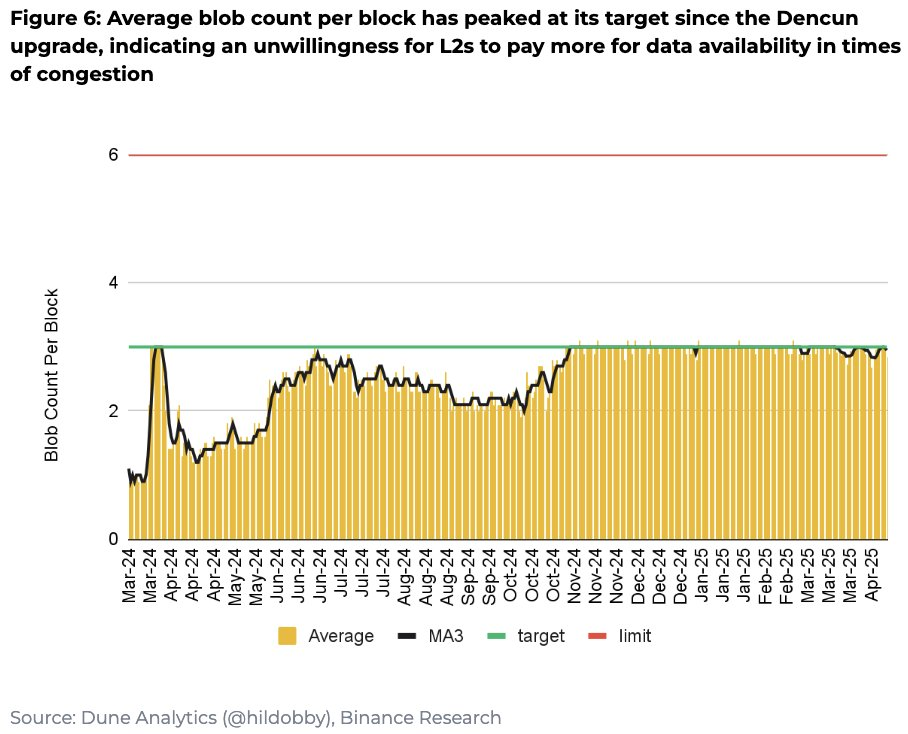
3/ EIP-7691 – Increasing Target and Maximum Blob Capacity
Since the Dencun upgrade, average blob usage has reached target levels, meaning that during network congestion, Layer 2 (L2) networks are unwilling to pay higher fees for data availability (DA). Increasing blob capacity should allow more data to be posted to L1 while maintaining low costs.
4/ EIP-7702 – Turning EOAs into Smart Contract Wallets
EIP-7702 allows externally owned accounts (EOAs) to temporarily set executable smart contract code valid only for the duration of a transaction, enabling features such as transaction batching, gas fee sponsorship, and social recovery, offering greater flexibility.
5/ What’s Next for Ethereum?
Following the Pectra upgrade, the Fusaka upgrade is expected by the end of 2025. This upgrade will further advance Ethereum’s Layer 2 scaling roadmap by increasing blob capacity and potentially introducing upgrades to the EVM (Ethereum Virtual Machine).
6/ Fusaka Upgrade Plan
-
PeerDAS: Introduced in EIP-7594, PeerDAS will be a crucial step toward achieving full data availability sampling (DAS).
-
Ethereum Object Format (EOF): Aims to further improve developer experience and user security.
7/ The Future of Ethereum
While Ethereum remains committed to its Layer 2 scaling roadmap, questions remain about its long-term competitiveness as a data availability layer and how it can achieve sustainable value accrual.
8/ Ethereum as a Data Availability Layer
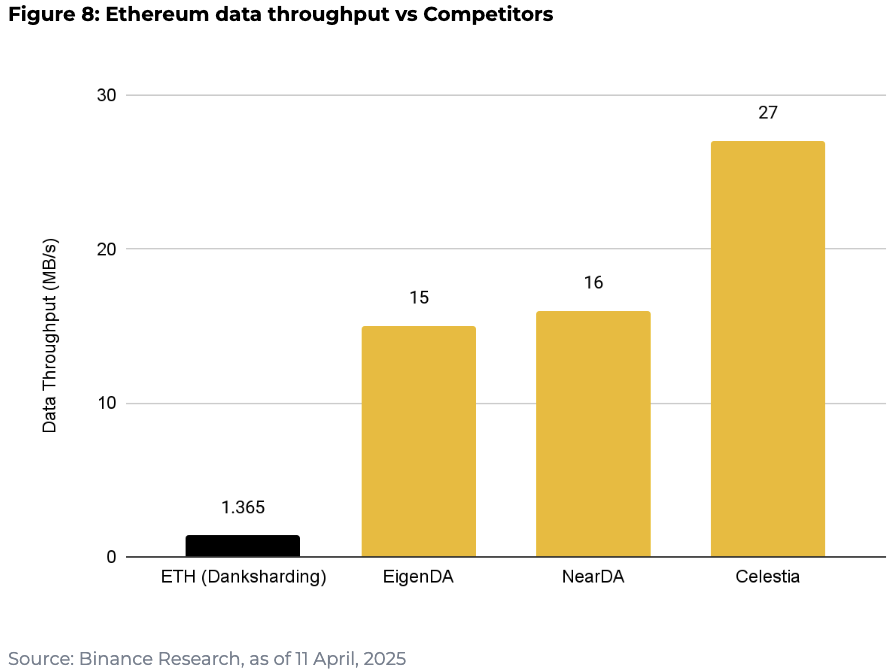
Even with full Danksharding implemented, Ethereum will still lag behind peers in raw data throughput. However, as the most secure network with over one million validators, Ethereum’s security is critical for ensuring data correctness verification.
9/ $ETH Value Debate
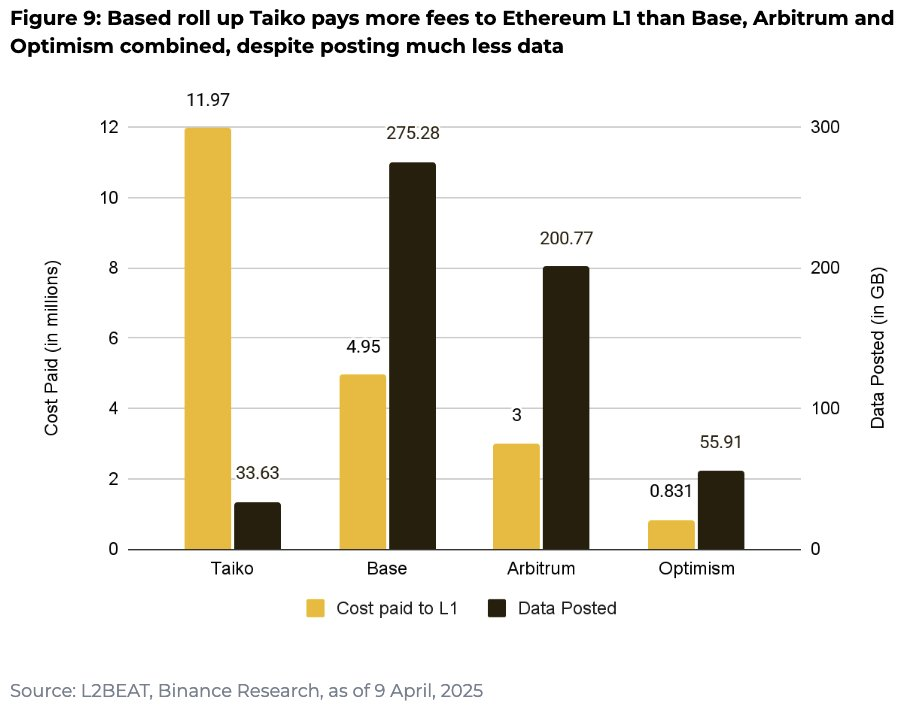
Proposals to reprice the blob market may push Layer 2 (L2) networks toward cheaper alternatives, and expecting L2s to support ETH through partial fee sharing remains highly subjective. Rollups built on Ethereum offer the greatest potential for value accrual, but they are currently not a priority in the roadmap.
Join TechFlow official community to stay tuned
Telegram:https://t.me/TechFlowDaily
X (Twitter):https://x.com/TechFlowPost
X (Twitter) EN:https://x.com/BlockFlow_News
 Binance Research