








Binance TGE, Chainlink airdrop: What is SXT all about?
TechFlow Selected TechFlow Selected
Binance TGE, Chainlink airdrop: What is SXT all about?
Space and Time (SXT) is a decentralized database based on zero-knowledge proofs, designed to address the bottlenecks in DeFi data access.
 Navigating Web3 tides with focused insights
Author: Luke, Mars Finance
Binance Launchpool kicked off with a bang, Chainlink community airdropped 1 billion tokens, and the name Space and Time (SXT) sparked heated discussion across the blockchain world. Backed by Microsoft and powered by zero-knowledge proofs (ZK), what exactly is SXT?
The Ambition of SXT: From DeFi Pain Points to a Data Revolution
The DeFi boom has brought decentralized finance into the spotlight, but the longstanding bottleneck—smart contracts' inefficient access to data—has acted like a chokehold, limiting its potential. Want DeFi to offer personalized loans based on on-chain history like traditional finance, or enable complex cross-chain derivatives? Enter SXT! It's not just another blockchain project, but a zero-knowledge proof-based decentralized database built for next-generation, data-driven applications.
SXT’s core weapon is Proof of SQL, a zero-knowledge co-processor that enables a single node to execute complex SQL queries, generate verifiable zero-knowledge proofs, and confirm results on-chain. Compared to traditional blockchains where all nodes redundantly compute, SXT reduces query latency to sub-second levels—fast and secure. This not only solves DeFi’s data bottleneck but also paves the way for tokenized real-world assets (RWA) and AI-powered smart contracts. Binance’s TGE (token generation event) and Chainlink’s airdrop are just the beginning; SXT’s true goal is to reshape blockchain’s data ecosystem.
Architecture Deep Dive: The Perfect Collision of Zero-Knowledge and Decentralization
SXT’s architecture reads like a meticulously scripted sci-fi epic, where zero-knowledge proofs and a decentralized validator network work in seamless harmony to build a minimally-trusting data empire. Let’s take a closer look.
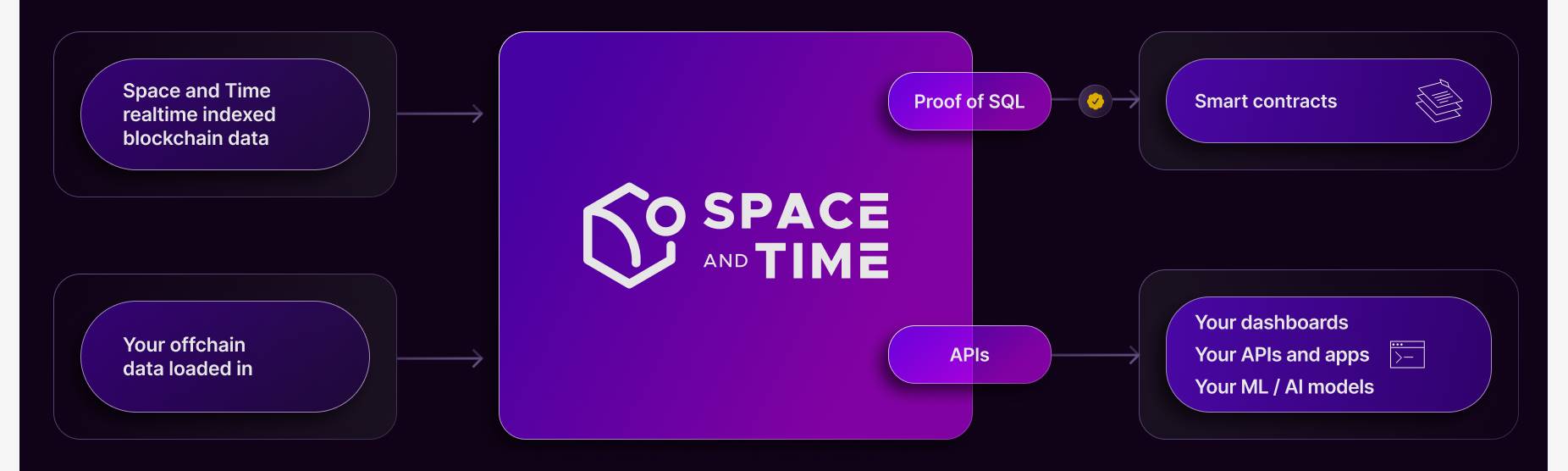
Proof of SQL: The "Super Brain" for Smart Contracts
The soul of SXT is Proof of SQL. Traditional blockchains can handle simple transactions, but struggle with large-scale data queries. Proof of SQL allows a single node to run SQL queries and generate zero-knowledge proofs that guarantee result correctness. Smart contracts simply verify the proof and use the result—no redundant computation needed. What does this mean? Sub-second query speeds delivering a centralized-system experience without sacrificing decentralized security.
Take Lendvest, an SXT ecosystem partner, as an example: this DeFi lending protocol uses Proof of SQL to analyze borrower behavior in real time and offer personalized loan terms, boosting market efficiency. This capability makes SXT a “data accelerator” for DeFi—and indeed, for Web3 as a whole.
Validator Network: The "Guardian Legion" of Data
Even the most powerful Proof of SQL needs reliable data sources. SXT’s validator network collects data from on-chain (e.g., Ethereum, Bitcoin, Polygon) and off-chain sources, indexing it into tamper-proof tables. Using Byzantine Fault Tolerance (BFT) consensus, validators generate cryptographic commitments to data states and confirm them via threshold signatures, ensuring immutability.
This is where the SXT token shines. Validators must stake SXT as collateral for honest behavior; signing incorrect commitments or going offline leads to slashing. Staked SXT isn’t just foundational for network security—it also backs the credibility of every zero-knowledge proof. What smart contracts trust is data economically guaranteed by this “staking legion.”
Real-Time Cross-Chain Data: Breaking the Fragmentation Curse
Another challenge in DeFi is data fragmentation—smart contracts struggle to access cross-chain or off-chain data. SXT indexes data from the genesis blocks of major blockchains and updates in real time, creating a unified, queryable database. Developers gain instant access to full historical data from Ethereum, ZKsync Era, or off-chain sources—without relying on centralized oracles or manual aggregation. This opens the door to complex use cases like cross-chain derivatives and tokenized assets.
The SXT Token: Igniting the Engine of a Decentralized Economy
The SXT token is more than a technical link—it’s the lifeblood of the ecosystem economy. With a total supply of 5 billion, SXT’s economic model stirred debate after being revealed by Binance on May 5, 2025. Here’s how it powers this decentralized empire.
The Token’s “Triple Play”: Staking, Payments, Incentives
SXT serves three primary roles in the ecosystem:
-
Network Security: Validators stake SXT to participate in consensus and secure data tables. Stakers earn network fees, but misconduct (e.g., data fraud) results in slashing. Delegators can also share rewards by supporting validators.
-
Data Incentives: Table owners who publish high-quality datasets earn SXT, with income driven by market demand. This ensures developers have a continuous supply of data.
-
Protocol Payments: SXT is the sole payment method for queries, data insertion, and verifiable computation. Fees are split between validators (processing) and table owners (data), creating a self-sustaining ecosystem loop.
Distribution Strategy: Community is the “Ace Card”
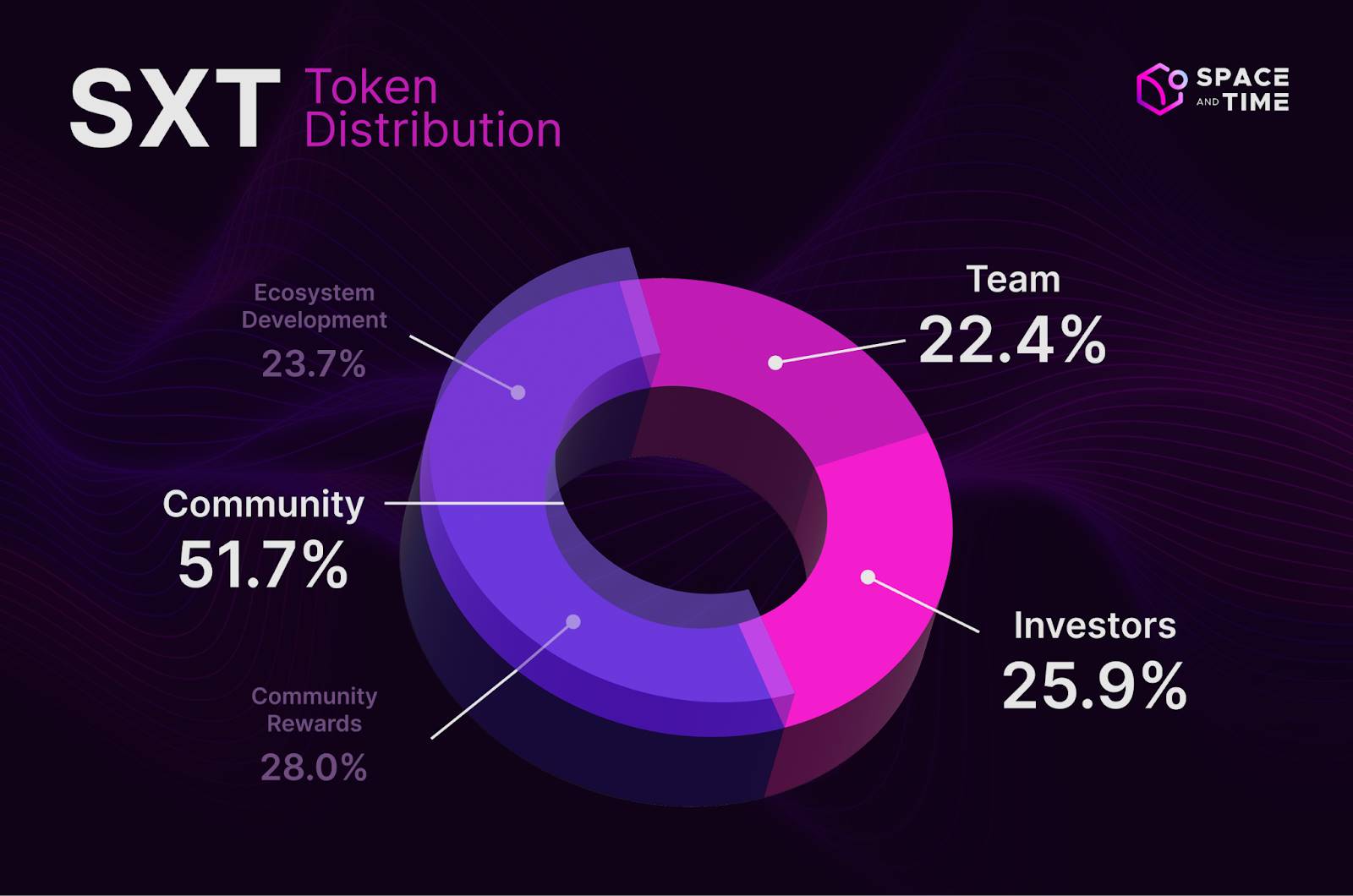
SXT’s distribution reflects its decentralized roots—over 50% of the 5 billion tokens go to the community:
-
Community (51.7%, 2.5825 billion SXT): 1.4 billion for rewards (staking, retroactive claims, developer grants), 1.1825 billion for ecosystem development (partnerships, protocol expansion). 375 million reward tokens unlock on Day 0, launching initiatives like Gigaclaims.
-
Investors (25.9%, 1.2953 billion SXT): Allocated to seed, strategic, and Series A investors, linearly unlocked over 4 years, with 15% unlocking after 12 months.
-
Team (22.4%, 1.1221 billion SXT): For MakeInfinite Labs and advisors, also unlocked over 4 years.
Initial circulating supply is 1.4 billion (28%), including 125 million for Binance Launchpool, which attracted 18.6477 million BNB, 413 million FDUSD, and 2.081 billion USDC (as of May 6, 2025). Marketing allocations of 25 million at launch and 50 million six months later ensure sustained project momentum.
Chainlink Airdrop: The 1 Billion SXT “Ignition Point”
Chainlink’s community incentive program took SXT’s popularity to new heights. In 2025, Chainlink allocated 2 billion SXT to its ecosystem, with 1 billion distributed during Season Genesis to LINK stakers. Starting May 8, eligible stakers can claim within 90 days; unclaimed tokens will be used for future rewards. This airdrop not only expanded SXT’s community base but also strengthened its position in data-driven DeFi.
Economic Model: A Self-Sustaining Decentralized Blueprint
SXT’s economic model operates like a precision machine, balancing incentives and constraints. Validators and delegators earn from processing queries and data insertion, while table owners benefit from providing quality data. The fee distribution mechanism ensures dual drivers: network security and data availability. As indexers and provers gradually decentralize, new staking roles will further expand economic opportunities.
The ecosystem development fund unlocks linearly over four years, supporting partnerships and innovation, ensuring SXT maintains leadership in the zero-knowledge tech race. The explosive success of Binance’s TGE and Chainlink’s airdrop are testament to the power of this model.
The Grand Vision: The Space and Time Foundation and the Decentralized Future
SXT’s ambition goes beyond technical breakthroughs—it aims to lay the foundation for a decentralized future. The Space and Time Foundation, established at the end of 2024, steers this vision. Led by Scott Dykstra (first contributor) and Catherine Daly (CMO), the foundation drives research, ecosystem growth, and community governance. Grants, hackathons, and transparent governance empower developers, while MakeInfinite Labs focuses on zero-knowledge research and enterprise integration.
The foundation marks a leap from company-led control to community co-governance. Its mission is to catalyze the next wave of innovation across blockchain, AI, and enterprise applications through zero-knowledge verified data. Support from Binance and Chainlink is just the prelude—SXT is weaving a decentralized dream for developers, stakers, and users alike.
Why SXT is the “Next Big Thing”?
The 2008 financial crisis and the 2024 record of 600 million data breaches remind us that centralized systems are inherently fragile. SXT offers a decentralized database as the antidote, empowering developers to build trustless, data-driven applications. Take DeFi: traditional finance optimizes loans using credit history, but DeFi has been limited by data scarcity. SXT enables protocols like Lendvest to offer personalized lending through real-time, verifiable data access—unlocking market potential.
This is just the tip of the iceberg. SXT’s ability to unify on-chain and off-chain data opens a new world for cross-chain financial tools, tokenized assets, and AI smart contracts. Binance’s TGE frenzy and Chainlink’s airdrop are merely the opening act. SXT’s true stage is the future of decentralized data.
SXT is not just another token, nor merely a database—it’s the beginning of a decentralized data revolution. With its zero-knowledge architecture, community-driven economic model, and strong backing from Binance and Chainlink, SXT stands out as a shining new star in the Web3 landscape. In an era where trust is scarce and data is king, SXT wields technology as its sword and community as its shield, proving that decentralization can deliver both efficiency and security.
Are you a developer building the next-gen DeFi protocol, or a staker contributing to network security? SXT’s invitation is out: join this data-driven decentralized adventure and ignite the next wave of blockchain innovation!
Join TechFlow official community to stay tuned
Telegram:https://t.me/TechFlowDaily
X (Twitter):https://x.com/TechFlowPost
X (Twitter) EN:https://x.com/BlockFlow_News






