AI triggers global wave of unemployment, American college graduates face joblessness upon graduation! Global tech giants jointly lay off tens of thousands
TechFlow Selected TechFlow Selected
AI triggers global wave of unemployment, American college graduates face joblessness upon graduation! Global tech giants jointly lay off tens of thousands
Now, AI has completely triggered a global wave of unemployment, and Duolingo's layoffs are just the first domino. Foreign media statistics show that five major global companies have already laid off tens of thousands of employees due to AI. Even more alarming data reveals that the unemployment rate among recent American college graduates has reached an unusually high 5.8%.
 Navigating Web3 tides with focused insights
No kidding, the global wave of unemployment brought by AI is really here!
Previously, such warnings were only sporadically voiced by a few individuals, but now mainstream media have fully recognized this reality: artificial intelligence will fundamentally transform the global labor market.
Recently, outlets like Forbes and TechCrunch have published numerous articles issuing alerts.
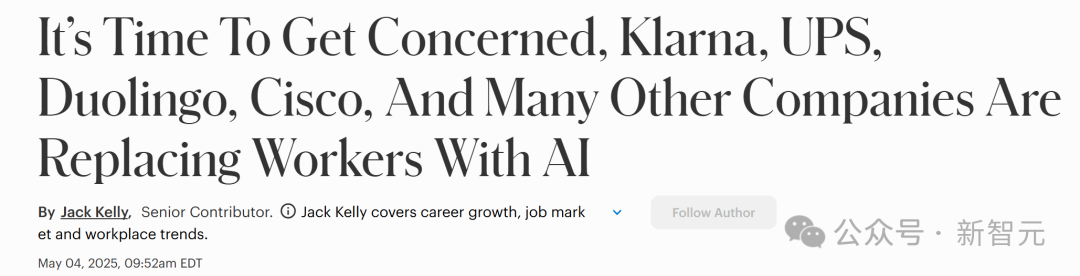
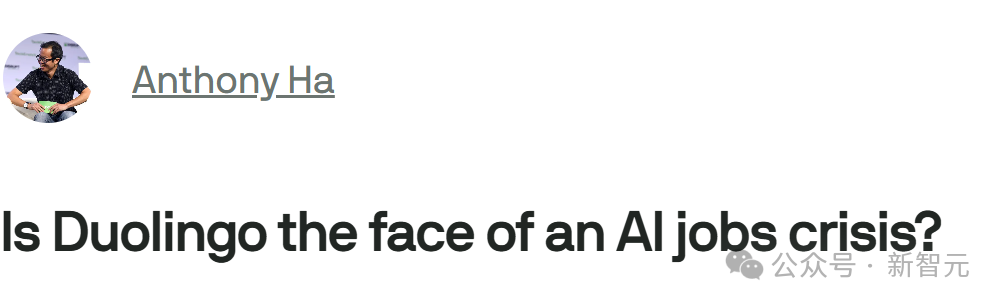
Now, due to AI's impact, large numbers of people are already losing their jobs.
For example, Obama and his team are currently discussing the serious consequences of this issue.
When human positions are taken over by AI, where should we go from here?
"At first, no one cared about this disaster—it was just a wildfire, a drought, the extinction of a species, the disappearance of a city—until this disaster became relevant to everyone."
Duolingo is just the beginning
You've probably already heard about Duolingo.
In fact, this isn't even news anymore.
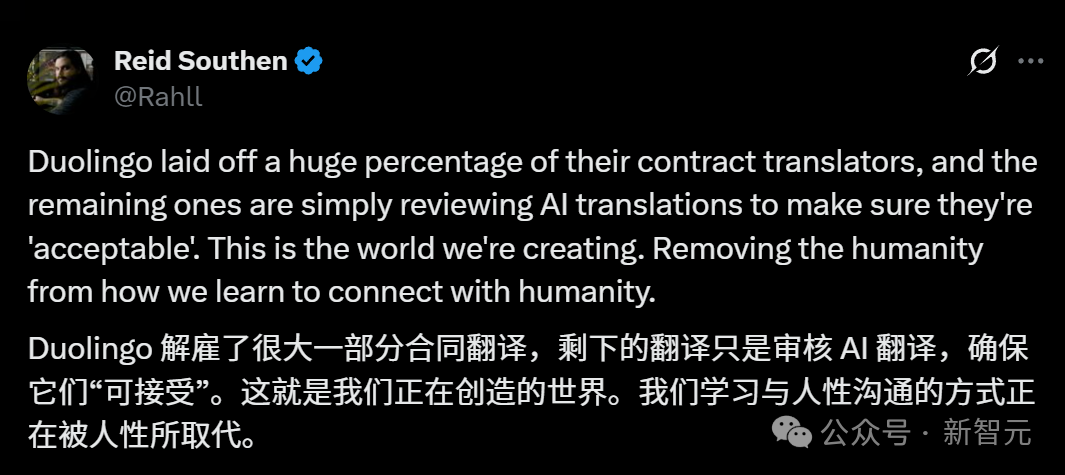
A TechCrunch journalist interviewed a former Duolingo employee who said the company had already laid off 10% of its staff by late 2023, followed by another round of layoffs in October 2024.
In these two major layoffs, translators were replaced first, then writers—both supplanted by AI.
At the end of 2023, Duolingo justified the layoffs by stating that much of its content production and translation had been streamlined using models like GPT-4.
Below is a layoff email sent out by Duolingo.
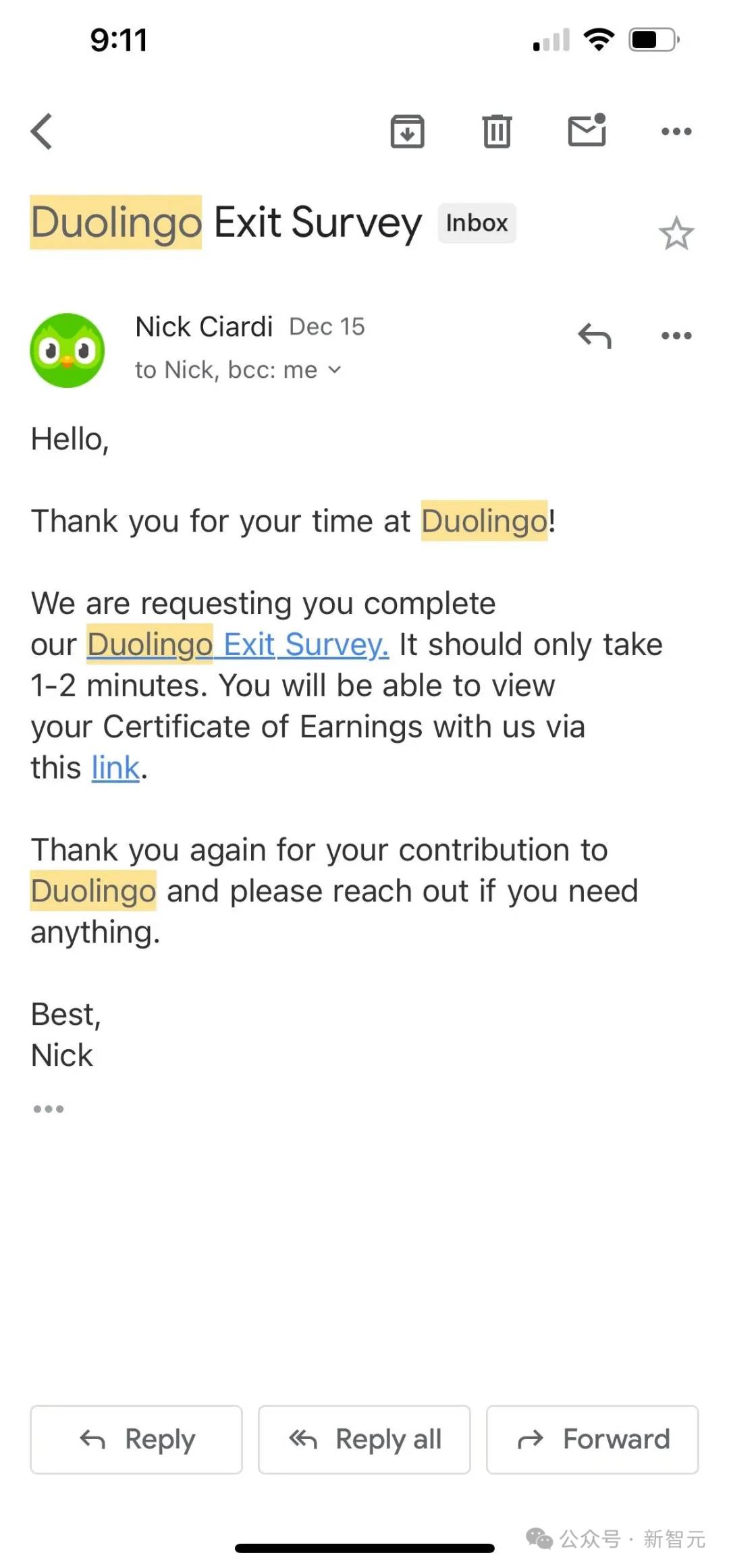
A laid-off employee revealed on Reddit that the company’s reason was that AI can now replace creators, translators, and nearly all similar roles.
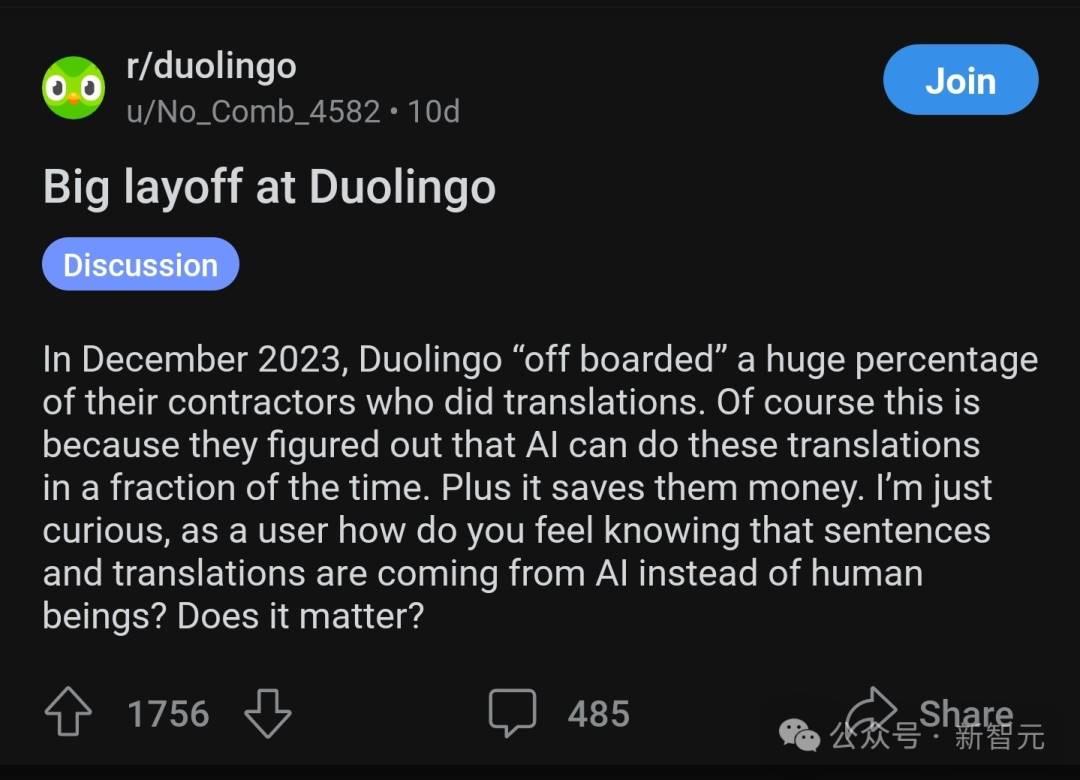
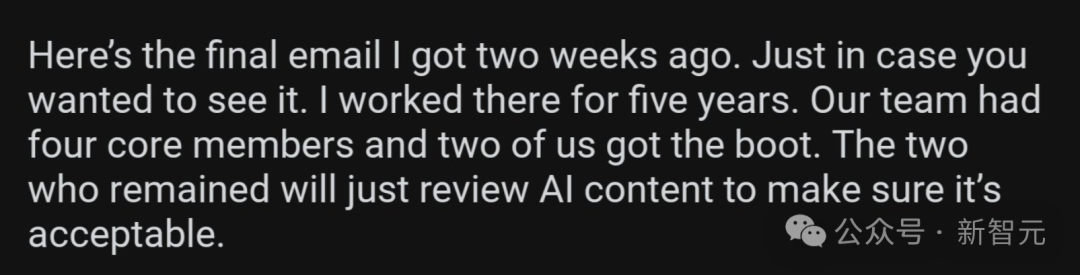
Reportedly, each team retained only a handful of people to continue working as "content editors." Their job? Check low-quality AI-generated content and click publish.
Besides this, Duolingo used GPT-4 to support the premium Duolingo Max subscription, employing AI chatbots to help users practice conversations. They also have a proprietary AI model called Birdbrain that personalizes lessons for users.
Yet, both laid-off employees and Duolingo itself seem deeply dissatisfied with the situation.
For affected employees, being replaced by AI is a heavy blow. Job insecurity has caused psychological distress, and incomplete resumes often make it difficult to secure stable employment.
Moreover, most of Duolingo’s employees are contractors. This structure allows the company to save significant costs by avoiding benefits like insurance, paid leave, or sick days.
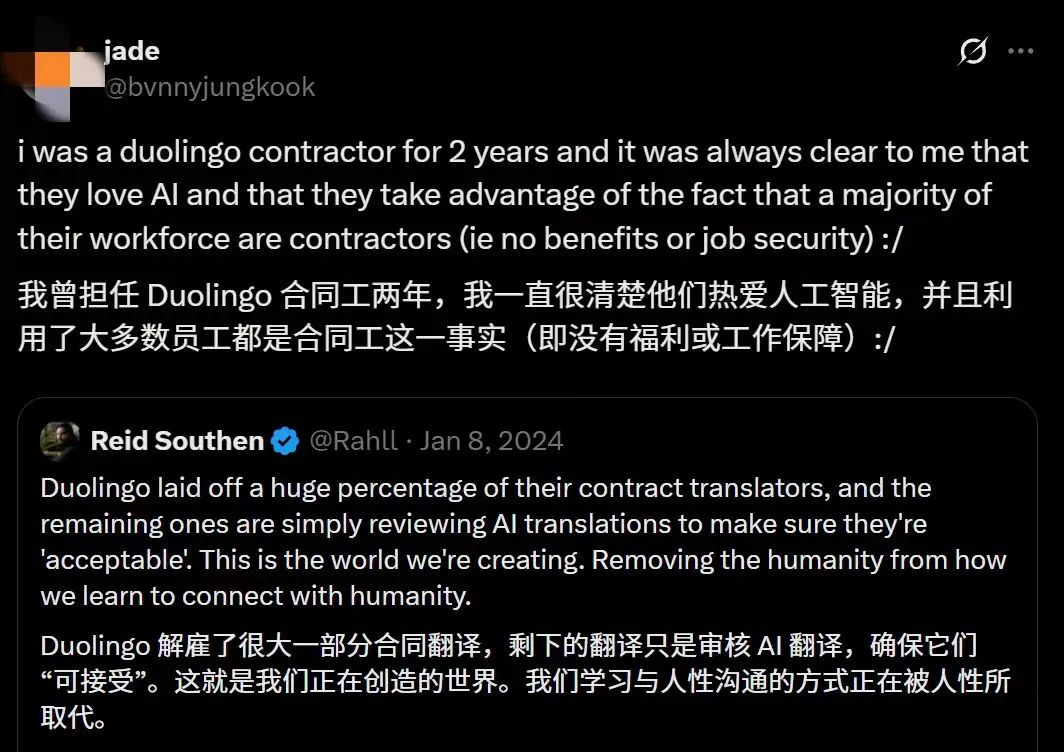
Meanwhile, users worry that relying on AI translation could undermine the value of experts who deeply understand language, idioms, and cultural nuances.
As early as the 2023 "Future of Jobs Report," the World Economic Forum predicted that AI would transform 23% of jobs within five years.
Now, two years later, that prediction is becoming increasingly evident.
This crisis may seem simple, but at its core, it's merely "a series of management decisions made by executives to cut labor costs and tighten internal control."
The consequences include talent drain in creative industries, declining incomes for freelance artists, writers, and illustrators, and companies' growing preference for hiring fewer human workers.
To foreign journalist Brian Merchant, the so-called AI employment crisis isn't a sudden, apocalyptic "Skynet moment," but rather a gradual process—like DOGE waving an "AI-first" banner while cutting thousands of federal employees.
U.S. college graduates: unemployed upon graduation
Not only that, The Atlantic has found that unemployment among recent U.S. college graduates is abnormally high!
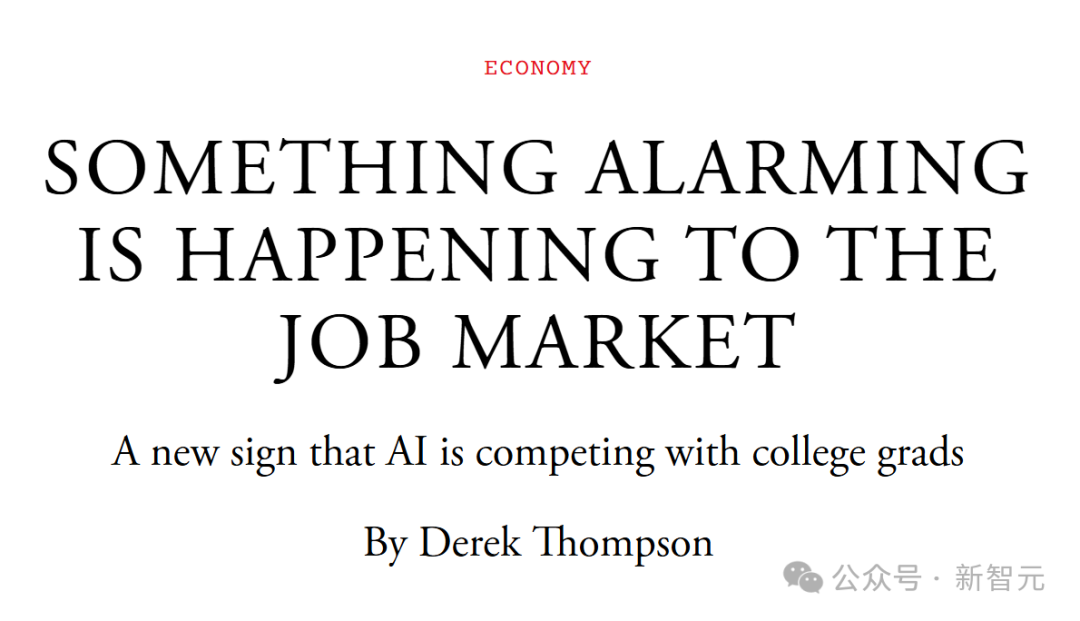
A likely explanation: many companies are replacing entry-level white-collar jobs with AI, or redirecting funds previously allocated for new hires toward AI tools.

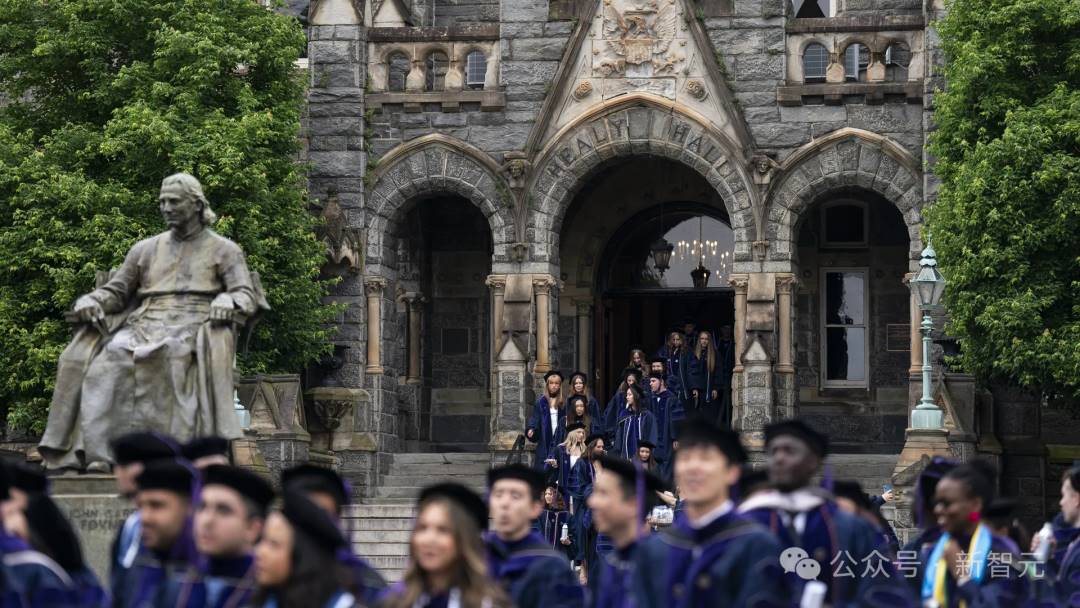
Just last Labor Day, this foreign outlet discovered strange and worrying shifts in the U.S. college graduate job market.
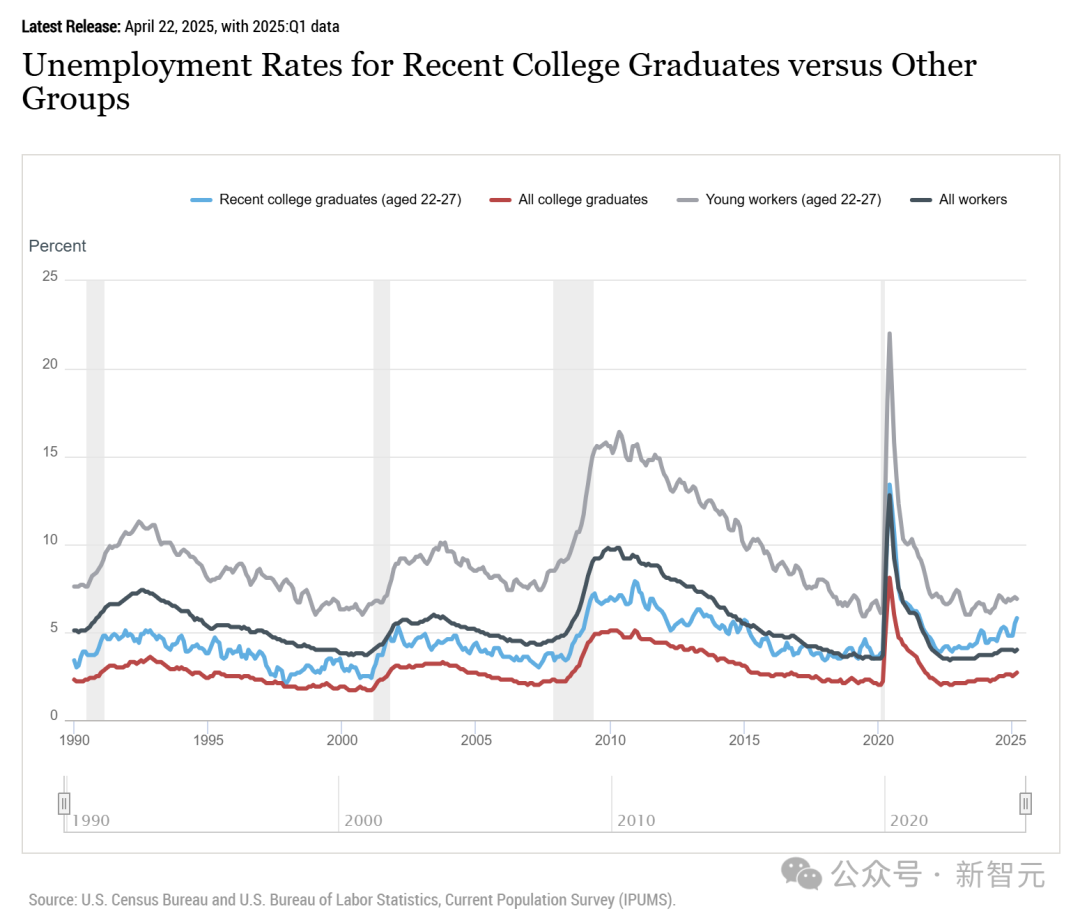
The New York Federal Reserve reported that in recent months, employment conditions for new college graduates have significantly deteriorated, with unemployment reaching a high of 5.8%!
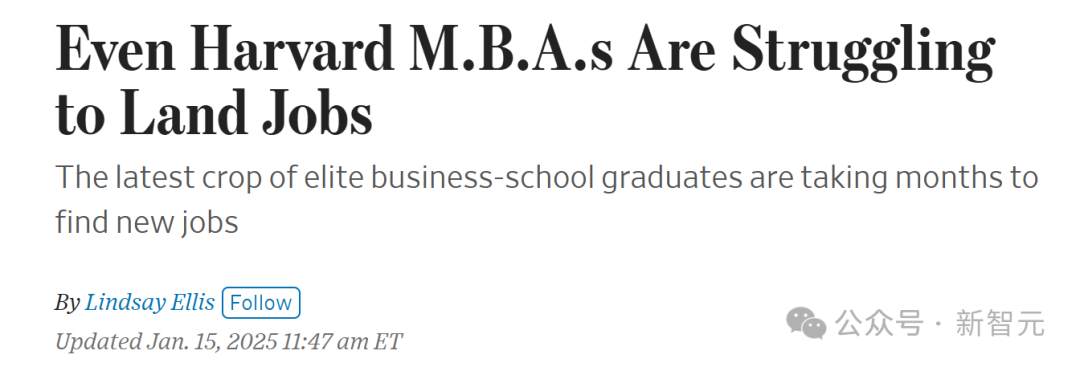
Even MBA students fresh out of elite programs often struggle to find jobs.
Meanwhile, law school applications are surging—an unsettling echo of how young people turned to further education during the financial crisis to escape job market pressures.
Regarding this phenomenon, The Atlantic contributor Derek Thompson suggests three possible reasons.
First, the youth labor market has yet to recover from the pandemic shock—or more accurately, this recession has lasted far too long.
Harvard economist David Deming noted that young people have found job hunting harder than ever, a trend lasting at least a decade.
The recession triggered mass layoffs, and many employers froze hiring. Just as tech prosperity seemed imminent, inflation returned, prompting the Fed to raise interest rates, directly suppressing economic demand.
White-collar sectors, especially tech, were hit particularly hard. Job openings in software development and IT operations have dropped sharply.
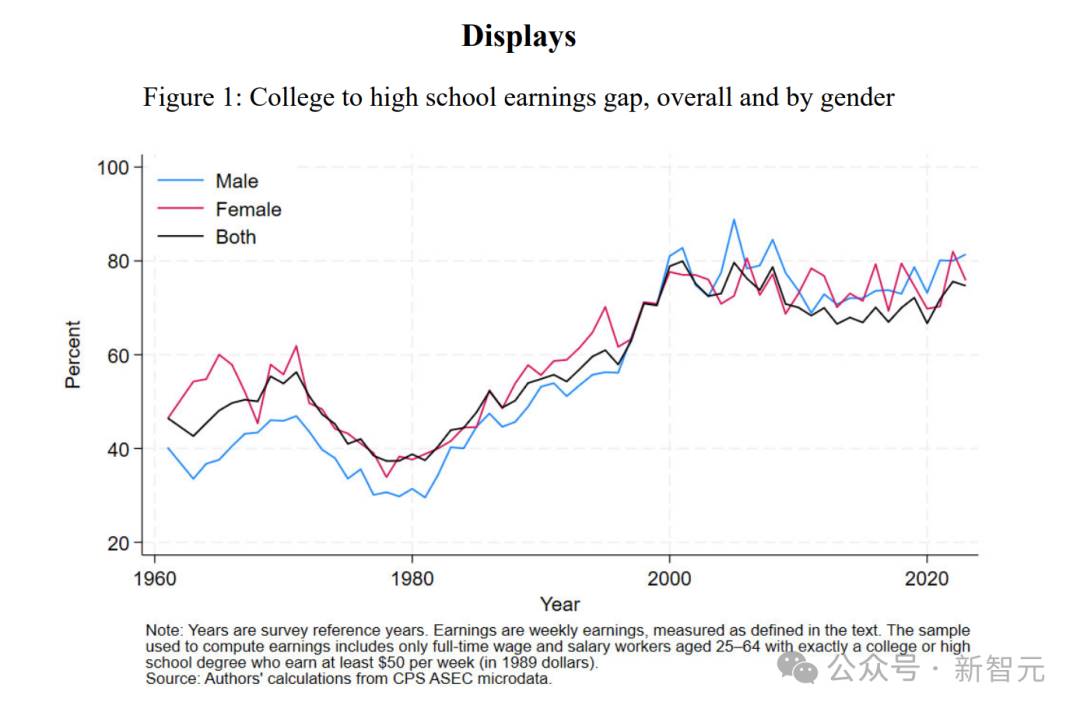
The second theory points to a deeper, structural shift: college degrees no longer confer the same labor-market advantage they did 15 years ago.
Research from the San Francisco Federal Reserve shows 2010 was a turning point—after which the lifetime income gap between college and high school graduates stopped widening.
The third theory is the most frightening: the weakness in the college graduate labor market might be an early sign that AI is beginning to reshape the economy.
If you examine an economic indicator—the "new graduate gap," defined as the difference between young college graduates' unemployment rate and the overall labor force's rate—you'll see things have changed dramatically.
Forty years ago, young college graduates didn’t face high unemployment because they represented relatively cheap labor.
But last month, the employment gap for college graduates hit a historic low.
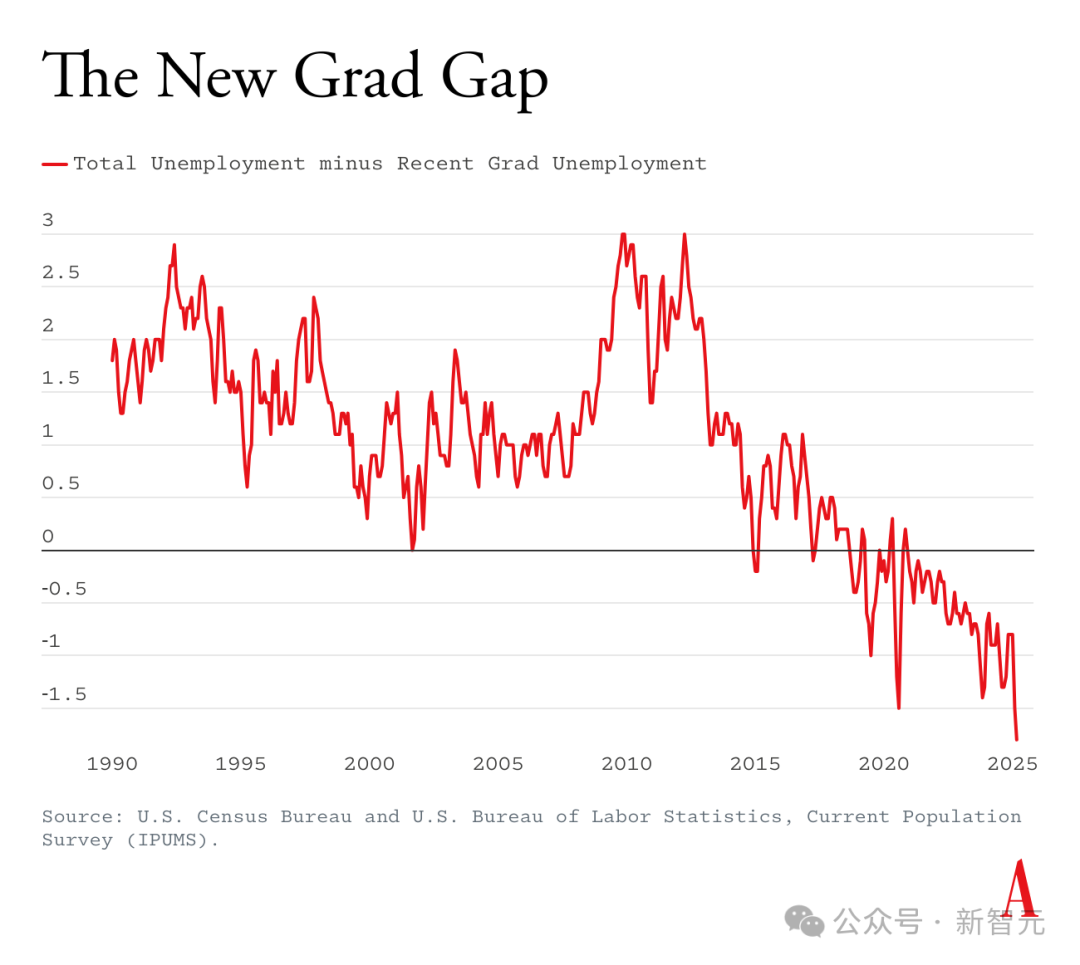
In short, the economic environment facing U.S. college graduates today is worse than any month in the past 40 years.
Law firms and consulting companies are realizing that five 22-year-olds using ChatGPT can accomplish the work of 20 fresh graduates.
And even if employers aren’t directly replacing humans with AI, the massive spending on AI infrastructure crowds out budgets for new hires.
In sum, warning signs are flashing in the college graduate labor market.
It's AI's turn to work
In short, more and more companies are quietly pushing you out of your seat.
This time, you really are being replaced by AI—not speculation, but an ongoing reality.
Thank you for your past efforts. Now it's AI's turn to work.
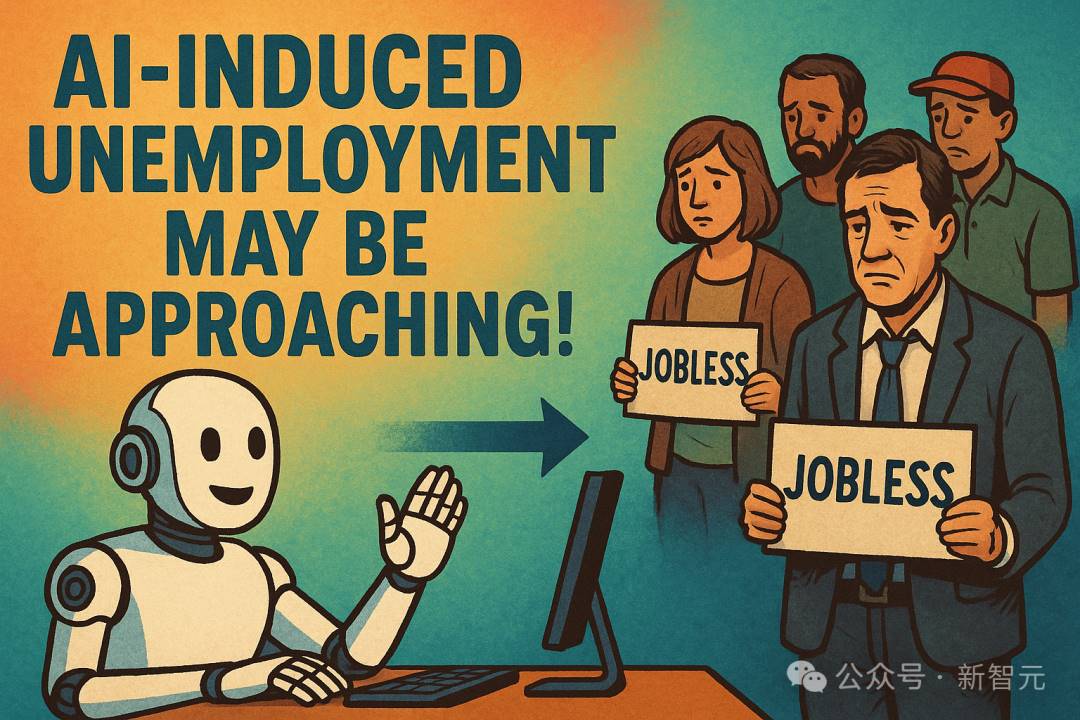
From customer service to translation, from pricing experts to tax advisors, more companies are hiring an AI worker who never complains.
Don't believe it? Look at the current state of these five companies.
From 2024 to 2025, at least five major global companies—Klarna, UPS, Duolingo, Intuit, Cisco—have collectively laid off tens of thousands of employees, directly or indirectly citing "AI efficiency."
Their justification: "We’re not replacing humans with AI—we’re just helping humans use AI to boost efficiency."
Sounds reasonable—until you realize human jobs have suddenly vanished!

Klarna
Klarna, a leading international "buy now, pay later" fintech firm, announced in 2024 that it would lay off over 1,000 employees—about 10% of its global workforce.
The news immediately made headlines in Forbes.
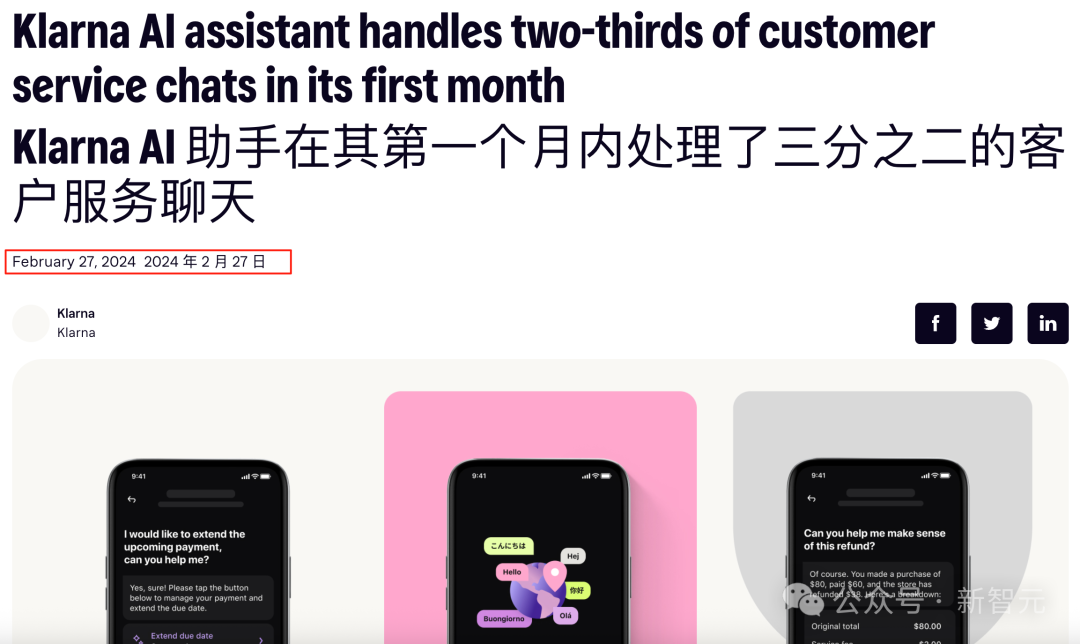
The company heavily invested in AI to handle customer service inquiries, process transactions, and optimize operations.
Klarna developed an AI assistant capable of handling workloads equivalent to 700 full-time employees.
The CEO openly discussed how AI-powered chatbots and automation systems now perform tasks once managed by human agents, such as answering customer queries and processing refunds.
By integrating generative AI, Klarna aims to reduce operational costs while scaling services. Reports indicate AI now handles a large portion of its customer interactions.
UPS
In early 2025, United Parcel Service (UPS) announced plans to lay off 20,000 employees—one of the largest cuts in its 116-year history.
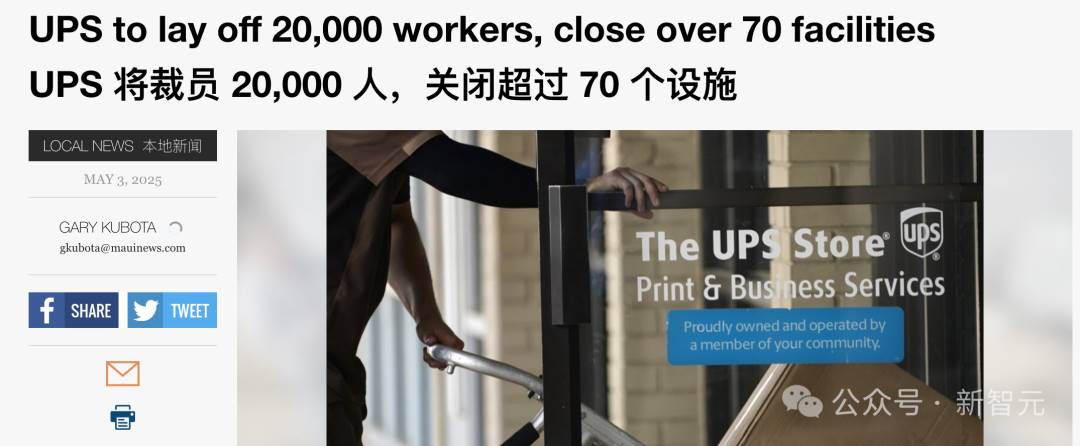
UPS CEO Carol Tomé frankly admitted that behind these layoffs lies the deployment of AI and machine learning technologies.
Tasks once performed by human pricing experts—such as drafting sales proposals—are now handled by AI, with higher efficiency and lower cost.
While UPS officially insists "AI isn’t replacing humans," it's clear the company now uses AI to optimize logistics routes and manage customer communications, naturally reducing the need for human staff.
In essence, this move is about saving money—and AI has become the perfect tool for cost-cutting.
Duolingo
Duolingo recently announced plans to replace contract workers with AI, positioning itself as an "AI-first company"—a move signaling that the AI-driven employment crisis has arrived.
The news was publicly shared by Duolingo’s Chief Engineering Officer on LinkedIn.
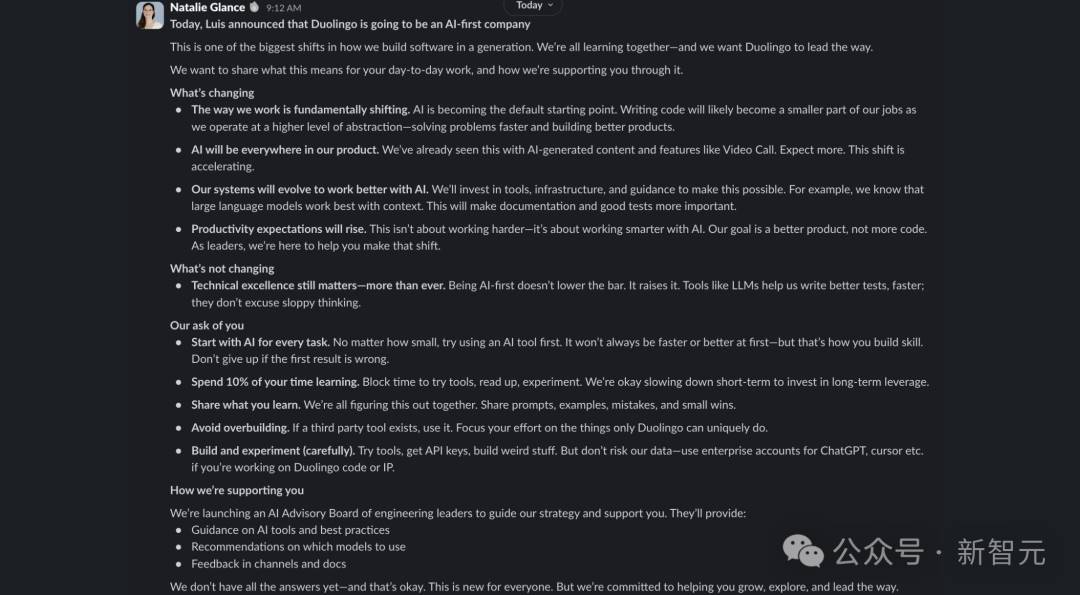
The CEO painted a rosy picture in an internal memo posted on LinkedIn: AI will soon handle content creation, employee performance evaluations, and even hiring decisions.
Accordingly, Duolingo took early action, cutting 10% of its contract translators, claiming AI can now do their jobs—automatically translating course materials across more than 100 languages.
Although the company emphasized, "No full-time employees were fired!"—the direction is clear: translation work can now be done by AI.
Intuit
Financial software company Intuit, headquartered in California, is a multinational computer software firm primarily known for financial and tax preparation software.
In 2024, it laid off about 1,800 people—but the money saved wasn’t distributed as dividends. Instead, it was entirely reinvested into AI.
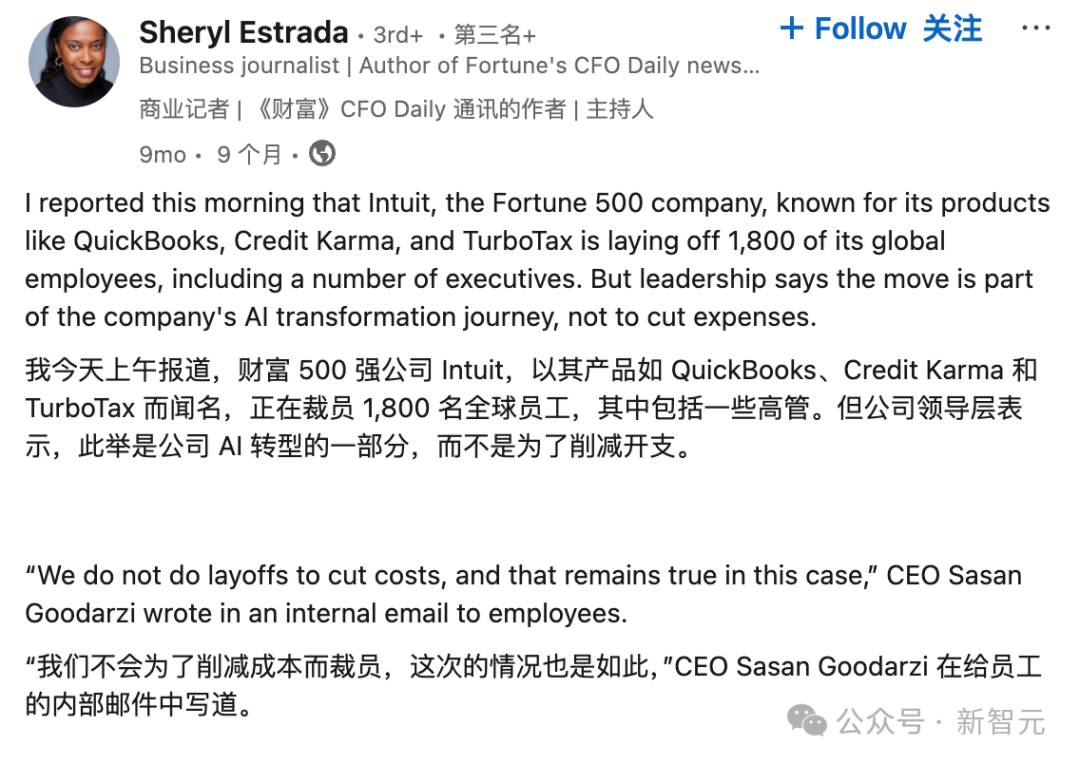
Artificial intelligence is a key part of its future strategy, especially in automating customer service, data analysis, and tax preparation processes.
Company leaders are candid: the future focus is AI. Tasks once requiring large teams can now be instantly completed by AI.
Cisco
Tech giant Cisco has joined the "AI-first" movement—announcing earlier layoffs of 7%, around 5,600 employees.
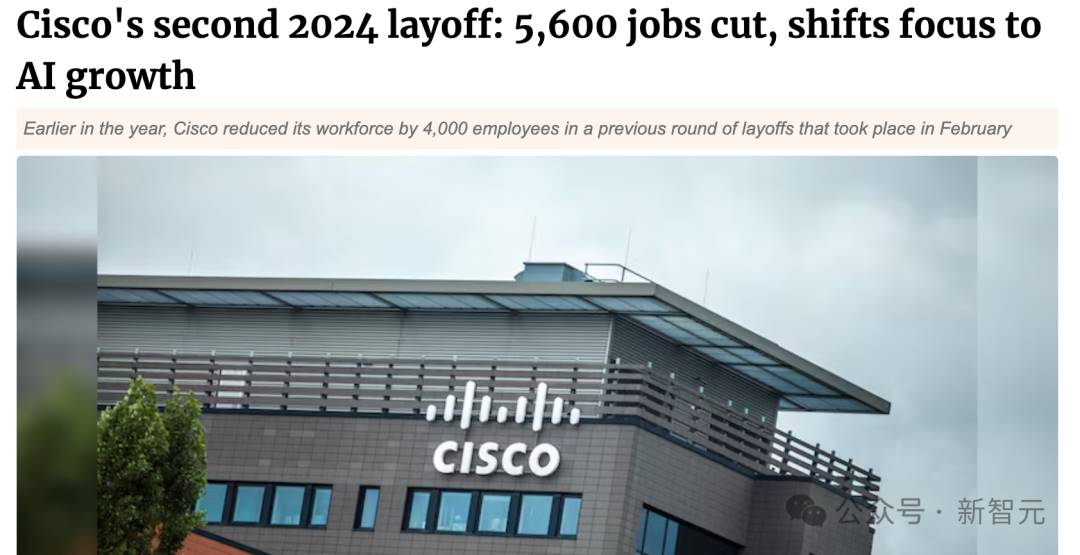
The company has been integrating AI into its network solutions, including predictive analytics for network management and automated customer support systems.
On the surface, this appears to be a strategic shift. In reality, many tasks previously done by humans are now equally well handled by AI. Cisco’s move reflects a broader industry trend: replacing human labor with AI to improve efficiency and cut costs has become an unspoken consensus.
Will companies that replace employees with AI succeed or fail?
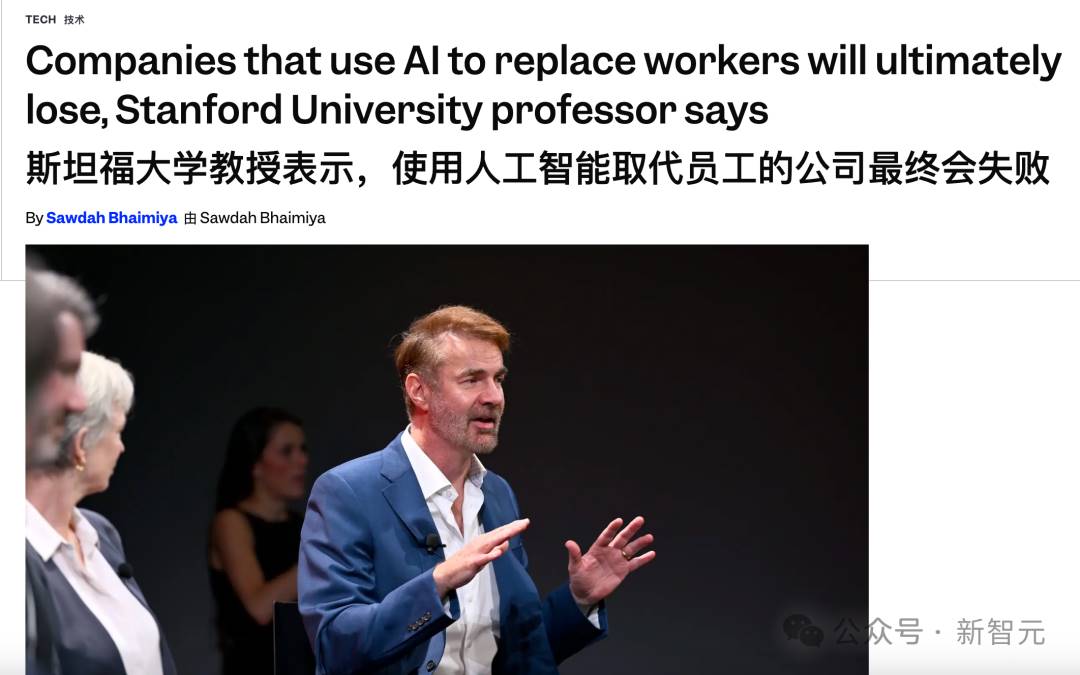
Back in January 2024, Stanford professor Erik Brynjolfsson stated that smart companies wouldn’t use AI to replace workers or jobs.
He argued that AI and humans should work together, leveraging their respective strengths—AI should "complement" human labor, not replace it.
But times have changed—AI capabilities have advanced significantly.
In early 2025, multiple global corporations began concentrated layoffs—with one common reason: AI has become more efficient and cheaper.
Klarna replaced 700 customer service agents with AI; UPS cut thousands of back-office roles, shifting to automated workflows; Duolingo drastically downsized its content team, relying instead on AI-generated question banks.
These companies didn’t opt for "human-AI collaboration," but boldly bet on "AI-first."
When generative AI first emerged, it was seen as a helpful partner to humans.
But now, AI seems less like a partner and more like a competitor—or even a replacement.
These companies are proving through action that under a business logic where efficiency rules and cost dominates, AI isn’t just an "assistant tool"—it’s the optimal solution!
This isn’t just a technological revolution—it’s a workplace earthquake.
People once imagined AI would free workers from tedious tasks and allow them to focus on creativity.
The reality, however, is—the more repetitive the work, the faster it gets eliminated byAI; the more procedural the role, the quicker it gets consumed byalgorithms.
Society may be standing at a tipping point:
From AI assisting humans, to humans needing to adapt to AI;
From optimizing jobs, to eliminating jobs;
From boosting productivity, to reshaping production relationships.
And this transformation has already quietly begun—without waiting for everyone to be ready.
Join TechFlow official community to stay tuned
Telegram:https://t.me/TechFlowDaily
X (Twitter):https://x.com/TechFlowPost
X (Twitter) EN:https://x.com/BlockFlow_News