Unveiling the Other Side of AI: Lesser-Known Applications That Are Transforming the Lives of Millions
TechFlow Selected TechFlow Selected
Unveiling the Other Side of AI: Lesser-Known Applications That Are Transforming the Lives of Millions
The true impact of artificial intelligence does not lie in Silicon Valley research labs or corporate headquarters, but in how these technologies transform people's lives.
 Navigating Web3 tides with focused insights
By: Metaverse Heart
When we witness artificial intelligence (AI) integrating into daily life, we often focus on the most eye-catching examples: chatbots that write poetry, algorithms creating art, or self-driving cars.
Yet in the meantime, we overlook how AI has already solved problems affecting the lives of millions within specialized fields.
Vladimir Kokorin, founder of the UK-based BCCM Group and IT venture capital expert, said: "The real impact of AI isn't seen in Silicon Valley research labs or corporate headquarters, but in how these technologies transform people's lives."
From this perspective, let's explore some lesser-known AI application areas unfamiliar to general readers.
01. Predicting Natural Disasters
Imagine: storm clouds have just begun gathering outside, yet you already know when precipitation will start, what it will be like, and when it will end. You also clearly understand whether these clouds might evolve into a dangerous natural disaster.
In combating natural disasters, AI has demonstrated remarkable capabilities.
In the past, meteorologists relied on massive physical models requiring hours of computation on powerful supercomputers. Today, models such as Google DeepMind's GraphCast, NVIDIA's FourCastNet, and Huawei's Pangu Weather can accomplish the same task within minutes—often with superior results.
"AI-based forecasting systems act like a magnifying glass, allowing us to observe weather conditions in unprecedented detail," explains Kokorin. "This precision is critical for rescue operations and timely responses to natural disasters."
The European Centre for Medium-Range Weather Forecasts is already using these new tools, dividing the world map into tiny grids for more granular analysis.
The startup Atmo goes even further—its model observes weather at one-mile resolution, compared to the previous system’s 5.5-mile range. It’s like comparing a blurry photo to a high-resolution image. This level of accuracy helps emergency responders and authorities react faster to approaching storms, floods, or droughts.
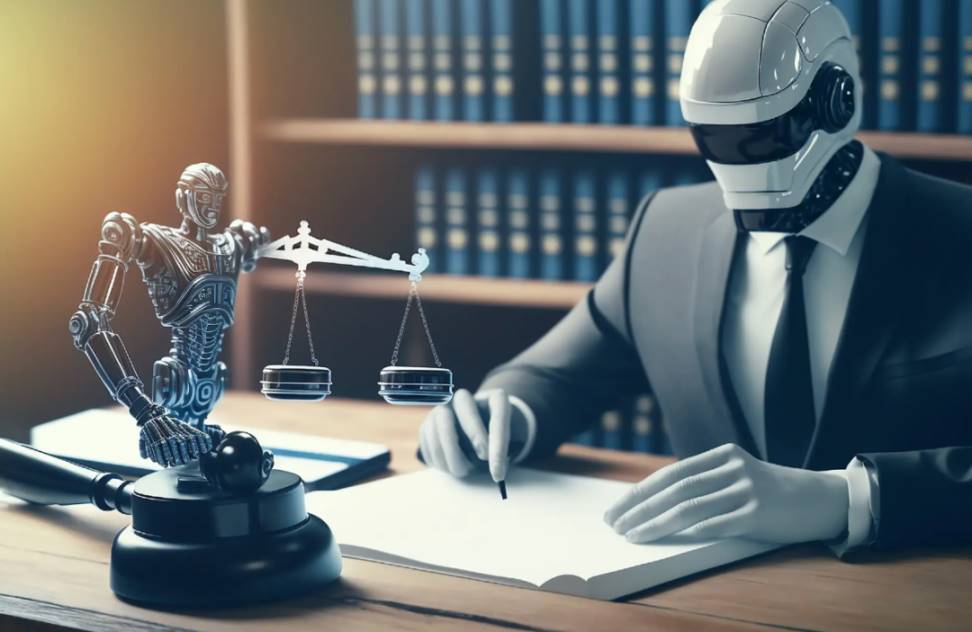
02. The AI Revolution in Law
A Thomson Reuters report shows that 77% of lawyers believe AI will bring significant change to their field within five years. Even more telling, 72% view AI as a positive factor for their professional development.
"AI frees lawyers from tedious routine tasks, enabling them to focus on the creative aspects of their profession," notes Kokorin. "In legal practice, we’re seeing rapid adoption of technologies once met with resistance."
This shift stems from tangible benefits: AI-powered document review, research, and contract analysis tools save lawyers enormous amounts of time. For U.S. lawyers alone, this translates to an efficiency gain of 266 million hours.
The market has responded accordingly. Legora, an AI-driven legal services company, recently entered the U.S. market and partnered with Goodwin, a leading global law firm.
After raising over $35 million from investors including Benchmark, Y Combinator, and Redpoint, Legora now serves clients across nearly 20 countries, helping lawyers focus on what matters most—client service.
"We’re seeing AI not only transform technical processes, but revolutionize entire industries long resistant to change," comments Kokorin. "Growing investor interest in such projects reflects their proven ability to enhance professional productivity."
Some law firms are going further by developing their own AI tools.
Allen & Overy collaborated with AI startup Harvey to develop a service that helps clients identify jurisdictions among over 130 where regulatory filings may be required during corporate mergers. The tool also detects missing data and generates information requests—tasks traditionally requiring hours of work by junior lawyers under supervision of highly paid experts.
03. The Power of AI in Education and Inclusion
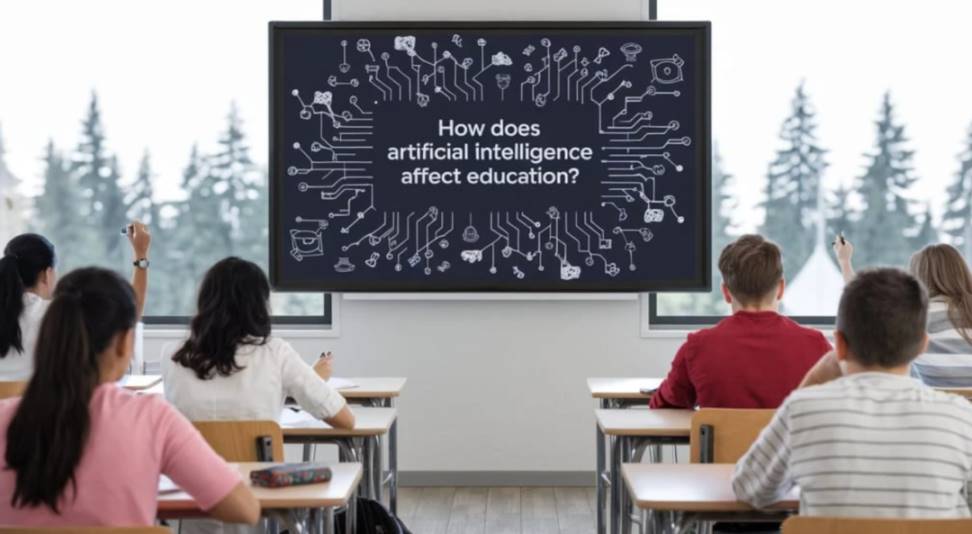
Today’s discussions about AI often center on its potential risks or impressive technical feats, while applications in education and inclusion remain overlooked.
"In education and inclusion, AI reveals its true humanistic potential," says Kokorin. "These applications allow us to remove barriers faced by people with disabilities and open new horizons for those previously unable to access quality education."
The AI platform Digify Africa provides educational opportunities to underprivileged students in remote areas of Africa. At a school in the UK, children with communication difficulties use AI to compose their own songs, opening new avenues for self-expression.
Yale University professor Brian Scassellati noted in an interview that in special education, AI-powered robots help autistic children engage socially—children respond to these machines "differently than they do to dolls or pets."
"Technologies that empower people with disabilities to interact with the world at a new level are especially important," emphasizes Kokorin. "AI development in this area deserves far greater attention and investment than it currently receives."
For the deaf and hard of hearing, companies like Ava are developing mobile apps powered by AI that provide real-time transcription, making communication easier in classrooms, business meetings, and public events.
The National Technical Institute for the Deaf in the U.S. has partnered with Microsoft to develop captioning technology for lectures involving deaf students, training the software on specialized terminology unique to the institution.
For individuals with physical disabilities, startups such as Voiceitt, Cognixion, and Parrots Inc are developing technologies that convert unique speech patterns, brainwaves, and eye movements into digital commands.
These tools enable users to operate computers, navigate digital environments, and control devices without using hands or speech—granting levels of independence once unimaginable.
04. The True Value of AI Technology
The true value of AI lies in its power to transform everyday life—in classrooms where disabled children discover new ways to express themselves, in courtrooms promoting fairer justice, and in disaster zones where improved prediction and response save lives.
Kokorin emphasizes that although these AI applications may not attract as much attention as talking robots or algorithm-generated artworks, their societal impact is deeper and more meaningful. It is precisely in these domains that technology reveals its authentic potential—not as an end in itself, but as a powerful tool for addressing urgent human challenges.
"The path to effective AI use lies in balancing innovation with responsibility, technological advancement with ethical principles," concludes Kokorin. "Such a future is worth investing in."
Join TechFlow official community to stay tuned
Telegram:https://t.me/TechFlowDaily
X (Twitter):https://x.com/TechFlowPost
X (Twitter) EN:https://x.com/BlockFlow_News