Hyperliquid Decentralized Exchange Crisis: Which Has a Brighter Future, DEX or CEX?
TechFlow Selected TechFlow Selected
Hyperliquid Decentralized Exchange Crisis: Which Has a Brighter Future, DEX or CEX?
DEXs and CEXs may not evolve toward a single dominant model, but instead coexist and evolve within their respective niches, jointly driving the crypto industry toward maturity.
 Navigating Web3 tides with focused insights
Authors: Liu Honglin, Zheng Hongde
Recently, the decentralized exchange (DEX) Hyperliquid once again became a hot topic in the crypto community due to the "JELLY short squeeze incident." This crisis not only damaged Hyperliquid's credibility but also reignited a long-standing debate: Can decentralized exchanges (DEXs) truly surpass centralized exchanges (CEXs)?
Industry leaders hold divergent views. Arthur Hayes predicted Hyperliquid’s decline in his blog, while CZ reaffirmed the irreplaceability of CEXs. Meanwhile, DEX advocates continue to believe that “decentralization is the future.” This article analyzes the current state and future trends of DEXs versus CEXs by reviewing the incident, offering insights into this ongoing debate.
Crisis Review: The Illusion of Decentralization Exposed
Let’s first examine the background of the Hyperliquid turmoil.
Hyperliquid is a decentralized exchange specializing in perpetual contracts, using its platform liquidity pool to provide counterparty support and promoting itself as efficient, low-cost, and high-leverage. By early 2025, Hyperliquid had captured approximately 70% of the decentralized perpetual contract market, emerging as a major competitor against centralized exchanges.

The incident began when an attacker exploited the platform’s high-leverage trading mechanism. On the evening of March 26, 2025, they purchased large amounts of JELLY spot tokens both on-chain and across other exchanges, driving up the price nearly tenfold within a short period before rapidly selling off—precisely targeting the platform’s liquidity pool. Due to the massive size of JELLY positions and insufficient liquidity, the platform’s fund pool was forced to take over about 398 million JELLY short positions, with unrealized losses peaking at $12 million. If prices had continued rising, the entire $240 million reserve could have been wiped out, leading to catastrophic losses for the platform.
That night, Hyperliquid implemented two emergency measures:
1. Announced forced liquidation of affected positions at favorable prices.
2. Used foundation reserve funds to partially compensate users.
By conducting forced liquidations at discounted rates, Hyperliquid not only avoided losses but actually profited $703,000. Despite branding itself as a decentralized exchange, Hyperliquid exercised highly centralized decision-making power—an action that defied expectations and sparked widespread skepticism about its commitment to decentralization. Data shows that in the 48 hours following the event, Hyperliquid’s TVL (Total Value Locked) plummeted 30%, falling from $800 million to $560 million, while trading volume dropped to just 50% of pre-crisis levels.
Although Hyperliquid appeared decisive in halting an impending liquidation spiral—preserving capital and core liquidity—it essentially traded trust for survival time, exposing critical flaws in its design and governance:
Highly Centralized Decision-Making
The decision to forcibly liquidate positions at preferential prices, though framed as an emergency response, carried strong hallmarks of centralization—akin to government market interventions in traditional finance. While Hyperliquid claimed the move was approved via “validator voting,” the community widely questioned the transparency and inclusiveness of the vote, viewing it more as unilateral action by the team rather than genuine consensus. This contradicts the very principle of “decentralized autonomy” the platform claims to uphold.
Design Flaws in Mechanism
Hyperliquid allows leverage as high as 50x yet lacks dynamic risk controls to prevent market manipulation. Attackers exploited this vulnerability through a rapid pump-and-dump strategy to trigger liquidations, directly targeting the HLP fund pool—revealing serious shortcomings in risk management. Subsequent measures such as lowering leverage caps and tapping foundation reserves alleviated immediate pressure but failed to address deeper structural issues in trading mechanisms and power distribution—merely treating symptoms rather than root causes.
Escalating Trust Crisis
The handling of the incident significantly weakened Hyperliquid’s credibility, eroding user confidence in its decentralization. According to Dune Analytics, daily active users dropped 25% in the week following the event, with some capital shifting to other DEXs or CEXs like Binance. Community forums were flooded with declarations that “Hyperliquid is dead.”
For a DEX aiming to challenge CEX dominance, this event serves as a dangerous warning. It’s not just Hyperliquid’s Waterloo—it’s a wake-up call for the entire DEX industry: Decentralization cannot remain a slogan alone; it must be backed by robust technical architecture and governance systems. Otherwise, the ideal of DEXs will struggle to withstand real-world shocks.
Arthur Hayes’ Decline Prediction: Is There Still Hope for Hyperliquid?
In the Old Testament, the story of “David vs. Goliath” is a well-known parable where Goliath represents a towering, heavily armed warrior symbolizing invincibility, while David is a young shepherd boy wielding only a sling and stones.

* Image source: Internet
Arthur Hayes, a prominent figure in crypto, recently referenced this metaphor on social media, likening Hyperliquid to David—the underdog facing much stronger rivals such as Binance and dYdX. He argued that the JELLY incident exposed Hyperliquid’s false claims of decentralization and inherent fragility during crises, bluntly stating, “Stop pretending Hyperliquid is decentralized,” and predicting it would follow FTX’s path toward eventual collapse and market elimination.
Hayes’ prediction isn’t baseless—Hyperliquid’s response did reveal weaknesses in risk management and product design, making a short-term trust crisis inevitable. However, I believe Hyperliquid’s fate isn't sealed. The key lies in what actions the team takes next.
In 2016, Ethereum suffered the DAO hack, losing $50 million worth of ETH, which split the community and even led to a controversial hard fork. Yet Ethereum didn’t fall—it used the crisis to strengthen smart contract security standards, laying a solid foundation for future growth.
Hyperliquid has a similar opportunity. The vulnerabilities revealed by the JELLY incident might become stepping stones for development. The platform should consider implementing corrective measures such as:
-
Transparent audits to rebuild credibility: Publish detailed audit reports of the liquidity pool and disclose the reasoning behind liquidation decisions to demonstrate sincerity to the community.
-
Mechanism optimization to mitigate risks: Improve liquidation protocols and introduce dynamic risk controls such as real-time leverage adjustments to prevent similar pump-and-dump attacks. dYdX’s perpetual contracts already use oracles and dynamic margining to effectively reduce systemic risk—Hyperliquid can look to such models for technical upgrades.
-
True decentralized governance to restore consensus: Transform “validator voting” from a symbolic gesture into actual self-governance, expanding community participation.
If Hyperliquid can conduct transparent audits, optimize its liquidation system, and regain user trust, there may still be room for recovery. Hayes’ view of “David vs. Goliath” may be overly pessimistic. After all, in the original biblical tale, David triumphed over the seemingly invincible giant through intelligence and courage.
Even if Hyperliquid faces existential threats, demand for the DEX sector remains strong. In 2024, global DeFi user numbers surpassed 150 million, with peak daily DEX trading volumes reaching $2 billion—proving solid underlying demand. Users’ desire for self-custody and trustlessness hasn’t waned. Hyperliquid’s users won’t abandon the model entirely after one crisis—they simply expect a safer, fairer platform.
Of course, if Hyperliquid fails to improve its mechanisms and fix vulnerabilities, decline is inevitable. Markets are pragmatic: once trust evaporates, capital and users will swiftly migrate to CEXs like Binance or alternative DEXs. Even if Hyperliquid collapses, the DEX space won’t die. New players will emerge, and those who perfect their designs will ultimately prevail. The road ahead for DEXs is long. Hyperliquid may fade, but DEXs themselves are here to stay.
DEX vs. CEX: Who Owns the Future?
Since the last bull market, many believed DEXs would eventually surpass CEXs. But recently, skepticism has grown—even CZ has reiterated that DEXs can’t match CEXs. So, who truly holds the future?
At present, DEXs and CEXs aren’t engaged in a zero-sum game or life-or-death battle. Instead, they coexist and complement each other, occupying distinct ecological niches and serving different user needs—each with their own challenges. Just as Hyperliquid faced issues, CEXs too have suffered incidents like Bybit’s recent major cryptocurrency theft. Clearly, both models have strengths, and users constantly weigh trade-offs between them.
Advantages of CEX: “Centralized Convenience” Hard to Replace in the Short Term
Currently, CEXs largely serve as the entry point for newcomers and the primary arena for large traders.
-
CEXs offer convenient fiat on-ramps, acting as the main bridge for new users entering the crypto world from traditional currencies.
-
Mature infrastructure and integration with traditional finance. CEXs provide deeper order books, lower latency, and professional customer support. Large traders need platforms capable of executing big orders quickly—something CEXs can handle easily thanks to deep liquidity.
-
Compliance assurance through KYC and AML checks enables alignment with traditional financial systems. For example, Coinbase is popular in the U.S. because institutional investors perceive it as trustworthy.
Core Features: Low barrier to entry, deep liquidity, strong compliance
DEX Appeal: Transparent and Free—Core Values Are Priceless
With platforms like Uniswap and GMGN improving usability, DEX ecosystems are becoming increasingly user-friendly, with faster transaction speeds and growing liquidity—offering advantages beyond typical CEX offerings:
-
DEXs use wallets as interfaces, enabling direct trades via smart contracts. Assets remain under user control at all times—a model inherently aligned with blockchain’s “trustless” philosophy.
-
Unlike the “black box” nature of CEXs, DEX operations run fully on transparent, publicly verifiable smart contracts, ensuring greater fairness.
-
Decentralized features bring flexibility and opportunity. For instance, during token launches like TRUMP, new coins often debut first on DEXs. CEXs, constrained by centralized listing processes and approvals, usually lag behind—or miss the window entirely. DEXs allow users to seize early opportunities without being bound by CEX timelines.
-
Open-source and community-driven innovation enables rapid experimentation and incubation of novel mechanisms, providing trading venues for emerging developer projects—areas many CEXs avoid due to regulatory or commercial concerns.
Core Features: Non-custodial security, transparency, freedom, flexibility, innovation-driven
CEX Must Reassess Its Moat
We’re witnessing rapid advancements in DEXs, particularly in areas like chain abstraction and cross-chain interoperability. Take UniversalX, a next-generation DEX, as an example: it dramatically simplifies user operations. Users no longer need to understand underlying chain differences—they can seamlessly trade tokens across any blockchain using just a wallet. This “plug-and-play” model removes traditional DEX technical barriers and eliminates reliance on third-party custodians, truly realizing asset sovereignty.
This mirrors the computer landscape of the 1990s, when complex command-line interfaces, intricate configurations, and steep technical learning curves limited computer usage to a small group of experts. Today’s on-chain interactions and DEXs face similar hurdles—concepts like private key management, cross-chain transactions, and gas fees remain obscure to most ordinary users.
While CEXs currently dominate in trading volume and user base, innovations like UniversalX are gradually changing this reality. Just as graphical user interfaces revolutionized computing and brought PCs into homes worldwide, the evolution of DEXs will drive mass adoption of blockchain technology—from niche geek culture to broad public engagement—continuously undermining the CEX user base.

If DEXs further enhance user experience and improve liquidity mechanisms to match current CEX performance levels, CEXs will be forced to rethink their competitive moats. Relying solely on trading efficiency or fiat access may no longer suffice. The decentralized nature and transparency of DEXs align better with blockchain’s long-term vision, and the convenience of wallets as traffic gateways may draw increasing numbers of users away from CEXs.
CEXs can build on their compliance strengths, evolving from convenience-focused platforms to pioneers in regulatory alignment. By deeply collaborating with regulators, they can position themselves as bridges for traditional capital entering the crypto world, thereby reinforcing their market standing. Such a transformation could not only preserve existing advantages but also open new avenues for growth.
As the saying goes, “Ducks know when spring water warms.” ManQin Law Firm has consistently monitored global blockchain policies across major jurisdictions and clearly observed the industry’s shift from “wild west” expansion to regulation. By 2024, over 50 countries globally had introduced crypto regulatory frameworks, including the EU’s MiCA regulations and the U.S. Stablecoin Transparency Act. Institutional investors—such as hedge funds and pension funds—are increasingly demanding compliant, secure channels to enter the crypto market, precisely where CEXs hold a natural edge. Compared to DEXs’ decentralized nature, CEXs integrate more easily with existing financial systems, offering KYC, AML, and other compliance services that meet both regulatory and institutional requirements.
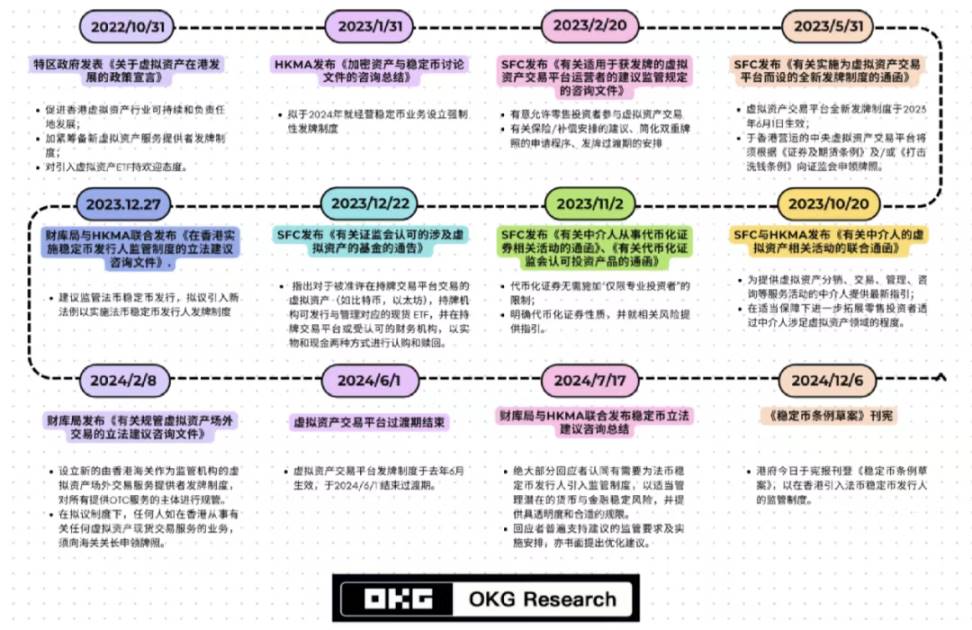
Hong Kong-based HashKey exemplifies this trend. As one of the first CEXs licensed by Hong Kong’s Securities and Futures Commission (SFC), HashKey has successfully attracted attention from traditional finance through compliant operations. It offers custody and trading services tailored to institutional clients and partners with Standard Chartered Bank to provide fiat on/off-ramps, attracting over 20 institutional clients and managing assets exceeding $500 million. Additionally, HashKey plans to launch a regulated stablecoin, further bridging traditional finance and the crypto economy. This “compliance-first” strategy not only secures HashKey’s position in the Asian market but also offers valuable lessons for other CEXs.
Such compliance breakthroughs not only reinforce CEX dominance in current markets but also unlock incremental capital inflows, channeling mainstream financial flows into Web3. Morgan Stanley forecasts that by 2030, traditional institutions’ allocation to crypto assets could reach $1.5 trillion. If CEXs can act as gatekeepers to this trend, their moats will become unshakable. In contrast, DEXs’ decentralized nature makes it difficult to meet regulatory demands in the near term—giving CEXs a valuable time window to consolidate their position.
ManQin Law Firm Summary
The Hyperliquid crisis acts as a mirror, reflecting the real-world challenges DEXs face in pursuing their decentralized ideals. At the same time, CEXs are far from invulnerable—centralized platforms carry their own significant risks. The DEX vs. CEX debate isn’t simply about one replacing the other, but rather a long-term tug-of-war between convenience and autonomy, centralization and decentralization, compliance and openness.
In the short term, CEXs will remain dominant in the crypto market due to mature infrastructure, deep liquidity, and regulatory advantages—especially for beginners and institutional investors. Yet the rise of DEXs is irreversible. Their core values of transparency and freedom, coupled with continuous technological innovation, are progressively lowering usage barriers and drawing more users toward a trustless future. Hyperliquid’s success or failure is merely a microcosm of the broader DEX landscape—the DEX journey continues, steadily fulfilling its potential to surpass CEXs.
For CEXs, the future moat may lie in deeper compliance breakthroughs. Practices like HashKey’s show that through close collaboration with regulators, CEXs can become vital bridges between traditional finance and the crypto world, capturing trillions in institutional capital.
In the end, DEXs and CEXs may not head toward a winner-takes-all outcome. Instead, they’ll likely coexist and evolve within their respective niches, jointly driving the maturation of the crypto industry. We are fortunate to be living in Web3’s “1990s”—an era full of transformation and possibility. Let us witness together the great evolution of technology and ideology unfolding before our eyes.
Join TechFlow official community to stay tuned
Telegram:https://t.me/TechFlowDaily
X (Twitter):https://x.com/TechFlowPost
X (Twitter) EN:https://x.com/BlockFlow_News