








The On-Chain Financial Revolution: How Crypto Wallets and PayFi Are Reshaping Personal Finance
TechFlow Selected TechFlow Selected
The On-Chain Financial Revolution: How Crypto Wallets and PayFi Are Reshaping Personal Finance
In the future, everyone will be able to seamlessly manage their funds through cryptocurrency wallets, achieving wealth growth and financial freedom.
 Navigating Web3 tides with focused insights
Authored by: Foresight Ventures & Bitget Wallet
Introduction: From Traditional Finance to the Onchain Revolution
Globally, financial systems remain costly and inefficient—especially cross-border payments, which involve high fees and long processing times. According to World Bank data, 1.7 billion people still lack access to banking services, excluded from traditional finance. Blockchain technology is now transforming this landscape.
The core strengths of blockchain lie in decentralization and transparency. By eliminating reliance on intermediaries, it significantly reduces transaction costs and enhances capital liquidity. In this context, crypto wallets have evolved from simple digital asset storage tools into feature-rich financial platforms. PayFi exemplifies this innovation, bridging the gap between onchain yields and real-world payments, making personal fund management more efficient and intelligent.
The Rise of Onchain Finance
Limits of Traditional Finance
-
Cross-border payments are expensive and inefficient: Fees for international transfers can reach 6%-8%. According to the World Bank, the global average cost of cross-border remittances stands at 6.65%, with rates as high as 8.2% in Africa. Settlement times span several days, eroding low-income workers’ remittances through excessive costs.
-
Inadequate financial service coverage: Globally, 1.7 billion people remain unbanked. In countries with the weakest financial infrastructure—such as Morocco and Vietnam—nearly 70% of the population lack bank accounts, depriving them of basic savings, lending, and investment services, limiting wealth accumulation. In nations like Mexico and Colombia, individuals struggle to open USD-denominated accounts, missing out on dollar-based high-quality investment opportunities.
-
Idle funds: Under traditional finance, idle capital is a major issue. Savings accounts in developed countries often yield less than 1% annual interest, while in developing economies, poor financial access leads to low capital efficiency.
Blockchain technology offers new solutions to these problems. The combination of decentralized finance (DeFi) and stablecoins enables individuals to bypass traditional banks, directly access USD-denominated assets, and earn returns far exceeding those available in traditional finance via onchain instruments.
The Emergence of Onchain Finance and Global Trends
The high cost and inefficiency of traditional finance have driven growing interest in onchain finance, particularly regarding cross-border payments and financial inclusion. According to Bitget Wallet’s Onchain Report, 46% of users choose crypto payments primarily for their speed—with demand especially strong in emerging markets such as Africa (52%) and Southeast Asia (51%). Traditional banking penetration is low in these regions, and settlement processes are slow. Crypto payments offer faster, more convenient capital flows.
Beyond speed, 41% of users value the global accessibility of crypto payments, enabling smoother cross-border remittances and international transactions. Seamless cross-border experiences are the top reason users in North America and Oceania prefer crypto payments. Different age groups also exhibit varying preferences: Millennials and Gen Z prioritize borderless transaction convenience more than Gen X. Users in the Middle East (38%) and Western Europe (35%) are more likely to choose crypto payments for privacy reasons.
Characteristics of Onchain Finance
Through decentralized architecture, Web3 transforms financial services from closed legacy systems into open ecosystems, making transactions more transparent and efficient while returning greater control to users. The global blockchain market is projected to grow rapidly over the next decade.
-
Lower transaction costs: Blockchain's decentralized structure removes intermediaries, enabling direct peer-to-peer transactions that dramatically reduce costs. Average transfer fees on blockchain-based networks are around $2. With scaling solutions like Ethereum Layer 2, these costs drop even further—making them ideal for microtransactions. OECD research indicates blockchain can reduce transaction costs by 60–80% compared to traditional payment methods.
-
Higher capital utilization: Smart contracts enhance automation and efficiency in onchain finance. By executing predefined rules automatically, smart contracts manage yield distribution or trading without manual intervention. When users deposit assets into DeFi protocols, smart contracts generate returns and distribute them directly to wallets, where they can be instantly used for payments.
-
Transparency and security: Transparency is a core feature of blockchain. As a public ledger, every transaction recorded on-chain is publicly verifiable, resolving trust issues inherent in traditional finance. In conventional banks or payment systems, fund flows and fee structures are often opaque. Blockchain allows users to track asset movements in real time. On decentralized financial platforms, all yield distributions are visible on-chain—users maintain asset security without relying on intermediaries.
How PayFi Transforms Personal Finance
PayFi represents a new innovation in payment finance, connecting onchain yields and transfers with real-world spending. It introduces dynamic capital utilization, allowing users’ assets to continuously generate returns while being immediately spendable for daily expenses. This innovation increases capital efficiency and maximizes asset utility. For those unable to access USD-denominated assets, PayFi offers exposure via stablecoins and higher-yield onchain investment tools, enabling greater wealth growth.
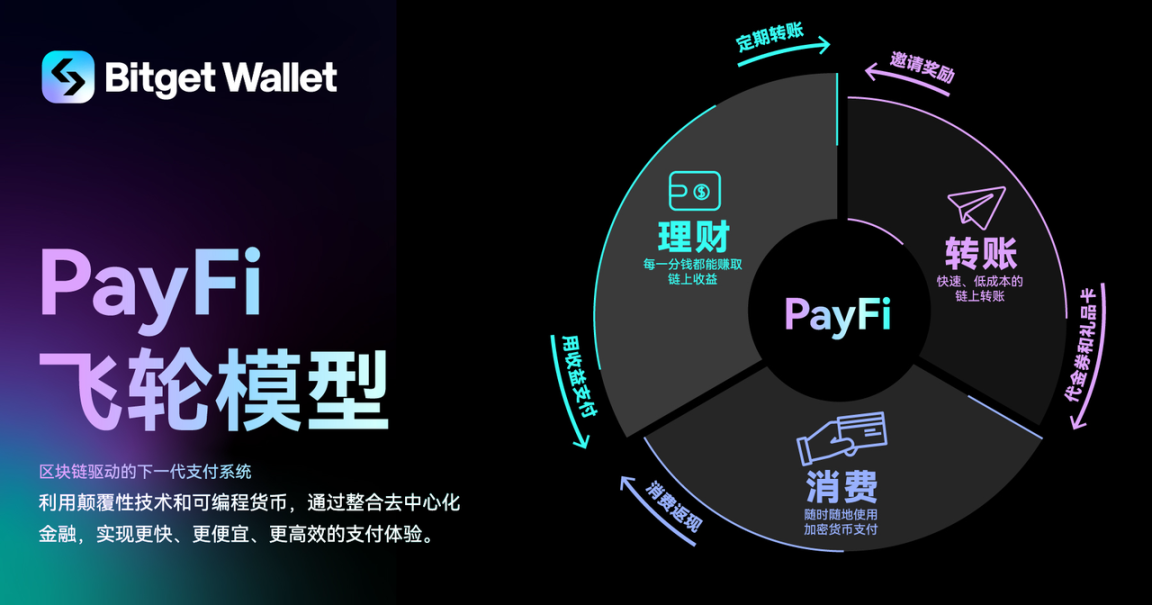
PayFi acts as a bridge, seamlessly linking onchain earnings with real-world payment scenarios. Through smart contracts and onchain finance, user-generated yields flow directly into payment accounts and can be automatically spent. Users can avoid volatility using stablecoins or pursue higher returns through DeFi participation. PayFi enables dynamic capital use through the following mechanisms:
-
Yield generation: User assets generate steady annualized returns via onchain protocols (e.g., DeFi). These returns come from staking or providing liquidity, typically yielding 5%-8% APY.
-
Real-time payments: Onchain earnings can be settled instantly for daily spending, without manual withdrawals or additional steps. This direct integration enables efficient capital flow, offering immediate settlement and low costs—avoiding delays and complexity common in traditional finance.
-
Financial inclusivity: Stablecoins (e.g., USDT, USDC) provide a convenient, secure, and low-volatility medium of exchange. They allow users to bypass banking systems and local currency restrictions, directly accessing USD-denominated assets and leveraging high-yield onchain tools for wealth growth.
The Rise of Crypto Wallets
The Evolution of Crypto Wallets: From Storage and Trading Tools to Full Financial Empowerment Platforms
If blockchain is the new engine of finance, then crypto wallets are its essential control panel. From early digital asset storage tools to today’s multifunctional financial platforms, the evolution of crypto wallets mirrors the rise of onchain finance. Early wallets like MetaMask helped users store and manage crypto assets, but modern wallets such as Bitget Wallet have transformed into comprehensive financial hubs—offering not just storage, but integrated trading, yield generation, and payment services, greatly enhancing user experience.
The Critical Role of Crypto Wallets in PayFi
As core infrastructure for onchain finance, crypto wallets provide secure asset storage while supporting yield generation, payments, and transfers.
-
Onchain wealth assistant: Wallets are more than storage—they empower users’ onchain financial activities. Integrated with leading DeFi protocols like AAVE and Compound, users can stake or deposit assets (e.g., USDT, ETH) to earn higher yields than centralized platforms offer. Smart contracts automate yield management and distribution. Returns are generated onchain, allowing users to “earn while holding” with minimal effort. In countries where opening USD accounts is difficult, crypto wallets become vital gateways to stablecoins—helping users hedge against local currency depreciation and access high-return dollar-denominated opportunities.
-
Global payment capability: Payments are a core wallet function, directly improving everyday spending experiences. Wallets support multi-currency payments (e.g., BTC, USDT), enable instant settlement, and eliminate traditional payment delays. Leveraging blockchain, transaction fees are reduced by 50%-80% compared to conventional channels—ideal for frequent cross-border payers.
-
Simplified transfer experience: Blockchain’s decentralized nature streamlines traditional money transfers. Users conduct peer-to-peer fund transfers without intermediaries. Cross-border remittances are fast and transparent, with fees far below traditional banking costs. Users retain full control over their funds, ensuring freedom and security.
Outlook: How Crypto Wallets and PayFi Will Reshape Personal Finance
Crypto wallets have transcended basic storage to become central platforms for personal finance. PayFi redefines capital management by integrating onchain yields with real-world spending, enabling efficient capital circulation and maximum utilization.
Deep Integration of Financial Ecosystems
Crypto wallets now do more than store assets—they integrate yield generation and payment functions, allowing users to earn in DeFi and seamlessly spend in real life.
Blockchain Innovation Driving Change
Blockchain’s transparency resolves trust deficits in traditional finance, while smart contracts automate and streamline payment and yield management. Meanwhile, energy-efficient technologies are making blockchain networks increasingly sustainable.
Widespread Adoption of Crypto Wallets and PayFi
Usage of crypto wallets and PayFi is expanding beyond tech enthusiasts to mainstream users. More individuals and businesses are joining this ecosystem, collectively driving financial innovation and development.
In the future, everyone will be able to seamlessly manage finances via crypto wallets, achieving wealth growth and financial freedom. This is not merely a technological breakthrough—it represents an entirely new financial lifestyle, paving the way toward a more open and equitable global financial system.
Join TechFlow official community to stay tuned
Telegram:https://t.me/TechFlowDaily
X (Twitter):https://x.com/TechFlowPost
X (Twitter) EN:https://x.com/BlockFlow_News
 Foresight Ventures






