Korean Crypto KOL Marketing Chaos: From "Speculative Streamers" to an Intolerant Social Culture
TechFlow Selected TechFlow Selected
Korean Crypto KOL Marketing Chaos: From "Speculative Streamers" to an Intolerant Social Culture
South Korean society is filled with an unhealthy "crab mentality," a mindset that leads the society to attack those who are "imperfect."
 Navigating Web3 tides with focused insights
Author: MORBID-19
Translation: TechFlow
If you've ever tried marketing in Korea, one thing becomes immediately clear: options are scarce. You're essentially limited to a handful of agencies, all sharing the same pool of KOLs (Key Opinion Leaders).
In Korea, marketing generally boils down to a few standard methods:
-
Invite KOLs to post on their Telegram channels
-
Host events
-
Distribute press releases
-
Localize content
-
Write research-driven articles
Of these, the easiest and fastest method is undoubtedly the first—getting KOLs to mention something on Telegram.
Unlike elsewhere in the world, Korean KOLs primarily operate on Telegram. Although Twitter has gained traction recently, Telegram remains dominant.
However, Telegram has poor content discoverability—it lacks the feed-based structure of platforms like Twitter or YouTube. And while Twitter's user base is growing, it still pales in comparison to YouTube’s scale.
This is precisely why YouTube remains the "holy grail" of content marketing in Korea.
The problem? Many premium crypto brands hesitate to collaborate with so-called "crypto YouTube channels," as they often lack quality or are run by mere "degen streamers."
Imagine Berachain or Story Protocol partnering with a streamer who bursts into tears mid-broadcast after losing six figures—and then proceeds to destroy his room.
Because of this reputation, most trading-focused streamers monetize via referral links, while people like me rely on sponsorships for income.
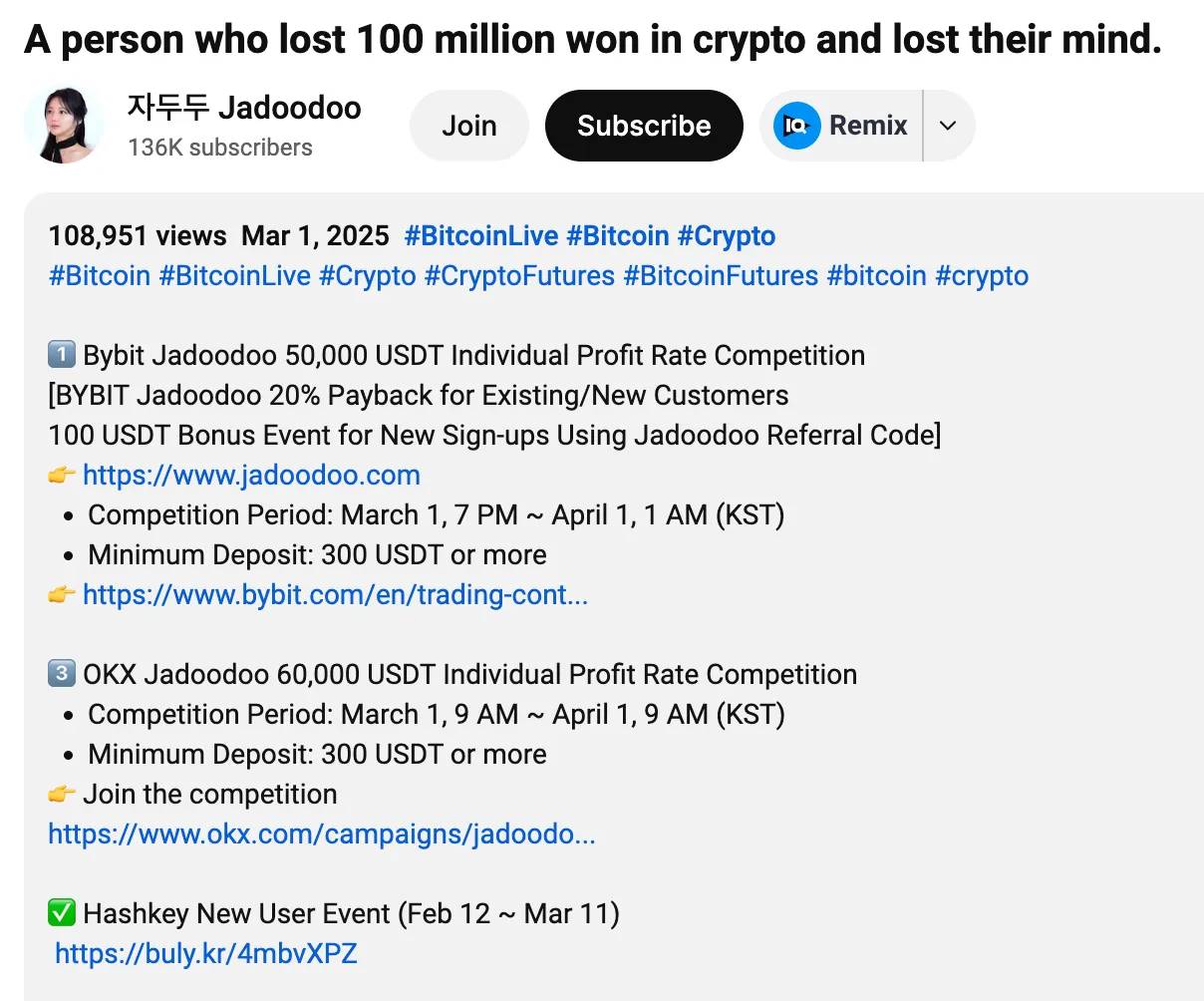
As described above, these streamers focus on creating viral short videos to drive traffic, ultimately converting attention into referral revenue. This model was once exclusive to crypto-native creators but is now spreading to more mainstream Korean content creators.
The best example is Inbeom. I only learned about him a few weeks ago. He’s clearly one of Korea’s most influential streamers.

I’m writing this article because of him.
According to Namuwiki, Inbeom was one of AfreecaTV’s (a major Korean live-streaming platform) original “Four Legendary Streamers,” alongside Yoo Shin, Sonic, and Chulgoo. His dominance in the MMORPG *Lineage* is unparalleled—other Lineage streamers openly acknowledge him as the top player.
Now, he’s launched his own meme coin, BugsCoin ($BGSC), which has successfully listed on Gate.io, Bitget, MEXC, and HashKey Global.
You might assume he’s just cashing out and scamming his audience. But the reality is quite different—he actually implemented a buyback mechanism for his token.
Where does the buyback funding come from? His referral income. He’s earned millions through referral links.
Even more surprising: the token has actual utility. $BGSC incentivizes users to engage in simulated trading on Anttalk, a website built specifically for the $BGSC community. The concept proved so successful that Gate Ventures invested $8.5 million into Anttalk.
To me, this is absolutely mind-blowing.
Naturally, this sparked significant controversy
Inbeom has always been a polarizing figure, so his foray into crypto hasn’t been universally welcomed. Many YouTubers, media outlets, and Telegram KOLs have readily accused him of “harvesting韭菜” (scamming followers), labeling everything he does as a fraud.
At first, I was skeptical too. But when I stepped back and viewed this phenomenon from a broader perspective, I realized Inbeom is actually doing something the industry has long aimed for—one of the core visions supported by venture capital: tokenized creator economies.
This reminded me of the 2021 crypto boom, when everyone talked about “empowering creators” through tokens. Even Silicon Valley VCs heavily promoted this idea. Remember Rally?
As a16z crypto once emphasized, one of crypto’s central tenets is enabling creators and communities to build internet-native economies. Tokens are the foundational component of these ecosystems. Though tainted by the ICO craze years ago, tokens remain the most basic unit of value in crypto economies. They represent a breakthrough in open network design by incentivizing participants—users, developers, investors, and service providers alike.
This is exactly what Inbeom is doing: converting attention into tokens and attaching real-world utility to them. It’s the very thing we all dreamed of just a few years ago—and now it’s slowly becoming a reality.
Yes, Inbeom is controversial, so caution is warranted when discussing him. But I don’t want to be someone who casually criticizes innovators—especially when their actions haven’t crossed any clear ethical lines.
Where is the “line”?
We punish people in court only when malicious intent is clearly proven. In other words, the legal principle is “innocent until proven guilty.”
For instance, if Inbeom launched his token solely to defraud buyers, that would unquestionably be a scam. But if he attempted to build a legitimate business model and failed, it wouldn’t qualify as fraud.
Of course, most scams try to mimic the latter. Without subpoenas or court rulings, proving wrongdoing is difficult—so many people, especially in crypto, tend toward “guilty until proven innocent.”
Years of scandals in Korea’s crypto space have bred deep-seated resentment and skepticism, making it nearly impossible to operate a legitimate entity in the country.
How bad is it? Many don’t even want to be associated with Korea at all.
More extreme: I’ve heard of Korean founders disguising themselves as foreign teams simply because the “Korea” label carries such negative connotations.
When you think about it, that’s absurd.
Inbeom’s controversy and the public reaction remind me of the recent scandal surrounding the death of Korean actress Kim Sae-ron.
For those unfamiliar with Korean entertainment, here’s a summary:
-
In May 2022, Kim Sae-ron was arrested for drunk driving after crashing into a guardrail, tree, and transformer box in Seoul’s Gangnam district, causing a blackout that affected 57 businesses for nearly five hours. Her blood alcohol level was 0.2%—well above the 0.08% threshold for license revocation. She was fined 20 million KRW (~$13,850 USD). The incident devastated her acting career, which began when she was just nine years old.
-
In February 2025, Kim Sae-ron died by suicide. Her family subsequently filed a lawsuit against actor Kim Soo-hyun, alleging his involvement in her death. Controversy centers around the timeline of their relationship and claims that she faced financial pressure from debts totaling approximately $530,000 USD.
-
The scandal revealed how her career unraveled after the DUI: scenes were cut from projects, upcoming roles canceled, and she was forced into obscurity due to public backlash. Reports say she worked at a café amid financial hardship and ultimately took her life at age 24, unable to bear the pressure.
-
Korean society and media relentlessly attacked her after the DUI. Every moment—from being photographed with friends, complaining about lack of work, to smiling during an indie film shoot—became fodder for criticism. This harsh treatment reflects Korea’s zero-tolerance culture toward public figures, where intense scrutiny leaves little room for redemption. Experts trace this phenomenon to Korea’s deep-rooted “relative deprivation culture.”

A once-promising child star became public enemy number one.
My point is this: Korean society is unforgiving. Once you make a mistake, you’re finished. There’s no second chance.
But that’s neither fair nor humane.
Why should people pay with their lives for mistakes? Why has error become so unacceptable?
The Roots of Collective Fear
Recently, I had the chance to interview some elders around my parents’ age. You can find the conversation in my YouTube video.
Currently, I’m planning to interview another woman of the same generation about her experience with cryptocurrency. When I reached out, her response deeply moved me:
“I’m afraid of saying the wrong thing.”
What?
How could someone possibly say the “wrong” thing about their own subjective experience?
Why do I hear this same reaction from so many people?
Why are Koreans so obsessed with being “correct”?
Could it stem from childhood corporal punishment for “mistakes”?
Turn on the subtitles, and you’ll see stories of students being physically punished in school.
In Korea, whether it’s hairstyle, grades, uniform fit, or even emotional expression—any deviation from the norm invites punishment, verbal or physical. At least, that’s my personal experience.
Most troubling is how early this violence begins. I remember my first day back in a Korean classroom at age seven, returning from Toronto.
Teachers imposed strict discipline on children—who were practically infants—with no understanding of their actions, obeying only out of fear.
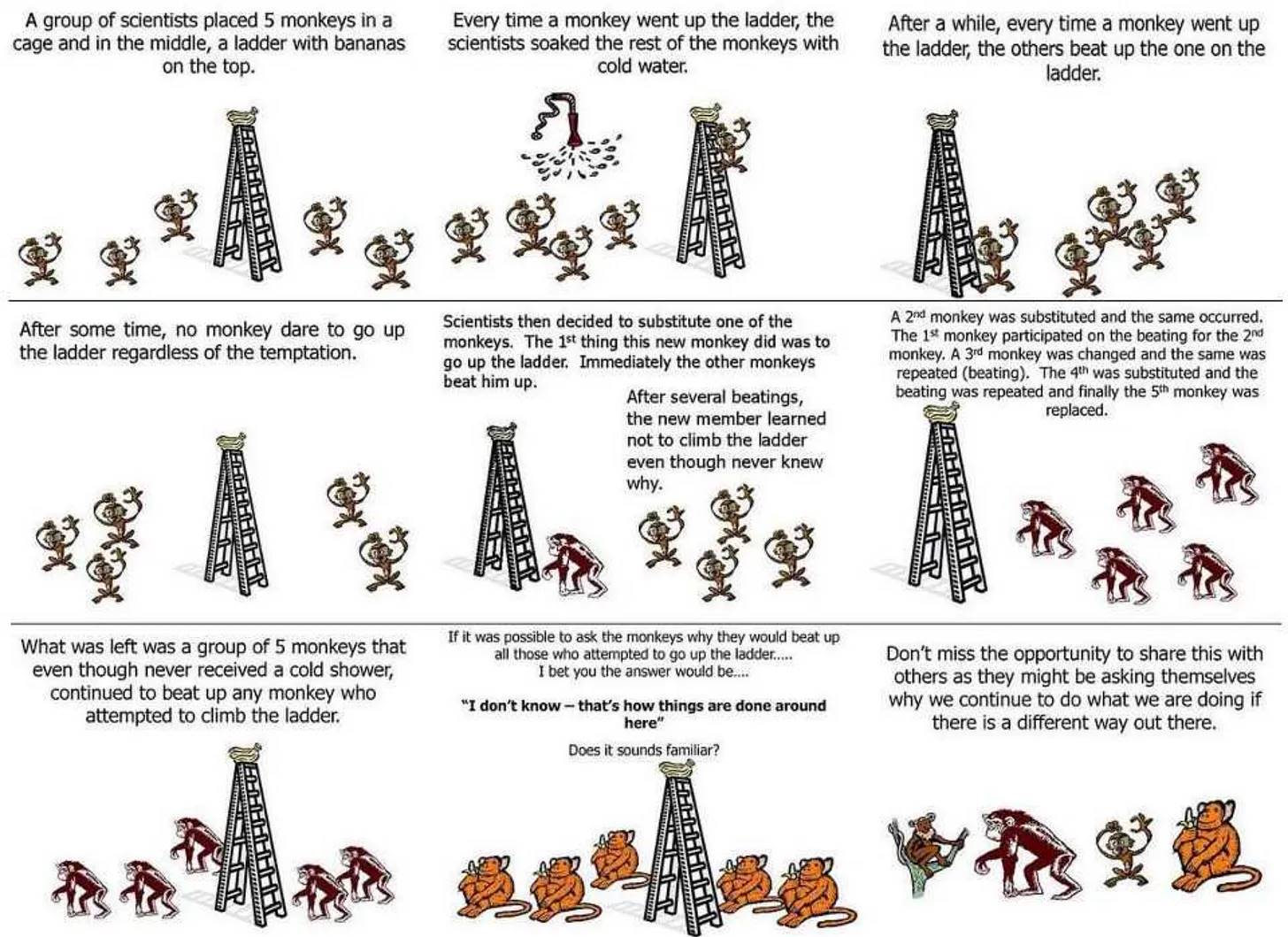
Korea’s zero-tolerance attitude toward mistakes not only makes redemption impossible for public figures but also traps ordinary people in collective fear. The roots of this culture deserve reflection—and changing it may require rethinking the meaning of “error” and “forgiveness.”
In Korea, collective punishment is widely used to “correct” children’s behavior. If one student acts foolishly or breaks rules, the entire class is punished. This violent method quickly “tames” children into obedient “monkeys.”
Once, I had bruising on my inner thigh simply because a classmate failed to complete a so-called “pre-class ritual.” As a result, every student was severely beaten. After that, we all hoped that student wouldn’t let us down again. We expected everyone to be “perfect.” We expected the whole class to follow the rules.
We were demanded to be perfect.
Where does this culture come from?
These teachers didn’t suddenly decide one day to start hitting kids, right?
Where Does Responsibility Lie?
If you trace every absurdity in Korean society, you’ll find it tied to “hierarchy.” First, Korea’s hierarchical structure dictates how you communicate. And communication styles, in turn, shape your thinking patterns to some extent.
According to Linguistic Relativity, language influences worldview and cognition. A stronger version, Linguistic Determinism, argues that language determines and shapes cultural perception of the world.
A famous example is color perception in Russian vs. English. Russian distinguishes light blue (“голубой”, goluboy) and dark blue (“синий”, siniy) with separate words, while English uses “blue” for both. Studies show Russian speakers identify the difference faster than English speakers, suggesting language affects cognitive processing of color—a strong case for linguistic relativity.
In Korea, you must use honorifics when speaking to superiors. Even referring to someone socially “above” you requires honorific speech.
This linguistic rule creates a strange hierarchy dynamic. For example, being just one year older can make you “superior” in every way. The younger person must obey the “older brother” (형).
Add Confucian hierarchies, military culture, and psychological conditioning, and “obeying authority” (while being perfect) ceases to be a choice—it becomes an obligation.
That’s why children and students never resist teachers who inflict physical pain. They don’t even know “resistance” is an option. The language system has already erased the concept of “rebellion” from their minds.
Through this article, I aim to portray certain macro-level phenomena in Korean society. Of course, this doesn’t mean the entire society operates this way—every society has rebels and artists.
But my point is, due to these factors, Korean society is saturated with an unhealthy “crab mentality.”
This mindset drives attacks against anyone deemed “imperfect.”
So should Inbeom be “canceled” because of this?
More broadly, should we boycott a founder or project simply because it’s Korean?
Criticism is necessary, and responding to criticism is everyone’s responsibility. Yet, the current state of Korea’s crypto scene feels toxic. I’ve never seen founders from the U.S., Malaysia, or Singapore pretend to be from another country on Twitter. Have you?
Join TechFlow official community to stay tuned
Telegram:https://t.me/TechFlowDaily
X (Twitter):https://x.com/TechFlowPost
X (Twitter) EN:https://x.com/BlockFlow_News