Bitcoin doesn't have intrinsic value?
TechFlow Selected TechFlow Selected
Bitcoin doesn't have intrinsic value?
Bitcoin's valuation method is the same as that of stocks, gold, and real estate. None of them have any intrinsic value.
 Navigating Web3 tides with focused insights
Article author: Trey Sellers
Article translation: Block unicorn
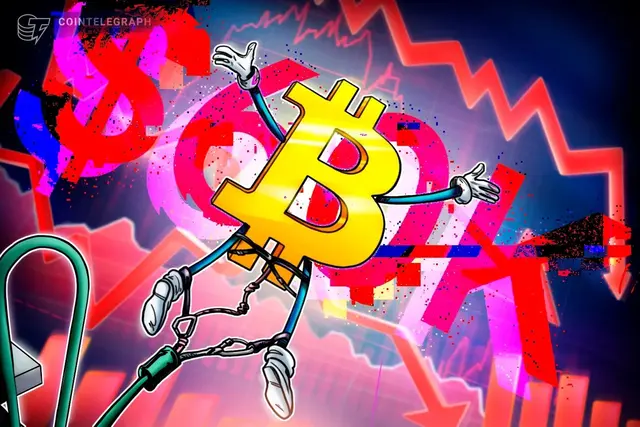
Bitcoin’s price has dropped roughly 25% from its all-time high of $109,000, and so the critics are back in full force—right on schedule.
A common criticism leveled against Bitcoin is that it lacks intrinsic value. This argument is often confidently, even smugly, declared by Bitcoin skeptics as if simply stating it as fact settles the debate about Bitcoin’s significance once and for all. They assert that without intrinsic value, Bitcoin must inherently be worthless—the discussion ends here!
Here's a recent example:

The "Dividend Bros" criticizing Bitcoin irritate me more than others because they'd rather take less money just to have income.
In any case, I find it interesting to directly respond to this critique, since it's also quite common within our community.
What Is Intrinsic Value?
According to the Oxford Dictionary, the word "intrinsic" means "belonging naturally; essential." So the term "intrinsic value" must refer to value being somehow an inherent attribute of an asset.
Investopedia defines intrinsic value as:
"...a measure of an asset’s value determined through objective calculations or complex financial models, rather than using the asset’s current market trading price."
This definition suggests there is some inherent value in a given asset that can be objectively discovered in reality—like determining water consists of two parts hydrogen and one part oxygen. Similarly, an asset’s value is treated as a property of the asset itself—something definitional.
Yet a quick look further into Investopedia’s page reveals a contradiction immediately.
There is no single standardized method for calculating the intrinsic value of a company or stock. Financial analysts attempt to determine intrinsic value by measuring an asset’s actual financial performance through fundamental and technical analysis.
Wait? You said intrinsic value was "objective," but now you're saying there’s "no standardized method"? What gives?
One common method used by financial analysts and investors to determine an asset’s intrinsic value is discounted cash flow (DCF) analysis. Essentially, they try to calculate what an asset is worth today based on the cash flows it generates—and what they could buy it for in the market. While this method may be "valid" at a point in time, it's hard to argue that any number you calculate is truly inherent to the asset being evaluated.
The mere fact that markets trade the asset at different prices is prima facie evidence that DCF valuations aren’t intrinsic to the asset itself.
Some assets generate no cash flows, yet still receive market valuations. Why?
Gold enthusiasts often loudly proclaim that Bitcoin lacks intrinsic value. True, gold is used in goods like jewelry and electronics, whereas Bitcoin has no real-world utility. Yet gold’s market value far exceeds the sum of its industrial uses.
Real estate investors believe their preferred asset has intrinsic value because it provides shelter or space for conducting business. People need a roof over their heads, right? Still, an identical house or building sells for much more in New York City or near a beach than in a dead-end neighborhood in Oklahoma.
When people say "intrinsic value," what they really mean is "utility." Stocks tied to cash-flow-generating businesses offer the utility of income streams. Gold offers the utility of wearing precious jewelry and enabling computation. Real estate provides housing or vacation spots for people.
While these are true, each person views an asset’s value and utility differently.
All Value Is Subjective
It’s all in our minds.
The value of any object, service, or asset does not exist within the thing itself, but is instead determined by individual perception, preferences, and needs. As Austrian economist Carl Menger put it:
"Value is the importance that a person attaches to the objects of their life and well-being. Thus, value does not exist outside of human consciousness."
Value does not reside in the physical or tangible attributes of an item—such as the gold in a coin or the silicon in a computer—but in the mind of the individual. For example, to someone dying of thirst in a desert, a glass of water might be priceless, while to someone with easy access to clean water, it’s nearly worthless. The intrinsic properties of the water haven’t changed, but its value shifts dramatically based on context and personal need. Likewise, a painting by a famous artist might sell for millions at auction—not because of the cost of canvas or paint—but because people perceive it as beautiful, historically significant, or a status symbol.
This doesn’t mean value is arbitrary or meaningless. It is deeply tied to human psychology, culture, and economic behavior. Individuals assign importance based on utility, scarcity, cultural meaning, or emotional attachment. This perceived importance translates into our valuation of specific things. Of course, this applies equally to gold, real estate, and stocks—as much as to the desire for water when thirsty or art in a gallery.
When we consider the value of financial assets, everything is speculative. Whether stocks, real estate, gold, or Bitcoin, the value of each asset primarily stems from individuals’ beliefs about its future worth. These beliefs or perceptions about future value shape present demand, collectively pushing prices up or down. Since expectations shift due to economic news, political events, technological innovations, and human psychology, the value of financial assets is inherently speculative and fluid.
Valuing Bitcoin
By now, it should be clear:
-
Nothing has "intrinsic value," at least not in the way most people use the term.
-
Individuals subjectively evaluate assets differently, based on their own perspectives and priorities.
-
Buying, selling, or holding any asset is a speculation about the future.
Bitcoin is valued in the same way as stocks, gold, and real estate. None of them possess anything intrinsic. People examine these assets and decide how much they’re worth to them based on the utility and returns they expect from owning them.
Over time, the utility offered by Bitcoin has become increasingly apparent to more people, leading them to buy and hold it.
-
An absolutely fixed supply, immune to alteration by governments, banks, or other powerful interests, means your share cannot be devalued.
-
Its digital nature and self-clearing capability mean it can be transferred anywhere in the world at relatively low cost and at any time.
-
Holding Bitcoin’s private keys means you have unilateral, sovereign control over your wealth, with no counterparty risk.
Shifting the discussion from intrinsic value to utility immediately exposes the hypocrisy of critics who rely on this argument against Bitcoin. If value depends on the utility an asset provides to individuals—and that utility is evident—then logically, Bitcoin holds considerable value for many people. This is precisely what we observe in the market.
Bitcoin is now valued in the trillions of dollars on the market, and as more people personally discover its utility, that value will grow by trillions more.
As people’s understanding of what Bitcoin is, how it works, and the utility it offers continues to evolve, Bitcoin’s price will keep fluctuating. But there is nothing “intrinsic” about this process—for Bitcoin or any other asset.
Join TechFlow official community to stay tuned
Telegram:https://t.me/TechFlowDaily
X (Twitter):https://x.com/TechFlowPost
X (Twitter) EN:https://x.com/BlockFlow_News