








It's 2025, and an increasing number of projects are choosing to slow down their token emission schedules.
TechFlow Selected TechFlow Selected
It's 2025, and an increasing number of projects are choosing to slow down their token emission schedules.
Early and rapid token release may leave the project team without sufficient token reserves to incentivize the community or attract new users in later development stages.
 Navigating Web3 tides with focused insights
Author: Tokenomist_ai
Translation: TechFlow
As a core component of crypto project design, tokenomics continues to evolve alongside market trends and investor sentiment.
As we enter 2025, an interesting trend has emerged—projects are no longer rushing to unlock tokens, gradually slowing down their token emission schedules.
Tokenomist (formerly TokenUnlocks) recently published a comparative analysis of token release patterns in Q1 2024 versus Q1 2025, examining projects launched at different points in the crypto market cycle. The study reveals a clear shift in token design—from aggressive, short-term releases toward more sustainable, long-term models.
Token Unlock Trends in Q1 2024
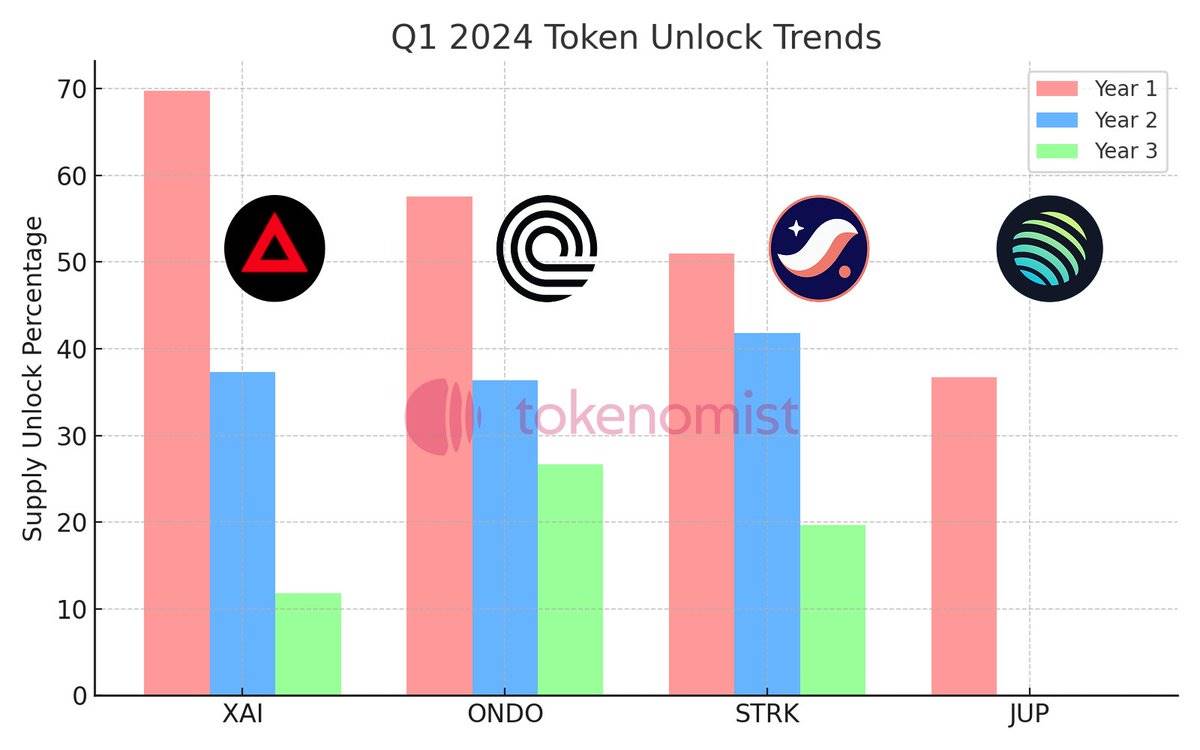
Looking back at Q1 2024, most projects adopted relatively aggressive unlock models, characterized by:
-
High initial unlocks: Many projects unlocked 50%-70% of their tokens within the first 6 to 12 months.
-
Short lock-up periods: Token lock-ups in 2024 were generally short, typically lasting 3 to 4 years, leading to rapid expansion of market supply.
-
High inflationary pressure: A large volume of tokens unlocking in a short timeframe placed significant inflationary pressure on the market, where demand struggled to keep pace, weighing on prices.
-
Liquidity risks: Rapid unlocking of large token holdings by early investors and teams increased the risk of concentrated sell-offs, causing price volatility and weakening market confidence.
In hindsight, this aggressive approach was largely driven by intense competition following the 2024 market recovery. During that period, the crypto market was in a relative upswing, and projects sought to capitalize on market momentum while meeting early investors’ liquidity needs.
High initial unlocks also provided projects with greater capital for technical development and marketing efforts. Additionally, during a recovering market, investors tend to be more active traders. High initial unlocks often came with stronger market liquidity, making such models more attractive to investors who could participate earlier and potentially realize gains faster.
However, the drawbacks of this aggressive model were equally evident. It intensified selling pressure, significantly increasing price volatility and raising the risk of price declines and cascading effects. Moreover, releasing too many tokens too early could leave projects without sufficient token reserves for future community incentives or user acquisition.
Token Unlock Trends in Q1 2025
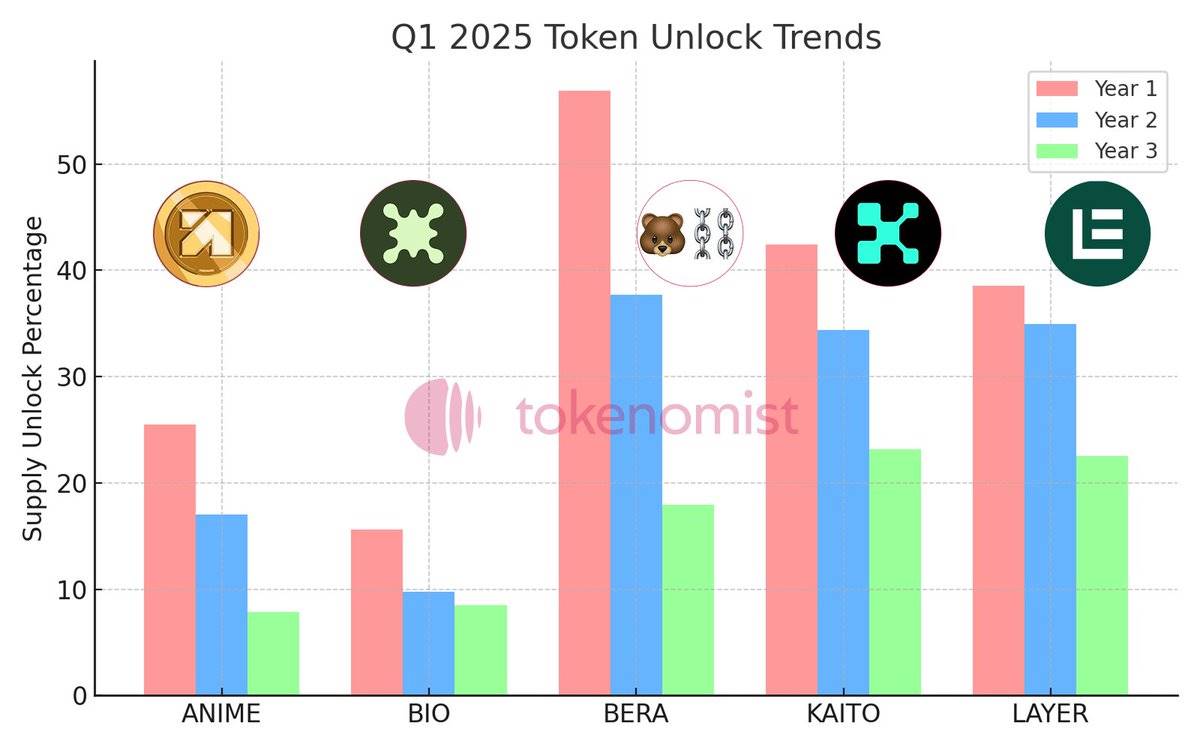
By Q1 2025, token release patterns have shifted noticeably, showing the following characteristics:
-
Slower release schedules: Projects in 2025 generally adopt longer unlock cycles, gradually releasing tokens over 5 years or more.
-
Extended lock-up periods: Lock-up periods for teams and early investors have significantly lengthened, with many projects extending them to 4–6 years.
-
Lower initial unlock ratios: Some projects unlock less than 30% of their tokens in the first year.
Theoretically, this model helps alleviate market selling pressure, reduces price volatility, and fosters more stable market sentiment. Longer lock-up periods better align the interests of project teams and investors, reinforcing commitment to long-term growth and reducing concerns about teams cashing out prematurely.
The shift from rapid releases in 2024 to more measured, sustainable approaches in 2025 reflects a growing emphasis on liquidity management across the market.
Yet, does slowing emissions truly lead to better price stability and stronger investor trust? That remains to be seen.
Join TechFlow official community to stay tuned
Telegram:https://t.me/TechFlowDaily
X (Twitter):https://x.com/TechFlowPost
X (Twitter) EN:https://x.com/BlockFlow_News
 @Tokenomist_ai






