Fake collaboration, real traffic diversion? Doubts remain over whether Sony's Soneium can successfully launch mini-games on the LINE platform
TechFlow Selected TechFlow Selected
Fake collaboration, real traffic diversion? Doubts remain over whether Sony's Soneium can successfully launch mini-games on the LINE platform
Although Soneium has not yet established a formal official partnership with LINE, its strategic intention to leverage LINE's 200 million active users and expand its ecosystem influence through social gaming is evident.
 Navigating Web3 tides with focused insights
Author: Zen, PANews
In the Web3 space, rumors about collaborations between major corporations always attract significant attention. Recently, the rumored "powerhouse alliance" between Soneium and LINE in their Web3 ventures became a hot topic across the industry. However, this much-hyped partnership has now been officially clarified as a misunderstanding by Dapp Portal, LINE's Web3 platform.
Meanwhile, LINE’s Mini Dapp ecosystem is gaining momentum, while Soneium actively expands its presence in blockchain gaming. Whether their development paths will truly converge remains a point of interest.
"Strong Collaboration" Between Entertainment and Social Giants in Web3 Was Misreported
"Recent reports claimed that LY Corporation and another company announced a 'partnership' regarding LINE-based Web3 services. However, LY Corporation has confirmed with LINE NEXT that no such transaction or relationship exists," stated Dapp Portal—the Web3 service platform operated by LINE—on social media on March 14, debunking widespread speculation about an alleged collaboration between Sony's blockchain Soneium and LINE in the Web3 sector. LY Corporation is the parent company of LINE, while LINE NEXT is LINE’s subsidiary dedicated to Web3 initiatives and the operator of Dapp Portal.
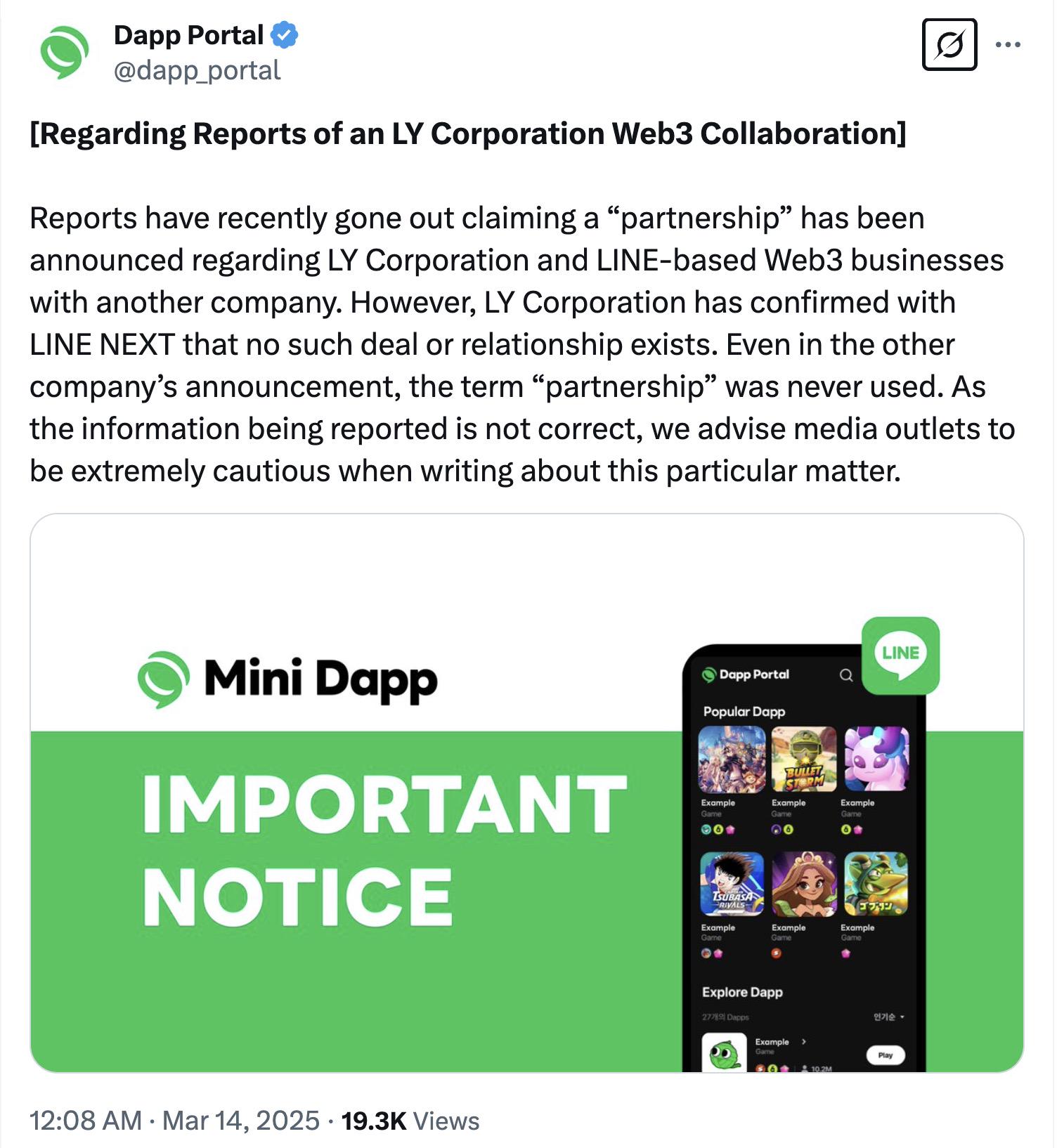
Dapp Portal further noted that even the other party’s announcement never used the term “partnership.” Indeed, Soneium’s official post on X simply read: “LINE Mini-App coming soon to Soneium,” indicating plans to bring LINE mini-apps on-chain and connect with LINE’s 200 million active users, benefiting developers supported by Soneium.
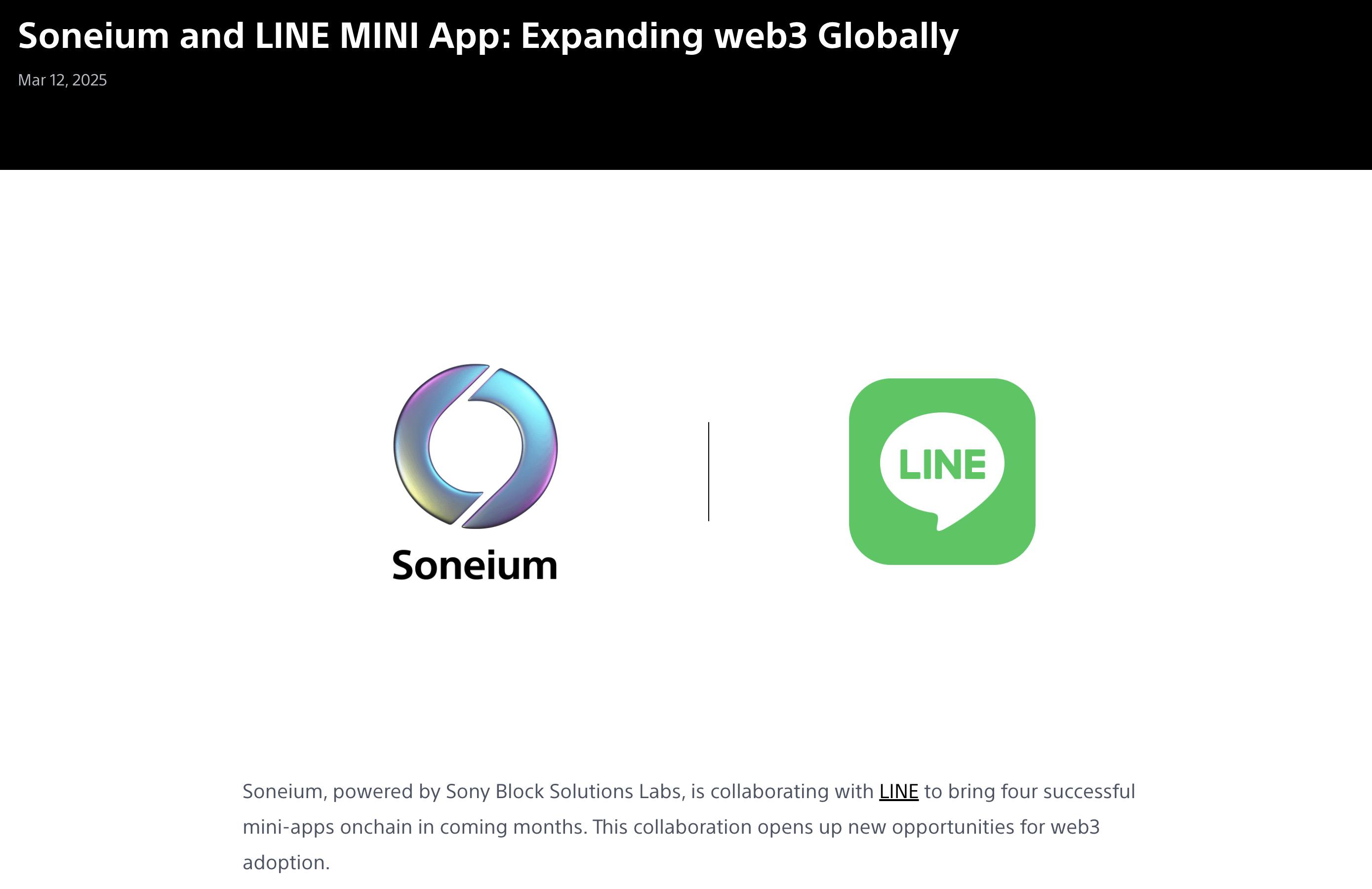
However, Soneium’s official blog stated it was “collaborating with LINE to bring four successful mini-apps on-chain within the coming months,” accompanied by imagery resembling typical partnership announcements—leading many media outlets and KOLs to mistakenly believe a formal partnership had been established. Additionally, Sota Watanabe, founder and CEO of Astar Network, which is closely associated with Soneium, commented when reposting media coverage on X: “This collaboration opens a new chapter for Web3, bringing us one step closer to mainstream adoption!”
Peter (aka @pet3rpan_), partner at 1kx, expressed dissatisfaction after Dapp Portal’s clarification. Quoting Soneium’s statement, he said: “This claim is entirely false and seriously distorts the facts—there is no official partnership between the two parties.” He also questioned Sota Watanabe for an explanation.
Although Soneium has not yet formed an official partnership with LINE, its strategic intent to leverage LINE’s 200 million active users and expand its ecosystem through social gaming is evident. Especially given LINE’s own notable achievements in Web3, the platform represents a critical testing ground for Soneium’s “Go Mainstream with Soneium” initiative.
LINE Platform Effect Takes Hold: Mini Dapp Reaches 35 Million Users in First Month
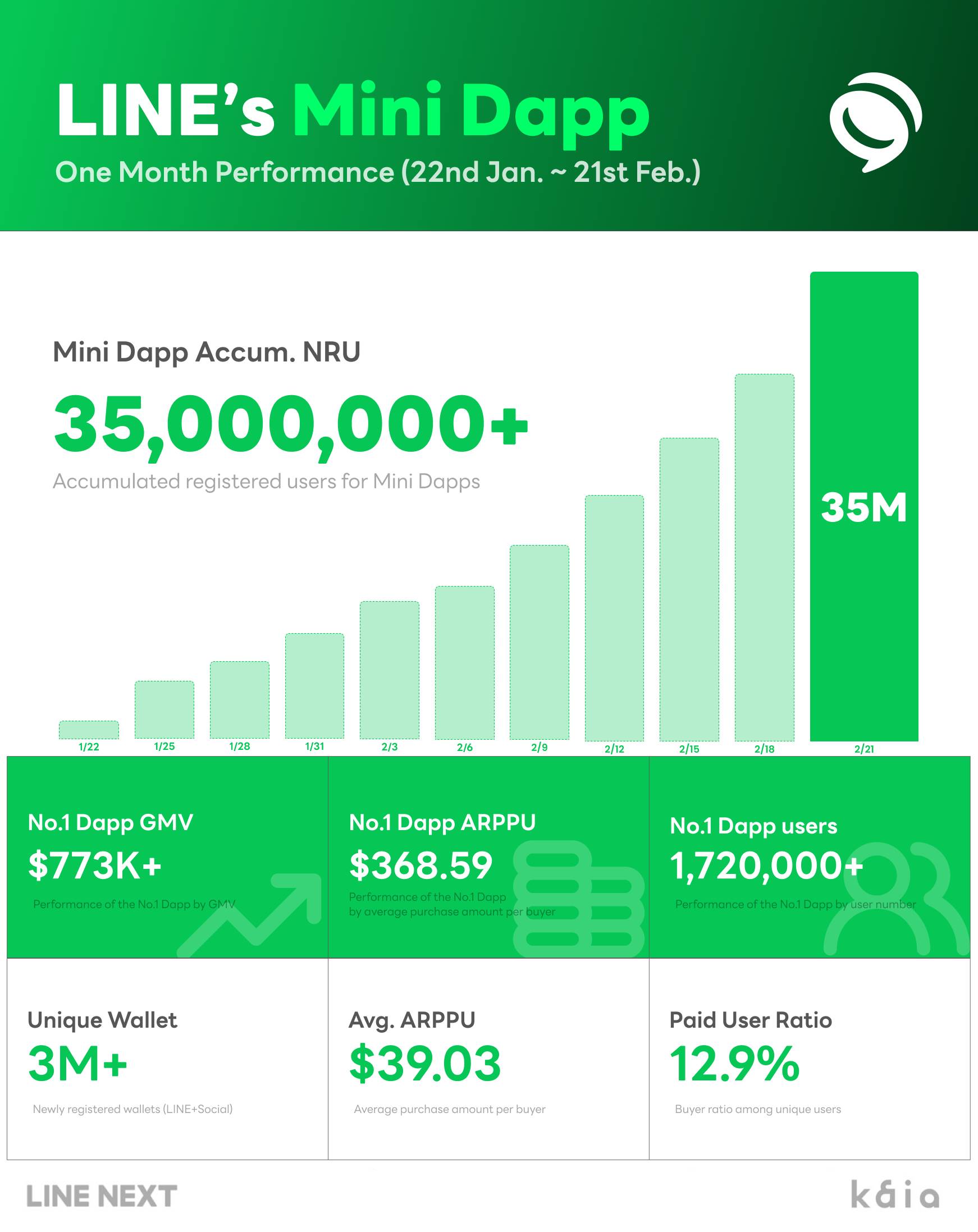
In January this year, LINE officially launched Mini Dapp, claiming over 35 million cumulative users within just one month—primarily from high-penetration regions including Japan, Taiwan, Thailand, and South Korea. Powered exclusively by the Kaia blockchain, users can access Mini Dapps directly via the Dapp Portal official account on LINE Messenger without downloading separate applications.
According to Dapp Portal, as of March 14, LINE has released 52 Mini Dapps, with games like Elderglade, Frog Defense, Web3.0 PvZ, and Slime Miner each surpassing two million players. At the official launch of Mini Dapp, LINE NEXT announced a goal to release over 1,000 projects by 2025.
Leveraging LINE’s platform effect, more than 3 million new wallets were created within the Dapp Portal ecosystem in the first month, driving a 1,168% increase in total Kaia network wallet count. Monthly transaction volume across the Kaia ecosystem rose 124% to 27.38 million. On-chain active user numbers surged 252% to 8.1 million. LINE reported an average buyer spending of approximately $39, with around 32% of Dapp purchases made via non-crypto payment methods such as credit cards—indicating that some users unfamiliar with digital assets are actively entering the Web3 space.
Notably, when HTML5 games were trending on social platforms, LINE previously introduced a game service called "LINE QUICK GAME," allowing instant gameplay within the LINE app without installing additional apps. Launched in September 2018 with 24 easy-to-play titles, it attracted over 3 million users in one month. Two years later, due to poor market response, LINE discontinued the service, citing the need to reallocate management resources to other areas of its gaming business.
Now, with advancements in blockchain technology and Telegram’s recent demonstration of success, LINE appears to have found a renewed direction with Dapp Portal—and off to a strong start. This makes LINE an attractive target for Soneium aiming to scale its ecosystem.
Soneium TVL Surpasses $80 Million, Plans Rollout of Four Mini Games on LINE
Over the past month, despite a downturn in the crypto market and shrinking total market capitalization, several projects continue to stand out—notably LINE’s Dapp Portal and Sony-backed Soneium, both experiencing rapid growth.
According to DefiLlama data, as of March 15, Soneium—a Layer 2 scaling solution—has reached a TVL of $83.08 million, exceeding the $80 million mark. Its TVL grew 90% in February alone, with nearly 24% growth in the past week. Additionally, decentralized exchanges within the Soneium ecosystem have seen explosive growth—an important indicator of ecological vitality. Sonex, Kyo Finance, and Velodrome recorded TVL increases of 1,504%, 429%, and 125% respectively over the past month.
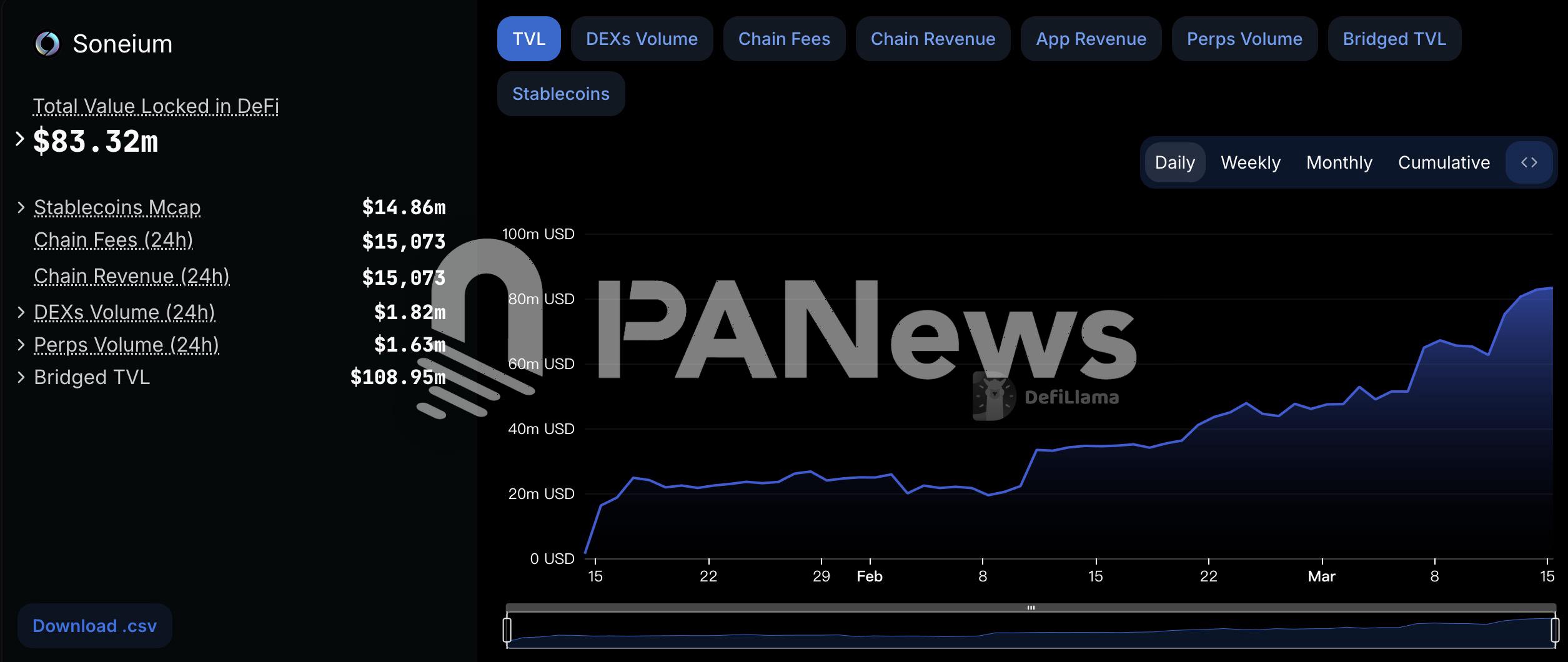
Given Sony’s influence in traditional electronic entertainment, Soneium’s progress may not be entirely surprising. However, if Soneium aims to achieve its “Go Mainstream with Soneium” vision, entertainment-focused initiatives—particularly gaming—may prove the most effective path. According to Soneium, four mini-games set to integrate with Soneium and launch on LINE are scheduled for release in the coming months:
- Sleepagotchi LITE: A simplified version of the Sleepagotchi Sleep Rewards app designed for iOS and Android, developed by the creators of the NFT gaming protocol Aavegotchi. The game offers a relaxed, casual experience without requiring sleep data tracking. Since launch, Sleepagotchi LITE has gained massive traction on Telegram, attracting 1 million users in just one month and ranking among the top-earning apps.
- Farm Frens: A farm-themed game developed by Amihan Entertainment, a studio that has raised $10.5 million to date. Previously known for the tower defense game Everseed, its team includes veterans who have worked on major titles such as League of Legends, Hearthstone, and MapleStory. Farm Frens first went viral on Telegram in 2024, briefly becoming the platform’s number-one game.
- Moonveil – Puffy Match: A mini-game developed by Moonveil.gg, a Web3 gaming platform focused on AI-driven infrastructure. Featuring fast-paced gameplay, it aims to boost community engagement and incentivize participation through reward mechanisms.
- Pocket Mob: A social strategy role-playing game developed by Sonzai Labs. It features highly interactive gameplay where players compete for respect points in mafia-style battles and have opportunities to win NFT rewards.
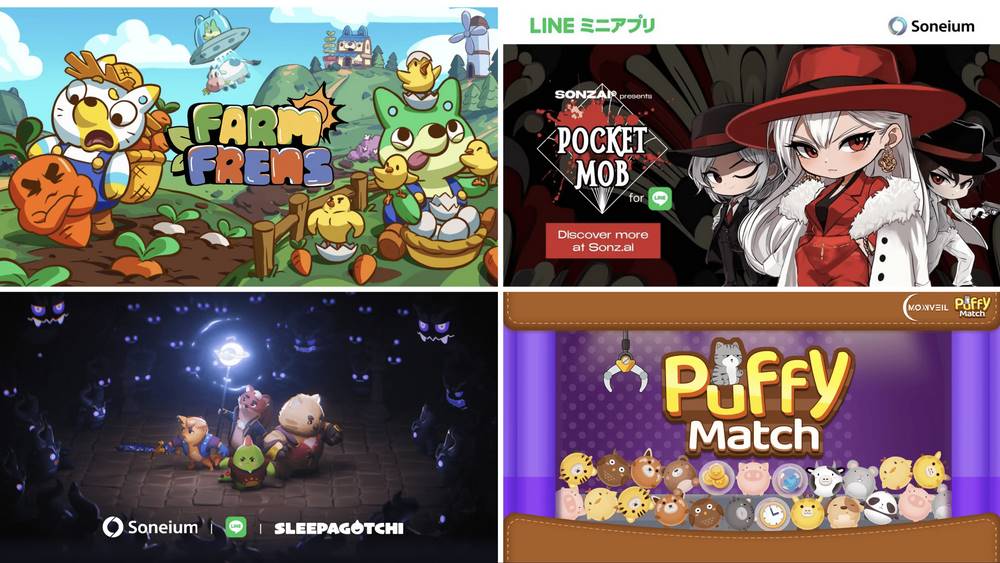
However, these four games have not yet launched, and questions remain about whether they will actually materialize.
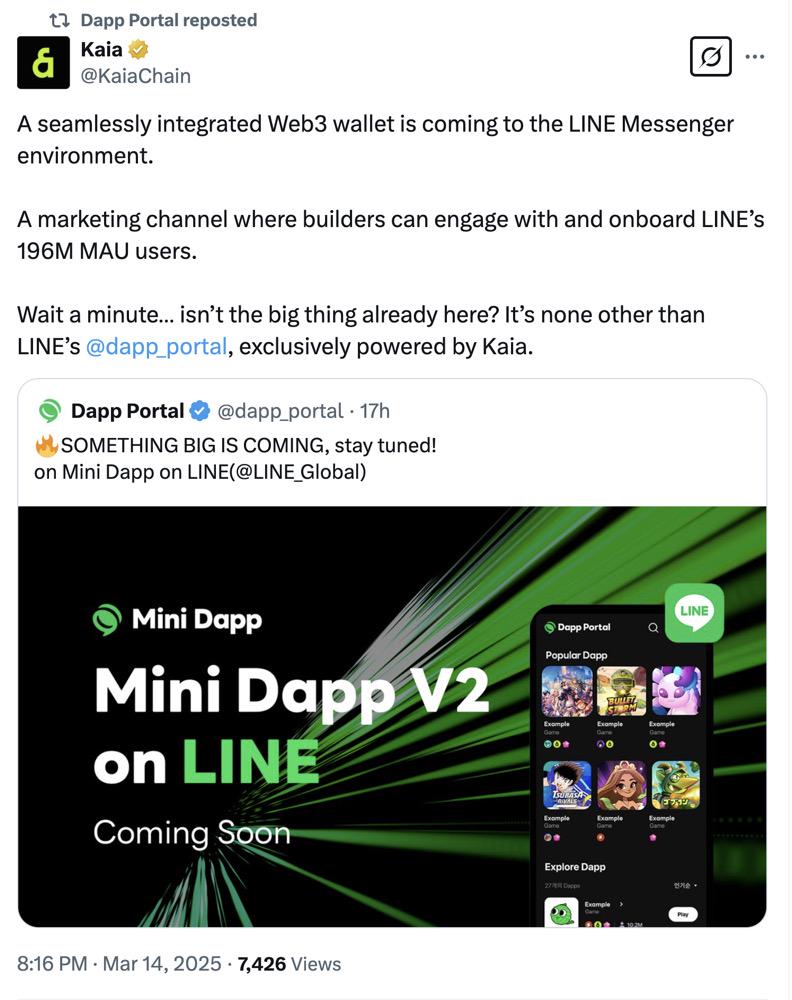
In January, Telegram announced TON as the sole blockchain infrastructure for its Mini App ecosystem, discontinuing support for all other blockchains. While LINE hasn’t explicitly prohibited blockchains other than Kaia, Kaia—developed jointly by LINE and Kakao as a Layer 1 chain—could eventually form a "platform barrier" to prioritize internal ecosystem development.
In fact, signals from LINE and Kaia suggest this possibility. On March 14, Dapp Portal announced a major update revealing the upcoming V2 version of Mini Dapp. Kaia quoted the post saying: “Haven’t big things already happened? It’s LINE’s Dapp Portal, powered exclusively by Kaia.” Dapp Portal then reposted Kaia’s comment.
Join TechFlow official community to stay tuned
Telegram:https://t.me/TechFlowDaily
X (Twitter):https://x.com/TechFlowPost
X (Twitter) EN:https://x.com/BlockFlow_News
 PANews