Koreans trade not only cryptocurrencies but also U.S. stocks
TechFlow Selected TechFlow Selected
Koreans trade not only cryptocurrencies but also U.S. stocks
As the infrastructure and platforms supporting the U.S. stock market continue to improve, new user groups may enter the market.
 Navigating Web3 tides with focused insights
Author: Heechang : : FP, Four Pillars Co-Founder
Translation: TechFlow
TL;DR
Korean investors currently hold over $100 billion in U.S. stocks. Trading volume has grown 17x since January 2020.
The current infrastructure for Korean investors trading U.S. equities faces significant limitations—high fees, lengthy settlement times, and slow withdrawal processes—creating an opportunity for tokenized or mirrored on-chain stocks.
In issuance, Backed Finance dominates 90% of the market share, but its total value locked (TVL) is only $18 million, minuscule compared to traditional stock markets. Additionally, @injective recently released a whitepaper on iAssets, proposing a new model for on-chain stocks.
Each tokenized/mirrored project launches on different networks—from L2s to L1s, even private L1s. Interoperability protocols like @LayerZero_Core and chain abstraction protocols such as @UseUniversalX will play critical roles.
As infrastructure and platforms supporting on-chain U.S. equity markets continue improving, more Korean traders are likely to enter—a massive opportunity.
A Boring Domestic Market Drives Koreans Into Crypto
What investment opportunities exist in South Korea? Stocks, real estate, bonds, funds, cryptocurrencies, etc.
-
Real estate prices are extremely high.
-
Bond/fund returns are barely higher than savings accounts.
-
The Korean stock index KOSPI is mockingly called "Box-PI" because it has shown almost no growth over the past 20 years. There's a popular saying: “국장 탈출은 지능 순” (“Only intelligent people exit the domestic market”). Imagine if ETH’s price hadn’t moved in 20 years—would anyone still invest?
*The candlestick chart shows NASDAQ, with the magenta line at the bottom representing KOSPI since 2008.
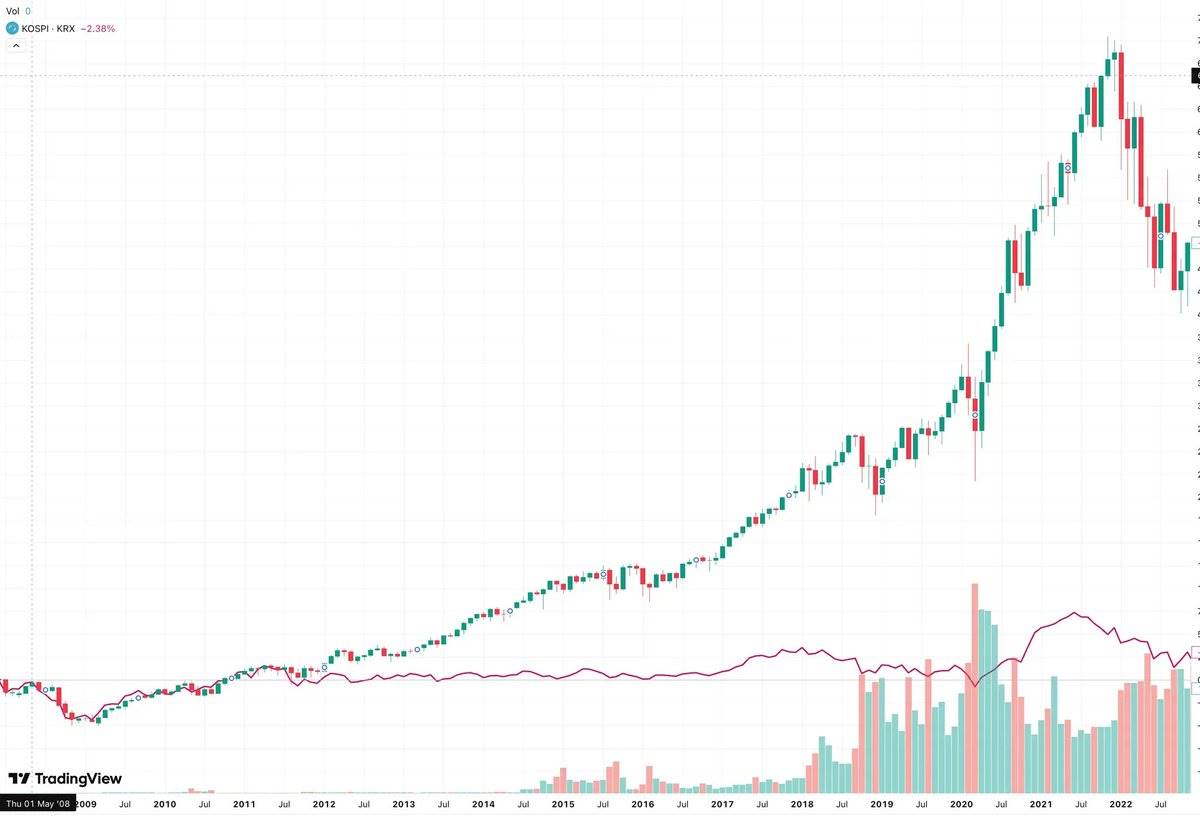
Source: NAS100 and KOPSI
This explains where traders are going. South Korea has 50 million people—0.6% of the global population—but accounts for 10% of global crypto trading volume. Every token-issuing project treats Korea as a key market.
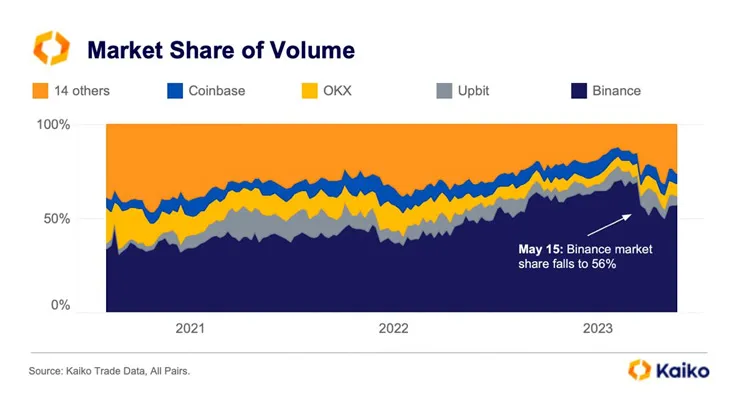
Source: Anthony Pompliano – The State of Crypto Market Structure
In the absence of viable alternatives, crypto trading volume and interest won't disappear. However, anything related to cryptocurrency, blockchain, tokens, or altcoins is widely perceived as fraudulent.
Case 1: @terra_money left the worst impression. People believed stablecoins were scams. (Sentiment is shifting recently—we (@FourPillarsFP @FourPillarsKR) are working hard to accelerate this change.)
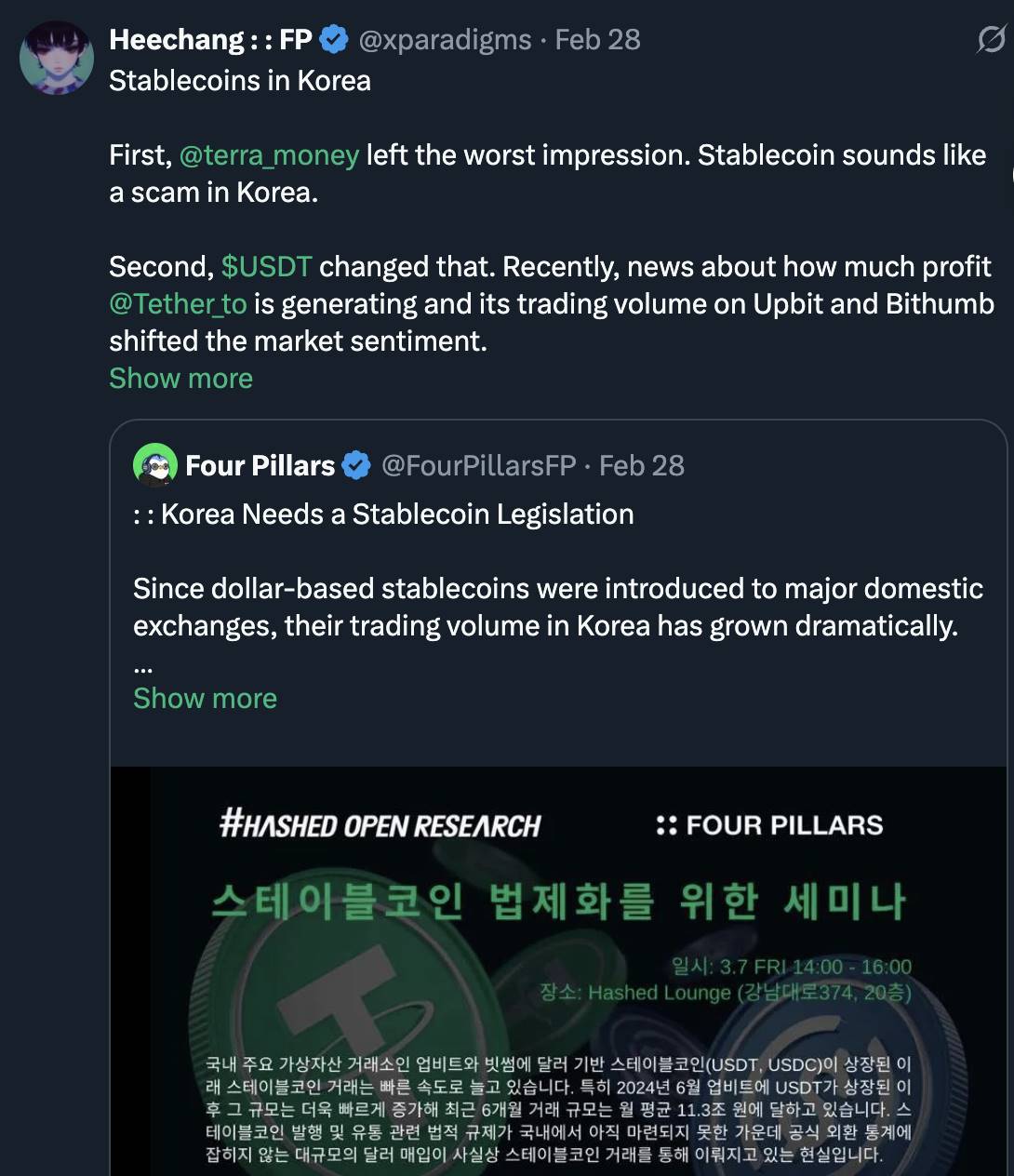
Case 2: Token projects dominated by Koreans from 2021–2022 were outright scams. Retail investors saw large institutions issuing tokens, but these projects delivered empty promises—worse than meme coins.
People Who Don’t (or Can’t) Trade Crypto Turn to U.S. Stocks
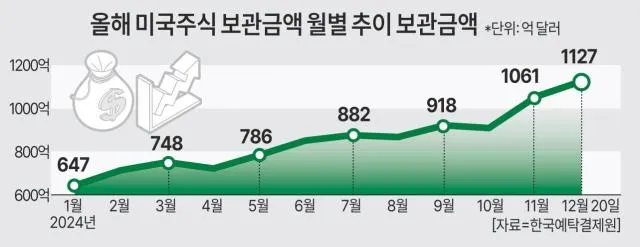
According to data from the Korea Securities Depository, by the end of 2023, Korean investors held $111.181 billion worth of U.S. equities—an increase of 70% from the beginning of the year ($67.609 billion). This milestone marks the first time holdings surpassed $100 billion. Koreans own $12.9 billion in Tesla stock, $12.9 billion in NVIDIA stock, $4.8 billion in Apple stock, among others.
The market shows strong momentum, with trading volume (total buy/sell) up 20% year-on-year and trading value nearly doubling. Compared to 5 trillion KRW in January 2020, volume has increased 18-fold in five years. Notably, 96% of foreign stock outflows are driven by domestic retail investors.
What Can Crypto Projects Do? Issuance & Interoperability
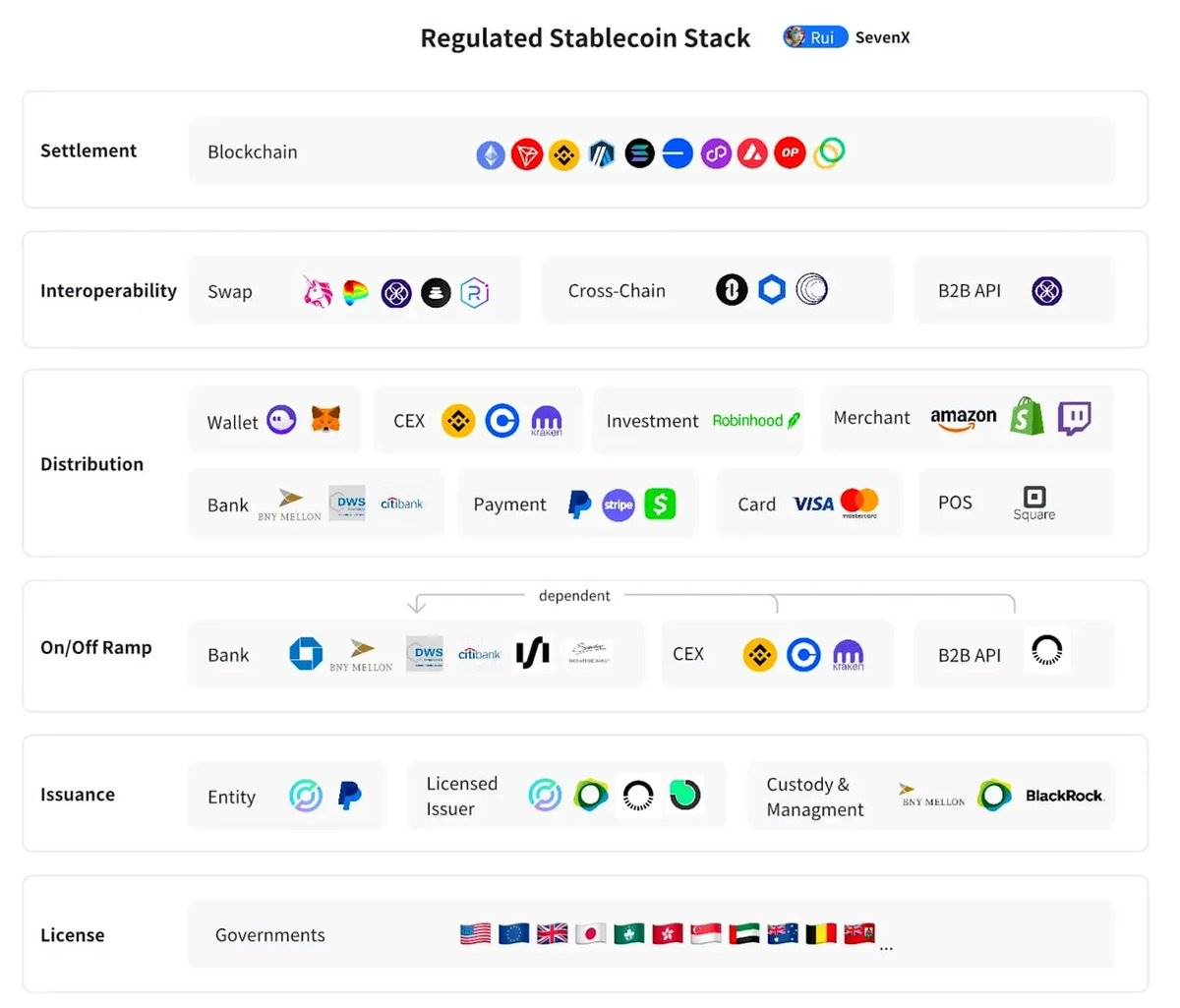
Drawing from Rui’s “Regulated Stablecoin Stack” framework proposed at sevenx and applying it to tokenized/mirrored stocks, two core infrastructure components are crucial:
-
Issuance of stocks
-
Interoperability of these assets
3.1 Issuance—Currently Small Market, Watch Injective’s iAsset Proposal
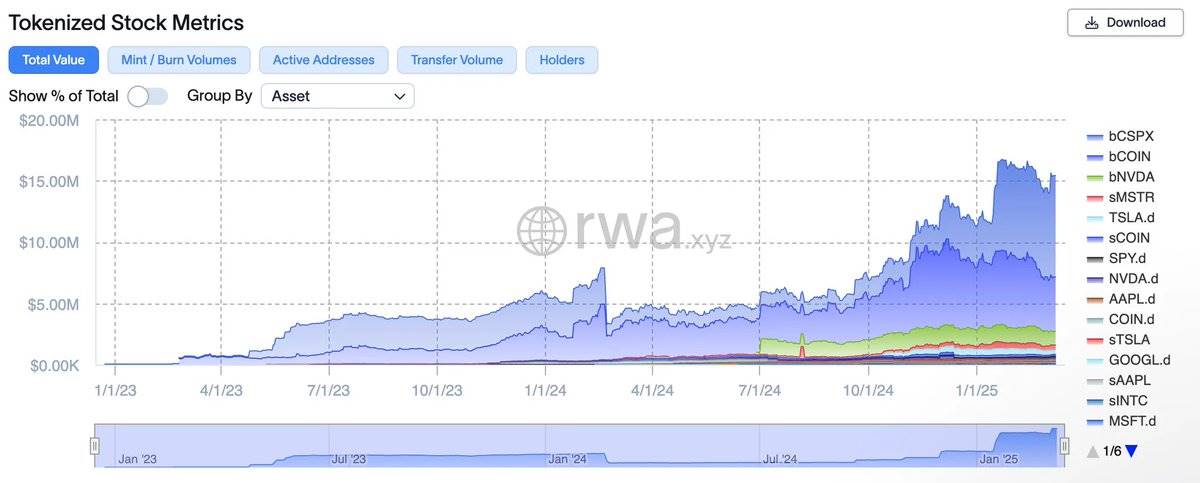
The size of the tokenized stock market in crypto remains tiny. Peak total value of tokenized stocks was around $17 million—negligible compared to traditional markets where individual companies often have valuations in the tens or hundreds of billions. Moreover, most value is concentrated in a few assets, such as Backed Finance’s bCSPX (tokenized S&P 500) and bCOIN (tokenized Coinbase).
Source: RWA.xyz | Stocks
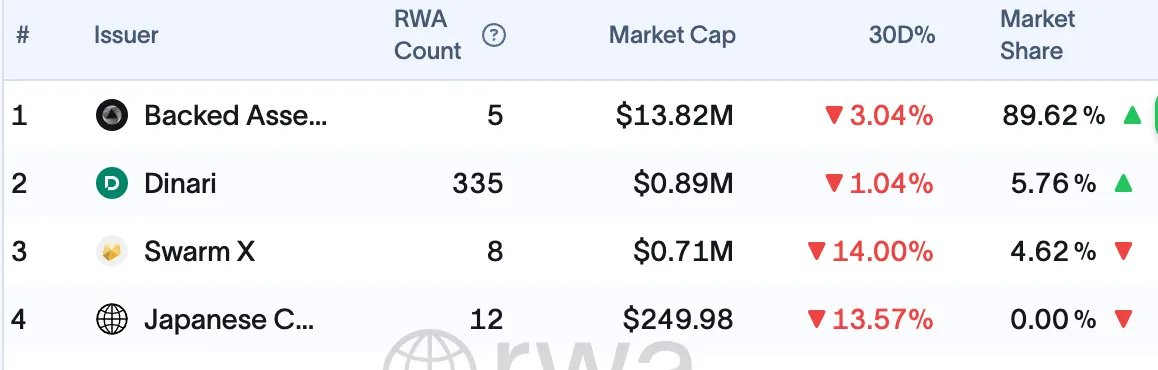
Few issuers of tokenized stocks exist:
-
Backed Finance leads with a $13.82 million market cap, accounting for ~90% of market share.
-
Other players like Dinari ($890k), Swarm X ($710k), and Japanese firms ($249.98) are significantly smaller.
Total market cap across all issuers is under $16 million.
Source: RWA.xyz | Stocks
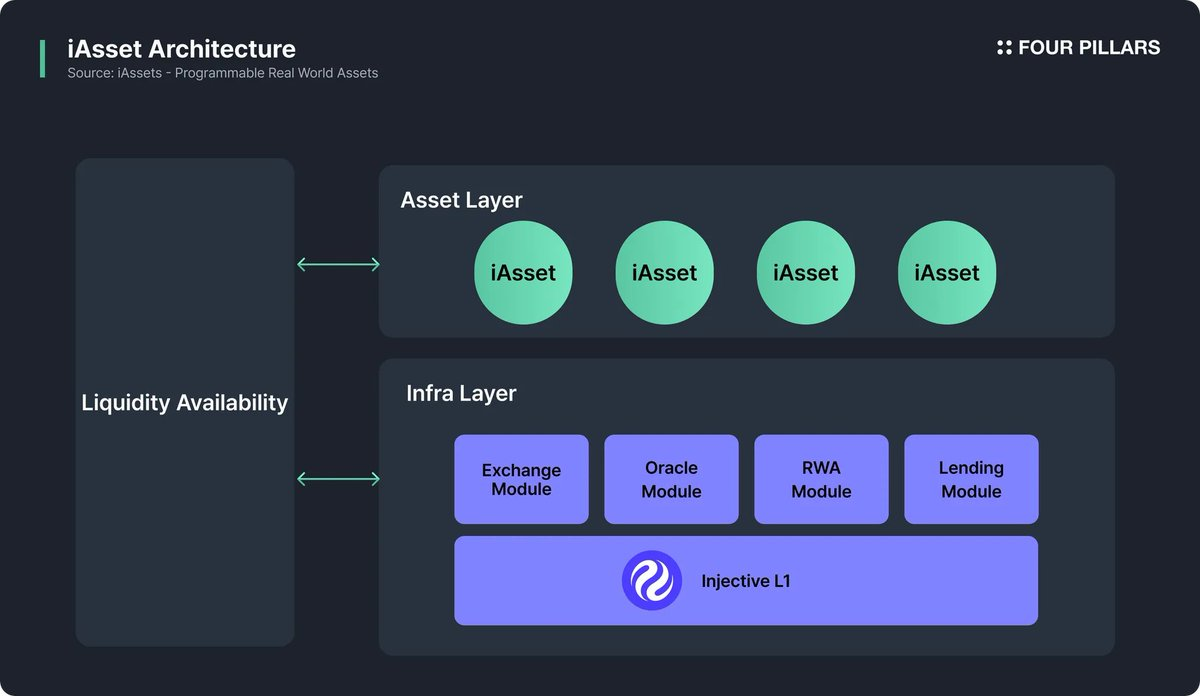
Recently, Injective introduced iAssets, aiming to overcome inefficiencies in both traditional finance and early DeFi models. Unlike traditional tokenized assets, iAssets do not require pre-funded collateral—they operate instead as composable on-chain instruments.
What does “no pre-funding” mean? In traditional finance, tokenization of real-world assets typically requires users to lock up substantial collateral. For example, minting synthetic stocks would require depositing and locking collateral.
Source: iAssets_Paper.pdf
Unlike traditional approaches, iAssets eliminate the need for excessive collateral or capital lockup. They leverage Injective’s shared liquidity network to dynamically allocate liquidity based on real-time demand. (Four Pillars will publish a detailed article soon.)
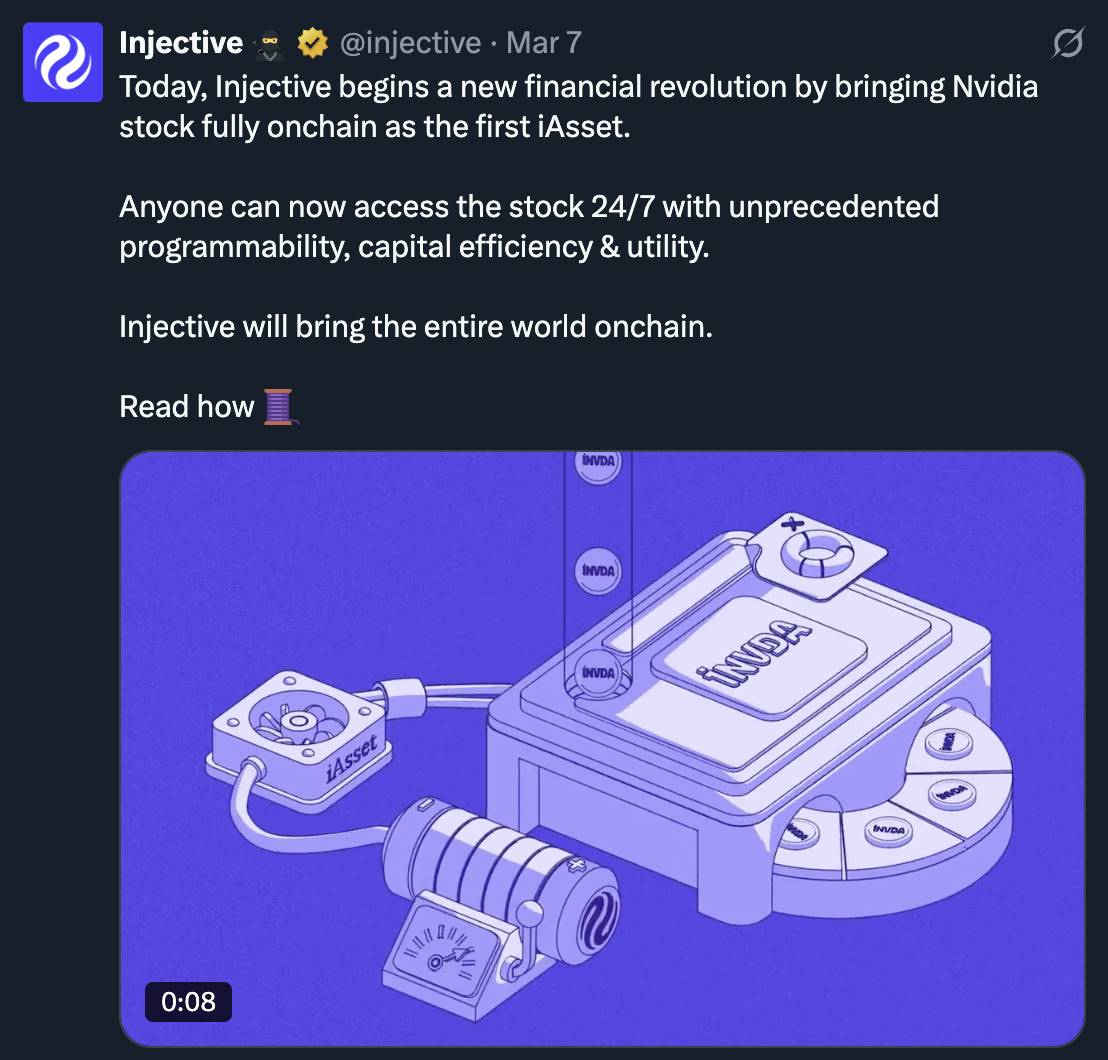
iNVDA is now tradable, with iTSLA and other stocks soon to be listed on Injective.
3.2 Interoperability—LayerZero and Chain Abstraction Will Solve Fragmentation
The number of projects issuing tokenized assets is growing, including major fintech firms and institutions:
-
@OndoFinance is launching its own L1
-
@noble_xyz L1 is rolling out more RWA tokens
-
@coinbase is considering listing its $COIN stock on Base
-
@RobinhoodApp CEO @vladtenev publicly advocates tokenizing real-world assets to democratize access to private market investments traditionally limited to accredited investors. (They may launch their own private L1.)
-
Apollo is launching its on-chain private credit fund Apollo Diversified Credit Securitize Fund (ACRED), available on Solana, Link, Ethereum, Aptos, Avalanche, and Polygon.
These tokens will be issued across 30 or even hundreds of networks. I believe two providers will solve the “fragmentation” problem:
-
@LayerZero_Core – OFT and DVN: What OFT is doing for tokens mirrors what stablecoins did for fiat—it breaks the isolation of single environments. OFT enables sending and managing tokenized assets across chains. But what about security? DVN allows customization, letting issuers control cross-chain interactions. For instance, Ondo Finance and Tether run their own DVNs for their tokens.
-
@ParticleNtwrk and @UseUniversalX: Ultimately, assets will be issued in a decentralized manner—scattered across Ethereum, Solana, Monad, L2s, Sui, etc.—leading to fragmented user experiences. I believe UniversalX could become the best platform. As tokenized stocks, funds, and indices are issued across chains, Particle Network and UniversalX appear best positioned.
With this infrastructure, users will be able to trade stocks on-chain without needing to navigate multiple networks.
Scale Up and Embrace Regulation
However, tokenized and mirrored stocks remain in early stages. Building infrastructure capable of supporting diverse assets and large-scale trading takes time. Yet, there’s clear potential in attracting new retail traders seeking more cost-effective stock trading options.
For Koreans trading U.S. stocks, the current system involves high fees, long settlement periods, and slow withdrawals. As infrastructure and platforms serving the U.S. equity market improve, a new wave of users may enter.
If this market grows significantly, Korean regulators will eventually step in. I hope this sector develops enough to warrant that level of regulatory attention.
Join TechFlow official community to stay tuned
Telegram:https://t.me/TechFlowDaily
X (Twitter):https://x.com/TechFlowPost
X (Twitter) EN:https://x.com/BlockFlow_News
 Four Pillars