








Cryptocurrency Strategic Reserve: A "Scam" Supported by the Trump Administration?
TechFlow Selected TechFlow Selected
Cryptocurrency Strategic Reserve: A "Scam" Supported by the Trump Administration?
This move was clearly aimed at calming market sentiment, but the volatility in cryptocurrency prices still reflects market concerns over policy uncertainty.
 Navigating Web3 tides with focused insights
Source: The Atlantic
Translation and compilation: Ivy, BitpushNews
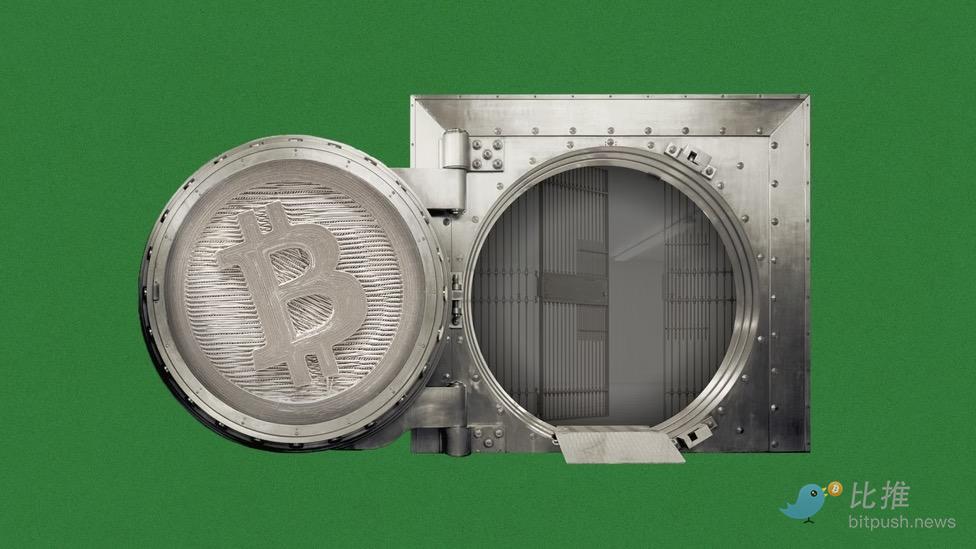
Between Donald Trump’s election victory and his official inauguration, cryptocurrency prices surged amid market speculation. Investors anticipated that Trump would appoint crypto-friendly regulators and establish a "strategic Bitcoin reserve." Indeed, there were regulatory moves under Trump: the U.S. Securities and Exchange Commission (SEC) appointed a new commissioner supportive of cryptocurrencies and paused or dropped lawsuits against several crypto exchanges. Moreover, in his first week in office, Trump issued an executive order directing an assessment of “the feasibility of establishing and maintaining a national digital asset reserve.”
However, after Trump took office, cryptocurrency prices sharply declined—especially in recent weeks, with losses accelerating. This triggered strong backlash from major supporters within the crypto industry. In apparent response to halt further price drops, Trump took to social media to promise the imminent creation of a “strategic cryptocurrency reserve,” stating that the government would stockpile not only Bitcoin and Ethereum—the two largest digital assets—but also more speculative tokens such as Ripple, Solana, and Cardano.
This move was clearly aimed at calming market sentiment, yet ongoing volatility in crypto prices reflects persistent concerns about policy uncertainty.
Trump’s announcement initially succeeded in boosting markets: Bitcoin and Ethereum prices briefly spiked over 10% following the news, and the total market capitalization of cryptocurrencies surged by $300 billion. However, the rally didn’t last long. Most gains reversed yesterday, partly due to uncertainty about the specifics and feasibility of Trump’s pledge.
In reality, the U.S. government already holds around $17 billion worth of Bitcoin and $110 million in Ethereum—mostly seized from criminals.
One possible approach would be for the government simply to continue holding these confiscated assets without selling them. But what crypto advocates are hoping for—and what Trump appears to be promising—is far more aggressive: actively purchasing billions of dollars’ worth of digital assets to fill this new strategic reserve.
In other words, they’re seeking a covert subsidy for cryptocurrency holders—something that, from the perspective of non-holders, looks like a reckless government bailout of high-risk speculative assets.
Establishing a crypto reserve would effectively transfer vast wealth from taxpayers to cryptocurrency holders (“HODLers,” a nickname in the crypto community derived from a misspelling of “hold,” meaning “to hold steadfastly”). Under current conditions, such a move is highly controversial, even absurd. Particularly because the Trump administration is simultaneously cutting government programs and slashing public spending across the board under the banner of “improving administrative efficiency.” Using taxpayer money to buy into volatile digital assets is unlikely to convince anyone beyond the crypto faithful.
The term “strategic cryptocurrency reserve”—or more commonly, “strategic Bitcoin reserve”—is clearly modeled on the concept of the “Strategic Petroleum Reserve,” managed by the U.S. Department of Energy and containing hundreds of millions of barrels of oil. The rationale for maintaining a petroleum reserve is unquestionable: oil is essential to the functioning of the American economy. In the event of crises like the 1973 oil embargo or major disruptions to global supply chains, the reserve can stabilize markets when needed. (Although domestic oil and gas production has increased in recent years, reducing U.S. vulnerability to external shocks.)
In contrast, holding cryptocurrencies offers no strategic benefit. These assets serve no practical function for the government or the broader economy. The U.S. could eliminate all crypto holdings tomorrow and the economy would continue operating normally. Crypto proponents often cite U.S. foreign exchange and gold reserves as precedents. Yet in reality, America’s foreign exchange reserves are relatively small and exist primarily to enable dollar conversions if necessary—for instance, intervening to support the dollar during extreme devaluation. Still, the U.S. has never actually used its forex reserves for this purpose. And unlike foreign currencies, Bitcoin and other cryptocurrencies cannot play any analogous role in national financial strategy.
As for America’s gold reserves, their significance has long since faded: the hoard at Fort Knox is a relic of a bygone era when the U.S. promised to redeem dollars for gold. Today, the U.S. retains its gold simply out of inertia—the government neither wants to crash markets by selling it off nor provoke political backlash by liquidating a reserve still cherished by believers in the gold standard. But regardless, this historical hangover does not justify creating a digital asset reserve.
Crypto advocates even claim that large-scale U.S. ownership of Bitcoin and other digital assets would strengthen the dollar. Yet the dollar is a fiat currency whose value doesn’t depend on any asset held by the government. More importantly, Bitcoin was created specifically to replace the dollar—not to support it. If the U.S. government spends billions acquiring assets designed to supplant the dollar, it won’t bolster confidence in the greenback; it may well undermine it. After all, if the U.S. government starts aggressively buying speculative digital assets, it sends a dangerous signal to the world: “We lack confidence in the future of our own currency.”
When crypto supporters argue that “government accumulation of digital assets enhances the dollar’s value,” what they really mean is that rising crypto prices will inflate overall market valuations, making the U.S. appear wealthier. But even if token prices rise, the financial gain relative to America’s massive budget is negligible. Worse, betting taxpayer funds on such wildly volatile assets amounts to gambling with public money. Next, should we establish a federal sports betting agency?
To date, Trump has remained vague on how the government would acquire these digital assets. Some proposals suggest selling part of the nation’s gold reserves to fund crypto purchases. But no matter the method, building a crypto reserve means diverting public funds into this sector—money that could otherwise reduce deficits or fund critical public services.
Finally, a government-backed crypto reserve could become a breeding ground for corruption, creating massive conflicts of interest between corporate regulation and public policy. Once certain cryptocurrencies are included in the national reserve, their prices would inevitably soar—especially for less mature tokens. This creates powerful financial incentives for crypto insiders to curry favor with Trump, who himself owns TRUMP meme coins. Large-scale government involvement would effectively legalize and institutionalize these conflicts of interest.
None of this is surprising coming from Trump—self-dealing and dynastic rule have long been his modus operandi. While Trump himself may suffer no reputational cost, the U.S. government, as the cornerstone of the global financial system, cannot afford such risks. The United States is not only the world’s largest debtor nation but also the ultimate guarantor of trust in global finance. If the government actively enters the crypto market, it undermines its own credibility and invites skepticism about the stability of the dollar. Ultimately, the push for a government-backed crypto reserve boils down to one goal: using public resources to artificially inflate crypto markets and drive prices higher.
In the end, this so-called “strategic cryptocurrency reserve” would amount to nothing more than a full-blown scam—with the U.S. government itself being the one scammed.
Join TechFlow official community to stay tuned
Telegram:https://t.me/TechFlowDaily
X (Twitter):https://x.com/TechFlowPost
X (Twitter) EN:https://x.com/BlockFlow_News
 @TheAtlantic


