








Senate Repeals "DeFi Broker Rule"—Is the U.S. Launching a Lightning Campaign to Deregulate DeFi?
TechFlow Selected TechFlow Selected
Senate Repeals "DeFi Broker Rule"—Is the U.S. Launching a Lightning Campaign to Deregulate DeFi?
With frequent policy relaxations, is the crypto spring arriving?
 Navigating Web3 tides with focused insights
By Ashley
Since Donald Trump returned to the White House, favorable cryptocurrency policies have continued to emerge. On March 4, local U.S. time, the Senate passed a resolution to overturn the so-called "DeFi Broker Rule" by a vote of 70 to 27. David Sacks, the White House's AI and Cryptocurrency Czar, posted on social media: "The White House is pleased to announce its support for the Congressional Review Act (CRA) resolution introduced by Senator Ted Cruz and Congressman Mike Carey to repeal the so-called 'DeFi Broker Rule'—a last-minute attack by the Biden administration on the crypto community."
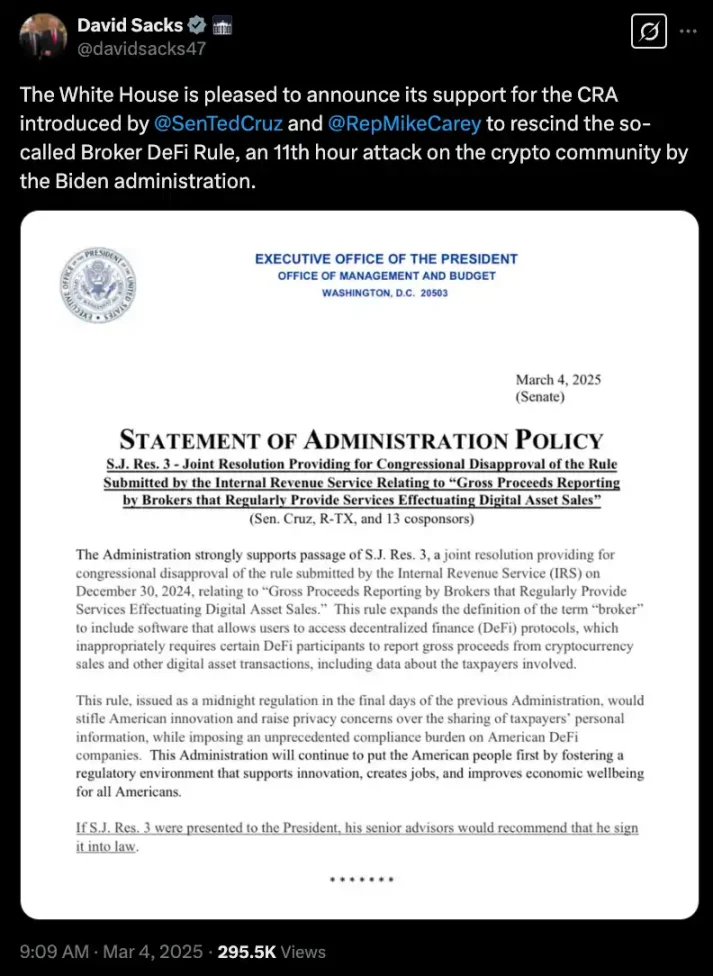
The resolution still needs to be approved by the House of Representatives before being signed into law by President Trump. Once enacted, not only will the rule be fully repealed, but the IRS will also be prohibited from introducing similar regulations in the future. The White House stated that the president may sign the resolution swiftly.
The Blockchain Association, representing major crypto firms such as Coinbase, Kraken, and Uniswap Labs, supports repealing the rule, arguing it would prevent unnecessary constraints on DeFi innovation. The DeFi Education Fund called the Senate’s vote “the first of many historic milestones in U.S. digital asset regulation.”
Why Repeal the "DeFi Broker Rule"?
The DeFi Broker Rule was a regulatory framework implemented on January 1, 2025, targeting providers of decentralized financial (DeFi) intermediary services—such as trading platforms and lending protocols—with the goal of ensuring compliance, user protection, and risk management. Its core requirements included anti-money laundering (AML), know-your-customer (KYC), smart contract audits, fund security, and transparency obligations. According to TaxDAO’s expert analysis, this rule had certain positive impacts on combating money laundering, terrorism financing, and tax evasion.
However, the rule sparked significant controversy within the industry even before implementation. Because decentralized platforms do not hold users’ funds or store customer data like traditional financial institutions, many critics deemed the rule impractical and an example of regulatory overreach. The digital asset think tank Coin Center labeled the proposal “technologically unfeasible.”
The root issue lies in the rule’s attempt to apply traditional finance (TradFi) regulatory logic to DeFi, failing to align with the fundamental principles and characteristics of crypto technology. It overlooked the decentralized and pseudonymous nature of DeFi, fundamentally misunderstanding the technology it sought to regulate. The rule imposed heightened compliance burdens, requiring participants to strictly fulfill tax reporting duties and mandating KYC procedures. For instance, under the 1099-DA filing guidelines, brokers were required to submit investors’ digital wallet addresses and transaction volumes—a measure that would significantly alter existing trading models. On one hand, implementing KYC would erode DeFi’s privacy-preserving features, substantially weakening user privacy. On the other hand, collecting, processing, and reporting user data would dramatically increase operational costs and compliance pressure.
This TradFi-style regulation could have deeper long-term consequences for DeFi development. First, the addition of manual review processes could disrupt the automated execution of smart contracts and impair the efficiency of decentralized governance mechanisms. Second, mandatory disclosure requirements fundamentally conflict with the core ethos of DeFi ecosystems. If regulators continue pushing for greater transparency and reduced anonymity, it may not only shift user behavior but also severely undermine the market competitiveness and innovative vitality of the entire decentralized finance system.
Ted Cruz, the senator who introduced the repeal effort, said during his Senate floor speech prior to the vote: “DeFi is a microcosm of the crypto revolution.” He described the rule as an “incoherent” federal overreach, stating it made no sense to treat software developers as brokers forced to disclose user data and personal information—“their software never held or controlled user funds.”
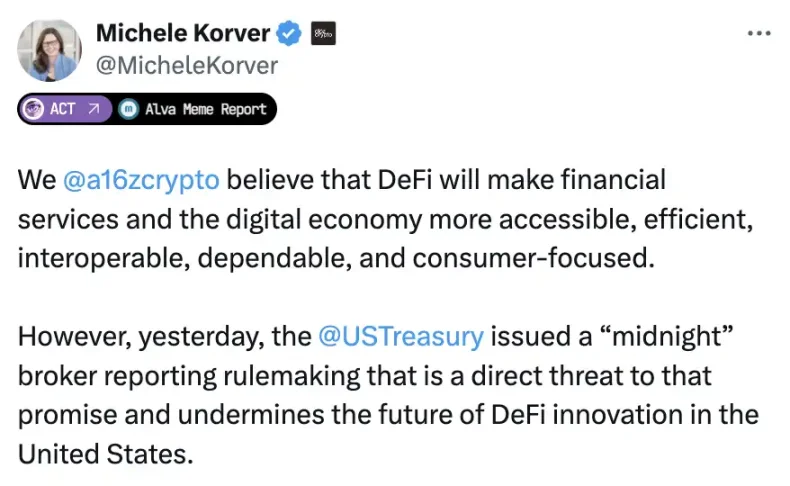
Michele Korver, Head of Regulatory Policy at a16z Crypto, previously wrote that the Treasury Department’s new broker reporting rules directly threaten the vision for DeFi development and could stifle future American DeFi innovation. In response, a16z Crypto supported legal action filed by the Blockchain Association, DeFi Education Fund, and Texas Blockchain Council against the IRS and Treasury Department, alleging they exceeded statutory authority, violated the Administrative Procedure Act (APA), and potentially acted unconstitutionally.
"Crypto Deregulation" Under Trump: DeFi First in Line
The overwhelming 70-to-27 victory in favor of the repeal demonstrates bipartisan support—not just Republicans, but many Democrats also back crypto advancement. A similar pattern occurred in the previous Congress when lawmakers overturned the SEC’s crypto accounting guidance, reflecting growing cross-party momentum in supporting crypto legislation and boding well for upcoming bills, including potential stablecoin regulation this year.
With Trump back in power, the most crypto-friendly Congress in U.S. history has taken shape. While the much-hyped “presidential coin,” “first lady coin,” and Trump’s recent reiteration of a “cryptocurrency strategic reserve” failed to spark sustained market enthusiasm, there is no denying that policy shifts are creating a favorable environment for the crypto market. Just three days after returning to the White House, on January 23, 2025, Trump signed an executive order establishing a cryptocurrency working group tasked with proposing new digital asset regulations and exploring the creation of a national cryptocurrency reserve. Notably, the order explicitly bans the development of a central bank digital currency (CBDC) in the United States, preventing government-issued digital money from competing with existing cryptocurrencies.
As a cornerstone of the crypto ecosystem, DeFi was among the first targets of regulatory pressure from agencies like the SEC in earlier years. However, recent developments signal a clear shift in regulatory stance. The SEC dropped its case against Kraken; closed its investigation into Gemini; ended a three-year probe into Uniswap Labs without taking enforcement action; market-making giants Wintermute and Citadel Securities began expanding into the U.S. market; and Tornado Cash founder Alexey Pertsev was temporarily released...
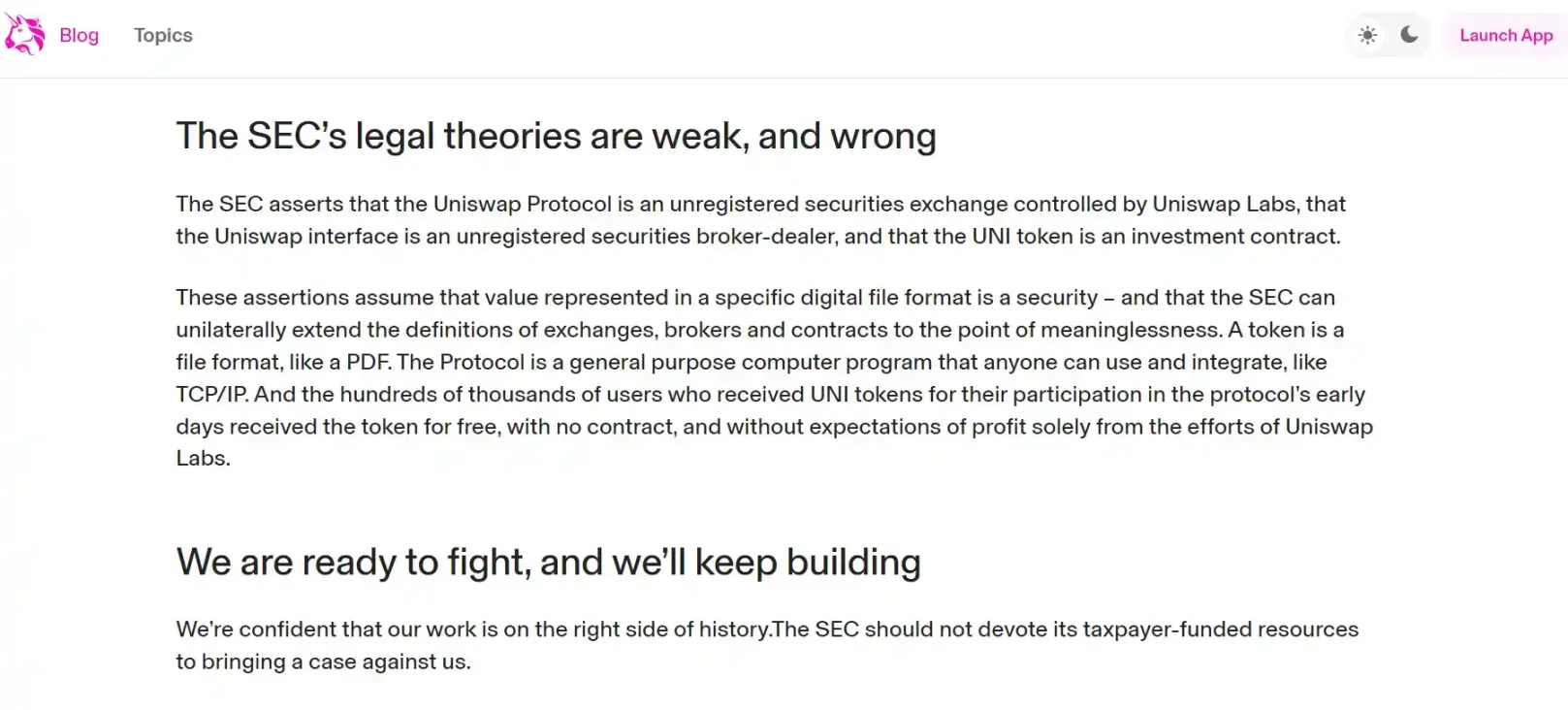
Additionally, the SEC withdrew its controversial accounting guidance requiring public companies to record third-party crypto assets as both assets and liabilities. It also announced the formation of a dedicated crypto task force to develop a comprehensive and clear regulatory framework, pledged to scale back enforcement actions, and reallocated more than 50 full-time lawyers and staff members to reduce regulatory burdens on the industry. Last month, the SEC approved several crypto ETF applications from major U.S. financial institutions and simultaneously dismissed or withdrew multiple lawsuits and investigations against companies like Coinbase, Robinhood, and Uniswap. These moves collectively indicate a shift in the SEC’s posture—from strict enforcement toward a more accommodating approach.
Going forward, in a regulatory environment marked by loosening measures such as the repeal of the "DeFi Broker Rule," the crypto market may gain more than just short-term benefits. Yet, in a more permissive regulatory climate, how can illicit activities like money laundering be effectively curbed? How can tax fairness and market integrity be ensured? And as the crypto industry rapidly evolves, how can policymakers strike the right balance between fostering innovation and maintaining oversight? As the self-proclaimed “crypto president,” how will Trump fulfill his promise to make America the global capital of cryptocurrency? Answers to these questions will ultimately emerge through ongoing dialogue, experimentation, and alignment between the crypto market and evolving regulatory frameworks.
Join TechFlow official community to stay tuned
Telegram:https://t.me/TechFlowDaily
X (Twitter):https://x.com/TechFlowPost
X (Twitter) EN:https://x.com/BlockFlow_News
 BlockBeats






