What innovative projects are worth watching after Uniswap V4 officially launched?
TechFlow Selected TechFlow Selected
What innovative projects are worth watching after Uniswap V4 officially launched?
Hooks is the most anticipated development in V4, allowing anyone to create custom logic and plug it into Uniswap as a module plugin.
 Navigating Web3 tides with focused insights
Author: francesco, member of Castle Labs
Translation: Ashley, BlockBeats
Editor's note: The article introduces Uniswap V4's innovative features, focusing on the modular nature of Hooks that allow developers to customize liquidity pool logic. It also discusses technical advancements brought by V4 such as the Singleton architecture, flash accounting, native ETH support, and highlights several innovative projects building on the V4 platform, demonstrating the new opportunities Uniswap V4 brings to the DeFi ecosystem.
The following is the original content (slightly edited for clarity):
About Uniswap V4
Uniswap V4 officially launched on January 30, 2025, marking a historic moment that shapes the future of DEXs and AMMs. With the introduction of Hooks, Uniswap has become more modular.
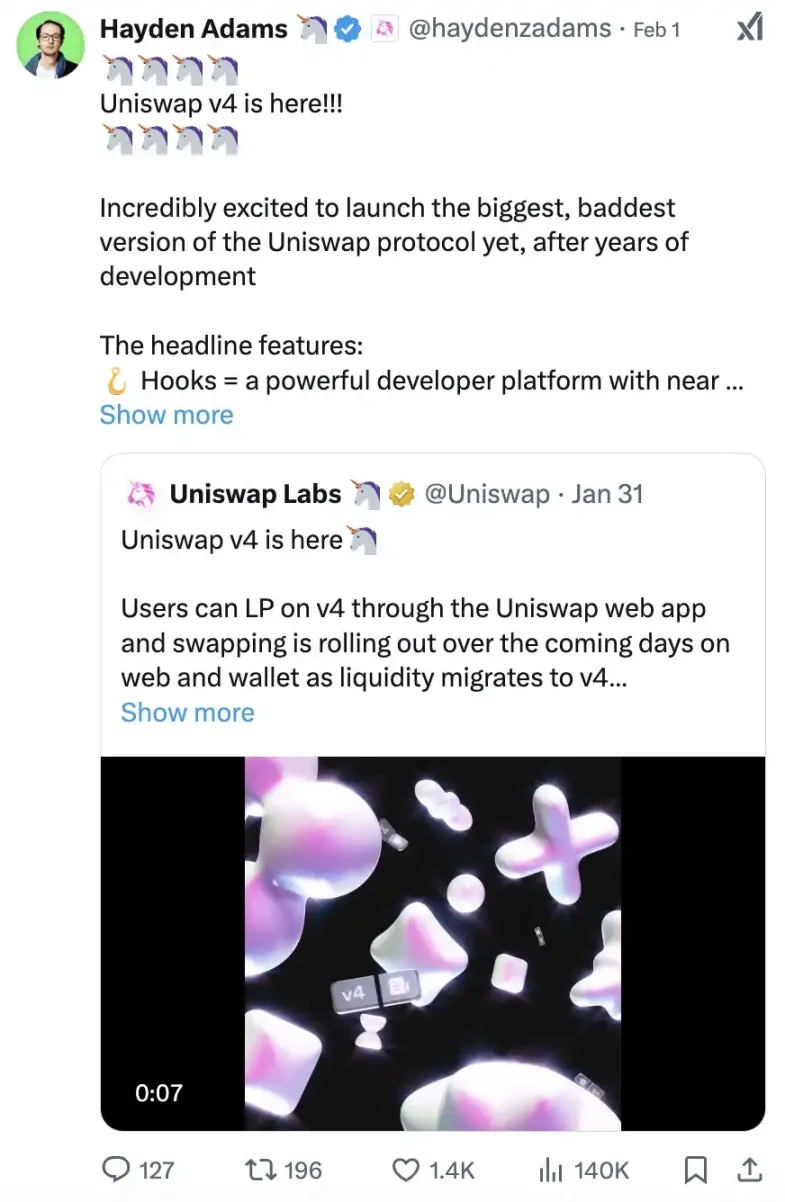
Hooks are the most anticipated development in V4, allowing anyone to create custom logic and plug it into Uniswap as modular components. Before diving deeper into Hooks, let’s review key concepts introduced in Uni V4:
-
Singleton architecture
-
Flash accounting
-
Native ETH support
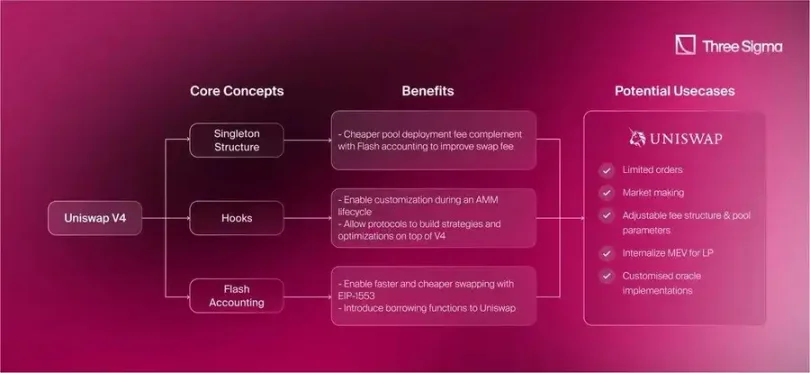
Singleton Contract for Pool Deployment
The Singleton architecture drastically reduces deployment costs for liquidity pools—by 99.99% in Uniswap V4—and also serves as an immutable settlement layer for all pools.
-
Previously: Each pool had its own smart contract (factory pattern)
-
V4: All pools are created within a single contract, reducing costs
Flash Accounting
With flash accounting, anyone can temporarily lock tokens within a pool as long as no debt remains at the end of the operation. Built using EIP-1153 ("transient storage"), which clears data after each transaction, users can stack multiple operations in one transaction for faster and cheaper execution. This allows more complex logic without increasing storage costs.
-
Previous (factory model): Token balances were settled after every operation across multiple contracts.
-
V4: The Singleton and flash accounting mean one contract ensures balance consistency. Internal balances are updated during operations, while external transfers occur only upon final settlement.
New take() and settle() functions allow borrowing from or depositing funds into a pool. By requiring that neither the pool manager nor caller owes any tokens at the end of a call, solvency is ensured.
Hooks

Hooks enable anyone to launch liquidity pools with customized, flexible execution logic or entirely new features. Hooks benefit everyone:
-
Chains: Foster ecosystem growth through added functionality
-
Protocols: Improve user experience and differentiation
-
Developers: New ways to integrate applications into Uniswap’s liquidity
The Uniswap Foundation has already supported the creation of over 150 new Hooks via direct grants and investments. Ensuring a rich set of Hooks is a core mission, especially those that are open-source, production-ready, and adaptable to various use cases. Hooks can also autonomously manage generated fees—they can set static or dynamic fees, or even redistribute all fees to incentivize usage (e.g., rewarding LPs, traders, or integrated apps).
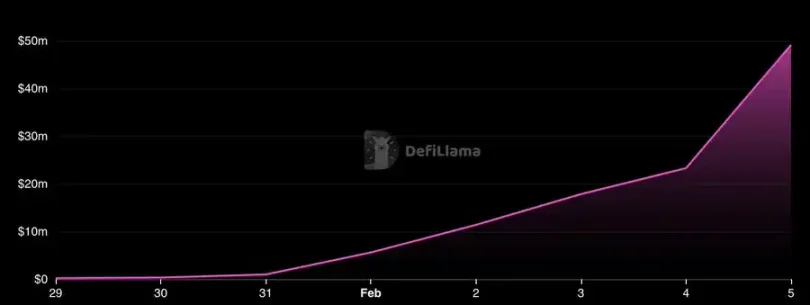
Uniswap V4’s TVL has already approached $50 million.
Additional Features
1. Native ETH support returns, reducing swap costs for ETH pairs by 15%.
-
V1: Only ETH pairs available
-
V2: ETH removed due to integration complexity and WETH-induced liquidity fragmentation
-
V3: WETH only
-
V4: Supports both ETH and WETH
2. Custom settlement: Developers can use Hooks to introduce new settlement logic. Examples include:
(1) Introducing custom fee models: Adding fees on LP positions
(2) Creating custom curves different from concentrated liquidity (e.g., Hooks can replicate Uniswap V2’s constant product market maker)
(3) Interface composability: Hooks adapt to swap parameters defined by each integrated smart contract
(4) Using ERC-6909 for token settlement, keeping tokens within the contract instead of transferring them
3. Governance does not control fee tiers or tick spacing but can extract a portion of pool swap fees
4. Reduced Gas Costs: Through Singleton and flash accounting, gas costs for pool deployment are significantly reduced, along with other optimizations. For example, the built-in price oracle from Uni V2-V3 is now redundant (saving oracle costs).
5. Users can directly tip liquidity providers via the donate() function using tokens from the pool
Together, these features make Uniswap V4 a highly customizable integration with multiple optimization mechanisms, delivering tangible benefits for developers and users:
-
Cheaper multi-route swaps
-
Simpler integration and customization
-
Secure and audited codebase
Star Projects on Uniswap V4
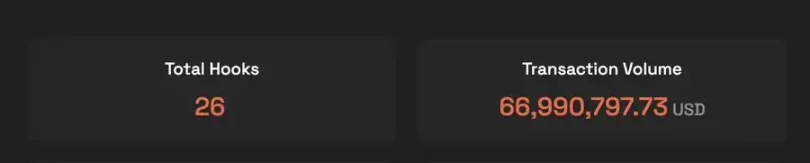
The power of Hooks lies in enabling permissionless development on Uniswap V4. Within just days, over 25 external Hooks have been deployed, generating over $66 million in trading volume.
Some of the most interesting projects building on V4 include:
-
Bunni
-
Flaunch
-
Sorella
-
Doppler
Bunni @bunny_xyz

Bunni focuses on enhancing LP returns through these unique features:
1. Liquidity Density Function (LDF), enabling complex liquidity distributions based on market conditions or strategies
2. Liquidity shape transformation: Modify liquidity shape anytime without removing positions
3. Automatic position rebalancing and auto-compounding rewards
4. Improved swaps: Consistent gas costs when crossing ticks, improving efficiency for large trades
5. Re-staking Hook: Pools can deposit idle assets into external protocols to earn additional yield
These capabilities integrate with most major DeFi protocols:
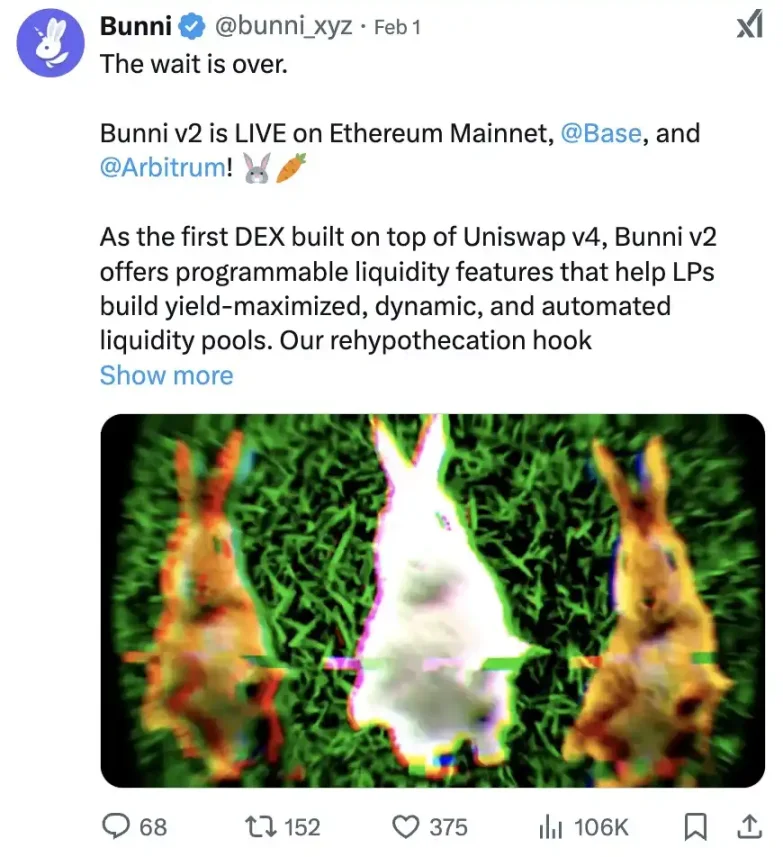
6. Auction mechanism enables MEV capture and optimizes fee revenue
7. Volatility-based swap fees
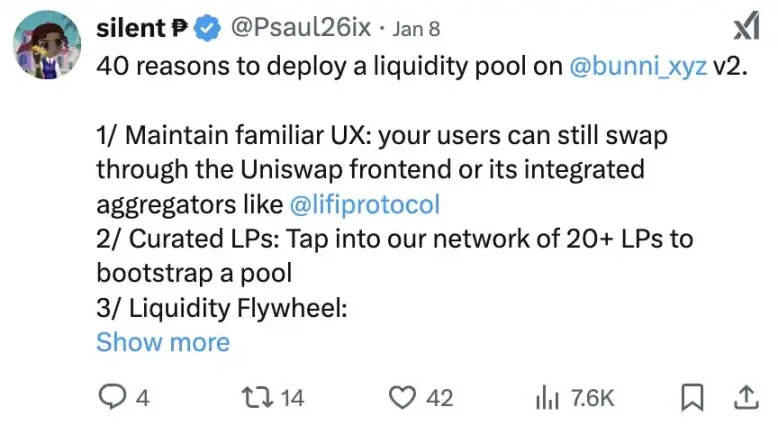
Why deploy on Bunni?
Flaunch @flaunchgg

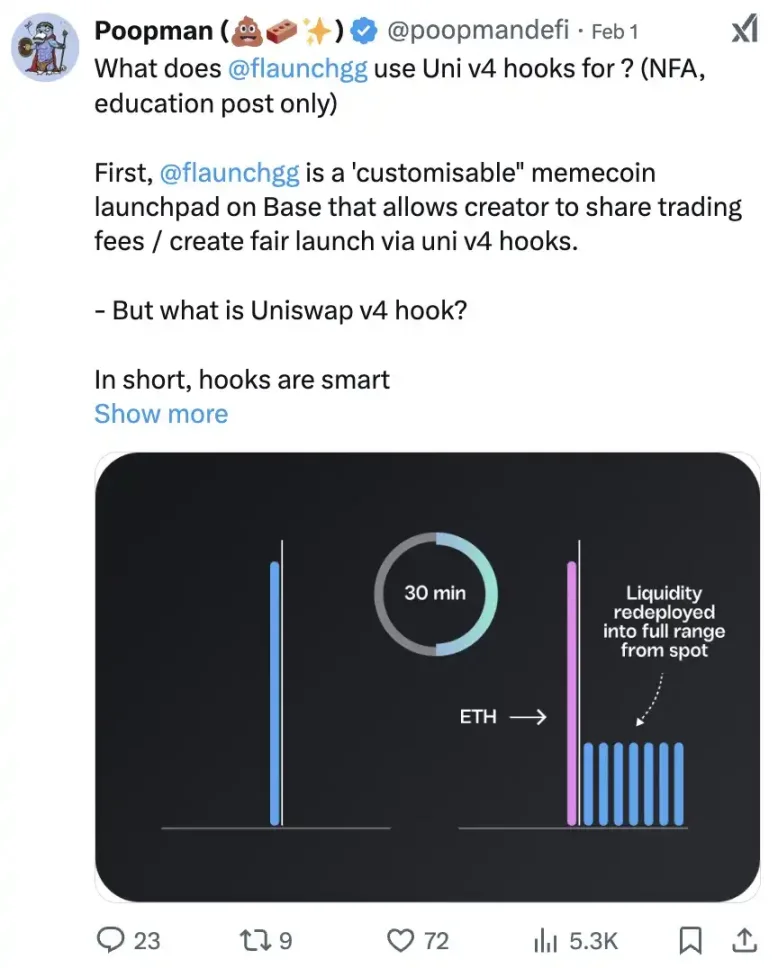
Flaunch is a memecoin launchpad integrating multiple sustainability mechanisms:
1. 100% of revenue returned to project developers, who decide how much to share with holders. Unclaimed fees are used for buybacks.
2. Native auto-buyback mechanism: A buyback is triggered for every 0.1 ETH in fees collected.
3. Private launch: Token price remains fixed for 30 minutes post-launch, ensuring equal entry for all.
4. Memestream: Creators can assign rights to trading fees via NFTs to any wallet, creating a secondary market for token trading fees.
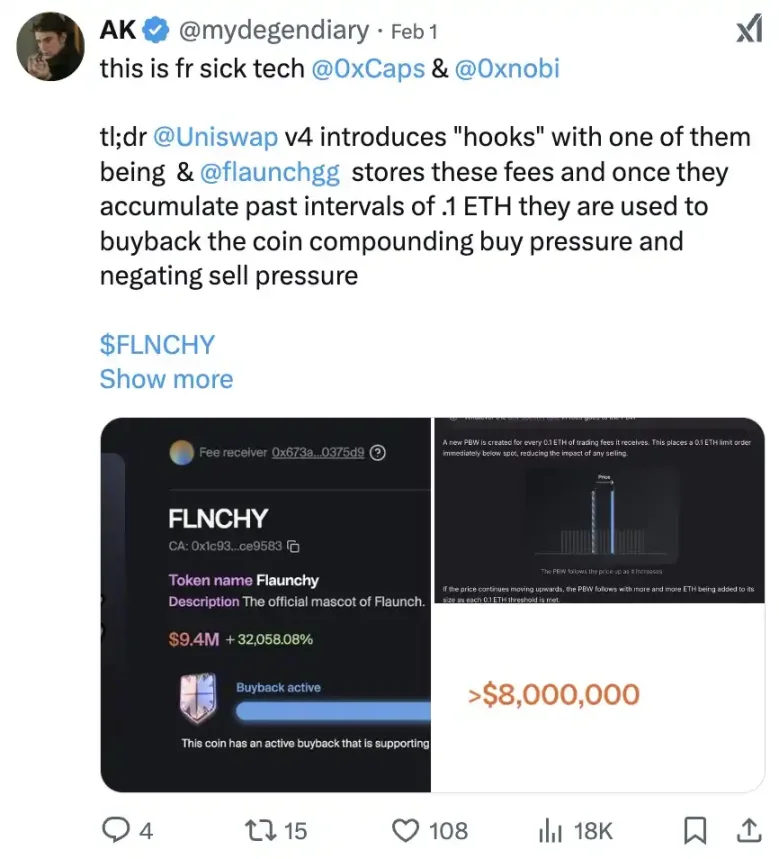
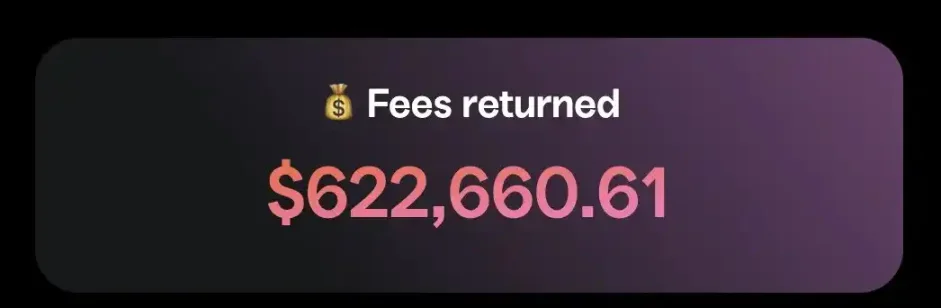
About a week after launch, Flaunch has returned over $622,000 in fees.
How to use Uniswap V4 Hooks? Poopman explains it clearly here.
Sorella Labs @SorellaLabs

Sorella Labs provides tools for LPs to address MEV issues:
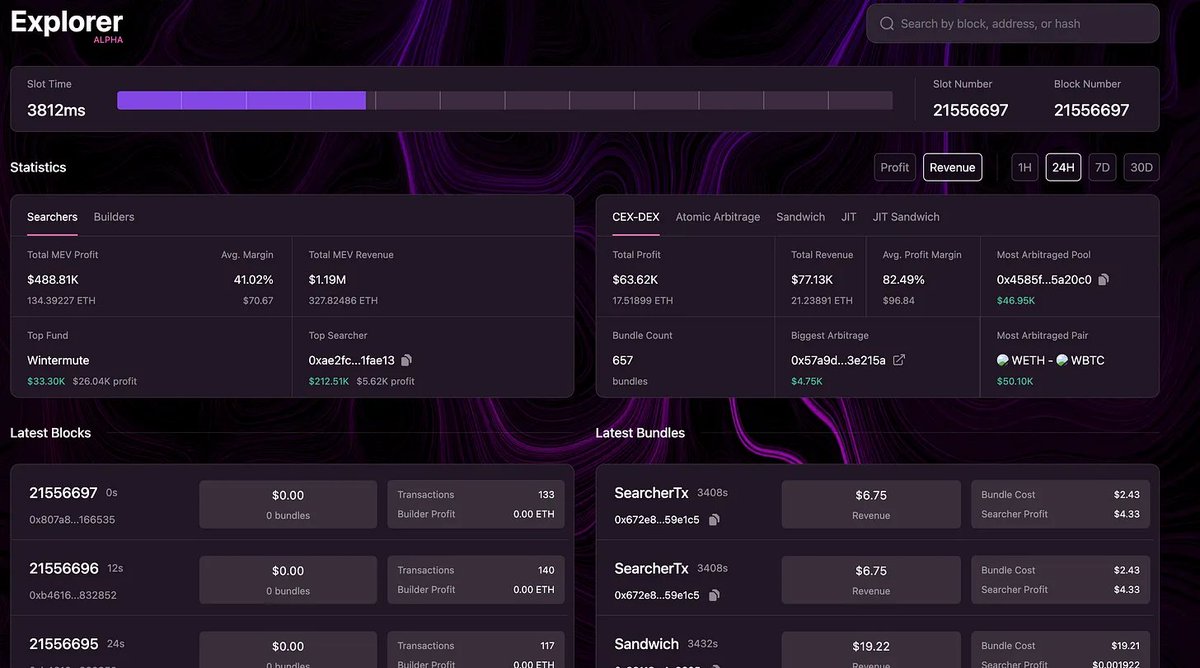
1. Blockchain explorer with MEV insights and real-time block statistics: Data on searchers and builders—MEV income and profits, top funds, top searcher events—including CEX-DEX arbitrage, atomic arbitrage, sandwich attacks, and frontrunning.
2. Dashboard for real-time monitoring of MEV events: Displays mempool activity and all builder bids
3. Historical MEV statistics segmented by category
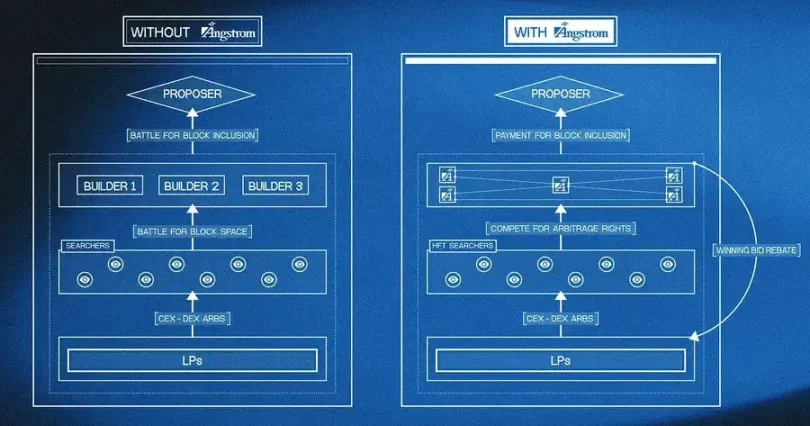
Sorella Labs also launched Angstrom, a new DEX iteration focused on reducing MEV losses for LPs. Angstrom’s proposed solution enables applications to:
-
Ensure fair pricing: All transactions in a block execute at the same price, eliminating priority fees.
-
Distribute kickbacks from winning bids to LPs for including transactions in blocks.
How does Angstrom work?
-
MEV auctions occur within the application’s mempool.
-
Rather than paying for priority, arbitrageurs "must bid directly to LPs for the right to perform arbitrage."
-
All transactions are executed equally within the same block, reducing sandwich attacks. Gas fees can be paid in any token.
-
Angstrom uses a network of "staked validators" who enforce ordering rules via consensus: Validators stake ETH via EigenLayer and face slashing penalties for rule violations.
Benefits for LPs are reflected through lower transaction fees and reduced costs for incentivizing liquidity.
Doppler @whetstonedotcc

Doppler is a protocol focused on improving liquidity bootstrapping and price discovery. It introduces the concept of "liquidity auctions," executed within Hook contracts. These complex operations are fully abstracted via UI.
Auctions can be:
-
Successful: If they conclude according to user parameters, liquidity is sent to the AMM
-
Failed: All contributions are refunded
Auctions help projects more accurately price their liquidity and minimize the risk of initializing liquidity at incorrect prices. This process also greatly simplifies integration challenges, removing the burden of liquidity planning so teams can focus on other priorities. Additionally, "integrator fees" incentivize decentralized integrators, allowing them to set fees they can capture upon successful liquidity bootstrapping.
Doppler has also launched its second product, Pure Markets, a frontend built on Doppler.
Other Projects
Additional protocols building on Uniswap V4 include:
@ArrakisFinance
@Corkprotocol
@SemanticLayer
Uniswap V4 is expected to inject a new wave of vitality into DeFi, bringing many novel use cases to the Ethereum ecosystem. This is just the beginning—more innovative Hooks are expected in the coming weeks as Uniswap V4 continues to evolve.
Join TechFlow official community to stay tuned
Telegram:https://t.me/TechFlowDaily
X (Twitter):https://x.com/TechFlowPost
X (Twitter) EN:https://x.com/BlockFlow_News
 @francescoweb3