Crypto Morning Brief: Michael Selig officially assumes role as U.S. CFTC Chair, Uniswap's "UNIfication Proposal" passes
TechFlow Selected TechFlow Selected
Crypto Morning Brief: Michael Selig officially assumes role as U.S. CFTC Chair, Uniswap's "UNIfication Proposal" passes
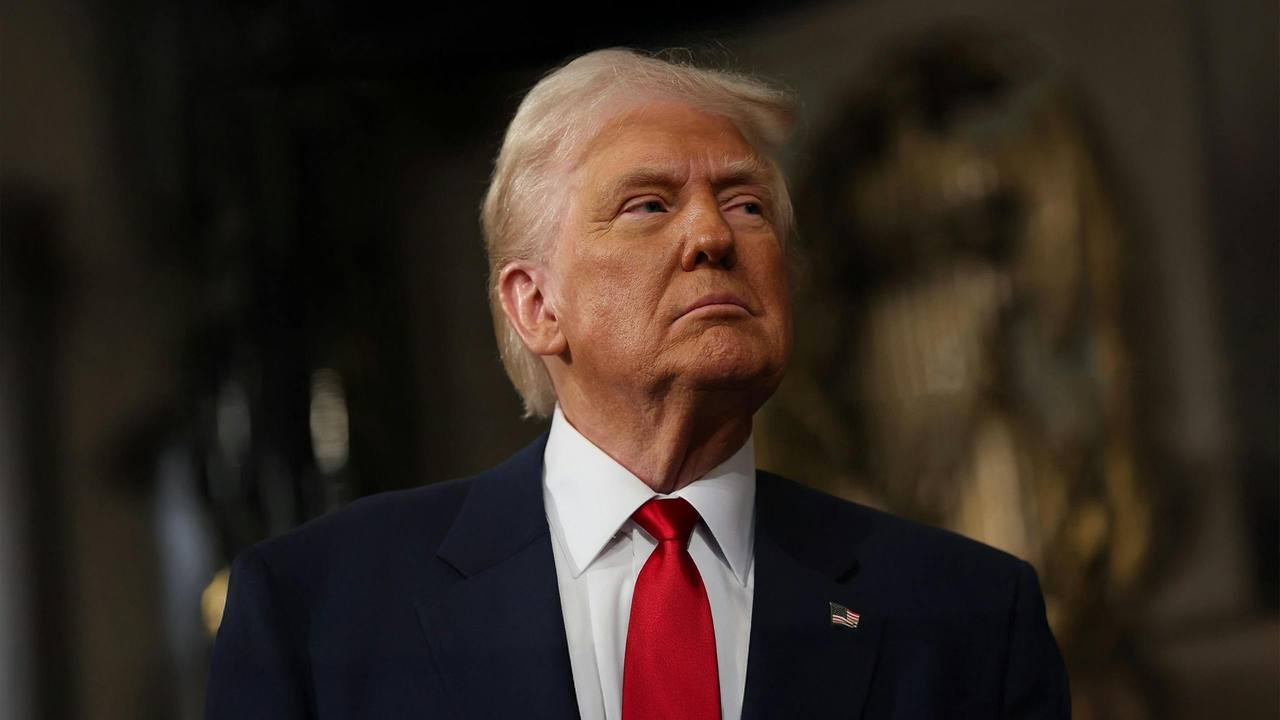
Trump Media spends $13.44 million to increase holdings by 150 BTC.
 Navigating Web3 tides with focused insights
Author: TechFlow
Yesterday's Market Dynamics
Spot gold surpassed $4,450 per ounce this morning, hitting a new all-time high
According to Jin10 News, spot gold surpassed $4,450 per ounce this morning, setting another record high with a 0.15% intraday gain.
Michael Selig officially sworn in as CFTC Chair
As reported by Cryptobriefing, pro-bitcoin advocate Michael Selig has officially been sworn in as Chair of the U.S. Commodity Futures Trading Commission (CFTC), following confirmation by the U.S. Senate.
In a statement, Selig said the CFTC is entering a period of significant transformation driven by increased retail participation and the emergence of new products and platforms. He emphasized that the agency will play a greater role in establishing practical regulatory standards for digital asset markets while maintaining stability and security in U.S. derivatives markets. Selig stated: "We are at a unique moment where new technologies, products, and platforms are emerging, retail participation in commodity markets is at an all-time high, and Congress is about to submit digital asset market structure legislation that solidifies the United States as the 'crypto capital.'"
Prior to joining the CFTC, Selig served as Chief Legal Counsel for the SEC’s Crypto Task Force and as Senior Advisor to SEC Chair Paul Atkins.
Fed Governor Miller: Necessity for 50-basis-point rate cut has diminished
Federal Reserve Governor Miller stated that due to recent progress in monetary policy adjustments, the need he previously advocated for a 50-basis-point rate cut has weakened. Miller noted that recent inflation data showed some anomalies, partly linked to government shutdowns. These irregular signals suggest the Fed's policy stance should shift toward greater accommodation. He stressed that he currently does not see a near-term risk of economic recession but believes the neutral interest rate level has clearly declined, and monetary policy must reflect this structural change. If the policy rate fails to continue adjusting downward toward the new neutral level, it could instead increase the risk of economic recession. Regarding his tenure, Miller admitted uncertainty about whether he will remain in office. He said: "If no successor has been confirmed by the end of January, I will assume I am continuing in my role."
Uniswap's "UNIfication" fee switch proposal has reached the 40 million vote threshold and will take effect this week
According to Cointelegraph, Uniswap's fee switch proposal "UNIfication" has reached the 40 million vote approval threshold and will go into effect this week.
As of Monday, the proposal had received nearly 69 million votes in favor, with voting set to conclude on Thursday (Christmas Day). After passage, there will be a two-day timelock period before the Uniswap v2 and v3 fee switches are activated on the Unichain mainnet, triggering UNI token burns.
The proposal will burn 100 million UNI tokens from the Uniswap Foundation treasury and implement a protocol fee discount auction system to boost liquidity provider returns. These changes are expected to significantly improve the supply-demand dynamics of the UNI token, enhancing its long-term holding value.
Since voting began, the price of UNI has risen over 25%, currently trading at $6.19.
Espresso: ESP airdrop eligibility check now open; token claims to open in early 2026
Per an official announcement, the Espresso Foundation has officially launched its $ESP token registration portal. Users can now connect their wallets to check eligibility for the Espresso airdrop. The token claim page will open in early 2026.
Previously, Espresso raised $28 million in a Series B round in 2024, led by a16z.
Hyperliquid responds to transparency concerns, emphasizes chain-verifiable solvency
Hyperliquid issued an official statement addressing recent criticisms of its platform. The statement emphasized that Hyperliquid operates on-chain transparency, is fully solvent, and every dollar can be tracked and verified. The company pointed out that critics overlooked the existence of HyperEVM USDC, falsely claiming a $362 million shortfall in the system.
The statement clarified that testnet features are only for testing environments and cannot be executed on mainnet; there are no privileged users or fee exemptions; and the CoreWriter function was misunderstood—it cannot mint tokens arbitrarily or move user funds.
Hyperliquid emphasized that as the only major perpetual contract platform with complete on-chain state and transaction transparency, anyone can run a node to verify the chain state, and every order, trade, and liquidation can be checked in real time—an unmatched transparency advantage compared to other major trading platforms.
Source: Polymarket plans to launch its own L2
Polymarket trader PredictTrader (@polymarketbet) summarized information recently disclosed by Polymarket team member Mustafa:
-
Polymarket plans to migrate off Polygon and launch its own Ethereum L2 called POLY. Launching POLY is a "top priority."
-
Polymarket plans to abandon all third-party providers (GoldSky, Alchemy, etc.).
-
Polymarket will launch 5-minute markets this week.
Japan's largest corporate Bitcoin holder Metaplanet approves dividend-paying preferred stock issuance
As reported by Cointelegraph, Japan's largest corporate Bitcoin holder, Metaplanet, approved a comprehensive overhaul of its capital structure on Monday, allowing fundraising from institutional investors through dividend-paying preferred stock. Approved proposals include reclassifying capital reserves, doubling the authorized number of Class A and Class B preferred shares, and modifying the dividend structure to include floating and regular payouts. Class A preferred shares will feature a monthly floating dividend mechanism, while Class B shares will offer quarterly dividends and be accessible to international institutional investors. Metaplanet currently holds approximately 30,823 bitcoins worth $2.75 billion, making it Asia's largest corporate Bitcoin holder. The company also announced plans to trade in the U.S. over-the-counter market via American Depositary Receipts, further expanding its global market presence.
JPMorgan considers offering cryptocurrency trading services to institutional clients
According to Bloomberg, Wall Street giant JPMorgan is evaluating the possibility of offering cryptocurrency trading services to its institutional clients. Sources familiar with the matter said the bank's markets division is exploring product and service expansions in its cryptocurrency business, potentially including spot and derivatives trading.
Coinbase acquires prediction market startup The Clearing Company
As reported by The Block, Coinbase has reached an agreement to acquire prediction market startup The Clearing Company, with the deal expected to close in January 2026. This acquisition is part of Coinbase's "one-stop exchange" strategy, aiming to deepen its footprint in event trading. The Clearing Company's team will join Coinbase to help expand its prediction market offerings. Founded this year, the startup raised a $15 million seed round in August, backed by Coinbase Ventures among others.
Trump Media buys 150 BTC for $13.44 million
According to Arkham monitoring data, Trump Media, owned by Donald Trump, purchased 150 BTC for $13.44 million approximately nine minutes ago. Trump Media now holds 11,241 BTC, valued at approximately $1 billion.
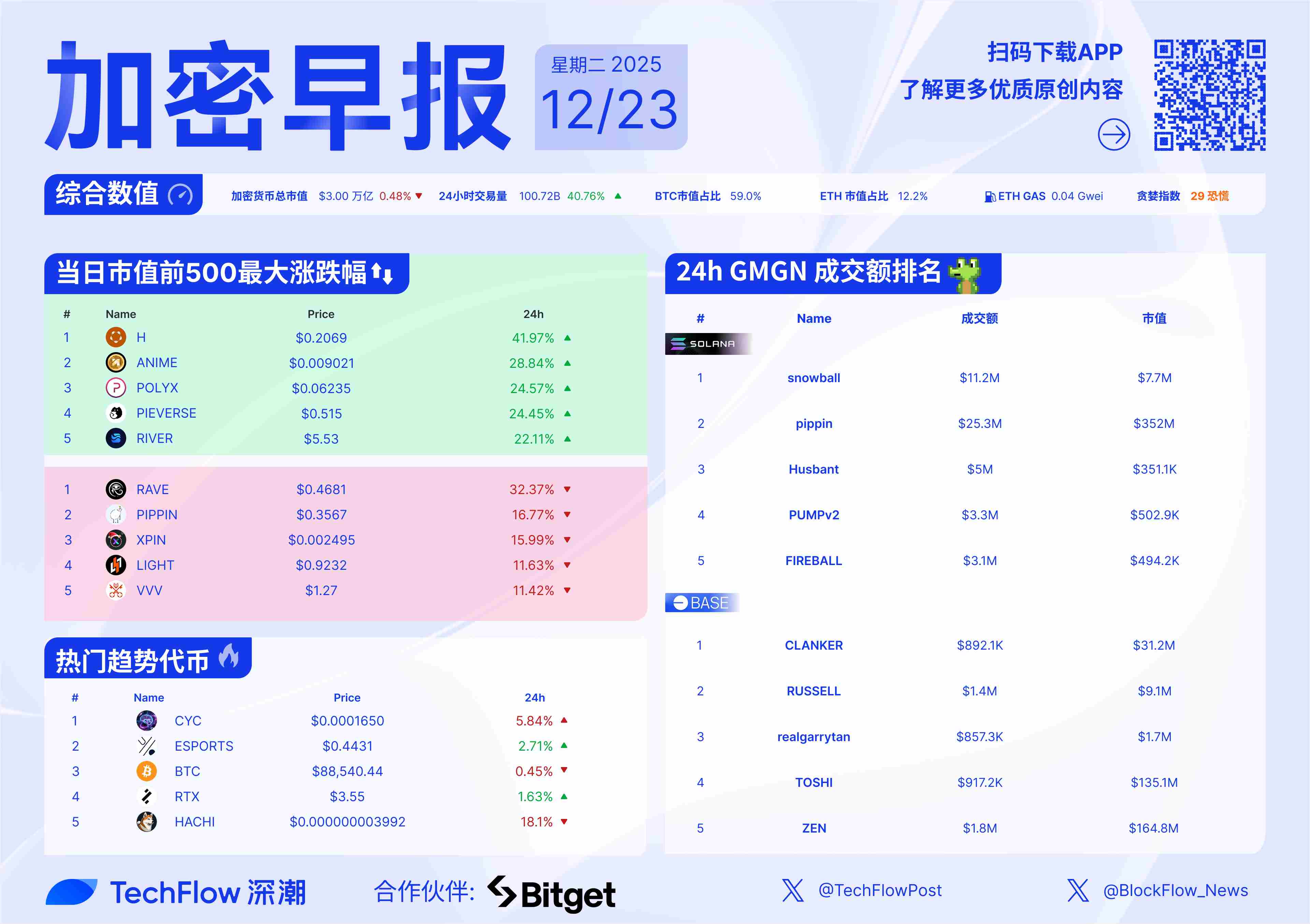
Market Data
Suggested Reading
20x in 2 days: A quick look at Snowball's automated market-making mechanism
This article details Snowball, a new meme coin that uses an automated market-making mechanism to convert trading fees into buy pressure and liquidity, preventing developers from running away with funds. Snowball's mechanism includes automatic token buybacks, increased liquidity pool depth, and token burning to create deflation, with creator fees scaled based on market cap. This mechanism relies on sustained growth in trading volume to maintain its snowball effect, which may face challenges in the current bearish market environment.
Coinbase's 2026 outlook for crypto: Deep financial integration amid cautious optimism and innovation
This article discusses how the crypto industry is at a critical stage of deep integration with core finance. It primarily explores the outlook for the crypto market in 2026, analyzing aspects such as market structure, tokenization, technological shifts, and regulatory developments, while outlining key future directions. Additionally, the article highlights specific trends in the crypto space, including the rapid growth of stablecoins, the potential of prediction markets, and the composability of crypto derivatives.
Based on Messari's annual report "The Crypto Theses 2026," this article analyzes the reasons behind the complete collapse of market sentiment in 2025. Despite no systemic market crash, sentiment fell to historic lows. The report points out this reflects a deep misalignment between market participants and market structure, particularly the burden of monetary imbalances on savers. Furthermore, the report examines Bitcoin's (BTC) establishment as "real money" and its implications for other Layer 1 blockchains.
Tracking 118 tokens launched in 2025: 85% are below launch valuation
This article analyzes data from token generation events in 2025, showing that 85% of tokens are currently valued below their initial launch prices, with median tokens seeing a 71% drop in fully diluted valuation and a 67% decline in market cap. The crypto market is undergoing a transition from retail speculation-driven to institution-led ecosystems. Stablecoin payments are becoming increasingly centralized, while transaction volume and count have grown significantly. Moreover, AI agent economies and crypto finance demonstrate both future potential and challenges.
This article analyzes the use of stablecoins in blockchain payments, focusing on transaction patterns of the two major stablecoins USDT and USDC on the Ethereum network. Using data filtering methods and label classification techniques, the article explores stablecoin payment adoption rates, transaction type distributions, payment drivers, and future trends.
Join TechFlow official community to stay tuned
Telegram:https://t.me/TechFlowDaily
X (Twitter):https://x.com/TechFlowPost
X (Twitter) EN:https://x.com/BlockFlow_News
 深潮TechFlow