Trump's Coin Launch Impact and Ethereum's Internal and External Challenges
TechFlow Selected TechFlow Selected
Trump's Coin Launch Impact and Ethereum's Internal and External Challenges
Ethereum must act immediately to address internal governance issues within its foundation and external competitive pressure from Solana, rather than merely talking about technology and ideals while ignoring users and the market.
 Navigating Web3 tides with focused insights
Preface
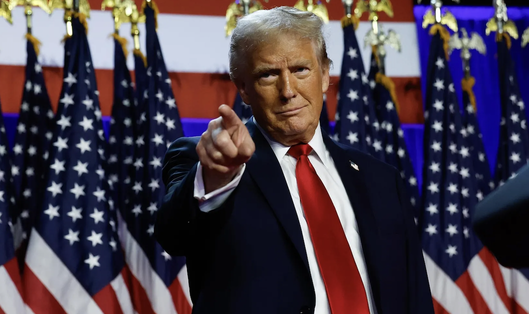
On the morning of January 8, Trump posted on Twitter and his social media platform Truth Social, launching a meme coin named TRUMP on Solana bearing his name. Within just four hours, TRUMP’s market cap surged to $16 billion, making it the second-largest meme coin by market cap after Dogecoin. On January 9, TRUMP’s price continued its meteoric rise, briefly reaching an $80 billion market cap—surpassing Dogecoin to become the largest meme coin and trailing SOL’s market cap by less than $50 billion, completing in two days what took Dogecoin 11 years.
Solana’s native token SOL also benefited from this momentum, continuing its upward trend. On January 16, according to the New York Post, Trump expressed an “open mind” toward the idea of U.S.-issued digital currencies (such as SOL, USDC, and XRP) being used as strategic reserves. SOL and XRP (Ripple) are expected to launch spot ETFs this year, with prices rising over 40% in the past week, fueling growing calls within the community for flipping Ethereum.
In contrast, ETH (Ethereum) and DeFi tokens in its ecosystem (LINK, AAVE, ENA, etc.), which performed exceptionally well during the "Trump rally" in December last year, have underperformed recently. Particularly Ethereum—second only to Bitcoin in market cap and one of only two cryptocurrencies with spot ETFs—not only lags far behind BTC, SOL, and XRP in price gains but has also drawn criticism from founders of several prominent projects directed at its foundation, leaving it in a difficult position.
The Impact of Trump's Token Launch
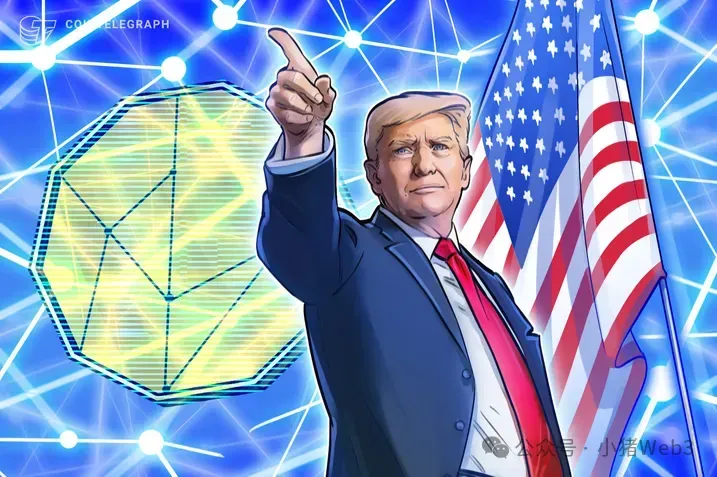
First, TRUMP is not a meme coin impulsively launched on Pump.fun, Solana’s largest meme coin issuance platform. Instead, it was a coordinated action secretly agreed upon between Trump, Solana, multiple on-chain protocols, and related projects—an orchestrated move that can be seen as a VC-backed token disguised as a meme coin. Collaborators include Jupiter, Solana’s largest DEX aggregator; liquidity protocol Meteora; meme coin trading platform Moonshot; and market maker Wintermute. Notably, Wintermute is also the primary market maker for many high-market-cap meme coins, having previously provided market-making services for the popular meme coin PEPE.
Second, in the short term, TRUMP’s launch created a massive “blood-sucking effect,” draining market liquidity and causing the prices of cryptocurrencies outside the Solana ecosystem to collapse. Deployed on the Solana chain, TRUMP further strengthened market recognition of Solana’s ecosystem. Meme coins and AI-themed tokens on Solana gained increased liquidity, boosting revenues for DeFi protocols on Solana. The crypto market also welcomed a wave of new users—Moonshot reported attracting over 400,000 new users within 24 hours. Additionally, on-chain tools like GMGN also benefited, with short-term revenue exceeding that of Uniswap, the largest DeFi protocol.
Finally, in the long run, Trump is fulfilling his promises regarding cryptocurrency policy. Combined with his statement at the World Economic Forum in Davos that he plans to make the U.S. the “global capital” of AI and cryptocurrency, Trump’s personal launch of a token signals a lenient regulatory stance toward the crypto industry. Trump’s family venture, World Liberty Financial, is not only involved in DeFi but is also actively investing in RWA (real-world assets), potentially encouraging more traditional financial institutions to enter the DeFi space. Furthermore, U.S.-based cryptocurrencies such as Solana, Ripple, and Sui may receive favorable policies, with the first two seeing renewed hope in their ETF approval processes.
Next, let’s take a closer look at Solana and Ripple, and how they differ from Ethereum.
Ethereum was conceived in November 2013 when Russian-Canadian programmer Vitalik Buterin published a white paper titled “Ethereum: A Next-Generation Smart Contract and Decentralized Application Platform.” Unlike Bitcoin’s singular function as a cash system, Ethereum functions as a decentralized global computer capable of running smart contracts of arbitrary complexity. ETH (Ethereum’s native cryptocurrency) ranks second in market cap after Bitcoin and is one of only two cryptocurrencies with spot ETFs. Ethereum marked the beginning of Web3, pioneering the era of blockchain smart contracts and catalyzing the explosion of DeFi projects on Ethereum in the summer of 2020—Uniswap, the largest DEX on Ethereum, processed over $450 billion in trading volume in 2023, surpassing Coinbase’s spot trading volume, the largest U.S. exchange.
Ripple was founded in September 2012, slightly earlier than Ethereum. Its predecessor was the RipplePay project, taken over and developed into Ripple (XRP) by Jed McCaleb, Chris Larsen, and Arthur Britto. Ripple was established to revolutionize the global remittance industry, replacing legacy systems like SWIFT. Strictly speaking, Ripple is not a public blockchain but a permissioned blockchain, using PoA (Proof of Authority) consensus, where transactions and blocks must be validated by approved validators (known as the UNL list). This makes Ripple more centralized compared to traditional blockchains like Bitcoin and Ethereum, though it demonstrates better scalability. Additionally, Ripple donated XRP worth $5 million to support Trump’s presidential inauguration.
Solana was launched in November 2017, when former Qualcomm engineer Anatoly Yakovenko released a white paper introducing “Proof of History” (PoH)—a mechanism for maintaining time between untrusted computers. With PoH, Anatoly set out to build the Solana blockchain, aiming to match the performance of a single machine and overcome the scalability limitations of traditional blockchains like Ethereum, enabling more efficient data propagation across nodes and creating a high-performance Layer1 whose software scales with hardware speed. Solana offers numerous technical advantages directly addressing Ethereum’s shortcomings: ultra-fast speed, with real peak average daily transactions per second reaching 1,000 compared to Ethereum’s 20; and extremely low fees, with transaction costs on Solana amounting to just 1% of Ethereum’s.
Ethereum's Internal and External Challenges
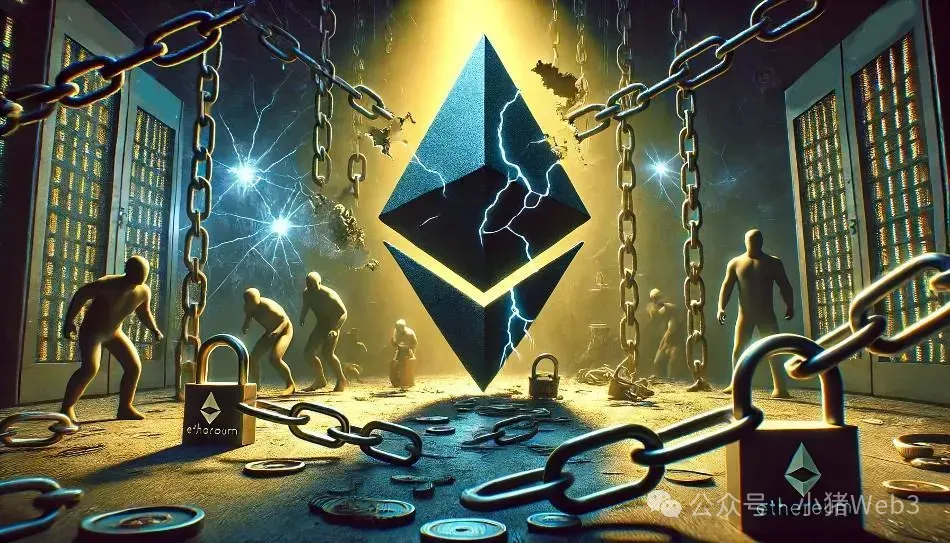
Ethereum’s current predicament can be summed up in four words: “internal strife and external threats.”
Internal Strife
Recently, the Ethereum Foundation has become a focal point of criticism, primarily due to perceived inaction, continuous ETH sales on-chain, disconnection from the community, and strategic issues concerning Layer2. Kain Warwick, founder of Synthetix and Infinex, believes there should be pressure on Layer2s to buy back ETH. Michael Egorov, founder of Curve, holds a more radical view, advocating abandoning Layer2 development in favor of Layer1. Stani Kulechov, founder of Aave, argues that the Ethereum Foundation needs comprehensive reform across 12 aspects.
On January 18, Vitalik stated that following criticism over the Ethereum Foundation’s lack of engagement with the Ethereum ecosystem, there would be “major changes” in leadership structure, communication with developer communities, and support mechanisms. Regarding the issue of selling ETH on-chain, on January 21, the Ethereum Foundation announced the creation of a wallet address to begin participating in DeFi. The organization plans to inject approximately $150 million worth of ETH into this wallet, though setup may take several days.
On January 22, Lido co-founder Konstantin Lomashuk shared a post hinting at forming a “Second Foundation.” He said: “Ethereum is the ultimate world computer, and every Ethereum enthusiast can help it grow, evolve, and succeed. If a second foundation is truly formed, it must have a clear goal to complement the tremendous work already being done by current contributors. I appreciate everyone’s support and believe we need more organizations contributing to Ethereum.”
On January 24, Vitalik published an article discussing Ethereum’s scaling strategy for 2025 and beyond, emphasizing Ethereum’s unique advantages in decentralization principles and practical application value. He affirmed that Layer2 success validates Ethereum’s ecosystem development philosophy and reiterated commitment to the Layer2 strategy. Vitalik identified two major current challenges: scalability scale and heterogeneity, with specific plans including increasing data block capacity, enhancing interoperability and ZK-EVM, strengthening security, and optimizing economic models.
External Threats
The two cryptocurrencies closest in market cap are Ripple and Solana. However, Ripple isn’t really a competitor—this was explained earlier. As a permissioned blockchain, Ripple primarily serves international banks and investment firms, prioritizing regulatory compliance over decentralization, so using a permissioned model is understandable. Therefore, Ethereum’s main competitor remains Solana, another public blockchain. Setting aside the “Trump factor,” we can compare these two blockchains across three dimensions: decentralization, scalability, and ecosystem.
Generally, Ethereum is considered more decentralized than Solana. The reason for saying “generally” is that decentralization itself is an abstract concept and hard to measure. Common metrics include node count and distribution, token holder distribution, client diversity, Nakamoto coefficient, and governance processes. To avoid controversy, this represents only the author’s personal view: if Ethereum scores 100 points on decentralization, Solana would score around 70–80, while other PoS blockchains fall below 60.
However, when scoring scalability, Solana could earn 90 points, while Ethereum scores below 10. That said, Ethereum’s approach to solving scalability involves Layer2 solutions—building additional network layers atop Ethereum to process more transactions while preserving security and decentralization. Currently, Base is Ethereum’s largest Layer2, jointly developed by cryptocurrency exchange Coinbase and Optimism, capable of up to 300 TPS—still significantly lower than Solana.
The ecosystem is Ethereum’s greatest strength. Ethereum launched six years earlier than Solana, accumulating vast numbers of developers and users, along with extensive infrastructure and long-term-oriented applications built around it. However, starting in 2024, Solana has surpassed Ethereum in newly added developers. For users, most activity occurs via on-chain Dexes. Due to wealth effects driven by meme coins and AI coins on Solana, active user counts there have recently exceeded those on Ethereum.
Conclusion

Personally, I am not overly pessimistic about Ethereum’s future development. I joined the Web3 industry in 2020, initially attracted by Ethereum’s innovation. As a contributor to LXDAO and ETHPanda, I’ve met Vitalik in various settings and listened to his presentations.
From an emotional standpoint, I see Vitalik as an outstanding leader embodying the spirit of “computer culture”—despite lacking flashy marketing language, he listens attentively, responds thoughtfully, and makes sound decisions. Thus, I believe the Ethereum Foundation can successfully reform under his leadership.
Technically, I believe Ethereum has established a long-term, detailed roadmap to uphold decentralization. In the future, Ethereum can achieve over 100,000 TPS through Layer2, with second-level transaction confirmations and low fees—provided the roadmap is delivered on schedule.
Regarding its rival Solana, Solana now positions itself as a consumer-grade public blockchain, gradually capturing user mindshare in the ToC space. After all, users care less about decentralization and more about tangible benefits like low fees and high speeds. For Ethereum to match Solana’s performance may require three to five years of technical implementation, making it unlikely to seize opportunities in this cycle.
But Ethereum can pursue a completely different path—positioning itself as a finance-grade public blockchain, where Layer1 focuses on ToB use cases, attracting traditional financial institutions to expand into Web3, particularly in RWA. Real-world financial operations are inherently conservative systems requiring higher stability, lower risk, and easier maintenance. Ethereum has never experienced downtime, maintains stronger decentralization than Solana, and boasts a far more robust ecosystem. It still leads in developer numbers and possesses the most comprehensive infrastructure. A full cycle of DeFi growth has already accumulated substantial experience in financial security practices and contract templates—these are compelling incentives for traditional financial institutions.
Finally, I want to emphasize that Ethereum must act immediately to address internal governance issues and external competition from Solana. It cannot afford to dwell solely on technology and ideals while ignoring users and markets. Overall, Ethereum has reached its tenth year. At this stage, any company inevitably faces transformation due to changing external conditions and internal interest conflicts. The challenges Ethereum faces today will likely confront Solana tomorrow. “Embracing change” remains the best path forward for Ethereum to reach a brighter future.
Join TechFlow official community to stay tuned
Telegram:https://t.me/TechFlowDaily
X (Twitter):https://x.com/TechFlowPost
X (Twitter) EN:https://x.com/BlockFlow_News