








DeSpread: Exploring Berachain's Ecosystem Characteristics and Overview of Core Projects
TechFlow Selected TechFlow Selected
DeSpread: Exploring Berachain's Ecosystem Characteristics and Overview of Core Projects
Berachain is a Layer 1 network featuring the Proof of Liquidity consensus mechanism.
 Navigating Web3 tides with focused insights
Disclaimer: The content of this report reflects the views of the respective authors and is for informational purposes only. It does not constitute advice to buy or sell tokens or use protocols. Nothing in this report constitutes investment advice, nor should it be construed as such.
This article does not cover Berachain basics. If you are new to Berachain, we recommend first reading "Exploring Berachain: Capturing Liquidity and Security in One Hand" before continuing. Protocol links included in this article may be deleted or modified after mainnet launch; please exercise caution when accessing and using these links.
Introduction
Berachain is a Layer 1 network featuring a Proof-of-Liquidity (PoL) consensus mechanism that aligns incentives among validators, liquidity providers, and protocols. Currently, Berachain is operating its second testnet, "bArtio Testnet," addressing issues identified during the first testnet phase.
Many ecosystem protocols have already deployed on the bArtio Testnet. As of January 2nd, according to Berachain's official website, 234 protocols are participating in the bArtio Testnet, with cumulative wallet participation exceeding 2.38 million. Despite being in the testnet stage, these figures indicate strong market interest in Berachain and its ecosystem.
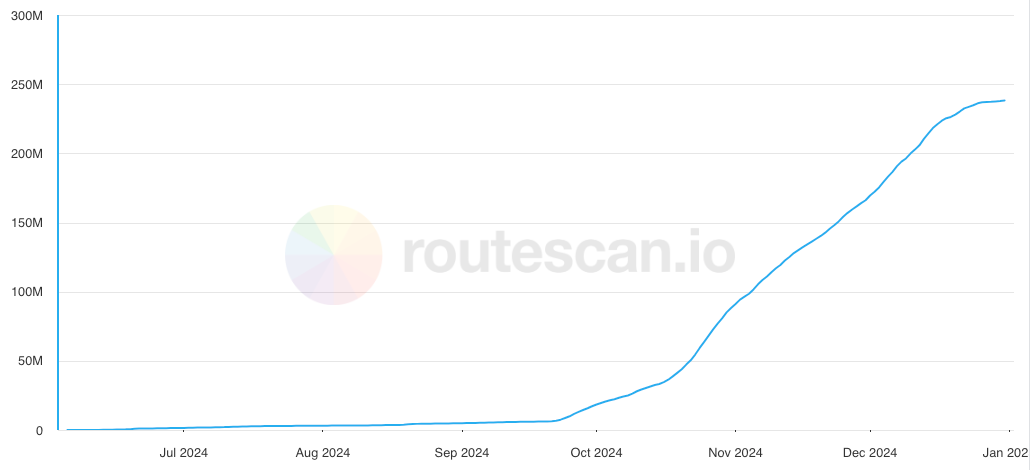
bArtio Testnet Cumulative Wallet Trend; Source: bArtio Explorer
Smokey The Bera, Berachain’s founder who promoted “Q5 Mainnet Launch” starting from late 2024, recently hinted via a X post about Boyco that “Q5 will happen before April,” signaling an imminent mainnet launch. This has attracted both new and existing users to join the Berachain ecosystem.
However, participating in Berachain’s ecosystem requires understanding its PoL mechanism. Before mainnet launch, various complex financial products launched by protocols aiming to gain advantages within the PoL framework have created significant entry barriers for new users.
This article aims to explore key areas across the Berachain ecosystem to effectively lower user participation thresholds. We will examine standout projects in each domain and detail how each protocol leverages the PoL mechanism.
DEX
Berachain features a native DEX called BEX, which will launch on mainnet as BeraSwap. BeraSwap will support seamless liquidity trading within the ecosystem and ensure effective operation of the PoL mechanism. Given BEX's presence, other DEXs preparing to launch on Berachain are developing more convenient and efficient services and strategies to compete, attract users, and capture liquidity.
2.1. Kodiak
Kodiak is a DEX that emerged from Berachain’s incubation program “Build a Bera.” In addition to supporting BEX-style Uniswap v2 functionality (spreading liquidity evenly across the entire price range), Kodiak also offers CLAMM (Concentrated Liquidity Automated Market Maker) features similar to Uniswap v3, allowing liquidity providers to set and concentrate liquidity within specific price ranges.
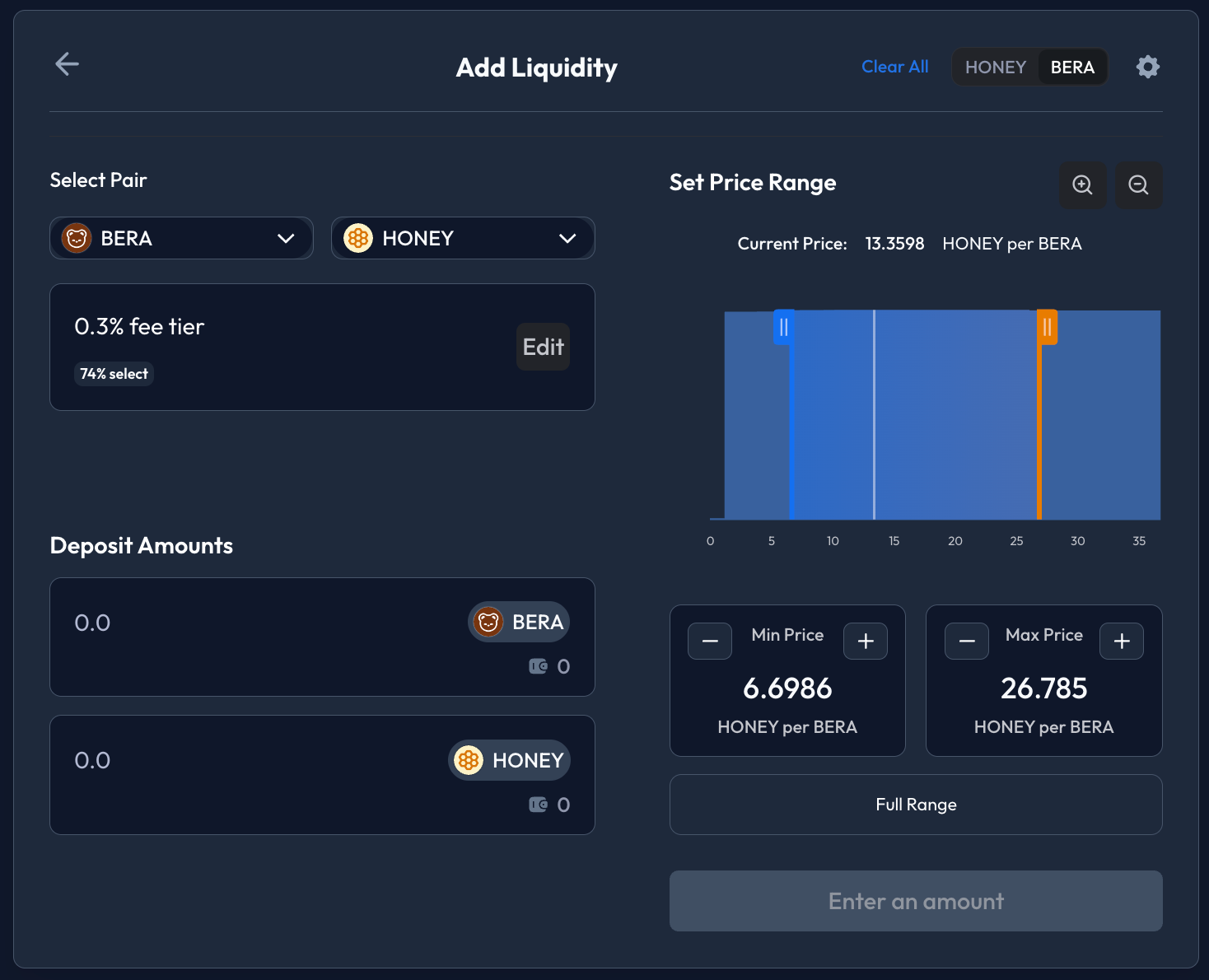
Kodiak CLAMM Pool Deposit Interface; Source: Kodiak
Users can provide liquidity within narrow ranges via CLAMM pools to farm $BGT more efficiently. Additionally, Kodiak provides an Island feature that automatically rebalances and resets CLAMM ranges, reducing the hassle of managing liquidity positions. This function uses BEX to rebalance liquidity, establishing a complementary rather than competitive relationship.
Moreover, due to the customizability of liquidity ranges, CLAMM position tokens are typically difficult for other protocols to utilize. However, Kodiak standardizes users’ CLAMM liquidity positions through its Island feature, enabling these LP tokens to be used across other protocols and promoting more flexible and diverse ecosystem interactions.
Prior to mainnet launch, Kodiak has partnered with many projects in the Berachain ecosystem, solidifying its status as core infrastructure. It also operates its own Berachain node as a validator and, as of January 3rd, received the second-highest amount of $BGT delegation on the bArtio Testnet.
2.2. Honeypot Finance
Honeypot Finance is a protocol supporting all aspects of a token’s lifecycle—from issuance to liquidity provision and efficient trading—and consists of the following sub-protocols:
-
Henlo DEX: A DEX designed to protect users from MEV attacks, offering limit orders and Batch-A2MM functionality that batches user orders over a period and executes them at the same price.
-
Dreampad: A launchpad protocol providing incubation and funding opportunities for projects launching on Berachain, ensuring fair token launches and distribution.
-
Pot2Pump: A meme coin launch platform offering a safer environment for meme coin offerings and trading, including anti-bot sniping measures and refunds to participants if fundraising goals aren’t met within 24 hours.
Like Kodiak, Honeypot Finance plans to operate as a validator after mainnet launch, offering its governance token $HPOT as staking rewards to users delegating $BGT.
Additionally, Honeypot Finance utilizes accumulated $BGT to emit into $HPOT liquidity pools, thereby enhancing $HPOT liquidity. The protocol also plans to increase token value by using node operation revenue to buy back and burn $HPOT while preserving reward value for $BGT delegators, further strengthening $HPOT liquidity.
Besides Kodiak and Honeypot Finance, other protocols preparing for Berachain mainnet aim to offer high-efficiency and convenient trading functions, including BurrBear, which supports capital-efficient trading by aggregating three or more similarly priced underlying assets (similar to Curve Finance); the liquidity aggregator OogaBooga; and the cross-chain abstract trading protocol Shogun.
Liquid Staking
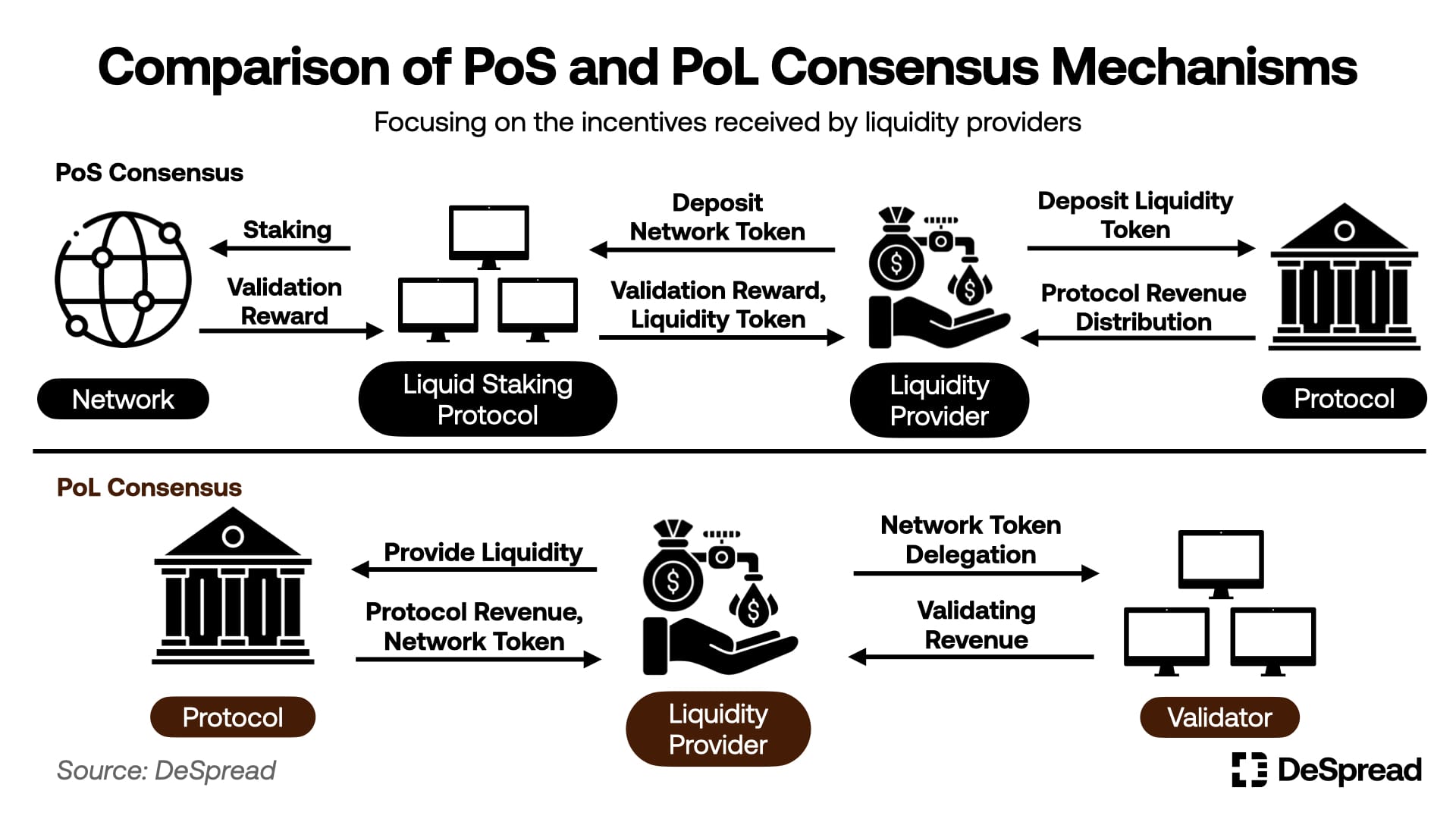
In typical PoS networks, network rewards are distributed to validators who hold a certain amount of tokens and operate nodes. Therefore, without a native token delegation structure, ordinary users who do not run nodes cannot earn network rewards.
To solve this issue, liquid staking protocols accept native token deposits and delegate node operations, distributing rewards so general users can participate in network staking. These protocols also issue LP tokens representing ownership of staked native tokens, increasing ecosystem liquidity. Through these functions, liquid staking protocols have become core infrastructure in PoS networks.
In contrast, while Berachain requires 69,420 $BERA to operate a node on the testnet, its structure allows liquidity providers who deposit liquidity tokens from ecosystem protocols into Berachain to receive network rewards denominated in $BGT along with liquidity provision yield. Thus, aside from differences in method and sequence, Berachain essentially integrates liquid staking into its network protocol.
On mainnet, although node operation will require 250,000 $BERA, Berachain’s structure distributes $BGT rewards and yield to liquidity providers—meaning, aside from procedural differences, Berachain inherently embeds liquid staking within its protocol.
However, in Berachain, existing protocols can currently only gain voting power either by cooperating with validators to share rewards or—as demonstrated by Kodiak and Honeypot Finance—by running their own nodes to build self-sustaining flywheel models for launching liquidity pools.
Within this context, Berachain’s liquid staking protocols will provide redemption capabilities for $BGT (which determines emission voting rights). This allows Berachain ecosystem projects to incorporate redeemed $BGT into their mechanisms without negotiating with validators or node operators. In other words, this makes it easier for ecosystem protocols to adopt tightly integrated PoL-based structures.
3.1. Infrared
Infrared is a liquid staking protocol co-incubated under Berachain’s “Build a Bera” program alongside Kodiak.
Infrared operates vaults that accept LP tokens from liquidity pools, generate $BGT yield, and run network nodes. When users deposit LP tokens into these vaults, Infrared uses those tokens to generate $BGT, and users receive $iBGT (redeemed $BGT) proportional to their deposited LP tokens.
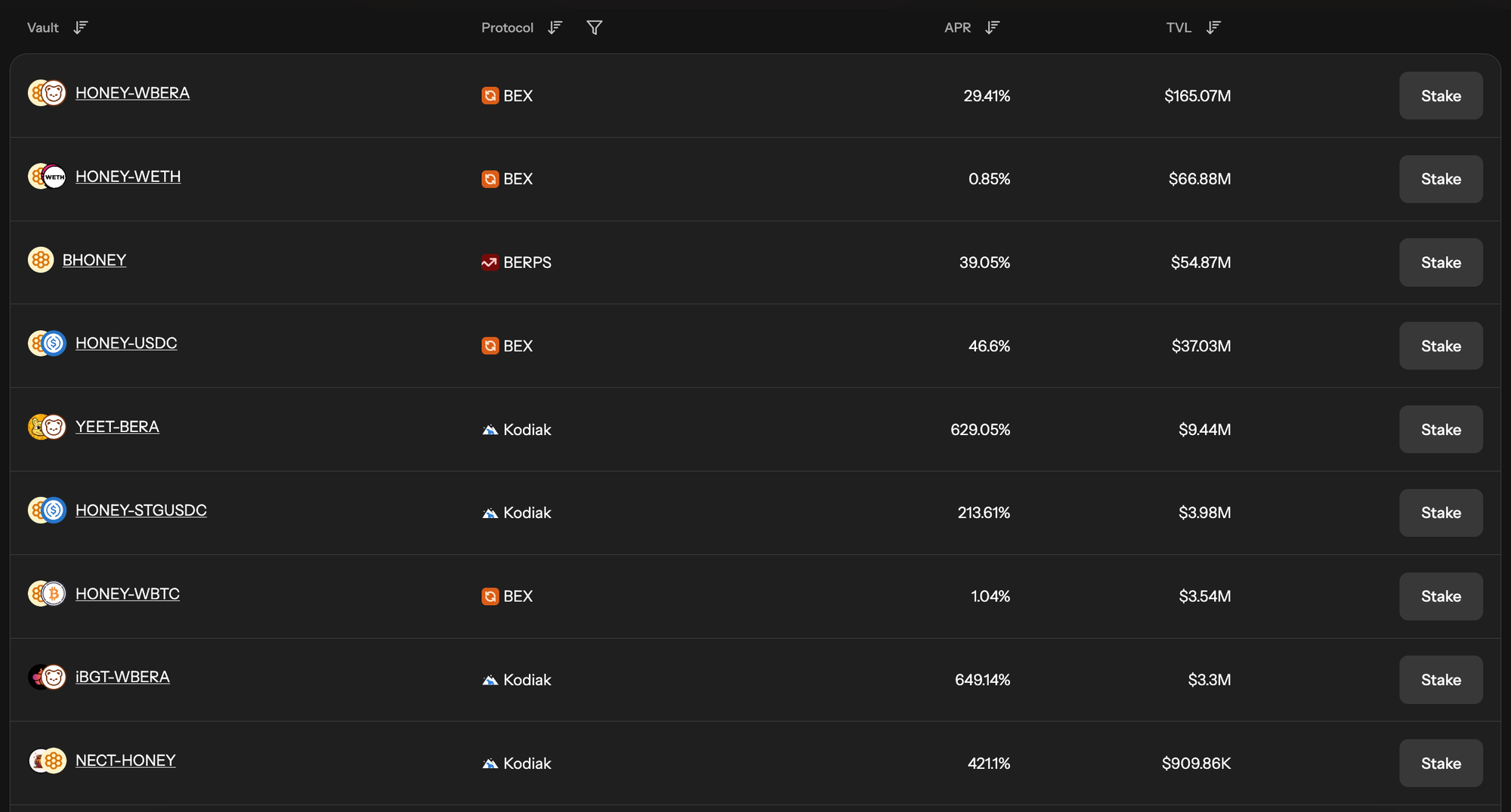
Infrared Dashboard; Source: Infrared
Users can leverage the received $iBGT in the following ways:
-
Stake in Infrared to claim rewards generated by nodes
-
Use in other DeFi protocols
-
Sell for profit
Thus, by making $BGT a liquid token, Infrared centralizes and redistributes PoL-generated rewards to fewer $iBGT stakers. It also helps other protocols in the Berachain ecosystem integrate $iBGT into their systems, allowing them to offer higher yields to users. Additionally, Infrared plans to introduce new features enabling it to receive and redeem the $BERA required for node operations while running nodes and distributing profits.
A prime example of effectively utilizing Infrared’s functionality is Kodiak’s Island Pool, briefly mentioned earlier in the DEX section. After mainnet launch, Infrared plans to roll out Kodiak’s Island Pool (already operational on testnet), enabling users to efficiently farm $iBGT using Kodiak’s CLAMM, then restake the earned $iBGT in Infrared or redeposit it into Kodiak’s $iBGT/$BERA Island Pool for additional $iBGT farming. Of course, users may also choose alternative ecosystem strategies.
Due to its interconnectedness and effective ecosystem dynamics, Infrared has attracted significant attention, currently receiving the highest $BGT delegation on the bArtio Testnet. Many ecosystem projects have already partnered with Infrared and plan to launch derivative products, indicating Infrared will become one of the most critical infrastructures post-mainnet.
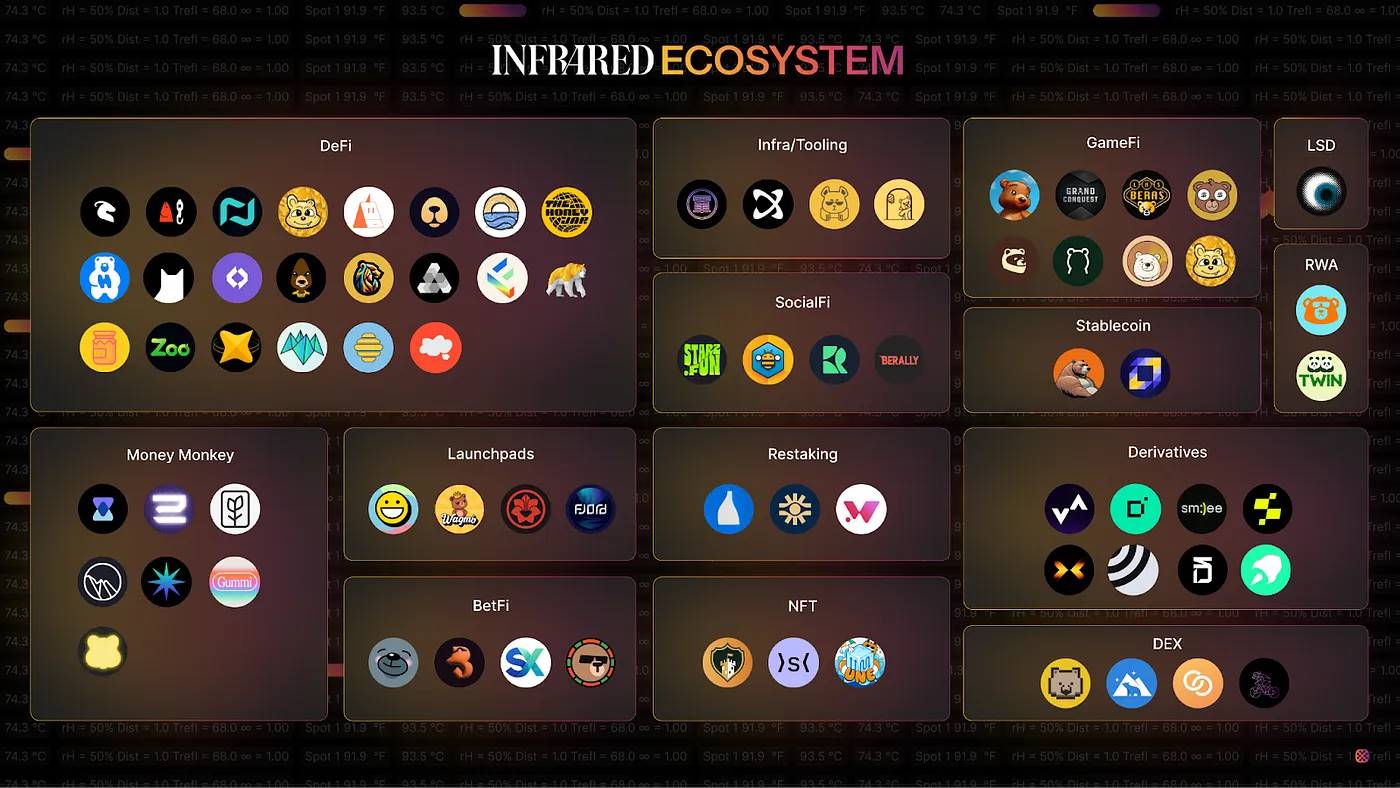
Infrared Ecosystem Map; Source: Infrared Blog
Meanwhile, specific details on how Infrared will use delegated $BGT to select $BGT emissions have not yet been disclosed. Therefore, it will be important to closely monitor whether Infrared implements these processes in a decentralized manner and who receives voting rights for its held $BGT.
3.2. BeraPaw
BeraPaw is another liquid staking protocol, but instead of operating its own nodes, it runs vaults across different nodes and liquidity pools registered on BeraPaw, issuing $LBGT as a $BGT redemption token.
BeraPaw’s governance token is $PAW. Users can vote with BeraPaw-held $BGT to determine which liquidity pools should receive $BGT emissions. Node operators distribute rewards from staked $BGT to $LBGT holders through this method.
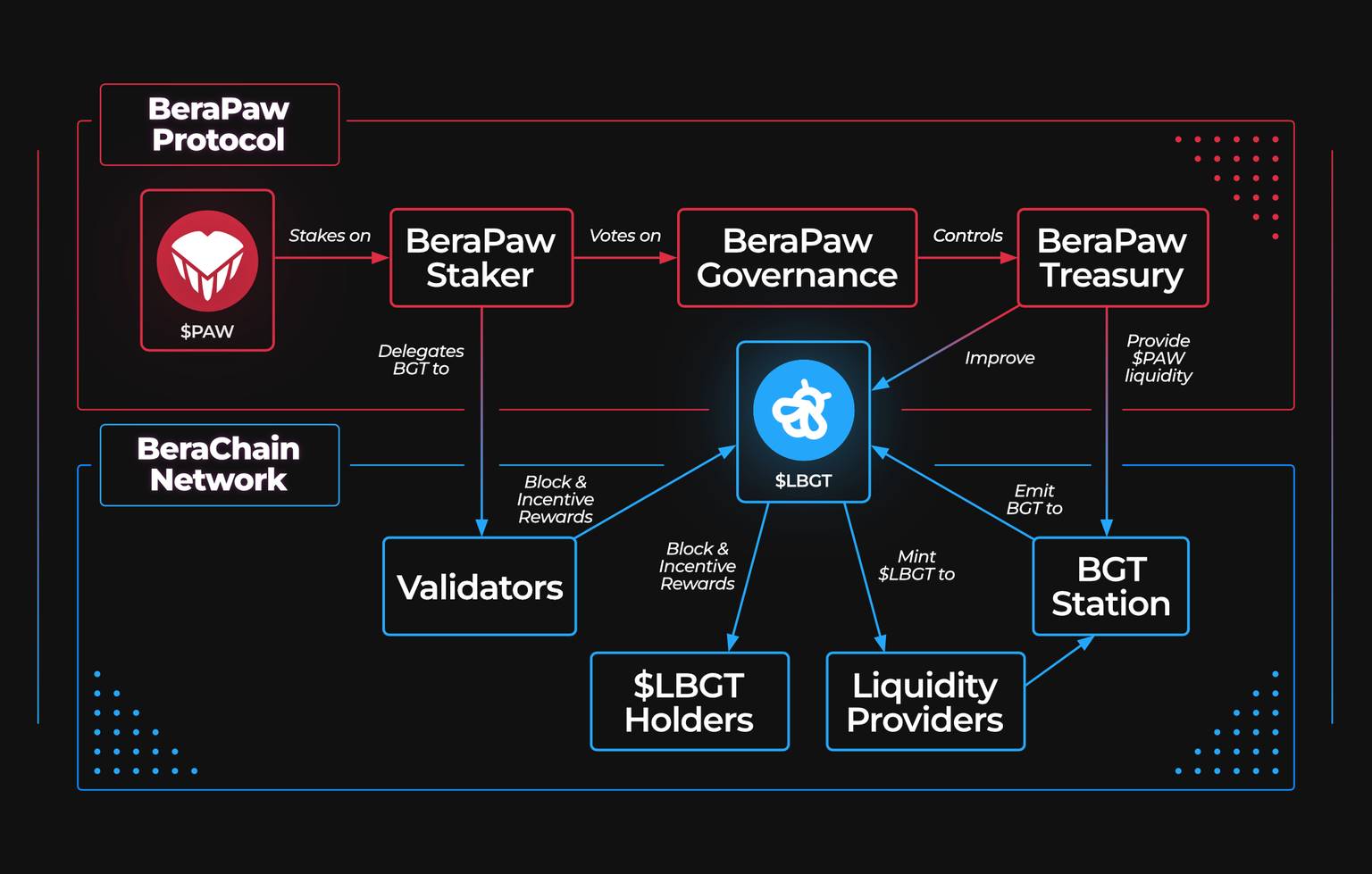
BeraPaw Protocol Structure; Source: BeraPaw Docs
BeraPaw’s structure splits the utility of $BGT tokens into two: $LBGT for receiving rewards and $PAW for voting on $BGT emission pools. This design allows users and protocols using $PAW to vote on $BGT emissions to wield greater voting power with relatively less capital. Protocols seeking initial liquidity in the Berachain ecosystem are therefore expected to actively leverage $PAW to generate $BGT rewards for their liquidity pools.
The above are two liquid staking protocols preparing for full launch on Berachain. While these protocols enable more derivatives and user strategies, they also increase ecosystem complexity. On the Berachain network, a node’s power and influence are proportional to the amount of delegated $BGT, and liquid staking protocols offering $BGT redemption are expected to be widely adopted by users and protocols alike, becoming core infrastructure.
Lending
Berachain also features a native lending protocol BEND, offering the following functionalities:
-
Borrow $HONEY using $WBTC, $WETH as collateral
-
Deposit $HONEY
Unlike typical lending protocols, BEND has two notable characteristics: 1) $HONEY cannot be used as collateral, and 2) deposits of $WBTC and $WETH do not earn interest, but borrowing $HONEY generates $BGT rewards.
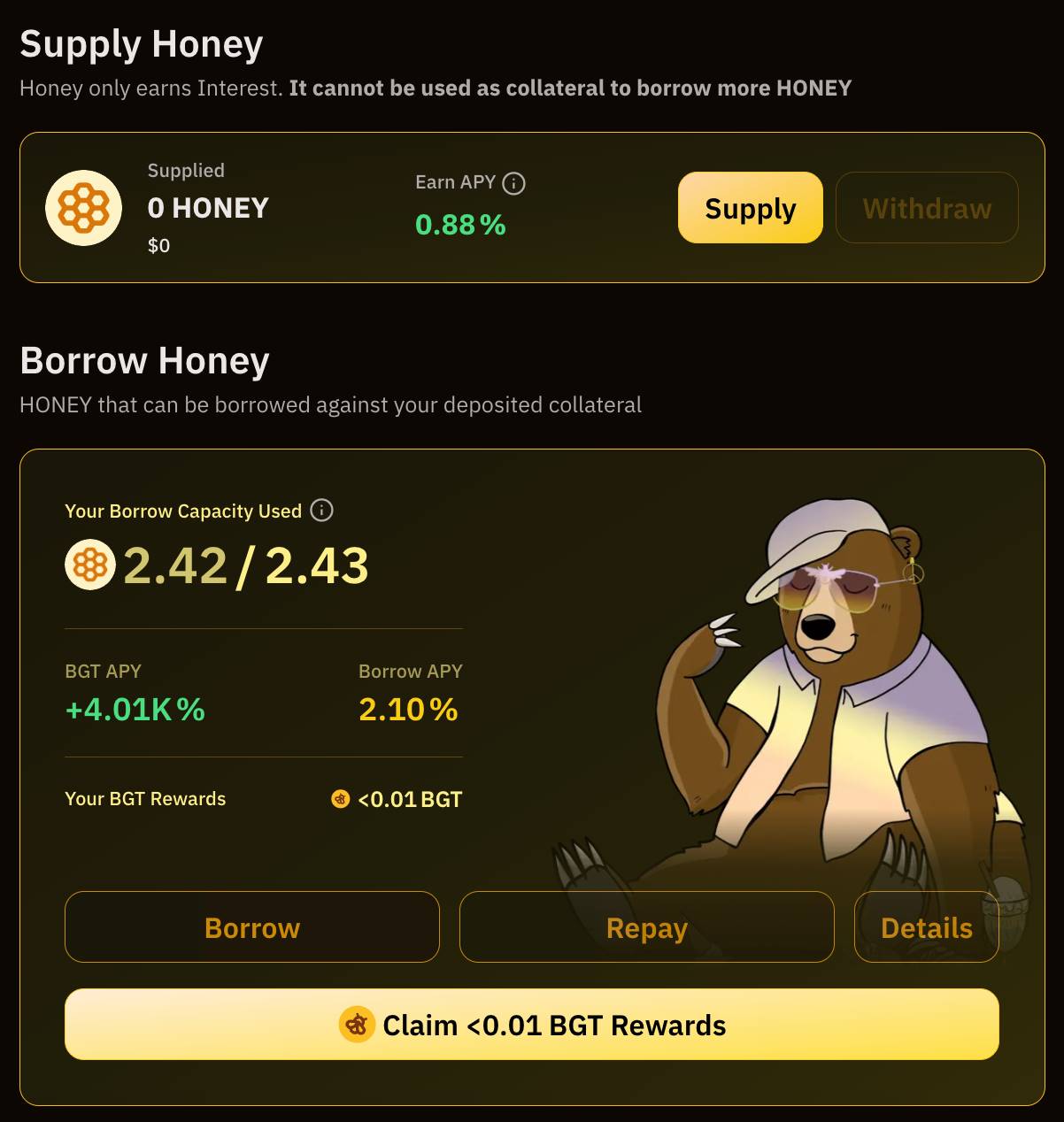
In BEND, $BGT can be claimed for borrowed $HONEY; Source: BEND
This structure reinforces Berachain’s triple-token economic model, generating base yield for $HONEY while increasing borrowing demand through $BGT incentives and enriching ecosystem liquidity. Users can also execute leveraged $BGT farming by repeatedly swapping borrowed $HONEY back into $WETH or $WBTC and redepositing them into BEND.
Next, we’ll explore several major lending protocols preparing to launch on Berachain and examine the features each platform offers.
4.1. BeraBorrow
BeraBorrow is an over-collateralized stablecoin issuance protocol where users can mint the $NECT stablecoin. It accepts not only common assets like $BERA and $HONEY but also BEX and Berps LP tokens, as well as Infrared’s $iBGT as collateral. $NECT minted against these collateral assets can be deposited into BeraBorrow’s liquidity stability pool, where depositors earn fees from $NECT borrowers and liquidation events, creating a structure that supports baseline demand for $NECT.
In addition to $NECT, BeraBorrow has a governance token $POLLEN, which serves as an incentive token in the following ways:
-
Rewarding liquidity pools that earn $BGT emissions
-
Incentivizing deposits into pools with high $NECT debt exposure
-
Distributed as rewards to depositors in the liquidity stability pool
Beyond this basic structure, LP tokens deposited into BeraBorrow are automatically deposited into Infrared to earn $iBGT rewards and automatically restaked to compound returns. Users can borrow $NECT to provide liquidity on other protocols and redeposit the received LP tokens into BeraBorrow to establish leveraged positions.
Additionally, BeraBorrow plans to allocate $BGT to DEX liquidity pools for $NECT and $iBGT trading, boosting $NECT demand and market liquidity while offering high yields to liquidity providers.
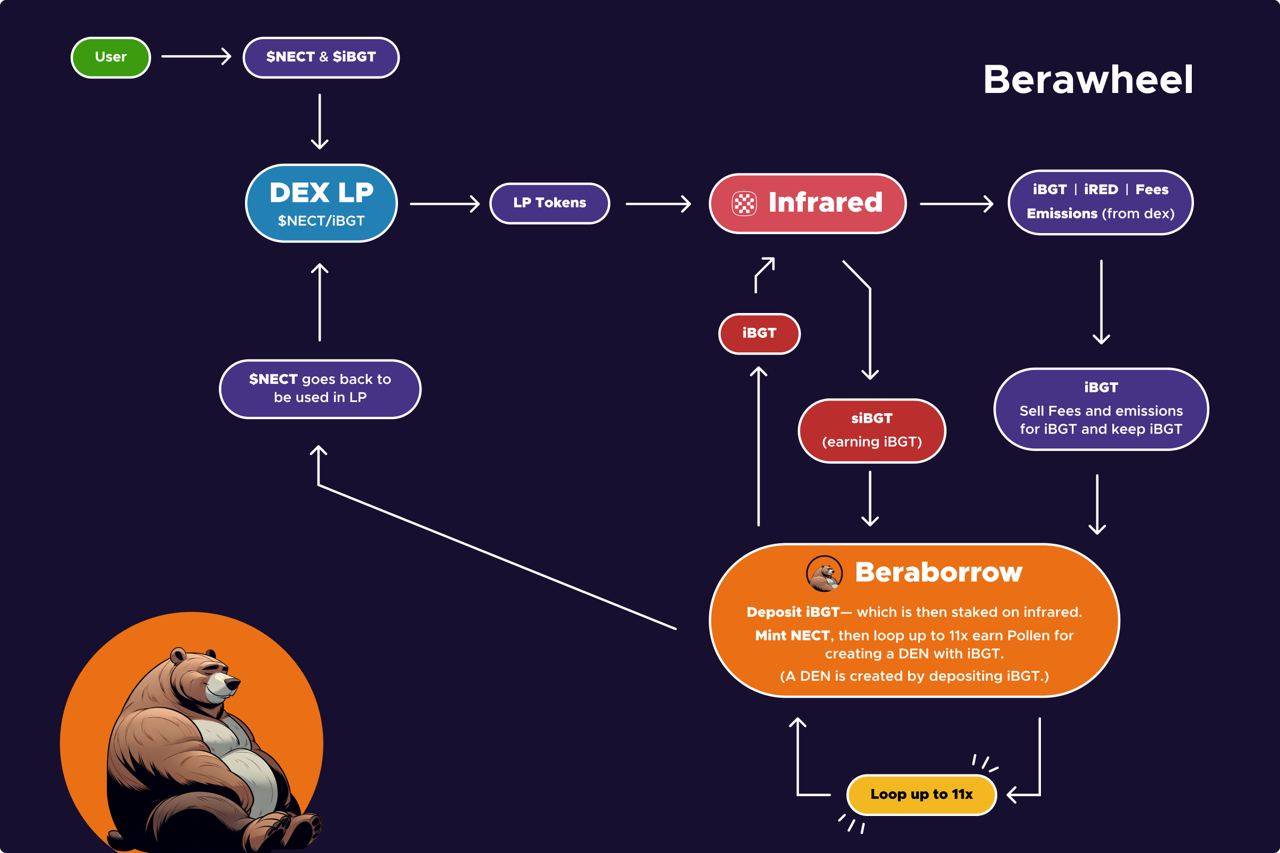
BeraBorrow's Flywheel Structure; Source: BeraBorrow Docs
With various forms of demand support, $NECT is poised to become a core native stablecoin in the Berachain ecosystem alongside $HONEY.
4.2. Gummi
Gummi is a lending protocol incubated through “Build a Bera” that operates without oracles and allows anyone to create lending pools without restrictions. Leveraging this architecture, Gummi plans to enable 100x leveraged positions on any asset available on Berachain.
Prior to mainnet launch, Gummi has established partnerships with core infrastructure players like Infrared and Kodiak and plans to support leveraged farming positions using $iBGT and various LP tokens from Kodiak.
As evident, unlike lending protocols on other networks primarily used for leverage and hedging specific assets, Berachain’s lending protocols can amplify $BGT emissions from the PoL mechanism. Therefore, as more protocols launch on Berachain and the ecosystem diversifies, the utility and demand for lending protocols are expected to grow in tandem, making them essential components of the ecosystem.
Derivatives
Currently, various derivative protocols leveraging the PoL mechanism in unique ways are preparing to launch on Berachain. Foundational infrastructure includes Berps, a native Perp DEX developed by the Berachain team to launch alongside BEX and BEND.
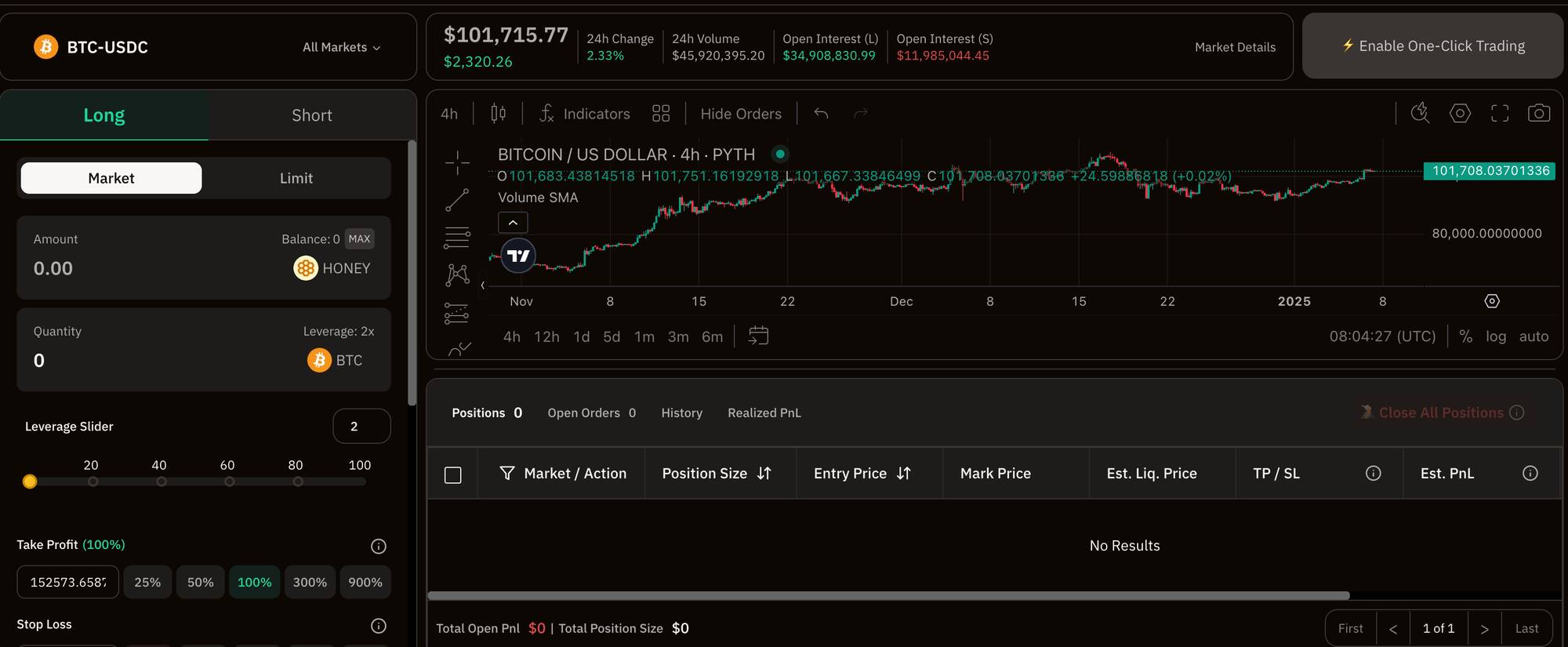
Berps Interface; Source: Berps
On Berps, users can open 100x leveraged positions on various assets using $HONEY or deposit $HONEY to provide liquidity for traders, earning trading fees, funding payments, and $BGT in return.
This structure gives $HONEY a clear use case as the base asset for Berachain’s native Perp DEX while offering a simple yet effective entry point for $BGT farming—enabling even new users intimidated by the PoL mechanism to earn $BGT rewards by simply depositing a single token, $HONEY. As such, this protocol is expected to become one of the most critical pillars supporting Berachain’s triple-token economy.
Next, let’s examine some unique derivative protocols preparing to launch on Berachain.
5.1. SMILEE
SMILEE is an options protocol capable of creating hedging positions for DEX liquidity provider stakes. Options created on SMILEE have a unique structure that generates higher profits during periods of high price volatility—producing the exact opposite effect of Impermanent Loss (IL), where liquidity providers suffer larger losses during high volatility.
Users must pay a premium to open an options position on SMILEE, choosing from three types of options:
-
Bull: Bet on significant upward price movement until expiry.
-
Bear: Bet on significant downward price movement until expiry.
-
Smile: Bet on significant upward or downward price movement until expiry.
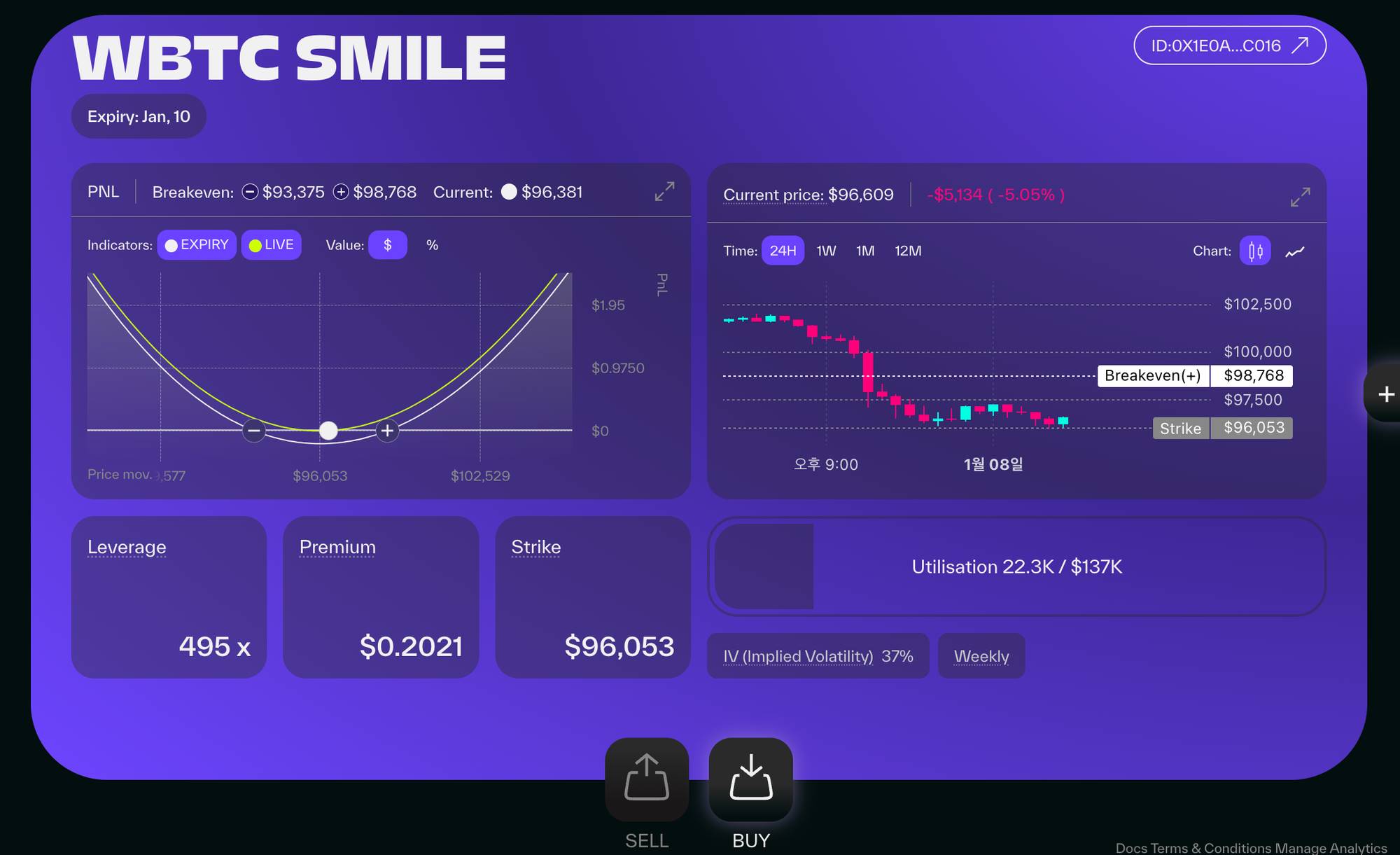
WBTC Smile Option Product; Source: Smilee
Besides options trading, users can also provide liquidity for options positions opened by traders and earn the premiums paid by traders. While liquidity providers face IL equivalent to traders’ profits, similar to providing liquidity on DEXs, SMILEE reduces liquidity provider IL by dynamically rebalancing liquidity positions in real time when options trades occur.
Berachain network protocols are expected to create liquidity pools on major DEXs—including native dApps like BEX—to enhance their token liquidity and generate $BGT rewards for these pools. In this environment, liquidity providers and protocols farming $BGT are likely to widely adopt SMILEE as a hedging tool for LP positions. Furthermore, if SMILEE positions begin earning $BGT emissions in the future, SMILEE’s position within the Berachain ecosystem will become even more entrenched.
5.2. Exponents
Exponents is another derivatives protocol that enables non-liquidatable leveraged positions on all assets within the ecosystem via its self-developed inverse asset issuance protocol, IBC (Inverse Bonding Curve).
IBC adopts a reverse Bonding Curve, opposing the conventional Bonding Curve concept. Bonding Curves have recently been adopted by many meme coin launchpads (e.g., Pump.fun) as a price discovery mechanism. Traditional Bonding Curves increase prices by reducing the quantity of the asset needed as more collateral is deposited into the liquidity pool. In contrast, IBC implements inverse assets—prices decrease as demand increases, while the quantity of receivable assets increases with more collateral deposited.
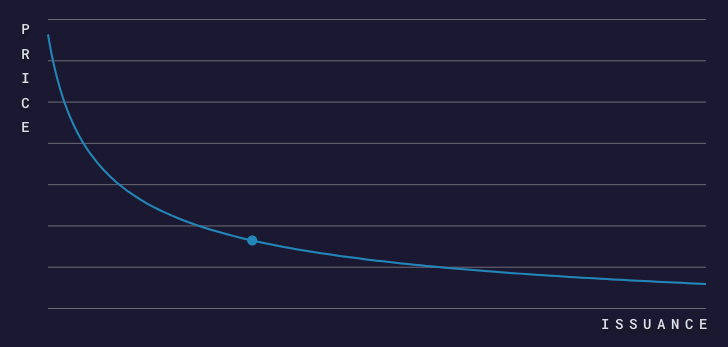
IBC Graph; Source: IBC
Exponents uses the IBC mechanism to create long and short positions on all assets without relying on oracles. Its goal is to adjust IBC parameters to steepen the bonding curve slope, thereby enabling non-liquidatable leveraged positions.
Additionally, IBC includes staking functionality for synthetic assets issued on the protocol and distributes profits generated by the protocol. When combined with Berachain’s PoL mechanism, $BGT emissions can be distributed as rewards to users issuing assets via IBC. In other words, by using $BGT as incentives, Exponents encourages users to establish short positions on competing protocol tokens, enabling more diverse ecosystem dynamics.
Beyond SMILEE and Exponents, various derivative protocols are preparing to launch on Berachain, including IVX, which enables low-cost, short-term, high-leverage positions via 0-DTE functionality, and Polarity Finance, which offers loans collateralized by options. Compared to derivative tools in other network ecosystems, each of these instruments is more diverse and complex—some complementing Berachain’s PoL mechanism, others leveraging it to highlight their unique advantages.
Others
So far, we’ve explored several protocols serving as foundational infrastructure in blockchain ecosystems—including DEXs, liquid staking, lending, and derivatives—and examined how these projects leverage the PoL mechanism to highlight their unique strengths on Berachain.
However, beyond the DeFi sectors introduced so far, various types of projects are preparing to launch on Berachain. Some actively utilize Berachain’s unique structure and PoL mechanism; others achieve high synergy with the ecosystem without directly employing the mechanism; and some promote concepts aligned with Berachain’s cultural codes—each attracting user interest in their own distinctive way.
Next, we’ll introduce several notable projects preparing to launch on Berachain.
6.1. Goldilocks
Goldilocks is a DAO and platform developing Berachain-specific DeFi infrastructure, composed of the following sub-protocols:
-
Goldiswap: Includes an FSL Pool (Floor Supporting Liquidity Pool) guaranteeing a minimum floor price for Goldilocks’ governance token $LOCKS, and a PSL Pool (Price Supporting Liquidity Pool) for exchanging $HONEY and $LOCKS. This structure uses fees generated from $LOCKS trading in the PSL Pool to continuously increase the $LOCKS floor price. Users pledging $LOCKS receive $PORRIDGE as rewards, which grants them the right to purchase $LOCKS at the minimum price. Users can also borrow $HONEY by pledging $LOCKS.
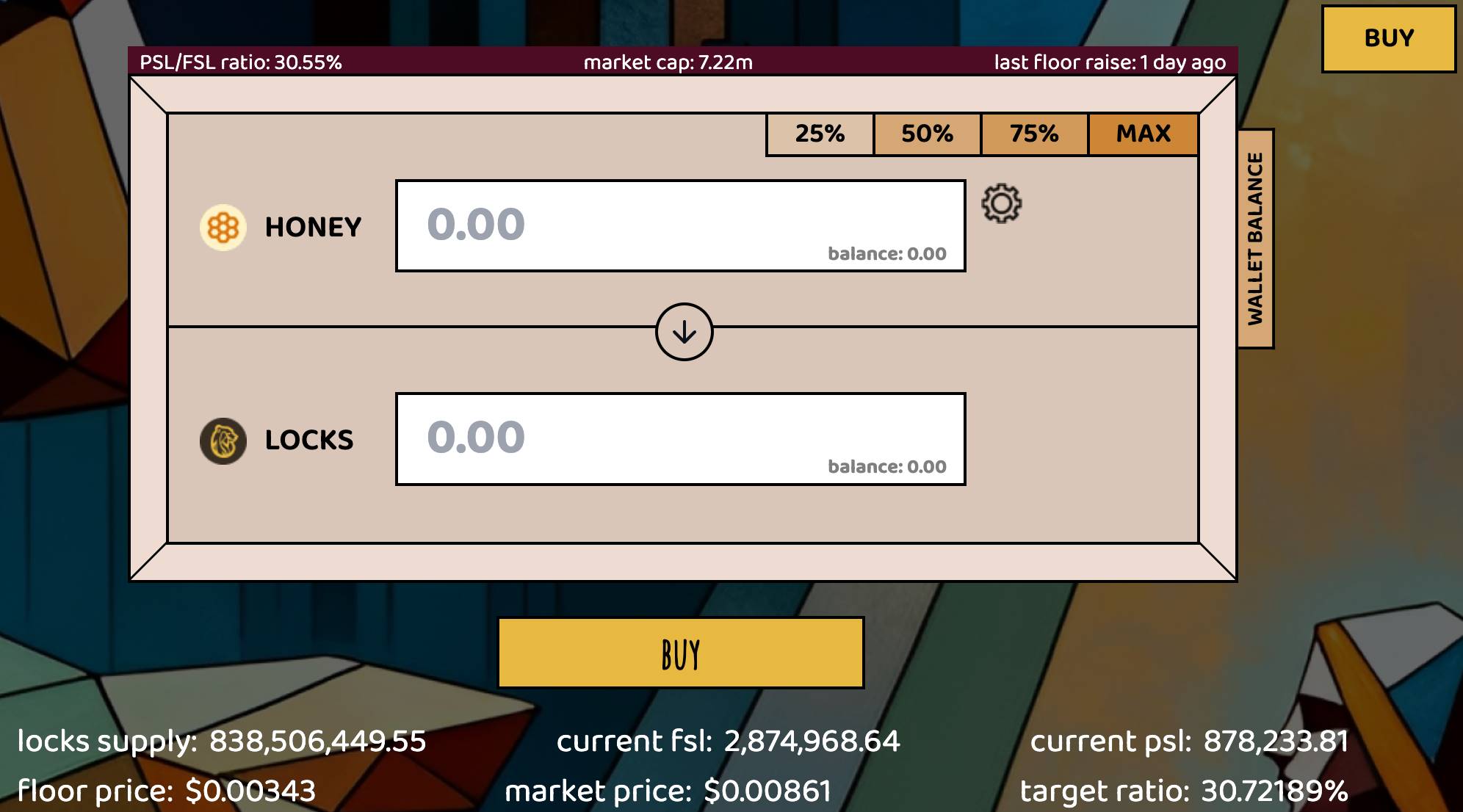
Goldiswap Interface; Source: Goldilocks DAO
-
Goldilend: An NFT-backed lending protocol for Berachain ecosystem NFTs.
-
Goldivaults: Generates yield using time-locked assets deposited in Berachain ecosystem DeFi protocols. Depositors receive OT (Ownership Tokens), granting rights to reclaim principal upon maturity, and YT (Yield Tokens), granting rights to accrued yield. This enables users to trade future yield income, offering functionality similar to Ethereum’s Pendle Finance. (For detailed information on this feature, see the article “Pendle Finance – Discovering Undeveloped Markets for Yield Trading”).
Thus, Goldilocks provides Berachain-optimized services such as NFT-backed lending and yield trading. Compared to other networks, protocol-issued NFTs and liquidity provision play more prominent roles in this ecosystem. Additionally, Goldilocks plans to gradually secure more users and liquidity by progressively increasing its platform token’s pricing structure and leveraging it in lending services.
Meanwhile, Pendle Finance has become a core DeFi protocol adopted by many projects in the current Ethereum ecosystem, distributing protocol points via YT to incentivize liquidity deposits and drive airdrop activities. Similarly, it will be interesting to observe whether Goldilocks can partner with other token-launching projects in the Berachain ecosystem to create various types of Goldivaults, thereby gaining dominance within Berachain.
6.2. Beradrome
Beradrome is a protocol that aggregates users’ liquidity tokens and distributes generated profits and negotiated rewards from other protocols back to users. Beradrome employs three native tokens to reinternalize profits generated within Beradrome:
-
$oBERO: Rewards users who deposit liquidity tokens into Beradrome. By burning $oBERO, users gain voting rights over $oBERA reward emissions in liquidity pools or can mint and receive $BERO by depositing an equivalent amount of $HONEY into Beradrome.
-
$BERO: Beradrome’s primary token. Since $HONEY is deposited during minting via $oBERO burn, its value is guaranteed to remain above 1 $HONEY.
-
$hiBERO: Beradrome’s governance token, obtainable by staking $BERO. It allows voting—with Beradrome-held $BGT—on which liquidity pools should receive $oBERO and entitles holders to protocol-generated profits. $hiBERO stakers can also borrow $HONEY using their staked $hiBERO as collateral.
Thus, Beradrome encourages internalization of protocol-generated rewards through the $oBERO-to-$BERO minting mechanism, maintaining $BERO and $hiBERO prices above $1 while offering $hiBERO holders non-liquidatable borrowing opportunities using deposited $HONEY from the $BERO minting process. This will continuously attract external liquidity into the protocol, encourage more protocols to develop liquidity via Beradrome, and establish a self-sustaining flywheel that reallocates provided rewards back to users.
Additionally, Beradrome plans to operate its own node, accepting external $BGT delegation to gain $BGT emission voting rights separate from its protocol operations, allocating $BGT to the $hiBERO minting pool. If successful, $hiBERO holders could simultaneously earn Beradrome profits and $BGT, potentially attracting more liquidity to the Beradrome ecosystem.
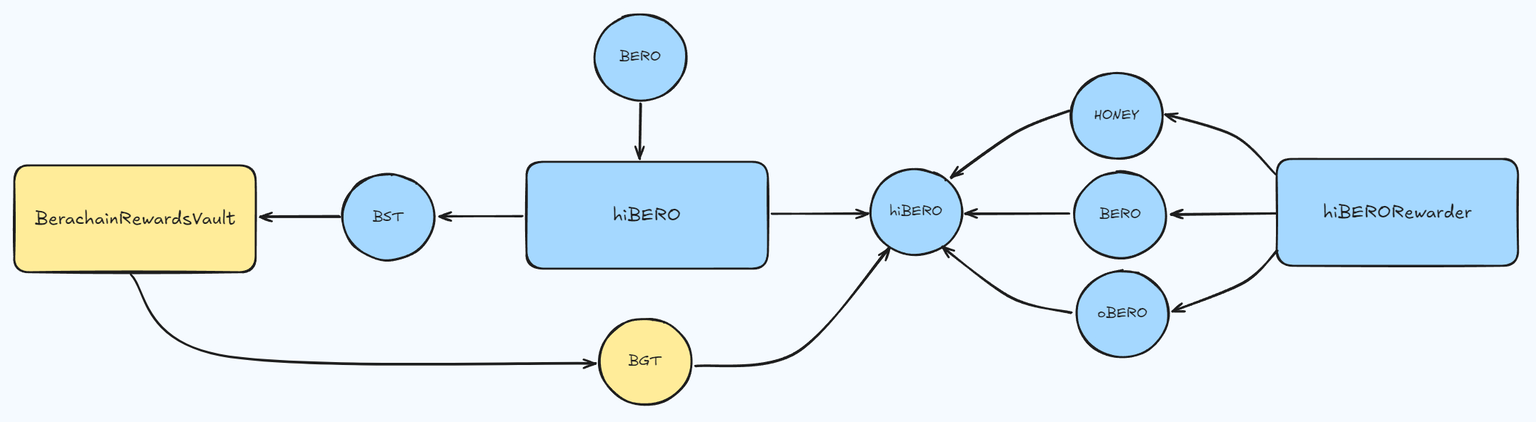
Beradrome's Incentive Flow; Source: Beradrome Docs
6.3. Yeet
Yeet is an on-chain betting game protocol using $BERA. During a defined game period, anyone can participate by depositing $BERA into Yeet’s liquidity pool—approximately 0.5% more than the previous depositor’s amount—and the last person to deposit $BERA takes 80% of the total $BERA in the pool.
Even if users don’t win, they receive Yeet’s native token $YEET as a reward proportional to their bet amount. Users can stake received $YEET in Yeet’s Liquidity Trifecta Vault to earn yield.
The Liquidity Trifecta Vault collects 9% of both $BERA deposited by users during gameplay and $YEET staked as bets. The vault then uses these assets to provide liquidity on Kodiak and redeposits the received liquidity tokens into Beradrome to maximize yield for stakers.

Yeet Liquidity Flow; Source: Yeet Docs
Additionally, Yeet plans to launch YeetBond, allowing users to claim bonds for specific tokens at a discounted price relative to the market rate at maturity. With various methods to create future value from liquidity on Berachain, YeetBond’s functionality is expected to be actively utilized by various protocols as a means to secure liquidity.
Therefore, Yeet aims to deliver both “fun” and “utility” optimized for Berachain. From the testnet phase, it has built a solid community centered around a playful, humorous meme culture—including the Yeetard NFT series featuring enhanced $YEET rewards.
6.4. Ramen
Ramen is a launchpad protocol similar to Honeypot Finance’s Dreampad, helping new protocols prepare to launch on Berachain promote themselves and raise funds securely through fair token sales. The platform supports two launchpad models:
-
Fixed Price Model: A method to purchase tokens at a fixed price. Users must register on a whitelist to participate or stake the platform’s native token $RAMEN to obtain Gacha tickets, which are consumed to enter raffles.
-
Price Discovery Model: Unlike the fixed-price model, anyone can participate. Users blind bid an amount of deposit assets equivalent to desired token price × quantity, determining the settlement price. The right to purchase tokens at the settlement price starts with the highest bidder.
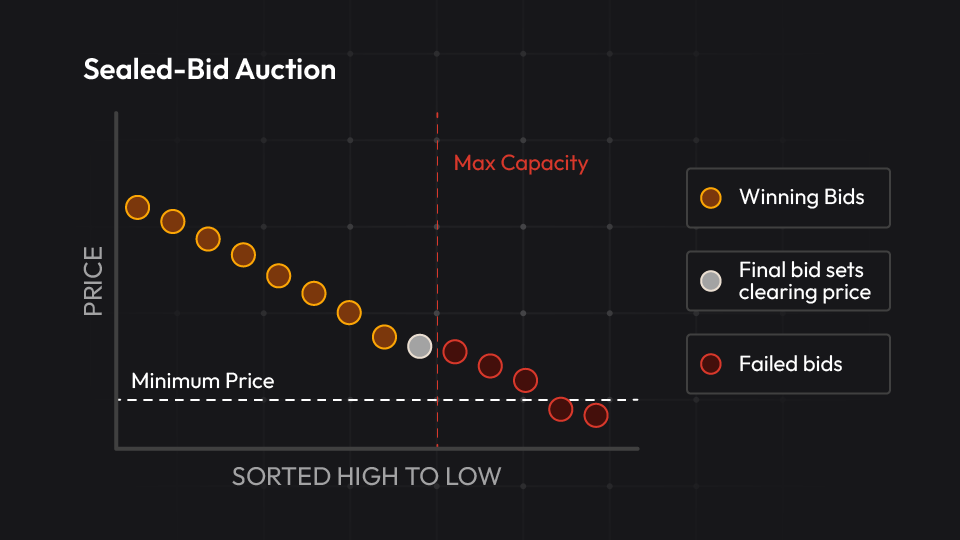
Price Discovery Mode's Price Discovery Method; Source: Ramen Docs
Beyond launchpad functionality, Ramen plans to introduce Airdrop Recipes, enabling easy setup and execution of token airdrop criteria. Ramen provides all necessary functions from token issuance to sale and distribution, aiming to become core infrastructure adopted by many new projects after Berachain mainnet launch.
However, for Ramen to maintain user interest, it must exhibit a degree of protocol dependency—requiring projects that sell tokens via Ramen to succeed operationally and deliver profits to token buyers. Therefore, it will be necessary to continuously monitor the long-term growth of projects conducting token sales via Ramen and whether promising projects choose to use the Ramen launchpad.
6.5. PuffPaw
PuffPaw is a Vape-to-Earn project where users earn tokens through vaping. It uses proprietary vaping devices and cartridges to measure user vaping activity, distributing higher amounts of the $VAPE token for e-liquids with lower nicotine content to incentivize smoking reduction.
Additionally, through its Leasing-Borrowing program, users who don’t vape but wish to participate can lend devices to those unable to purchase them and share profits—creating a structure that attracts users regardless of whether they vape, expanding reach within the Berachain ecosystem.
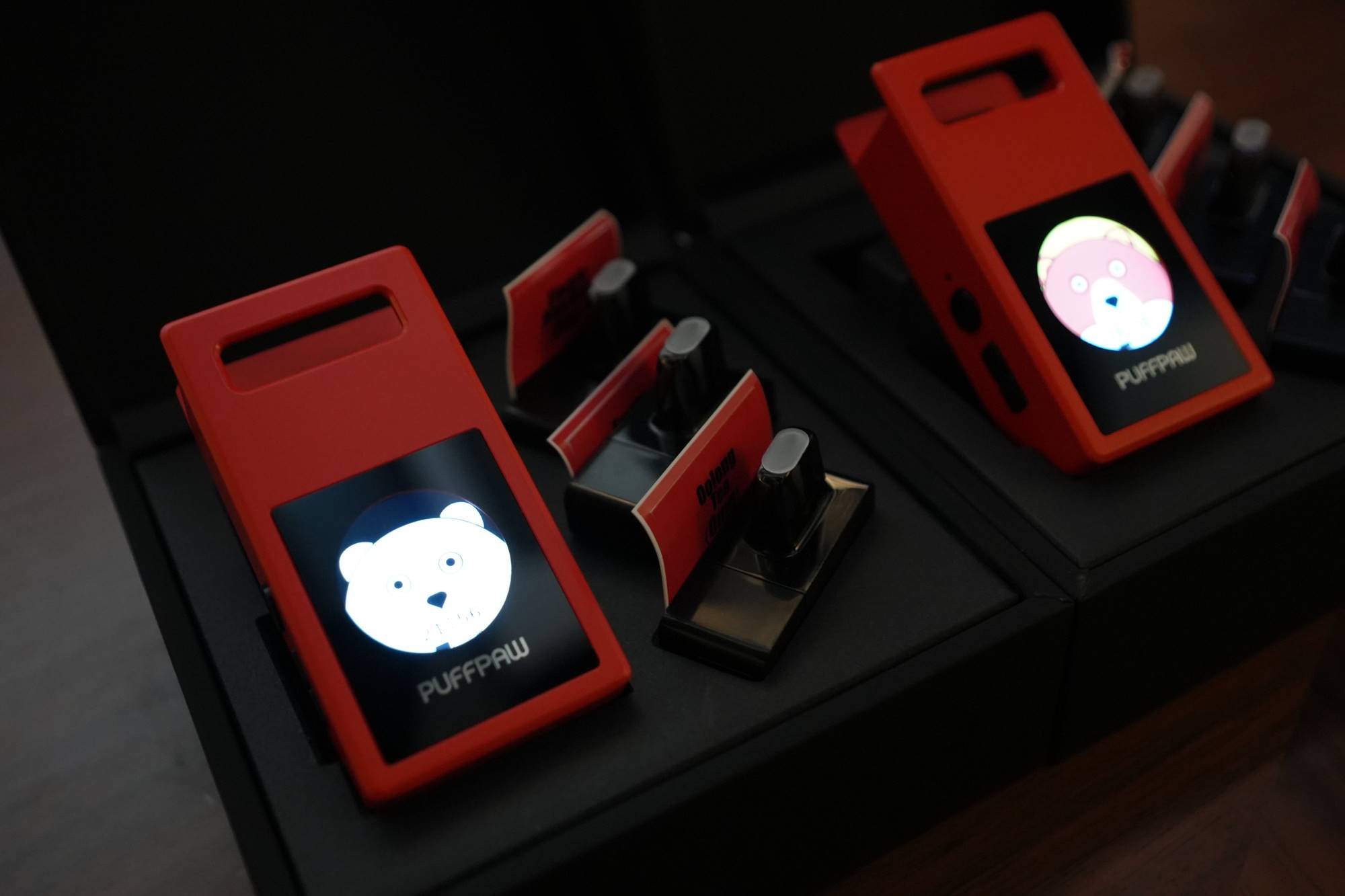
PuffPaw's Vaping Device; Source: @puffpaw_xyz
In December 2023, PuffPaw’s PUFF PASS NFT sold out completely, serving as an access pass to the project. The team plans to strengthen its Vape brand image through additional device sales and expand its ecosystem. Additionally, the company intends to generate extra revenue by providing usage data from user devices to AI companies and insurers, using this income to support the value of $VAPE distributed as rewards, while also planning to develop methods leveraging the PoL mechanism to generate additional income for $VAPE holders.
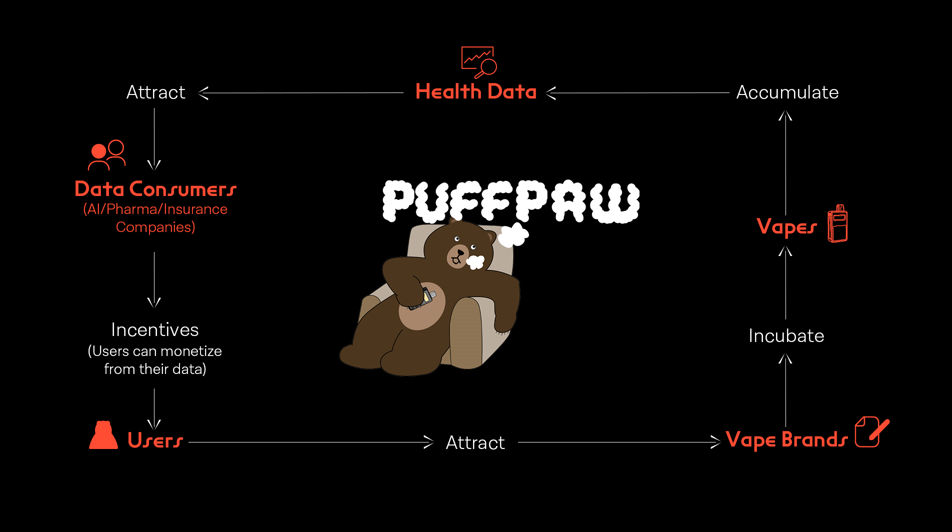
PuffPaw Flywheel; Source: PuffPaw Whitepaper
By now, we’ve examined representative protocols across various tracks on Berachain, each with its unique strengths. There are also projects accessible without needing to understand Berachain’s liquidity mechanics:
-
Beratone: Life simulation and role-playing game
-
Junky Ursas: GambleFi platform
-
Fable: Decentralized media/game platform
-
Onikuma: On-chain SocialFi platform
Moreover, multiple Vault/on-chain fund protocols such as Dirac Finance, NAV, and D2 will soon launch, simplifying various DeFi strategies across the Berachain ecosystem by combining protocol functionalities—making it easier for new users to participate and earn profits through simplified risk management.
These protocols not only encourage more users to join the Berachain ecosystem—increasing overall liquidity—but also promote broader ecosystem usage.
Community
Most protocols in the Berachain ecosystem adopt structures that distribute high yields to liquidity providers to gain initial liquidity, actively leveraging the PoL mechanism and using NFTs and memes to build communities as a means to further strengthen and expand these structures.
Since the PoL mechanism grants users with larger $BGT holdings and liquidity positions greater negotiation power and increased incentive opportunities, some projects adopt strategies focused initially on building communities through NFTs and memes, establishing reputation and status through community activities before generating and distributing profits—even if they don’t necessarily offer specific protocol functions.
7.1. The Honey JAR
The Honey Jar is a community united around a core philosophy, building sticky liquidity through a community-driven flywheel. It originated in 2023 around an NFT collection called Honeycomb.
The expansion of The Honey Jar community mirrors Berachain’s growth pattern—both achieved through issuing and distributing derivative NFT series to holders. Building on this growing community, it has partnered with various projects developing within the Berachain ecosystem, offering NFT holders benefits from these projects and solidifying its position.
Subsequently, The Honey Jar produced various educational materials related to Berachain and offered useful services such as testnet faucets to newcomers. Additionally, The Honey Jar acts as a venture studio within the Berachain ecosystem, incubating S&P (Standard & Paws), a community-based evaluation service assessing Berachain ecosystem projects, and Bera Infinity, a platform measuring and rewarding contributions to the Berachain ecosystem.
According to The Honey Jar’s Ecosystem Explorer, as of January 11th, The Honey Jar has direct involvement or partnerships with 89 projects, establishing itself as the most influential core community in the current Berachain ecosystem. Moreover, Honeycomb NFT holders receive NFT whitelist spots and token airdrops from numerous partner projects, making Honeycomb the highest-floor-priced NFT series in the Berachain NFT ecosystem—maintaining a 0.6 ETH floor—after Bong Bears and Rebase NFTs.
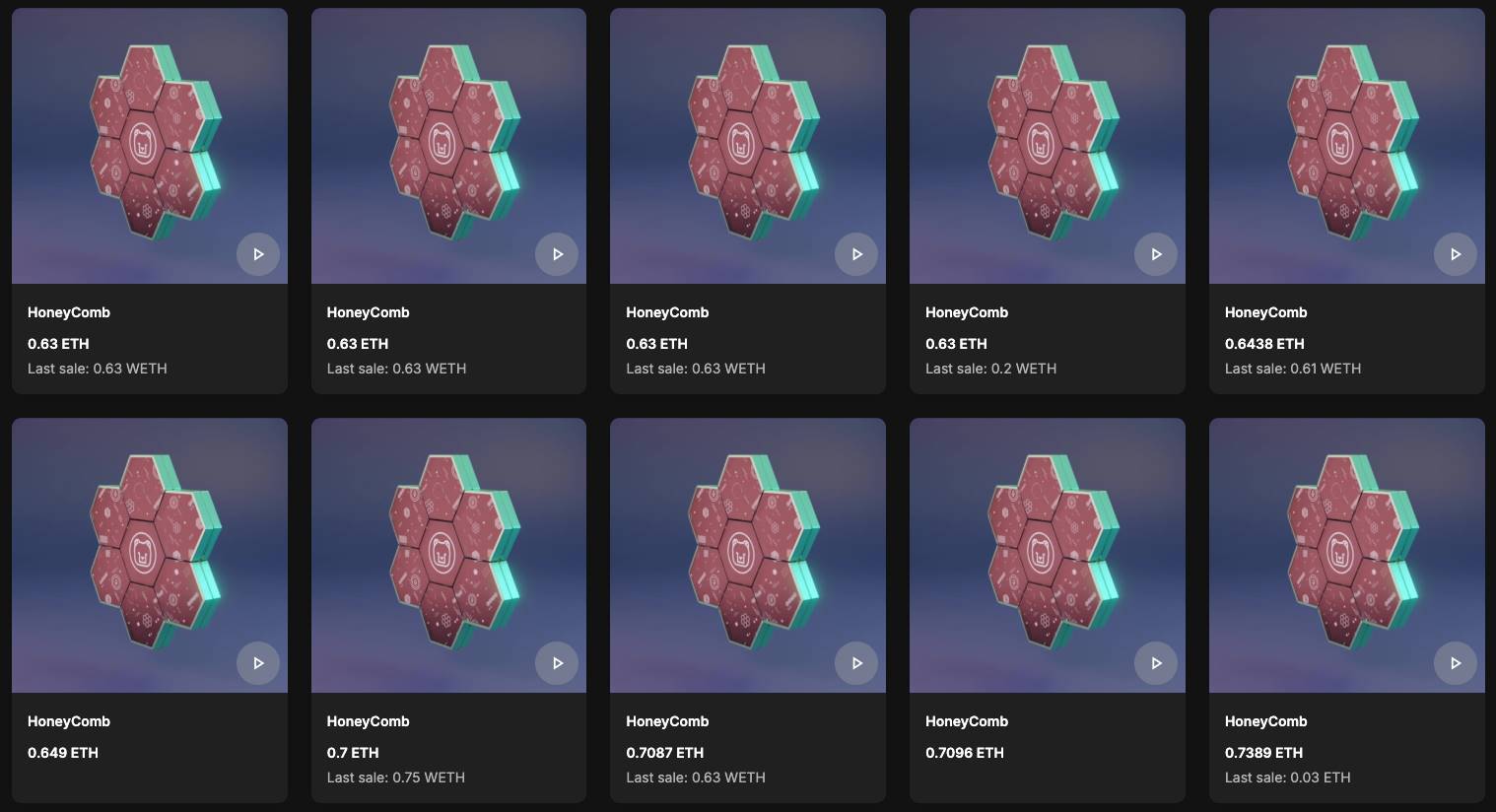
Honey Comb NFT; Source: Opensea
On the current bArtio Testnet, the node operated by Honey Jar ranks third in $BGT delegation, behind only nodes operated by Infrared and Kodiak. Notably, subsequent rankings are also dominated by community-centric projects, including Beraland, which provides Berachain-related information via podcasts, and TTT, which provides educational resources for Vietnamese users and operates a node—both ranking just below Honey Jar in $BGT delegation.
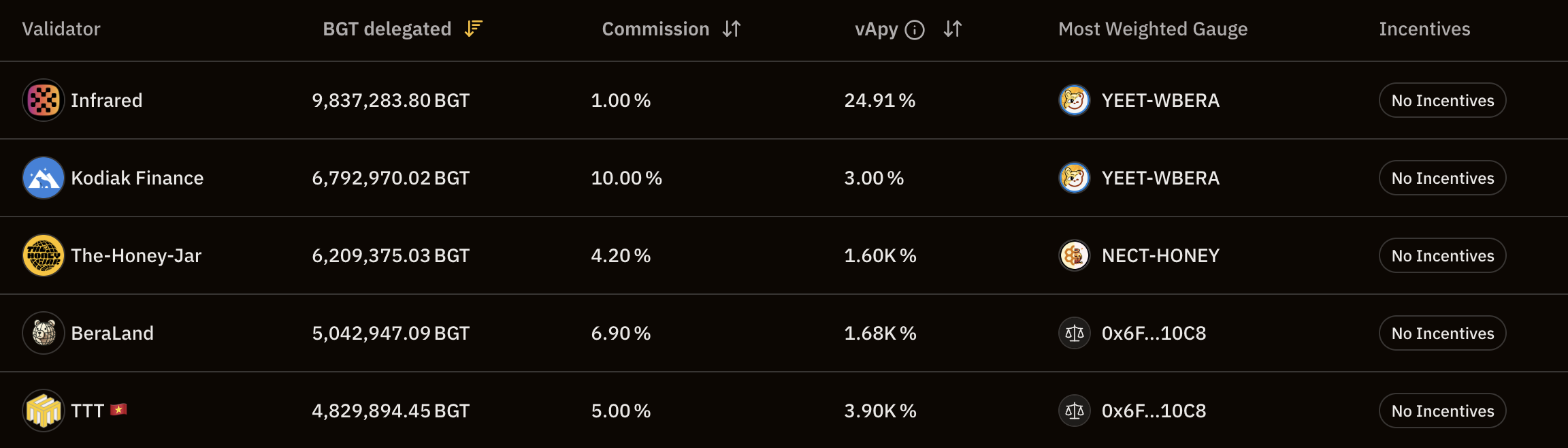
bArtio Testnet Validator Rankings; Source: BGT Station
These data illustrate that in the current Berachain ecosystem, a community-centric approach to gaining advantages within the PoL mechanism is an effective strategy.
Conclusion
Above, we explored how foundational protocols in the Berachain ecosystem—such as DEXs, liquid staking, and lending—combine various features to create complex financial services. We also examined examples of ecosystem projects that attract user interest and liquidity through Berachain’s PoL mechanism and unique community culture using “high yields” and “entertainment.”
Simultaneously, Berachain recently announced plans to support $BERA token distribution and early ecosystem liquidity through initiatives like Boyco, RFA (Request for Application), and RFC (Request for Community), signaling an imminent mainnet launch.
-
Boyco: A pre-mainnet liquidity platform enabling protocols planning to deploy on Berachain to negotiate liquidity and future reward allocations with liquidity providers in a transparent environment.
-
RFA (Request for Application), RFC (Request for Community): Programs to distribute $BERA tokens post-mainnet launch to projects actively developing within the ecosystem or building communities. Selected RFA and RFC recipients will continue contributing to the ecosystem using allocated tokens—distributing them to users—to stimulate early ecosystem and liquidity activity.
These initiatives suggest Berachain will experience rapid growth immediately after mainnet launch. Users planning to participate in the early ecosystem should closely monitor projects selected through RFA and RFC to inform their participation strategies.
Currently, Pre-Boyco vaults operated by protocols such as Stakestone, Ether.fi, and Ethena, along with the Boyco vault launched on January 28th, have collectively secured 2% of the initial $BERA token supply. As of January 31st, total deposits across these vaults reached $2.35 billion. If this liquidity flows directly into ecosystem protocols after mainnet launch, Berachain’s TVL would surpass Sui, currently ranked 8th in TVL.
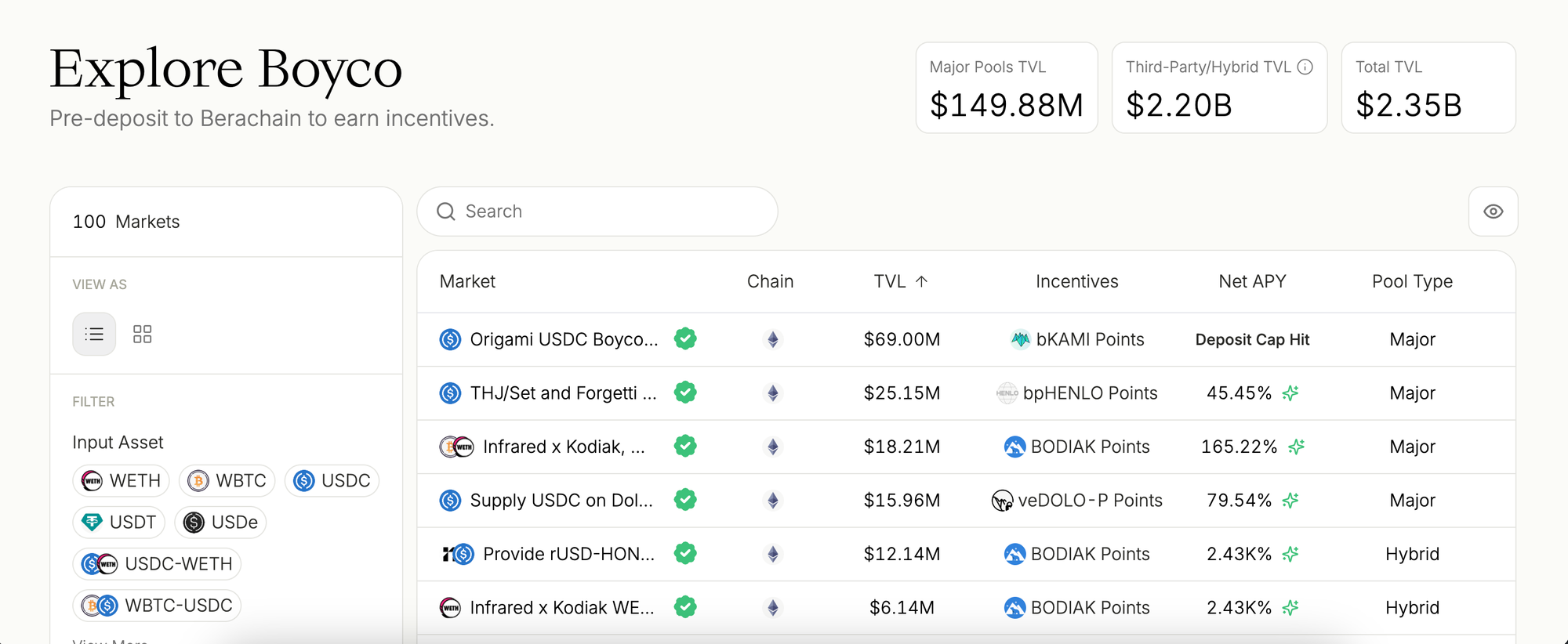
Boyco Dashboard; Source: Boyco
With Boyco ending on February 3rd approaching, users are expected to deposit funds into high-yield vaults in the final days, further increasing total TVL. Additionally, considering Berachain’s PoL structure encourages liquidity
Join TechFlow official community to stay tuned
Telegram:https://t.me/TechFlowDaily
X (Twitter):https://x.com/TechFlowPost
X (Twitter) EN:https://x.com/BlockFlow_News
 @berachain






