A Brief Discussion on the Ethereum Gas Limit Debate: Pros and Cons of Increasing the Cap for Blocks, Validators, and MEV Revenue
TechFlow Selected TechFlow Selected
A Brief Discussion on the Ethereum Gas Limit Debate: Pros and Cons of Increasing the Cap for Blocks, Validators, and MEV Revenue
Increasing the gas limit is fundamentally aimed at improving Ethereum's scalability.
 Navigating Web3 tides with focused insights
Author: Seongwan Park
Translation: Glendon, Techub News
The Ethereum community has recently been focused on a hot topic: increasing the gas limit. The idea of raising the gas limit seems reasonable, as it aligns with user demand for higher transaction throughput and reflects the natural trend of network capacity growth over time. Many researchers and community members strongly support this proposal, believing Ethereum is well-prepared for such a change and viewing it as a timely move to directly enhance Ethereum's scalability.
This proposal has also attracted widespread attention within the community. Community-created websites like pumpthegas.org aim to educate users about the basics of increasing the gas limit and how validators can modify their node settings. Another site, Gaslimit.pics, actively tracks progress in validator support for a higher gas limit—data shows that as of December 21, 2024, 25% of Ethereum validators have already adjusted their client configurations in support. Once more than 50% of validators agree to raise the gas limit and update their client settings, Ethereum’s gas limit will begin to increase and eventually stabilize at a new target level.
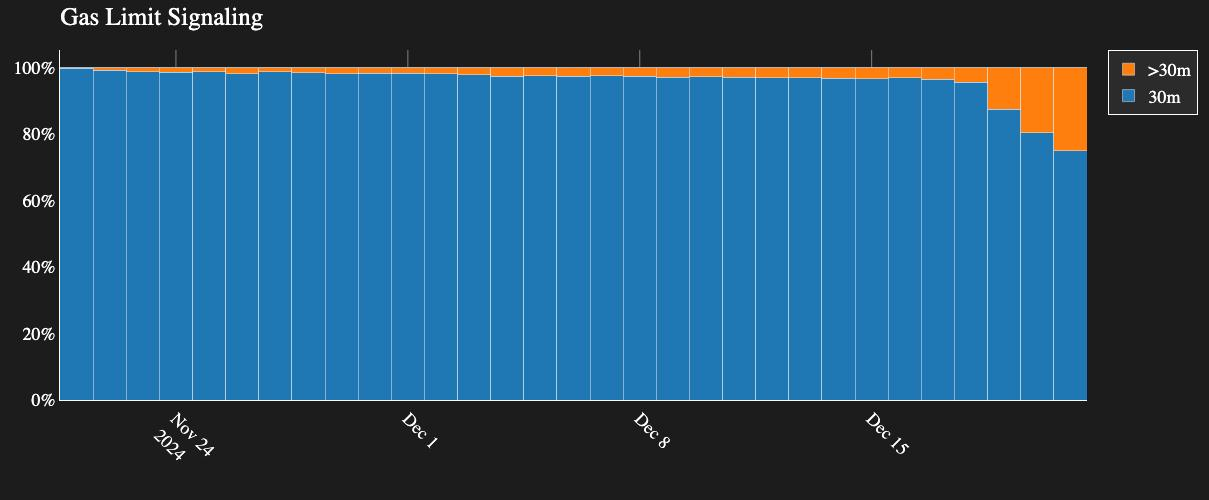
Notably, this proposal differs from Ethereum’s rollup-centric roadmap. Unlike recent scalability improvements such as EIP-4844 and EIP-7691—which focus on rollup scaling and blob transactions—increasing the gas limit represents a Layer 1 scaling approach. (Techub News note: Ethereum block gas limit refers to the maximum number of operations allowed in a single block, measured in gas units.)
While this discussion excites parts of the community, it has also raised concerns among researchers about potential risks to Ethereum’s core values of decentralization and security. Critics warn that, in the worst case, larger block sizes could strain the consensus layer and increase validator hardware requirements, potentially threatening network stability.
Are these concerns unfounded? This article explores the brief history, potential impacts, and key technical considerations behind the ongoing debate on increasing Ethereum’s gas limit.
A Brief History of the Ethereum Gas Limit Increase Proposal
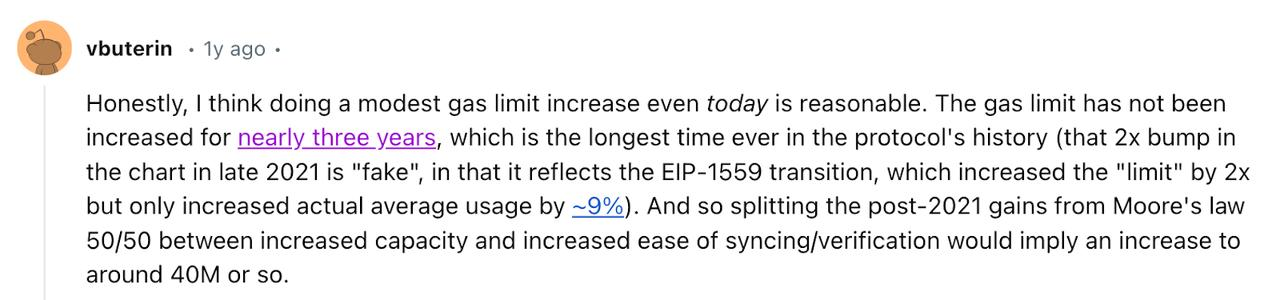
In fact, the idea of increasing Ethereum’s gas limit has been discussed for some time. During an Ethereum AMA in January 2024, co-founder Vitalik Buterin suggested raising the gas limit to 40 million (currently, Ethereum’s gas limit is 30 million), aligning with Moore’s Law and reflecting steady improvements in hardware capabilities.
It’s worth noting that Ethereum has not adjusted its gas limit since April 2021, despite significant hardware advancements during that period. As such, many community members now believe it’s time for Ethereum to reflect these developments.
More recently, a proposal set an even more "ambitious" goal: doubling the gas limit to 60 million. However, 60 million is largely seen as a long-term objective rather than an immediate one. In December 2024, Toni Wahrstätter proposed a more cautious approach, advocating first increasing the gas limit to 36 million (a 20% increase) as a safer initial step.
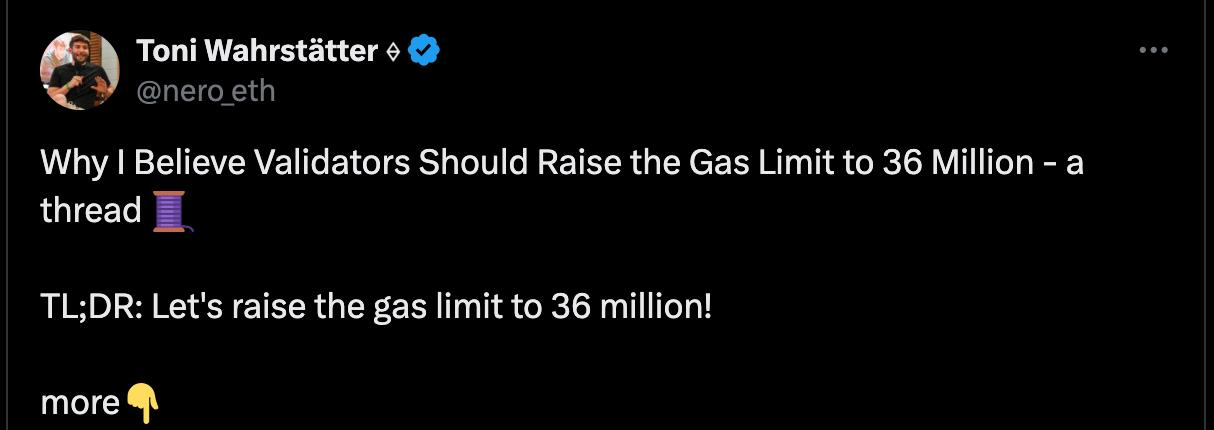
Thus, raising Ethereum’s gas limit to 36 million is currently viewed as an initial milestone, with any further increases expected to follow a gradual, phased approach.
How Is the Block Gas Limit Adjusted?
The block gas limit can be increased incrementally without requiring a fork or changes to network rules. Instead, validators achieve backward-compatible adjustments by modifying their configuration options, allowing regular and flexible updates based on community consensus.
Contrary to common belief, Ethereum’s block gas limit is not fixed at 30 million. Block proposers can fine-tune it within certain bounds. Specifically, the gas limit of a block can change by up to 1/1024 relative to the previous block’s limit. For example, if the current block’s gas limit is 30 million, the next block could increase it to “30,000,000 + 30,000,000 × (1 / 1024) = 30,029,296.”
The code below illustrates the default behavior of an Ethereum node in the geth client: if the gas limit of a new block falls within the acceptable range relative to its parent block, it is considered valid.
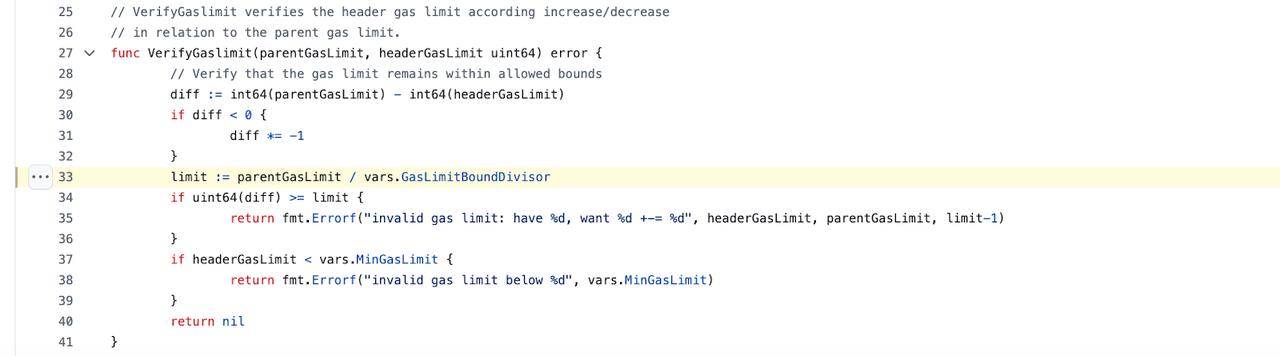
If consecutive block proposers agree to raise the limit, the gas limit can continue to grow. For instance, under ideal conditions (assuming validator consensus), reaching the first milestone of 36 million (a 20% increase) would take approximately “log(1.2) / log(1025/1024) = 187 blocks,” or about 38 minutes. Once more than 50% of validators signal support, the increase can happen rapidly.
What Impacts Would Increasing the Gas Limit Have?
Let’s first examine some relatively predictable effects of raising the gas limit. Increased block capacity will make handling current blockchain demand easier, thereby lowering gas fees.
In the short term, according to the EIP-1559 mechanism, reduced gas fees may lead to less ETH being burned, temporarily increasing Ethereum’s net issuance. A similar trend occurred after EIP-4844, when rollup data availability (DA) fees dropped significantly, reducing ETH burn. An increase in the gas limit could have the same effect, exacerbating short-term inflation.
However, in the long run, lower fees may encourage more network activity, as more users can afford transaction costs. This increased activity could strengthen Ethereum’s network effects, attracting more DApps and promoting broader adoption. As Ethereum becomes an integral part of DApp and DeFi ecosystems, the frequency of ETH usage as currency may rise. This increased ETH utility could further drive network growth, creating a positive feedback loop for the Ethereum ecosystem.
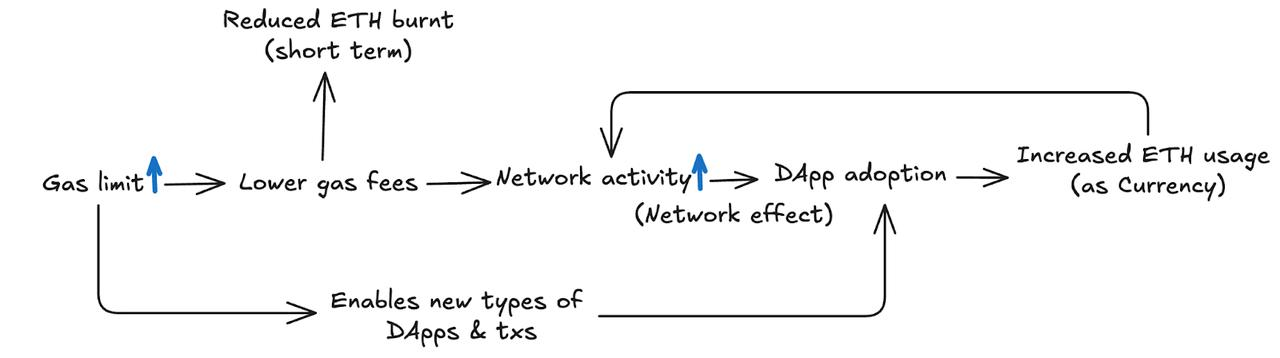
New DApp Development Becomes Possible After Gas Limit Increase
Beyond reducing gas costs and improving transaction flow, increasing the per-block gas limit could unlock entirely new opportunities. While a modest increase to 36 million may not bring dramatic changes, a larger jump to 60 million could enable novel DApps and transactions previously constrained by the 30 million gas cap. Operations that nearly fill or exceed the current 30 million gas limit may become more efficient—or feasible for the first time—after the change.
For example, gas-intensive transactions—such as NFT batch mints, large token airdrops, or DAO activities—often approach or surpass the current 30 million gas limit. These are typically split across multiple blocks, leading to inefficiencies, delays, and potential vulnerabilities. The figure below shows a specific example: an NFT batch mint consuming over 28 million gas.
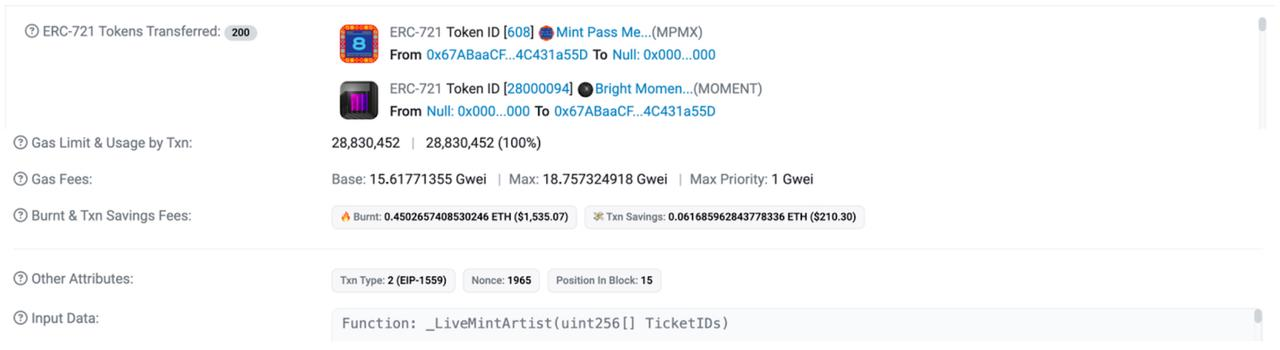
Transaction hash: 0xf99bdd89f7e3186e63d71a4a3ffb53cb5cd1c3190ce3771c966f2a82b3346bee
With a gas limit increased to 60 million, such operations could be completed within a single block, ensuring atomic execution. This guarantees that the entire operation either succeeds or fails completely, avoiding partial completion, ensuring fairness among participants, and reducing manipulation risks.
Beyond optimizing existing use cases, a higher gas limit could pave the way for innovative DApps requiring computationally intensive operations. For instance, with more available gas, on-chain AI applications—such as small-scale model training or inference—may become viable. Similarly, more complex smart contracts—like fully on-chain games or advanced governance mechanisms—could thrive in a higher-capacity environment. These advances could expand Ethereum’s functionality and appeal, diversifying the ecosystem.
Therefore, in many cases, doubling the gas limit could bring greater benefits by reducing fragmentation and unlocking new possibilities.
What Does Increasing the Gas Limit Mean for Blockchain’s “Impossible Triangle” Dilemma?
Raising the gas limit fundamentally aims to improve Ethereum’s scalability. Within the context of blockchain’s “impossible triangle” dilemma—where higher scalability often comes at the expense of decentralization or security—the proposal has sparked skepticism. Concerns include whether higher validator requirements could lead to centralization or whether consensus layer stability might weaken.
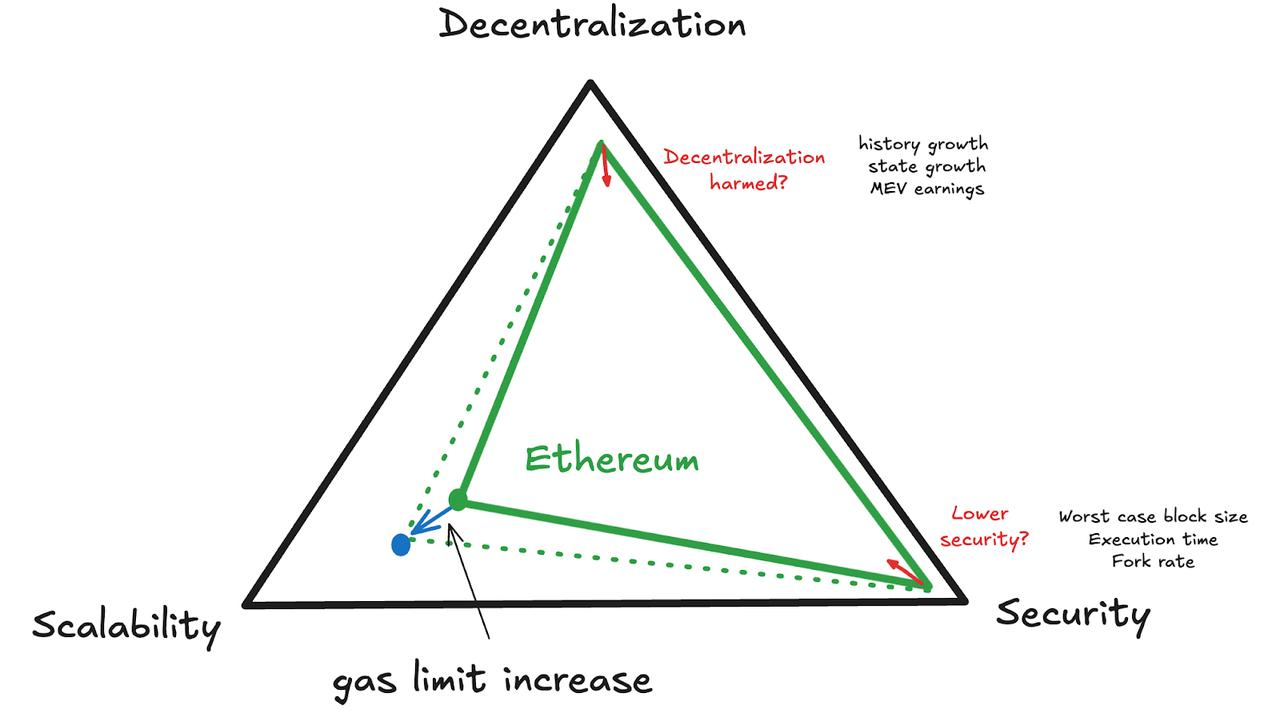
Supporters argue, however, that this isn’t about sacrificing decentralization or security for scalability. Instead, they describe it as leveraging hardware performance improvements described by Moore’s Law to expand the blockchain’s total capacity. Under this view, the “triangle” of the impossible triangle may actually grow, as modern hardware enables greater overall capacity without compromising Ethereum’s core properties.
To assess this claim, we must carefully examine the potential risks of increasing the gas limit. Decentralization considerations include rising validator hardware requirements and increased complexity of MEV strategies. From a security standpoint, we should evaluate the impact of larger worst-case block sizes and longer transaction execution times, which could affect fork rates or missed slot probabilities.
Gas Limit Increase and Block Size
An increased gas limit per block allows more call data, affecting worst-case block size. Currently, the maximum block size achievable by filling a block with meaningless call data is about 1.8MB. With six blobs, the total data transmitted in a single slot can reach 2.58MB. A higher gas limit would increase this worst-case block size, potentially causing issues in the peer-to-peer (P2P) layer used for node communication.
This situation could stress the P2P layer of consensus clients. When the gas limit exceeds 40 million, worst-case block sizes may surpass built-in limits in default client behavior, causing some clients to fail in proposing or propagating blocks correctly. Therefore, resolving these limitations is critical before significantly raising the gas limit.
EIP-7623 is expected to help by adjusting calldata pricing in data availability transactions, potentially reducing worst-case block size from 2.58MB to around 1.2MB. Thus, adopting EIP-7623 will likely be necessary to ensure consensus stability with any future gas limit increases.
Likewise, actual block size (the size of blocks filled with real transaction data) correlates with the probability of reorgs or missed slots. Analysis of slot data (#9526972 to #10351782) shows minimal difference in block size distribution between included and reorged/missed slots for smaller blocks. However, as block size grows (e.g., beyond 0.25MB), the likelihood of reorgs or missed slots increases.
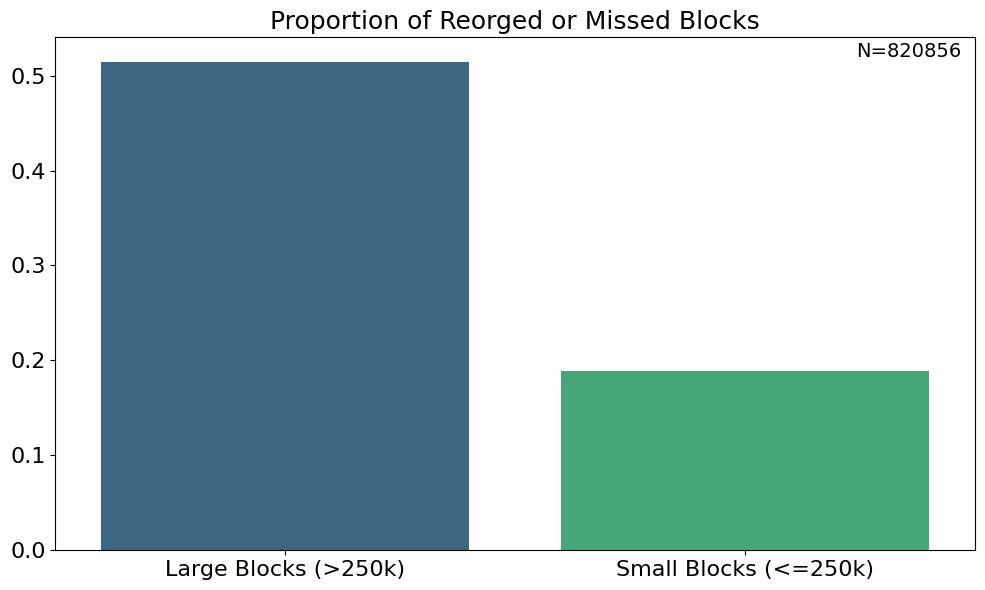
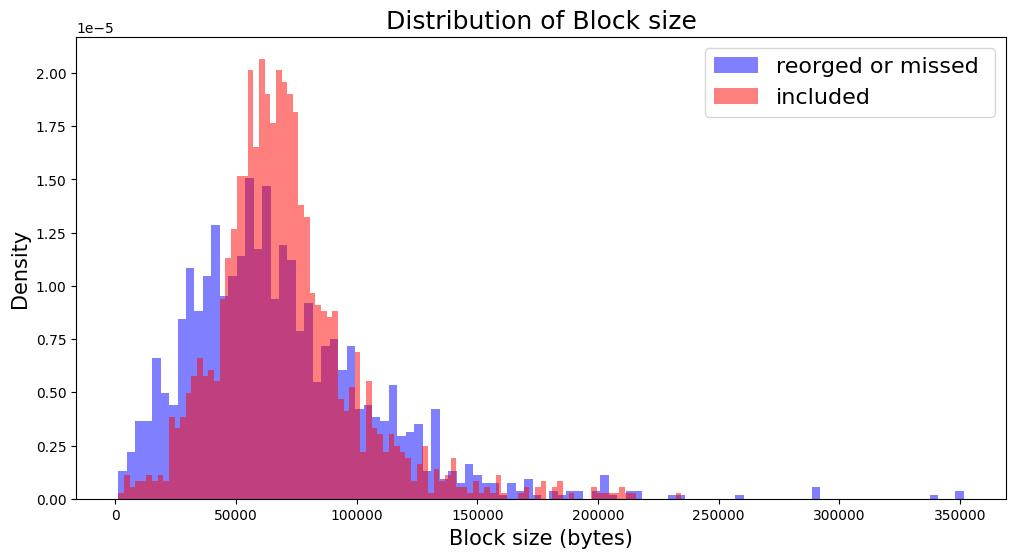
This correlation may stem from factors such as longer transaction execution times or default P2P behaviors, not just block size itself. While the observed relationship highlights potential risks, it does not establish causation.
In summary, while increased block size affects slot stability, worst-case block size is particularly important for ensuring robustness of the P2P layer. Future gas limit increases must be accompanied by changes like those proposed in EIP-7623 to effectively mitigate these risks.
Gas Limit Increase and Execution Time
As a higher gas limit allows more transactions per block, execution time naturally increases. Whether this becomes critical depends on reorg or missed slot rates, which reflect overall consensus stability.
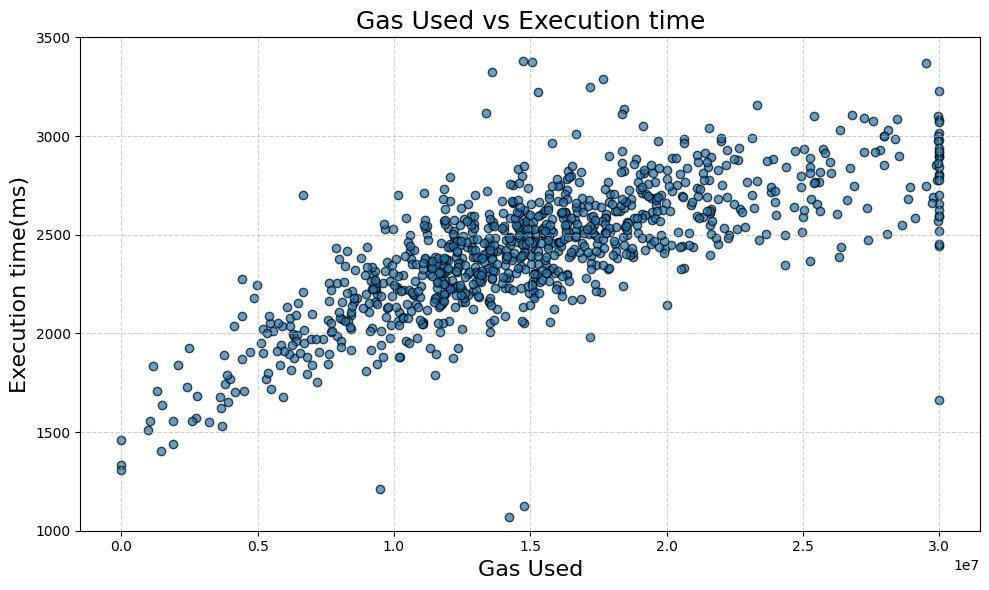
The chart below shows that as more gas is used in a block, execution time tends to rise. A 20% increase in gas limit is expected to slightly extend execution time, though exact impacts are hard to predict. Execution time doesn't always scale linearly with max gas limit or gas usage. However, making a conservative proportional assumption based on the chart, an increase of 400–500 milliseconds in execution time seems reasonable.
Now let’s explore the relationship between execution time and reorgs or missed slots.
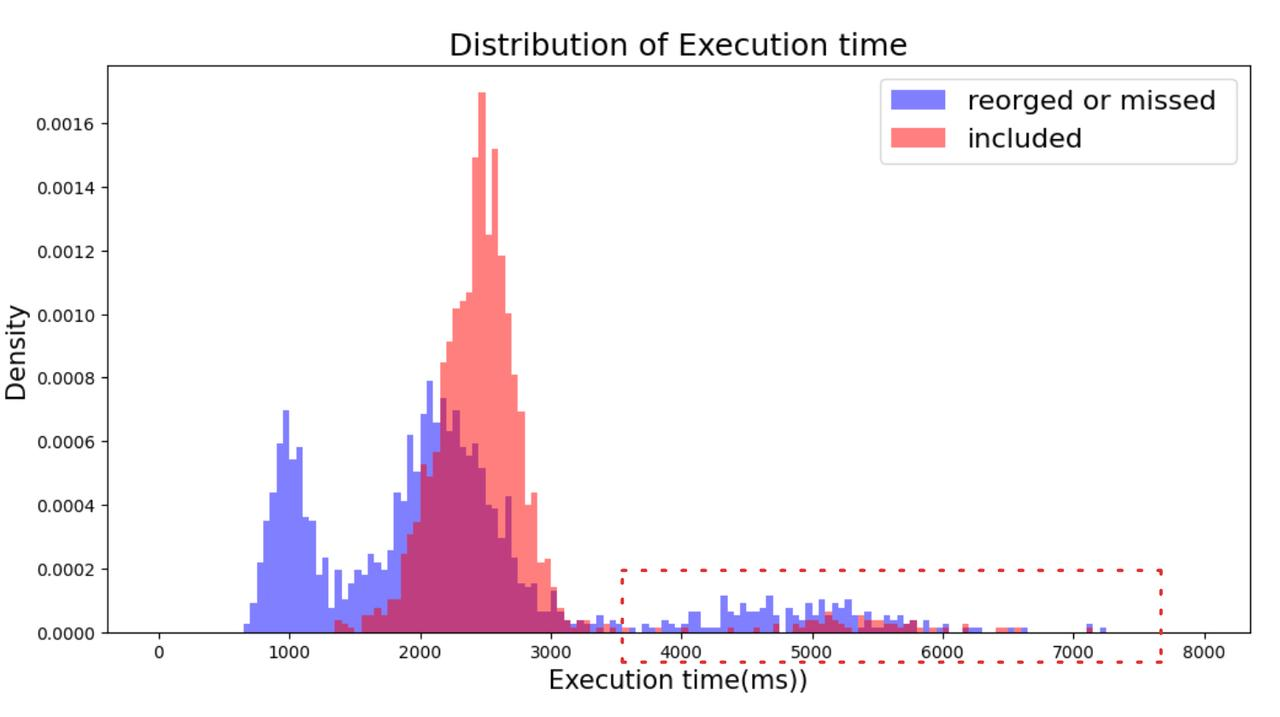
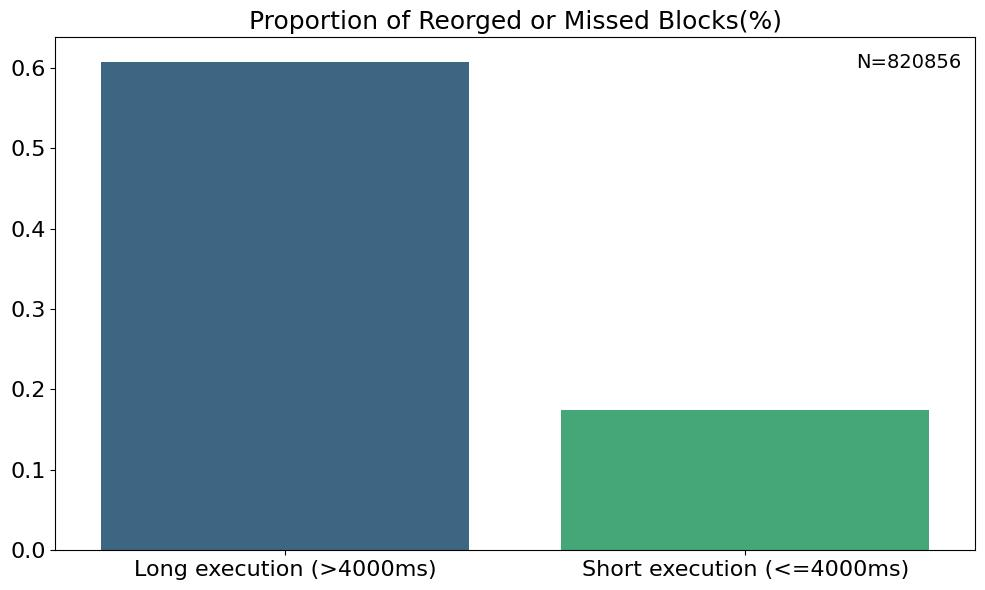
The red box in the chart above highlights that slots with execution times exceeding 4000 milliseconds are more prone to reorgs or misses compared to shorter ones. Although most reorgs or missed slots occur between 1000–3000 milliseconds (indicating weak correlation in this range), the red-boxed blocks show a clear spike in reorg probability when execution time exceeds 4000 milliseconds. Another chart further emphasizes this by showing that slots with execution times over 4000 milliseconds have a reorg or miss rate more than three times higher than those below 4000 milliseconds, underscoring the impact of very high execution times on stability.
Will Increasing the Gas Limit Affect Validator Hardware Requirements?
When considering a gas limit increase, validators’ main concern revolves around storage size needed to run a node. As of December 2024, a validator node requires approximately 1.5–1.6TB of storage for historical and state data. Raising the gas limit will accelerate the growth of both historical and state data.
In 2020 and 2021, running a validator node required a 2TB solid-state drive (SSD). However, when historical and state data reached 1.8TB, validators using 2TB SSDs had to upgrade to 4TB SSDs. While today’s 4TB SSDs cost roughly the same as 2TB SSDs did three years ago—around $250—the need for replacement itself implies ongoing maintenance costs and technical challenges.
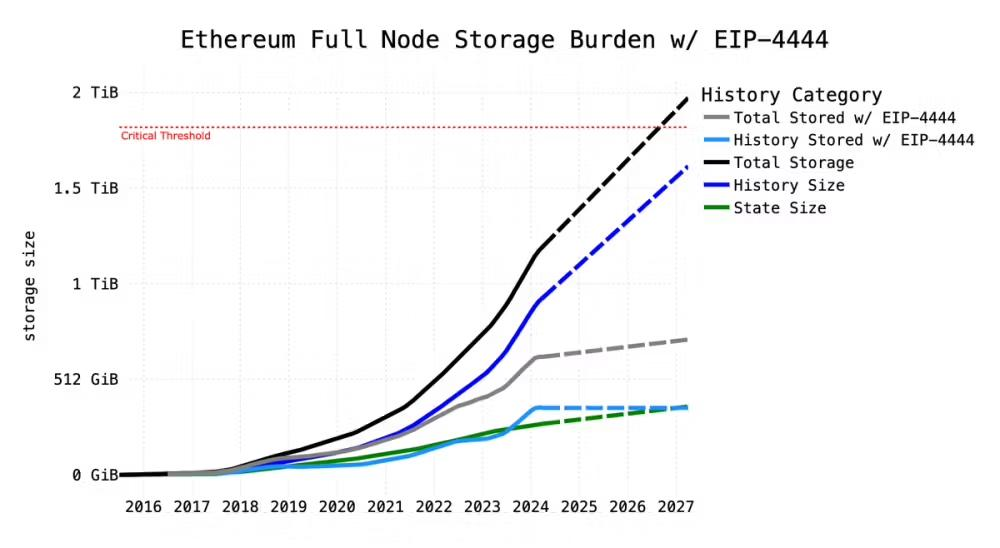
A gas limit of 36 million may not pose major issues. But if the limit rises to 60 million or higher, validator nodes may face continuous hardware upgrades, accumulating maintenance costs and threatening decentralization.
When EIP-4444 is implemented (targeted for client release before May 2025), historical data growth may halt, providing more room for gas limit increases. Without EIP-4444, however, continued historical data growth could become the next bottleneck for raising the gas limit.
Storm Slivkoff’s analysis of state growth suggests state growth is another potential bottleneck, but the current rate (~2.62 GiB/month) is manageable—modern hardware can sustain a decade of growth. Memory demands increase with state size, and raising the gas limit to 60 million would accelerate this, requiring an additional 2–4.7 GiB of RAM annually. While current 64 GiB RAM setups offer sufficient buffer, sustained growth may necessitate more frequent upgrades.
Upcoming improvements such as Verkle trees and state expiry are expected to alleviate this burden, but careful monitoring remains crucial.
What Does a Higher Gas Limit Mean for MEV?
Another factor potentially impacting decentralization is how increased gas limits affect validator MEV (Maximal Extractable Value) earnings. As MEV gains importance, concerns grow about income disparities between sophisticated validators using advanced MEV strategies and smaller independent stakers. This gap could intensify centralization pressures, as resource-rich and technically skilled validators dominate. To address this, the Ethereum community is actively discussing mechanisms like Proposer-Builder Separation (PBS) and MEV burning, aimed at balancing validator revenues.
Theoretically, a higher gas limit allows more transactions per block, potentially widening MEV-related income gaps. While MEV Boost has partially mitigated this issue by enabling independent stakers to capture some MEV rewards, definitive data on validator income disparity remains elusive. Challenges in defining MEV transactions and accurately tracking profits—especially in complex scenarios involving cross-CEX and DEX MEV strategies—make measurement difficult. However, such complex strategies are relatively rare, as most MEV originates from top-of-block tactics.
On the other hand, a higher gas limit could enable more complex and resource-intensive MEV strategies. Though uncommon, there are instances of MEV bots executing highly intricate transactions consuming nearly an entire block’s gas limit. For example, one observed bot transaction used over 18 million gas to perform multiple swaps and liquidity operations within a single block. As the gas limit increases, such strategies may become more common, potentially widening the gap between established validators and smaller participants.
Conclusion
The debate around increasing Ethereum’s gas limit presents an exciting opportunity to boost scalability, reduce transaction fees, and unlock new possibilities for DApps constrained by current limits. Yet, this discussion also triggers deep concerns regarding decentralization, validator requirements, and network stability. Issues such as state and historical data growth, longer execution times, and MEV disparities highlight the need for careful consideration and empirical monitoring.
In the end, successfully raising the gas limit hinges on Ethereum’s ability to skillfully balance these complex factors. Solutions like EIP-7623, Proposer-Builder Separation (PBS), and MEV burning demonstrate the network’s proactive stance toward addressing potential risks. With thoughtful planning and execution, a higher gas limit could unlock the next phase of Ethereum’s growth.
Join TechFlow official community to stay tuned
Telegram:https://t.me/TechFlowDaily
X (Twitter):https://x.com/TechFlowPost
X (Twitter) EN:https://x.com/BlockFlow_News
 @2077Research