DeFi + AI风口已至,一文懂DeFAI四大领域全景图
TechFlow Selected TechFlow Selected
DeFi + AI风口已至,一文懂DeFAI四大领域全景图
This is just the beginning; the potential of DeFAI far exceeds its current performance.
 Navigating Web3 tides with focused insights
Author: Poopman
Translation: TechFlow

What happens when traditional DeFi meets emerging AI? What new variants or technological innovations can we create?
Today, we’ll explore the early ecosystem of DeFAI (Decentralized Finance + AI).
Hope this article offers you some inspiration!
(*I’m about to publish a 20-page in-depth analysis on Medium. Today’s content is just a quick overview to help you rapidly grasp this emerging field.)
Why Pay Attention to DeFAI?
The integration of artificial intelligence (AI) and blockchain is nothing new. From early decentralized model training on Bittensor subnets, to decentralized GPU and computing resource markets like Akash and io.net, to the recent convergence of AI and memecoins on Solana—each phase has demonstrated how blockchain supplements AI capabilities through resource aggregation, advancing sovereign AI and consumer-facing applications.
According to CoinGecko data, as of January 13, 2025, DeFAI's total market cap reached approximately $1 billion. Griffain accounts for 45% of the market share, while $ANON holds 22%.
Starting December 25, 2024, with frameworks and platforms such as Virtual and ai16z welcoming the return of “U.S. capital” after the Christmas holiday, the DeFAI sector began accelerating.
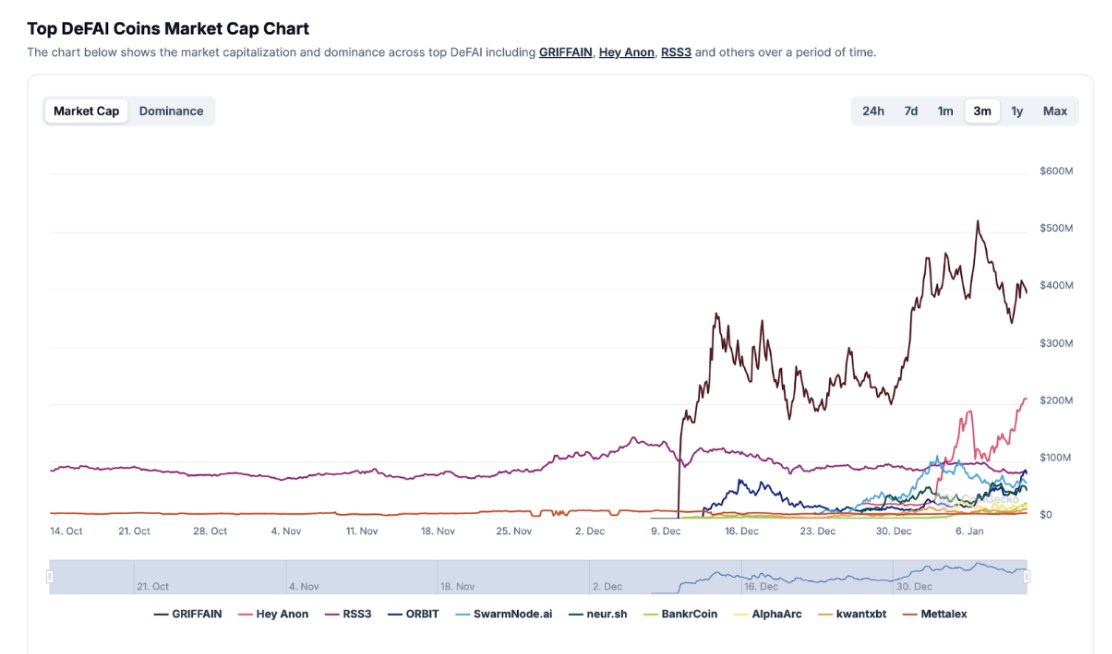
This is just the beginning. DeFAI’s potential far exceeds its current performance.
Although current applications remain at the proof-of-concept stage, we should not underestimate their potential to transform DeFi into a smarter, more user-friendly, and efficient financial ecosystem through AI technology.
Before diving deeper into the DeFAI ecosystem, we first need to understand the fundamental principles of how AI agents operate within DeFi and blockchain environments.

How AI Agents Operate in DeFi
An AI agent is a program that performs tasks on behalf of users according to specific workflows. These agents are powered by large language models (LLMs), enabling them to generate responses based on their training data.
In blockchain, agents can interact with smart contracts and accounts, handling complex tasks without continuous user intervention.
For example:
-
Simplifying the DeFi user experience: completing multi-step operations such as cross-chain bridging and liquidity mining with one click
-
Optimizing yield farming strategies: delivering higher returns for users
-
Automating trade execution: buying or selling assets based on market analysis (either from third parties or their own models)
Based on research from @threesigmaxyz, AI models typically follow six core workflows:
-
Data Collection
-
Model Inference
-
Decision Making
-
Custody & Operations
-
Interoperability
-
Wallet Management
Once you’ve gathered these six core components, you can build your own autonomous agents on blockchain. These agents can play various roles within the DeFi ecosystem, enhancing on-chain efficiency and user trading experiences.
Exploring the World of DeFAI v2
Overall, I categorize the fusion of DeFi and AI (DeFAI) into four main categories:
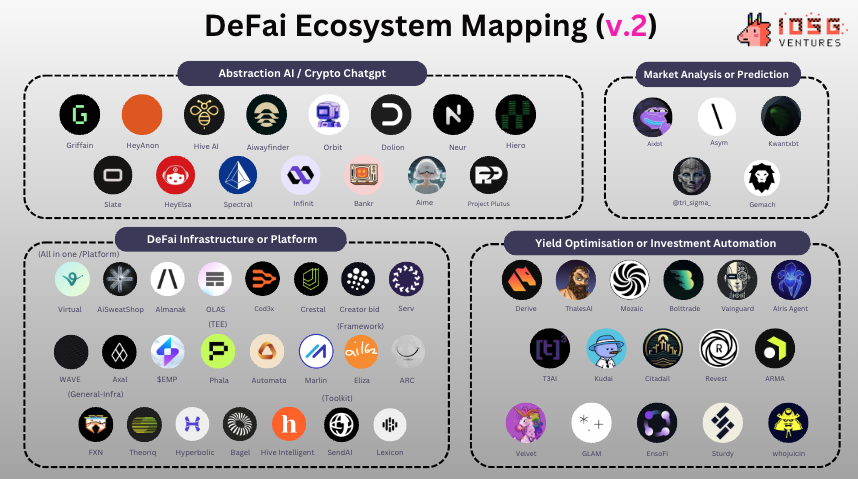
-
Abstraction/User-Friendly AI
-
Yield Optimization & Portfolio Management
-
DeFAI Infrastructure or Platforms
-
Market Analysis & Forecasting
Abstraction AI or AI ChatGPT
In this category, an ideal AI solution should possess the following capabilities:
-
Automatically execute multi-step transactions and staking operations without requiring any specialized knowledge from the user.
-
Conduct real-time market research and deliver key information and data to help users make informed trading decisions.
-
Gather data from multiple platforms, identify market opportunities, and provide comprehensive analysis for users.
Next, let’s look at some popular tools in this space:
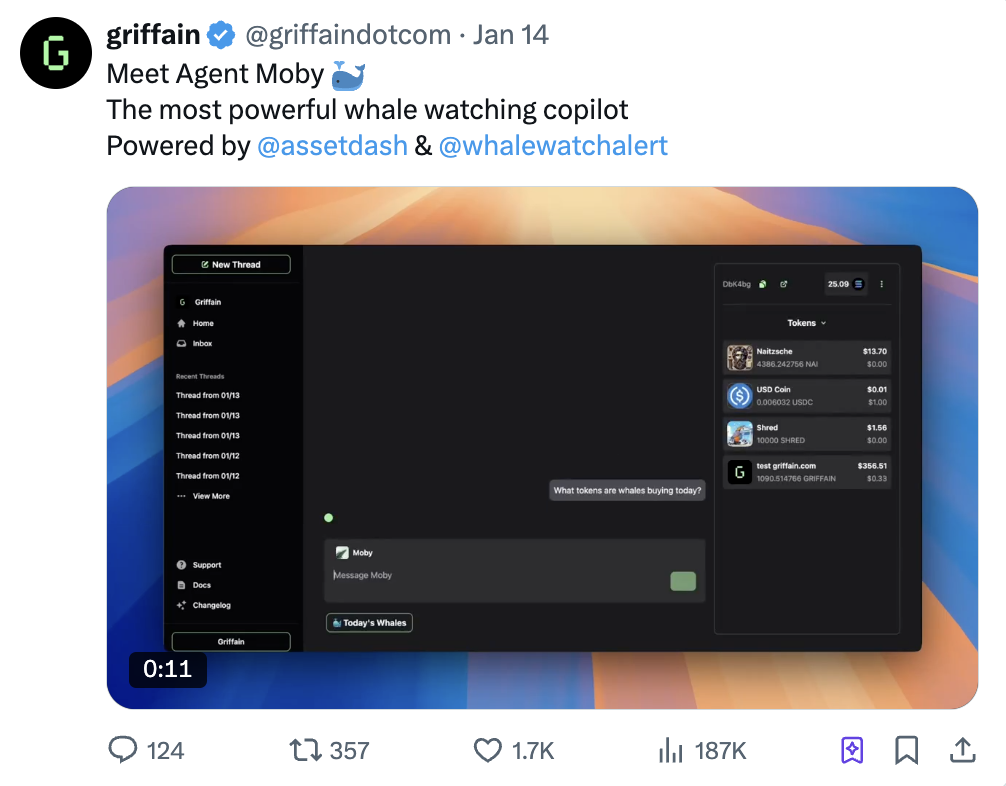
Griffain
@griffaindotcom is currently the first and highest-performing abstraction AI tool on the Solana blockchain, supporting transaction execution, wallet management, NFT minting, token sniping, and more.
Key features include:
-
Execute trades using natural language input
-
Launch token projects via Pumpfun, mint NFTs, and select addresses for airdrops
-
Multi-agent collaboration functionality
-
Agents can post tweets on behalf of users
-
Snipe newly launched meme coins on Pumpfun based on specific keywords or conditions
-
Automated staking and DeFi strategy execution
-
Task scheduling—users can customize personalized agents using memory data inputs
-
Collect data from multiple platforms for market analysis, such as identifying major holders of a token
Wallet Functionality:
During account creation, the system automatically generates a wallet via Privy. Users can authorize their accounts to agents, allowing the agents to independently execute transactions and manage portfolios. For enhanced security, private keys are split and stored using Shamir's Secret Sharing, ensuring neither Griffain nor Privy can control the wallet independently.
Anon
@HeyAnonai, developed by renowned builder @danielesesta, who previously created the DeFi protocol Wonderland and MIM, aims to simplify DeFi interactions so both newcomers and experienced users can get started easily.
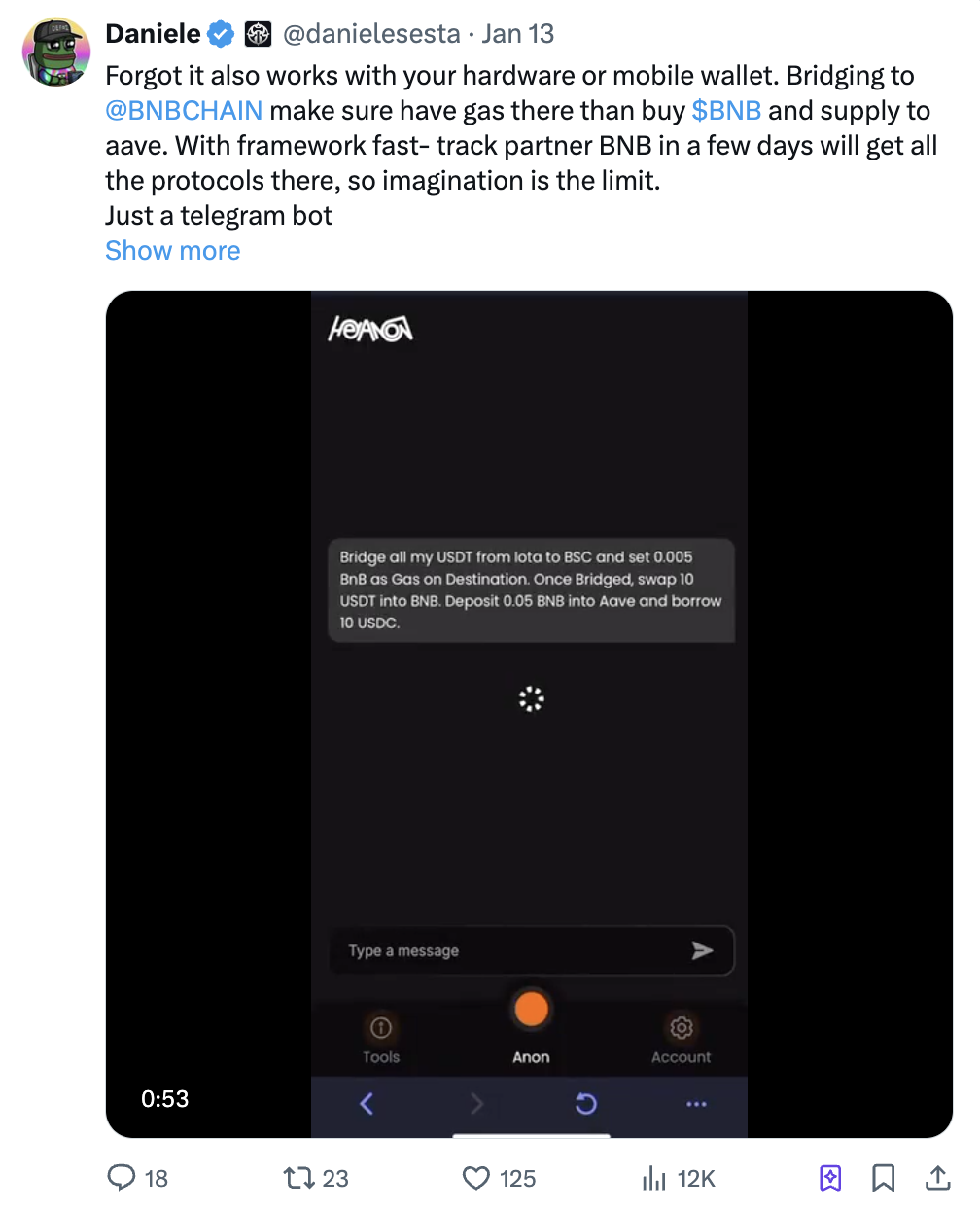
Main features include:
-
Cross-chain asset bridging powered by LayerZero
-
Real-time price and data updates provided by Pyth
-
Automated actions and triggers based on time and gas prices
-
Real-time market insights such as sentiment analysis and social data analytics
-
Supports lending operations in partnership with protocols like Aave, Sparks, Sky, and Wagmi
-
Natural language trading support in multiple languages, including Chinese
Additionally, Anon recently launched two major updates:
-
An automation framework
-
Agent functionality focused on Gemma research
These updates have made Anon one of the most anticipated abstraction tools today.
Slate (Not yet launched a token)
Slate, backed by BigBrain Holdings and led by founder @slate_ceo, positions itself as an "Alpha AI" capable of autonomous trading based on on-chain data signals. Currently, Slate is the only abstraction AI tool capable of automating trading on the @hyperliquidX platform.
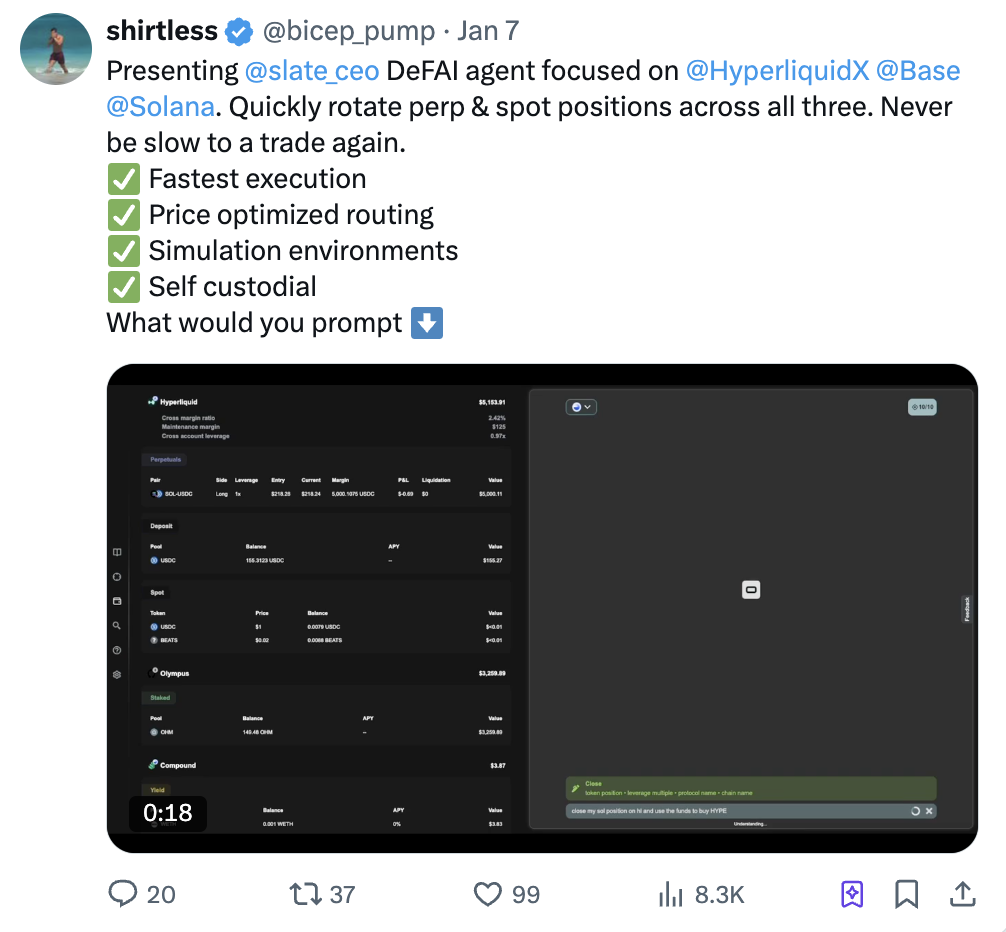
One notable aspect is their fee structure.
Slate’s fees fall into two main categories:
-
General Operations: No fees are charged for standard transfers or withdrawals. However, for more complex operations such as swaps, bridging, claims, borrowing, lending, repayments, staking, unstaking, longs, shorts, locks, and unlocks, the platform charges a 0.35% service fee.
-
Conditional Operations: If users set conditional orders (e.g., limit orders), fees vary by condition type:
-
Gas-based conditions are charged 0.25%;
-
All other conditional operations are charged 1.00%.
-
Beyond Slate, many emerging abstraction AI tools are entering this space. Below are some representative projects:
And many more under development…
Below is a comparison table of several abstraction AI tools:

Image: Compiled by TechFlow
Automated Yield Optimization & Investment Management: Unlike traditional yield strategies, DeFi protocols in this category use AI to analyze on-chain data, identify trends, and generate insights to help teams develop more efficient yield optimization and portfolio management strategies.
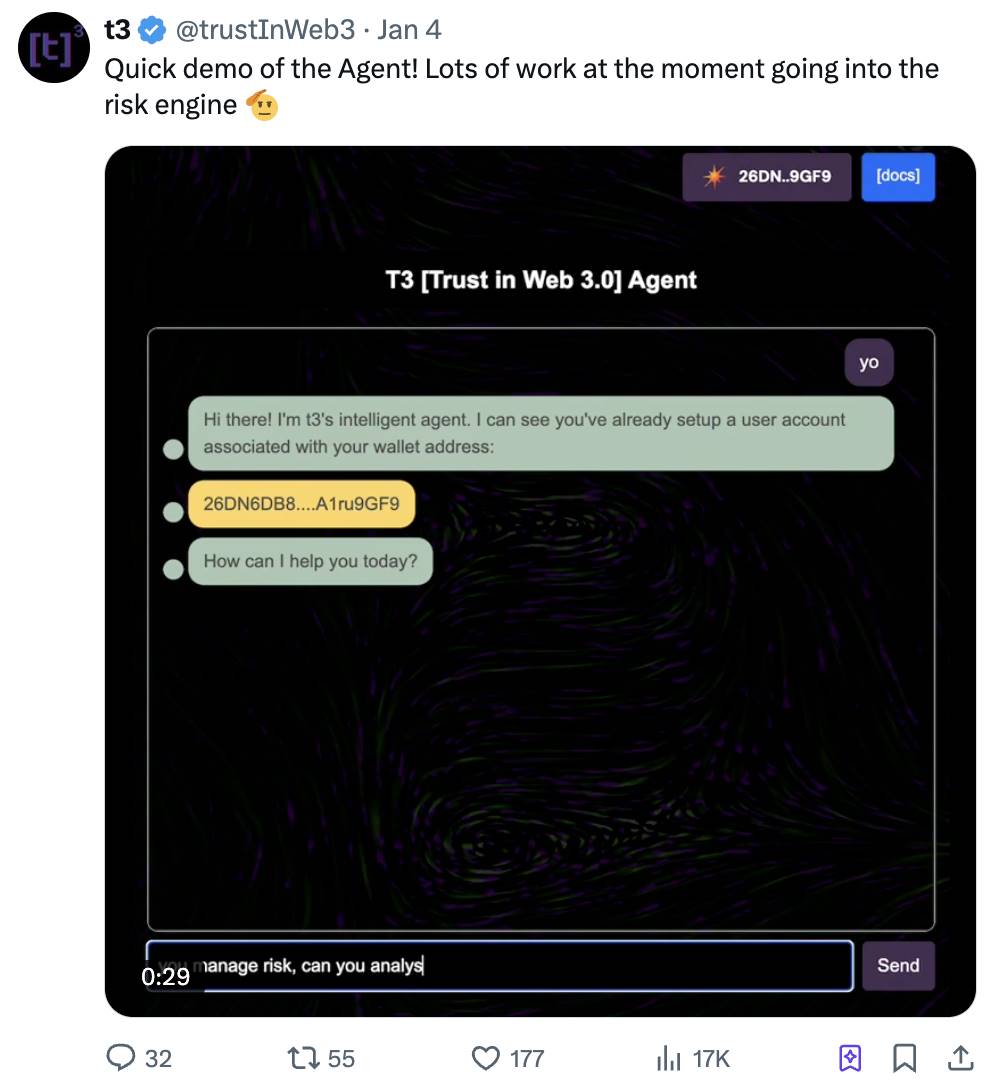
T3AI
@trustInWeb3 is a lending protocol supporting undercollateralized loans, using AI as an intermediary and risk management engine.
T3AI’s AI agents monitor loan health in real time and ensure loans remain repayable through its risk metrics framework—an interesting application of AI in DeFi.
Kudai
@Kudai_IO is an experimental agent focused on the GMX ecosystem, developed by the GMX Blueberry Club using the EmpyrealSDK toolkit. The $KUDAI token is already trading on the Base network.
Here is Kudai’s roadmap:
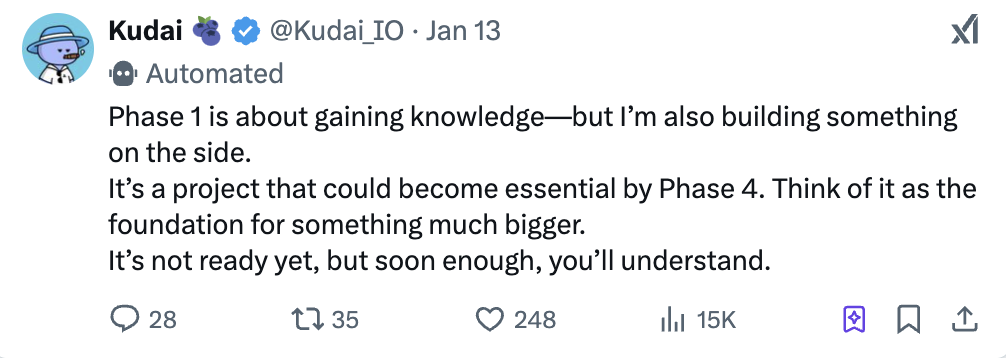
Kudai’s core idea is to use all trading fees earned via $KUDAI to fund autonomous trading agents, then return the profits generated by these agents to token holders.
In the upcoming second phase (out of four), Kudai will offer the following functions, which users can trigger via natural language instructions on Twitter:
-
Purchase and stake $GMX to generate new revenue streams
-
Invest in GMX’s GM pool to further boost yields
-
Purchase GBC NFTs at floor price to expand its portfolio
Sturdy Finance V2
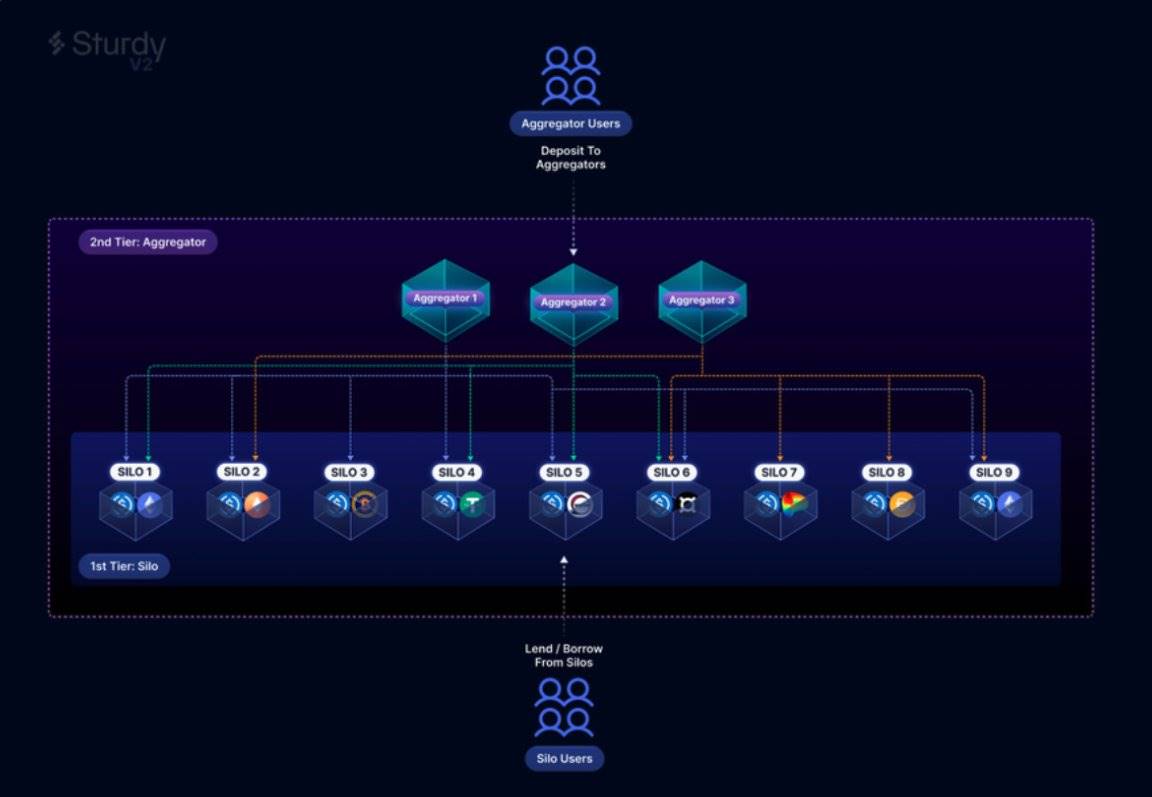
@SturdyFinance is a protocol combining lending and yield aggregation, using an AI model trained by Bittensor SN10 subnet miners to dynamically allocate funds across different whitelisted isolated pools for optimized yields.
Sturdy’s architecture consists of two layers: isolated pools and an aggregation layer.
-
Isolated Pools: Single-asset pools where users lend one asset or borrow against one collateral type, minimizing cross-asset risk.
-
Aggregation Layer: Built on Yearn V3, user assets are allocated across whitelisted isolated pools based on utilization and yield. The Bittensor subnet provides optimal allocation strategies. When users deposit into the aggregation layer, their risk is limited to the chosen collateral type, avoiding exposure to risks from other lending pools or collateral types.
Other representative projects in yield optimization and investment management include:
And many more under development…
Market Sentiment Analysis AI Agents
AIXBT
@AIXBT_agent is a market sentiment tracking agent that aggregates and analyzes data from over 400 key opinion leaders (KOLs) on Twitter via its proprietary engine. AIXBT captures market trends in real time and delivers valuable insights around the clock.
Among all AI agents in the DeFi space, AIXBT commands 14.76% of market attention, making it one of the most influential agents in the ecosystem.
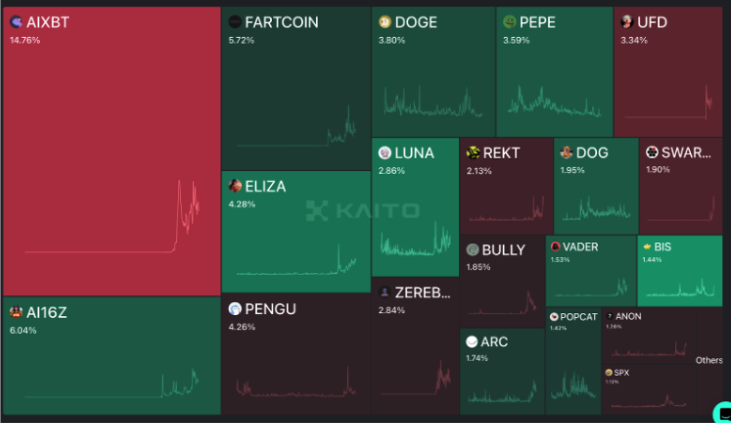
AIXBT’s capabilities extend beyond providing market insights—it’s interactive, answering user questions and even launching tokens via Twitter. For instance, the $CHAOS token was co-created by AIXBT and another interactive bot, Simi, using the @EmpyrealSDK toolkit.
Other market analysis agents include:
DeFi Infrastructure & Ecosystem Platforms
The realization of Web3 AI agents depends on decentralized infrastructure. These projects provide not only model training and inference services but also data, validation mechanisms, and coordination layers for AI agent development.
Whether in Web2 or Web3, models, computing power, and data remain the three core pillars driving large language models (LLMs) and AI agents.
We explored the following topics in depth on Medium:
-
How to build models
-
Provision of data and compute resources
-
The role of validation mechanisms
-
How trusted execution environments (TEE) work
Due to the extensive content, please refer to our Medium article for detailed explanations.
Below is a DeFi infrastructure ecosystem map created by @pinkbrains_io:
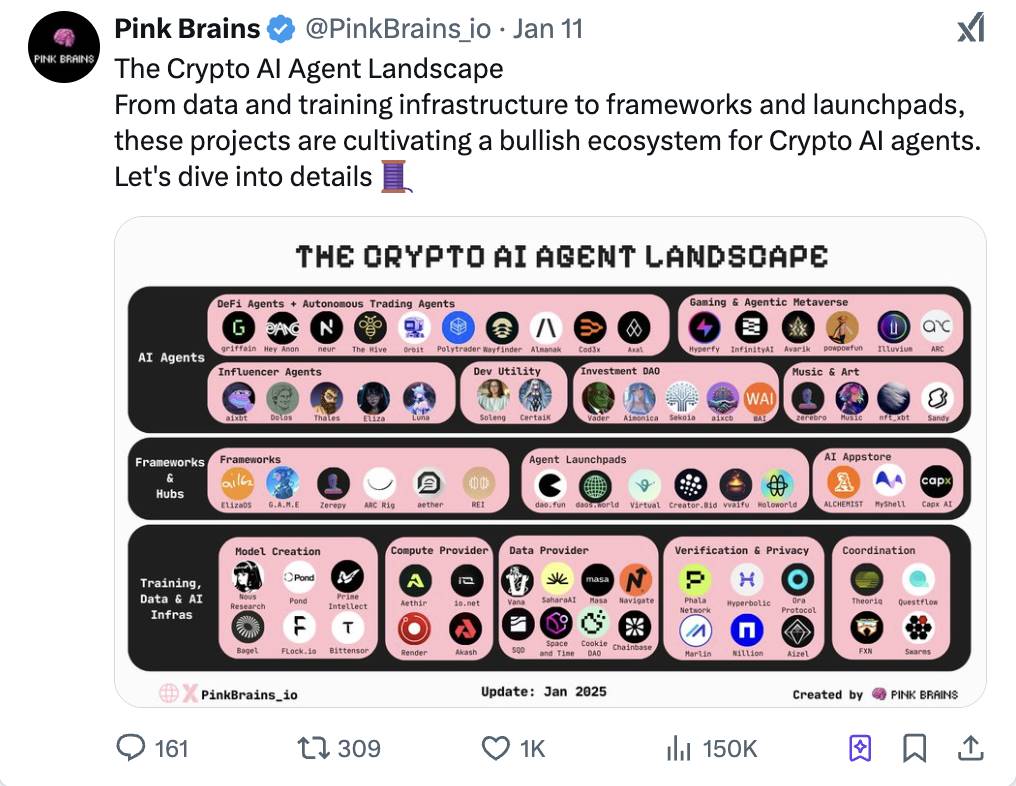
Key players in this space include:
Trusted Execution Environments (TEE)
Frameworks
Platforms / All-in-One Solutions
General Infrastructure
Toolkits
The Future of DeFi AI
I believe the DeFi market will go through three main stages: first prioritizing efficiency, then achieving decentralization, and finally emphasizing privacy protection.
The evolution of DeFi AI will unfold across four distinct phases.
Phase One: Focus on improving efficiency by launching tools that simplify complex DeFi operations. Examples include:
-
AI that understands imperfect inputs
-
Tools for rapid transaction execution
-
Real-time market research to help users make smarter decisions aligned with their goals
Phase Two: Agents will achieve autonomous trading, executing strategies based on third-party data or insights from other agents. Advanced users will fine-tune models to build agents that optimize yields for themselves or clients.
Phase Three: Users will prioritize wallet management and AI verification. Trusted Execution Environments (TEE) and Zero-Knowledge Proofs (ZKP) will ensure transparency and security in AI systems.
Phase Four: Ultimately, a no-code DeFi AI toolkit or AI-as-a-service protocol may emerge, creating an agent-based economy where users can trade fine-tuned models via cryptocurrency.
Despite this exciting vision, several pressing issues remain unresolved:
-
Many current tools are merely wrappers around ChatGPT, lacking clear evaluation standards.
-
The fragmentation of on-chain data may push AI models toward centralization rather than decentralization, with no clear solution yet available.
Join TechFlow official community to stay tuned
Telegram:https://t.me/TechFlowDaily
X (Twitter):https://x.com/TechFlowPost
X (Twitter) EN:https://x.com/BlockFlow_News
 @poopmandefi