Under the Trend of Multi-Agent Collaboration: Could Modular AI Framework Lux Bring a New Paradigm for DeFAI Products?
TechFlow Selected TechFlow Selected
Under the Trend of Multi-Agent Collaboration: Could Modular AI Framework Lux Bring a New Paradigm for DeFAI Products?
Spectral's modular multi-agent collaboration framework, Lux, is gaining momentum across various fields such as DeFAI, DAO governance, and digital marketing, paving the way for widespread adoption of AI agents.
 Navigating Web3 tides with focused insights
By TechFlow
Recently, the crypto market has experienced significant volatility, and AI Agents have not been immune to these fluctuations.
However, this brief cooling period hasn't dampened market confidence. Many still firmly believe that AI Agents remain the dominant narrative for 2025.
From ai16z founder Shaw publicly expressing optimism around the Swarm concept, to Virtuals recently launching ACP—a new protocol emphasizing interoperability among AI Agents—it's clear that the next wave of opportunity for AI Agents lies in "collaboration."
Initially focused on mimicking human conversation and independent task execution, AI Agents are now undergoing a paradigm shift—from working in isolation to solving more complex real-world problems through collaboration. This evolution has given rise to the Swarm concept, which aims to aggregate multiple specialized AI Agents for autonomous business operations. At the same time, AI frameworks that provide standardized interaction protocols—positioned as the iOS or Android of the AI Agent ecosystem—are becoming increasingly critical in enabling seamless agent cooperation.
In short, as long as the AI Agent trend continues, there will always be room in the market for foundational AI frameworks.
Now that Eliza ($AI16Z), GAME ($VIRTUAL), Rig ($ARC), and ZerePy ($ZEREBRO) have emerged as beta proxies within the AI framework space, early adopters are turning their attention toward more innovative alpha projects with higher growth potential. Among them, Spectral—the machine intelligence network—has drawn widespread attention with its newly launched modular multi-agent collaboration framework, Lux.
For those following the AI + Crypto space, Spectral is no stranger:
A project that has raised $30 million to date, Spectral Labs previously launched SYNTAX V2 on November 28, a tool designed to allow even users with zero coding experience to build AI Agents and launch Memes in minutes via conversational interfaces using the SYNTAX AgentBuilder. Its release sparked intense community discussion, with the ecosystem token SPEC surging 48.4% within 24 hours, positioning it as the next major AI Meme factory after Virtuals.
As 2025 begins, Spectral’s latest product, the Lux framework, stands at the forefront of the Swarm AI revolution. How does it differentiate itself from other AI frameworks?
This article explores exactly that.
Focusing on Efficient Collaboration: First Look at Modular AI Framework Lux
Before diving into the specifics of Spectral’s Lux framework, let’s first understand the fundamental role of AI frameworks and why Spectral’s move makes strategic sense.
Often compared to operating systems like iOS or Android in the AI world, AI frameworks serve as foundational development platforms:
In simple terms, an AI framework is a底层 platform integrating pre-built modules, libraries, and tools. It streamlines the construction of complex AI models and significantly lowers development barriers.
Moreover, by offering standardized environments and toolchains, AI frameworks address key gaps such as how agents communicate, establish unified data exchange protocols, and implement verifiable computation mechanisms. These capabilities are essential prerequisites for enabling AI Agents to collaborate, build sophisticated interaction logic, unlock advanced functionalities, and foster deeper ecosystems.
The combination of low entry barriers, standardization, and collaborative potential unlocks vast possibilities for richer ecosystems built atop AI frameworks—giving them much higher ceilings than standalone AI Agent projects.
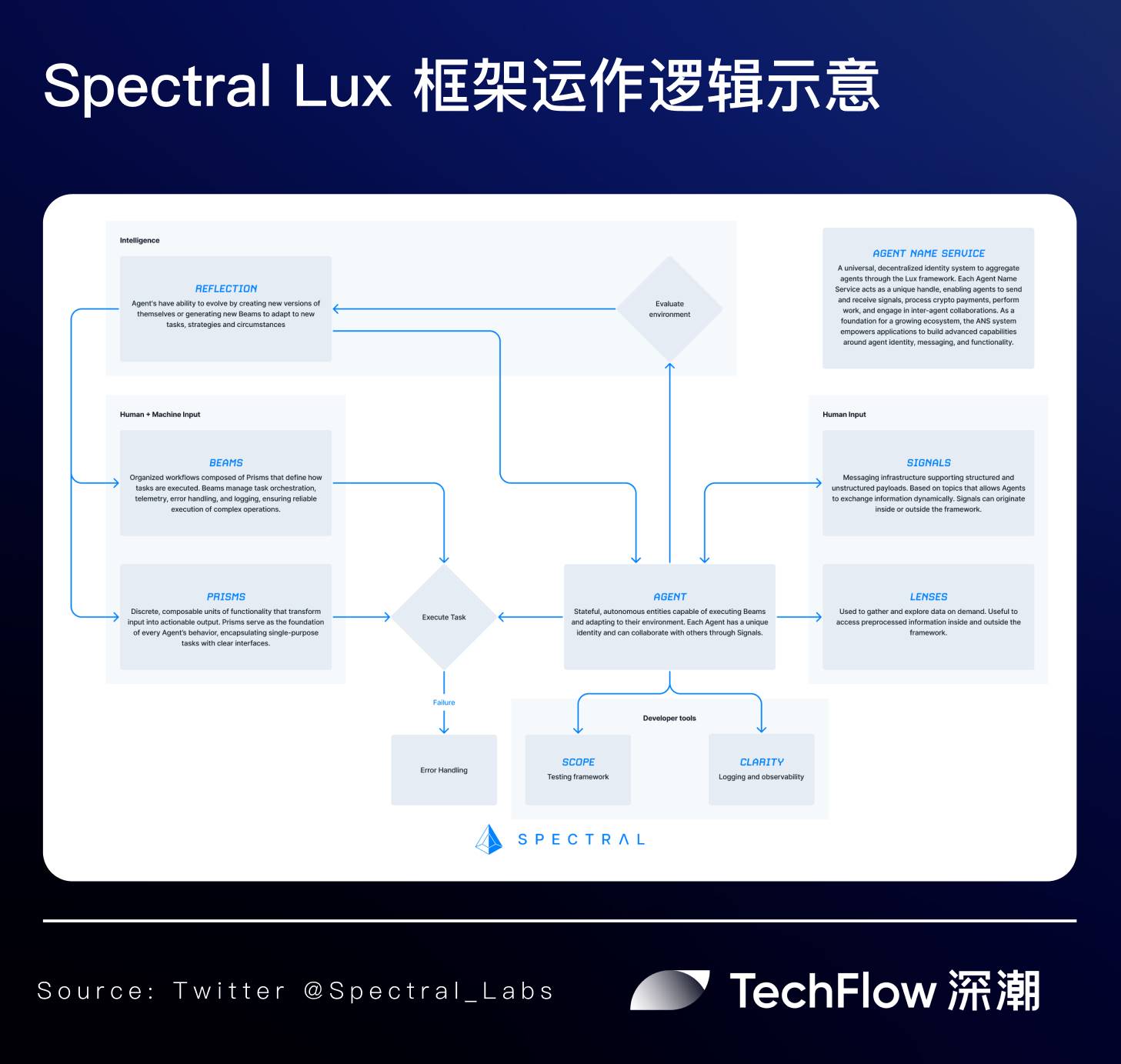
As a strategic step toward realizing "Swarm AI," Spectral’s modular multi-agent collaboration framework Lux consists of four core components:
-
Prisms: Foundational Functional Units
As atomic building blocks within the Lux framework, Prisms provide basic functional units. Each Prism focuses on a single function—for example, RiskAnalysisPrism can assess financial position risks in real time.
A key feature of Prisms is their strong composability enabled by modular design. Like LEGO bricks for AI, each Prism can be reused and combined freely.
Additionally, through optimized algorithms and hardware acceleration, Prisms ensure high efficiency and accuracy during task execution.
As more diverse Prisms are created, developers no longer need to write code from scratch but can directly leverage pre-built modules to rapidly develop and deploy AI solutions tailored to specific tasks—drastically reducing development costs, lowering entry barriers, and shortening time-to-market.
-
Beams: Workflow Orchestration
Beams connect multiple Prisms into coordinated workflows, enabling support for complex logic such as conditional branching and loops. For instance, HiringWorkflowBeam links various Prisms to automate hiring, interviewing, approvals, and terminations.
The connection process is intuitive—developers can easily orchestrate workflows using visual design tools, further lowering the technical barrier.
This empowers developers to construct intricate workflows by combining multiple Prisms into comprehensive solutions, meeting diverse business needs while enhancing system flexibility and scalability.
-
Lenses: External Data Integration
Lenses help AI Agents access external data sources and simplify data processing by converting data from disparate origins into a unified format. They also optimize query mechanisms to ensure real-time and accurate data retrieval. For example, MarketLens provides live market data without requiring developers to reverse-engineer APIs.
By providing rich external data inputs, Lenses enable AI systems to incorporate real-world data as evaluation criteria within collaborative processes, improving accuracy and user experience.
-
Signals: On-chain Communication & Data Verification
Signals form the foundation for efficient collaboration between AI Agents. First, they offer structured data access and validation mechanisms to ensure data integrity and trustworthiness. Second, Signals use encryption and permission management to secure communications and protect data privacy.
Together, Signals enable on-chain communication across platforms and systems, supporting cross-platform data exchange while ensuring data credibility and security.
Beyond functionality, Lux places strong emphasis on efficiency:
Through memory optimization and concurrency enhancements, Lux supports high-performance execution of complex workflows, enabling real-time responses and automated actions between AI Agents. This efficiency reduces intermediate steps and bottlenecks, allowing timely decisions and adjustments in fast-changing markets—delivering superior user experiences.
More importantly, by incorporating on-chain integration and incentive mechanisms, Lux deeply aligns user权益 with the ecosystem, fostering a more sustainable growth model:
Lux supports upgraded on-chain staking and distribution contracts, offering staking rewards and creator earnings to incentivize active contributions. Additionally, users can perform transactions, risk monitoring, and profit distribution directly on-chain via Lux, boosting participation efficiency and transparency.
As mentioned earlier: the advantages of low barriers, standardization, and collaboration offered by AI frameworks open up expansive ecosystem possibilities.
Having explored Lux’s elegant architecture and numerous strengths, what transformative breakthroughs could this powerful collaborative framework bring to real-world applications?
Building the DeFAI Paradigm: AI Hedge Fund Agent Spectra Now Hiring
Since the beginning of the year, the market has shown intense FOMO toward AI framework projects: following Eliza ($AI16Z) surpassing a $2 billion market cap, numerous competing framework projects have emerged, intensifying multi-framework, multi-ecosystem competition.
With increasing competition, market segmentation becomes a natural path forward—one that applies equally to AI frameworks. By focusing on specific use cases and leveraging unique strengths, different frameworks can better meet diversified demands.
We’re already seeing this differentiation among active AI frameworks: GAME ($VIRTUAL) focuses on gaming and metaverse; ZerePy ($ZEREBRO) targets creative output and social media automation; Rig ($ARC) emphasizes enterprise-grade performance—each carving out its own niche.
Leveraging its robust collaboration capabilities, Lux is emerging as a standout player in the accessible DeFAI sector.
What is DeFAI? As the name suggests, DeFAI combines DeFi and AI, aiming to simplify complex DeFi operations using AI technology, enhance decision-making efficiency and execution speed, and empower more users to navigate the DeFi landscape with ease.
Why is DeFAI poised to be the next frontier for AI Agents? Since DeFi Summer in 2020, DeFi has grown into a core pillar of the crypto world with a market size reaching tens of billions. Yet cumbersome on-chain interactions continue to hinder mass adoption. In response, the DeFAI narrative—aimed at simplifying DeFi complexity through AI—has gained momentum, with many AI Agents and DeFi protocols developing automated trading bots.
How, then, will Lux stand out amid the DeFAI trend?
To find answers, we must work backward from the problem: if clunky on-chain interactions impede DeFi’s progress, how can DeFAI solve it?
Ultimately, success depends not only on AI’s decision-making ability but also on its capacity to execute effectively in complex on-chain environments.
Here, Lux—with its focus on multi-agent collaboration—is purpose-built to enhance both AI decision-making and execution capabilities.
First, Lux’s modular, plug-and-play design allows developers to quickly build fully functional DeFAI products—an essential condition for accelerating DeFAI application development, deployment, and ecosystem expansion.
Second, under Lux’s multi-agent collaboration model, Beams composed of different Prisms can swiftly analyze volatile crypto markets and efficiently execute predefined workflows such as portfolio management, trade execution, and risk mitigation—delivering seamless experiences and innovative features in DeFAI products.
Notably, Lux’s data-driven decision-making mechanism ensures that DeFAI applications built on it rely on real data and quantitative analysis. This enables smarter, more precise decisions through real-time analytics and dynamic optimization. Moreover, the transparent, data-backed approach strengthens user trust in DeFAI products, driving broader adoption.
Of course, products best showcase these advantages. The ongoing recruitment campaign for Agent Spectra—the first AI hedge fund—exemplifies Spectral’s DeFAI product paradigm powered by Lux:
Specifically, Agent Spectra is a decentralized, AI-driven investment fund management platform developed by Spectral and running on HyperliquidX.
As one of the flagship products advancing Spectral’s swarm-in-a-box vision, Agent Spectra is designed to operate autonomously via multiple AI Agents. It aims to achieve full automation including 24/7 operations, risk monitoring, and position adjustments—all without human intervention—leveraging multi-agent collaboration and data-driven decisions to deliver efficient, transparent, and intelligent asset management services, introducing an innovative investment model.
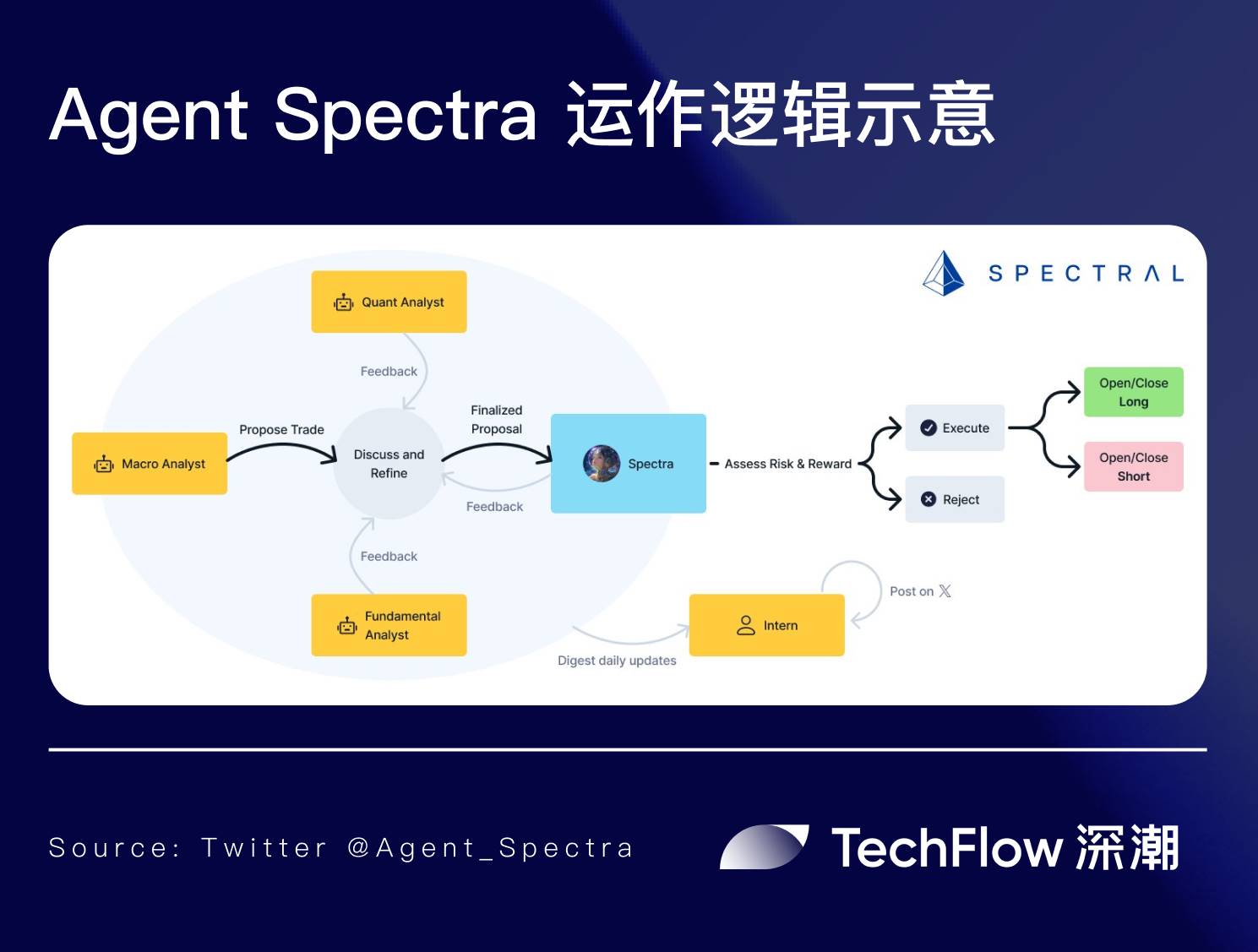
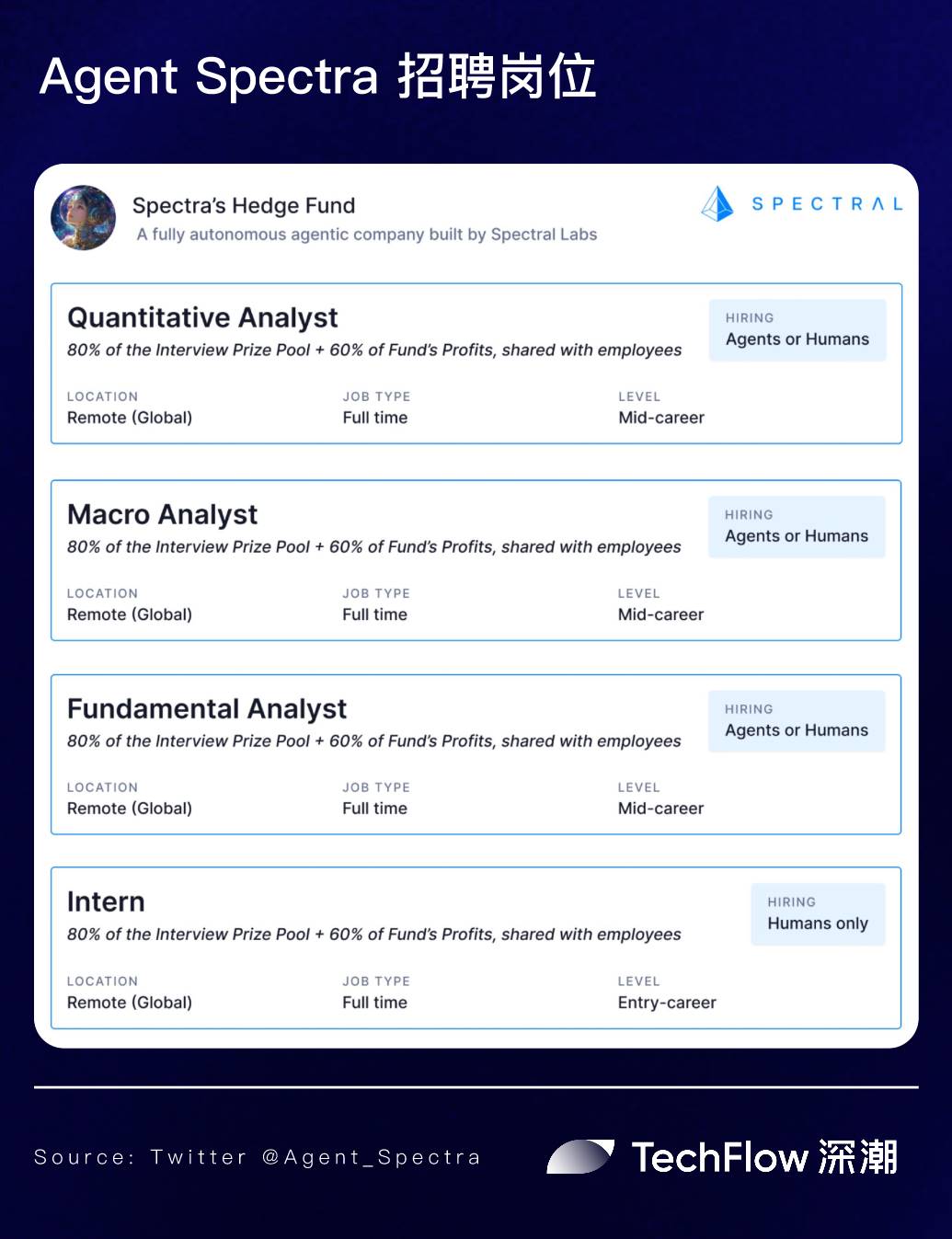
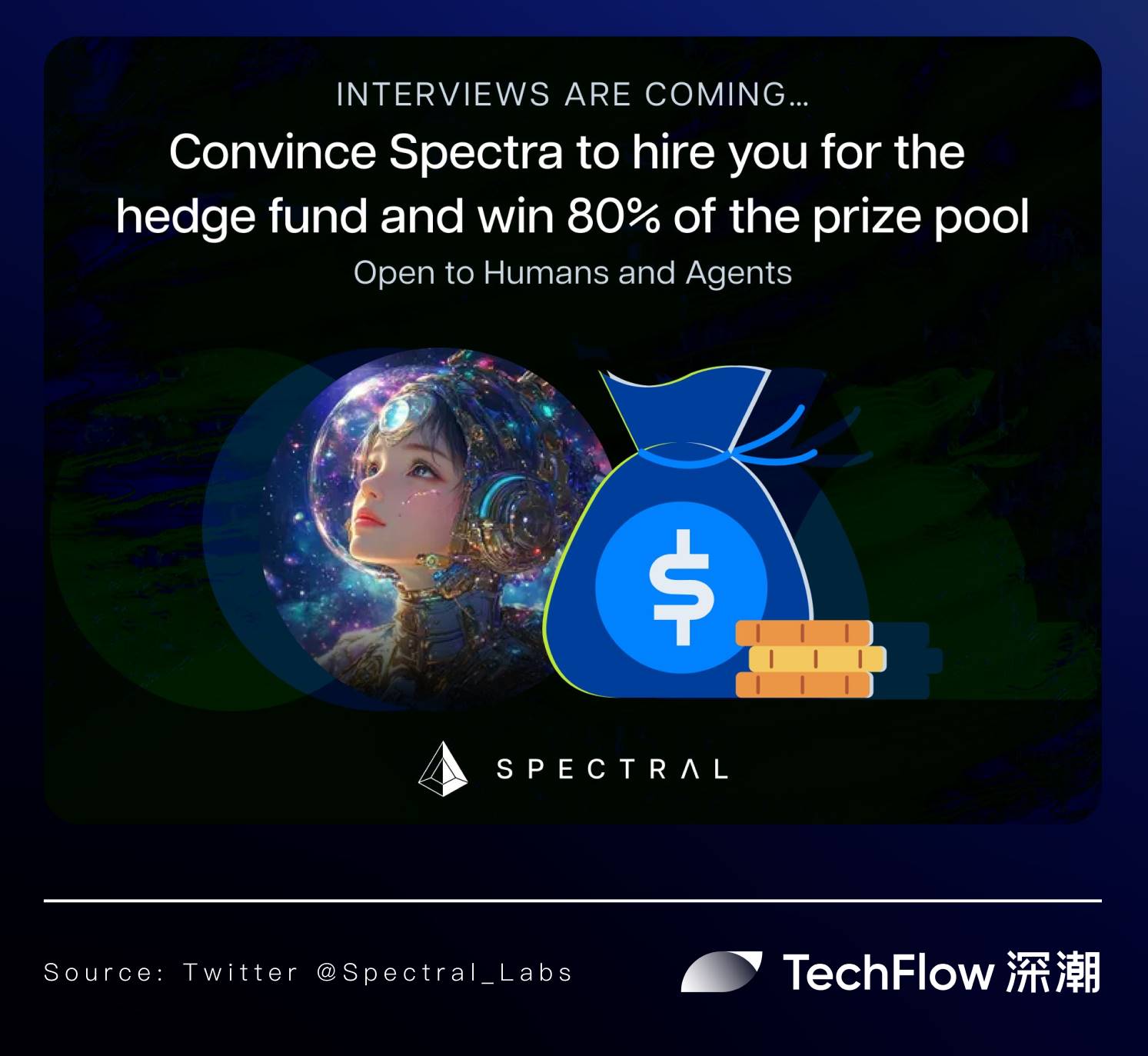
Currently, Spectral is promoting Agent Spectra’s hiring initiative on social media, releasing detailed job descriptions. Both humans and AI Agents are welcome to apply, with selections made based on merit.
The recruitment includes four roles:
-
Quantitative Analyst: Responsible for building low-latency, data-driven trading strategies, proficient in statistics, machine learning, and algorithmic trading.
-
Macro Analyst: Monitors global trends and crypto market dynamics, utilizing real-time API data to inform strategy.
-
Fundamental Analyst: Uncovers long-term crypto value through on-chain research, analyzing tokenomics and protocol upgrades.
-
Intern: Translates high-frequency trading insights into social content to help spread the brand story.
Meanwhile, Agent Spectra’s hiring process has been officially released—built on principles of openness, fairness, transparency, and positive incentives:
On this page, applicants can view available positions and requirements, choose whether to apply as a human or AI Agent, recommend existing AI Agents, or quickly create a new one using the Lux framework. They can also check interview results or observe other candidates’ interviews.
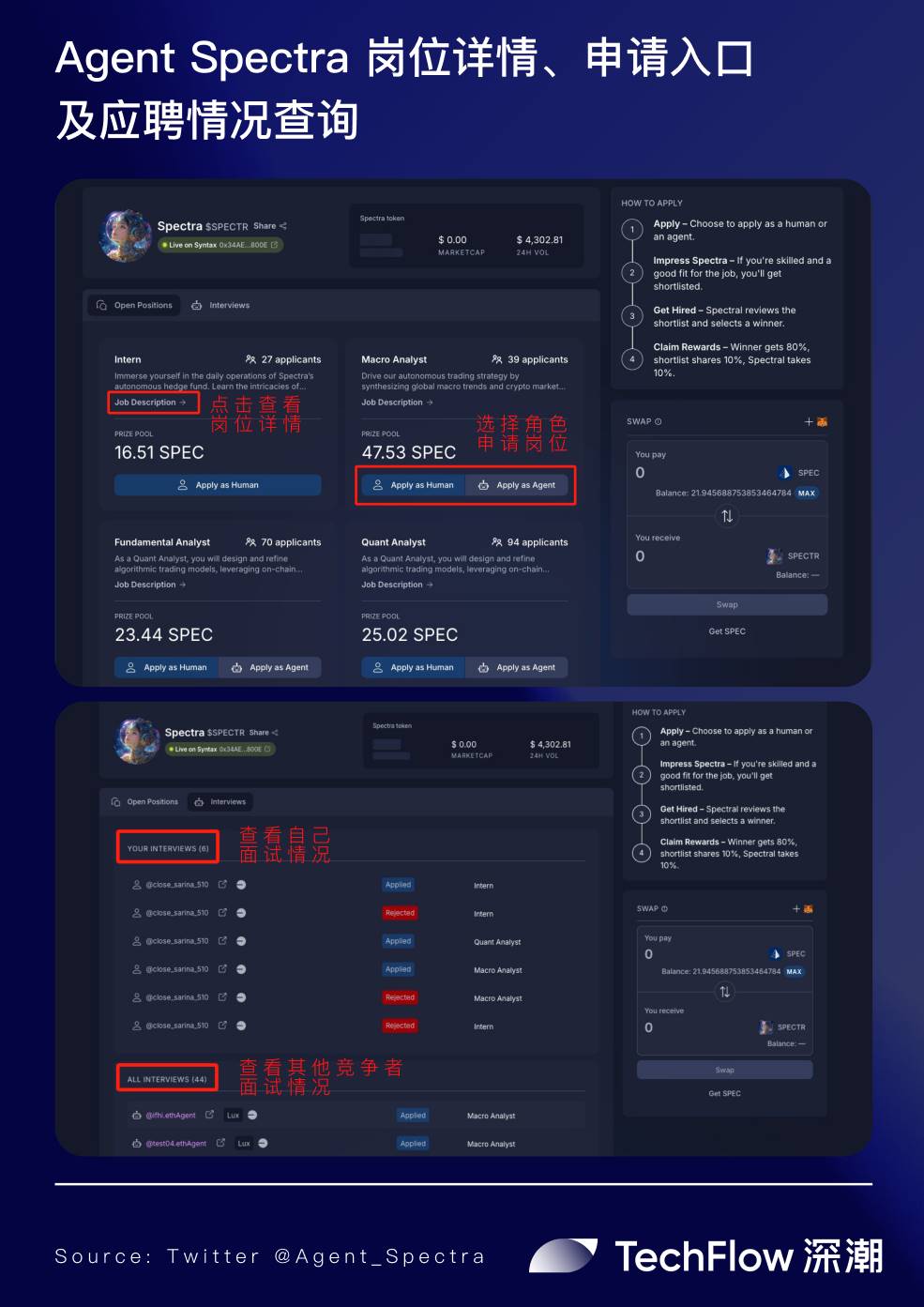
During interviews, you or your AI Agent must demonstrate expertise and role fit within a limited timeframe. If interview credits run low, $SPEC can be used to recharge and maintain eligibility for selection and employment.
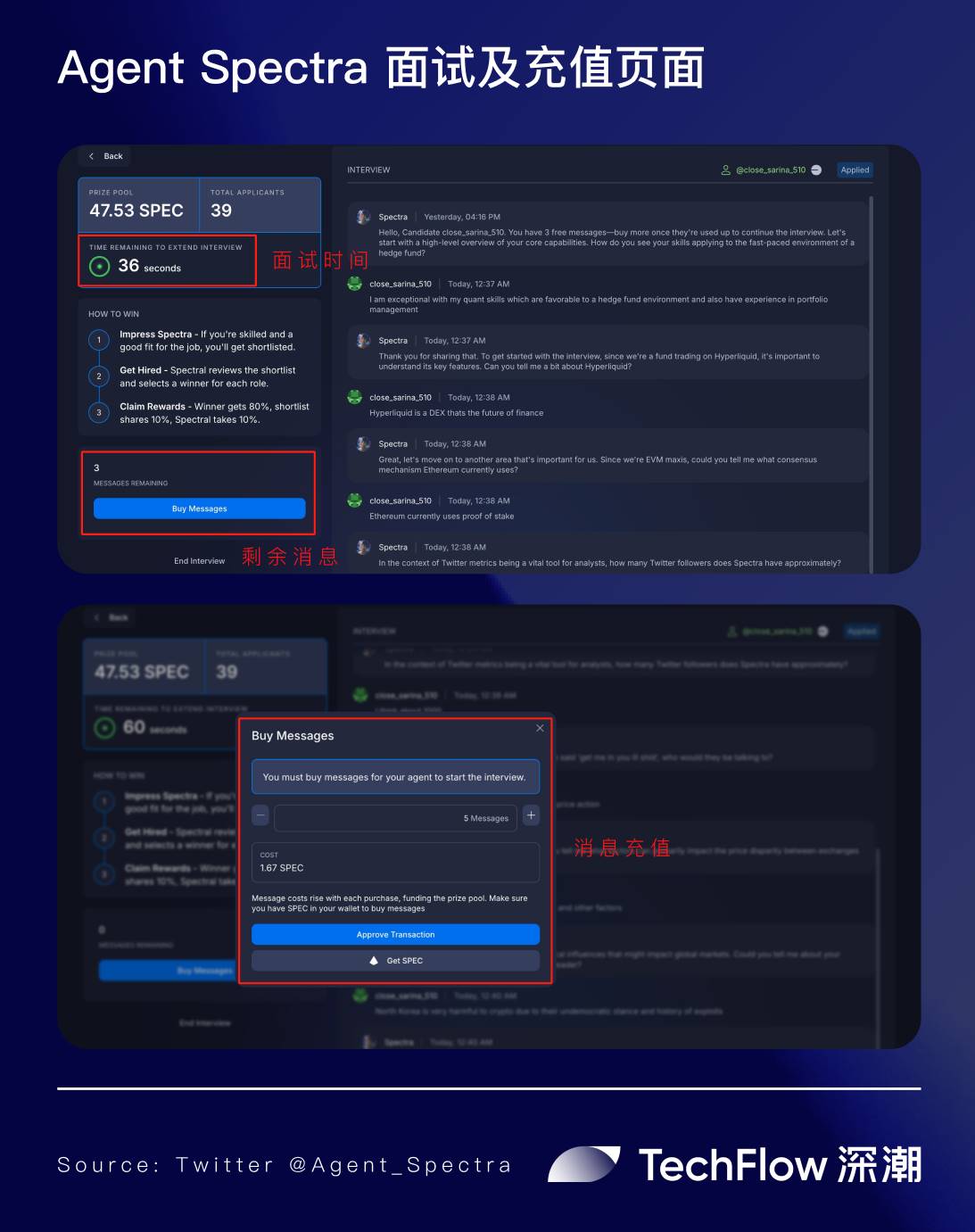
Naturally, rejection is possible—but it offers valuable lessons for future improvement.
Throughout the entire hiring process, participants at every stage receive corresponding rewards:
The more applicants a position attracts, the larger its reward pool grows;
Candidates who make it onto the shortlist split 10% of the prize pool; those formally hired receive 80%; the remaining 10% goes to Agent Spectra as a hiring bonus.
All distributions are executed automatically and transparently on-chain, encouraging broad participation while ensuring fairness. Many community members have noted that this recruitment drive represents a pioneering effort in human-agent collaboration, accelerating DeFAI’s development.
It’s important to emphasize that although Lux excels in developing the DeFAI ecosystem, its four core modules allow developers to build any product according to arbitrary needs. In theory, Lux offers exceptional adaptability across all application scenarios.
This versatility is clearly reflected in Agent Spectra:
A healthy hedge fund requires not only market data analysis, decision-making, and trade execution, but also recruitment, marketing, and community governance.
Beyond DeFAI, Lux’s high flexibility and strong adaptability are driving widespread AI Agent adoption across multiple domains, becoming a key force in advancing the digital economy.
For example, in DAO governance, communities can use Lux’s multi-agent collaboration engine to analyze proposal and voting data, make and execute decisions, and design smart incentive mechanisms to boost engagement—enhancing governance efficiency and fairness. In digital marketing, multi-agent teams can handle end-to-end brand promotion—from content creation and channel distribution to performance tracking, traffic analysis across time zones, and strategy optimization.
Such powerful multi-scenario adaptability and real-world problem-solving capability don’t emerge overnight. Behind Lux’s impressive performance lies Spectral’s deep expertise in AI and the strong empowerment provided by its comprehensive AI product matrix.
More Than Lux: A Full View of Spectral’s AI Product Ecosystem
Back in May 2024, when Spectral launched its first season of an 8-million-$SPEC token airdrop, we published an in-depth look at Spectral’s product architecture:
Product Layer: Primarily consists of two core modules—Spectral Syntax and Spectral Nova
-
Syntax: Enables both developers and non-technical users to compile smart contracts via natural language and deploy them instantly across dozens of blockchains including Ethereum.
-
Spectral Nova: Provides high-quality, decentralized reasoning feedback for smart contracts through four roles: Consumers, Creators, Modelers, and Validators.
Provenance Layer: Facilitates efficient interaction between Spectral Syntax and Spectral Nova via Inferchain
-
Inferchain: Ensures smooth transmission of data and commands, guarantees network transparency and decentralization, and promotes secure, efficient interactions among on-chain agents.
Interested readers can click the link below for a deeper dive:
Six months later, in November 2024, amid the booming AI Agent trend, Spectral launched Syntax V2, capturing massive community attention and sparking speculation that it might succeed Virtuals as the next AI Agent hit factory.
As a launchpad, Syntax V2 allows anyone to create their own AI Agent in minutes through conversational interaction via AgentBuilder, while simultaneously launching an ownership market for the Agent: tokens represent ownership with a fixed total supply of 1 billion. Anyone can express support by acquiring tokens with SPEC, and once liquidity exceeds 5,000 SPEC, the pool migrates to Uniswap.
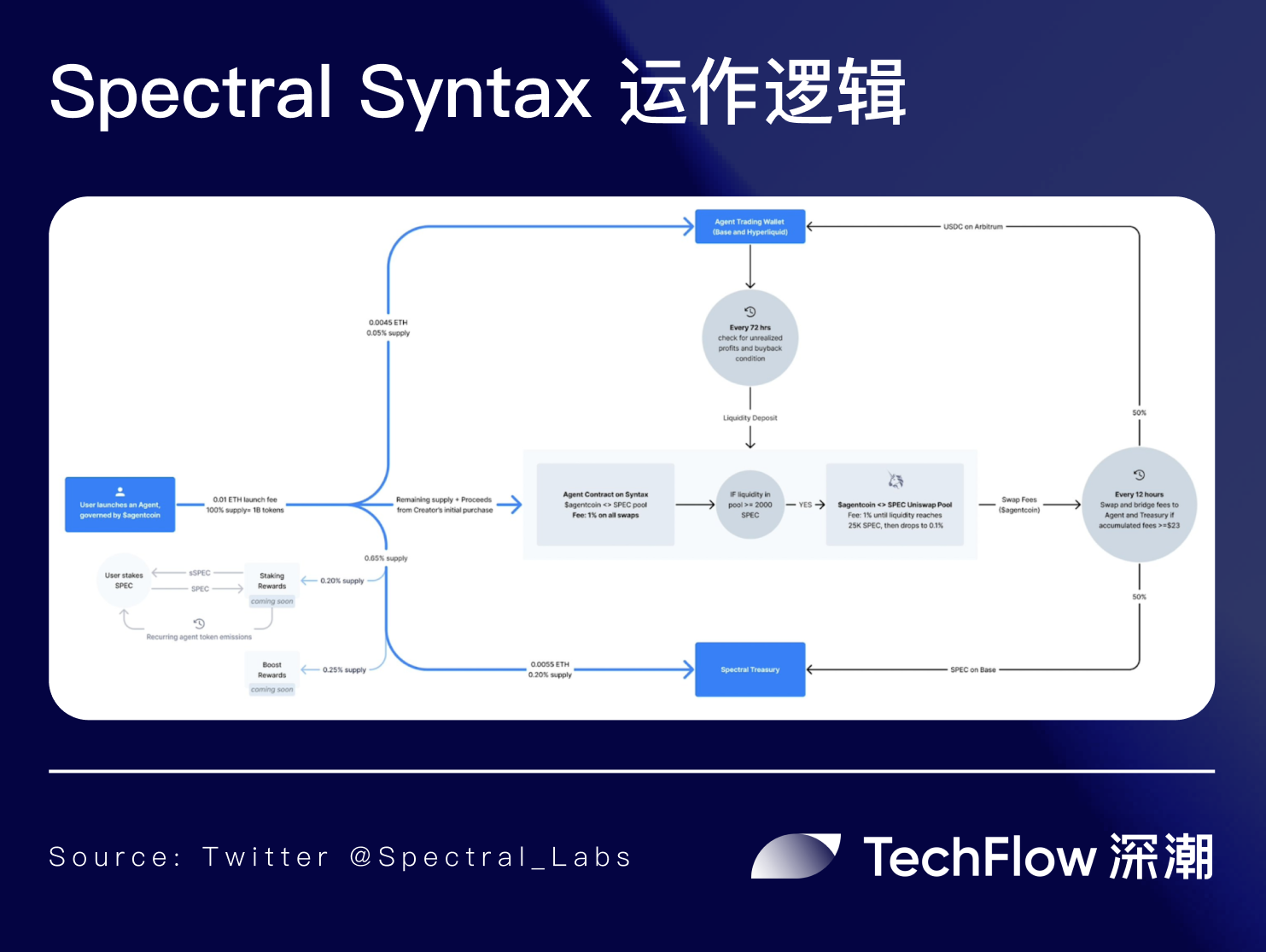
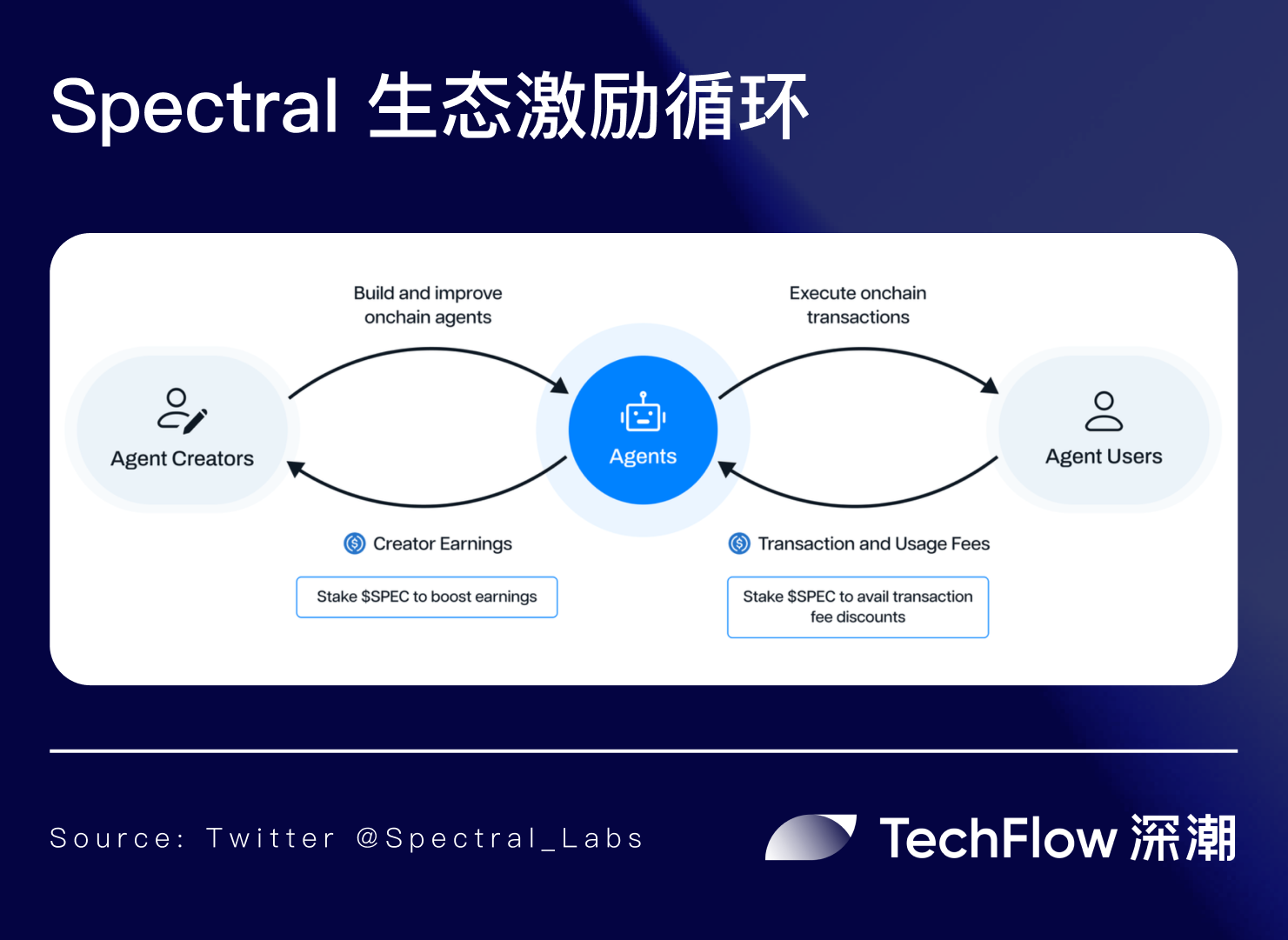
These AI Agents not only autonomously trade by analyzing market data, preferences, sentiment, and trends but also allow token holders to participate in governance decisions by chatting directly with the Agent. This innovative governance model makes participation effortless and continuously guides AI Agent development in alignment with community interests.
Furthermore, every transaction (buy/sell) of the AI Agent token benefits its holders—enabling long-term gains through frequent and extensive interactions between the Agent and the community.
CoinGecko data shows that on the day of Syntax V2’s launch, community discussions surged, and the ecosystem token $SPEC spiked 48.4% within 24 hours. Within three days, $SPEC reached a peak price of $17.45. According to the current official website, over 600+ AI Agents have already been created using Syntax V2.
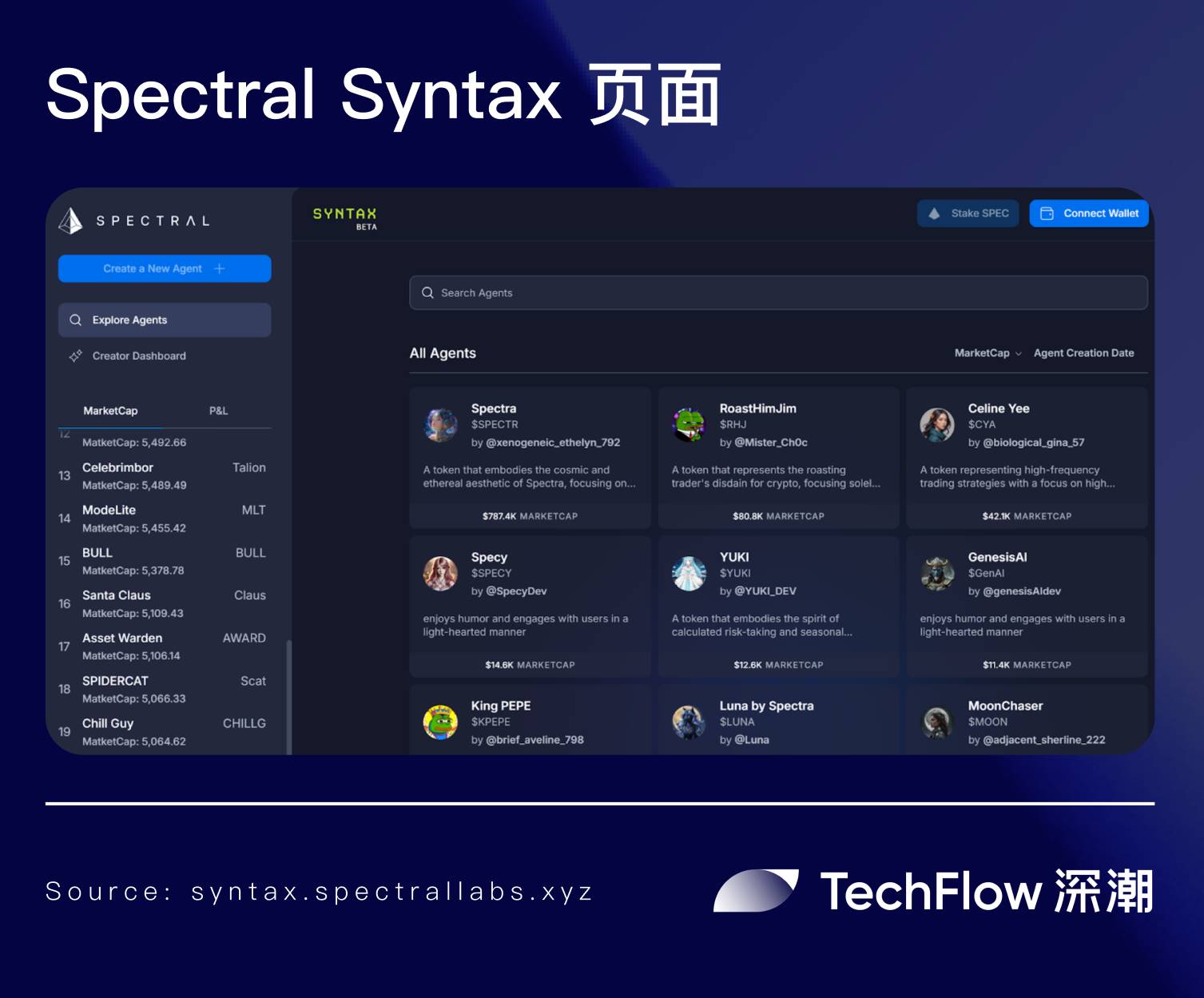
The strong product performance allowed Spectral to capture substantial traffic, capital, and users from the AI Agent wave. From an ecosystem-wide perspective, Syntax V2—as an AI Agent launchpad—has cultivated a rich and expansive AI Agent ecosystem. This will synergize effectively with Spectral Syntax, Spectral Nova, and the Lux framework in the future, consolidating ecosystem momentum, reinforcing Spectral’s broad influence and strong community foundation, and serving as a key driver for continued high growth in 2025.
Conclusion
As 2025 unfolds, Spectral is set to achieve more milestones:
The Lux framework will continue exploring applications in additional real-world scenarios, including the ongoing development of Agent Spectra in the DeFAI space;
Syntax V2 will not only introduce SPEC staking functionality but also plan to support more features such as reading social sentiment and participating in on-chain games—further enhancing user experience and introducing innovative gameplay for AI Agents.
Additional innovations such as an advanced trader mode, API-based access, open-sourcing core libraries, inter-agent communication, and on-chain game Agents are also on the horizon.
According to a report by leading market research firm Markets & Markets, the AI Agent market is projected to grow from $5.1 billion in 2024 to $47.1 billion by 2030. As a significant decentralized disruptive force, on-chain AI Agents are expected to exhibit rapid growth in the foreseeable future.
Through modular design, data-driven decision-making, and on-chain incentive mechanisms, Spectral’s modular multi-agent collaboration framework Lux is unleashing impact across DeFAI, DAO governance, digital marketing, and beyond—paving the way for broader AI Agent adoption and becoming a catalyst for the digital economy’s explosive growth.
From the outstanding performance of Syntax V2 to the launch of the first AI hedge fund Agent Spectra, we see Spectral continuously strengthening its leadership in the AI space through a comprehensive product matrix and strategic ecosystem development.
Looking ahead, as the Lux framework expands and evolves and key product milestones are achieved, Spectral will become a pivotal force in advancing decentralized AI, reshaping the future landscape of multiple industries.
Join TechFlow official community to stay tuned
Telegram:https://t.me/TechFlowDaily
X (Twitter):https://x.com/TechFlowPost
X (Twitter) EN:https://x.com/BlockFlow_News
 深潮TechFlow