Interpreting the Eliza Technical Whitepaper: A Web3-Friendly AI Agent Operating System
TechFlow Selected TechFlow Selected
Interpreting the Eliza Technical Whitepaper: A Web3-Friendly AI Agent Operating System
Eliza's potential is limited only by the user's imagination.
 Navigating Web3 tides with focused insights
Author: TechFlow
After much anticipation, Eliza has finally released its technical whitepaper today.
While we often hear about AI agents built on the open-source Eliza framework, there has long been a lack of detailed and rigorous explanation regarding how Eliza defines itself technically.
This whitepaper provides a solid answer, describing in depth how Eliza enables deep integration between AI and Web3, its modular system architecture, and technical implementation details as an open-source framework.
The whitepaper was co-authored by Shaw, multiple members of Eliza Labs, and engineers from other related organizations. However, due to the extensive technical details and specialized concepts involved, it may not be easily accessible to general readers.
TechFlow has simplified and distilled the content to help you quickly grasp the essence of this whitepaper using clear and straightforward language.
1. Why Build Eliza?
Note: The author believes that thinking starts with defining scope — specifically, why build Eliza within the crypto or Web3 domain, rather than comparing this framework broadly against other similar AI frameworks.
Following this logic, the introduction and background sections of the whitepaper actually offer a strong answer:
In the intersection of AI and Web3, there has always been a noticeable gap: a lack of agent frameworks capable of seamlessly integrating with Web3 applications.
More specifically, the whitepaper identifies three major challenges facing the Web3 space:
-
Complexity of Decentralized Transactions: With the rapid growth of public blockchains such as Ethereum, Solana, and Base, managing assets and executing transactions across different chains is becoming increasingly challenging. Although some trading platforms exist, their basic functionalities are often insufficient for intermediate to advanced users with customized needs.
-
Unlocking Value from On-chain Data: Blockchains contain vast amounts of valuable information — from fundamental metrics like wallet holdings, token prices, and market caps, to more sophisticated indicators such as whale address concentration and market maker behavior. Effectively transforming these complex datasets into actionable insights remains an urgent challenge.
-
Fragmentation of Social Media Information: For the Web3 industry, social platforms like Twitter, Discord, and Farcaster are crucial sources of information. Yet, as the number of influencers (KOLs) grows, information becomes increasingly fragmented. Filtering meaningful insights from this flood of data is a common challenge for every trader.
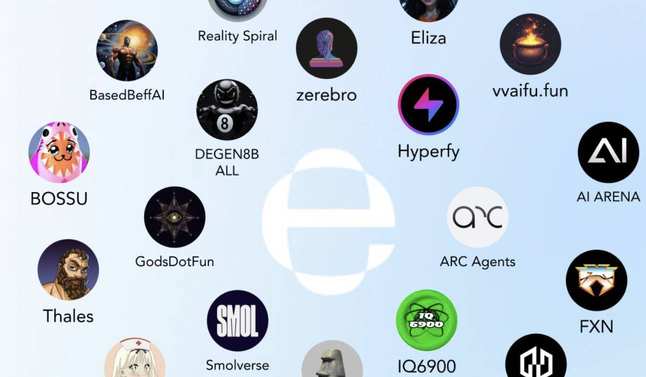
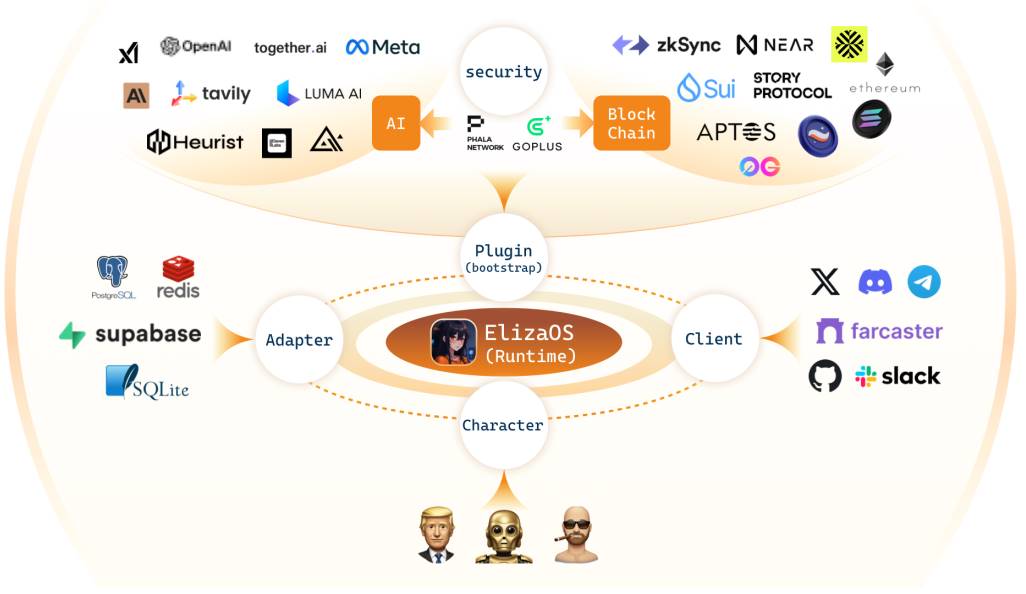
It is precisely these real-world demands that gave rise to Eliza. As the first open-source, Web3-friendly AI agent operating system, Eliza adopts a modular design, enabling developers and users to customize solutions based on their specific needs.
Eliza aims to lower the barrier for ordinary users to access advanced AI capabilities, allowing them to build their own AI agents without requiring deep programming expertise.
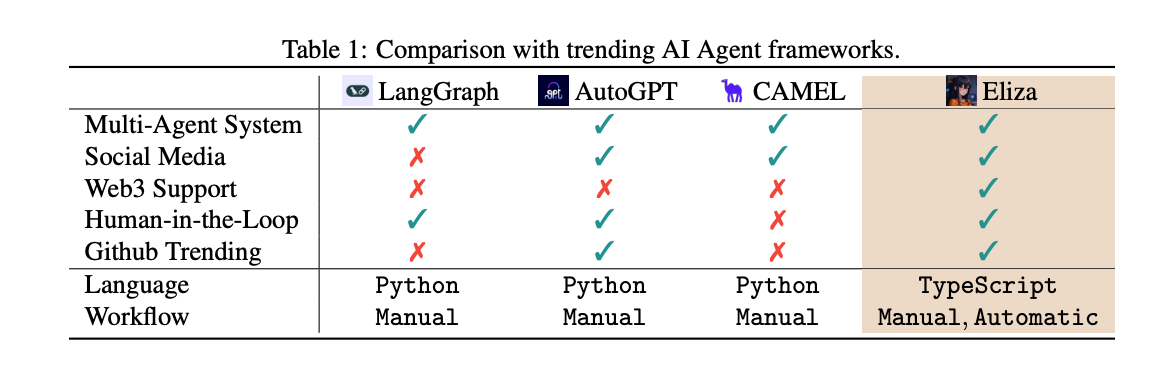
Additionally, the whitepaper compares Eliza with several other common AI frameworks. The table below clearly illustrates Eliza's claim of being the most Web3-optimized solution — a key message throughout the document.
2. Eliza’s Design Philosophy and Technical Innovations
Three Core Design Principles: Simple, But Not Simplistic
Eliza’s success did not happen by accident. From the outset, the team established three core principles:
-
Web3 Developer First: Given that Web3 development primarily relies on JavaScript/TypeScript, Eliza chose TypeScript as its primary language. This allows developers to use familiar tools and easily integrate blockchain functionality into existing web applications. In short, it enables Web3 developers to “use it right away.”
-
Modular Plugin Architecture: Eliza breaks down the system into a core runtime and four key components:
-
Adapter (data adapter)
-
Character (agent personality)
-
Client (messaging interface)
-
Plugin (general-purpose functions)
This design allows developers to freely add custom plugins, clients, characters, and adapters without needing to understand the intricacies of the core runtime. It also enables Eliza to support the widest range of model providers (e.g., OpenAI, Llama, Qwen), platform integrations (Twitter, Discord, Telegram), and chain compatibility (Solana, Ethereum, Ton, etc.).
-
Simplicity Over Complexity:
With limited engineering resources, maintaining a simple internal implementation saves time for developing new features, adapting to new scenarios, and keeping pace with the fast-moving AI and Web3 landscapes.
Technical Innovation: Internal Enhancement and External Expansion
In practical implementation, Eliza’s innovations fall into two dimensions: internal enhancement and external expansion.
-
Internal Enhancement: To improve the AI model’s reasoning capabilities, Eliza integrates several cutting-edge techniques:
-
Chain-of-Thought (CoT):
-
Technical Definition: Introduces step-by-step reasoning
-
Plain Explanation: Just like showing your work when solving a math problem, the AI writes out its thought process step by step instead of jumping straight to the answer. This improves accuracy and makes the AI’s reasoning transparent to humans.
-
-
Tree-of-Thought (ToT):
-
Technical Definition: Enables branching exploration of multiple solutions
-
Plain Explanation: Like considering multiple possible moves in chess, the AI explores several potential solutions simultaneously and selects the best one — akin to choosing the optimal branch on a tree of thoughts.
-
-
Graph-of-Thought (GoT):
-
Technical Definition: Connects reasoning paths into a network
-
Plain Explanation: Treats problems as interconnected networks where ideas link together — similar to creating a mind map when solving complex issues.
-
-
Layer-of-Thought (LoT):
-
Technical Definition: Hierarchical reasoning in AI
-
Plain Explanation: Similar to using filters, the reasoning process is divided into layers — starting with high-level strategy and progressively refining down to fine details, layer by layer.
-
-
External Expansion: To enhance real-world problem-solving, Eliza integrates various external capabilities:
-
RAG (Retrieval-Augmented Generation):
-
Technical Definition: Enhances generation through retrieval
-
Plain Explanation: Like a student consulting textbooks while doing homework, the AI retrieves relevant knowledge from its database to ensure more accurate responses.
-
-
Vector Database:
-
Technical Definition: Stores and retrieves structured data
-
Plain Explanation: Acts as the AI’s “library,” enabling quick search and retrieval of similar content. For example, if you say “find poems about the moon,” it can rapidly return all relevant results.
-
-
Web Search:
-
Technical Definition: Real-time access to internet information
-
Plain Explanation: Allows the AI to browse the web like a human, staying updated beyond its static training data.
-
-
Text-to-Image/Video/3D Model:
-
Technical Definition: Converts text descriptions into multimedia content
-
Plain Explanation: Just as an artist paints from a description, the AI generates images, videos, or even 3D models from textual input.
-
Comparison with Other Web3 Frameworks
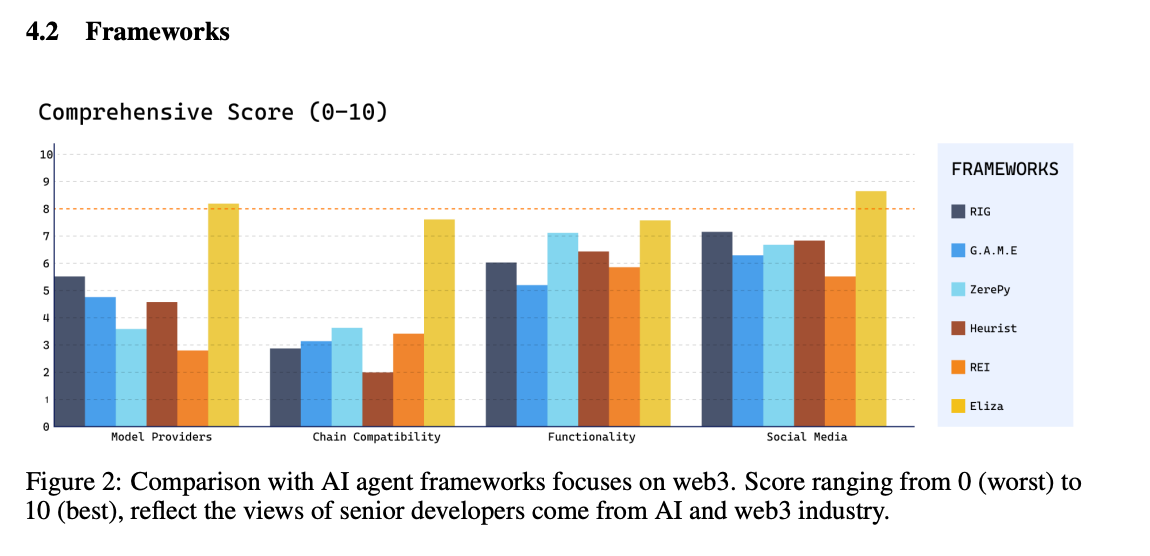
Among current Web3 AI agent frameworks, Eliza demonstrates clear advantages. Based on feedback from over 50 AI researchers and senior blockchain developers, Eliza outperforms other frameworks across the following key metrics:
-
Support for model providers
-
Blockchain compatibility
-
Functional completeness
-
Social media integration
3. Eliza OS: A Thoughtfully Crafted Web3 AI Ecosystem
Having understood Eliza’s design philosophy, let’s explore how this framework actually works. Think of Eliza as a meticulously designed LEGO system — each piece fits perfectly while offering exceptional flexibility.
Core Components: Five Key Roles
In Eliza’s ecosystem, five core components work together to form a complete intelligent system.
-
Agents: The Main Actors
These function as independent "digital assistants," handling various autonomous interactions. Each agent possesses its own "memory" and "personality," enabling coherent conversations and engagement with users across platforms like Discord and Twitter.
-
Character Files: The Agent’s “Persona”
To give agents distinct personalities, Character Files define their “resumes.” These specify identity, personality traits, supported models (e.g., OpenAI, Anthropic), and permitted actions (e.g., blockchain transactions, NFT minting). Through carefully crafted configurations, each agent can exhibit unique expertise and behavioral patterns.
-
Providers: The Agent’s “Sensory System”
When interacting with the outside world, agents rely on Providers as their “sensory organs.” Just as humans need senses to perceive reality, Providers supply real-time data such as market prices, wallet details, and sentiment analysis, helping agents better understand context and environment.
-
Actions: The Agent’s “Skill Set”
When taking action, Actions serve as the agent’s “toolbox.” From placing buy/sell orders to generating NFTs, every operation undergoes strict security validation to ensure safety, especially in financial tasks. These capabilities empower agents to make real impact in the Web3 world.
-
Evaluators: The Agent’s “Decision Engine”
Finally, Evaluators act as the agent’s “decision-making system,” assessing conversation content, extracting key information, and helping build long-term memory. They track goal progress and maintain conversational coherence throughout.
Intelligent Interaction: More Than Just Chatting
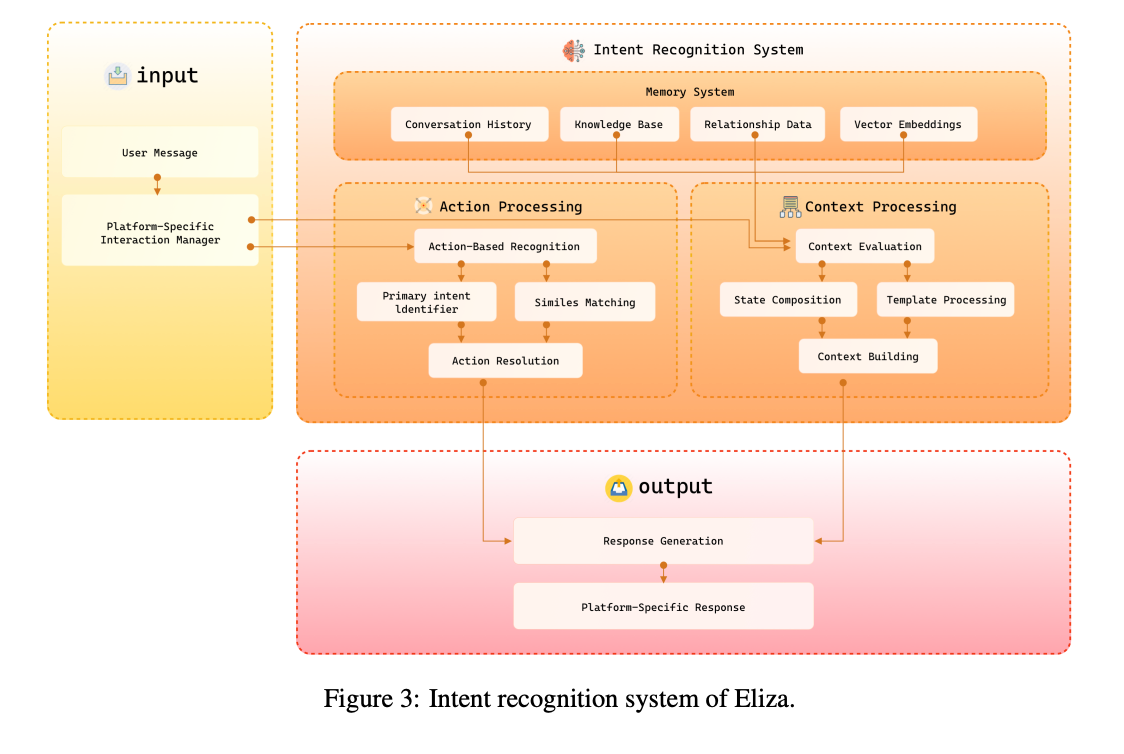
In terms of interaction, Eliza employs a multi-layered understanding system — akin to an experienced interpreter who grasps not only literal meaning but also context and intent. This system accurately captures user needs, delivers consistent experiences across communication platforms, and dynamically adjusts responses based on context.
Plugin System: Infinite Possibilities for Expansion
Eliza’s plugin system functions as a versatile toolbox, providing powerful extensibility across three directions: multimedia generation, Web3 integration, and infrastructure support:
-
In multimedia generation, it supports image, video, and 3D model creation, automatic NFT series generation, and image description/analysis.
-
In Web3 integration, it enables multi-chain operations (Ethereum, Solana, etc.), comprehensive transaction toolkits, and integration with various DeFi protocols.
-
In infrastructure, it offers browser services, document processing, speech-to-text, and other foundational utilities.
Thanks to this modular design, Eliza maintains system stability while offering developers nearly limitless room for expansion — enabling adaptation to emerging needs and novel scenarios in the ever-evolving Web3 landscape.
4. How Powerful Is Eliza? Let the Data Speak
When a new technology emerges, people naturally want to know how well it performs. Eliza offers a candid answer.
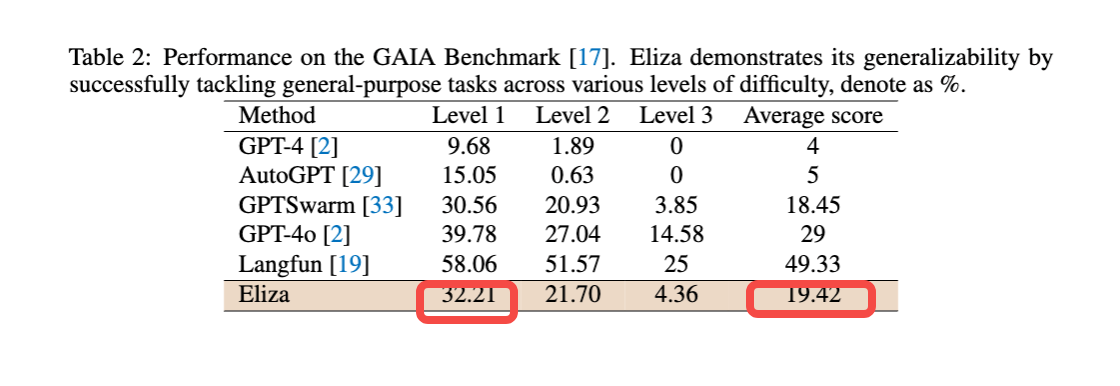
In the GAIA benchmark test — a platform specifically designed to evaluate AI agents’ ability to solve real-world problems — Eliza demonstrated impressive capabilities. Unlike simple Q&A tests, GAIA evaluates skills such as logical reasoning, multimodal processing, web browsing, and tool usage.
Although Eliza’s score (19.42%) still lags behind the top-performing systems, this result is highly commendable given its specialization in the Web3 domain. Particularly in basic task performance (Level 1), Eliza achieved a 32.21% completion rate, reflecting solid foundational competence.
Web3 Domain: A Pioneer in Standard Setting
Even more noteworthy is Eliza’s role as a de facto “standard setter” in the Web3 space. Since AI systems tailored for Web3 are still in early stages, Eliza has taken the lead in proposing a comprehensive evaluation framework that charts a path forward for the entire industry.
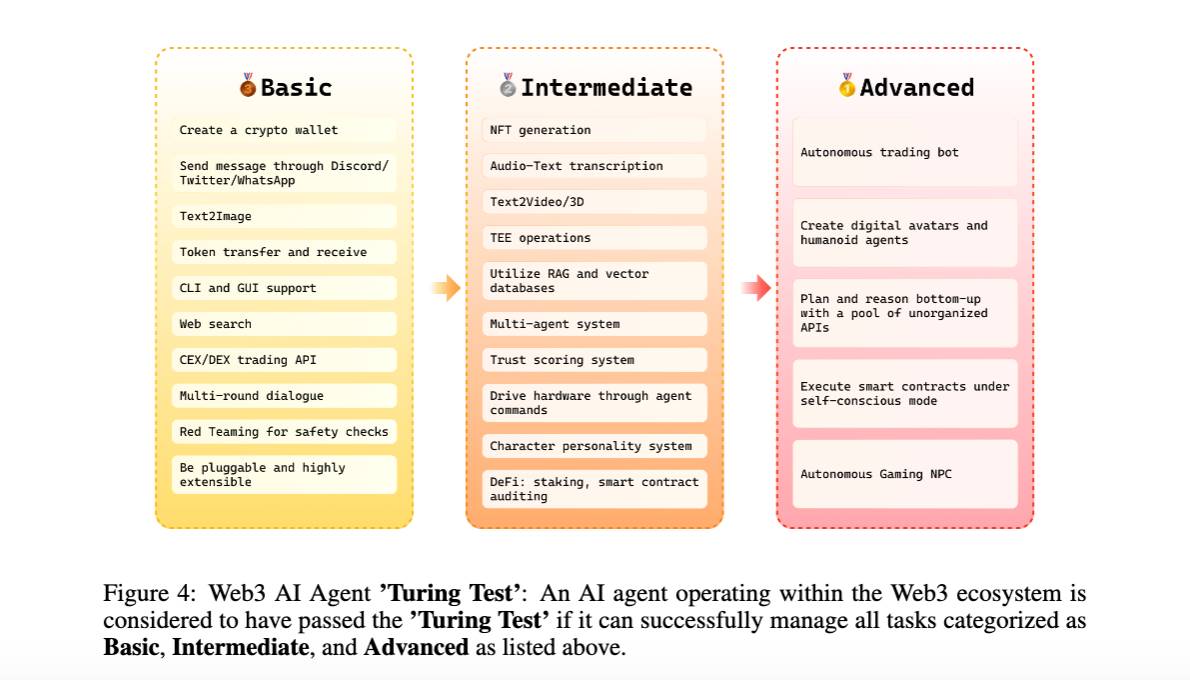
This evaluation system consists of three tiers, which the whitepaper refers to as the Web3 AI version of the “Turing Test”:
-
Basic Capabilities: Includes fundamental operations such as wallet creation, token trading, and smart contract interaction
-
Advanced Features: Incorporates state-of-the-art AI technologies like text-to-video/3D and RAG support
-
High-Level Intelligence: Capable of autonomous planning and reasoning based on user instructions, achieving truly intelligent decision-making
Currently, Eliza has successfully implemented all functions at the basic level and is advancing toward the intermediate tier. The team expresses confidence that within the coming years, they will realize fully autonomous AI agent systems.
5. Real-World Applications: The Market Votes with Money
The original whitepaper includes a section showcasing code examples to demonstrate practical applications built on the framework. Considering complexity and technical depth, we’ll skip those here and focus instead on broader real-world adoption.
According to the whitepaper, as of January 2025, multiple major Web3 projects have already built their AI agent systems on Eliza, with partner projects collectively valued at over $20 billion.
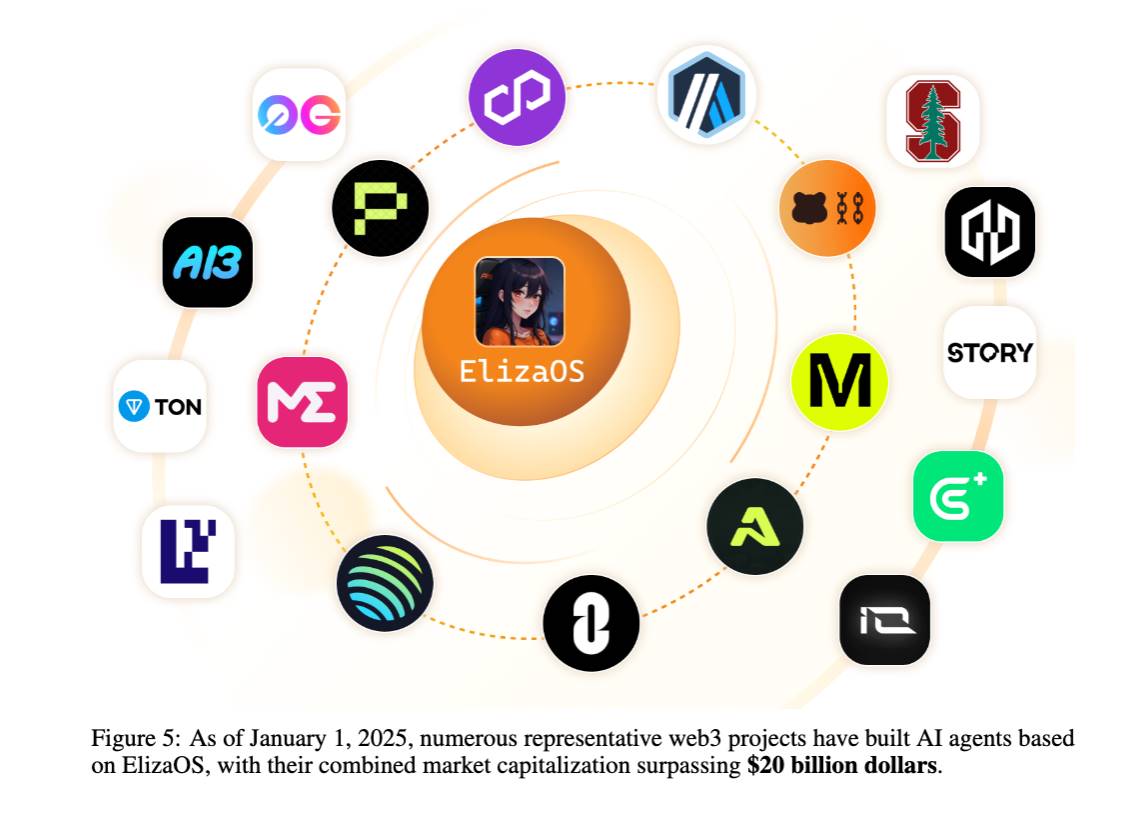
This figure alone may be the strongest endorsement of Eliza’s technical strength.
More importantly, the Eliza team remains highly confident about the future. They envision an era where evolving “intelligent agents” collaborate in networks. Much like Anthropic CEO Dario Amodei’s vision of a “genius data center,” Eliza is paving the way for that future.
6. Current Limitations and Future Outlook: An Honest Self-Assessment
No technical framework is perfect, and the Eliza team openly acknowledges the current limitations of the system in the whitepaper.
Three Key Challenges to Address
-
Lack of Workflow System: Just as a skilled assistant benefits from standardized workflows, developers currently lack ready-made solutions in Eliza for routine tasks — such as regularly aggregating data from multiple sources. For such use cases, external workflow platforms like Dify or Coze with graphical interfaces may still be required.
-
Performance Issues in Multi-Agent Systems: As the number of agents increases, the volume of context and memory data grows exponentially. Balancing computational overhead and operational efficiency — especially under heavy I/O loads — remains a significant technical challenge.
-
Need for Broader Language Support: Currently based primarily on TypeScript, Eliza needs to expand support for other programming languages like Python and Rust to attract developers from diverse backgrounds.
Outlook: Ushering in a New Era of Decentralized AI
Despite these limitations, Eliza’s significance extends far beyond that of a mere technical framework. It represents a pioneering effort in deeply integrating AI with Web3 applications.
By designing each functional module as a standard TypeScript program, Eliza ensures full user control over the system. At the same time, it offers seamless integration with blockchain data and smart contracts. This architecture balances security with exceptional extensibility.
As the whitepaper concludes, Eliza’s potential is limited only by the imagination of its users. As AI and Web3 technologies continue to evolve, Eliza will keep advancing, leading the way in decentralized AI innovation.
Join TechFlow official community to stay tuned
Telegram:https://t.me/TechFlowDaily
X (Twitter):https://x.com/TechFlowPost
X (Twitter) EN:https://x.com/BlockFlow_News
 深潮TechFlow