Crypto Trader's Guide: Go with the "Market" Flow, Become an Independent Thinker in the Market
TechFlow Selected TechFlow Selected
Crypto Trader's Guide: Go with the "Market" Flow, Become an Independent Thinker in the Market
In a narrative-driven market, those who can independently construct and analyze narratives often gain a significant advantage.
 Navigating Web3 tides with focused insights
Author: Tulip King, Head of Tech at MessariCrypto
Translation: TechFlow
Investment Strategy: Alpha First
-
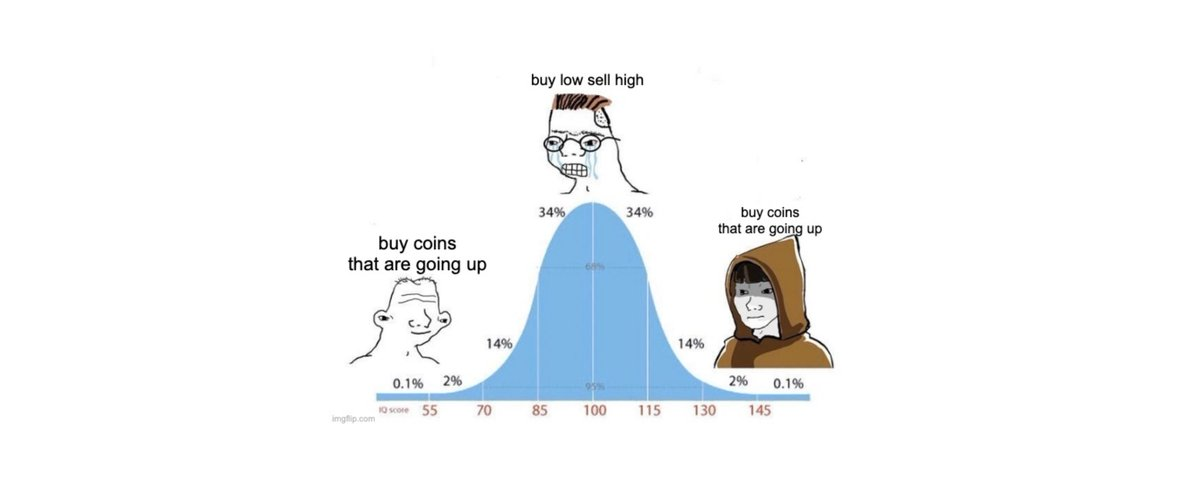
Let the market tell you which coins are performing well and which are not. Buy those that have demonstrated strength, sell those showing weakness. You don’t need to be first in—just make sure you’re not last out.
-
Put in the time and effort. Seek out coins that contradict your assumptions and deeply research why.
-
Trade independently. If you rely on copy trading, the outcome will likely be poor.
The Market Is Always Right—Traders Must Follow Its Lead
Indeed, going against the trend can sometimes yield higher returns. In an ideal world, everyone wants to buy at the bottom and sell at the top. But this is unrealistic. Traders could avoid many unnecessary losses by calmly following market trends—chasing coins that surge 40% in a single day, while decisively selling those that drop more than 10% over several consecutive days.
-
The market never errs: The market’s movement is always correct—the error lies only in individual perception. This means that no matter how you think the market should behave, its actual behavior is the undeniable reality.
-
Profit validates correctness: Being “right” isn’t about predicting price direction—it’s about making money. Even if a trader correctly judges market direction, poor execution or mistimed entries can still lead to losses. True “correctness” lies in profitable trades, not theoretical accuracy.
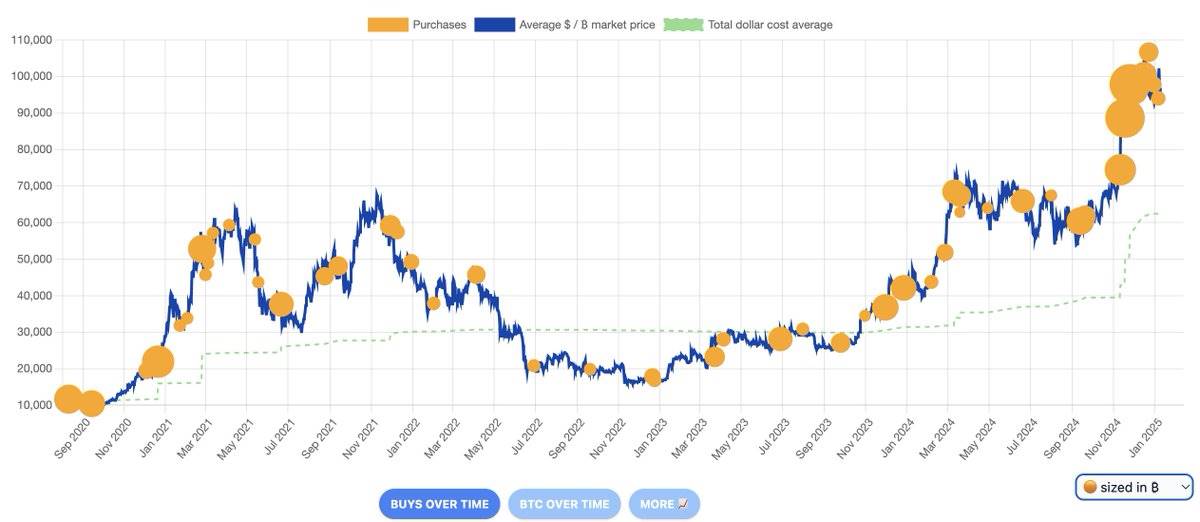
You’ll notice investors like Saylor (Michael Saylor, founder of MicroStrategy) continue buying aggressively even at price highs.
Rather than trying to predict reversals, learn from successful traders: identify and follow strong market areas. This includes having the courage to buy assets that have already risen significantly, cutting losses quickly when sentiment shifts, and avoiding cost-averaging into losing positions.
Skilled traders prioritize risk management over being right. This means: locking in gains when opportunities arise, avoiding holding through major drawdowns, and being willing to re-enter when market conditions improve.
@slingdeez: "Man, over the past year I’ve probably ridden the rollercoaster of six-figure unrealized gains about 15 times, treating paper profits as if they were real."
"Even if I had taken profits then, I could’ve easily bought back in later at lower prices. But I kept falling into self-delusion—almost every time, others took profits that same day or the next, and my gains vanished just like that."
"Overall performance was still decent, but yeah, I was fooling myself a bit. Not a big deal though."
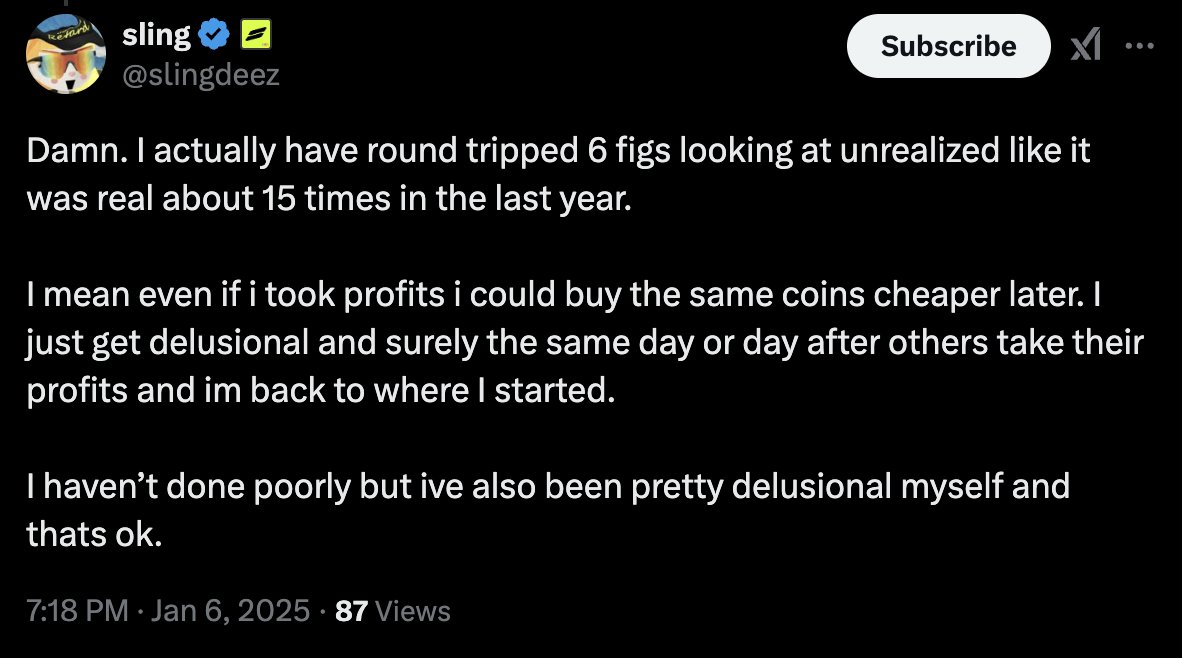
We’ve all been there.
Price action is the only truth in the market. When your position is underwater, the market is telling you your thesis may be flawed. A wise strategy is to accept small losses rather than hold and turn them into large ones.
When your holdings experience a clear pullback, pausing to reflect is crucial: Is this a broad market trend? Has the market narrative shifted elsewhere? Did I miss something? Most importantly, ask yourself: Do I really need to endure this drop? When the market contradicts your assumption, stay humble, reassess your logic, and adapt to evolving conditions.
Market Signals: A Case Study with AICC
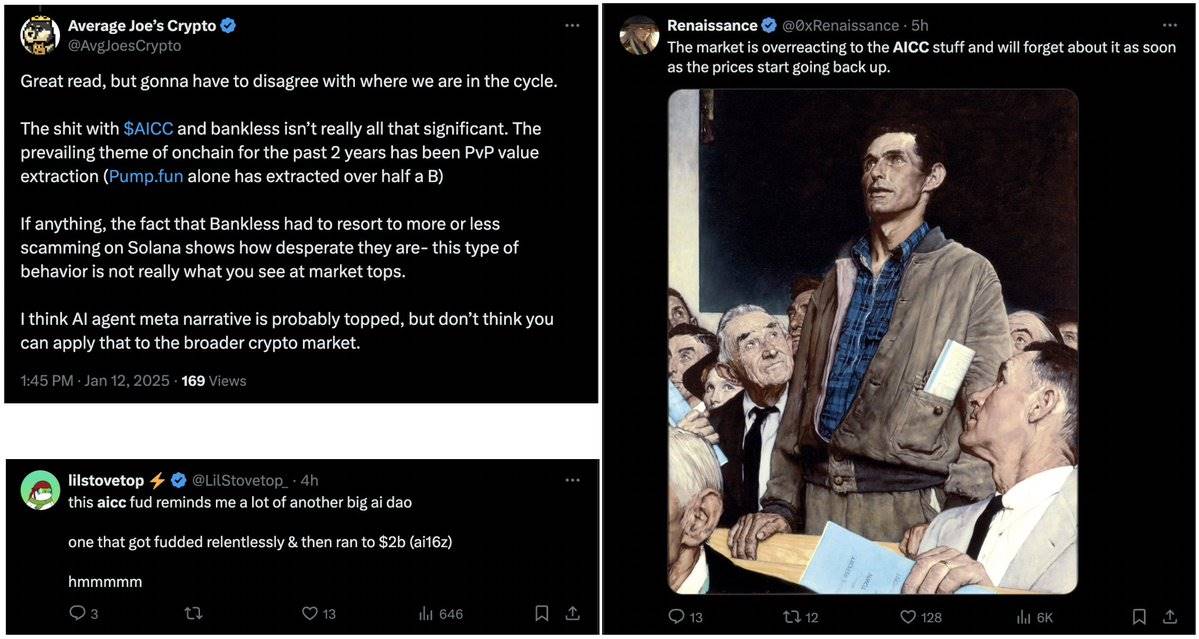
AJC is a smart investor and a friend of mine. This example simply highlights our differing interpretations of the market.
The current market reaction to AICC offers an important lesson in market psychology. Here are the key takeaways: If your view on AICC diverges from the market, you face two possibilities—and must act accordingly:
-
The market is right, and your analysis is wrong
-
The market is selling off for reasons you haven’t identified
In either case, fighting the trend is dangerous. If you can't explain the price decline, you won't know when it might end. As Buffett said, “Only when the tide goes out do you discover who's been swimming naked.” If you don’t understand the market’s movement, you're exposed to invisible risks.
Let Go of Ego—Adapt with Flexibility
In the fast-moving crypto market, there is only one asset that truly qualifies as “buy and hold forever”: Bitcoin. This isn’t dogma—it’s a pragmatic assessment based on Bitcoin’s unique status. As digital gold, Bitcoin enjoys unmatched network effects, genuine decentralization, and widespread institutional acceptance. Across all other digital assets, active management isn’t just advisable—it’s essential for survival.
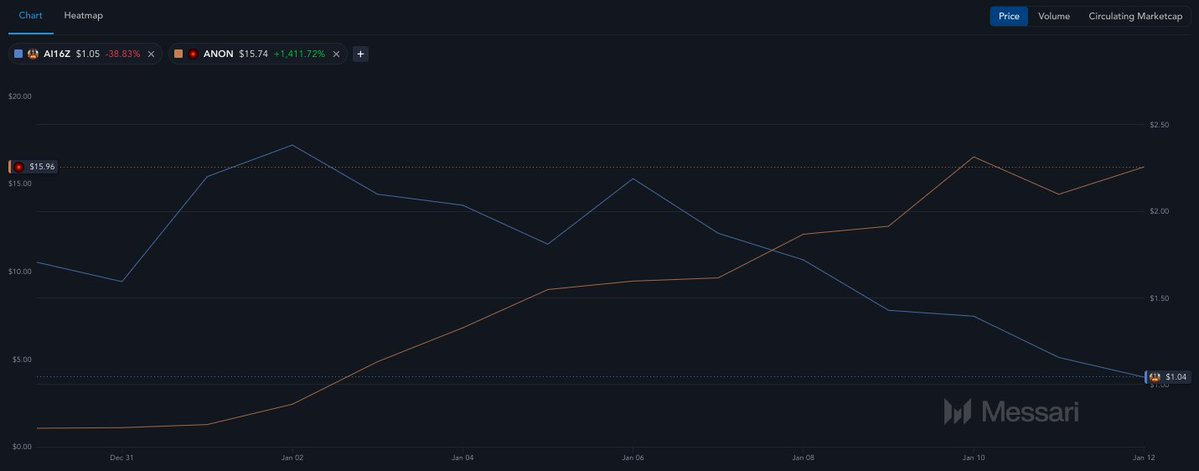
Despite recent hype around ai16z, the market signaled weeks ago that the focus should shift to DeFAI.
Crypto demands a unique mindset: deep understanding paired with constant adaptability. Successful traders maintain what Andy Grove called “professional paranoia”—a state of continuous questioning. Every position must be challenged, every assumption reevaluated, every gain treated as potentially temporary. This isn’t pessimism; it’s clear-eyed realism. In this space, narratives evolve faster than Discord messages scroll by.
The greatest danger in crypto isn’t leverage or bad timing—it’s emotional attachment to positions. We’ve all seen it: traders turn into “diamond hands” during drawdowns, investors double down because their ego is tied to a failing thesis, or community members grow rigid instead of acknowledging changing realities. This kind of “emotional conviction” destroys capital far more effectively than any smart contract bug.
To succeed here, you need more than being “always online” and gathering information from multiple sources—you also need emotional discipline to analyze objectively, free from bias. Your beliefs should be strong enough to drive action, yet flexible enough to pivot when market conditions change. See yourself as a surfer reading waves, not a captain trying to control the ocean.
@muzzyvermillion: "Why does the collective consciousness believe some AI tokens with no real valuation basis are worth $100 million, while others aren’t? What actually drives these shifts?"
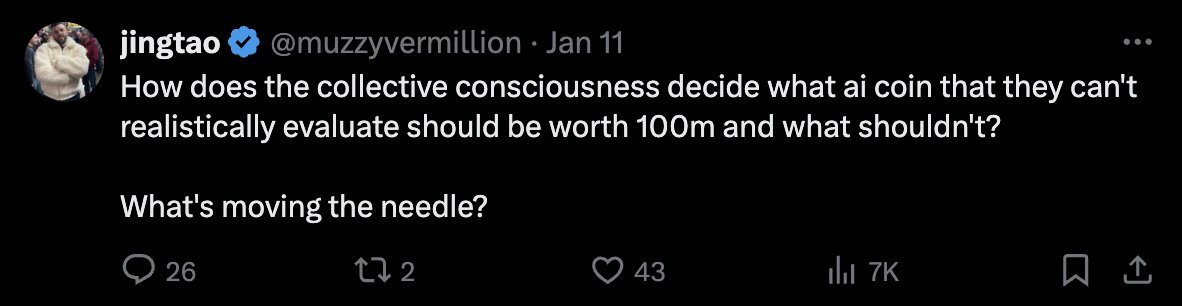
Key trait of elite traders: follow the trend and adjust frameworks promptly.
The most successful crypto traders share one trait: they hold views with clarity, but wear them loosely—ready to discard them when the market sends new signals. They understand that in crypto, being “right” isn’t about clinging to beliefs, but about staying attentive and adapting quickly.
Remember: every investment outside Bitcoin requires active management, continuous validation, and the humility to admit mistakes when conditions change. In such a dynamic environment, beliefs should be treated as testable hypotheses—not unshakable faiths.
The Power of Independent Thinking
In the noise of Crypto Twitter, every price move spawns endless conflicting narratives. In this chaos, independent thinking is both rare and invaluable. People often mistake information consumption for analysis, or following influencers for insight. But at the end of the trading day, your P&L statement bears only your name.
@kelxyz_: "Building conviction on Twitter is so hard. Within 24 hours, I saw someone compare BTC to Cisco, claiming today’s all-time high may never be revisited in 20 years. Then, just 12 hours later, another claimed BTC would reach half of gold’s market cap within nine months (imagine if that applied to altcoins)."
"If you want to survive in crypto, you must build your own investment framework and assign probabilities to different outcomes."
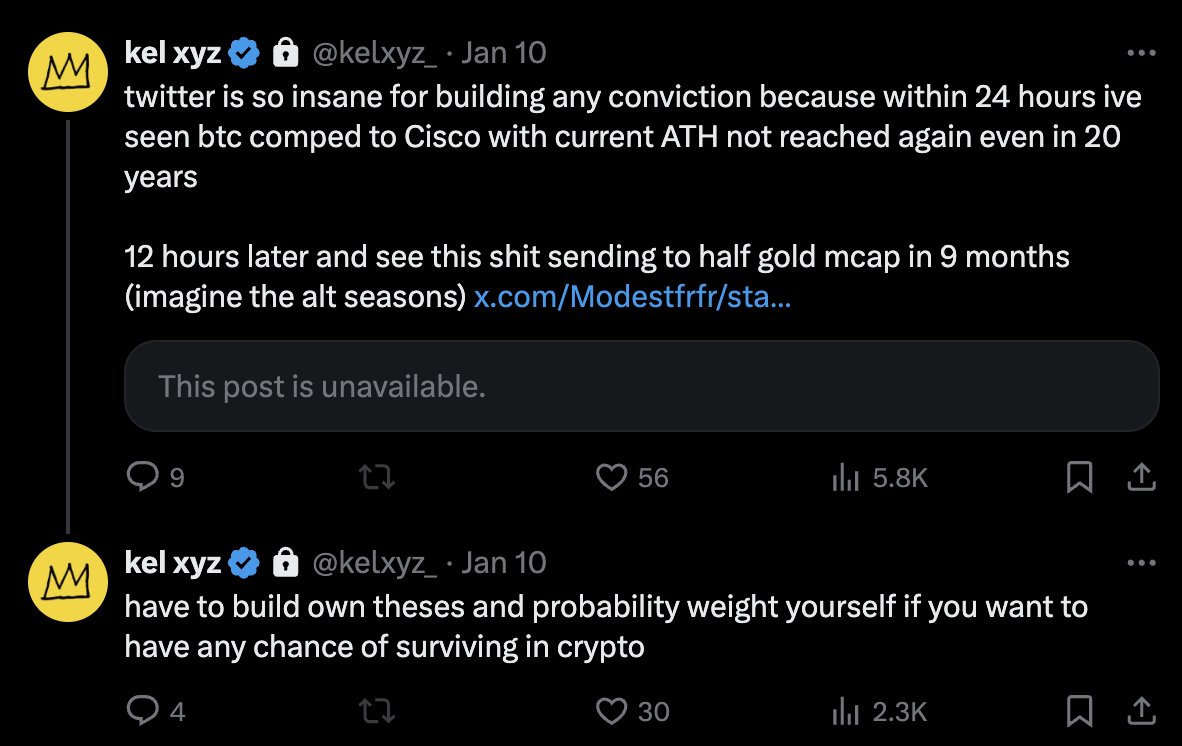
Form your own views—become an independent thinker in the market.
The market doesn’t care which experts you follow or which exclusive “Alpha groups” you joined. It reacts solely to supply and demand, fear and greed, and the collective actions of participants acting on their beliefs. This is precisely why blind copy-trading is so dangerous—if you don’t understand the underlying logic, you’ll never know when to exit, add, or recognize when the original thesis has expired.
Writing is one of the most powerful tools for developing market insight. The act of writing forces clarity of thought. When you try to articulate your market thesis in writing, vague ideas that seemed plausible suddenly reveal glaring flaws. Only through clear expression can these arguments withstand rigorous scrutiny. This explains why top investors like George Soros and Howard Marks are also influential writers.
@RyanWatkins: "Feels great to write again."

Messari’s secret: writing sharpens thinking.
Messari has become a talent incubator in crypto because of its culture of regular research and writing. This habit isn’t just about recording thoughts—it’s mental training. Every research note, every market analysis, forces authors to test their views and dig beneath surface-level observations to uncover deeper market mechanics.
The key to success isn’t finding a guru to follow—it’s cultivating your own voice. Start writing, even if only for yourself. Log every trade, explain your reasoning, reflect on mistakes. Publicly challenge your assumptions, engage in debates. Be brave enough to change your mind when new data emerges. The goal isn’t to be right all the time—it’s to think clearly and independently.

"Don’t imitate others’ voices—cherish your own. Develop it. Nurture it." — Rick Rubin
In a narrative-driven market, those who can independently construct and analyze narratives gain a significant edge. Your writing doesn’t need to be polished or popular—it just needs to be honest and insightful. Through this process, vague intuitions evolve into actionable trading logic, and ordinary participants can gradually rise to become market leaders.
Join TechFlow official community to stay tuned
Telegram:https://t.me/TechFlowDaily
X (Twitter):https://x.com/TechFlowPost
X (Twitter) EN:https://x.com/BlockFlow_News
 @mikeykremer