Analyzing the cryptocurrency market cycle: What drives market rallies and downturns?
TechFlow Selected TechFlow Selected
Analyzing the cryptocurrency market cycle: What drives market rallies and downturns?
Wealth is being extracted from the market, and you are experiencing this phase.
 Navigating Web3 tides with focused insights
Article Author: Tulip King, Head of Technology at MessariCrypto
Article Translation: Block Unicorn
Foreword:
-
The disgusting behavior of @BanklessVC clearly indicates we’ve entered a predatory, PvP (player versus player) market phase. Protect yourself and your profits.
-
I suspect this cycle has already peaked and we're now experiencing a natural correction as the crypto market attempts to work through its pain—but this pain could last for a while.
-
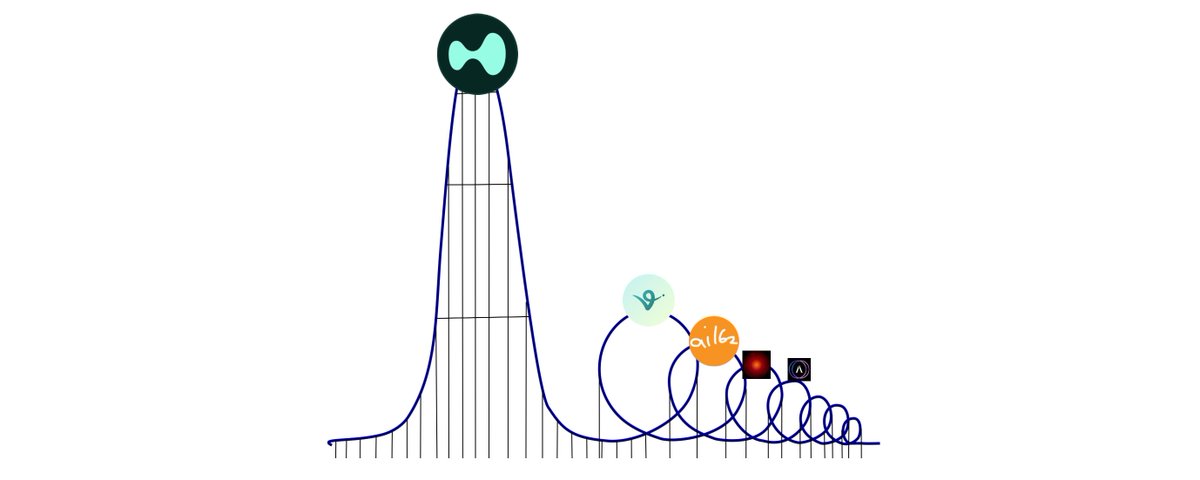
Tokens like virtuals, ai16z, and heyanon may reach new all-time highs during any recovery, but they face narrative risk—keep reassessing your worldview.
What Drives Market Rallies?
Markets rise because new money flows in—this is obvious. From now on, I’ll tie the concept of fresh capital entering the market to the “wealth effect.” We should all hope the crypto industry creates real value (wealth) in the world and shares in monetary expansion. This can happen in several ways:
1. Wealth Creation Through Innovation (Airdrops)
Airdrops have become a powerful mechanism for value redistribution in crypto, generating significant wealth effects that benefit broad groups of participants. The September 2020 Uniswap airdrop set the standard, distributing 400 UNI tokens (worth about $1,400 at issuance) to over 250,000 addresses, ultimately totaling over $900 million in value.
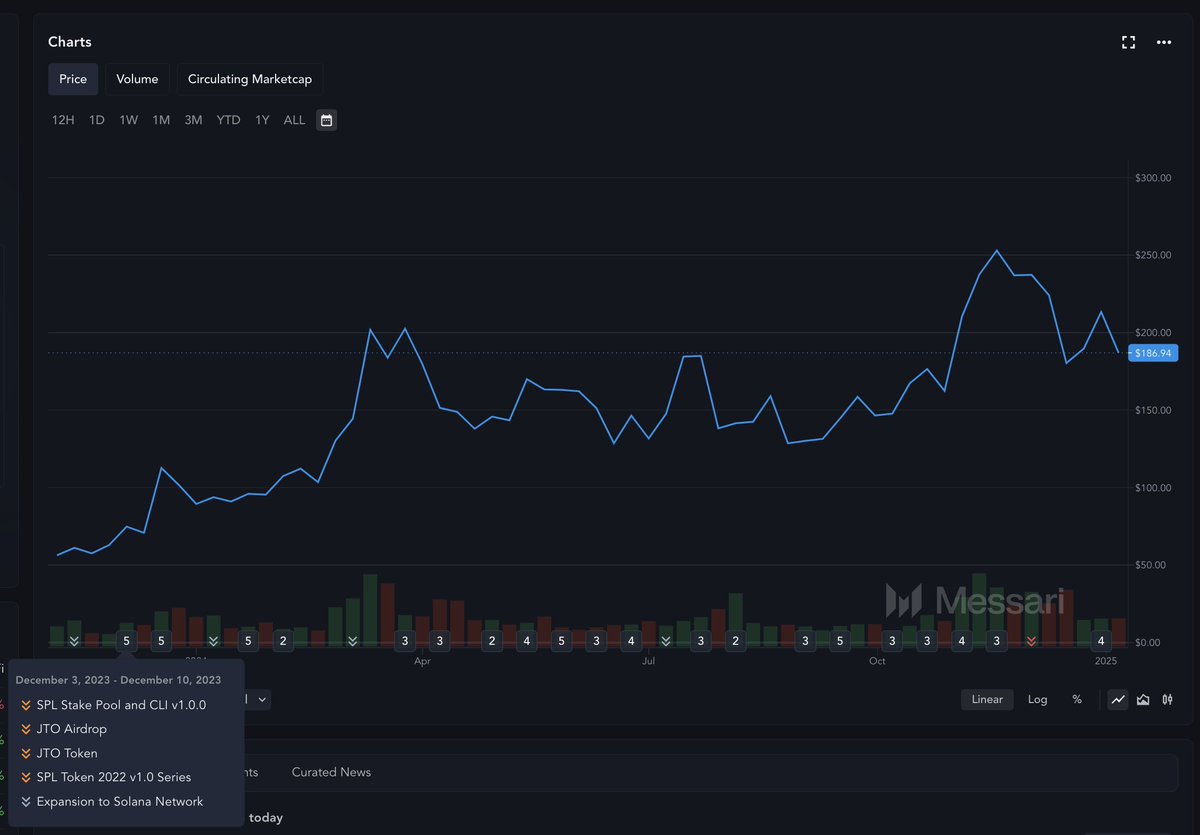
The Jito airdrop was an early catalyst for the Solana meme coin bull run
The December 2023 Jito airdrop distributed 90 million JTO tokens worth $165 million, with some users earning up to $10,000 by simply moving $40 worth of JitoSOL. The Jito airdrop helped drive growth in Solana’s total value locked (TVL) and boosted on-chain activity. This wealth effect stimulated broader adoption and development across the Solana ecosystem, much like how Uniswap’s UNI token catalyzed DeFi growth.
Jupiter’s token distribution further illustrates the democratizing potential of airdrops. They plan to distribute 700 million JUP tokens across more than 2.3 million eligible wallets—one of the most widely distributed airdrops in crypto history. Jupiter's strategy aims to foster ecosystem growth by incentivizing long-term participation and governance involvement. These airdrops have proven highly effective at expanding market participation.
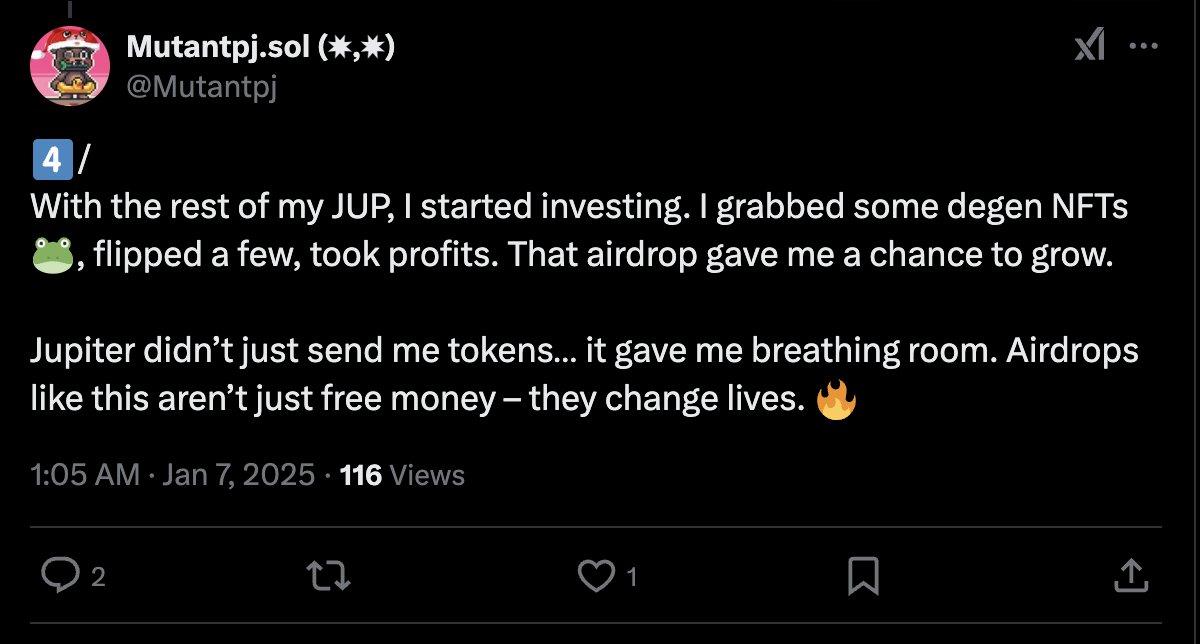
This is what I’m talking about
The wealth effect extends beyond direct financial gains. Airdrops have transformed users into stakeholders who can participate in governance and protocol development. This mechanism creates a virtuous cycle: beneficiaries reinvest their gains back into the ecosystem, further driving market expansion and innovation.
These strategic distributions have proven to be powerful market catalysts, sparking broader bull markets within their respective domains. The Uniswap airdrop ignited DeFi Summer in 2020, unleashing a wave of innovation across decentralized finance. Similarly, Jito’s December 2023 airdrop marked a turning point for the Solana ecosystem, boosting TVL and catalyzing unprecedented on-chain activity. This surge in liquidity and market confidence laid the foundation for subsequent meme coin explosions and strong growth. These airdrops effectively acted as economic stimulus packages for entire ecosystems, creating self-reinforcing cycles of investment and innovation that defined their market eras.
2. Wealth Appreciation (Marginal Buyers)
When markets experience positive catalysts such as strategic airdrops, they attract previously观望 participants who bring fresh capital and enthusiasm. The influx of these marginal buyers creates a virtuous cycle of market expansion and innovation.

Airdrops generate positive FOMO, pushing both new and existing users deeper into the market
Hesitant investors, seeing successful airdrops and subsequent market momentum, begin deploying capital—transitioning from observers to active participants. This shift from cash to crypto assets represents truly new money entering the ecosystem, not just transfers among existing players.
Large institutions are increasingly enabling this transition. Companies like BlackRock, Fidelity, and Franklin Templeton are building products that bridge traditional finance with digital assets. Their involvement helps legitimize the market and provides easier on-ramps for sidelined capital. This expansion creates a positive-sum environment where new participants contribute directly to overall market growth.
Unlike zero-sum trading environments, markets energized by new entrants create real wealth effects by expanding liquidity, increasing development activity, and broadening adoption. This positive feedback loop attracts even more sidelined capital, further fueling ecosystem growth.
3. Wealth Creation Through Leverage (Multiplicative Expansion)
Toward the end of a bull market, leverage becomes the primary driver of price increases—marking a transition from value creation to value multiplication. As markets enter price discovery territory, traders increasingly use leverage to amplify positions, creating a self-reinforcing upward spiral.
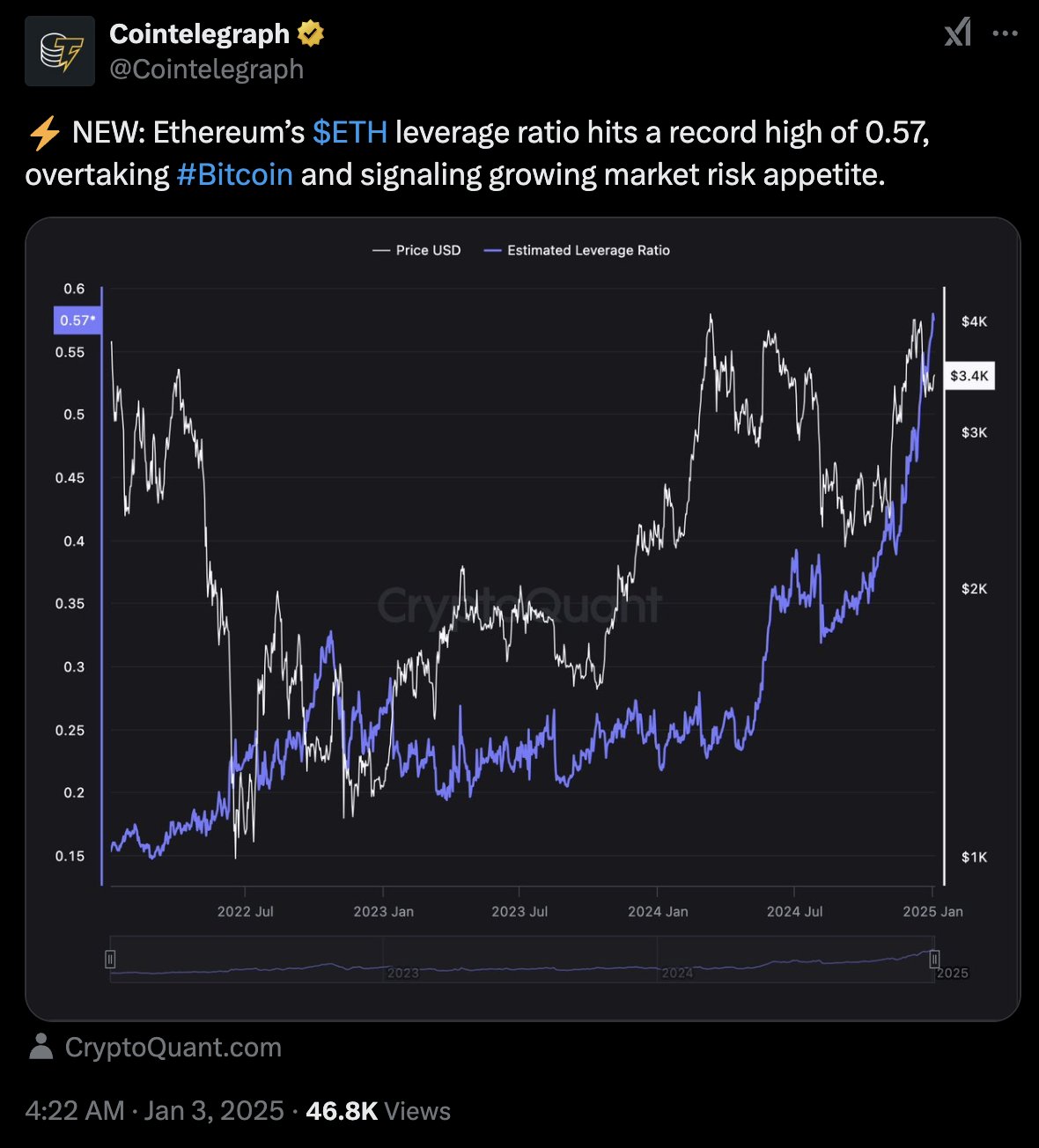
Interesting
As Bitcoin moves into uncharted price territory above previous highs, leverage ratios spike as traders seek to maximize exposure. This creates a chain reaction: borrowed stablecoins fuel additional purchases, pushing prices higher and encouraging more leveraged positions. This multiplicative effect accelerates price volatility.
Rising leverage also introduces systemic fragility. As more traders take leveraged positions, the risk of cascading liquidations grows—especially when borrowed stablecoins become more expensive and harder to obtain.
Increasing borrowing costs for stablecoins are a key signal that the market is entering its final stage. This marks a critical shift from organic growth to leverage-driven expansion, where no new value is created—only existing value amplified through debt.
Heavy reliance on leverage at this stage creates an unstable situation where sudden price movements can trigger mass liquidations, leading to rapid price corrections. This fragility signals the end of the bull market, as the system becomes increasingly dependent on borrowed funds rather than fundamental value creation.
What Causes Market Declines?
Markets fall because money exits the market—also obvious. This is essentially a reverse wealth effect, where speculators exploit animal spirits, smart money takes chips off the table to lock in profits, and the naive get liquidated.
1. Wealth Extraction from the Market
The crypto ecosystem periodically experiences cycles of value extraction, where savvy operators design schemes to pull capital from enthusiastic market participants. Unlike productive innovations that distribute value, these schemes systematically remove liquidity through various predatory mechanisms.
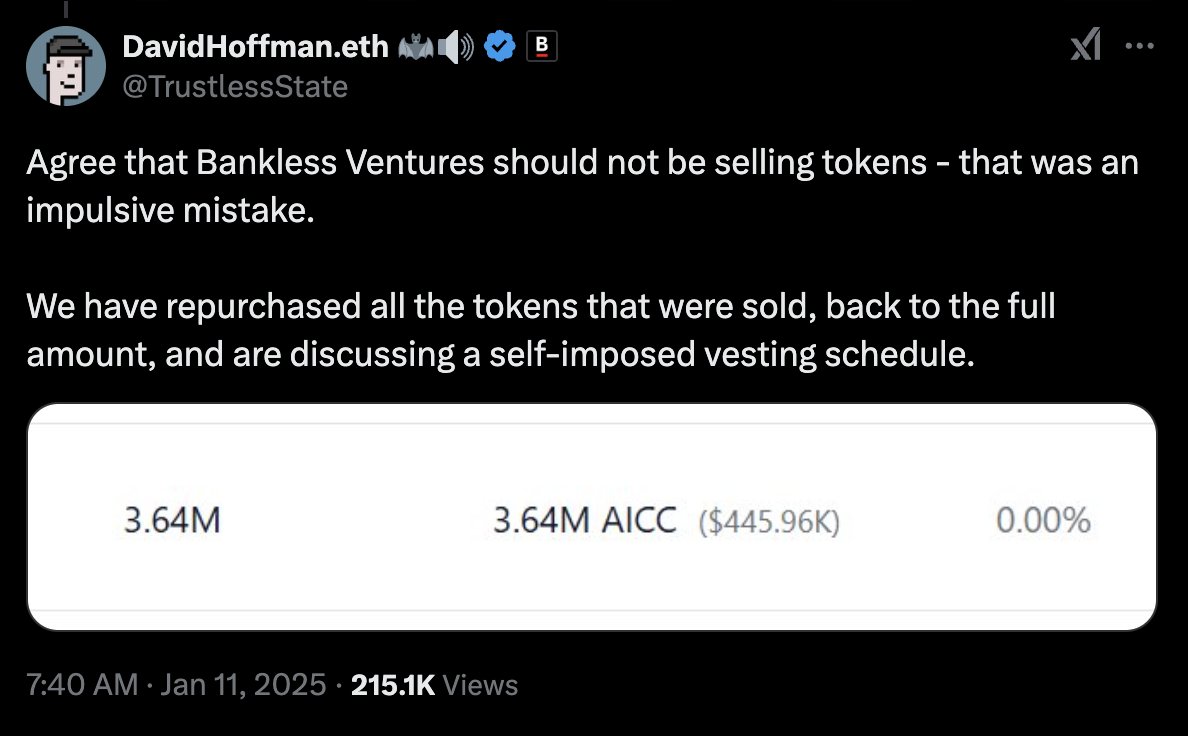
The most disgusting part of the Bankless story is that they spent only 2 SOL to extract thousands of SOL from the ecosystem
The recent launch of Aiccelerate DAO exemplifies this evolution—even backed by prominent advisors like the founders of Bankless and other industry veterans, the project faced immediate backlash after insiders began dumping tokens with no vesting period. Even respected figures can become vehicles for quick value extraction.
Celebrity tokens also embody this predatory behavior. Through malicious smart contracts and coordinated dumps, these projects effectively transfer wealth from retail buyers to insiders, suffocating altcoin cycles. These extraction events erode market confidence and discourage legitimate participation. Instead of building sustainable ecosystems, they create cycles of distrust that hinder the maturation of the broader crypto space.
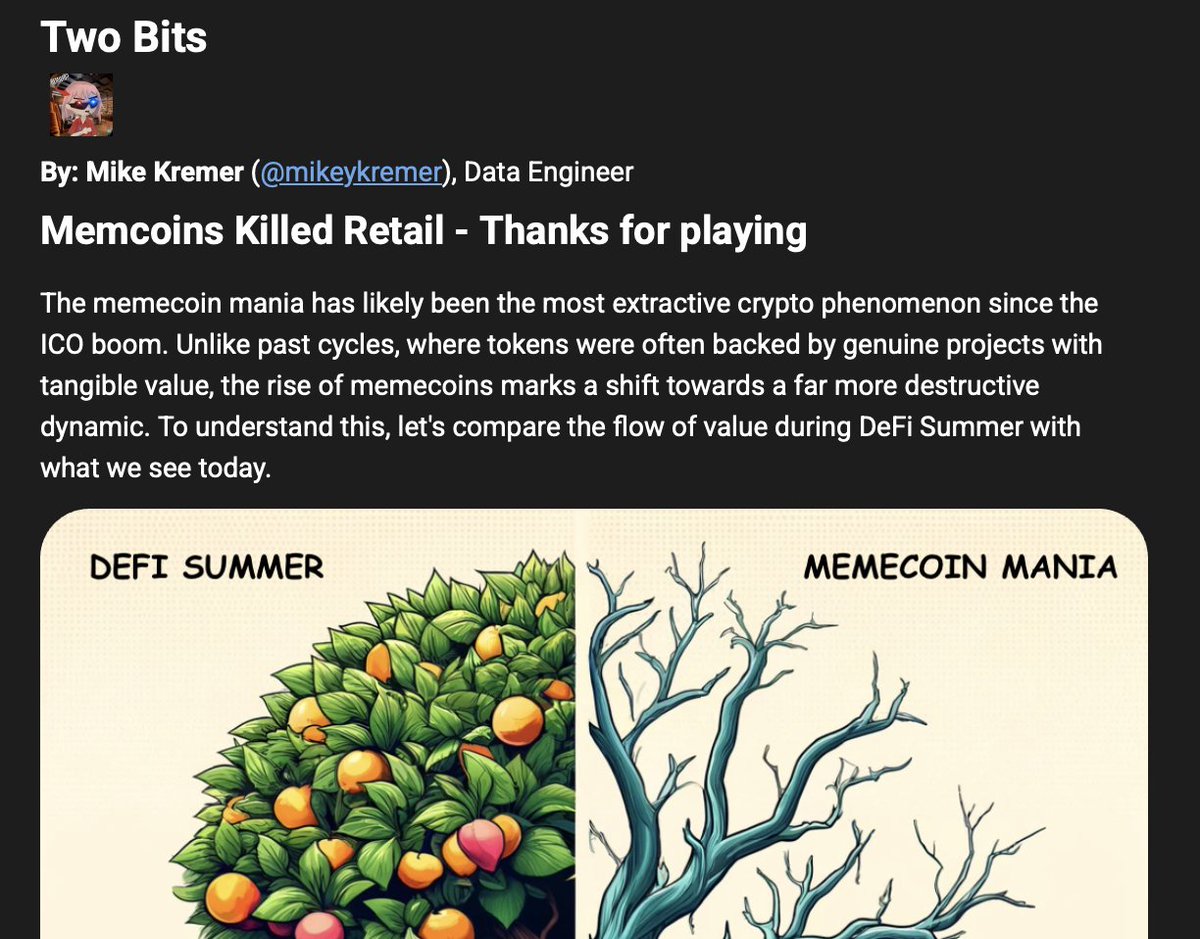
I discussed this earlier in the Messari newsletter
Instead of reinvesting profits into ecosystem development, these schemes systematically drain liquidity from the market. Extracted funds often exit the crypto ecosystem entirely, reducing total capital available for legitimate projects and innovation.
The evolution from blatant scams to sophisticated operations backed by celebrities represents a worrying trend. When established institutions engage in fast value extraction, it becomes increasingly difficult for market participants to distinguish between legitimate projects and elaborate frauds.
2. Only Sellers

Were you surprised that BAYC reached the top just three months later?
When the market begins to decline, a key asymmetry emerges—the gap between seasoned players who recognize the shift and retail investors still clinging to bullish narratives. At this stage, the market isn't characterized by inflows of new capital, but by systematic liquidity withdrawal by experienced operators.
Professional traders and investment firms begin reducing exposure while maintaining public optimism. Venture capital firms quietly unwind positions via OTC markets and strategic exits, protecting capital without moving the market. This creates an illusion of stability even as large amounts of capital have already left the system.
Smart investors start pulling liquidity from DeFi protocols and exchanges. This subtle but steady outflow creates increasingly fragile market conditions, though the impact may not be immediately visible to casual observers.
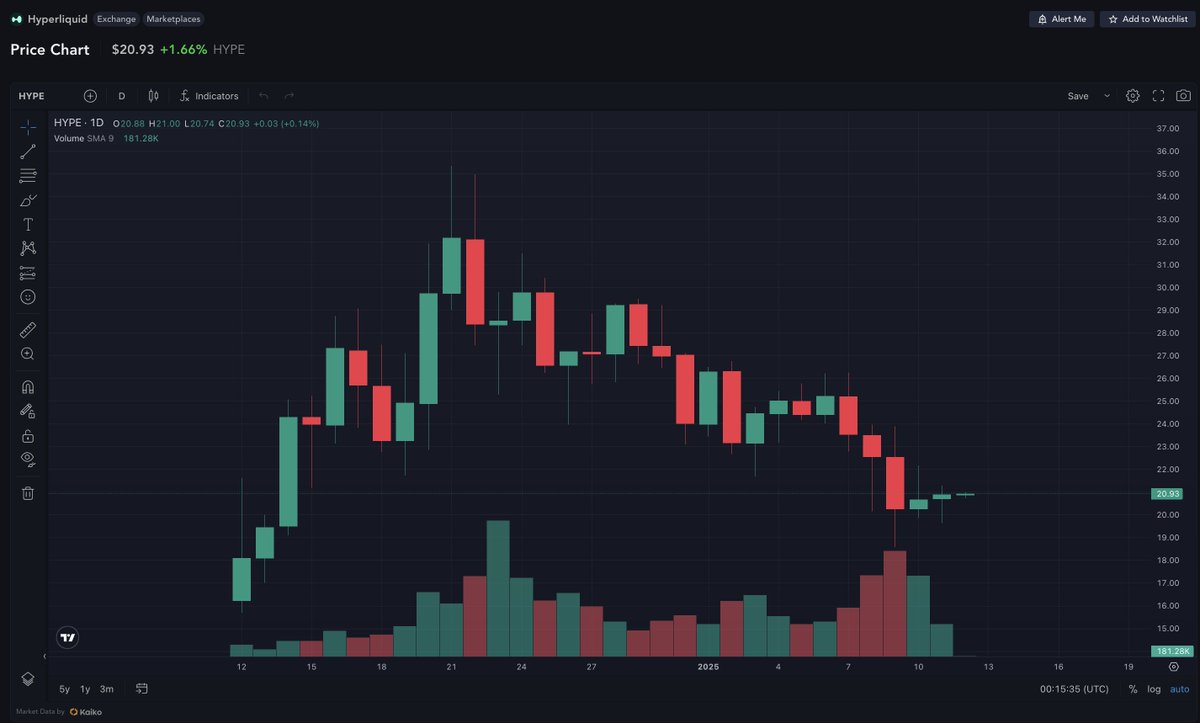
Looks like some smart money is taking chips off the table
Denial Psychology: While experienced players take profits, retail investors often still believe the dip is a temporary buying opportunity. This cognitive dissonance is reinforced by:
-
Social media echo chambers that maintain bullish narratives
-
Emotional attachment to unrealized gains from the bull run
-
Misinterpretation of the "diamond hands" mentality
Most retail investors miss optimal exit points, holding through early declines and rationalizing their decisions. By the time the downtrend becomes undeniable, substantial value has already been lost, panic intensifies, and selling pressure mounts.
The steady withdrawal of professional capital deteriorates market conditions, making each subsequent sell order increasingly impactful. Erosion of market depth often goes unnoticed until sharp price moves expose underlying fragility.
Unlike the positive-sum environment driven by new entrants during bull markets, this phase represents pure value destruction, as capital systematically exits the crypto ecosystem and remaining participants bear mounting losses.
3. Leverage Implosion (Liquidation Chain Reaction)
The final stage of market capitulation reveals the devastating consequences of excessive leverage—echoing Warren Buffett’s famous line: “Only when the tide goes out do you discover who’s been swimming naked.” The most dramatic collapses in crypto markets are stark illustrations of this principle.
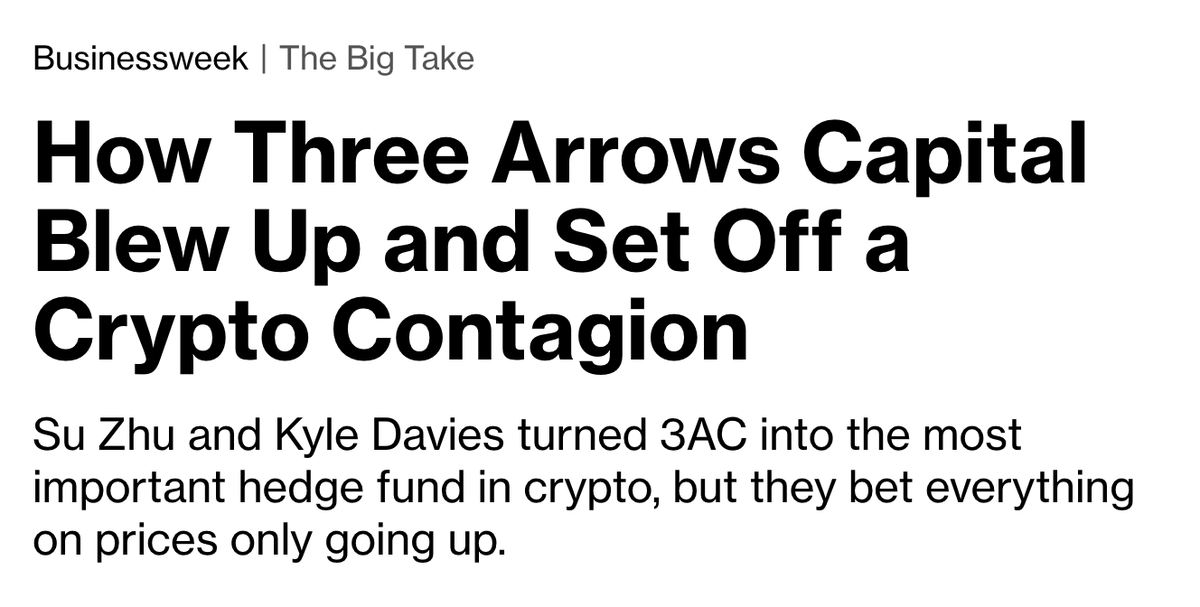
The unraveling began in June 2022 with the collapse of 3AC, a $10 billion hedge fund. Their leveraged positions—including $200 million in LUNA and massive exposure to Grayscale’s Bitcoin Trust—triggered a series of forced liquidations. The fund’s failure exposed a complex web of interconnected loans, affecting over 20 institutions.
The FTX collapse further highlighted the dangers of hidden leverage. Alameda Research borrowed $10 billion in FTX customer funds, creating an unsustainable leveraged structure that ultimately brought down both entities. Reports revealed that 40% of Alameda’s $14.6 billion in assets consisted of illiquid FTT tokens, exposing the fragility of their leveraged positions.
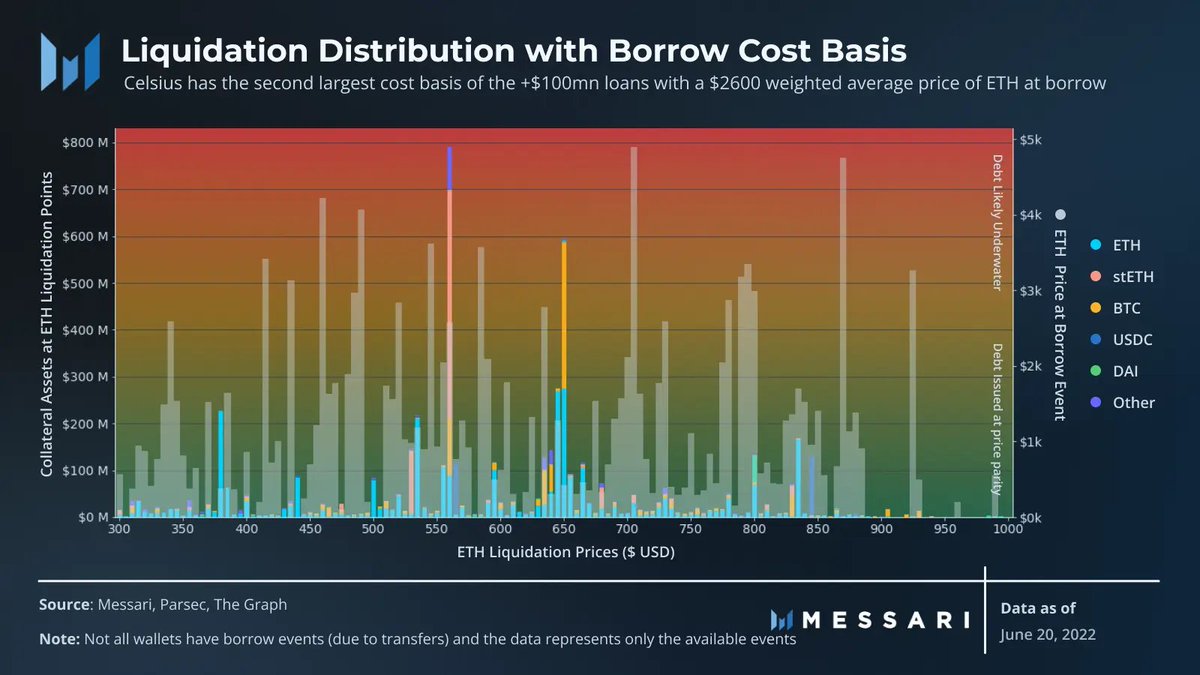
@Saypien_’s old research
These collapses triggered widespread contagion. 3AC’s failure led to the bankruptcy of multiple crypto lenders, including BlockFi, Voyager, and Celsius. Likewise, FTX’s collapse caused a domino effect across the industry, with many platforms freezing withdrawals and eventually filing for bankruptcy.
Successive liquidations revealed the true state of market depth. As leveraged positions were forcibly closed, asset prices plummeted, triggering further liquidations—a vicious downward spiral. This exposed how much of the market’s apparent stability was supported by leverage, not genuine liquidity.
The tide going out revealed that many institutions once thought mature were actually naked—poorly managed and overly leveraged. The interconnectedness of these positions meant one failure could spark a systemic crisis, exposing the fragility of the entire crypto ecosystem.
Looking Ahead – Narrative Risk
The title of this article is somewhat provocative. My gut tells me this is just a healthy, albeit painful, market shakeout. We will bounce back. Bitcoin price targets remain quite high—yet I’ve already taken my chips off the table, locking in Bitcoin profits I’m willing to carry into the next cycle, just in case this really is the end. Remember, nobody ever went broke taking profits.
I’ve written many times about the importance of following market narratives instead of clinging to old coins. The longer this downturn lasts, the more narratives will shift. If the market fully recovers tomorrow morning, I expect virtuals, ai16z, and similar virtuals-family tokens to continue winning. But if recovery takes longer, watch for emerging tokens that might capture fresh capital inflows.
You should interpret this as me telling you not to hold coins out of bias unless you truly have strong conviction. Don’t stubbornly hold your assets through the downturn. Even if they hit new all-time highs, I bet you’ll miss out on significant potential gains by failing to rotate into new opportunities.
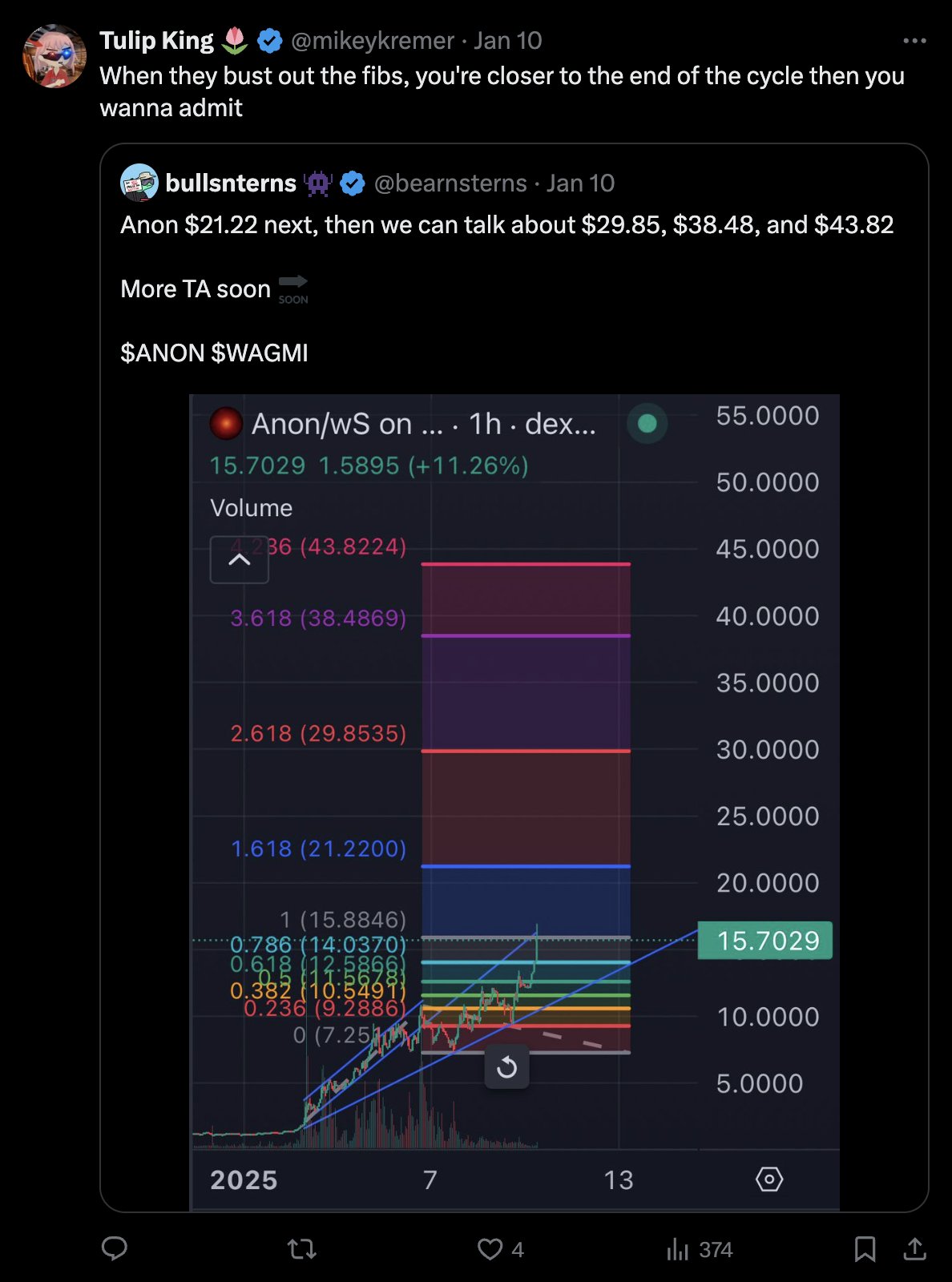
The only reason people post Fibonacci charts is to convince themselves (and others) they can sell at a higher price
Join TechFlow official community to stay tuned
Telegram:https://t.me/TechFlowDaily
X (Twitter):https://x.com/TechFlowPost
X (Twitter) EN:https://x.com/BlockFlow_News
 @mikeykremer