Supra: Building a Vertically Integrated, All-in-One Public Blockchain
TechFlow Selected TechFlow Selected
Supra: Building a Vertically Integrated, All-in-One Public Blockchain
Supra offers an innovative technological approach to solving numerous challenges in the existing blockchain ecosystem.
 Navigating Web3 tides with focused insights
Author: Pzai, Foresight News
In the evolution of blockchain architecture, we have moved from Bitcoin's UTXO model to Ethereum's smart contracts, spawning countless application scenarios. However, within today's public chain ecosystems, interoperability challenges between different architectures are becoming increasingly evident. To address this, the Layer 1 blockchain Supra has built a vertically integrated, all-in-one solution. By offering a Layer 1 platform with all core functionalities natively embedded, and leveraging its proprietary "Tribe-Clan" layered network model and Moonshot consensus engine, Supra enhances system resilience, security, and processing speed. This article explores how Supra provides innovative technical pathways to resolve key challenges in today’s blockchain ecosystem.
Vertical Integration
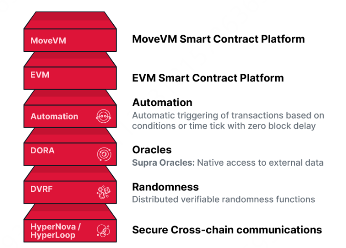
In existing blockchain ecosystems, many public chains integrate consensus, data availability, and execution functions directly into the core network, while outsourcing other infrastructure components—such as oracles, cross-chain communication, automation, and on-chain randomness—to external protocols. This approach often leads to increased integration complexity, security risks, and higher development costs. Supra L1 addresses this by vertically integrating critical services like oracles, cross-chain messaging, automation, and verifiable random functions (VRF) directly at the Layer 1 level. This ensures all services share a unified security model, eliminating latency and vulnerabilities inherent in traditional cross-chain interactions.
Supra Containers: Efficient Composition and Diverse Ecosystems
Most current blockchain applications are constrained by ecosystem dependencies, limited cross-chain interoperability, and restricted access to liquidity. Additionally, their independence is often affected by execution and economic models, limiting use case expansion within individual apps. On Supra, dApps are built using containerization technology, enabling them to maintain application-specific autonomy while benefiting from the elasticity and flexibility typically associated with Layer 2 solutions. Within these containers, developers can customize governance and incentive models according to their needs and leverage L1-level liquidity to enhance transaction efficiency. Furthermore, Supra offers multiple vertically integrated services such as an automation network and on-chain random number generation, helping developers deploy applications faster while improving performance and security.
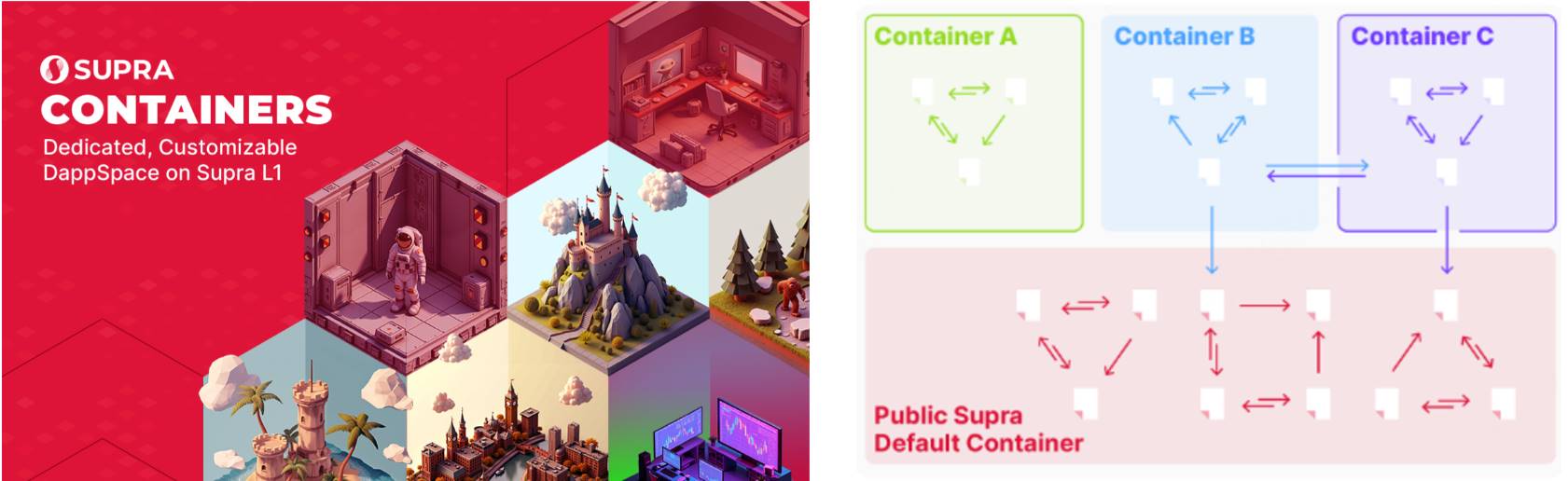
Regarding execution environments, the market features a wide variety of virtual machine designs. Supra’s Multi-VM architecture expands platform versatility by supporting multiple mainstream VMs including MoveVM and EVM, with future support planned for Solana VM and Cosmos VM. Developers from different ecosystems can seamlessly migrate their applications to Supra without re-coding, while taking advantage of high throughput, low latency, and improved interoperability between smart contracts.
Moonshot Consensus and Proof Mechanism
Many Layer 1 blockchains struggle to balance throughput and finality. Supra’s Moonshot consensus protocol is a Byzantine Fault Tolerant (BFT)-based, randomly rotated single-leader protocol that improves transaction processing efficiency through parallelized workflows. Featuring an elastic design adaptable to various requirements, Moonshot achieves up to 500,000 transactions per second with sub-second consensus latency. Moreover, Supra employs formal verification methods to rigorously prove the security of the Moonshot protocol, ensuring correctness and reliability.
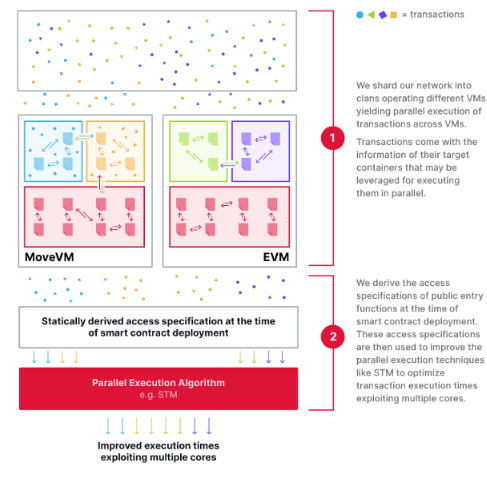
The Moonshot protocol uses an optimistic proposal mechanism: when a node submits a block proposal, it assumes acceptance and immediately proceeds to propose the next block. If other nodes agree, the proposal is included in the subsequent block. This allows nodes to advance to the next consensus step without waiting, minimizing idle time. Additionally, since transaction dissemination, ordering, and execution can run in parallel, processing time is significantly reduced. This separation reduces reliance on honest nodes, lowering the minimum threshold of honest participation required for consensus.
"Tribe-Clan" Architecture: Hierarchical Node Management and Parallel Execution
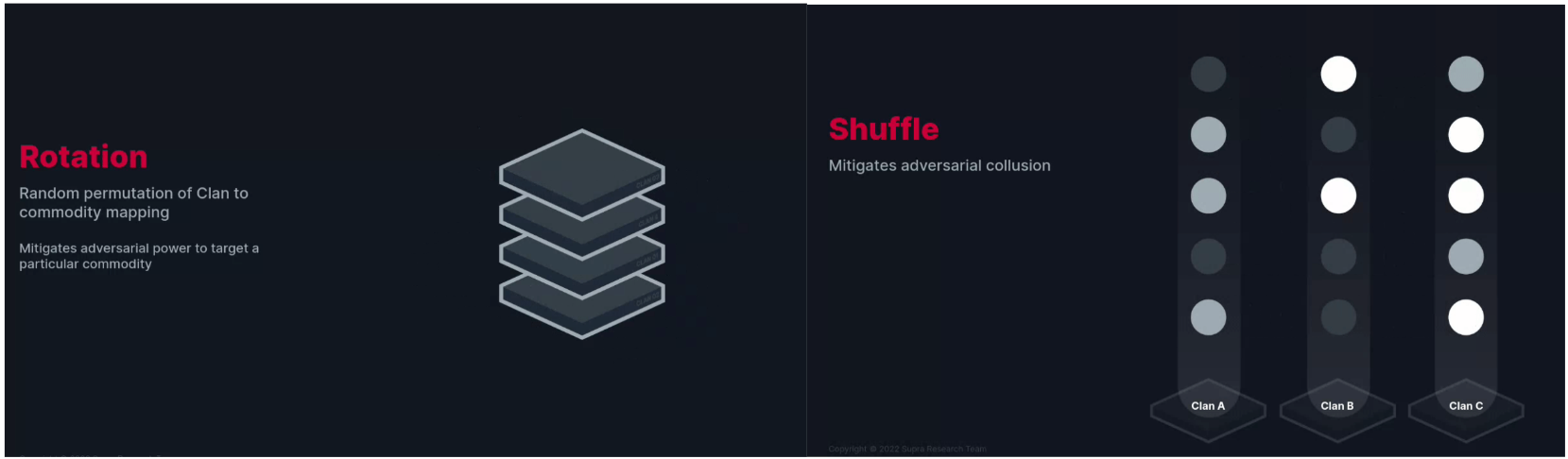
The "Tribe-Clan" node management architecture adopts a hierarchical and randomized approach. Tribes represent large-scale node collectives, while Clans are small, randomly selected groups of nodes within each Tribe. By randomly assigning nodes into Clans, the risk of Byzantine behavior at each layer is minimized, delivering high resilience and robustness. Node resources are dynamically allocated based on demand, with different tasks assigned to different Clans and executed in parallel. This mechanism ensures Supra’s network remains operational even under Byzantine interference, enhancing multi-dimensional computational and execution efficiency. The unique architecture boosts scalability and security by enabling parallel execution at both network and node levels. Random node reorganization at L1 ensures security, while VRF-based randomness strengthens resistance against targeted attacks.
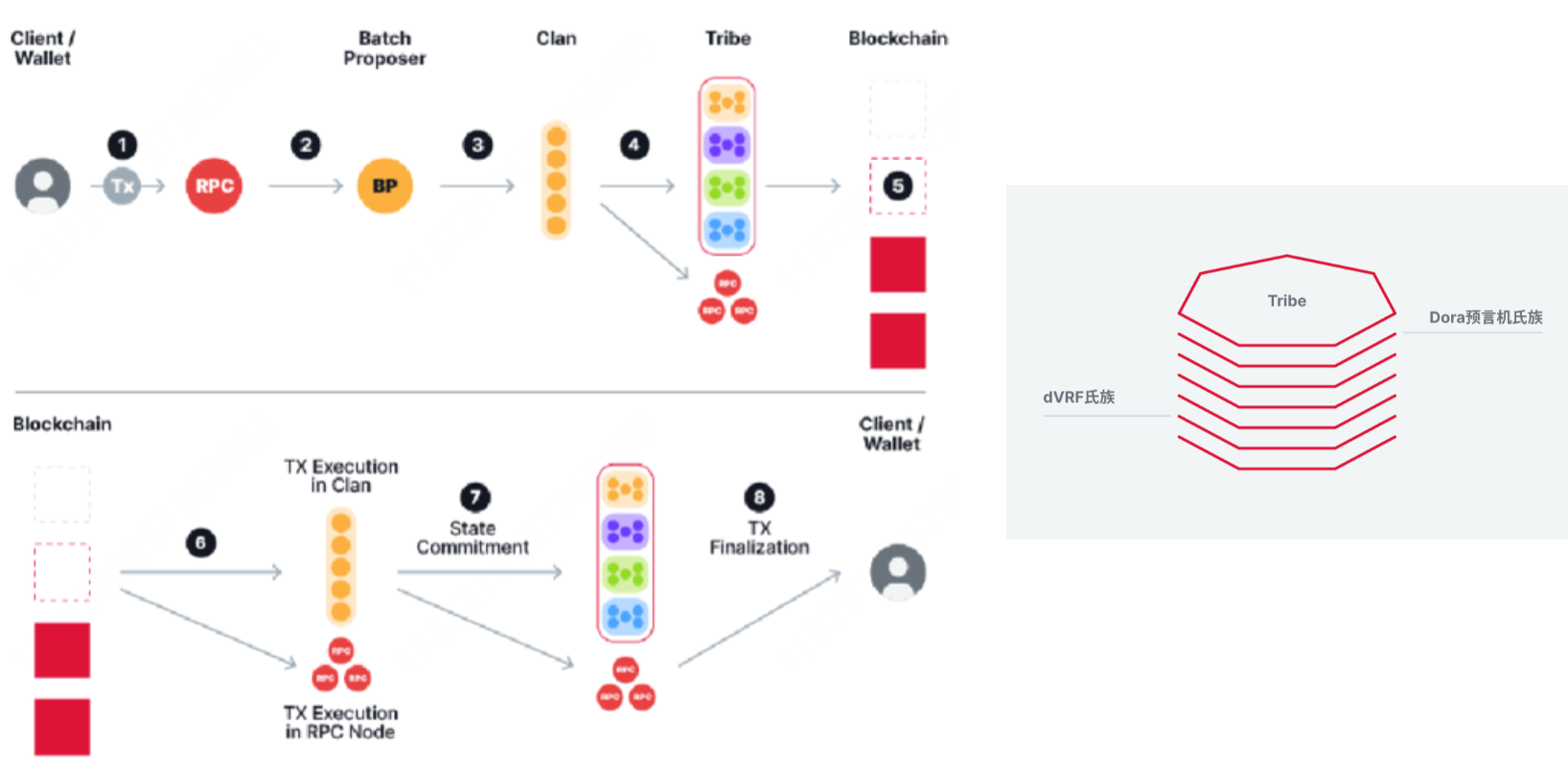
Left: User transaction flow in Supra
Right: "Tribe-Clan" architecture
PoEL: Proof of Economic Liquidity
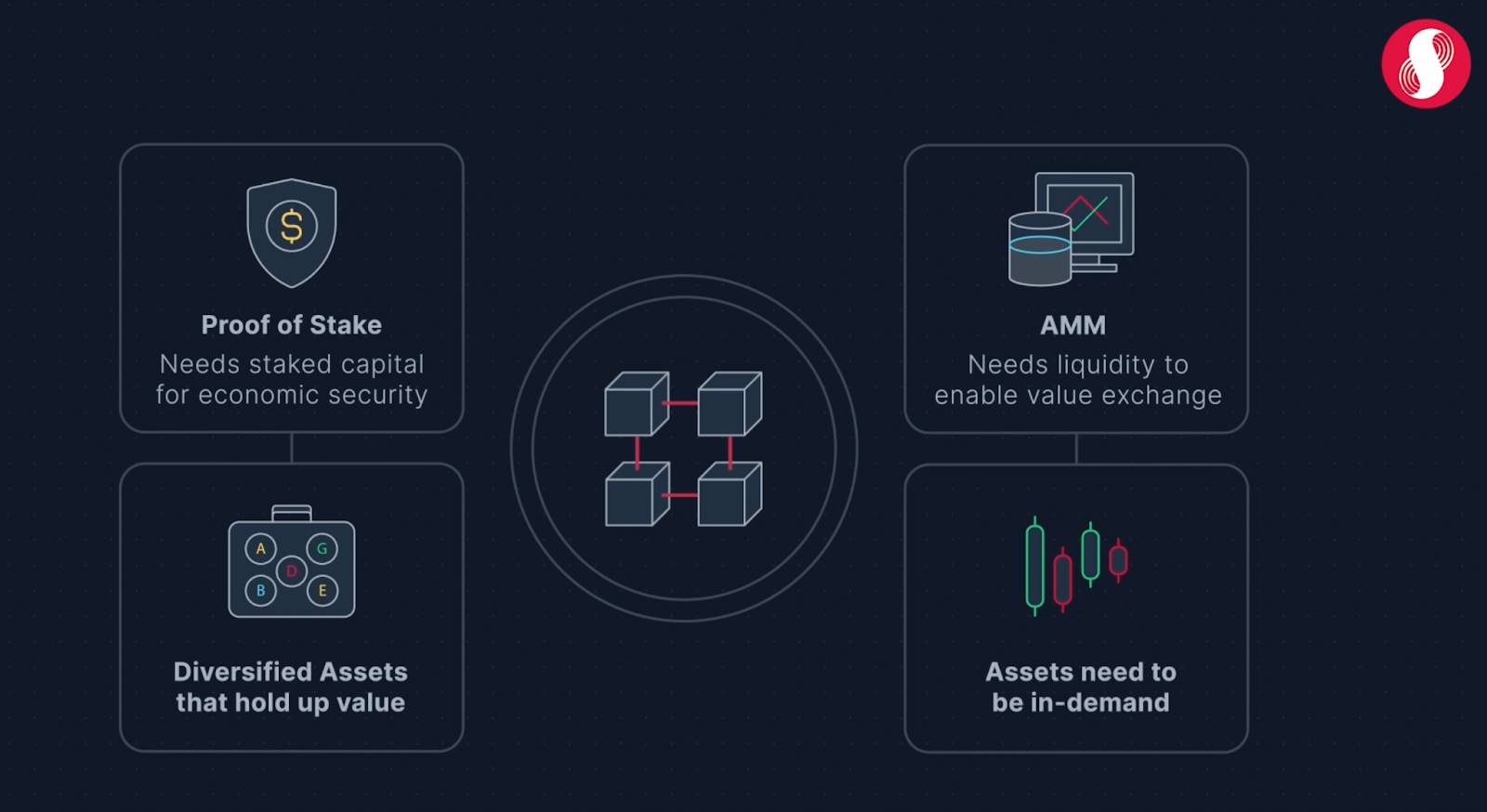
PoEL (Proof of Economic Liquidity) is Supra’s unique incentive mechanism that links participants’ capital risk to rewards. By designing customized incentives based on capital risk and usage, PoEL encourages long-term investment in network development. It supports multiple digital assets in liquidity pools, diversifying capital sources, and employs risk management measures to mitigate the impact of asset volatility on network security.
Moreover, PoEL enables capital providers to earn staking rewards while supplying liquidity, allowing capital to be efficiently utilized across multiple scenarios and significantly improving capital efficiency.
Team and Project Progress
The Supra team has strong academic foundations, led by Dr. Aniket Kate—the inventor of KZG commitments and a renowned cryptographer—who serves as Chief Research Officer. KZG commitment technology plays a central role in Ethereum’s scaling roadmap. Supra recently launched its MoveVM mainnet and will soon release its EVM version. To date, over 50 dApps have been deployed on Supra, with more than 100 additional projects in discussion. The project has also launched a $100 million ecosystem fund and initiated a community-driven initiative called the Super dApp Showdown, where community and VC judges select winners each season who receive direct funding from the ecosystem fund.
Conclusion
In today’s competitive blockchain landscape, users and developers alike require architectural consolidation to access superior services. Amid the fragmented ecosystem, interoperability and integration complexity across different public chains remain pressing issues. As a Layer 1 platform, Supra aims to solve these problems through vertical integration—natively embedding essential functionalities and supporting multiple virtual machines such as MoveVM and EVM. This approach facilitates seamless migration of applications across diverse tech stacks, providing developers with a highly flexible, secure, and high-performance decentralized platform. Looking ahead, Supra’s technological innovations will unlock new possibilities for developers and accelerate the global adoption and advancement of blockchain applications.
Join TechFlow official community to stay tuned
Telegram:https://t.me/TechFlowDaily
X (Twitter):https://x.com/TechFlowPost
X (Twitter) EN:https://x.com/BlockFlow_News
 Foresight News