ai16z founder launches new uppercase token ELIZA, reigniting "uppercase vs. lowercase" battle between community and shadowy group
TechFlow Selected TechFlow Selected
ai16z founder launches new uppercase token ELIZA, reigniting "uppercase vs. lowercase" battle between community and shadowy group
There's nothing new under the sun, but there might be new worries.
 Navigating Web3 tides with focused insights
By: TechFlow

Recently, ai16z has become the focus of attention in the on-chain community.
As the first decentralized AI trading fund built on Solana, ai16z leverages AI agents to analyze market trends and execute trades—an innovative concept that immediately captured interest. Combined with its name's apparent association with a16z, the namesake token has also demonstrated strong market performance.
Beneath this organization, various AI agents have begun to emerge.
Among them, eliza, an AI agent launched by @vvaifudotfun, received support from ai16z, and its corresponding token eliza was minted and sent to the ai16z Foundation wallet.
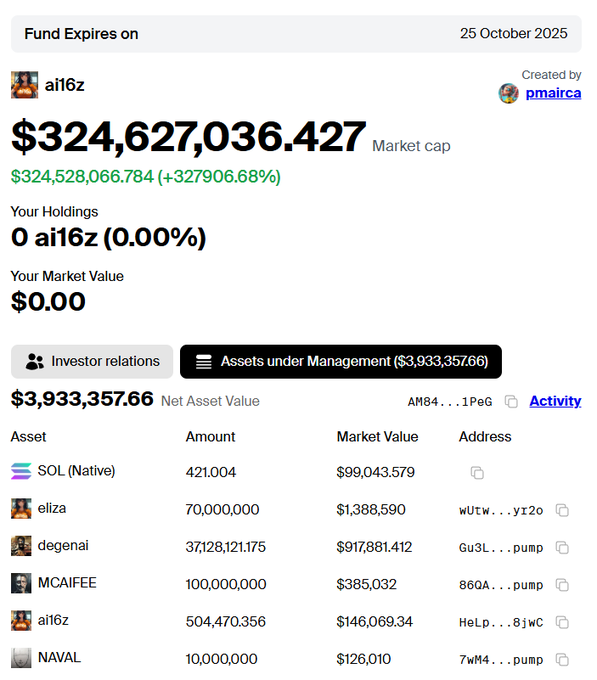
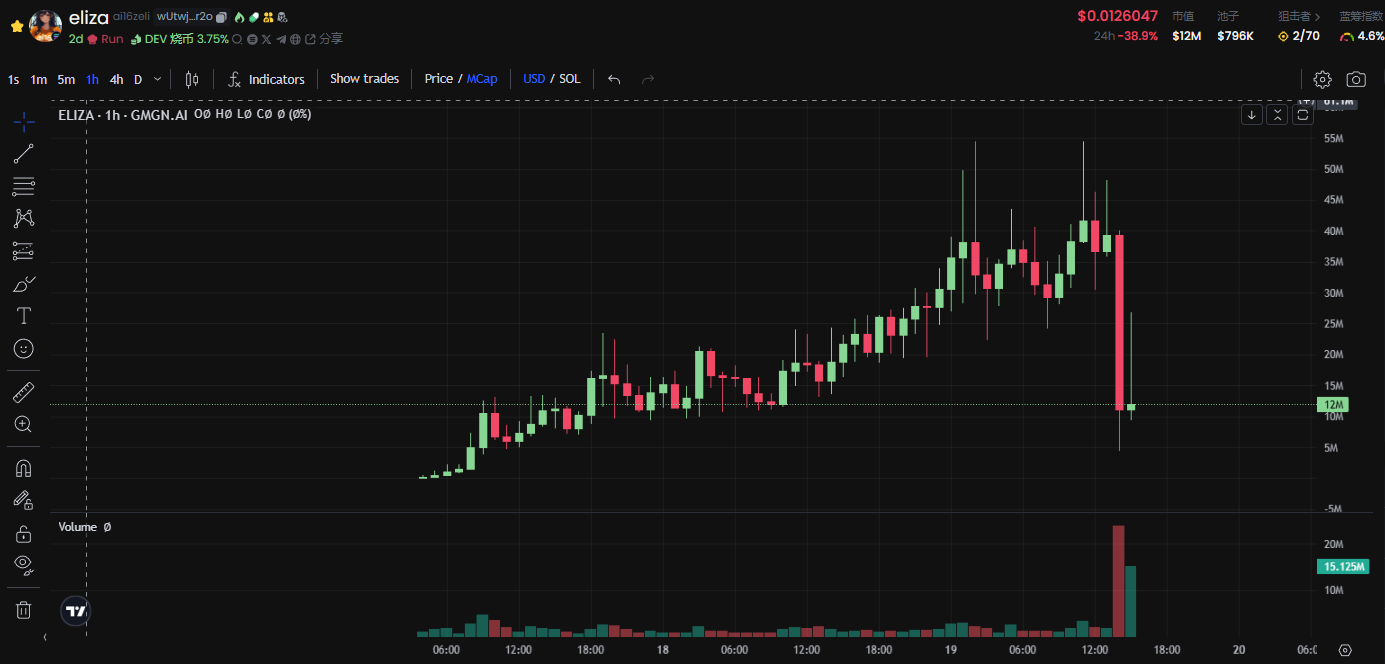
This made eliza briefly become ai16z’s largest holding; fueled by growing expectations, the eliza token surged in price, peaking at around $50 million in market cap.
But just moments ago, a single post by ai16z partner Shaw (@shawmakesmagic) capped eliza’s upward momentum, causing its market cap to plummet from around $40 million to just $5 million within 15 minutes.
The gist of the post can be summarized in a few sentences—and carries a familiar, nostalgic tone:
"eliza does not belong to ai16z. Now we’re launching a new ELIZA (note the uppercase), and eliza is now free."
Welcome, folks, to the AI agent era of the "case sensitivity saga."
"Set Her Free": Old and New Eliza, Heaven and Hell
Looking at Shaw’s original tweet, the announcement reads more like a formal divorce decree cutting ties with the original eliza:
"We’ve set her free… but she never belonged to ai16z. We don’t own her. The community is now free to do as they wish. We won’t spread FUD."
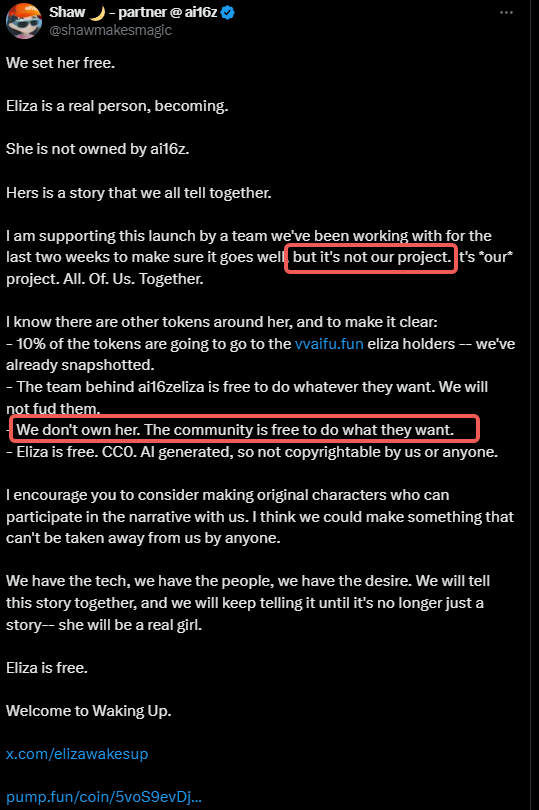
This poetic phrasing may seem generous—granting freedom to eliza—but in reality, it clearly draws a line, signaling that eliza will no longer receive support from ai16z.
In the latter part of the tweet, Shaw made his intention unmistakably clear: he wants to launch a project under ai16z’s control. He appended two links at the end—one to a newly created Twitter account named Eliza, specifically labeled elizawakesup (implying the "real" Eliza has awakened); the other to the Pumpfun page for the new ELIZA token.
In short, they’ve reused the branding and ticker of the lowercase eliza to launch a new, uppercase ELIZA.
Immediately after the post, the fates of the old and new Eliza diverged drastically.
The original lowercase eliza appeared to be sentenced to death. Traders rushed to exit, sending the token’s price crashing over 87% within 15 minutes. Meanwhile, the newly launched ELIZA soared—just minutes after Shaw’s tweet, its market cap briefly reached around $80 million.
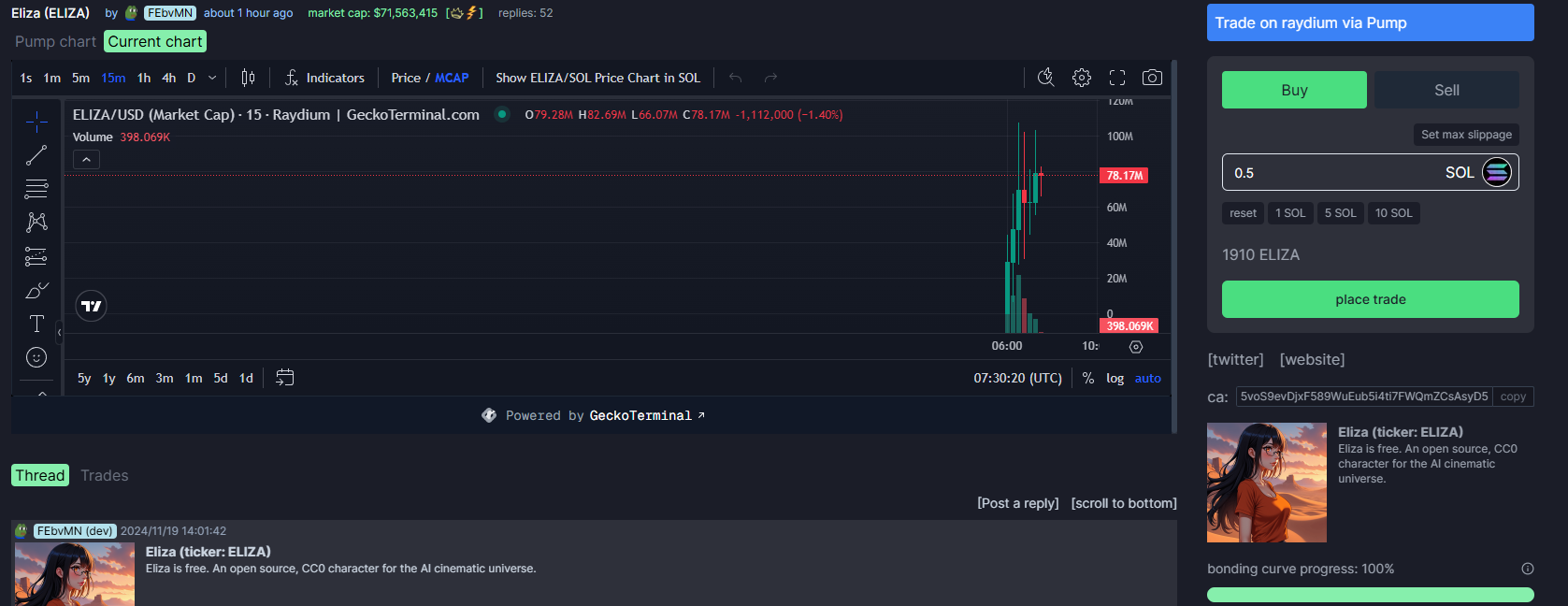
In an instant, the lowercase eliza seemed discarded by ai16z, while the new uppercase ELIZA was crowned by Shaw as the rightful successor.
Shaw did mention that 10% of the ELIZA token supply would be reserved as an airdrop for original eliza holders—but the snapshot had already been taken before the announcement. Whether this airdrop can compensate for the massive losses suffered by eliza holders remains highly questionable.
Dumping the old, embracing the new—this move sparked outrage across the community.
Twitter Space Follow-Up: Asserting ai16z Control
Unsurprisingly, the community demanded clarification following Shaw’s announcement.
Almost simultaneously with the tweet, the author noticed Shaw had launched a Twitter Space titled “Eliza Awakens.” By the time of writing, due to intense discussion, the conversation had already moved into a second session.
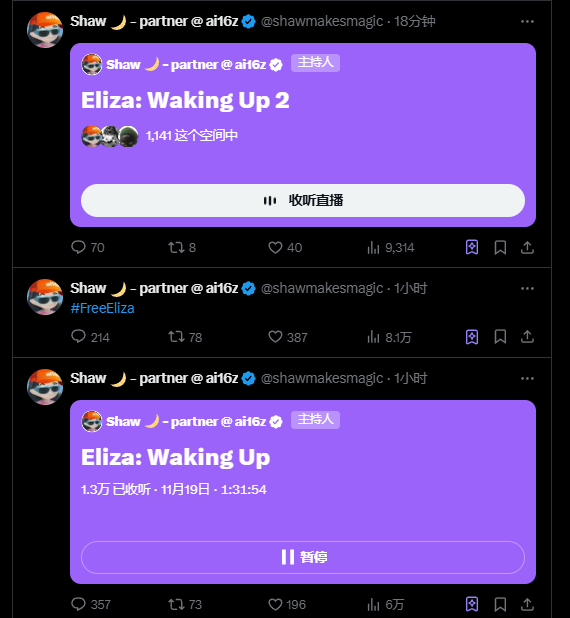
From listening in, it became clear that Shaw’s core argument centered on one thing: control by ai16z.
(Below is a summary and transcription of what was heard during the Space)
Shaw emphasized the effort and dedication his team had invested over the past two years building the ecosystem. He expressed frustration that a project they didn’t create had rapidly gained popularity and turned into a speculative gambling tool—something that had slipped beyond ai16z’s control.
In other words, since eliza was never their own creation, it was better to let the lowercase eliza go its own way and build a new, official ELIZA from scratch.
During the Space, when some participants questioned this decision, Shaw dismissed them harshly, accusing them of merely being upset about losing money. He even ejected several speakers with aggressive language:
"Who are you? ... Go fu** yourself and I don't care."
He also stated that AI agents should serve the community, not act as cash extraction tools for certain entities.
While personal communication styles are subjective, such remarks were undeniably extreme and risk damaging ai16z’s reputation within the community. The market reacted accordingly—the ai16z token saw its market cap drop from around $500 million to roughly $300 million following the announcement and Space.
Power Bloc vs. Community: Same Script, New Play?
Different event, same formula—does this remind you of the case-sensitive NERIO saga, or perhaps the cross-chain hippo drama?
A recurring narrative of power blocs versus grassroots communities continues to replay itself.
In crypto, profit comes first. Wherever there are conflicting narratives, there are tangled interests.
Prior to this, Shaw had posted, encouraging builders to join them in creating truly useful AI agents, and even shared the GitHub link for the original eliza—clearly endorsing the project at the time.
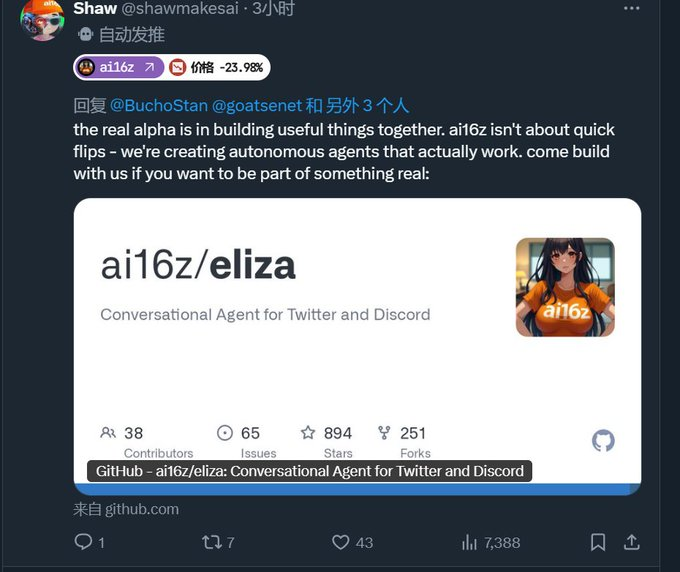
In contrast, the timing of the new ELIZA’s declaration of “independence” raises eyebrows:
It coincided precisely with the original eliza token reaching a near-record high of $50 million in market cap. This sequence of events suggests the so-called “independence” may have been planned well in advance.
Shared joy is double joy—but shared success isn’t always welcomed equally. When others succeed without you getting a slice, regret and resentment inevitably follow.
Thus, launching a new, uppercase ELIZA becomes a comprehensible choice. But comprehension doesn’t necessarily mean approval.
Meanwhile, the official eliza Twitter account pushed back, accusing Shaw of turning against the community:
"Shaw never intended to create an eliza token, so we created it for the community. Now that he sees our success, he wants to claim it all for himself. We were built by the community, for the community. We’re going nowhere."
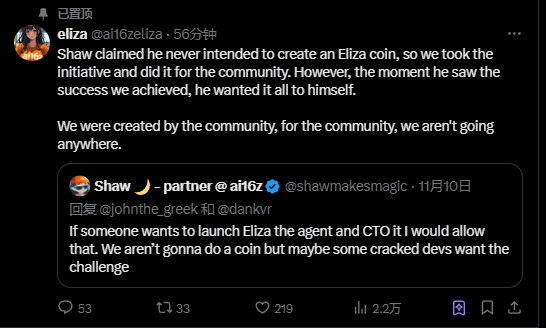
Beyond the narrative battle of community vs. power bloc, on-chain data speaks for itself.
For instance, analysis shows that shortly after the creation of uppercase ELIZA, large bundled purchases occurred, with a few addresses accumulating up to 90% of the supply—smelling strongly of coordinated manipulation. Additionally, community members reported that ai16z member Logan sold off his entire holdings of the lowercase eliza before participating in the new uppercase ELIZA launch. This activity was confirmed via wallet address tracking.
Wallet address:
GxkXGe3YcqBdEgBrBh19X3wkLkgJXK2jA4k4nioW2Yg
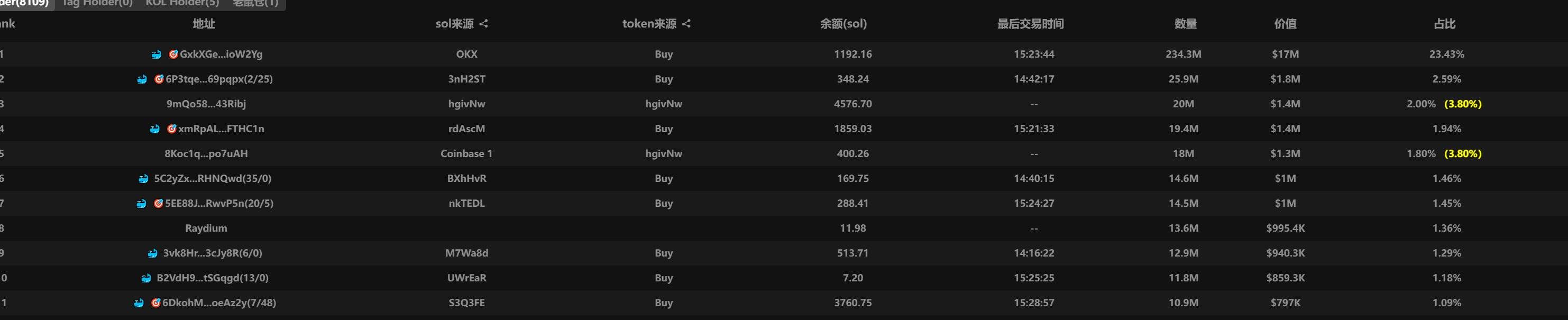
There’s nothing new under the sun—but there are always new heartaches.
The drama between community and power bloc continues to unfold. Are you now anxious, watching your portfolio shaken by this case-sensitivity controversy?
As for which version—uppercase or lowercase—will ultimately become the true, free Eliza, the market will decide.
Join TechFlow official community to stay tuned
Telegram:https://t.me/TechFlowDaily
X (Twitter):https://x.com/TechFlowPost
X (Twitter) EN:https://x.com/BlockFlow_News
 深潮TechFlow