








WOO X Research: When You're Rich, Do You Want Immortality? What Is the Recently Popular DeSci?
TechFlow Selected TechFlow Selected
WOO X Research: When You're Rich, Do You Want Immortality? What Is the Recently Popular DeSci?
Celebrity endorsement effect, with Vitalik and CZ paying close attention.
 Navigating Web3 tides with focused insights
Decentralized Science (DeSci) is not actually a new concept. As early as March last year, research firm Messari had already published a related report. Recently, this sector has regained market attention, largely due to Binance's investment in BIO Protocol.
On November 8, Binance completed a strategic funding round for BIO Protocol, though the specific round and amount were not disclosed. Thanks to Binance’s backing, the BIO Genesis community fundraising campaign initiated by BIO Protocol quickly reached its cap, raising a total of $33 million. CZ also tweeted about attending a small entrepreneur gathering on DeSci, where Vitalik was also present.
With Binance's concrete investment and endorsements from two major figures in the crypto space, what exactly is DeSci? And which projects are worth knowing? Let’s explore with WOO X Research.

Source: @bioprotocol
What is DeSci?
DeSci stands for Decentralized Science—a movement aiming to address various issues in scientific research, including opaque funding allocation, knowledge monopolies, and lack of public access to research data.
Below are the core features and principles of DeSci:
-
Decentralized Fundraising: Traditional scientific funding typically comes from governments, academic institutions, or large corporations, often influenced by political or commercial interests. Grant applications are usually time-consuming and inefficient, while underfunding of research projects remains common. In DeSci, researchers can directly raise funds from communities via blockchain-based DAOs—using cryptocurrencies or issuing project-specific tokens—enabling broader participation and support for innovative research.
-
Open Data and Knowledge Sharing: DeSci promotes storing research data and findings openly on blockchains to ensure transparency and immutability, addressing the current issue of closed academic data. Researchers can also use blockchain technology to track citations and usage of their work, ensuring fair recognition and distribution of knowledge.
-
Incentive Mechanisms: DeSci typically uses tokens or other blockchain tools as incentives, allowing participants (researchers, peer reviewers, data providers, etc.) to be rewarded within the system. For example, researchers may receive token rewards when publishing papers or sharing datasets, encouraging greater openness in science.
-
Improved Peer Review: Traditional journal publishing and peer review processes often suffer from inefficiency, bias, or high costs. DeSci leverages smart contracts and decentralized review systems to create more transparent and efficient evaluation workflows, while fairly compensating reviewers.
-
NFTs and Intellectual Property: In DeSci, research outputs can be minted as NFTs to manage and track intellectual property rights. For instance, a breakthrough discovery could be tokenized on-chain, securing the original author’s ownership and revenue rights.
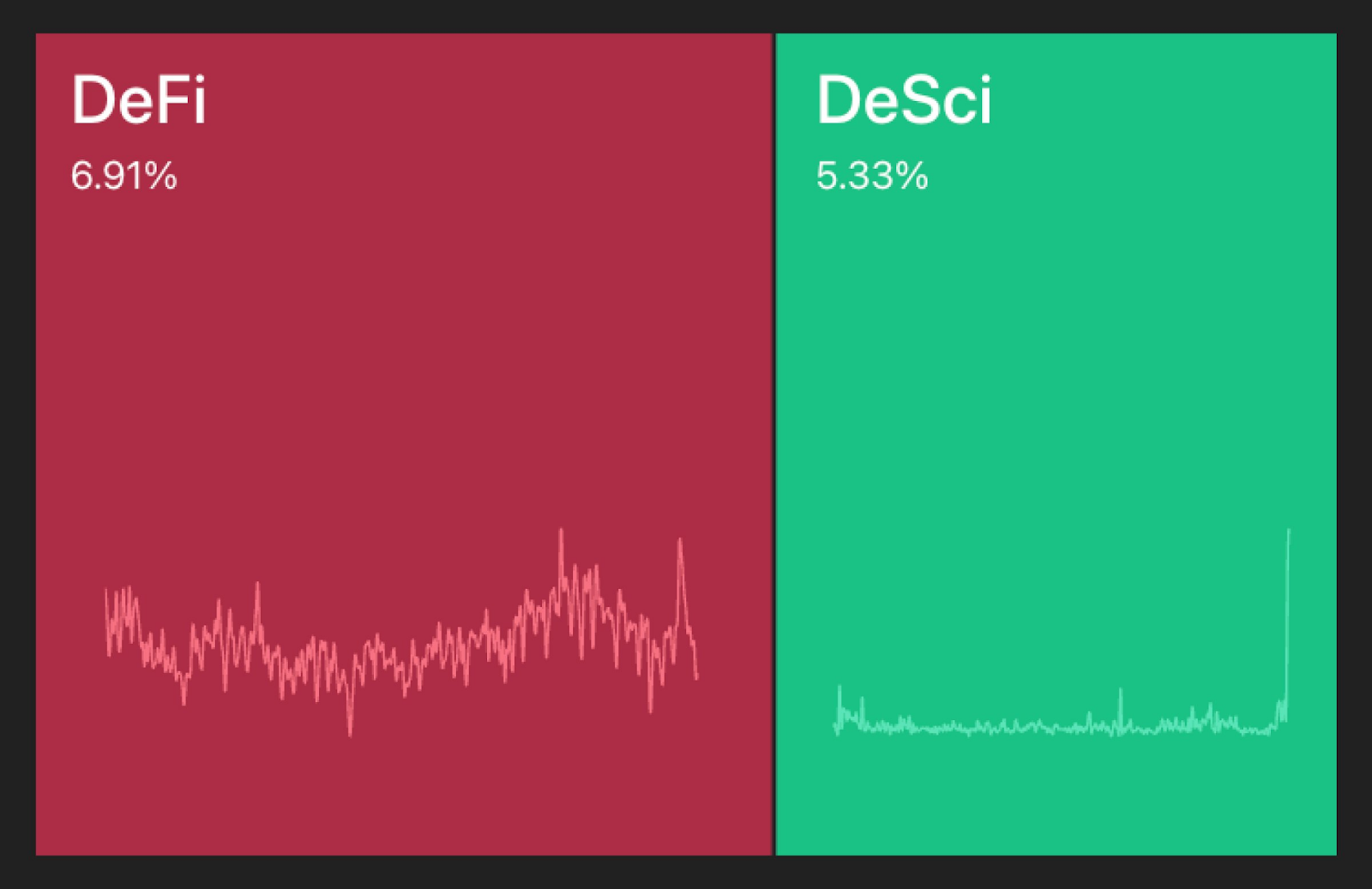
The key difference lies in the contrast between blockchain projects and real-world science: blockchain often sees capital precede development, leading to overfunded, overvalued applications disconnected from actual progress. Scientific research, however, is the opposite—difficult to fund, slow to yield results, and with little room for hype.
DeSci essentially channels speculative capital from crypto into scientific research. The narrative here is that blockchain can genuinely support scientific advancement and benefit society—an idea that opens up significant room for valuation growth in this sector.
Source: @_kaitoai
Representative Projects
VITA
The BIO Protocol invested in by Binance was founded by one of the co-founders of VitaDAO. Thus, the token VITA can be considered the most legitimate DeSci project to date. Established in 2021, VitaDAO focuses on funding and advancing early-stage longevity research aimed at extending human healthspan. As mentioned earlier, during the DeSci meetup attended by CZ and Vitalik, Vitalik showcased VitaDAO’s first longevity product—VD001, a naturally derived, high-dose spermidine supplement approved by Thailand’s FDA.
Beyond celebrity endorsements, VitaDAO secured $4.1 million in funding on January 30, 2023, backed by Pfizer’s venture arm, Shine Capital, L1 Digital, and Balaji Srinivasan. Notably, this marked pharmaceutical giant Pfizer’s first investment in the Web3 space.
-
Blockchain: Ethereum
-
Current Price: $6.2
-
Market Cap: $160 million
-
Holders: 4,076
-
All-Time High Market Cap: $160 million (current ATH)
$RIF
A meme coin launched through Pump.Science, a meme coin issuance platform introduced by Molecule DAO—a subsidiary of BIO Protocol—at the Token2049 Solana Breakpoint conference. Unlike Pump Fun, Pump.Science does not allow anyone to launch coins; only projects tied to scientific research are eligible.
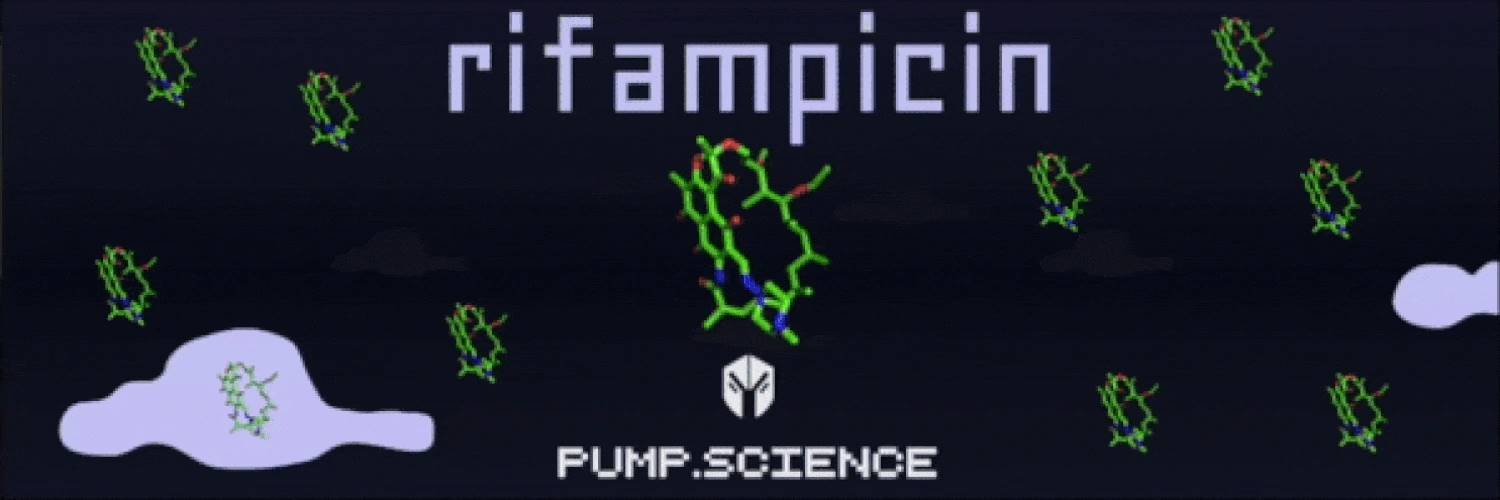
Currently, Pump.Science officially recognizes only two meme coins: RIF and URO. RIF represents the antibiotic "Rifampicin," which inhibits bacterial RNA synthesis and has strong bactericidal effects, used to treat tuberculosis, leprosy, trachoma, and Legionnaires’ disease.
Rifampicin has been shown to activate cells’ natural defense mechanisms against stress and damage. Experiments in worms have demonstrated lifespan extension and improved health, although human applicability remains uncertain due to early-stage research. Nonetheless, it represents an exciting direction in anti-aging therapies.
-
Blockchain: Solana
-
Current Price: $0.1705
-
Market Cap: $170 million
-
Holders: 20,146
-
All-Time High Market Cap: $183 million
Source: Dexscreener
$URO
Another meme coin issued via Pump.Science, and one of only two officially recognized tokens on the platform alongside $RIF.
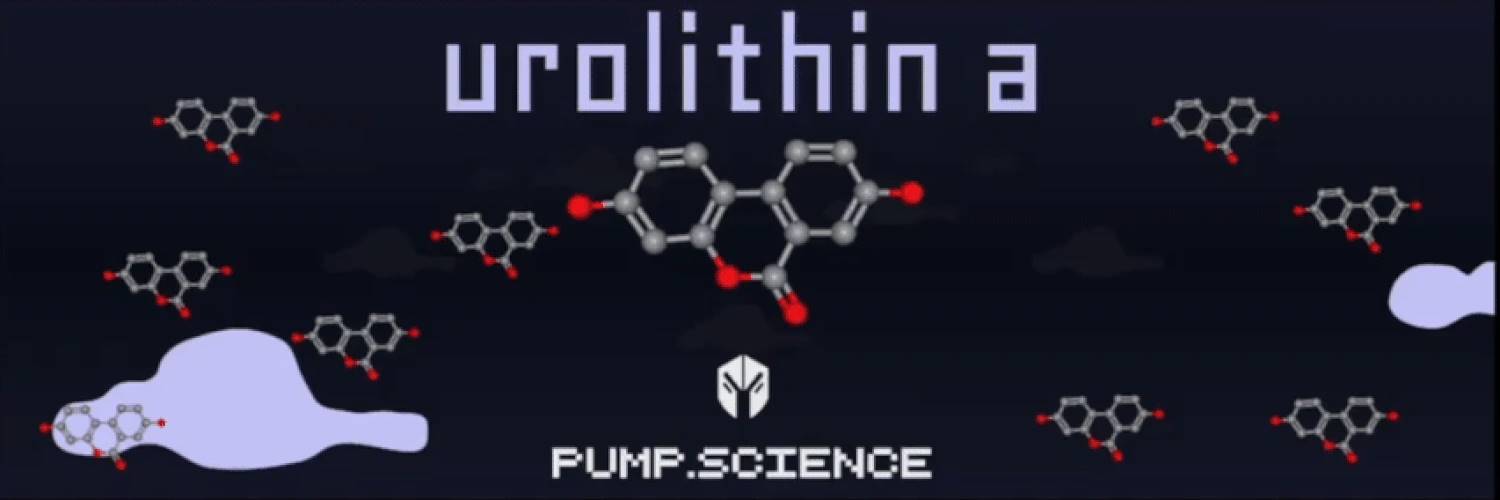
Urolithin A is a compound naturally found in pomegranates. Its unique property lies in enabling cellular “clean-up”—it helps remove aged and dysfunctional mitochondria, allowing healthy new mitochondria to thrive. Think of it as a reset button for cells, helping them maintain optimal function.
-
Blockchain: Solana
-
Current Price: $0.0466
-
Market Cap: $46.6 million
-
Holders: 12,674
-
All-Time High Market Cap: $60 million
Source: Dexscreener
SCIHUB
An open-access digital library of academic papers, founded in 2011 by neuroscientist Alexandra Elbakyan, aiming to provide free access to scholarly research for everyone—but sparking controversy over copyright infringement. In 2017, Sci-Hub was sued by publisher Elsevier and ordered to pay $15 million in damages. WTF Academy founder 0xAA purchased 22% of the total SCIHUB token supply and later transferred 20% to Alexandra Elbakyan’s wallet, showing support for Sci-Hub.
-
Blockchain: Solana
-
Current Price: $0.0486
-
Market Cap: $49 million
-
Holders: 13,842
-
All-Time High Market Cap: $73 million

Source: @SciHubFans
Conclusion: Can DeSci Deliver Real-World Impact?
The central narrative of DeSci is that speculative crypto capital can be channeled into scientific research, allowing cryptocurrencies to make meaningful contributions to global progress. However, DeSci is not a newly emerged trend this year—VitaDAO was established back in 2021 and even attracted investment from pharmaceutical giant Pfizer. Yet, it remained relatively obscure until Binance’s investment and the joint appearance of CZ and Vitalik brought renewed spotlight. At this stage, the hype still outweighs tangible outcomes.
As previously noted, scientific research is inherently expensive and time-consuming, rarely yielding immediate results after funding. Meanwhile, DeSci-themed meme coins are driven by the same attention economy logic as previous meme coins. Given the crypto market’s demand for quick returns, the long-term sustainability of DeSci remains highly questionable.
For the sector to achieve lasting momentum, several conditions must be met:
-
Ongoing Celebrity Endorsement: This current wave of interest was sparked by crypto influencers CZ and Vitalik. Continued involvement from prominent figures in the space would strengthen the DeSci narrative and attract further capital and users.
-
Sustained Fundraising Activity: More funding events are needed to demonstrate institutional interest in DeSci. When major investors build ecosystems around this sector, the fundamental foundation of DeSci will become more solid.
-
Growth of Leading Project Valuations: Currently, top projects like VITA and RIF have market caps ranging between $150 million and $200 million—still low compared to leaders in other sectors. If these flagship projects can reach $5 billion valuations and list on major centralized exchanges, they could drive broader growth across the DeSci ecosystem, proving its long-term potential.
Join TechFlow official community to stay tuned
Telegram:https://t.me/TechFlowDaily
X (Twitter):https://x.com/TechFlowPost
X (Twitter) EN:https://x.com/BlockFlow_News
 @WOOXResearch






